
Ceremony Schedule
While exact hourly schedules may vary slightly year-by-year, a typical flow for the festival day follows a structured, traditional timeline:
- 09:30 AM – Shinto Purification Rites (Norito & Oharai): Head Shinto priests officiate formal prayers inside the shrine, chanting sacred liturgy to purify the grounds, the participants, and the farming implements.
- 10:30 AM – The Grand Procession: A ceremonial parade featuring shrine priests, community leaders, local participants, and costumed performers marches from the main shrine buildings toward the sacred paddy field.
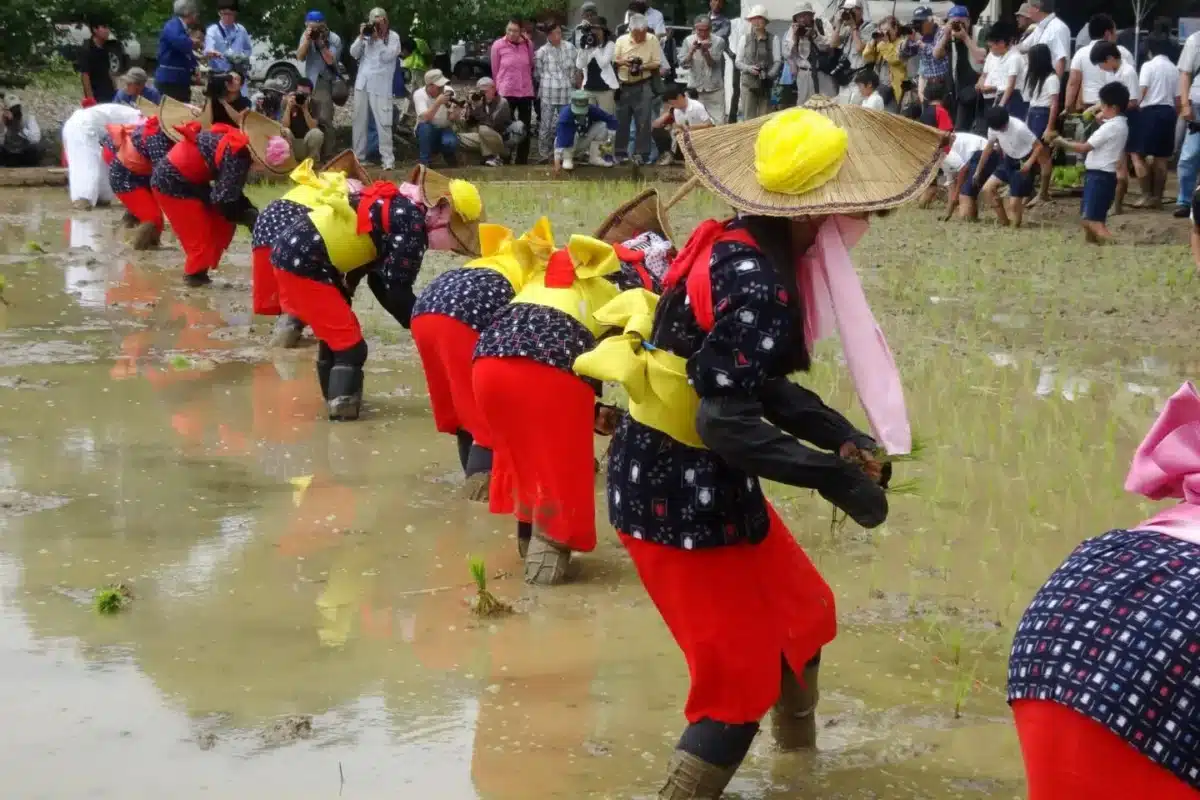
- 11:00 AM – The Core Rice-Planting Ritual (Otaue): Saotome (young women dressed in vibrant traditional attire and woven sedge hats) step into the shallow waters of the sacred paddy to plant the first seedlings.
- 01:00 PM onwards – Folk Performances & Public Festivities: The formal religious rites transition into a lively community celebration featuring traditional music, theatrical skits, food vendors, and family-friendly activities.
Traditional Activities
- Ritual Hand-Planting: Witnessing the synchronization and precision of the saotome as they move backward in straight lines, planting green rice shoots into the mirrored water of the paddy.
- Agricultural Play (Ta-asobi): Engaging with or watching humorous, stylized theatrical skits that mimic comical farming mishaps, designed to entertain the gods and ensure a hearty laugh-filled, stress-free harvest season.
- Shrine Blessings & Ema Offerings: Visitors have the opportunity to walk the historic grounds of Nobara Hachimangu, make traditional prayers at the main altar, and purchase seasonal protective amulets (ofuda).
- Local Market Stalls: Exploring rows of neighborhood stalls offering regional Kumamoto street foods, fresh agricultural produce, and handmade crafts.
Performances
- Dengaku Music: Live traditional accompaniment featuring piercing bamboo flutes (shinobue) and rhythmic taiko drumming. This music was historically designed to maintain planting tempo and drive away malevolent spirits.
- Folk Dances and Theatrical Skits: Costumed local preservation groups perform localized dances that narrate historical myths, local legends, and prayers for rain and sun.
- Special Guest Appearances: True to Kumamoto’s vibrant tourism culture, the prefecture’s world-famous, beloved bear mascot—Kumamon—frequently makes a guest appearance at the festival grounds to cheer on the planters, delighting families and photographers alike.
Date & Duration
- Event Date: Late June 2027 (Dates TBD)
- Event Duration: Approximately one hour
Visiting this event? Don’t miss out on these amazing activities and local experiences while you’re here.
Visitor Etiquette
- Respect Sacred Boundaries: Maintain a polite distance from the ritual areas and strictly stay behind designated barrier ropes, especially around the edges of the active rice paddy.
- Mindful Photography: While casual photography of the outer festival is welcomed, be mindful during solemn Shinto prayers in the morning. Refrain from using flash or obstructing shrine attendants and participants.
- Quiet Reverence: Keep noise levels down during the early morning Shinto rituals, transitioning to an enthusiastic, festive volume during the afternoon performances.
What Visitors Should Wear/Bring
- Footwear: Wear comfortable, slip-on walking shoes. You may need to remove your shoes if entering specific traditional shrine structures or walking on tatami mats.
- Weather Protection: Early-summer weather in Kumamoto can bring strong sun and high humidity. Pack a wide-brimmed hat, sunglasses, sunscreen, and a compact umbrella or light rain shell just in case.
- Cash (Japanese Yen): Essential for purchasing local street food, festival souvenirs, and making small donations (saisen) at the shrine offering boxes, as digital payments are rarely accepted by local vendors.
Ticket Information
- How Tickets Are Sold: Admission is open to the public on-site with no advance online ticket purchasing required.
- Admission Type: Free Admission
- Ticket Pricing: Free Admission
- Special Seating Options: Open standing areas around the rice paddies with no designated or reserved seating structures.
- VIP Options: No VIP packages, exclusive seating zones, or tiered access tiers are available for this traditional community event.
How to Get There
- By Train: Take the JR Kagoshima Main Line to Arao Station, which serves as the primary transit gateway for the city.
- By Local Bus or Taxi: From Arao Station, board a local regional bus or take a quick 10-to-15-minute taxi ride directly to the Nobara Hachimangu Shrine grounds.
- Travel Time: If you are traveling from central Kumamoto City, expect a total transit duration of roughly 1 hour to 1 hour and 15 minutes combining the train ride and local taxi/bus transfer.
Venue / Location
- City and Country: Arao, Kumamoto Prefecture, Japan
- Venue Name: Hachimandai (Adjacent to Hachiman Shrine)
- Google Maps Address: Hachimandai, Arao, Kumamoto 864-0000, Japan
Festival Background
The Arao Rice Planting Festival, locally celebrated as the Nobara Hachimangu Otaue-sai, is deeply rooted in the agricultural history of Arao City in northwestern Kumamoto Prefecture. Centered around the historic Nobara Hachimangu Shrine, this event marks the ceremonial beginning of the region’s rice-planting season. Historically, before the era of modern machinery, rice cultivation required intense communal labor. To lighten the arduous workload, communities blended agricultural tasks with rhythmic music, songs, and prayers directed toward Ta-no-Kami (the deity of the rice fields). Over centuries, these localized farming customs evolved into formal Shinto rituals designed to ward off natural disasters, appease pest spirits, and secure a prosperous crop.
Cultural Significance
In Japanese tradition, rice (kome) is far more than a dietary staple; it is a profound symbol of life, communal cooperation, and spiritual purity. The festival acts as a living bridge to Japan’s ancient agrarian roots, maintaining intangible folk heritage that modern industrialization might otherwise erode. By participating in or observing the ritual, locals and visitors alike acknowledge humanity’s deep reliance on nature’s cycles. The event reinforces social harmony, as multi-generational community members work together to preserve ancient choreographies, musical scores, and Shinto customs that have been passed down for centuries.
Enjoy Your Event Stress-Free with Japan Travelo
Do you know? Planning events, festivals, concerts, and cultural experiences in Japan can be overwhelming. Japan Travelo brings everything together in one place, helping you manage your itinerary, transport, and accommodation with ease—so you can enjoy Japan without the stress of planning.
Contact Information
- Email: info@araokankou.jp
- Phone Number: +81 968-63-0234
- Official Website: https://en.japantravel.com/kumamoto/arao-rice-planting-festival-1/33281
Location
FAQ
What is the main purpose of the Arao Rice Planting Festival?
The festival celebrates the start of the rice planting season and honors the agricultural heritage of the region. Rice is a staple food in the Japanese diet, and this tradition has spanned over a millennium in the small town of Arao. Locals gather to pay respect to the land and pray for a successful harvest.
Where exactly does the festival take place?
The event is held in the rice paddies located directly adjacent to the town's historic Hachiman Shrine. Visitors can easily find the location in the Hachimandai area of Arao within Kumamoto Prefecture. The surrounding shrine grounds provide a scenic and cultural backdrop for the ceremonies.
What activities can spectators expect to see during the event?
The hour-long program kicks off with energetic masked dancers performing traditional routines near the paddies. Following the opening dance, local women dressed in vibrant traditional garments step into the muddy fields to carry out the planting ritual. They are often joined by local school children and regional mascot Kumamon.
Do visitors need to register or purchase credentials ahead of time?
There is no requirement to book reservations or secure documentation before attending this community ritual. Spectators are welcome to arrive at the venue and watch the open-air ceremonies from permitted viewing areas around the paddies.
Is public parking available near the shrine grounds?
Limited local parking spaces can be found near the Hachiman Shrine area for arriving visitors. Because space can fill up quickly during local festivals, utilizing public transportation or regional taxis to reach Arao is often recommended.

Leave a Reply