
What to expect in 2026
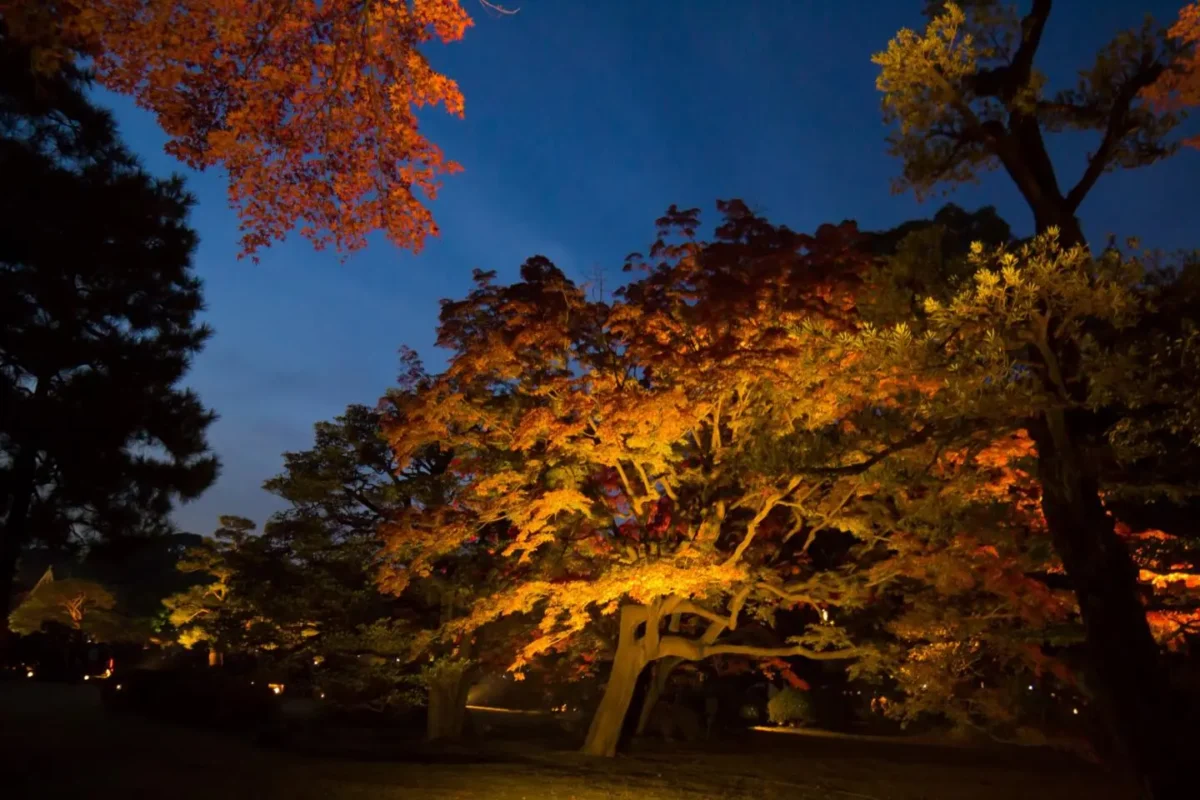
Rikugien Garden Autumn Illumination 2026 will transform one of Tokyo’s most celebrated traditional gardens into an atmospheric nighttime landscape of illuminated autumn foliage, reflections, historic architecture and seasonal photography. The event is known officially as Rikugien Gardens “Nighttime Autumn Foliage Viewing,” or “Niwa Momiji,” and gives visitors an opportunity to experience the garden after its normal daytime closing.
Rikugien is a traditional Japanese strolling garden created during the Edo period and is particularly admired for its pond, artificial hills, bridges, teahouses, groves and carefully designed landscape views. During the autumn illumination, selected areas of the garden are lit to emphasize the changing leaves and the relationship between trees, water and traditional structures.
The 2026 edition also introduces projection mapping on the historic storehouse and bamboo grove, adding a modern visual element to the traditional garden setting. Photogenic installations will be placed around the grounds, while visitors can stop at tea houses for matcha and Japanese sweets or enjoy light food from temporary stalls and food trucks.
Enjoy Your Event Stress-Free with Japan Travelo
Do you know? Planning events, festivals, concerts, and cultural experiences in Japan can be overwhelming. Japan Travelo brings everything together in one place, helping you manage your itinerary, transport, and accommodation with ease—so you can enjoy Japan without the stress of planning.
The experience is primarily about autumn scenery rather than a stage-based festival. Visitors walk along designated garden paths, pause at illuminated maple and ginkgo areas, photograph reflections in the pond and discover traditional structures appearing differently under nighttime lighting.
Event dates
Late Nov – Early December 2026
The 2026 nighttime autumn foliage programme is scheduled within this seasonal period, with the garden specially reopening in the evening for the illumination event. Visitors should use the official Rikugien information page to confirm the latest operating arrangements before travelling.
The special nighttime viewing is separate from ordinary daytime garden admission. During the illumination period, visitors entering during the special evening session require the designated nighttime viewing ticket.
The event traditionally operates for several consecutive evenings, making it possible to choose between different days according to weather, foliage conditions and expected crowd levels.
Visiting this event? Don’t miss out on these amazing activities and local experiences while you’re here.
Venue & event locations
Rikugien Garden
Rikugien Garden is the principal and only main venue for the autumn illumination. The special nighttime viewing covers much of the garden, although certain areas may be closed for safety or operational reasons.
The garden is located in Honkomagome, Bunkyo City, Tokyo, and is easily accessible from Komagome Station.
Illuminated autumn foliage areas
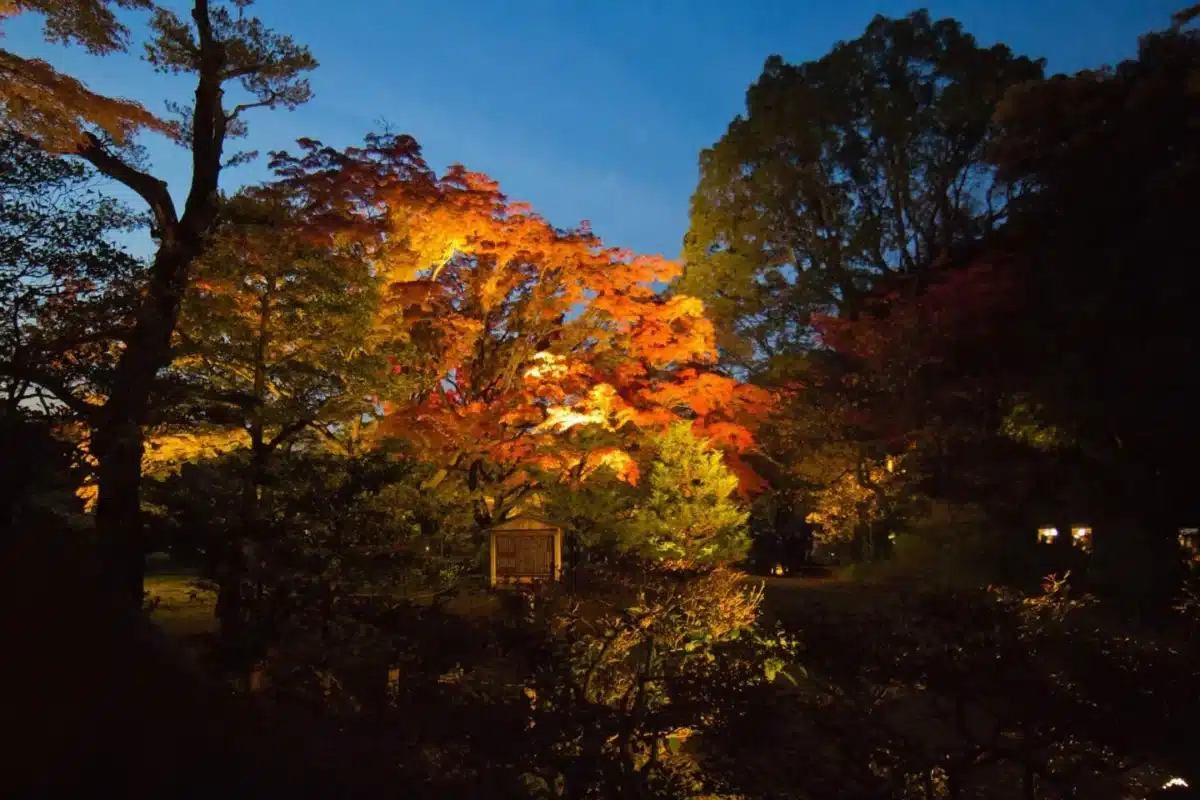
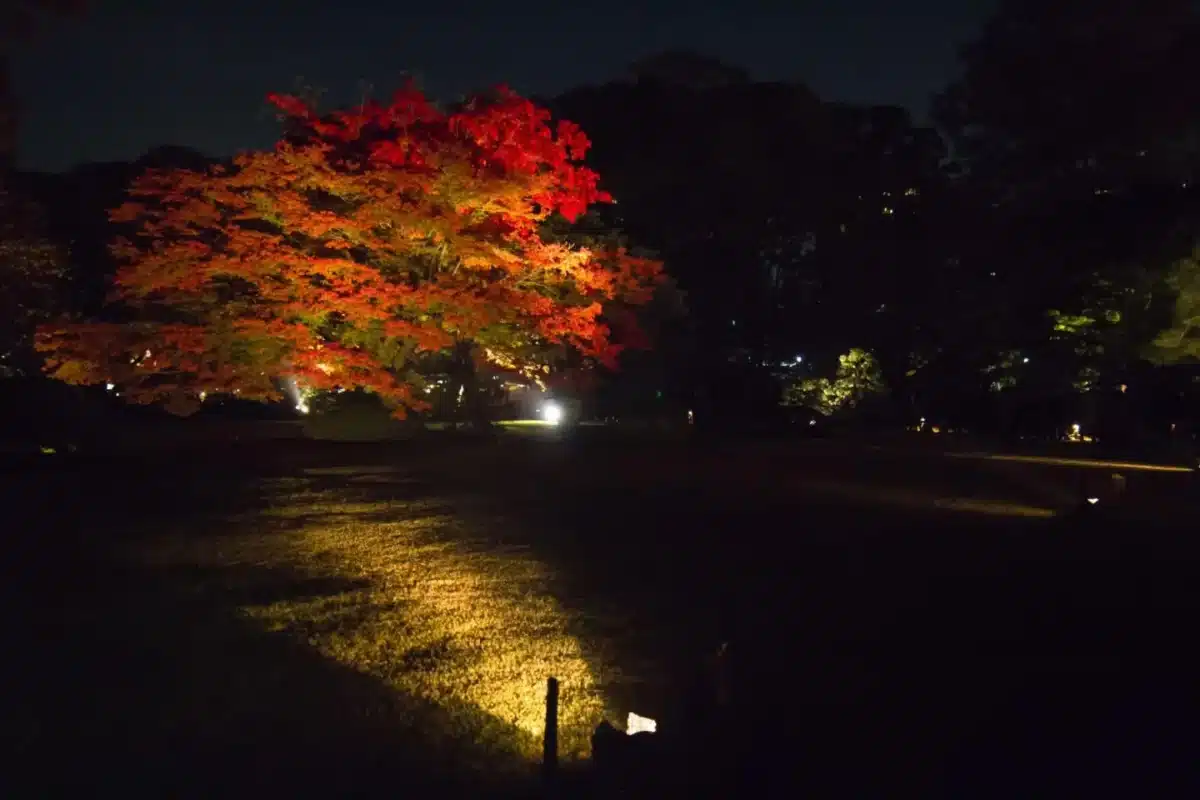
Maple trees, ginkgo trees and other seasonal vegetation are highlighted through carefully positioned lighting. Different parts of the garden create different visual effects, from brightly illuminated foliage to darker pathways emphasizing silhouettes and reflections.
Pond and bridge viewpoints
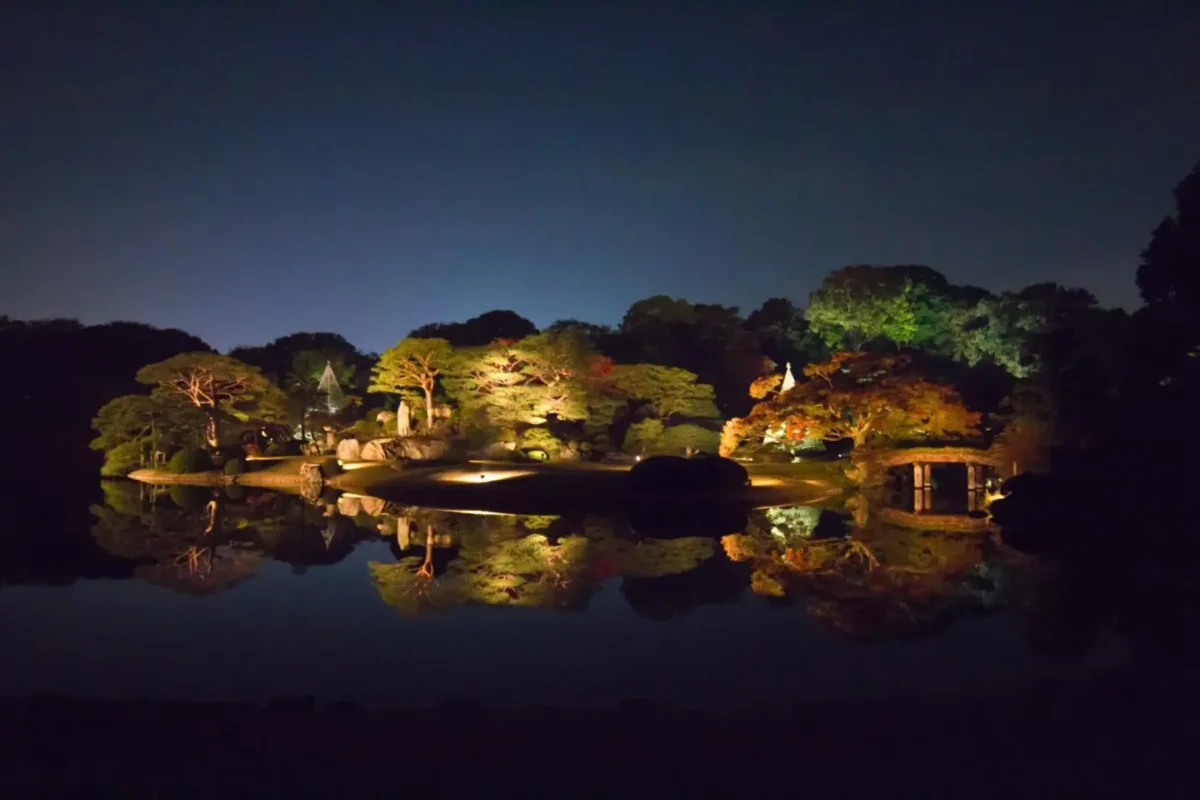
The central pond and surrounding bridges provide some of the most atmospheric viewpoints. Reflections of illuminated trees and structures can create layered nighttime compositions.
Tsutsuji Chaya and Yamakage-bashi
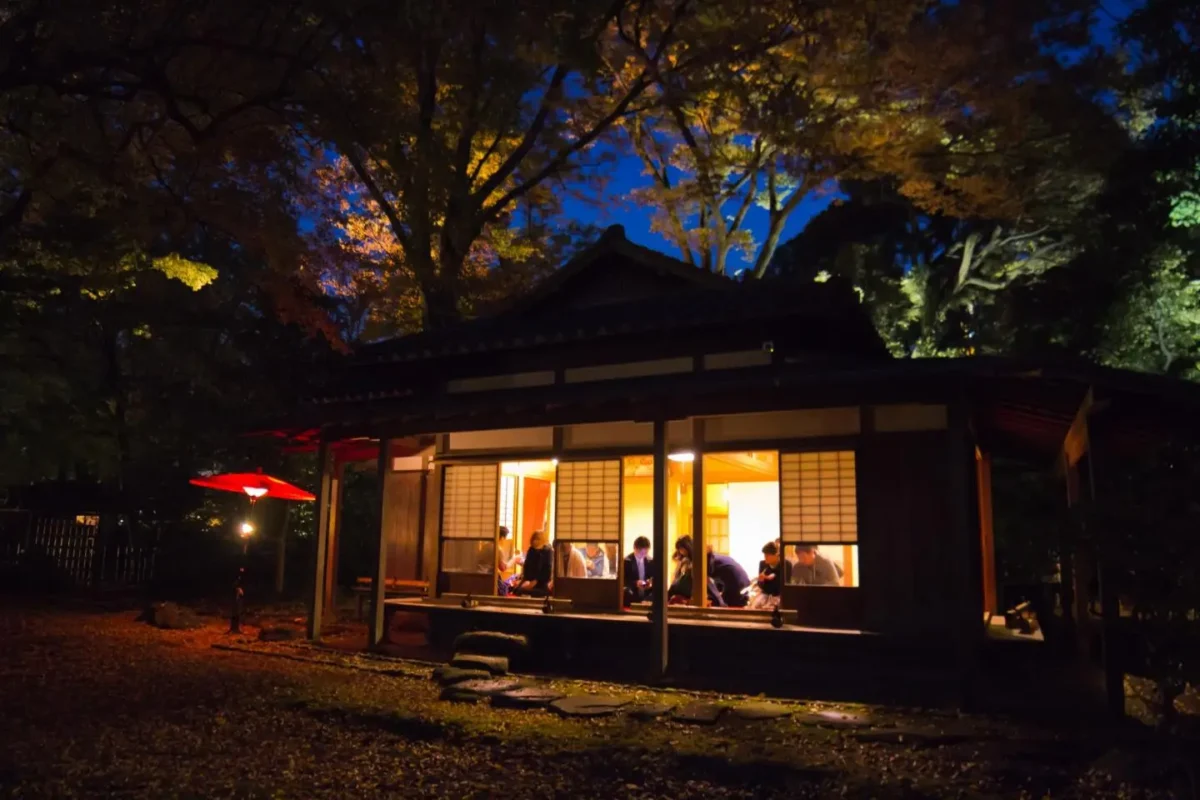
The area around Tsutsuji Chaya and Yamakage-bashi is designed to evoke the atmosphere of autumn scenery in a traditional Japanese mountain landscape.
Historic storehouse
The traditional storehouse provides the setting for projection mapping, combining the historic building with changing illuminated imagery.
Bamboo grove
The bamboo area also forms part of the projection experience in the 2026 programme, creating a contrast between natural vegetation and modern light-based visuals.
Full holiday programme
Although this is not a conventional holiday festival, the autumn illumination functions as a major seasonal celebration in Tokyo’s garden calendar.
Nighttime autumn illumination
The central programme is the illumination of Rikugien’s autumn landscape. Lighting is concentrated around areas where seasonal foliage can be appreciated from designated walking routes.
Historic storehouse projection mapping
A major new feature for 2026 is projection mapping on the exterior of the storehouse. Images are adapted to the shape of the historic building, creating a contemporary visual interpretation of the garden.
Bamboo projection experience
Projection mapping is also presented around the bamboo grove, creating an illuminated environment where traditional landscape design and modern technology interact.
Photography installations
Special photo spots are positioned throughout the garden. These may feature traditional Japanese visual elements such as umbrellas and red carpeting, providing visitors with dedicated places for seasonal photographs.
Matcha tea houses
Fukiage Chaya and Shinsen-tei offer matcha and Japanese sweets during the evening programme, providing a traditional refreshment experience within the garden setting.
Seasonal food stalls
Temporary stalls and food trucks provide light refreshments during the evening. The official programme includes food vendors near the storehouse and former Ginhakutei area.
Main attractions & highlights
Illuminated maple foliage
Autumn maple trees are one of the main reasons visitors come to Rikugien during the illumination. Carefully positioned lighting brings out the changing colors and textures of the leaves.
Pond reflections
The garden pond creates reflections of illuminated trees, bridges and surrounding structures. These views become particularly atmospheric after sunset.
Projection mapping
The 2026 programme expands the event beyond conventional garden illumination with projection mapping on the historic storehouse and bamboo grove.
Japanese garden scenery
Rikugien’s hills, bridges, streams, ponds, trees and tea houses were designed to create changing views along a strolling route. At night, lighting gives familiar landscape features a completely different appearance.
Photogenic installations
Dedicated photo spots provide visitors with opportunities to photograph the illuminated landscape using traditional Japanese decorative elements.
Tea houses
The evening matcha service at Fukiage Chaya and Shinsen-tei allows visitors to combine seasonal sightseeing with a traditional Japanese tea experience.
Markets, decorations & themed areas
Rikugien’s illumination is not structured around a large commercial market. Instead, temporary food stalls, tea houses and souvenir areas complement the garden experience.
Temporary food stalls
Light meals and snacks are offered from temporary vendors around the garden. The 2026 programme includes stalls and kitchen cars near the storehouse and former Ginhakutei area.
Matcha areas
Fukiage Chaya and Shinsen-tei provide traditional tea-house settings where visitors can take a break during the illuminated walk.
Seasonal photo spots
Japanese umbrellas and traditional red carpeting are incorporated into selected photography areas, creating decorative settings that complement the autumn foliage.
Storehouse projection zone
The historic storehouse becomes a dedicated nighttime visual attraction through projection mapping.
Bamboo illumination zone
The bamboo grove provides another distinctive environment for the projection programme, contrasting vertical natural forms with changing light.
Events & entertainment schedule
The illumination is primarily a continuous walking and visual experience rather than an entertainment programme with hourly concerts or performances.
Evening opening
The garden closes temporarily before the nighttime programme begins and then reopens specifically for evening visitors. The current 2026 programme operates during the evening, with final admission before the end of the viewing period.
Garden illumination
The main lighting programme continues throughout the evening, allowing visitors to follow the designated route at their own pace.
Projection mapping
The storehouse and bamboo projection experiences operate as part of the nighttime programme.
Photo opportunities
Photography spots are available during the evening, although some installations may be adjusted or suspended in strong winds or severe weather.
Food and tea
Tea houses, temporary stalls and food trucks provide refreshments during the evening, subject to availability and weather conditions.
Visitors should allow enough time to complete the walking route rather than arriving immediately before the final admission period.
Admission & ticket information
The nighttime illumination uses a dedicated special viewing ticket rather than ordinary daytime garden admission.
Based on the officially announced 2026 ticket structure:
Online advance ticket: approximately $6.25
Same-day ticket: approximately $7.50
Discounted admission for eligible disability certificate holders: approximately $3.13
Children of elementary-school age and younger: $0
These dollar figures are approximate conversions of the official 2026 ticket prices and are provided for website planning; the actual amount charged in Japan is set by the organizer. The official 2026 programme lists the advance ticket at ¥1,000, the same-day ticket at ¥1,200, the eligible discounted ticket at ¥500, and free admission for elementary-school-age children and younger.
Online tickets provide access through a priority entrance lane, while same-day tickets can be purchased online or at the entrance counter. The official information also notes that quantities are limited to help manage visitor congestion.
For the 2026 event, the nighttime ticket is the admission required for evening entry, with no additional ordinary garden admission fee necessary.
Special experiences & activities
Night photography
The illumination creates excellent opportunities for photographing autumn foliage, bridges, ponds and traditional structures. Reflections on the water can be particularly effective after dark.
Projection mapping
Visitors can combine traditional garden sightseeing with contemporary projection art at the storehouse and bamboo grove.
Matcha and Japanese sweets
A matcha break at one of the garden tea houses offers a quieter cultural experience away from the busiest walking sections.
Autumn garden walk
The designated nighttime route allows visitors to see familiar landscape features from a different perspective.
Traditional photo settings
Japanese umbrellas and other decorative elements are used at selected photo spots, providing a seasonal backdrop for visitors.
Historic landscape viewing
The evening experience allows visitors to appreciate the relationship between Rikugien’s historic architecture and its natural landscape under carefully controlled lighting.
Family & children’s activities
Rikugien Autumn Illumination can be suitable for families, particularly for children interested in lights, colorful autumn trees and projection mapping.
Illuminated garden walk
Children can experience the garden as a nighttime landscape rather than simply viewing autumn foliage during daylight.
Projection mapping
The storehouse and bamboo projection displays provide a more visually dynamic part of the event and can be particularly engaging for younger visitors.
Photo spots
Families can take seasonal photographs at designated installations around the garden.
Matcha and sweets
The tea houses provide an opportunity for families to experience traditional Japanese refreshments, although parents should consider whether younger children will enjoy the quieter tea-house environment.
Safety
Because the event takes place after dark, families should remain together and follow the designated route. Some garden sections are restricted during nighttime operation, and visitors should follow staff instructions.
Event rules
Follow the designated route
Some garden areas are closed during nighttime operation. Visitors should remain on permitted paths and avoid restricted areas.
Respect the garden
Rikugien is a historic landscape garden. Visitors should not climb trees, enter planting areas, touch installations unnecessarily or disturb the garden environment.
Photography
Photography is encouraged in designated areas, but visitors should avoid blocking paths or preventing other guests from enjoying the scenery.
Weather restrictions
Certain photo installations and outdoor activities can be suspended in strong winds or severe weather.
Follow staff instructions
Crowding can occur at popular viewpoints. Visitors should follow staff directions regarding movement, queues and access.
Ticket conditions
Nighttime entry requires the appropriate special viewing ticket. Ticket availability may be limited, and online advance purchase can provide access through a priority lane.
How to get there
Rikugien Garden is located in Bunkyo City in northern central Tokyo and is convenient to reach by train.
From Komagome Station
Komagome is the most convenient railway station for many visitors. The garden is a short walk from the station, making it particularly practical for visitors arriving from other parts of Tokyo.
JR Yamanote Line
Komagome Station is served by the JR Yamanote Line, providing connections with major Tokyo stations and sightseeing districts.
Tokyo Metro Namboku Line
Komagome Station is also served by the Tokyo Metro Namboku Line.
From Sengoku
Sengoku Station on the Toei Mita Line is another useful access point and can be combined with a walk through the surrounding neighborhood.
The garden’s official address is 6-16-3 Honkomagome, Bunkyo City, Tokyo.
Public transport & parking
Public transport is generally the most practical way to reach the illumination.
JR Komagome Station
The station provides convenient access to the garden and is particularly useful for visitors traveling on the Yamanote Line.
Tokyo Metro Komagome Station
The Namboku Line provides another direct rail connection.
Sengoku Station
Visitors can also approach from Sengoku Station, depending on their itinerary and accommodation.
Walking
The surrounding neighborhood is suitable for walking, and approaching the garden on foot makes it easy to combine the visit with nearby restaurants or other Tokyo attractions.
Parking
Rikugien is not primarily designed as a drive-in event venue, and visitors should not rely on on-site parking. Public transport is recommended, particularly during the busy autumn illumination period.
Because evening admission is controlled and visitor numbers can become concentrated around popular viewing points, arriving by train also avoids the difficulty of finding parking in the surrounding urban area.
Accommodation areas
Visitors staying in Tokyo have many accommodation options within convenient travel distance of Rikugien.
Komagome
Komagome is the most convenient neighborhood for visitors who want to stay close to the garden. Its railway connections also make it practical for exploring other parts of Tokyo.
Sugamo
Sugamo is nearby and provides additional accommodation, restaurants and local shopping.
Ueno
Ueno is a useful option for travelers combining Rikugien with museums, parks and other northern Tokyo attractions.
Ikebukuro
Ikebukuro provides a much larger selection of hotels and restaurants while remaining conveniently connected to Komagome.
Tokyo Station area
Travelers arriving by Shinkansen or staying in central Tokyo can easily reach Rikugien by rail, making central Tokyo accommodation practical for the event.
Visitors planning to attend during the peak autumn foliage period should reserve accommodation in advance, especially if the illumination is a major part of their Tokyo itinerary.
Food, drinks & seasonal specialties
The nighttime programme includes food and drink opportunities within the garden.
Matcha
Fukiage Chaya and Shinsen-tei serve matcha with Japanese sweets, providing one of the most traditional refreshment experiences available during the illumination.
Japanese sweets
Seasonal wagashi and other Japanese sweets complement the matcha experience and provide a natural pause during the garden walk.
Dango
Temporary stalls have offered dango and other light refreshments during the illumination.
Light food
Temporary stalls and kitchen cars provide casual food for visitors who want to eat without leaving the garden.
Local Tokyo vendors
The 2026 programme includes participation by Bunkyo-area shopping district businesses through kitchen cars, connecting the event with the surrounding community.
Visitors should remember that food and beverage availability can vary according to weather, vendor schedules and stock.
Accessibility
Rikugien is a historic landscape garden with natural terrain, slopes, bridges and traditional garden paths. Accessibility therefore varies across the grounds.
Some nighttime areas may be restricted for safety, while lighting and crowd management can affect how easily visitors move through certain sections.
Visitors using wheelchairs, walking aids or strollers should check the current route and accessibility conditions before visiting. Staff can provide information about permitted routes and restrictions.
The event can become crowded around popular viewpoints, especially when autumn foliage reaches peak color. Visitors who require additional space or time may prefer quieter periods within the evening.
Eligible visitors with qualifying Japanese disability certificates receive a reduced nighttime ticket under the current 2026 arrangement, with an accompanying person also eligible for the specified discount under the official rules.
Best days & times to visit
Early evening
Arriving near the beginning of the nighttime session allows visitors more time to explore the illuminated garden and reduces the risk of rushing near final admission.
Weekday evenings
Weekday visits can provide a calmer experience than the busiest weekend periods, although crowd levels depend on foliage conditions and weather.
Peak autumn foliage
The strongest visual experience depends on natural foliage conditions rather than the calendar alone. Maple and ginkgo colors can change according to temperatures and seasonal weather.
After sunset
The event is specifically designed for nighttime viewing, so visitors should allow enough time after sunset to appreciate the full lighting effects.
Photography periods
Visitors interested in photography should allow time at pond viewpoints, bridges, maple areas and designated photo spots rather than spending the entire visit at the entrance areas.
Weather-conscious visits
Rain can alter reflections and atmosphere, but severe weather can lead to cancellations or suspension of some attractions. Visitors should check official announcements before travelling.
Previous year’s highlights
The previous edition established the current format of Rikugien’s nighttime autumn viewing, combining traditional garden illumination with contemporary visual elements.
The programme featured lighting across the garden’s autumn foliage areas, dedicated photo spots and projection experiences. The historic storehouse was used as a projection surface, while the garden’s waterways, bridges, tea houses and vegetation were emphasized through nighttime lighting.
The event also included Fukiage Chaya and Shinsen-tei as matcha tea locations. Visitors could enjoy matcha and Japanese sweets while taking a break from the illuminated walking route.
Temporary stalls and kitchen cars offered light refreshments, including dango, while souvenir sellers presented Rikugien-related products and botanical or traditional items.
Another recurring highlight was the use of carefully positioned photography areas. Traditional Japanese umbrellas and red carpeting created atmospheric settings for photographs against the illuminated garden.
The 2026 programme builds on this established format with projection mapping on both the historic storehouse and bamboo grove, giving the event an expanded combination of traditional landscape appreciation and modern visual presentation.
Official event information
The official organizer for Rikugien Garden is the Tokyo Metropolitan Park Association, which publishes current information about the garden, seasonal events, access arrangements, admission and nighttime programmes.
Official Rikugien Garden: https://en.japantravel.com/tokyo/rikugien-garden-autumn-illumination/33182
The official 2026 announcement confirms the nighttime autumn viewing, illuminated garden areas, photography spots, matcha tea houses, temporary food vendors and the new storehouse and bamboo projection mapping.
Visitors should check the official information shortly before travelling for ticket availability, weather-related changes, access restrictions, foliage conditions and any updates to the programme.
Video
Location
FAQ
Are advance tickets required or can visitors buy them at the gate?
Advance tickets can be purchased online to secure your preferred time slot, though limited day-of tickets are also sold at the counter. Buying early is strongly advised because daily entry caps frequently sell out well in advance due to high demand.
Is the entire garden pathway fully accessible for wheelchairs and strollers?
Most main pathways consist of packed gravel and dirt which are partly navigable, though certain historic bridges and teahouse areas feature steps. Visitors with mobility considerations should plan their routes carefully or request assistance from on-site staff.
Can visitors bring food or consume picnic meals inside the garden during the night event?
Bringing outside food and conducting picnics is strictly prohibited to preserve the cleanliness and historical integrity of the grounds. However, light refreshments and warm beverages are typically available for purchase at designated vendor booths near the entrance.
What is the best way to avoid the heaviest crowds during the evening illumination?
Attending on a weekday evening rather than a Friday, Saturday, or Sunday drastically reduces the number of fellow visitors on site. Arriving during the late entry slots can also help you experience a slightly calmer atmosphere as the evening winds down.
Are pets allowed to accompany visitors inside the garden during the autumn event?
Pets are generally not permitted within the historic garden grounds, with the exception of certified guide or service animals. This policy ensures the safety of all attendees and protects the delicate natural landscaping of the park.

Leave a Reply