
-
November 1, 2026
Event date:
-
November 3, 2026
Event end:
Festival Participation & Dance Lessons
One of the most welcoming aspects of the Ohara Matsuri is its strong emphasis on public inclusion, inviting all visitors to become active participants rather than passive observers. Spontaneous participation is heavily encouraged, allowing travelers who happen to be in town to jump into the dance lines. Friendly locals and dance leaders readily welcome newcomers, helping them catch the simple rhythm of the Ohara-bushi steps.
For those who wish to learn the choreography beforehand, the festival organizes dedicated public dance practice sessions hosted at municipal facilities. These workshops provide step-by-step guidance, ensuring that even complete beginners feel confident before joining the massive street processions. Participating directly in the dance breaks down cultural barriers and creates deeply personal travel memories.
Stepping onto the asphalt alongside thousands of welcoming residents allows visitors to experience the true communal spirit of Kagoshima. It transforms a standard sightseeing trip into an immersive cultural exchange fueled by shared laughter and music. By the end of the dance session, every participant feels a genuine connection to the heart of the city.
Enjoy Your Event Stress-Free with Japan Travelo
Do you know? Planning events, festivals, concerts, and cultural experiences in Japan can be overwhelming. Japan Travelo brings everything together in one place, helping you manage your itinerary, transport, and accommodation with ease—so you can enjoy Japan without the stress of planning.
Night Festival & Main Festival Experience
The festival unfolds across distinct phases, kicking off with an atmospheric evening pre-festival event that lights up the downtown district. As dusk settles, lanterns illuminate the streets while evening dance parades and taiko performances create a magical nocturnal ambiance. This nighttime prelude builds high anticipation for the massive daytime celebrations that follow.
The main festival commences early the next morning, launching a full day of non-stop dancing, music, and cultural displays across the Tenmonkan corridor. Troupes flow continuously through the blocked-off streets, maintaining an infectious energy from morning until late afternoon. Spectators can easily spend hours wandering between different stages, food stalls, and parade viewing spots without a dull moment.
The transition from the glowing evening festival to the sprawling daytime main event showcases the incredible versatility of the celebration. Every hour brings a fresh lineup of performers, ensuring that returning visitors always discover something new. It is a masterclass in large-scale urban festival planning that honors tradition while keeping crowds thoroughly entertained.
Food, Shochu & Local Festival Atmosphere
- Abundant street food stalls offering mouthwatering Kagoshima culinary specialties and festival snacks
- Complimentary local shochu tasting stations providing visitors and dancers a taste of regional potato spirits
- Steaming bowls of local noodles, Kurobuta pork dishes, and grilled street treats satisfying hungry crowds
- Refreshing beverages and local sweets sold alongside bustling pedestrian thoroughfares
- Warm, welcoming hospitality extended freely by local vendors, volunteers, and dancers
- Energetic social interactions breaking out spontaneously among strangers sharing street-side tables
- Festive decorations, banners, and paper lanterns transforming the commercial district into a carnival
- Rich aromatic blends of grilled foods and sweet treats hanging pleasantly in the autumn air
- Lively communal dining hubs set up near public parks and rest zones for relaxing breaks
- Celebratory toasts shared using regional shochu, reinforcing the warm spirit of southern Japanese hospitality
Photography, Crowd & Viewing Tips
- Arrive early along the Tenmonkan tram line route to secure prime curbside viewing and photography angles
- Utilize elevated pedestrian bridges or designated open plazas for sweeping panoramic shots of the massive dance formations
- Respect moving dance troupes by keeping camera tripods out of active parade pathways and pedestrian lanes
- Capture dynamic action shots using faster shutter speeds to freeze rapid dance movements and drumming strikes
- Be mindful of large pedestrian surges during peak afternoon hours and evening events
- Stay patient when navigating congested crossing points across the blocked-off tram corridors
- Maintain a polite distance when taking close-up portraits of performers in traditional costumes
- Carry lightweight gear and compact lenses to stay mobile while exploring the sprawling downtown venue
- Take advantage of the evening illumination hours for atmospheric low-light street photography
- Check official schedule boards daily to track exact performance timings for marching bands and taiko stages
Visitor Etiquette, Safety & What to Wear & Bring
- Dress in comfortable, lightweight casual clothing and reliable walking shoes for navigating extensive asphalt routes
- Bring a light sweater or jacket for cooler evening temperatures after the sun sets
- Carry small cash denominations in Japanese yen for purchasing street food, drinks, and local souvenirs
- Follow all instructions issued by security staff, police officers, and event marshals managing street crossings
- Respect designated spectator zones and keep pathways clear for marching dance teams and emergency access
- Refrain from smoking outside of designated public smoking areas within the downtown festival precinct
- Carry personal trash away or dispose of it properly in marked recycling stations to keep streets pristine
- Keep personal belongings secure in zipped bags while navigating dense street crowds
- Drink responsibly if participating in local shochu tastings offered along the parade route
- Embrace the friendly local culture with an open mind and a willingness to join public dances
Date & Duration
- Event Date: November 1st – November 3rd 2026
- Event Duration: A multi-day autumn celebration featuring grand folk dance parades, musical performances, and evening festivities
Visiting this event? Don’t miss out on these amazing activities and local experiences while you’re here.
Marching Bands & Street Parades
- Dynamic marching band processions featuring regional school and civic music corps
- Colorful brass instrument performances adding a lively contemporary flair to traditional celebrations
- Special guest marching units and festive invitation squads traveling from across the prefecture
- Visually striking baton twirlers and flag-bearing groups leading various parade segments
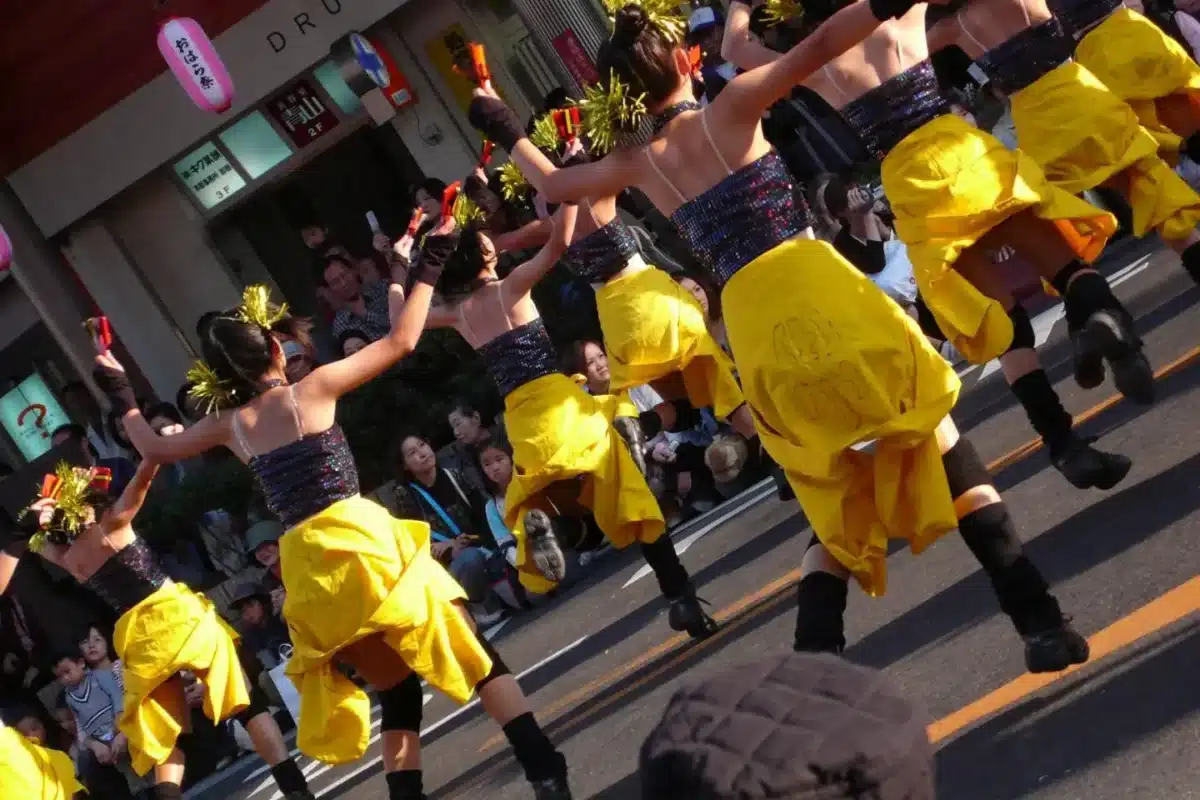
- High-energy modern dance troupes introducing creative choreography alongside classical numbers
- Celebratory anniversary floats and special commemorative processions featured during milestone years
- Rhythmic coordination matching the energetic pace of thousands of festival spectators
- Seamless scheduling that integrates musical bands smoothly between massive dance formations
- Engaging street-level interactions between marching performers and delighted families lining the curbs
- Dynamic audio-visual spectacles transforming downtown commercial avenues into vibrant performance spaces
Ticket Information
- How Tickets Are Sold: General viewing along public street parade routes and open city areas requires no tickets, advance registrations, or entry tokens.
- Admission Type: Free Admission for public street access, dance parade viewing, and open festival zones
- Ticket Pricing: Free Admission ($0.00 USD) for all outdoor viewing areas and general festival participation, with food, local shochu drinks, and optional merchandise purchased independently from individual vendors ranging from $2.00 USD to $10.00 USD.
- Special Seating Options: Open standing zones along the downtown Tenmonkan tram line routes and unreserved sidewalk viewing spaces.
- VIP Options: None offered, as this historic community-driven festival welcomes all local residents and visitors equally under traditional open-access custom.
Venue / Location
- City and Country: Kagoshima City, Kagoshima, Japan
- Venue Name: Tenmonkan District and Tram Line Route
- Google Maps Address: Higashisengokucho, Kagoshima, 892-0842, Japan
Ohara Bushi, Hanya Bushi & Shibuya Ondo
The musical identity of the festival revolves around classic regional folk tunes that have defined Kagoshima’s cultural heritage for generations. The primary composition is the famous ‘Ohara-bushi’, a lively folk song originating in the early Showa period that gives the festival its historic name. Its rhythmic verses tell local stories and set the upbeat tempo that guides thousands of dancers through the city streets.
Alongside the Ohara-bushi, participants dance to the lively rhythms of the Kagoshima Hanya-bushi, which adds a distinct regional flavor to the procession. The musical repertoire also frequently includes the Shibuya Ondo, celebrating historical cultural ties between Kagoshima and Tokyo’s Shibuya ward. Together, these traditional songs create a continuous audio backdrop that unites performers and spectators in a shared acoustic experience.
The enduring popularity of these melodies highlights the community’s dedication to preserving intangible folk arts in a modern urban environment. Live musicians and recorded broadcasts synchronize perfectly across the festival footprint, ensuring that every corner of the downtown route pulses with authentic southern rhythm. Listening to these classic folk tunes while watching the colorful parades provides an unforgettable sensory immersion.
Ogojo Taiko Drum Performances
Thunderous taiko drum performances form another vital pillar of the festival’s artistic programming, delivering powerful acoustic energy that resonates across downtown Kagoshima. Groups of skilled local drummers, including renowned women’s taiko ensembles known locally as Ogojo taiko, showcase breathtaking physical coordination and rhythmic precision. Their booming percussion punctuates the air, adding dramatic intensity to the cheerful street celebrations.
The performances take place on dedicated stages and open plazas near the main parade routes, drawing tight crowds of captivated onlookers. The deep vibrations of the large drums blend seamlessly with the melodic strains of flutes and traditional chanting, enriching the festival’s soundscape. This dynamic display of percussion artistry highlights the strength and passion of regional musical traditions.
Spectators often gather long before performances begin to secure prime viewing spots near the stages to witness the incredible speed and power of the drummers. The striking visual harmony of performers moving in absolute unison creates an electrifying atmosphere that thrills audiences of all ages. It stands as a powerful demonstration of Japanese festival performance art at its finest.
Contact Information
- Phone Number: +81 99-808-3333
- Website: https://en.japantravel.com/kagoshima/ohara-matsuri/32039
Sō-odori Mass Dance Tradition
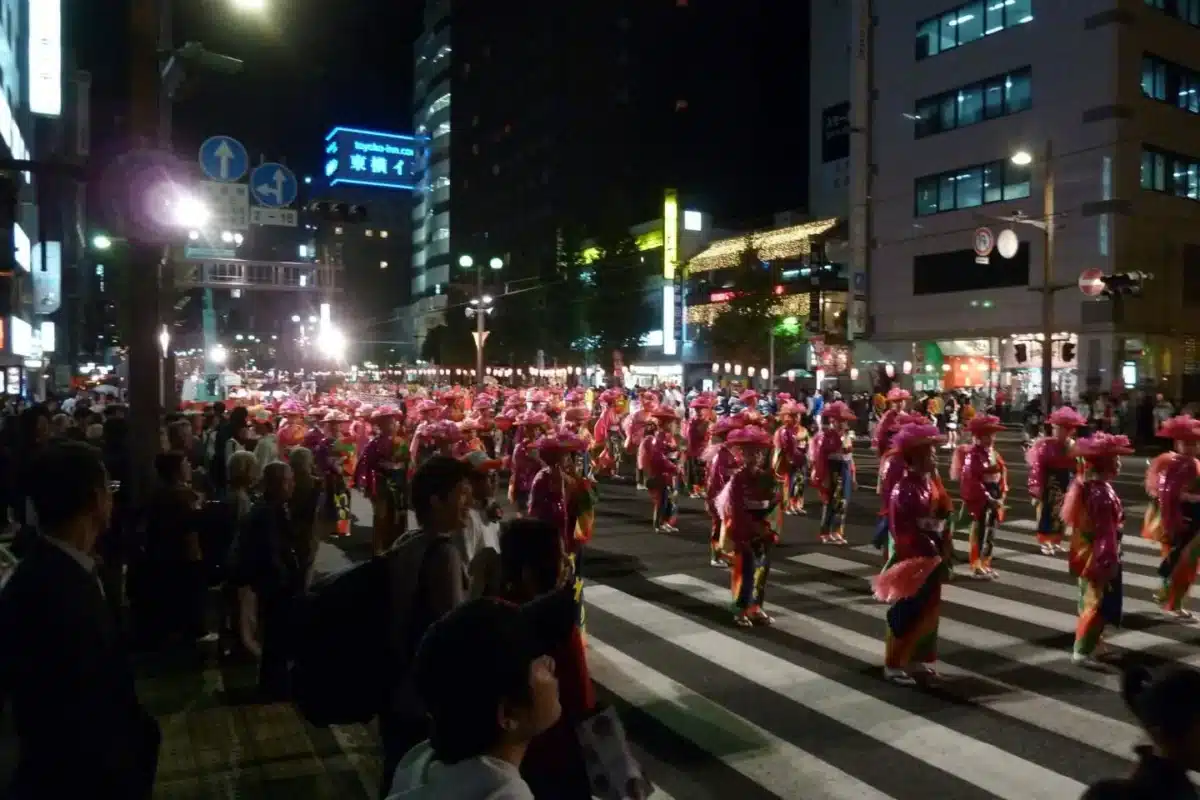
- Grand-scale mass dance procession recognized as the largest public street dancing event in southern Kyushu
- Involves approximately twenty thousand participants marching and dancing in unison through urban streets
- Occupies the major tram line route in the downtown Tenmonkan commercial district, halting regular vehicles
- Organized into distinct community and corporate groups known as ren marching in structured formations
- Showcases synchronized choreography performed to traditional local folk tunes
- Features participants dressed in matching traditional yukata, happi coats, and straw hats
- Welcomes spontaneous public participation, inviting spectators to join the dancing groups freely
- Fosters an atmosphere of collective joy, unity, and shared cultural celebration among citizens
- Supported by an army of local volunteers who maintain route organization and cleanliness
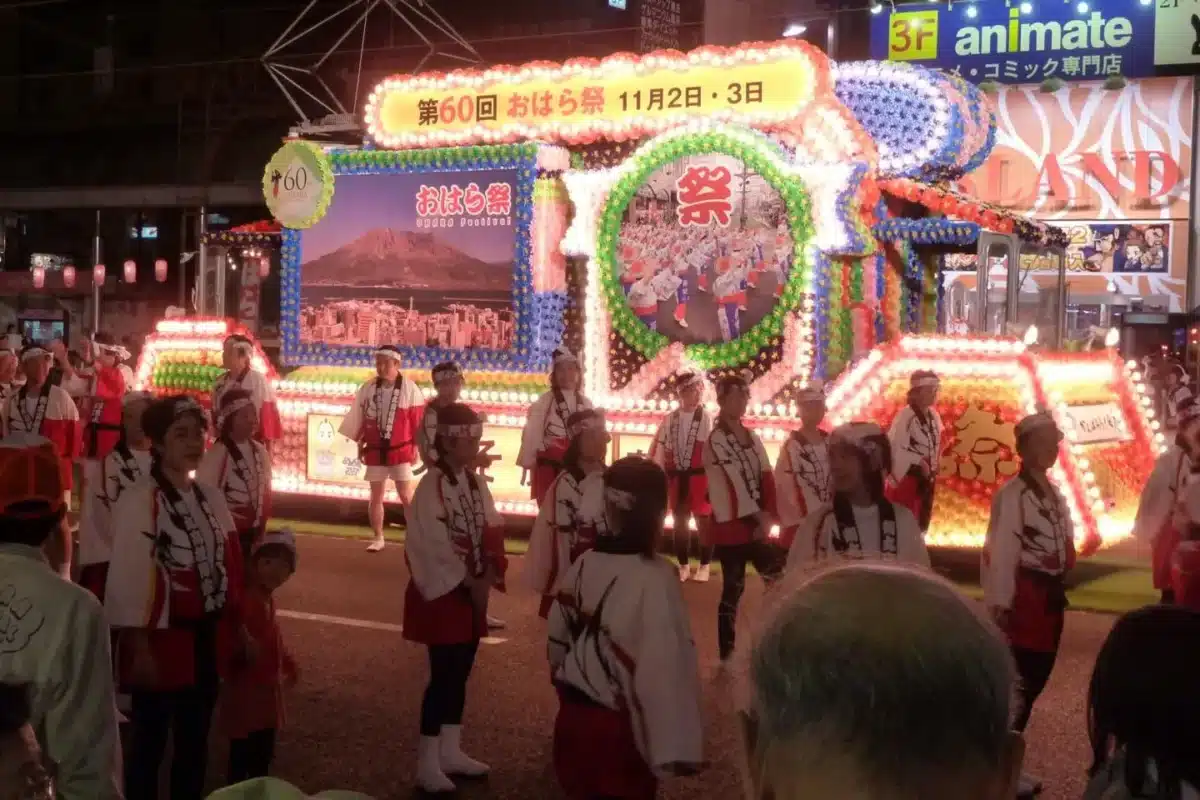
- Incorporates festive flower trams decorated with lights running along the operational tracks
- Draws massive crowds of domestic and international travelers to the heart of Kagoshima City
- Serves as the vibrant living heartbeat of the multi-day autumn festival calendar
Traditional Costumes & Dance Teams
The visual splendor of the festival is driven largely by the diverse and colorful attire worn by the participating dance teams. Dancers assemble in coordinated groups, donning traditional summer kimonos, light happi coats, and distinctive straw hats that shade their faces. Each team showcases its unique identity through custom color schemes, printed logos, and creative uniform variations.
- Coordinated team uniforms featuring vibrant traditional summer kimonos and happi coats
- Distinctive straw headwear worn uniformly by dancers to complete the classic folkloric aesthetic
- Custom corporate and school logos printed on team coats to highlight community involvement
- Detailed sashes, tabi socks, and handcrafted accessories completing the traditional ensemble
- Hours of advance group preparation ensuring flawless visual alignment during mass street movements
- Intergenerational participation ranging from school children to energetic senior citizen groups
- Striking visual contrasts between modern urban storefronts and traditional textile displays
- Friendly competition among dance teams to showcase the most creative and spirited presentation
Video
Location
FAQ
What is the primary highlight of the Ohara Matsuri held annually in Kagoshima?
The main highlight is the massive Sō-odori mass dance parade where thousands of people dance in unison through the downtown streets. Participants wear traditional clothing and move to classic local folk songs like the Ohara-bushi.
Are visitors allowed to join in the street dancing without prior experience?
Travelers are warmly encouraged to join the dance processions spontaneously or participate in public practice sessions. Local dancers and organizers are very welcoming to newcomers wanting to try out the steps.
Do visitors need to purchase tickets to view the festival parades and events?
General public access to all street viewing areas, parade routes, and outdoor plazas is completely free of charge. Attendees only pay out-of-pocket costs if they choose to buy food, drinks, or festival merchandise.
What historical milestone originally inspired the creation of this major autumn festival?
The festival was established in 1949 to commemorate the sixtieth anniversary of Kagoshima's municipal organization founding. It has since grown into the largest public celebration of its kind in southern Kyushu.
What is the most convenient way to travel to the festival venue using public transport?
Visitors can take a short walk from JR Kagoshima-Chuo Station toward the downtown Tenmonkan district or ride the city tram directly to Takamibaba Station. This places travelers immediately adjacent to the main parade routes.

Leave a Reply