
-
October 8, 2026
Event date:
-
October 10, 2026
Event end:
What to expect in 2026
Takayama Autumn Festival 2026 is one of Japan’s most celebrated traditional festivals, bringing elaborate wooden festival floats, traditional music, ceremonial processions, mechanical puppet performances and historic community traditions to the old town of Takayama in Gifu Prefecture. Known locally as the Hachiman Festival, it is the autumn festival of Sakurayama Hachimangu Shrine and forms one half of the famous Takayama Festival tradition, together with the spring Sanno Festival.
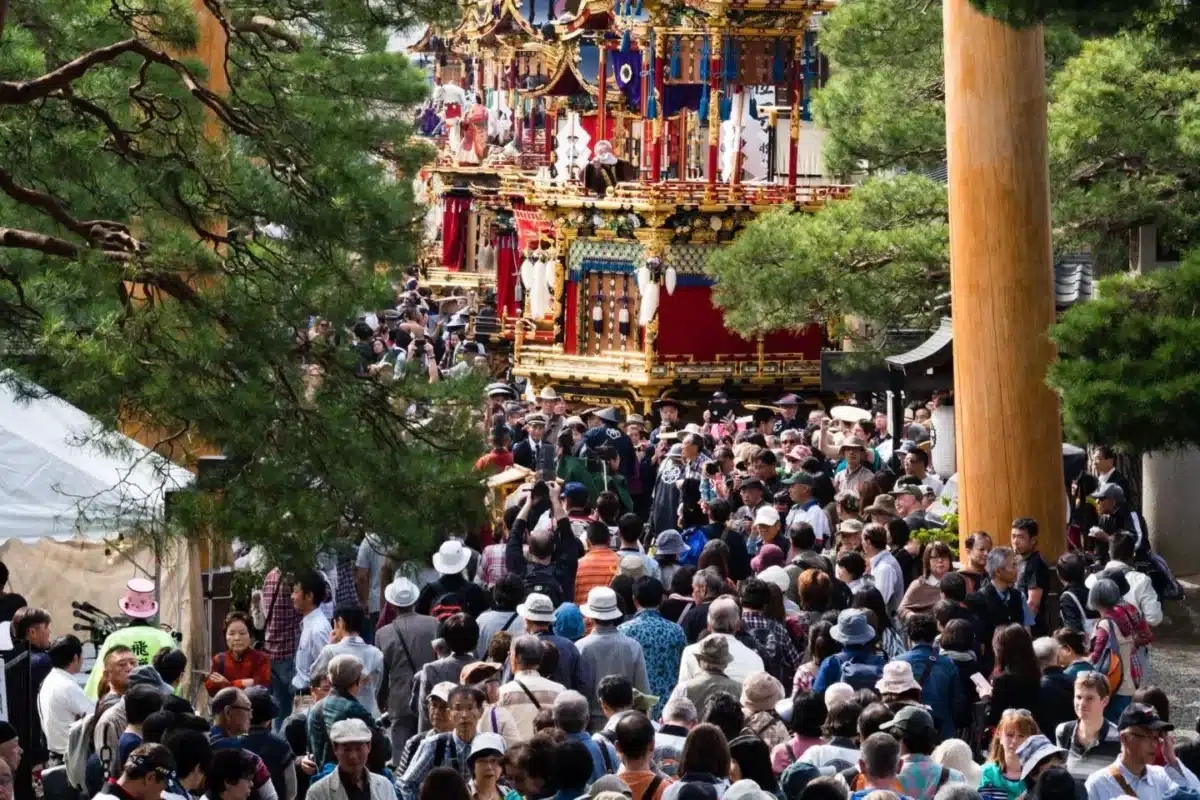
The 2026 event will once again center on the magnificent yatai floats that are brought into the streets surrounding Sakurayama Hachimangu Shrine. These floats are renowned for their intricate woodwork, lacquer, metalwork, textiles and decorative details created through generations of craftsmanship.
Takayama Festival has deep historical roots dating back to the period when the Kanamori family governed Hida. The festival floats developed into highly sophisticated works of art, with the present tradition reflecting techniques that flourished during the Edo period. Takayama City identifies the festival as an important example of Japan’s traditional float festivals, while the “Yama, Hoko, Yatai, float festivals in Japan” group was inscribed on the UNESCO Representative List of the Intangible Cultural Heritage of Humanity.
Enjoy Your Event Stress-Free with Japan Travelo
Do you know? Planning events, festivals, concerts, and cultural experiences in Japan can be overwhelming. Japan Travelo brings everything together in one place, helping you manage your itinerary, transport, and accommodation with ease—so you can enjoy Japan without the stress of planning.
Visitors can expect a combination of religious ceremony, traditional performing arts, historic streets, local food and an exceptional concentration of traditional craftsmanship.
The main highlights include:
- Elaborately decorated autumn festival floats
- Traditional float processions
- Karakuri puppet performances
- The Shinto procession known as the Gojunko
- Evening Yomatsuri celebrations
- Lantern-lit floats
- Traditional festival music
- Historic streets and merchant houses
- Local food and Hida specialties
- Community stalls and festival vendors
The atmosphere changes dramatically between daytime and evening. During daylight, visitors can study the fine craftsmanship and movement of the floats. After sunset, the lanterns create a completely different visual experience as the illuminated floats travel through the historic town.
Event dates
Takayama Autumn Festival 2026 takes place during October 8–10, 2026, with the main public festival programme concentrated on the traditional two-day Hachiman Festival period.
The official Hida Takayama tourism website identifies the principal 2026 Autumn Festival as taking place around Sakurayama Hachimangu Shrine, while its detailed festival information notes that the main festival days are the traditional autumn festival period.
October 8 is associated with preparations and float-related activities before the principal festival programme. The two central festival days feature the major processions, float displays and evening celebrations.
The official programme can be affected by weather. Takayama tourism information states that individual festival activities may be cancelled because of weather conditions and that postponed events are not necessarily rescheduled.
Visitors should therefore check the latest official schedule immediately before traveling.
Visiting this event? Don’t miss out on these amazing activities and local experiences while you’re here.
Venues & festival locations
The main venue is Sakurayama Hachimangu Shrine, located at 178 Sakuramachi, Takayama, Gifu Prefecture. The shrine serves as the religious center of the Autumn Festival and gives the event its local name, Hachiman Festival.
The festival also extends throughout the northern part of Takayama’s historic city center.
Important locations include:
- Sakurayama Hachimangu Shrine
- Sakuramachi
- The old town area
- Yasukawa-dori
- Shimoninomachi and nearby historic streets
- The festival float storage areas
- The procession routes
- Designated float display areas
- Streets surrounding the shrine
The old town is particularly important because the festival is integrated into Takayama’s historic urban landscape rather than taking place inside a modern festival ground.
Visitors walking between Sakurayama Hachimangu and the preserved merchant districts can see traditional wooden buildings, shops, restaurants and small streets that provide context for the festival.
Full cultural programme
The cultural programme combines religious ceremonies with traditional performing arts and the movement of the festival floats.
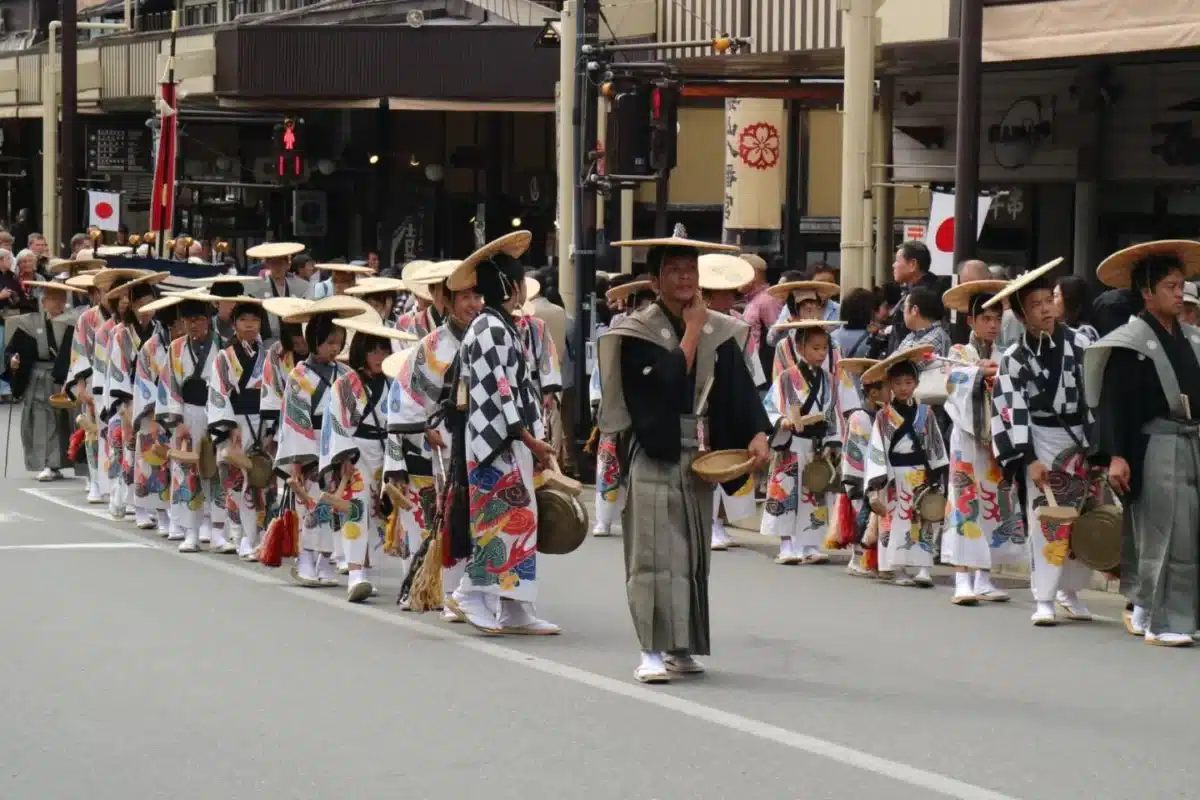
The Gojunko is the major ceremonial procession associated with the festival. A portable shrine is carried through the streets as part of the religious observances, accompanied by participants in traditional dress.
The yatai floats are then brought into the festival area. Takayama Autumn Festival traditionally features 11 autumn festival floats, each associated with different communities and maintained by local float organizations. Takayama City identifies 23 historic Takayama festival floats in total, with 11 used for the autumn Hachiman Festival and 12 for the spring festival.
Karakuri performances are another major part of the programme. These mechanical puppets demonstrate the exceptional engineering and craftsmanship incorporated into some of the floats.
The evening Yomatsuri provides a contrasting atmosphere. Lanterns are attached to the floats, traditional music continues and the illuminated yatai move through the streets.
The programme also includes:
- Shrine ceremonies
- Traditional festival music
- Float preparation
- Float displays
- Karakuri performances
- Gojunko procession
- Yomatsuri
- Float return and storage activities
- Local food and market stalls
Featured traditions & performances
The yatai floats are the heart of the festival. Each is a highly decorated mobile structure incorporating wood carving, lacquer, metal fittings, textiles and other traditional crafts.
Many of the floats have distinctive designs and histories. Their decoration demonstrates the skills of generations of Hida craftsmen.
Karakuri performances are especially popular with visitors. Mechanical puppets are controlled through sophisticated mechanisms and demonstrate movements that appear remarkably lifelike from the street.
The festival also features traditional hayashi music. Musicians perform using instruments associated with Japanese festival traditions, helping create the distinctive soundscape accompanying the float processions.
The Yomatsuri is one of the most atmospheric traditions. Lanterns illuminate the floats after dark, while the historic streets provide a dramatic backdrop.
The Gojunko adds a solemn religious element to the event. Unlike a purely entertainment-focused parade, the procession is part of the shrine’s annual religious observance.
Historical & heritage highlights
Takayama Festival is deeply connected with the history of Hida and the development of Takayama as a castle town and center of craftsmanship.
Takayama City states that the festival’s origins are associated with the period of the Kanamori lords, who governed Hida from the late sixteenth century into the seventeenth century. The development of the elaborate festival floats is generally associated with the eighteenth century.
The festival floats are particularly important heritage objects. Takayama’s 23 festival floats are designated as Important Tangible Folk Cultural Properties of Japan. The festival float traditions themselves are also recognized as important intangible folk cultural heritage.
In addition, the Takayama Festival float events form part of the UNESCO-recognized “Yama, Hoko, Yatai, float festivals in Japan” heritage group.
The festival therefore combines tangible heritage, including the floats and historic architecture, with living intangible traditions such as music, procession customs, craftsmanship and religious ceremonies.
Events & activities schedule
The 2026 programme follows the established structure of the Autumn Festival.
Visitors can expect the following sequence:
- Festival preparations: Float teams prepare the yatai and local communities organize the festival areas.
- Float displays: The decorated yatai are presented in and around the festival district.
- Religious ceremonies: Sakurayama Hachimangu conducts its annual festival rites.
- Gojunko: The shrine procession travels through the streets.
- Karakuri performances: Mechanical puppet displays take place at designated times.
- Yomatsuri: Lanterns illuminate the floats during the evening celebration.
- Float return: After the celebrations, the yatai return toward their respective storage areas.
The exact performance times can vary by float and programme arrangement. The official Hida Takayama tourism guide publishes the detailed festival schedule and route information for visitors.
Visitors who want to see the karakuri performances should check the official timetable rather than relying on a general festival opening period, because the performances occur at specific times.
Ticket types & entry options
The main outdoor festival experience is free to watch. Visitors do not need a general admission ticket simply to walk through the festival streets or observe the public procession and floats.
Sakurayama Hachimangu Shrine itself is also a shrine that can be visited as part of the wider cultural experience, although individual facilities or associated attractions may have their own admission arrangements.
The festival is fundamentally a community religious celebration rather than a ticketed music festival.
Visitors should budget separately for:
- Food and drinks
- Souvenirs
- Local crafts
- Museum or attraction admissions
- Transportation
- Accommodation
There is no need to purchase a general festival ticket simply to experience the outdoor atmosphere.
Because the main event takes place in public streets, crowd-control arrangements can change access to particular locations.
Guided tours & cultural experiences
A guided cultural tour can help visitors understand the craftsmanship and religious traditions behind the festival.
The most useful guided experiences focus on the relationship between Takayama’s old town, Sakurayama Hachimangu and the festival floats.
Visitors can explore:
- Sakurayama Hachimangu Shrine
- The Takayama Festival Floats Exhibition Hall
- Takayama Jinya
- Sanmachi Suji historic district
- Traditional merchant houses
- Local craft shops
- Hida folk culture attractions
The Takayama Festival Floats Exhibition Hall is especially useful for visitors who want to examine the yatai closely. It allows travelers to understand details that can be difficult to appreciate while a float is moving through a crowded street.
A walking tour of the old town can also explain how the festival developed alongside Takayama’s historic neighborhoods.
Special ceremonies & celebrations
The religious ceremonies at Sakurayama Hachimangu provide the spiritual foundation of the festival.
The Gojunko procession is one of the most important ceremonial elements. The portable shrine is carried through the streets with attendants and traditional participants.
The Yomatsuri is the most visually distinctive celebration. Once darkness arrives, lanterns are lit on the floats and the atmosphere becomes quieter and more atmospheric than during the daytime programme.
Traditional music accompanies the illuminated procession, while residents and visitors gather along the route.
The karakuri performances provide another special experience. These mechanical puppet displays are examples of traditional craftsmanship and engineering that have been maintained as part of the festival tradition.
The combination of sacred ceremony, craftsmanship and public celebration is what makes the event different from a conventional historical reenactment.
Festival rules
Visitors should remember that Takayama Autumn Festival is a living religious and community tradition.
Important visitor rules include:
- Do not touch the festival floats. The official tourism guidance specifically asks visitors not to touch the yatai because oils from human skin can damage their surfaces.
- Follow staff instructions. Temporary pedestrian and traffic arrangements are introduced around the festival area.
- Respect traditional buildings. Avoid leaning against or damaging historic structures.
- Keep the streets clean. Visitors are encouraged to carry waste and dispose of it properly.
- Do not smoke on the streets in restricted areas. The official festival information prohibits roadside smoking in areas where historic buildings need protection.
- Do not fly drones. Unmanned aircraft are prohibited around the festival area.
- Stay behind designated barriers. Processions and floats require clear movement routes.
- Watch children carefully. Large crowds and moving floats can make some streets difficult to navigate.
- Follow weather-related announcements. Events can be cancelled when conditions are unsuitable.
Visitors should also avoid stepping into the path of moving floats or attempting to photograph them from unsafe positions.
How to get there
Takayama is located in the Hida region of Gifu Prefecture and can be reached by train and highway bus from major Japanese cities.
From Tokyo, travelers can generally connect through Nagoya before continuing toward Takayama by rail.
From Nagoya, JR services provide access to Takayama, while highway buses offer another practical option.
Takayama Station is the main rail arrival point. From the station, the Sakurayama Hachimangu area is accessible on foot or by local transport.
Because the festival takes place in the historic center, walking is often the most practical way to move between viewing areas once visitors arrive in the city.
Travelers arriving by car should plan carefully because the central festival district is subject to traffic restrictions.
Public transport & parking
Public transportation is strongly recommended during the festival.
The official Hida Takayama tourism information explains that major traffic restrictions are implemented around the festival area and that cars cannot enter restricted festival zones. Visitors are advised to use shuttle services and follow directions from traffic-control staff.
Takayama Station is the principal arrival point for visitors using JR services and highway buses.
For drivers, parking should be arranged outside the central restricted zone. Takayama operates permanent and temporary parking arrangements during major festival periods, although availability can change according to traffic conditions.
Visitors should expect heavier congestion than on ordinary autumn days.
The best strategy for drivers is to park outside the central festival area and continue on foot or by designated shuttle transportation.
Accommodation areas
Takayama has accommodation options ranging from modern hotels to traditional Japanese inns and family-run guesthouses.
The most convenient areas include:
- Around Takayama Station
- Central Takayama
- Sanmachi Suji
- Sakurayama Hachimangu area
- Around the Miyagawa River
- Traditional ryokan areas
- Outlying hot-spring destinations
Staying near Takayama Station is convenient for visitors arriving by train or bus.
Staying closer to Sakurayama Hachimangu provides easier access to the festival area, especially for visitors planning to watch the evening Yomatsuri.
A ryokan stay can add another cultural dimension to the trip, particularly for international visitors who want to experience traditional Japanese accommodation, seasonal meals and tatami rooms.
Festival accommodation can become busy, so travelers should make reservations well in advance.
Food & traditional specialties
Food is an important part of a visit to Takayama, even though the festival itself is primarily a cultural and religious event.
The surrounding streets and temporary stalls offer opportunities to sample regional foods while exploring the festival.
Hida beef is the best-known local specialty. It is valued for its marbling and is served in restaurants in several forms, including grilled preparations, sushi-style dishes and rice bowls.
Other local specialties include:
- Hida beef
- Hoba miso
- Takayama ramen
- Gohei-mochi
- Pickled vegetables
- Local mountain vegetables
- Japanese sweets
- Hida dairy products
- Local sake
Hoba miso is traditionally served on a magnolia leaf and is closely associated with the Hida region.
Takayama ramen is another popular choice, particularly useful during the cooler autumn weather.
Visitors can also explore local sake breweries around the old town and taste products made using water from the Hida region.
Accessibility
The festival takes place across public streets, shrine grounds and historic neighborhoods, so accessibility conditions vary.
Some streets can become extremely crowded during the main procession and evening celebrations.
Visitors using wheelchairs or mobility aids should consider selecting a viewing location with adequate space rather than attempting to follow the entire procession route.
The historic environment also includes traditional surfaces and narrow streets that may be less accessible than modern pedestrian areas.
Public transportation can be used to reach Takayama, but visitors should check the latest accessibility arrangements for individual buses and stations before traveling.
For visitors with mobility requirements, contacting the Takayama tourism information service before the festival can help identify suitable routes and viewing locations.
Best cultural experiences
The best way to experience Takayama Autumn Festival is to combine the major festival events with the city’s historic attractions.
Start at Sakurayama Hachimangu to understand the religious foundation of the festival. Then explore the surrounding streets and view the yatai before the busiest procession periods.
The karakuri performances are particularly worthwhile because they demonstrate the technical skills incorporated into the festival floats.
Walking through the Sanmachi Suji district adds another historical dimension. The preserved merchant houses show the type of urban environment in which Takayama’s festival traditions developed.
Other recommended experiences include:
- Viewing the festival floats
- Watching the karakuri puppets
- Experiencing the Gojunko
- Seeing the illuminated Yomatsuri
- Visiting Takayama Jinya
- Exploring Sanmachi Suji
- Visiting the Festival Floats Exhibition Hall
- Tasting Hida beef
- Trying Hida regional cuisine
- Visiting local sake breweries
- Exploring traditional craft shops
For photographers, the evening float procession provides some of the strongest visual opportunities, while daytime viewing is better for examining the intricate details of the floats.
Previous year’s highlights
The previous edition continued the traditional structure that defines Takayama Autumn Festival, including the yatai, procession, karakuri performances and evening Yomatsuri.
The festival remains one of Takayama’s largest annual cultural events. Official city statistics recorded approximately 195,000 visitors for the autumn festival in the previous year, demonstrating the scale of the event and the importance of planning for crowds.
The festival’s traditional float programme continued to showcase the 11 autumn yatai associated with Sakurayama Hachimangu.
The evening celebration remained one of the most atmospheric parts of the festival, with lantern-lit floats moving through the historic streets.
The previous programme also highlighted the importance of traffic management and visitor etiquette, with major parts of the central city subject to temporary restrictions.
The 2026 edition continues this established tradition while maintaining the cultural identity of the Hachiman Festival.
Official tickets
Takayama Autumn Festival does not require a general admission ticket for visitors to watch the public outdoor festival.
The principal activities, including viewing the floats, processions and public performances from designated areas, are part of the open festival environment.
Visitors should use the official Hida Takayama tourism website for the latest festival programme, traffic-control information, route maps and visitor guidance.
The official tourism website provides the current 2026 Autumn Festival information and identifies Sakurayama Hachimangu Shrine as the festival location.
The Takayama City website also provides official information about the heritage status of the festival floats and the broader Takayama Festival tradition.
The official visitor resources include:
- Hida Takayama Travel Guide
- Takayama City official website
- Sakurayama Hachimangu Shrine
- Takayama Festival float information
- Official festival traffic and route maps
The official 2026 tourism materials state that the detailed festival schedule and traffic-control map are provided for visitors and can be checked before traveling.
Video
Location
FAQ
What are the exact annual dates when the Takayama Autumn Festival takes place?
The festival is held consistently every year on October 9th and 10th in the historic Shimomachi district of Takayama. These specific autumn dates mark the conclusion of the summer season and celebrate the successful harvest. Travelers should note that major events run exclusively across these two core days.
How can visitors reach the festival location conveniently via public transport?
Travelers can take the JR Hida Limited Express train directly from Nagoya to Takayama Station in approximately two hours and twenty minutes. From Takayama Station, Sakurayama Hachimangu Shrine is accessible via a pleasant 20-minute walk through the town. Regional highway buses also connect Takayama directly to major hubs like Toyama and Matsumoto.
Is it necessary to purchase admission tickets to view the festival floats and parades?
General admission to the outdoor shrine grounds, street parades, and evening lantern displays is completely free for all attendees. Visitors can walk openly along public streets to admire the majestic yatai floats without buying any entry tickets. Optional paid entry applies only to indoor museum facilities like the adjacent float exhibition hall.
What happens to the festival schedule if unexpected rain occurs?
Outdoor events, including the float parades, marionette performances, and evening lantern tours, are immediately canceled if rain falls. The festival is never postponed to alternative dates due to inclement weather conditions. Depending on weather severity, visitors may occasionally view sheltered floats inside their permanent storage storehouses.
How many festival floats participate specifically in the autumn celebration?
A total of eleven magnificent matsuri-yatai floats belong to the autumn festival collection of Sakurayama Hachimangu Shrine. These ornate structures are paraded collectively through the northern town streets during fair weather. On rare occasions when individual floats undergo maintenance, the exact active count on display may be adjusted slightly.

Leave a Reply