
What to expect in 2027
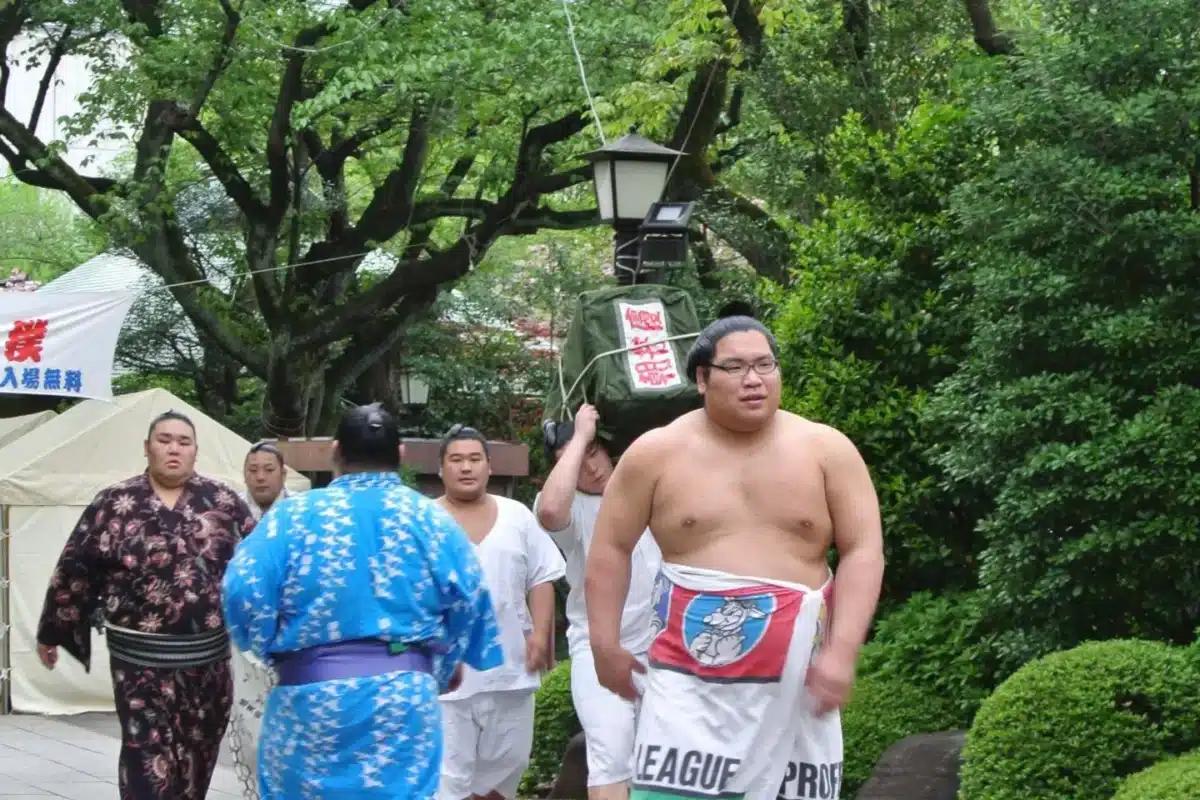
Sumo at Yasukuni Shrine 2027 is a ceremonial sumo event held within the grounds of Yasukuni Shrine in central Tokyo. It forms part of the spring regional tour of professional sumo and offers visitors an opportunity to watch wrestlers outside the atmosphere of a regular Grand Sumo Tournament. The event is expected in mid April 2027, although the exact date has not yet been confirmed.
Unlike a regular honbasho, the Yasukuni Shrine event is not an official championship tournament. The atmosphere is more informal and community-oriented, with visitors able to watch wrestlers warm up, compete in exhibition-style bouts and take part in traditional ceremonies.
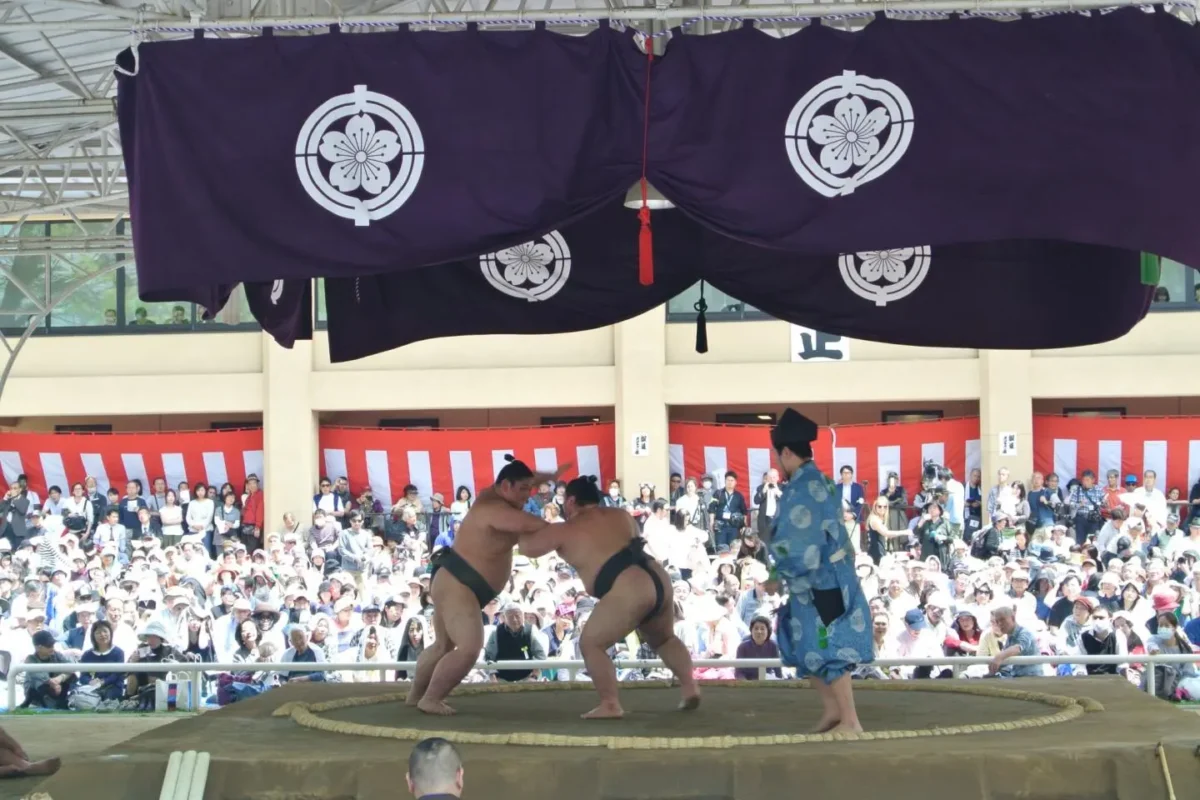
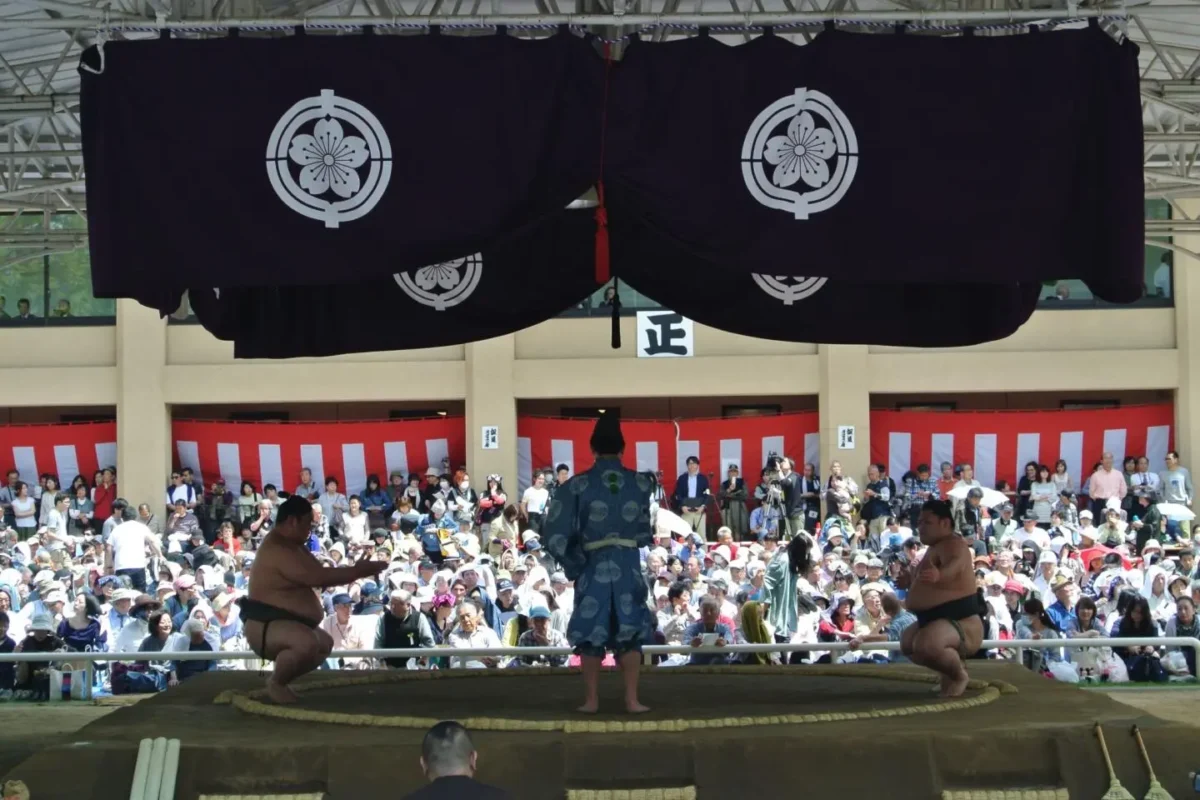
The event takes place in an open-air amphitheatre area at the rear of the shrine. Spectators can sit around the dohyo and watch the wrestlers from relatively close range. Japan Travel describes it as a relaxed way to experience professional sumo, with the setting providing a very different experience from the large indoor Ryogoku Kokugikan tournaments.
Enjoy Your Event Stress-Free with Japan Travelo
Do you know? Planning events, festivals, concerts, and cultural experiences in Japan can be overwhelming. Japan Travelo brings everything together in one place, helping you manage your itinerary, transport, and accommodation with ease—so you can enjoy Japan without the stress of planning.
The day can include warm-ups, bouts between wrestlers, ring-entering ceremonies and other elements associated with sumo culture. Visitors may also have opportunities to see wrestlers in more relaxed surroundings before and after their formal appearances.
One of the distinctive features is that the event is held to pray for the wrestlers’ victories. The wrestlers enter the shrine grounds and participate in religious observances, although parts of the shrine’s inner ceremonial activity may not be accessible to general spectators.
Match/event dates
Sumo at Yasukuni Shrine is expected to take place in mid April 2027. The exact 2027 date has not been confirmed by the organizers, and the Japan Travel event listing currently states that the date is still to be announced.
The event is part of the spring sumo tour rather than one of the six official Grand Sumo Tournaments. The Japan Sumo Association’s tour schedule identifies the Yasukuni Shrine Honozumo as a ceremonial tournament held in the shrine precincts.
Visitors planning a Tokyo trip around the event should therefore check the official Yasukuni Shrine and Japan Sumo Association information before finalizing their itinerary.
Visiting this event? Don’t miss out on these amazing activities and local experiences while you’re here.
Stadium & sports venue
The event is held at Yasukuni Shrine, one of Tokyo’s major Shinto shrines. The shrine is located in Kudankita, Chiyoda City, close to central Tokyo attractions and major transportation connections.
Yasukuni Shrine
Address: 3 Chome-1-1 Kudankita, Chiyoda City, Tokyo 102-8246, Japan.
Rather than a conventional sports stadium, the event uses an outdoor sumo arena or amphitheatre within the shrine grounds. This gives the event a distinctive setting, with spectators sitting around the dohyo rather than inside a modern indoor arena.
The smaller venue creates an intimate atmosphere but also means that seating capacity is limited. Japan Travel recommends arriving early for visitors who want to sit close to the ring, as the best areas can become occupied quickly.
The outdoor nature of the venue also means visitors should prepare for the weather. Some ringside positions have limited or no shade, so sun protection and appropriate clothing can be important.
Full fixture or event schedule
The detailed 2027 programme has not yet been announced. Because this is a ceremonial sumo event rather than a standard Grand Tournament, visitors should not expect a conventional multi-day fixture list or championship bracket.
The event generally follows a progression similar to a day of sumo activities, beginning with wrestlers preparing and warming up before moving into bouts and ceremonial activities.
Wrestler warm-ups
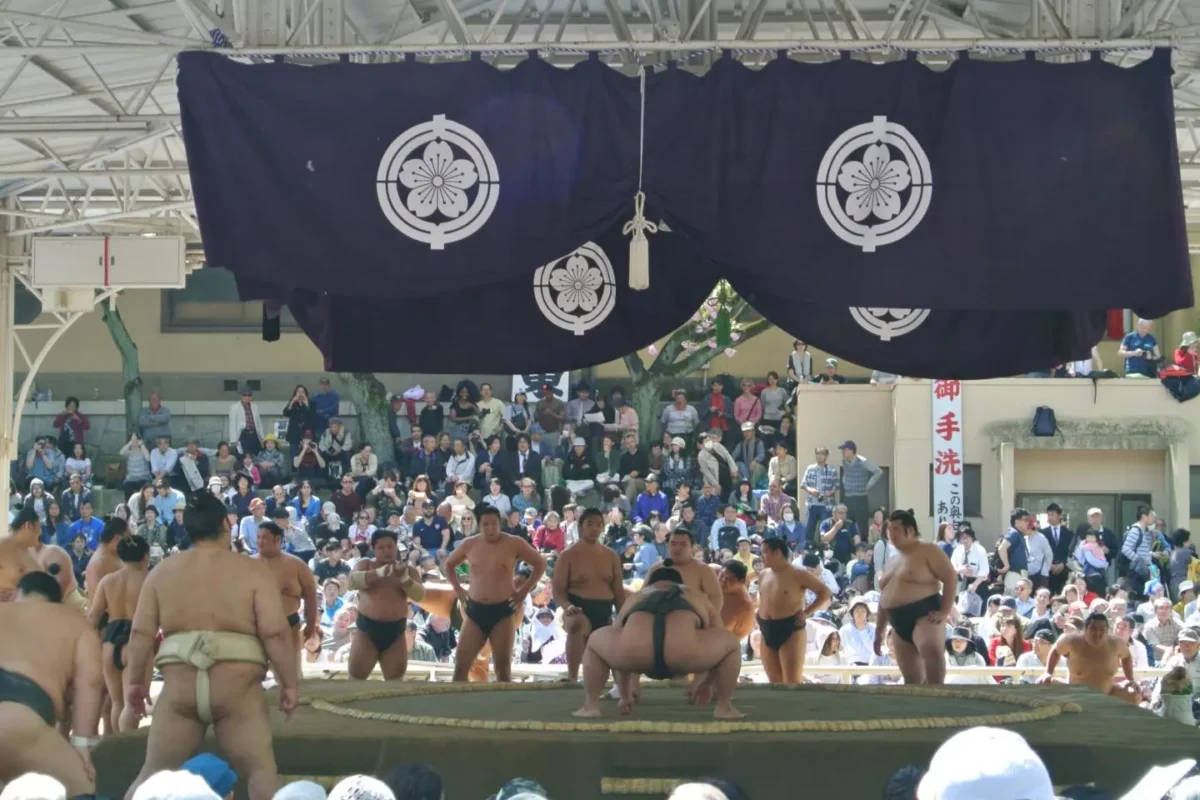
The morning can begin with wrestlers warming up around the dohyo. Japan Travel notes that these activities can include wrestlers pushing against one another as part of their preparation.
Sumo bouts
The main sporting programme consists of sumo wrestlers competing against one another in bouts. The event allows spectators to observe the techniques, rituals and physical preparation associated with professional sumo.
Ring-entering ceremony
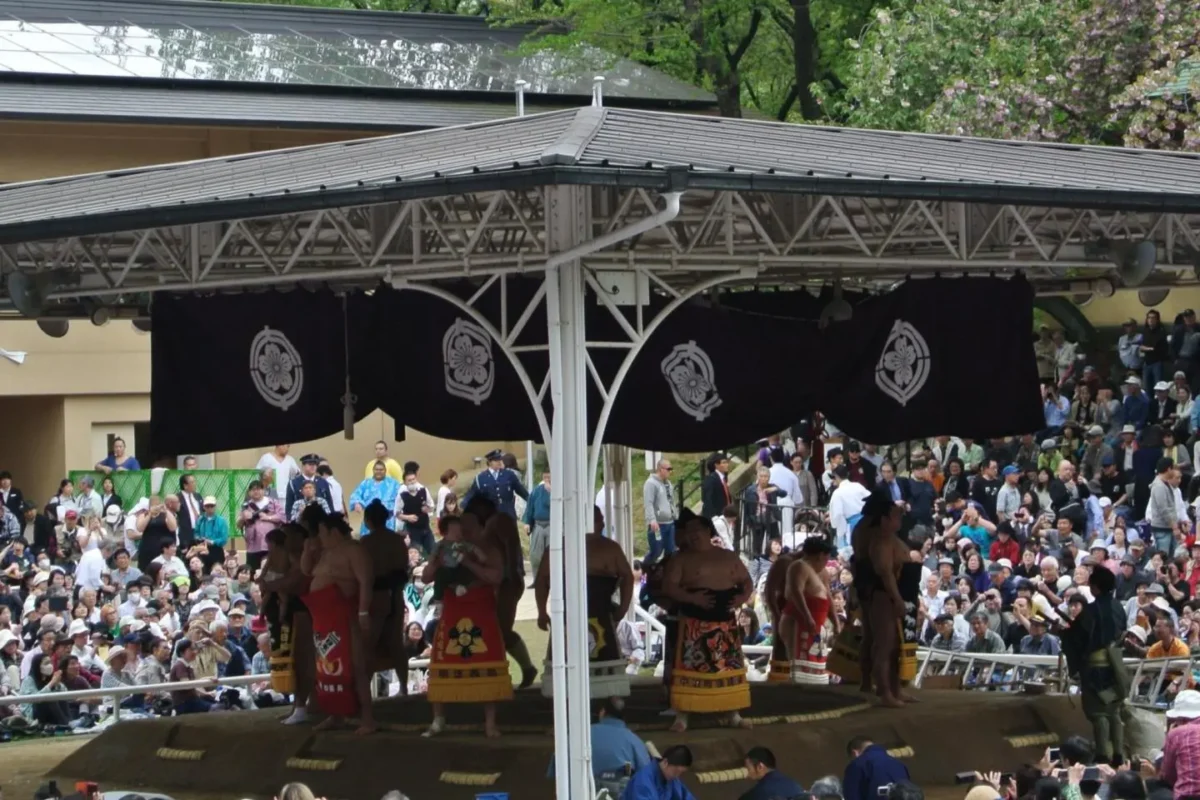
A ceremonial ring-entering sequence can form part of the programme, allowing spectators to see wrestlers wearing their formal keshō-mawashi, the richly decorated ceremonial aprons worn during the ring-entering ceremony.
Ceremonial activities
The event also includes activities connected with the shrine and the wrestlers’ prayers for victory.
Closing activities
The programme concludes after the day’s wrestling and ceremonial activities. The exact sequence and timing for 2027 will depend on the official programme.
Teams, athletes & participants
Sumo does not use teams in the same way as football, baseball or other team sports. The participants are professional rikishi representing their respective sumo stables.
The Yasukuni Shrine event is associated with wrestlers participating in the spring tour. The Japan Sumo Association describes the Yasukuni Shrine Honozumo as a ceremonial tournament held in the shrine’s precincts.
The final list of participating wrestlers for 2027 is not yet available. This means visitors should not plan around a specific wrestler appearing until the official participant information is released.
The event can nevertheless provide an opportunity to see high-ranking professional wrestlers in a more informal environment than a Grand Sumo Tournament. The atmosphere also allows visitors to observe wrestlers during preparation and ceremonial activities.
Because the event is connected with a tour, the exact participants can differ from one edition to another.
Tournament format & competition structure
Sumo at Yasukuni Shrine is a ceremonial event rather than a regular championship tournament. There is therefore no championship title, tournament bracket or multi-day ranking competition comparable to the six official Grand Sumo Tournaments.
Individual wrestlers compete in bouts under standard sumo rules. A bout generally ends when one wrestler forces the other outside the circular dohyo or causes the opponent to touch the ground with a body part other than the soles of the feet.
The ceremonial setting gives spectators the opportunity to see many familiar elements of professional sumo without the pressure and formal structure of a honbasho.
The event can also include non-competitive or entertainment-oriented moments. Japan Travel has previously described a sumo comedy routine in which wrestlers interacted humorously with judges, illustrating the more relaxed character of this particular event.
Match/event times
The detailed 2027 timetable has not yet been announced. Previous information from Japan Travel indicates that the event begins around the morning, with wrestlers warming up before the main wrestling programme.
Visitors should plan to arrive early rather than treating the event as a single headline match. The warm-ups and preparations are part of the experience and provide an opportunity to observe the wrestlers before the main bouts begin.
Morning arrival
Early arrival is useful for finding a good viewing position and experiencing the opening activities.
Warm-ups
Wrestlers prepare around the dohyo before the competitive portion of the event.
Main bouts
The wrestling programme follows the preparatory activities, with professional rikishi competing before the spectators.
Ceremonial activities
Ring-entering and shrine-related activities add cultural elements beyond the wrestling itself.
The official 2027 timetable should be checked shortly before attending because event timings can change.
Ticket types
General admission to Sumo at Yasukuni Shrine is listed as free. Japan Travel’s current event information identifies the event as free entry, meaning visitors do not need to purchase a conventional match ticket for general attendance.
This makes the event substantially different from the official Grand Sumo Tournaments held at major arenas, where advance tickets are sold for designated seats.
There is currently no published 2027 ticket price structure for standard admission, VIP seating or hospitality packages. Visitors should therefore avoid purchasing unofficial tickets or assuming that commercial ticket categories used for regular tournaments apply to this ceremonial event.
Seating is limited and availability can depend on arrival time. Free entry does not guarantee a preferred ringside position.
Ticket release phases
There is currently no announced ticket-release schedule for the 2027 Yasukuni Shrine event because general entry is listed as free and the final event date has not yet been confirmed.
Visitors should distinguish this event from the official Grand Sumo Tournaments. The Japan Sumo Association publishes advance ticket schedules for those tournaments, but those ticket arrangements do not automatically apply to Yasukuni Shrine Honozumo.
For 2027, the important preparation step is to monitor official event announcements rather than waiting for a conventional ticket-sale opening.
If any reserved seating, special access or participation arrangements are introduced, they should be confirmed through the official organizers.
VIP & hospitality options
The Yasukuni Shrine event does not currently have a published VIP or hospitality ticket programme. The event is primarily a free public ceremonial gathering rather than a commercial hospitality event.
The intimate outdoor setting can nevertheless provide spectators with close views of the wrestlers, particularly when they arrive early and secure a position near the dohyo.
Visitors seeking a premium sumo experience can consider attending one of Tokyo’s official Grand Sumo Tournaments separately. Those tournaments have formal ticket categories and advance sales, unlike the free Yasukuni Shrine event.
For the Yasukuni event itself, there is currently no confirmed information about private hospitality areas, premium lounges or VIP packages for 2027.
Stadium & event rules
Visitors should follow instructions from shrine staff and event organizers throughout the day. The event takes place within an active religious site, so normal shrine etiquette is particularly important.
Respect the shrine
Yasukuni Shrine remains a religious site during the event. Visitors should behave respectfully and follow instructions regarding areas that are restricted to participants or shrine personnel.
Respect the dohyo
Spectators should remain outside designated competition areas and should never enter the dohyo or interfere with wrestlers.
Follow seating guidance
Because seating can be limited, visitors should use only areas designated for spectators and avoid blocking pathways.
Photography
Photography may be possible, but visitors should follow any restrictions imposed by organizers and avoid obstructing other spectators.
Weather preparation
The arena is outdoors, and some seating areas have little shade. Visitors should prepare for sun, heat or rain depending on conditions. Japan Travel specifically warns that ringside areas can have no shade during hot weather.
How to get there
Yasukuni Shrine is centrally located in Tokyo and is accessible by several railway and subway stations.
The nearest major station connections include Kudanshita Station, which is served by multiple Tokyo Metro and Toei subway lines. Visitors can walk from the station toward the shrine entrance.
Iidabashi Station and Ichigaya Station are also useful alternatives depending on the visitor’s starting point and accommodation.
The central location makes public transportation more practical than driving. On an event day, visitors should allow extra walking time because of crowds around the shrine.
Public transport & parking
Public transportation is the recommended way to reach Yasukuni Shrine.
Subway
Kudanshita Station is one of the most convenient options and provides access via the Tokyo Metro Hanzomon and Tozai lines as well as the Toei Shinjuku Line.
JR railway
Ichigaya and Iidabashi stations provide additional access through Tokyo’s extensive rail network.
Walking
From the nearby stations, visitors can walk through the central Chiyoda area toward Yasukuni Shrine.
Parking
Limited parking may be available around the shrine and surrounding city streets, but event-day demand can make driving inconvenient. Visitors who need to use a vehicle should check current parking restrictions and availability before traveling.
Public transportation is particularly useful because the event is held in central Tokyo and the venue is within walking distance of several major stations.
Accommodation areas
Staying in central Tokyo provides the greatest convenience for visitors attending Sumo at Yasukuni Shrine.
Kudanshita and Jimbocho
These neighborhoods are among the closest areas to the shrine and provide easy access by walking or subway.
Iidabashi
Iidabashi offers a useful combination of railway connections, restaurants and accommodation while remaining close to Yasukuni Shrine.
Shinjuku
Shinjuku provides a much larger selection of hotels and is connected to central Tokyo by multiple railway and subway routes.
Tokyo Station and Marunouchi
This area is suitable for visitors who want convenient access to other Tokyo attractions as well as transportation connections throughout the city.
Asakusa and Ueno
These districts can suit travelers interested in traditional Tokyo attractions while still providing straightforward subway connections toward central Chiyoda.
Food & drink at the venue
Food is part of the Yasukuni Shrine sumo experience. Japan Travel specifically highlights chanko-nabe, the hotpot-style dish traditionally associated with sumo wrestlers. It contains a combination of vegetables and meat in a broth and is one of the most recognizable foods connected with sumo culture.
Visitors may also find bento meals and beer available during the event. Japan Travel notes that visitors should purchase other food or drink before entering the shrine grounds if they require additional options.
Chanko-nabe
A hearty hotpot associated with the daily diet of sumo wrestlers.
Bento
Convenient boxed meals that are well suited to an outdoor event.
Festival refreshments
Additional refreshments may be available depending on the programme and vendors operating at the event.
Visitors who require specific dietary options should consider eating before arrival or bringing suitable food where permitted.
Accessibility
Yasukuni Shrine is an outdoor historic site, and accessibility conditions can differ across the grounds. Visitors with mobility requirements should consider the walking distance from the nearest station and the outdoor nature of the event.
The temporary spectator arrangement around the sumo ring may also have uneven or limited seating areas. Japan Travel recommends bringing a mat because spectators may otherwise find themselves sitting on dirt around the back of the event area.
Visitors who require wheelchair-accessible viewing or other specific arrangements should contact the venue or event organizers before attending to confirm available facilities.
Arriving early can also make it easier to identify an appropriate viewing position before the crowd becomes larger.
Best matches/events to attend
Because this is a single ceremonial event rather than a multi-day championship, the best approach is to experience as much of the programme as possible rather than selecting one particular bout.
Wrestler warm-ups
The warm-up period provides an opportunity to see wrestlers preparing close to the dohyo before the main bouts.
Main sumo bouts
The wrestling itself is the central attraction and provides visitors with the chance to see professional rikishi compete in an intimate outdoor setting.
Ring-entering ceremony
The ceremonial ring-entering is particularly valuable for visitors interested in the traditions and visual culture of sumo. Wrestlers wear their ornate keshō-mawashi during this formal presentation.
Ceremonial shrine activities
The connection between the wrestlers and Yasukuni Shrine gives the event a cultural dimension that is not present at an ordinary sporting fixture.
Behind-the-scenes atmosphere
Seeing wrestlers arriving, warming up and interacting around the venue can be just as memorable as watching the individual bouts.
Previous year’s highlights
Previous editions have been characterized by the combination of professional sumo, shrine traditions and a relaxed outdoor atmosphere. Japan Travel describes the event as a more informal alternative to a regular Grand Sumo Tournament, with spectators sitting in an amphitheatre around the ring.
Wrestlers have traditionally begun their activities with warm-ups before moving into bouts. The event has also included ring-entering ceremonies, allowing spectators to see the rikishi wearing their elaborate ceremonial belts.
One particularly unusual feature described in previous coverage was a sumo comedy routine involving wrestlers and judges. Such moments demonstrate the less formal character of the event compared with championship competition.
The event has also included family-oriented interactions. Previous coverage describes parents placing babies into the arms of sumo wrestlers as a good-luck custom, with some children also being brought into the ring during ceremonial activities.
Food has remained another attraction, particularly chanko-nabe, while visitors have been able to enjoy the unique combination of traditional Japanese sporting culture and the surroundings of Yasukuni Shrine.
Official tickets
General entry to Sumo at Yasukuni Shrine is currently listed as free. There is therefore no standard admission price to convert into dollars and no conventional paid ticket requirement for the main event.
The 2027 event date is still awaiting confirmation, and the latest event information should be checked before traveling. The Japan Sumo Association separately publishes its official Grand Sumo Tournament schedule, but those ticket arrangements should not be confused with the free Yasukuni Shrine ceremonial event.
For official updates, visitors should check Yasukuni Shrine’s official website and the Japan Sumo Association’s spring tour information. Japan Travel also identifies Yasukuni Shrine as the venue and provides the event’s current 2027 listing.
Video
Location
FAQ
Do I need to purchase a ticket in advance to attend?
No tickets are required for general admission since the outdoor exhibition event is completely free for all visiting members of the public. Attendees can simply walk onto the designated shrine grounds to watch the morning practice and afternoon matches.
What food and beverage options are available on site?
Visitors can purchase traditional bento boxes, refreshing cold beer, and delicious bowls of wrestler chanko-nabe hotpot directly at festival stalls. It is recommended to buy any specialized snacks outside before entering the shrine complex.
How early should visitors arrive to get good seats?
Arriving well before the 9am start time is strongly recommended because viewing spaces around the outdoor ring fill up very quickly. Securing a spot early ensures a clear line of sight for the wrestling matches and ceremonies.
Are there shaded areas for spectators to use?
Many of the surrounding amphitheater and ringside seating locations lack natural shade, making sun protection essential on bright spring days. Bringing a hat, sunscreen, and portable cooling items helps prevent heat exhaustion during long events.
Can tourists participate in any of the active ceremonies?
While general visitors cannot enter the sacred shrine prayer areas or wrestle in the ring, families can watch the baby blessing customs. The event is primarily designed for viewing rather than direct participatory athletic engagement.

Leave a Reply