
What to expect in 2027
Niwaka Lantern Festival 2027 is a traditional summer festival held in the Ukawa area of Noto Town on the Noto Peninsula in Ishikawa Prefecture. Known locally as Niwaka Matsuri, the event is one of the distinctive Kiriko lantern festivals of the Noto region and is closely connected with the area’s fishing heritage, community traditions and prayers for safe fishing.
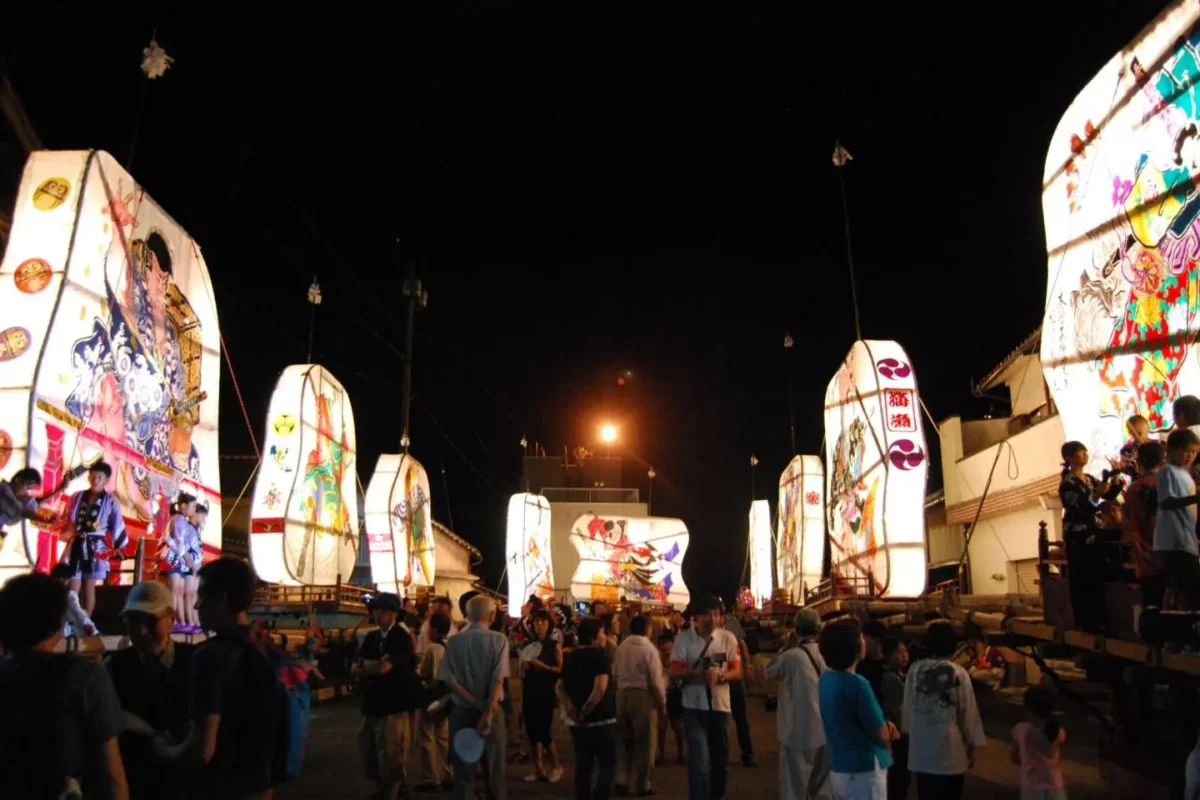
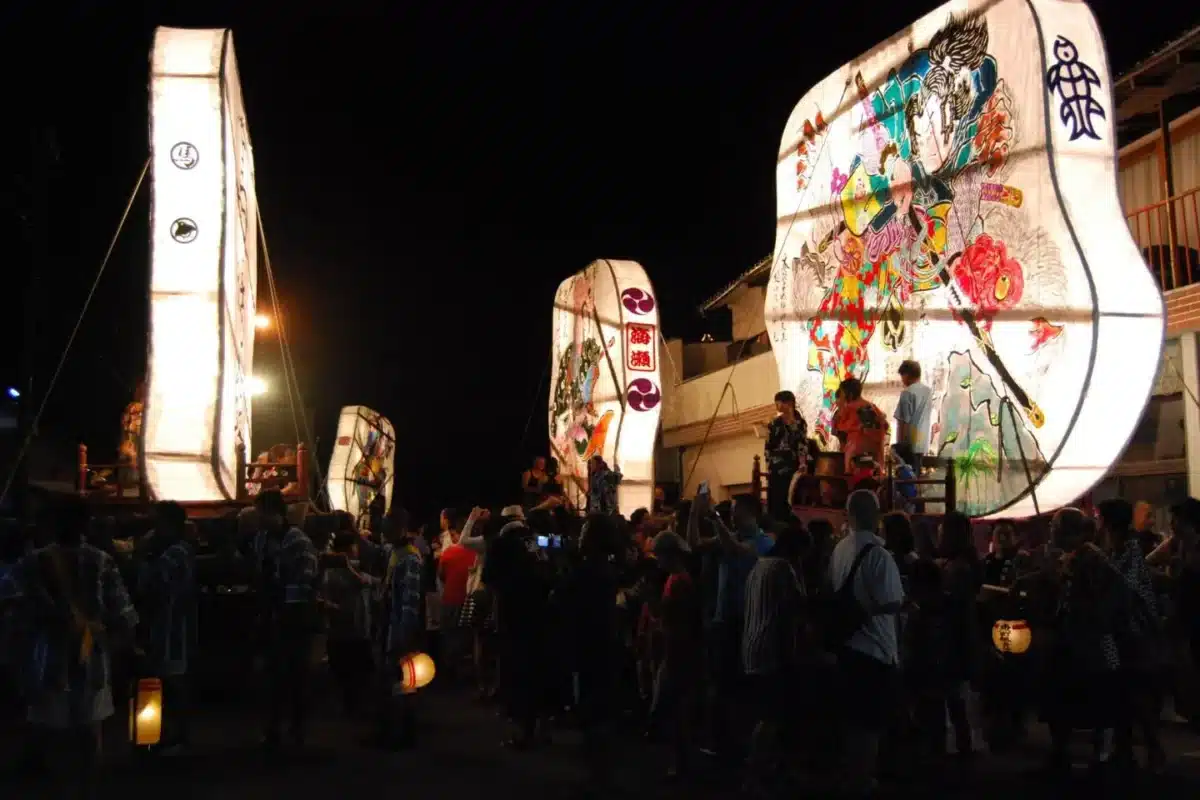
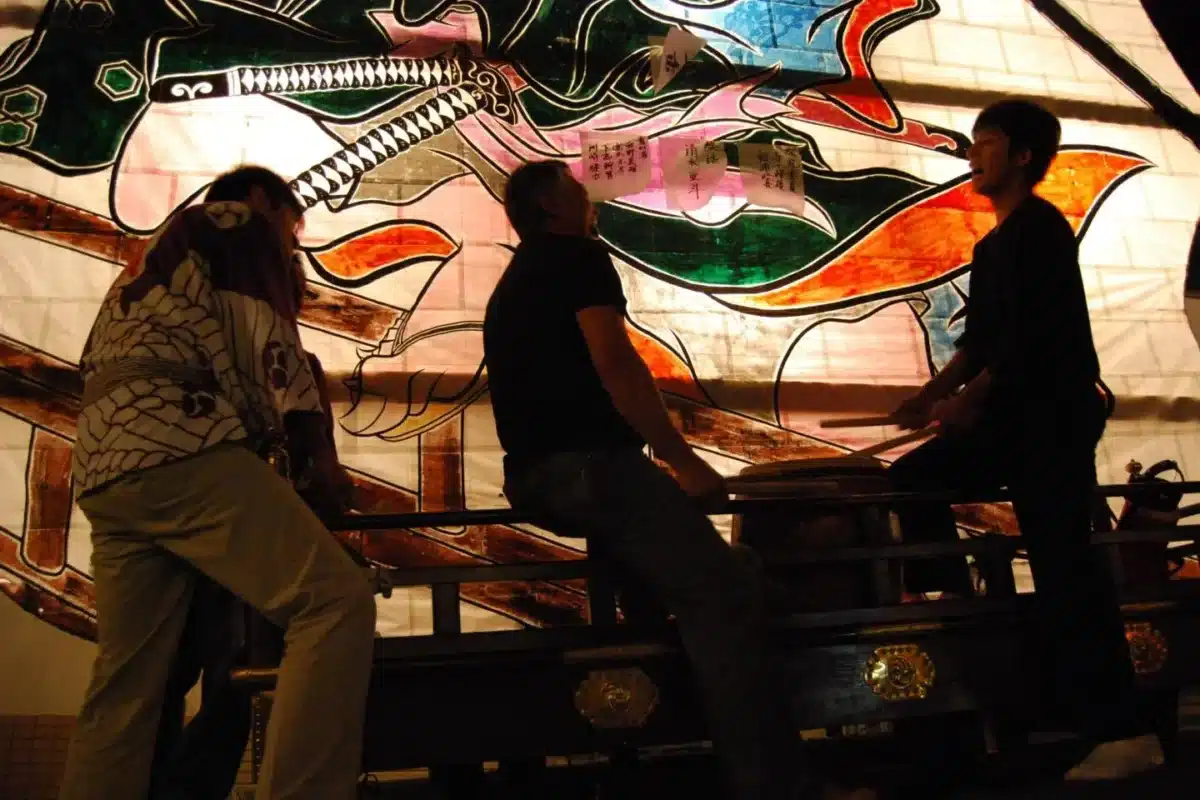
The festival is centered on large, wheeled lantern floats known as Niwaka. Unlike the tall, narrow Kiriko floats commonly seen elsewhere on the Noto Peninsula, Niwaka have a broader and more rounded form. The floats are approximately 7 meters high and about 5.4 meters wide, with large painted panels depicting samurai warriors.
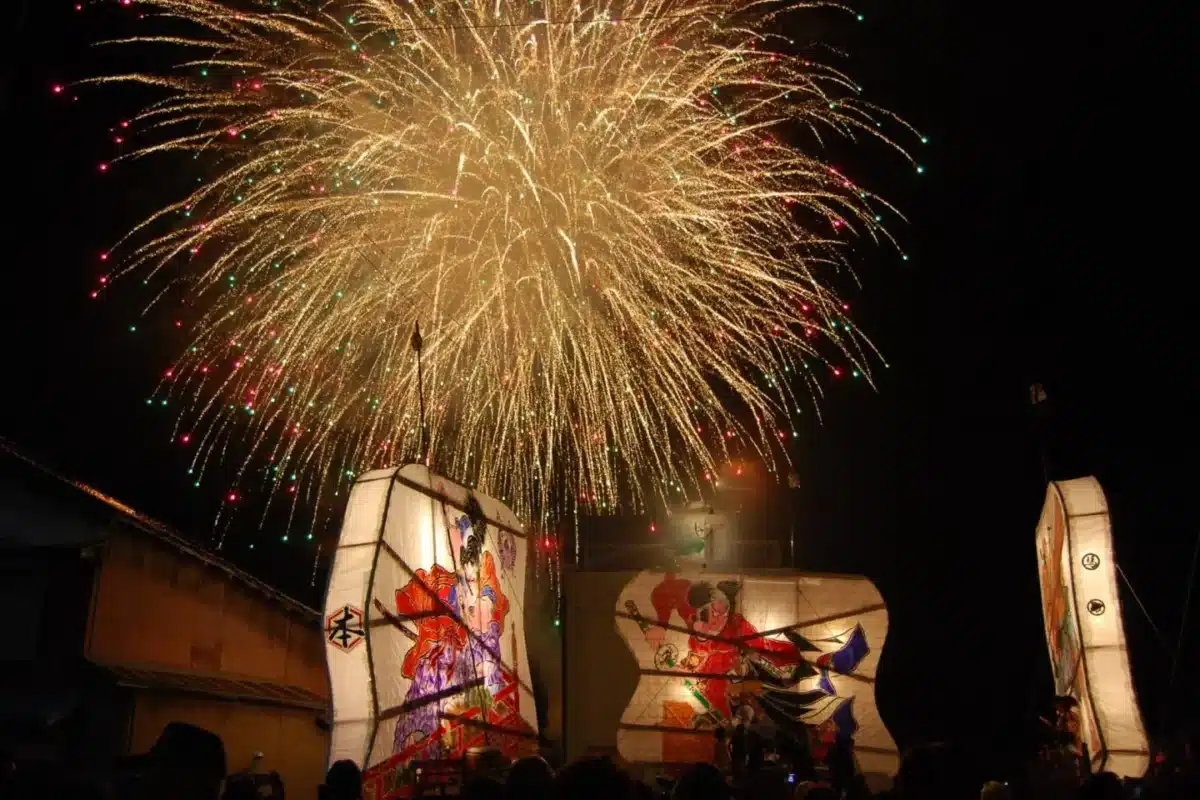
The main spectacle takes place after dark. The Niwaka floats gather in the local area, where they are illuminated and prepared for the procession. Fireworks provide a dramatic signal before the floats begin moving through the streets.
Enjoy Your Event Stress-Free with Japan Travelo
Do you know? Planning events, festivals, concerts, and cultural experiences in Japan can be overwhelming. Japan Travelo brings everything together in one place, helping you manage your itinerary, transport, and accommodation with ease—so you can enjoy Japan without the stress of planning.
The festival has a strongly local character. Residents from the nine participating districts traditionally prepare and decorate the floats, and each Niwaka features its own warrior painting. These paintings are an important part of the festival’s folk-art tradition and give visitors an opportunity to compare the different designs.
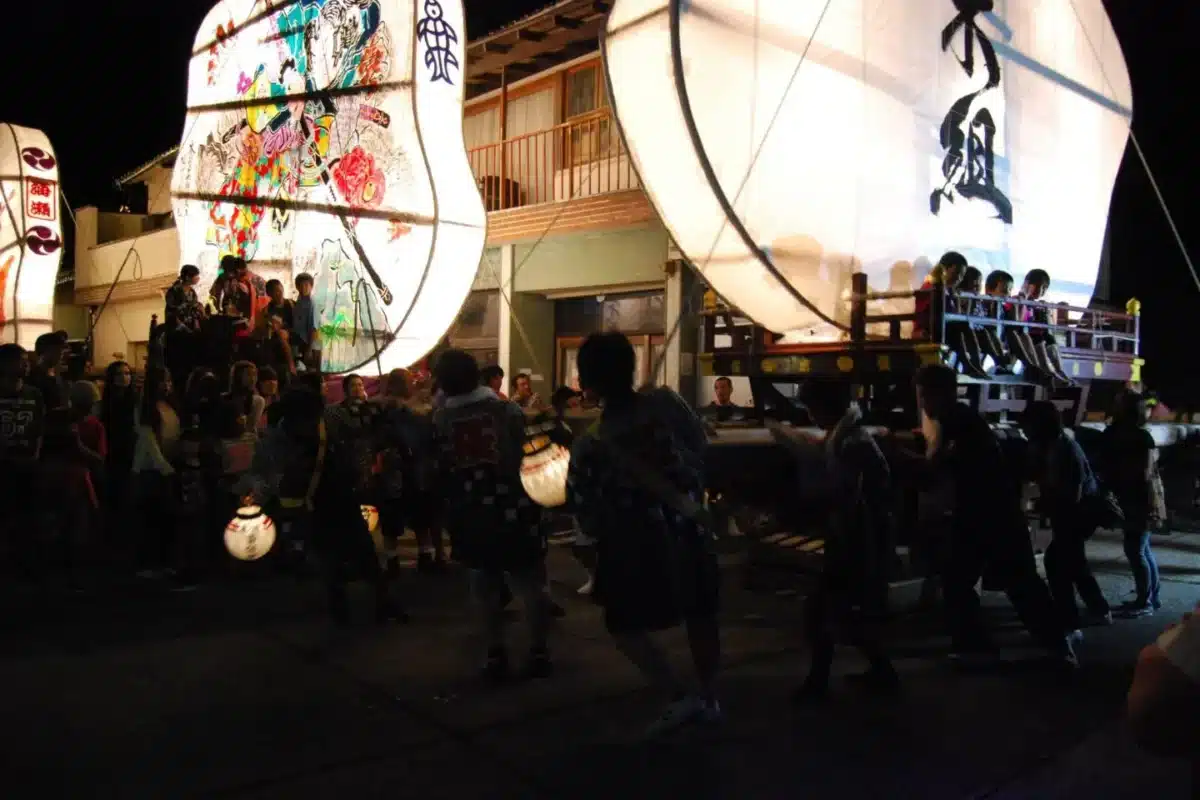
The atmosphere becomes increasingly energetic as the night progresses. Taiko drums, gongs, shouted calls and the movement of the enormous illuminated floats create a powerful nighttime procession. The floats eventually make their way toward the shrine area, where the festival continues late into the night.
The official Noto Kiriko Festival information describes the event as a traditional festival connected with prayers for a good catch and safe fishing. The festival’s distinctive lanterns, warrior imagery and overnight procession make it particularly different from ordinary summer festivals.
The 2027 programme should retain the established character of the festival, although exact arrangements, participating floats, traffic controls and visitor facilities should be confirmed closer to the event.
Event dates
Niwaka Lantern Festival 2027 is expected in late August 2027, with the exact calendar date to be confirmed.
The festival traditionally takes place on the fourth Saturday of August. The official Noto Kiriko Festival information identifies the fourth Saturday of August as the regular timing for Niwaka Festival.
The celebration is primarily an evening and nighttime event. Preparations begin earlier, while the main public spectacle develops after dark and continues deep into the night.
Because the festival is held in a small coastal community, visitors should check the latest local information before travelling. Road conditions, parking, public transport and visitor arrangements can be particularly important in the Noto Peninsula.
Visiting this event? Don’t miss out on these amazing activities and local experiences while you’re here.
Venue & event locations
The festival takes place in the Ukawa area of Noto Town, on the Noto Peninsula in Ishikawa Prefecture.
The main locations associated with the festival include:
- Sugahara Shrine
- Kaise Shrine and surrounding shrine grounds
- Mioroshino-hama Square
- Ukawa Ohashi Bridge
- Streets through the Ukawa community
- The waterfront and surrounding fishing village
- Local residential streets used by the procession
The official Noto Kiriko Festival website identifies the Ukawa area of Noto Town as the location and highlights the gathering of the Niwaka floats at Mioroshino-hama Square.
Japan Travel describes the event as taking place in Ukawa, a fishing village on the Noto Peninsula. The festival route passes through the small roads of the village before reaching the shrine area.
The village setting is an important part of the experience. Unlike major urban festivals where huge crowds can surround a temporary stage, Niwaka remains closely connected with the local community and its traditional streets.
Ukawa Ohashi is another notable viewing point. When the illuminated floats cross the bridge, their colorful warrior paintings can be reflected in the water, creating one of the festival’s most recognizable scenes.
Full holiday programme
The complete 2027 programme has not yet been announced, but the established festival format includes several connected stages.
The traditional programme can include:
- Preparation of the Niwaka floats
- Gathering of local participants
- Taiko performances
- Display of the warrior paintings
- Gathering of the nine Niwaka
- Fireworks
- Lantern procession
- Movement through the village
- Crossing of Ukawa Ohashi
- Arrival at the shrine
- Taiko and gong performances
- Dynamic movement of the floats
- Religious dedication
- Late-night or overnight festival activity
The nine Niwaka floats are traditionally associated with nine local districts. Each district has its own float and its own warrior painting, giving the festival a strong neighborhood-based identity.
The paintings are not simply decorative. Historically, warrior imagery was connected with the community’s hopes for strength, protection and successful fishing. The official Noto Kiriko information explains that local fishermen used warrior images and sacred objects in connection with prayers for a good catch and safety at sea.
The festival therefore combines visual spectacle with a deeper connection to the area’s maritime culture.
Main attractions & highlights
Nine Niwaka lantern floats
The central attraction is the collection of large Niwaka floats. Their distinctive broad shape separates them from the more slender Kiriko floats found in other parts of Noto.
Samurai warrior paintings
Every float carries a large warrior image. The designs differ between districts, making it possible to compare the artistic styles and subjects represented by each community.
Night illumination
After dark, the lanterns are illuminated from within or around the structure, making the paintings particularly striking against the night sky.
Fireworks
Fireworks mark an important transition in the evening programme. The official festival description identifies fireworks as the signal for the procession to begin after the floats have gathered.
Ukawa Ohashi crossing
The crossing of the bridge is one of the most visually impressive moments. The illuminated warrior paintings can appear reflected in the water as the floats move across the bridge.
Taiko and gongs
The powerful sound of drums and gongs accompanies the movement of the floats and contributes to the energetic atmosphere.
Late-night procession
The festival continues well beyond the beginning of the evening, with the floats eventually reaching the shrine and continuing their energetic movement there.
Markets, decorations & themed areas
Niwaka Lantern Festival is primarily a traditional community festival rather than a large commercial market event. Its atmosphere comes from the illuminated floats, decorated streets, local homes and temporary festival activity.
The main visual areas include:
Niwaka display area
The large floats gather together before the procession, allowing visitors to see the different warrior paintings side by side.
Mioroshino-hama Square
This gathering area provides one of the strongest opportunities to see the nine floats together before they begin their nighttime journey.
Village streets
The floats travel through narrow local streets surrounded by traditional homes and community buildings.
Bridge crossing
Ukawa Ohashi provides a particularly scenic section of the procession because of the relationship between the illuminated floats, the bridge and the water below.
Shrine area
The final section of the procession centers on the shrine environment, where the festival takes on a more ceremonial character.
Visitors may also see local households preparing for the festival. Japan Travel describes residents opening the doors and windows of traditional houses and gathering with family and friends during the celebration, emphasizing how closely the event remains connected to village life.
Events & entertainment schedule
The detailed 2027 timetable should be confirmed by the organizers, but the traditional sequence provides a useful guide.
A typical festival experience develops as follows:
- Daytime preparation of the floats
- Gathering of local participants
- Taiko performances
- Display and inspection of the warrior paintings
- Assembly of the Niwaka
- Evening illumination
- Fireworks
- Beginning of the procession
- Movement through the Ukawa streets
- Crossing of Ukawa Ohashi
- Arrival near the shrine
- Taiko and gong performances
- Energetic movement and dancing of the floats
- Late-night ceremonial activity
Japan Travel describes the procession as beginning around the evening fireworks and continuing into the early morning.
The official Noto Kiriko information similarly describes the floats gathering near the waterfront, moving through the town and eventually reaching the shrine, where young participants move the floats to the sound of drums and gongs.
Visitors should not expect a conventional stage programme with performances happening continuously at fixed times. Much of the entertainment comes from following the movement of the floats and experiencing the festival as it travels through the community.
Admission & ticket information
Niwaka Lantern Festival is a free public festival. Japan Travel lists the event as free, and there is no standard admission ticket for watching the outdoor procession.
Visitors can normally experience the main public areas without purchasing a festival pass.
Typical visitor access includes:
- General festival viewing: Free
- Niwaka float viewing: Free
- Public procession viewing: Free
- Fireworks viewing: Free
- Street viewing areas: Free
Visitors may have separate expenses for transportation, accommodation, food, drinks, souvenirs or other services in the surrounding region.
Because this is a local community festival, visitors should avoid assuming that paid seating or commercial VIP packages will be available. The event’s appeal is based on its traditional open-air community atmosphere.
Special experiences & activities
View the warrior paintings
Each Niwaka has its own large warrior image. Taking time to compare the different designs provides insight into the artistic traditions of the participating districts.
Watch the floats gather
Seeing the floats assembled together before the procession allows visitors to appreciate their enormous size and different decorations.
Experience the fireworks
The fireworks create the transition from preparation to the main nighttime celebration.
Follow the procession
Walking between appropriate public viewing points provides a more complete understanding of how the festival moves through the village.
Watch the bridge crossing
The Ukawa Ohashi section offers one of the strongest photographic opportunities, particularly when the illuminated paintings are reflected in the water.
Listen to the taiko
The drum performances are integral to the festival atmosphere and become particularly powerful when the floats are moving near the shrine.
Explore the fishing village
The surrounding Ukawa community is an important part of the experience. Visitors can observe the relationship between the festival, local homes, streets and maritime heritage.
Family & children’s activities
Children are an important part of the festival atmosphere, particularly through the involvement of younger local participants in traditional music and festival activities.
Japan Travel notes that local boys and girls in traditional festival clothing gather around the Niwaka and take turns playing taiko drums for spectators.
Families can enjoy:
- Viewing the illuminated lanterns
- Watching the fireworks
- Listening to taiko performances
- Seeing the warrior paintings
- Watching the floats move through the village
- Experiencing traditional festival clothing
- Exploring the waterfront area
However, parents should be especially careful near moving floats. Niwaka are large structures traveling through narrow streets, and crowd movement can become unpredictable.
Young children should remain with adults throughout the nighttime programme, particularly around the procession route, bridge and shrine area.
Because the festival continues late into the night, families with young children may prefer to experience the earlier portions of the celebration rather than staying until the final activities.
Event rules
Visitors should treat the festival as a community religious and cultural event rather than simply as a tourist attraction.
Important guidelines include:
- Follow instructions from local organizers.
- Stay outside restricted areas.
- Never enter the path of a moving Niwaka.
- Keep children away from moving floats.
- Do not touch the lantern structures.
- Do not climb on festival equipment.
- Avoid blocking local participants.
- Follow temporary road closures and traffic controls.
- Keep emergency routes clear.
- Be respectful around shrines and religious ceremonies.
- Ask permission before entering private property.
- Do not disturb residents.
- Dispose of rubbish responsibly.
- Follow photography instructions.
The festival takes place in a residential community, so visitors should be particularly considerate of local households. Japan Travel emphasizes the intimate community character of the event, with residents gathering at their homes to watch and participate in the celebration.
How to get there
Niwaka Lantern Festival takes place in the Ukawa area of Noto Town on the Noto Peninsula.
The area is relatively remote compared with major tourist centers such as Kanazawa, so visitors should plan transportation carefully.
Japan Travel notes that reaching Ukawa takes some time and identifies a rental car as the easiest option. It also describes a local bus connection passing through Ukawa on the route between Kanazawa and Suzu.
For travelers coming from outside the Noto Peninsula, Kanazawa can be used as a larger transportation base before continuing toward Noto.
Visitors should check current road and transportation conditions before travelling because the Noto Peninsula has experienced significant infrastructure changes following the 2024 earthquake.
Public transport & parking
By rental car
A rental car provides the greatest flexibility for reaching Ukawa, particularly because the festival takes place at night and public transportation options are limited.
Drivers should allow plenty of time for the journey and check road conditions before departure.
By bus
Japan Travel identifies a local bus service between Kanazawa and Suzu that passes through Ukawa, although services are limited. Visitors should confirm the current timetable before relying on this option.
By rail and connecting transport
There is no convenient railway station immediately beside the festival area, so visitors arriving by train will need to continue by road transport.
Parking
Local parking arrangements may be provided for festival visitors, but capacity can be limited. Because the event takes place in a small community, visitors should use designated parking areas and follow instructions from local traffic staff.
Do not park on residential streets, procession routes or roads needed for emergency access.
Accommodation areas
Noto Town
Staying within Noto Town is the most convenient option for visitors who want to remain close to Ukawa and avoid a long nighttime journey after the festival.
Suzu
Suzu is another possible base in the northern Noto Peninsula and offers accommodation and restaurants, although visitors should plan the return journey carefully after the late-night festival.
Wajima
Wajima provides another Noto Peninsula base, particularly for travelers combining Niwaka with other Kiriko festivals and cultural attractions.
Anamizu
Anamizu can be useful as a southern gateway to the northern Noto Peninsula, depending on transportation and accommodation availability.
Kanazawa
Kanazawa offers the largest selection of hotels and transport connections, but it is considerably farther from Ukawa. Visitors staying in Kanazawa should plan the return journey carefully because the festival continues late into the night.
Given the festival’s remote location, staying within the Noto region can make the experience easier and allow visitors to explore other local attractions.
Food, drinks & seasonal specialties
Niwaka Lantern Festival is deeply connected with the fishing culture of the Noto Peninsula, making local seafood an important part of the wider regional food experience.
Visitors staying in the area can look for:
- Fresh local seafood
- Grilled fish
- Sushi
- Sashimi
- Seafood rice bowls
- Local vegetables
- Rice dishes
- Japanese sweets
- Festival snacks
- Regional sake and non-alcoholic drinks
The festival itself is not primarily a large food-market event, so visitors should not rely on extensive food-stall facilities throughout the night.
It is advisable to eat before arriving or check local food availability in advance. Restaurants in small Noto communities may have limited opening hours, particularly outside the main festival period.
The relationship between food and the festival is also cultural. The event historically developed around the concerns of fishing communities and prayers for a good catch and safe fishing.
Accessibility
Niwaka Lantern Festival takes place outdoors on local roads, bridges, village streets and shrine grounds. Accessibility can therefore vary significantly depending on the viewing location and crowd conditions.
The remote location also means visitors with mobility requirements should plan transportation and accommodation carefully.
Important considerations include:
- Check current road conditions before travelling.
- Confirm accessible accommodation in advance.
- Use designated parking areas.
- Avoid narrow sections of the procession route.
- Stay away from moving floats.
- Ask local organizers where accessible viewing is possible.
- Allow extra time for movement between viewing areas.
- Bring suitable mobility equipment for outdoor surfaces.
The bridge and narrow village roads may be particularly challenging during busy periods.
Because the festival is a moving procession rather than a fixed-seat event, visitors who require a stable viewing location should identify an appropriate area before the main procession begins.
Best days & times to visit
Niwaka Lantern Festival is traditionally concentrated into its main festival celebration rather than operating as a multi-week event.
The most important period is the evening when the Niwaka floats gather, fireworks take place and the procession begins.
For the full atmosphere
Arrive before the main nighttime programme begins so you can see the floats before they start moving.
For the warrior paintings
The period when the Niwaka are assembled together is ideal for comparing the individual paintings.
For fireworks
Stay near the main gathering area before the fireworks signal the beginning of the procession.
For photography
The illuminated floats after dark provide the strongest visual opportunities, especially around the bridge crossing.
For the overnight experience
Visitors who remain late can see the most energetic part of the festival near the shrine, where drums, gongs and the movement of the floats continue deep into the night.
Previous year’s highlights
Recent editions have demonstrated both the resilience and strong community character of the Niwaka tradition.
Japan Travel describes nine Niwaka traditionally participating in the festival, each associated with a local district and decorated with a different warrior painting. The paintings are created as distinctive pieces of local folk art and are traditionally renewed for each festival.
The official Noto Kiriko information highlights three major visual moments: the nine floats assembled at Mioroshino-hama Square, the reflection of the illuminated warrior paintings as the floats cross Ukawa Ohashi, and the energetic movement of the floats around the shrine.
The festival also demonstrates the connection between generations. Younger local participants take part in taiko performances, while families and residents gather along the streets to watch the procession.
The 2024 edition took place under particularly difficult circumstances following the Noto Peninsula earthquake. Contemporary reporting described a reduced-scale festival that nonetheless continued as an important expression of local identity and community connection.
This history is important when understanding the festival today. Niwaka is not simply a spectacle for visitors; it remains a local tradition through which residents maintain connections with their community, ancestors, fishing heritage and religious customs.
The continuing production of the warrior paintings and preparation of the floats also preserves traditional skills that are closely connected with the identity of Ukawa.
Official event information
The official Noto Kiriko Festival website identifies Niwaka Festival as a traditional festival of the Ukawa area of Noto Town. It describes the festival’s nine distinctive Niwaka floats, warrior paintings, fireworks, procession, bridge crossing and overnight shrine activities.
The official information identifies the location as the Ukawa area of Noto Town and provides the Noto Town Furusato Promotion Section as the festival contact.
Japan Travel also provides visitor information, including the festival’s free admission, general location and transportation guidance.
Visitors should check the official Noto Kiriko information before travelling for the latest 2027 arrangements, particularly because road access, parking and visitor services in the Noto Peninsula can change.
https://en.japantravel.com/ishikawa/niwaka-lantern-festival/27442
Location
FAQ
What makes Niwaka lanterns different from regular Kiriko floats?
Unlike the tall and slim Kiriko lanterns found in other parts of Wajima, Niwaka floats in Ukawa are wider, roundish structures measuring about 7 meters tall by 5 meters wide. They feature vibrant hand-painted artwork portraying legendary samurai warriors.
What is the significance of the midnight taiko competition?
The intensive drumming contest runs from midnight until 3:00 AM in front of the Benzaiten Shrine. During this climactic event, the sea goddess Benzaiten is said to select one of the painted warriors on the floats.
How can travelers reach the festival venue using public transportation?
Reaching the remote Ukawa district on the Noto Peninsula typically requires taking regional local bus routes or driving from major transport hubs. Planning transit connections well in advance is recommended due to the rural location.
Are there accommodation options available near the festival site?
Local lodging directly in Ukawa is extremely limited, meaning many visitors choose to stay in nearby Noto towns or drive back following the evening events. Booking rooms months ahead of time is essential for travelers wishing to stay overnight.
Is the late-night event suitable for families with young children?
While daytime preparations and early evening parades are family-friendly, the main climax involves loud midnight taiko drumming and dense crowds. Parents with toddlers may prefer attending the sunset procession rather than staying through dawn.

Leave a Reply