


-
February 10, 2027
Event date:
-
April 3, 2027
Event end:
What to expect in 2027
The Hina Festival Opening Parade is one of the signature cultural events associated with Yanagawa’s long-running Hina Festival celebrations. Set in the historic water town of Yanagawa in Fukuoka Prefecture, the event brings traditional Hinamatsuri customs into the streets and shrine grounds through a colorful procession, ceremonial activities and displays of locally distinctive Sagemon decorations.
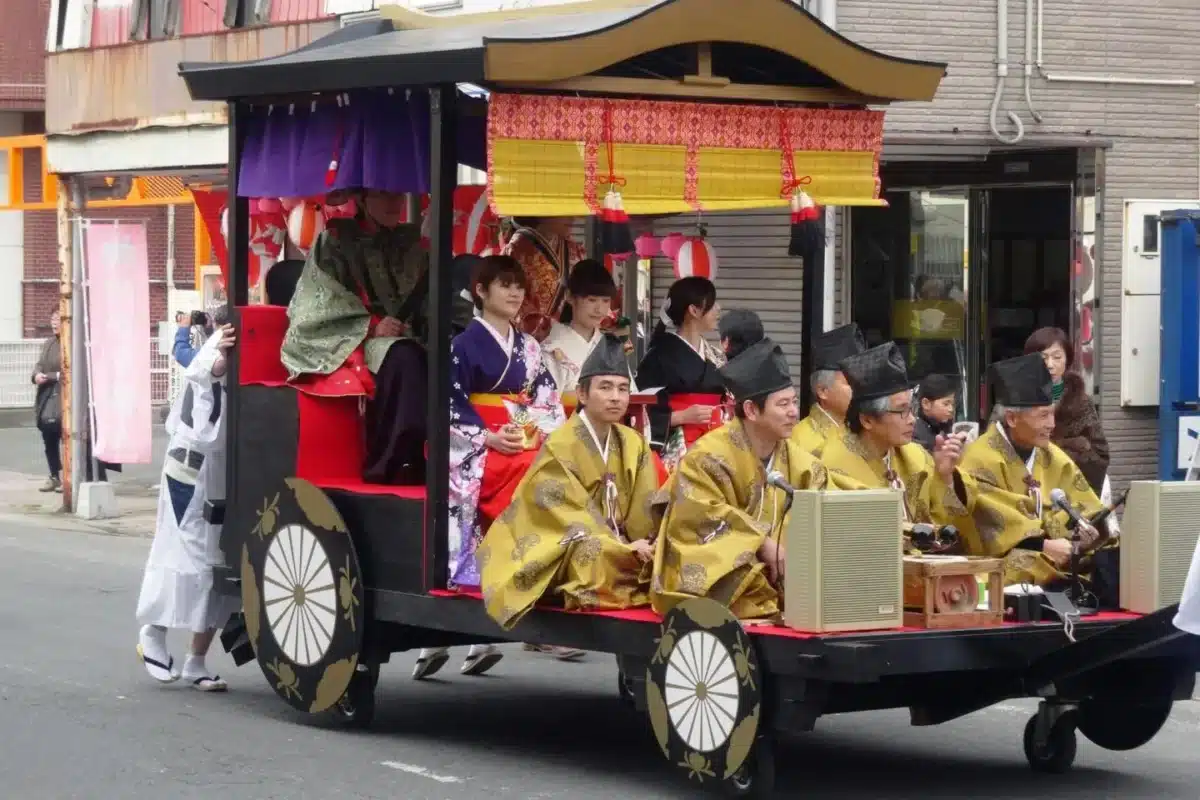
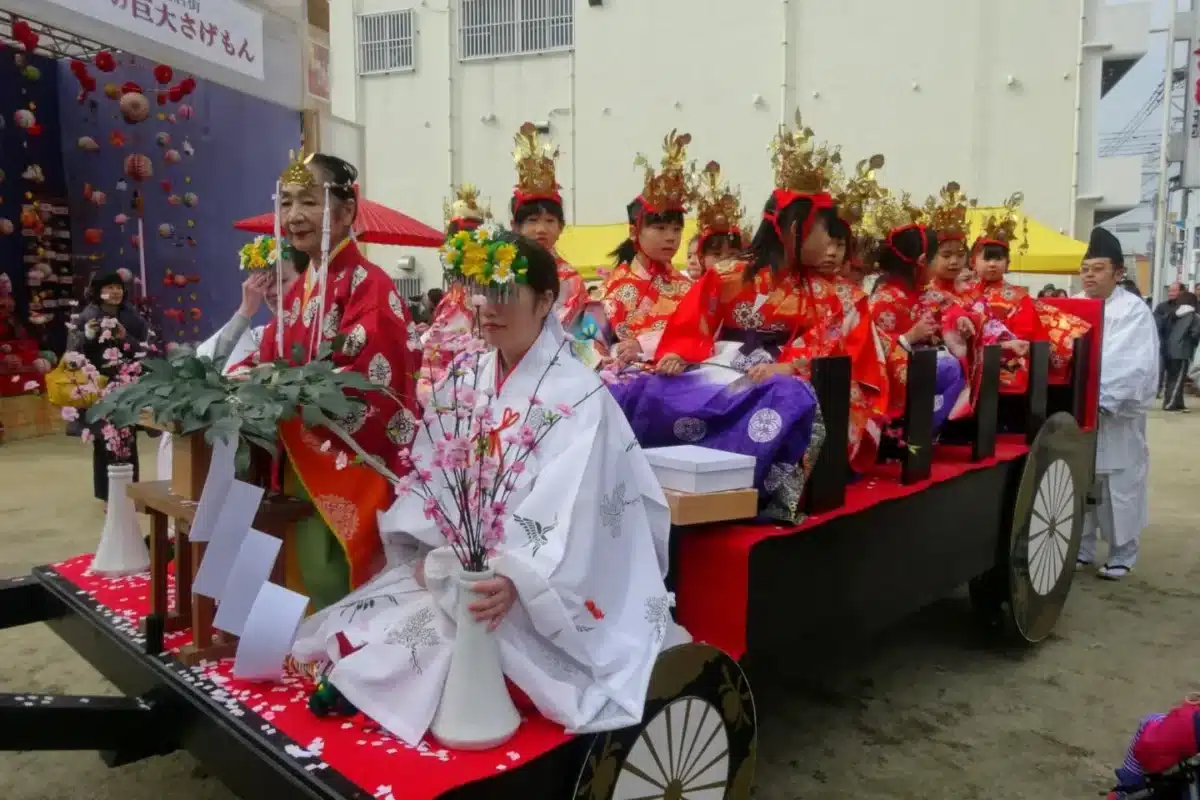
The opening celebrations are centered on Hiyoshi Shrine, where participants dressed in traditional costumes recreate the figures associated with a classic Hina doll display. Adults appear in Heian-period-inspired court clothing, while young girls dressed in bright kimono represent the child figures traditionally associated with Hinamatsuri. A shrine ceremony and miko dance add a religious and cultural dimension to the opening.
The wider celebration extends throughout Yanagawa, with Hina dolls, Sagemon ornaments, craft displays, decorated waterways, traditional shops and seasonal activities creating a festival atmosphere across the city. The wider Sagemon tradition is particularly distinctive to Yanagawa and is associated with wishes for the healthy growth and happiness of girls.
Enjoy Your Event Stress-Free with Japan Travelo
Do you know? Planning events, festivals, concerts, and cultural experiences in Japan can be overwhelming. Japan Travelo brings everything together in one place, helping you manage your itinerary, transport, and accommodation with ease—so you can enjoy Japan without the stress of planning.
Visitors can expect a combination of:
- Traditional Hina costumes and ceremonial processions
- Shrine rituals and miko performances
- Handmade Sagemon decorations
- Hina doll displays
- Local crafts and cultural exhibitions
- Canal-side festival scenery
- Traditional Japanese architecture and historic streets
- Seasonal food and Yanagawa specialties
- Additional Hina-related events throughout the city
The event is especially suitable for visitors interested in Japanese traditions, family customs, shrine culture, handmade crafts and historic townscapes.
Event dates
February 10th – April 3rd 2027
The supplied 2027 listing covers the wider Hina Festival period, while the opening parade is traditionally associated with the beginning of Yanagawa’s Hina Festival programme. JapanTravel identifies Hiyoshi Shrine as the venue and describes the event as the start of Yanagawa’s many Doll Festival activities.
The wider Sagemon celebration normally fills Yanagawa with decorations and related cultural activities throughout the festival period. Because individual events can be affected by weather and organizational changes, visitors should check the latest official Yanagawa tourism information before travelling.
Visiting this event? Don’t miss out on these amazing activities and local experiences while you’re here.
Venues & festival locations
Hiyoshi Shrine is the principal location associated with the Hina Festival Opening Parade. The shrine is an important historic site in Yanagawa and has served as a local place of worship for centuries. Its origins are traditionally connected with the transfer of the Hiyoshi Shrine tradition from Omi, and the present shrine complex reflects Yanagawa’s long connection with the Tachibana-era city.
The wider Hina Festival extends beyond the shrine into the surrounding city.
Hiyoshi Shrine
The shrine provides the ceremonial setting for the opening celebrations, including the blessing ceremony and traditional procession.
Yanagawa canals
The city’s famous waterways form an important backdrop for the wider Hina Festival. Decorated boats and canal-side Sagemon displays create one of the most recognizable visual elements of the celebration.
Yanagawa shopping streets
Local streets and businesses participate in the Sagemon tradition by displaying decorations, Hina dolls, crafts and seasonal items.
Tourist facilities and local shops
The official festival programme extends across participating tourism facilities, stores and other locations around the city. Some individual facilities may have their own admission requirements.
Water Parade areas
The Hina Doll Water Parade is another major part of the wider celebration, with decorated boats carrying traditionally dressed participants along Yanagawa’s waterways beneath hanging Sagemon ornaments.
Full cultural programme
The Hina Festival is much broader than a single parade. It presents a collection of Japanese seasonal traditions connected with Hinamatsuri and Yanagawa’s own Sagemon culture.
The opening programme traditionally begins with a shrine ceremony at Hiyoshi Shrine. Participants representing Hina doll characters gather in traditional clothing, while young girls dressed in ceremonial kimono form an important part of the procession. JapanTravel describes around a dozen adults in Heian-style clothing together with approximately two dozen young girls wearing red kimono and gold headpieces.
A blessing ceremony takes place at the shrine, followed by a miko dance and the beginning of the parade.
Across the wider festival, visitors can also encounter:
- Sagemon decorations displayed inside homes, stores and tourism facilities
- Hina doll exhibitions
- Handmade Yanagawa Mari ornaments
- Traditional craft displays
- Kimono-related activities
- Seasonal lighting and large-scale Sagemon installations
- The Hina Doll Water Parade
- Floating Hina traditions
- Photo opportunities and cultural displays
- Local food and shopping experiences
The programme reflects both the national Hinamatsuri tradition and customs that developed specifically in Yanagawa.
Featured traditions & performances
Sagemon decorations
Sagemon is one of the defining traditions of Yanagawa’s Hina Festival. These hanging ornaments are made from colorful fabric pieces and shaped into auspicious animals, objects and symbolic forms. They are traditionally displayed alongside Hina dolls and are associated with wishes for health, happiness and prosperity.
Yanagawa Mari
Colorful handmade Yanagawa Mari balls form an important part of Sagemon decorations. Their bright thread patterns and rounded shapes contribute to the distinctive appearance of festival displays.
Living Hina dolls
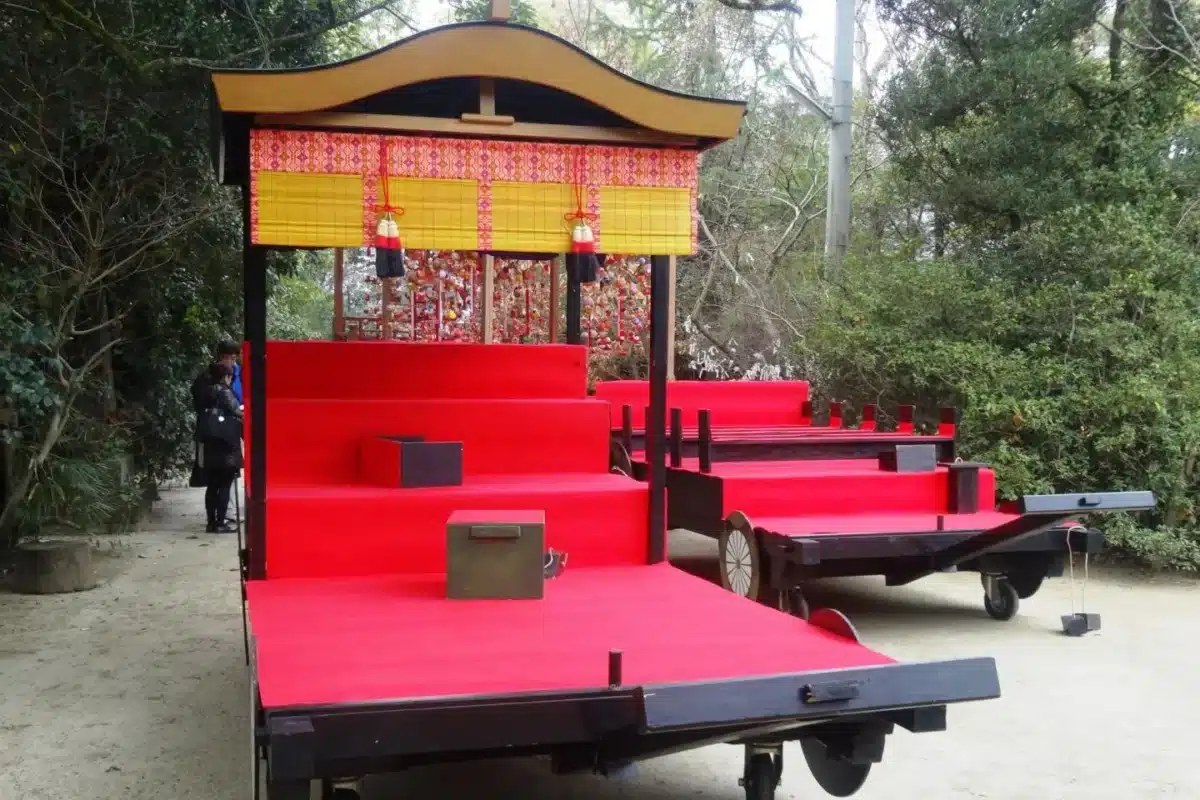
The opening parade transforms the familiar Hina doll arrangement into a live procession. Adults dressed in court-inspired costumes represent traditional Hina figures, while young girls in formal kimono create the child-focused element of the ceremony.
Miko dance
The opening ceremony includes a traditional dance performed by a shrine maiden. This adds a formal Shinto element to the festival and distinguishes the event from a purely theatrical parade.
Water-based Hina traditions
Yanagawa’s canals provide the setting for several of the festival’s most distinctive activities. Decorated boats carrying Hina-themed participants pass beneath colorful Sagemon ornaments, combining local water-town culture with Hinamatsuri traditions.
Historical & heritage highlights
The Hina Festival tradition in Yanagawa is closely connected with the Japanese custom of celebrating a girl’s first Hinamatsuri and praying for her healthy growth. In Yanagawa, this national tradition developed its own distinctive visual language through Sagemon decorations.
The Sagemon custom is associated with the Edo period and has been passed through generations as a form of handmade family decoration. Colorful fabric ornaments are traditionally arranged in groups and combined with Yanagawa Mari balls, creating elaborate hanging displays.
Hiyoshi Shrine itself is another important heritage feature. Yanagawa’s official historical information traces the shrine’s origins to the traditional transfer of the Hiyoshi Shrine deity from Omi and describes its historical role as a guardian shrine connected with the development of Yanagawa Castle and the local community.
The festival also reflects Yanagawa’s identity as a water town. The city is characterized by its extensive network of canals and waterways, which continue to shape its tourism, landscape and cultural traditions. The combination of historic buildings, waterways, shrines and handmade decorations gives the Hina Festival a strong sense of place.
Events & activities schedule
The detailed 2027 schedule should be checked with the official Yanagawa tourism organizers as individual activities can change. The established festival format includes several recurring components.
Opening ceremony and parade
The main opening celebration takes place at Hiyoshi Shrine, where the living Hina participants gather for a ceremonial blessing before the procession.
Sagemon displays
Throughout the festival, visitors can look for colorful hanging decorations in shops, tourist facilities and other participating locations across Yanagawa.
Hina exhibitions
Hina dolls and handmade decorations are displayed in various locations, allowing visitors to compare different styles and craft traditions.
Kimono activities
The wider festival includes opportunities to experience Yanagawa’s traditional clothing culture and see visitors and participants dressed in kimono.
Hina Doll Water Parade
One of the major attractions of the wider festival is the procession of traditionally dressed participants by boat through Yanagawa’s canals.
Floating Hina traditions
The festival concludes with a water-based seasonal ceremony in which children participate in a traditional floating Hina activity, linking Hinamatsuri with Yanagawa’s waterways.
Ticket types & entry options
The Hina Festival Opening Parade is generally experienced as a public cultural celebration rather than a ticketed concert or commercial festival.
General festival access
Public viewing of the outdoor parade and shrine-area festivities is generally free.
Shrine viewing
Visitors can observe the public portions of the ceremony and procession while respecting any areas reserved for participants or religious activities.
Sagemon displays
Many public displays around the city can be viewed without a festival admission ticket, although individual tourist facilities may have their own admission policies.
Individual experiences
Restaurants, boat rides, museums, workshops and other tourist activities operating during the festival are separate experiences and may require their own reservations or fees.
No conventional VIP ticket structure is associated with the opening parade.
Guided tours & cultural experiences
Yanagawa is well suited to guided cultural exploration because the Hina Festival spreads through the historic water-town environment rather than remaining inside a single enclosed festival site.
The local tourism organization offers guided walking experiences through the Suigou Yanagawa area. A published walking course includes locations such as Hakushu Road, historic residences, bridges, gardens, Hiyoshi Shrine, Yanagawa Castle ruins and other heritage points.
Historic walking tour
A guided walk can help visitors understand how Hiyoshi Shrine, the former castle area, waterways and historic residences connect to Yanagawa’s development.
Sagemon viewing
Visitors can explore participating shops and facilities to see different interpretations of Sagemon decorations.
Yanagawa river cruise
A traditional boat ride through the canals provides a different perspective on the festival landscape and is especially suitable when combined with Hina decorations and seasonal scenery.
Kimono experience
Visitors can incorporate traditional Japanese clothing into a broader cultural day in Yanagawa, particularly when the festival programme includes kimono-related activities.
Special ceremonies & celebrations
The most important ceremonial element of the opening event is the blessing at Hiyoshi Shrine.
The procession represents the traditional Hina doll arrangement through real participants. The visual symbolism is especially strong because the adults wear court-inspired costumes while young girls appear in brightly colored kimono and formal headwear.
The shrine ceremony is followed by a miko performance, giving the opening a distinctly religious atmosphere rather than presenting it solely as a street parade.
The wider festival also includes ceremonies connected with the waterways. The Hina Doll Water Parade places the traditional figures in decorated boats, while the closing floating Hina tradition brings children and seasonal wishes together on Yanagawa’s canals.
Festival rules
Visitors should treat the Hina Festival as both a public cultural event and a traditional shrine celebration.
Respect the shrine
Follow shrine instructions and avoid entering restricted areas during religious ceremonies.
Keep parade routes clear
Do not stand in areas reserved for participants, procession staff or shrine personnel.
Photography etiquette
Photography is generally an important part of the experience, but visitors should avoid blocking other spectators or interfering with ceremonial activities.
Respect participants
Young children and families are an important part of the festival. Visitors should maintain a respectful distance and avoid intrusive photography.
Follow weather updates
Outdoor activities and water-based events may be changed, postponed or cancelled because of weather conditions.
Observe local traffic controls
Temporary restrictions may apply around busy festival areas, particularly when processions or water events are taking place.
How to get there
Yanagawa is located in southern Fukuoka Prefecture and is accessible from the wider Fukuoka urban area.
From Fukuoka
The most practical route for many visitors is to travel toward Nishitetsu Yanagawa Station using the Nishitetsu railway network. From the station, visitors can continue into central Yanagawa by local transport, taxi or on foot depending on their destination.
From Nishitetsu Yanagawa Station
The station is an important arrival point for visitors exploring Yanagawa. Hiyoshi Shrine and the historic central areas can then be reached using local transportation or walking routes.
By car
Yanagawa can also be reached by road from surrounding parts of Fukuoka Prefecture. Driving may be convenient for visitors staying outside the city, but festival congestion and limited parking around central attractions should be considered.
Public transport & parking
Public transportation is recommended when visiting the main festival areas because Yanagawa’s historic center contains narrow streets, waterways and busy tourist areas.
Rail
Nishitetsu Yanagawa Station is the principal railway gateway for visitors arriving by train.
Local transportation
Taxis and local bus services can help visitors reach attractions beyond comfortable walking distance.
Walking
Several central attractions can be combined into a walking itinerary, including Hiyoshi Shrine, historic streets, canal scenery and Sagemon displays.
Parking
Parking is available at various locations around Yanagawa, but spaces near the busiest cultural attractions can become limited during major festival activities. Visitors travelling by car should allow extra time and follow temporary traffic instructions.
For a festival focused on walking, photography and cultural sightseeing, arriving by train and exploring the central area on foot can be particularly convenient.
Accommodation areas
Staying overnight allows visitors to experience Yanagawa beyond the busiest parade periods.
Yanagawa city centre
Central accommodation is convenient for exploring Hiyoshi Shrine, shopping streets, historic buildings, restaurants and canal areas.
Nishitetsu Yanagawa Station area
The station district provides convenient transport connections and is practical for visitors making day trips elsewhere in Fukuoka.
Canal and river areas
Accommodation near the waterways provides a more traditional Yanagawa atmosphere and makes it easier to combine festival activities with river sightseeing.
Okihata area
The Okihata district is known for restaurants, canal scenery and access to traditional Yanagawa food experiences.
Fukuoka city
Visitors who prefer a larger range of hotels can stay in Fukuoka and make Yanagawa a day trip.
Food & traditional specialties
Yanagawa is particularly famous for eel cuisine, making food an important part of a Hina Festival visit.
Unagi seiro-mushi
Yanagawa’s signature specialty is unagi seiro-mushi, in which seasoned eel and rice are steamed together in a bamboo steamer. Local restaurants treat the dish as a major culinary tradition, with different establishments using their own preparation techniques.
Yanagawa nabe
Another local specialty is Yanagawa nabe, traditionally prepared with dojo loaches, burdock and egg. It is associated with the city’s older culinary culture.
Local Japanese cuisine
Traditional restaurants throughout the city offer seasonal Japanese dishes that pair naturally with a cultural sightseeing itinerary.
Festival sweets and seasonal treats
During Hina Festival season, visitors can also encounter sweets and decorative foods inspired by Hinamatsuri and local seasonal customs.
Food experiences can be combined with a canal cruise, shrine visit and Sagemon viewing for a full day of Yanagawa culture.
Accessibility
Accessibility can vary considerably between venues because many festival activities take place in historic streets, shrine grounds, waterways and traditional buildings.
Main walking areas
Visitors should expect uneven surfaces, steps and narrow passages in some historic locations.
Hiyoshi Shrine
The shrine grounds are an important cultural site, but visitors with mobility limitations should check the latest access conditions before visiting.
Restaurants
Some local restaurants provide table seating and facilities that can accommodate guests with mobility needs. One Yanagawa restaurant, for example, specifically notes that a traditional tatami room has been adapted to table seating for customers who have difficulty walking.
Canal activities
Boat rides involve boarding and disembarking from traditional boats, so visitors with mobility concerns should confirm boarding arrangements with the individual operator.
Planning ahead
For visitors requiring wheelchair access, step-free routes or seating arrangements, contacting individual facilities before arrival is recommended.
Best cultural experiences
Watch the opening ceremony
The Hiyoshi Shrine ceremony provides the clearest introduction to the meaning behind the festival and the role of Hina traditions.
See the living Hina procession
The combination of Heian-inspired costumes, kimono-clad girls and shrine attendants makes the opening parade one of the most distinctive cultural experiences.
Search for Sagemon displays
Instead of visiting only one venue, explore Yanagawa’s streets and participating businesses to see the different handmade decorations.
Take a canal cruise
Yanagawa’s waterways are central to the city’s identity and provide an excellent way to understand why the Hina Festival incorporates decorated boats and water-based traditions.
Visit Hiyoshi Shrine
Allow time to explore the shrine itself rather than treating it only as a parade venue.
Try unagi seiro-mushi
A meal of Yanagawa’s famous steamed eel and rice adds an important culinary dimension to the cultural experience.
Explore historic Yanagawa
Combine the festival with historic residences, former castle-related sites, gardens and traditional streets.
Experience the water parade
If the wider festival programme includes the Hina Doll Water Parade as expected, it is one of the best opportunities to see Yanagawa’s local Hina tradition combined with its waterways.
Previous year’s highlights
The recent Yanagawa Hina Festival programme demonstrates the scale and variety visitors can expect from the wider celebration.
The opening ceremony and parade featured participants dressed as living Hina dolls, with adults wearing Heian-period-style costumes and young girls dressed in red kimono with gold headpieces. A shrine blessing and miko dance formed part of the opening programme.
The wider festival included Sagemon exhibitions, a Yanagawa Mari contest, illuminated Sagemon displays, kimono activities, the Hina Doll Water Parade and the closing floating Hina celebration.
The water parade was particularly representative of Yanagawa’s identity. Traditionally dressed participants travelled by boat beneath hanging Sagemon decorations, creating a combination of Japanese seasonal customs, handmade crafts and the city’s canal landscape.
The festival also continued its tradition of making Sagemon visible throughout Yanagawa’s shops and tourism facilities. This decentralized format means visitors can experience the celebration while walking through the city rather than remaining at one festival ground.
For 2027, the exact participating groups, programme details and individual activities should be confirmed through the official Yanagawa tourism information as the organizers finalize the programme.
Location
FAQ
What is the significance of the living Hina doll parade in Yanagawa?
The opening parade marks the grand start of Yanagawa's two-month-long Doll Festival season celebrating Girls' Day. Local participants dress in classical Heian-period court attire to represent traditional multi-tiered doll figurines. This living theatrical tradition brings stationary cultural displays into active, public community celebration.
Are traffic restrictions implemented along the parade route during the event?
Traffic on the parade route is generally not redirected or closed off for exclusive pedestrian use. Followers and spectators walking alongside the floats must remain mindful of passing local vehicles. Exercising caution ensures a safe and enjoyable viewing experience along the streets.
How can visitors easily reach Hiyoshi Shrine using public transportation?
Arriving by train at Nishitetsu Yanagawa Station places travelers within a reasonable distance of the venue. Taking a quick taxi ride directly to Hiyoshi Shrine is the most convenient option for visitors. Alternatively, a leisurely walk to the shrine takes approximately twenty to twenty-five minutes.
What parking options are available for travelers arriving by personal vehicle?
Early arriving drivers can utilize a limited number of free spaces available in the dirt parking lots at Hiyoshi Shrine. Latecomers may find convenient parking spots in nearby paid lots located along Rt 770. Arriving well before the 10 am ceremony ensures the best chance of securing a space.
What makes Yanagawa's sagemon decorations uniquely famous across Japan?
Sagemon ornaments are meticulously handcrafted hanging decorations consisting of traditional textile balls and auspicious symbols. Local artisans stitch forty-nine specific charms representing health, happiness, and prosperity for young children. These colorful cascading displays decorate homes, shops, and parade floats throughout the two-month festival.

Leave a Reply