
-
October 10, 2026
Event date:
-
October 11, 2026
Event end:
What to expect in 2026
Michinoku Yosakoi Festival 2026 will transform central Sendai into a large-scale celebration of YOSAKOI dance, music, costumes, flags and Japanese festival culture. The 29th edition is built around the theme “Let’s Make Music Together”, encouraging dancers and spectators to create the festival atmosphere through clapping, cheering and shared participation.
The festival is spread across seven locations, including six stage venues and one major parade venue. Kotodai Park serves as the main festival site, while additional performances take place at Nishikicho Park, Aobayama Park Sendai Ryokusai-kan, Asuto Nagamachi Morinohiroba Park and the Date Rium venue at JR Sendai East Gate Building. The Jozenji-dori area hosts the major street parade.
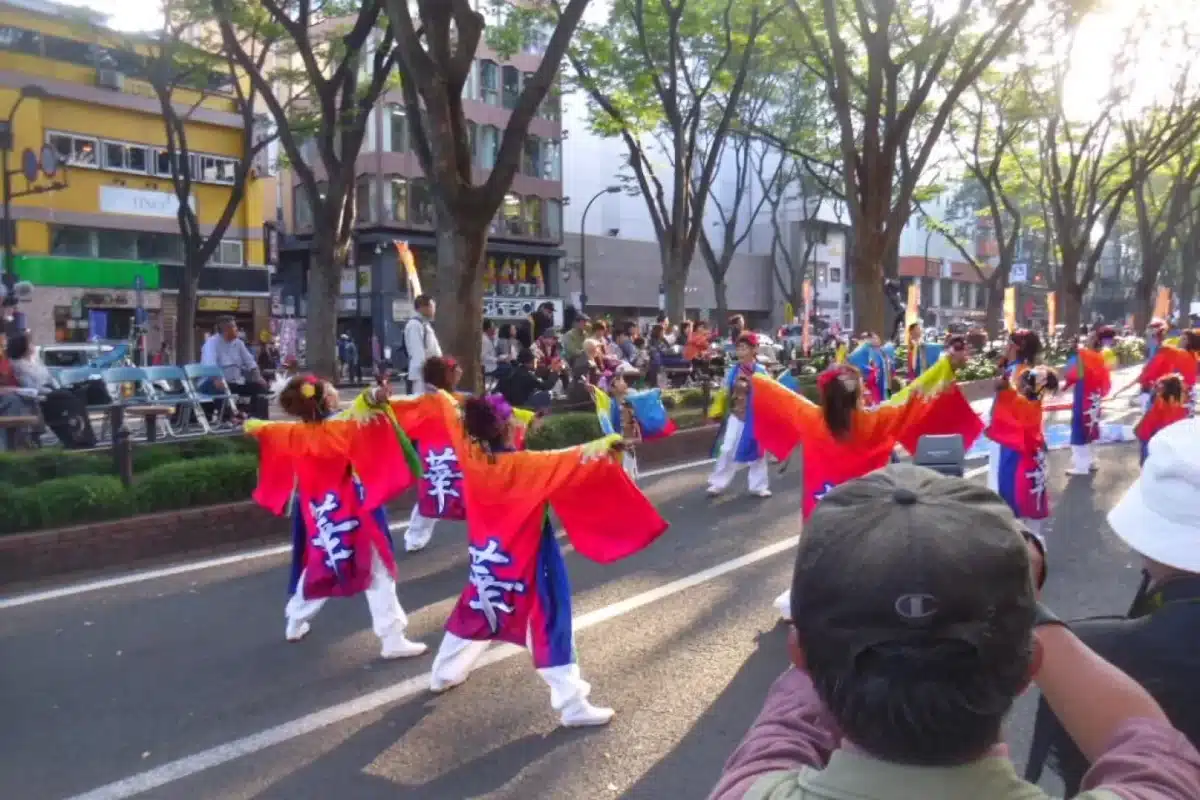
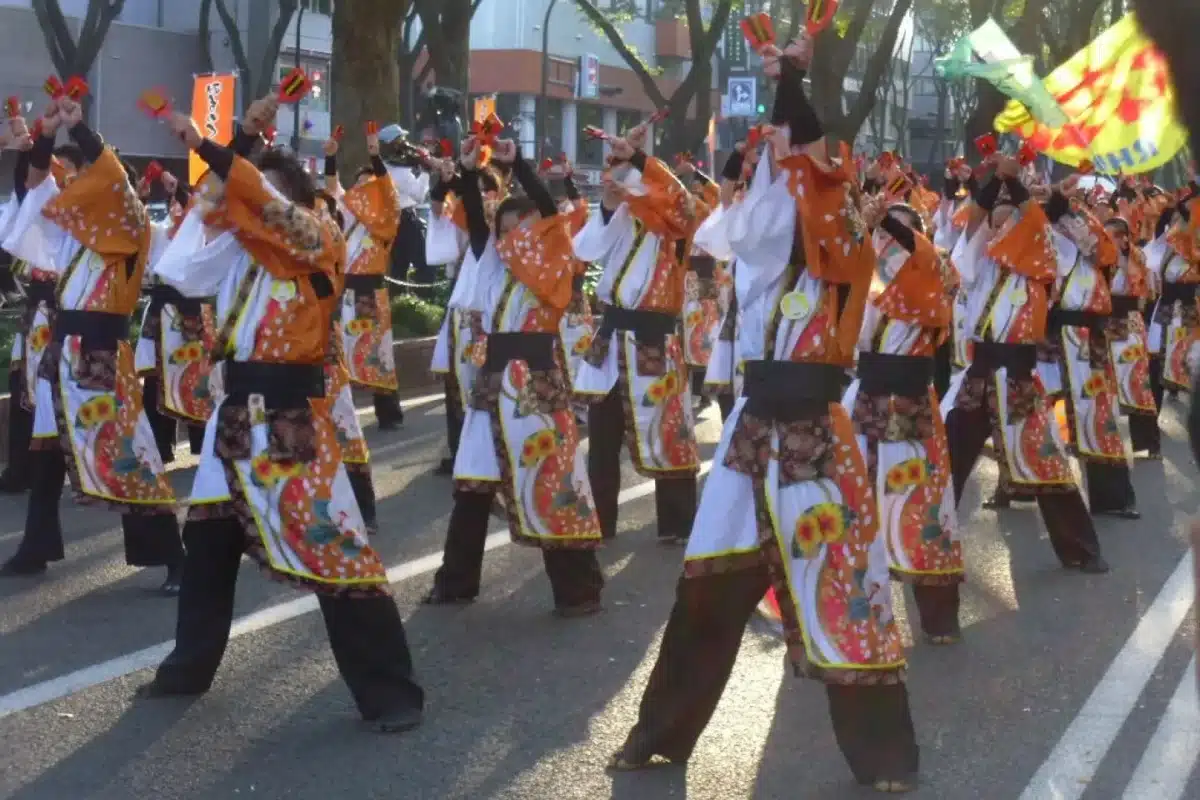
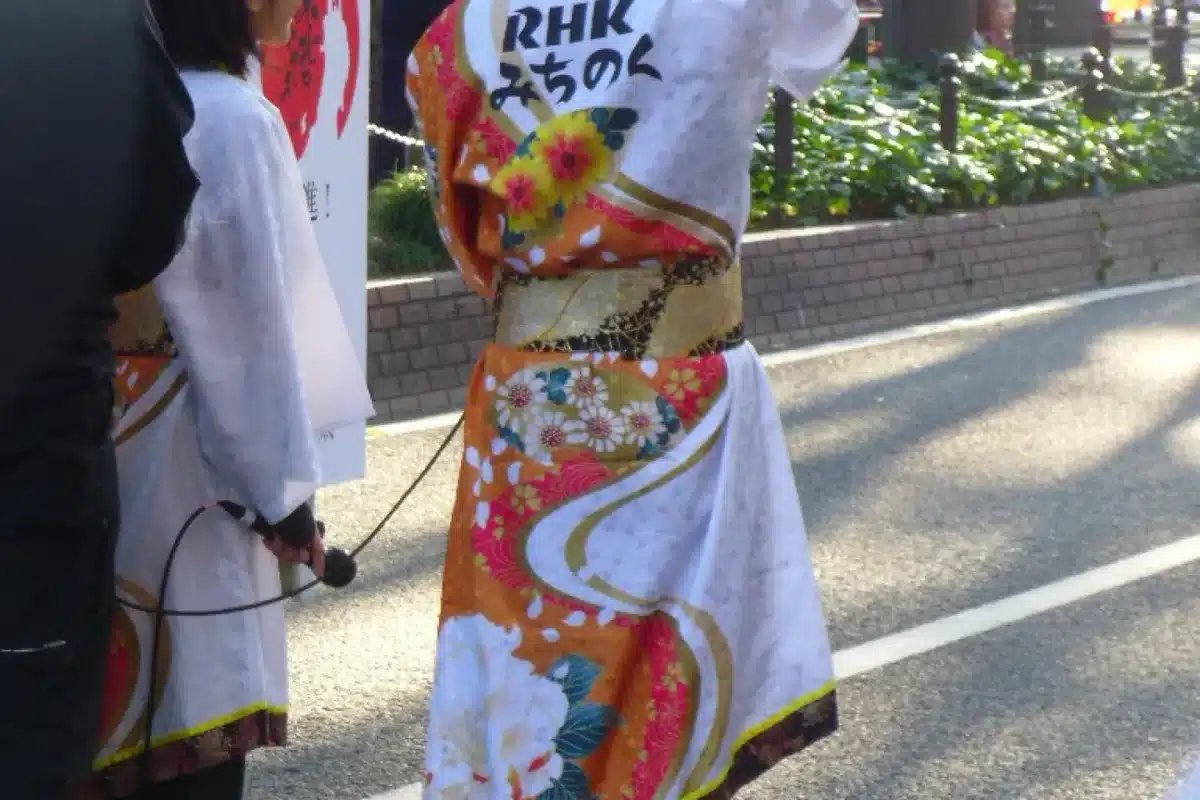
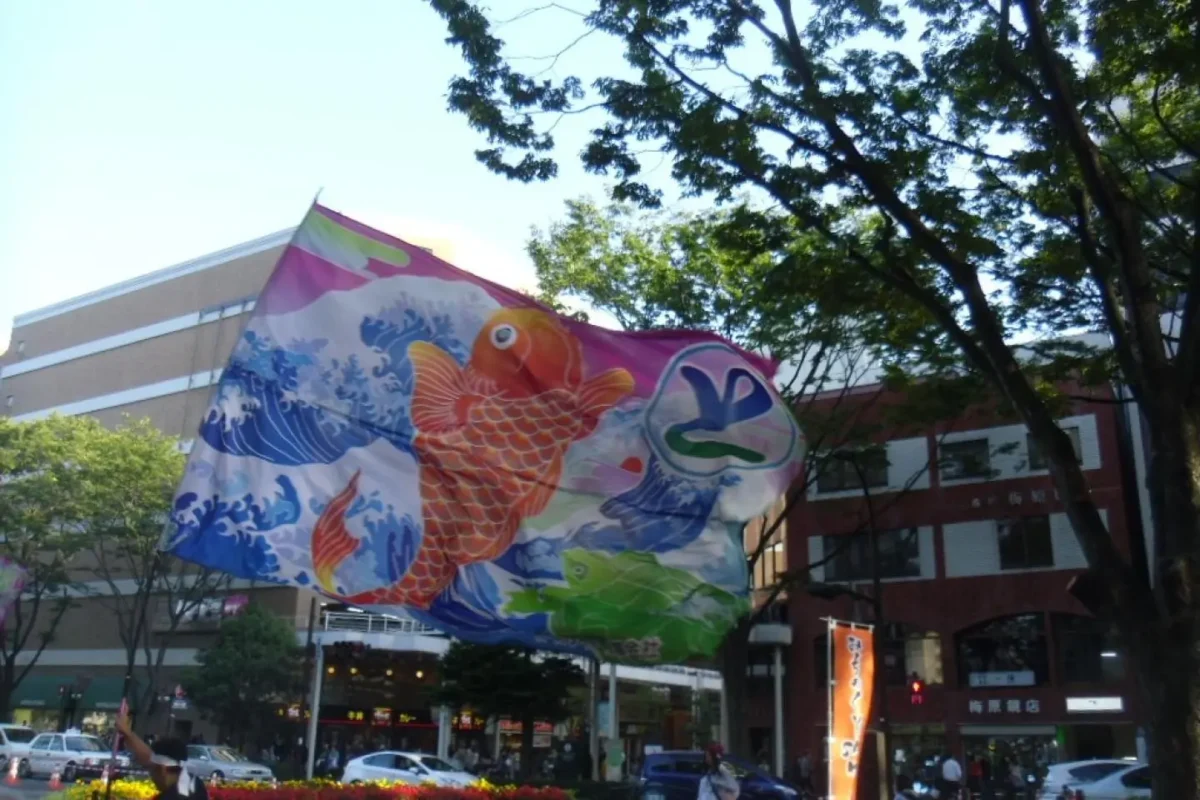
Visitors can expect highly choreographed group performances featuring traditional naruko clappers, colourful costumes, energetic music and large decorative flags. Teams have considerable creative freedom in their choreography and presentation, giving each performance its own identity.
Enjoy Your Event Stress-Free with Japan Travelo
Do you know? Planning events, festivals, concerts, and cultural experiences in Japan can be overwhelming. Japan Travelo brings everything together in one place, helping you manage your itinerary, transport, and accommodation with ease—so you can enjoy Japan without the stress of planning.
The festival is also designed as a city-wide experience. Rather than remaining at one stage throughout the event, visitors can travel between venues using Sendai’s subway, JR railway and bus network. Food stalls, merchandise areas and additional entertainment add to the festival atmosphere.
Event dates
October 10–11, 2026
The festival will take place across two days in Sendai, with performances distributed between the various stage venues and the Jozenji-dori parade area. The official organisers confirm the event dates and identify Kotodai Park as the main venue.
The festival operates in both daytime and evening periods, although individual venue schedules can differ. Visitors should consult the official programme before attending particular performances because teams and stages are allocated separately.
The event is scheduled to proceed in rainy weather, so visitors should prepare for changing autumn conditions.
Visiting this event? Don’t miss out on these amazing activities and local experiences while you’re here.
Venue & performance locations
Kotodai Park Main Venue
Address: 3-9 Honcho, Aoba Ward, Sendai, Miyagi, Japan
Kotodai Park is the central venue and one of the most important places to experience the festival. It hosts the general competition, revival stage, final stage and junior competition. Food stalls, merchandise sales and paid spectator seating are also available here.
Nishikicho Park
Address: 2-21 Honcho, Aoba Ward, Sendai, Miyagi, Japan
Nishikicho Park provides another outdoor festival setting with YOSAKOI performances and food stalls. It is only a short walk from Kotodai-Koen Station and can be combined with a visit to the main venue.
Aobayama Park Sendai Ryokusai-kan
This venue contains the Masamune Stage and Tanabata Stage, providing two separate performance areas within the Aobayama Park complex. Food and merchandise facilities are available.
Asuto Nagamachi Morinohiroba Park
This venue hosts general-category preliminary competition performances and also includes food stalls. It gives visitors the opportunity to watch teams outside the central Kotodai Park area.
Date Rium at JR Sendai East Gate Building
The Date Rium venue is particularly convenient for visitors arriving by train because it is directly connected to the Sendai Station area. The official access information places it approximately one minute from the JR Sendai Station East Gate.
Jozenji-dori Parade Venue
Jozenji-dori provides the festival’s major street-performance setting. Teams move along the parade route while performing, creating a very different experience from fixed-stage performances. Paid viewing areas are also available.
Full programme
The 2026 programme combines competitive YOSAKOI performances, special stages, guest appearances, parade performances and supporting entertainment.
The main programme includes:
- General-category YOSAKOI competition
- General-category preliminary performances
- Junior-category competition
- Revival performances
- Final competition stage
- Street parade
- Guest stages
- Special collaborative projects
- Large-flag performances
- Food stalls
- Festival merchandise
- Street entertainment
- Audience participation
The festival’s central concept is participation. Spectators are encouraged to clap, cheer and respond to performances rather than simply watching silently. This is particularly noticeable during the larger stages and parade performances.
The 2026 programme also includes guest and special-project entertainment alongside the YOSAKOI teams. Officially announced guests and projects include Kepatte Tohoku, Menkoi na Tohoku, Tohoku YOSAKOI Flag-Flying Federation Yushikai, GGSO (Golden Group Sounds Orchestra) and Chiitan☆. Additional entertainment includes the MichiYOSA street-performance festival and the ROAD TO ARAHAMA2028 collaboration.
Featured productions & performers
Michinoku Yosakoi Festival does not operate like a conventional concert with one headline performer. Its main performers are participating YOSAKOI teams, each presenting an original choreographed production.
Teams combine:
- Group choreography
- Naruko clappers
- Japanese and contemporary music
- Coordinated costumes
- Large flags
- Formations and movement
- Themed storytelling
- Audience interaction
The variety between teams is one of the defining characteristics of the festival. Some performances can emphasise traditional Japanese influences, while others incorporate modern dance, contemporary music and theatrical presentation.
The 2026 guest programme adds another layer of entertainment, including musical acts, performers, special guests and collaborative projects. Chiitan☆ will also appear around the festival venues as part of the programme, with appearances and activities taking place across the event.
Shows & performances
The main attraction is the YOSAKOI dance performance. Groups perform highly coordinated routines while using naruko clappers as an essential part of their presentation.
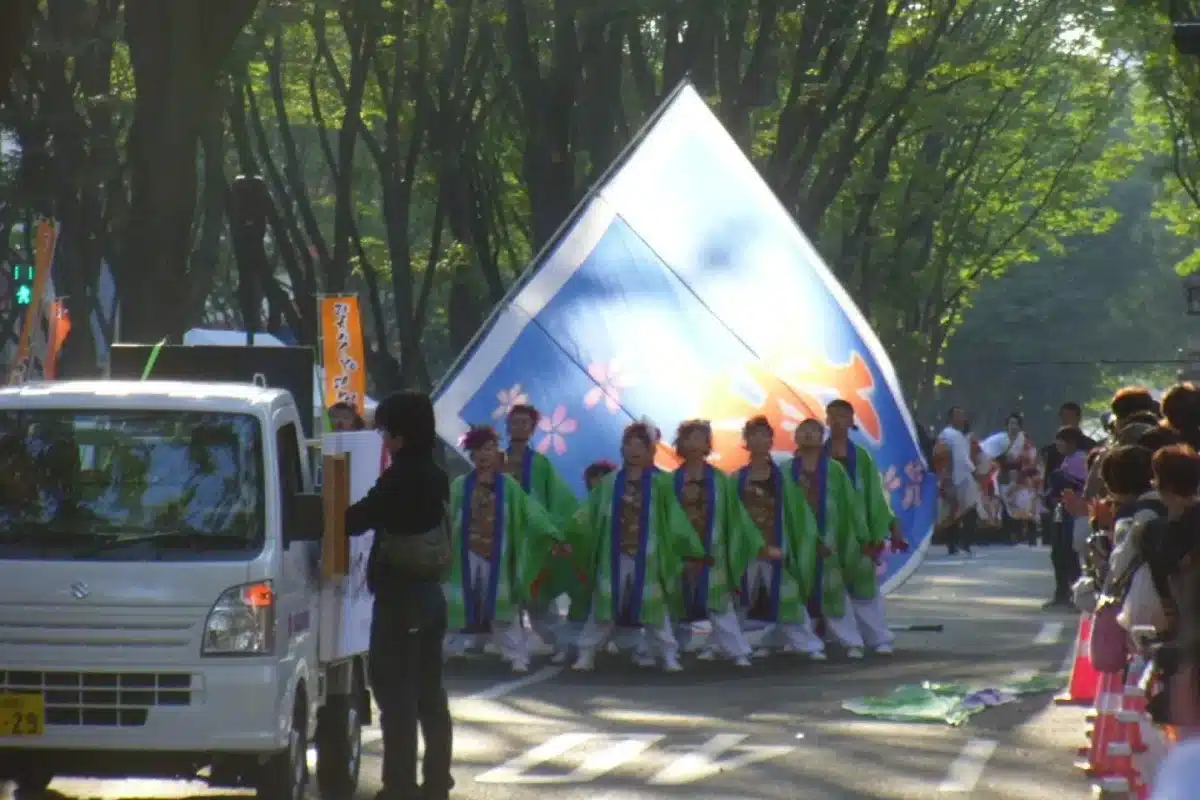
Performances can range from large ensemble productions with many dancers to junior performances featuring younger participants. Large flags are often carried and moved alongside the dancers, creating striking visual formations.
The competition structure gives visitors several different types of performances to watch:
- General competition: established YOSAKOI teams compete through choreographed performances.
- Preliminary performances: teams compete for progression through the competition structure.
- Junior competition: younger performers present their own YOSAKOI productions.
- Revival stage: teams and performances return in a dedicated revival programme.
- Final stage: selected teams appear in the concluding competitive performances.
- Parade performances: teams perform while moving along Jozenji-dori.
- Guest stages: invited performers provide additional entertainment.
- Special projects: collaborative performances and themed activities complement the main YOSAKOI programme.
The street parade is particularly distinctive because the dancers are not restricted to a conventional stage. Spectators can see formations travelling through the city while flags, costumes, music and choreography combine into a moving performance.
Performance schedule
The festival uses several simultaneous performance locations, so the programme is organised by venue rather than as one continuous stage schedule.
Kotodai Park is the central location for the major competition programme, including the general category, junior competition, revival performances and final stage.
Asuto Nagamachi Morinohiroba Park hosts preliminary general-category performances, while the Aobayama Park Sendai Ryokusai-kan site provides two separate stages.
Nishikicho Park and Date Rium offer additional opportunities to see teams without remaining at the main venue.
The Jozenji-dori parade is presented as a moving performance, with teams progressing along the designated route.
The official website currently provides the festival’s schedule section, but visitors should use the latest official programme for individual team times and stage assignments rather than relying on older schedules.
A practical approach is to choose the performances you most want to see first and then use the subway to fill the remaining time with performances at nearby venues.
Ticket types
General festival viewing is available free of charge from public standing areas, while paid spectator seating is offered at selected major performance locations.
The main paid seating options at Kotodai Park are:
- A Seat – Stand Seating: approximately $9.56 USD
- B Seat – Arena Seating: approximately $6.37 USD
- Prime A Seat: approximately $15.94 USD
- Prime B Seat: approximately $9.56 USD
- Junior/Revival A Seat: approximately $15.94 USD
- Junior/Revival B Seat: approximately $9.56 USD
- Final A Seat: approximately $31.87 USD
- Final B Seat: approximately $19.12 USD
- Jozenji-dori Parade one-day viewing pass: approximately $6.37 USD
These dollar figures are approximate conversions of the official ticket prices using an exchange rate of about ¥156.88 per US dollar.
The free standing areas remain an option for visitors who want to move between venues and watch different teams without purchasing spectator seating.
Ticket release & booking
Paid spectator tickets are sold through the official Ticket Pia channel linked by the festival organisers. The official festival viewing page identifies the Ticket Pia event listing and provides the booking route.
Paid seating is limited, so visitors who specifically want a seated view should purchase through the official ticket channel rather than assuming seating will be available at the venue.
Important booking points include:
- Check the seating category before purchasing.
- Confirm which performance period the ticket covers.
- Keep the booking information available when attending.
- Exchange advance tickets for the required wristband before entering the paid seating area.
- Follow staff instructions at the entrance.
The official organisers state that paid-seat admission requires a colour-coded wristband corresponding to the relevant seating category and performance period.
VIP & premium seating
The festival’s paid seating system is designed around viewing categories rather than a conventional VIP hospitality package.
The higher-priced options provide access to selected major performance periods, including the prime, junior/revival and final programmes. The final-stage seating includes both A and B categories, with A providing the higher-priced seating option.
Seating is not individually assigned. Entry is handled on a first-come basis within the relevant seating area, so visitors seeking a preferred position should arrive with sufficient time before their selected performance period.
Visitors holding consecutive viewing periods can remain in the same seat during the transition, subject to the organisers’ seating rules.
Event rules
The festival encourages active audience participation, including applause, handclaps and cheering. At the same time, spectators are asked to follow the viewing rules to protect sightlines and maintain a comfortable environment.
Important rules include:
- Do not hold smartphones or cameras above head height while seated.
- Do not use umbrellas in the spectator areas.
- Use a raincoat when weather conditions require rain protection.
- Follow staff instructions at entrances and seating areas.
- Keep required wristbands visible.
- Avoid blocking pathways or other spectators.
- Respect performers and other visitors.
- Follow any temporary crowd-control or safety instructions.
Paid-seat ticket holders must exchange advance tickets for the appropriate wristband before entering the paid viewing area. Seats are not individually assigned, and entry is handled on a first-come basis.
How to get there
Kotodai Park is located in central Sendai and is particularly easy to reach by subway.
The closest subway access is Kotodai-Koen Station on the Sendai Subway Namboku Line. Park Exit 1 is immediately close to the main venue.
Nishikicho Park is approximately a short walk from Kotodai-Koen Station.
Aobayama Park Sendai Ryokusai-kan can be reached via Kokusai Center Station on the Sendai Subway Tozai Line. The station is connected with the venue through Exit 1.
Asuto Nagamachi Morinohiroba Park can be reached from Nagamachi Station, with the park approximately an eight-minute walk from the indicated subway exit.
Date Rium at JR Sendai East Gate Building is particularly convenient for railway passengers, with the venue approximately one minute from the JR Sendai Station East Gate.
Public transport & parking
Public transportation is the recommended way to move between the festival’s different venues. The organisers specifically identify the Sendai Subway as a convenient option, with the JR railway and buses also useful for reaching different areas.
The subway is especially practical because several festival venues are positioned close to stations. Visitors staying near Sendai Station can also use the city’s rail network to reach the different performance areas.
A subway day pass may be available for visitors who plan to make multiple journeys around Sendai, subject to the current conditions of the local transport operator.
Driving directly between festival venues can be less convenient because of the concentration of visitors and activity around the central performance areas. Visitors using a car should consider parking outside the busiest festival zones and continuing by public transportation.
The Jozenji-dori parade can also involve traffic restrictions, so visitors should check the official transportation notices before attempting to drive into the central parade area.
Accommodation areas
Central Sendai provides the most convenient base for visitors attending Michinoku Yosakoi Festival.
Sendai Station area is useful for travellers arriving by JR train and provides extensive hotel, restaurant and shopping options. It also makes it easy to reach the Date Rium venue and connect with the subway.
Aoba-dori and Ichibancho are central areas with shopping streets, restaurants and pedestrian-friendly areas. They provide convenient access to the central festival venues.
Kokubuncho and Kotodai Park are particularly useful for visitors who want to stay close to the main performance area. From here, Kotodai Park and Nishikicho Park can be reached easily on foot.
Aobayama and the western central area can suit visitors who want easier access to the Aobayama Park stages and nearby cultural attractions.
For a festival-focused trip, accommodation near Sendai Station or Kotodai Park also makes it easier to return to the hotel between performances.
Best performances to attend
Kotodai Park competition performances are central to the festival experience because the main venue hosts the general competition, junior competition, revival stage and final stage.
The final stage is particularly useful for visitors who want to concentrate on the concluding competitive performances and see teams that progress through the competition.
The Jozenji-dori parade provides a completely different atmosphere. Instead of watching dancers from a fixed stage, visitors can see teams moving through one of Sendai’s major central streets.
Junior performances offer an opportunity to see younger YOSAKOI performers and different styles of choreography.
Aobayama Park stages are useful for visitors who want to combine performances with a visit to one of Sendai’s scenic cultural areas.
For visitors with limited time, focusing on Kotodai Park and the Jozenji-dori parade provides a concentrated introduction to the festival, while visitors staying longer can explore the additional stages.
Previous year’s highlights
The previous edition attracted approximately 600,000 visits over the two-day festival period, according to the official organisers. The event continued despite poor weather, with the organisers highlighting the enthusiastic performances and audience atmosphere.
The previous competition featured a wide range of YOSAKOI teams and awards across the general and junior categories. The official results recorded YayoI as the recipient of the Michinoku YOSAKOI Grand Prize, with several other teams receiving major awards.
The junior competition was also an important part of the programme, with younger performers presenting their own choreographed YOSAKOI productions.
The previous festival also demonstrated the importance of the city-wide format, with performances spread across multiple venues and the central parade bringing teams directly into the streets of Sendai.
The 2026 edition continues this multi-venue format while adding a programme of guest stages and special projects, giving visitors more entertainment beyond the competition itself.
Official tickets
The official festival website provides the latest information about viewing arrangements and links visitors to the authorised Ticket Pia booking page for paid spectator seating.
https://michinoku-yosakoi.net/
https://t.pia.jp/pia/event/event.do?eventCd=2629911
Free standing viewing is available at festival locations, while paid seating is provided at selected major performance areas. Visitors purchasing paid seating should check the latest official information for the applicable performance category and venue arrangements.
Video
Location
FAQ
What is the primary cultural origin of the Yosakoi dance style?
Yosakoi originated in Kochi Prefecture in 1954 as a modern adaptation of traditional folk dances. It has since evolved into a nationwide phenomenon celebrated through massive regional festivals across Japan.
Is it necessary to purchase tickets to watch the festival performances?
General admission to all outdoor street parades, public parks, and open-air stage venues is completely free. Paid tickets are only required for optional reserved grandstand seating areas.
How can visitors easily travel between the different festival venues?
The primary venues are concentrated within downtown Sendai and are easily accessible on foot or by using the city's efficient subway network. Free walking maps are also readily available at information booths.
What should first-time visitors bring for a comfortable festival experience?
Visitors should wear comfortable walking shoes, dress in weather-appropriate layers, and bring a camera for capturing performances. Staying hydrated and grabbing an event schedule will help maximize the experience.
Can international travelers participate or take dance workshops during the event?
The festival frequently hosts interactive workshops and open participation events where spectators can learn basic steps. It is a welcoming celebration designed to include people from all cultural backgrounds.

Leave a Reply