
What to expect in 2027
Summer Gagaku Performance in Sendai 2027 is expected to bring traditional Japanese court music, sacred dance and shrine culture together at Osaki Hachimangu in Sendai, Miyagi. The event offers visitors an opportunity to experience gagaku in an authentic Shinto shrine setting rather than in a conventional concert hall.
Gagaku is one of Japan’s oldest forms of traditional music and combines instrumental music, vocal traditions and dance. Historically associated with the imperial court, religious ceremonies and important cultural occasions, it is recognized for its distinctive sound created by traditional instruments such as the sho, hichiriki, ryuteki, biwa, koto and percussion. Osaki Hachimangu uses the setting of its historic shrine grounds to present this heritage in an atmosphere closely connected with Japanese religious tradition.
The 2027 event is currently listed for mid-August, with the exact schedule still to be confirmed. Visitors should therefore treat the programme, participating artists and performance details as provisional until the shrine publishes its final information.
Enjoy Your Event Stress-Free with Japan Travelo
Do you know? Planning events, festivals, concerts, and cultural experiences in Japan can be overwhelming. Japan Travelo brings everything together in one place, helping you manage your itinerary, transport, and accommodation with ease—so you can enjoy Japan without the stress of planning.
The experience is particularly suited to travelers interested in Japanese culture, traditional music, Shinto architecture, performing arts and heritage experiences. The performance is not designed like a large commercial music festival. Instead, the emphasis is on atmosphere, traditional instruments, ceremonial performance and the relationship between music and the shrine environment.
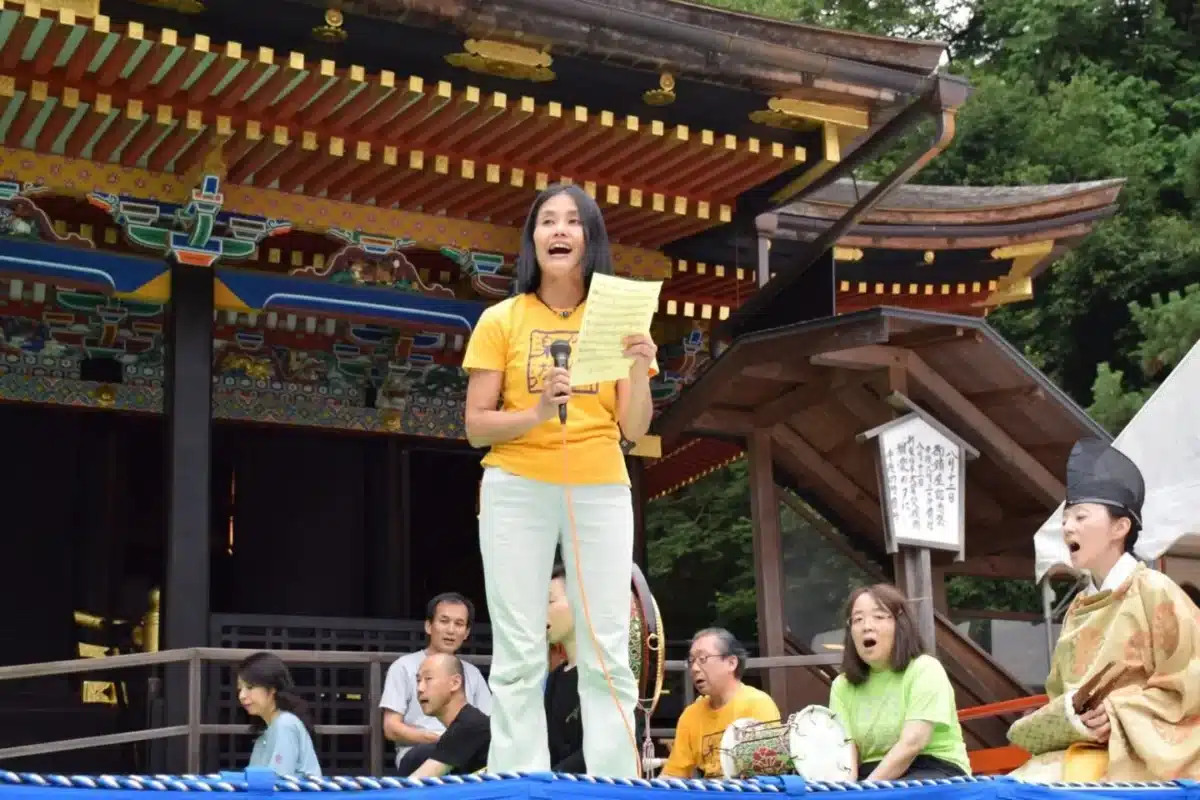
Previous editions have included an evening Gagaku programme following a shrine ceremony, with performances taking place in front of the main shrine buildings. Past programmes have included instrumental Gagaku, Kagura and traditional dance, giving audiences a combination of music and movement.
Event dates
2027 schedule
Mid August 2027 (Dates TBD)
The exact 2027 calendar date has not yet been confirmed by the organizers. JapanTravel currently lists the event for mid-August 2027 and notes that the dates will be updated once the organizers make an official announcement.
Visitors planning a trip around the performance should check the official Osaki Hachimangu website before making non-refundable travel arrangements.
The performance is traditionally associated with the shrine’s summer ceremonial programme and is presented in the evening, creating a distinctive atmosphere as traditional music and dance take place within the historic shrine grounds.
Visiting this event? Don’t miss out on these amazing activities and local experiences while you’re here.
Venue & festival site
Main venue
Osaki Hachimangu
4-6-1 Hachiman, Aoba Ward, Sendai, Miyagi 980-0871, Japan
Osaki Hachimangu is one of Sendai’s most important historic shrines and is particularly notable for its elaborate architecture and connection with the Date clan. The shrine’s grounds provide an atmospheric setting for Gagaku because the performance is presented alongside the traditional religious and architectural surroundings rather than being separated from them.
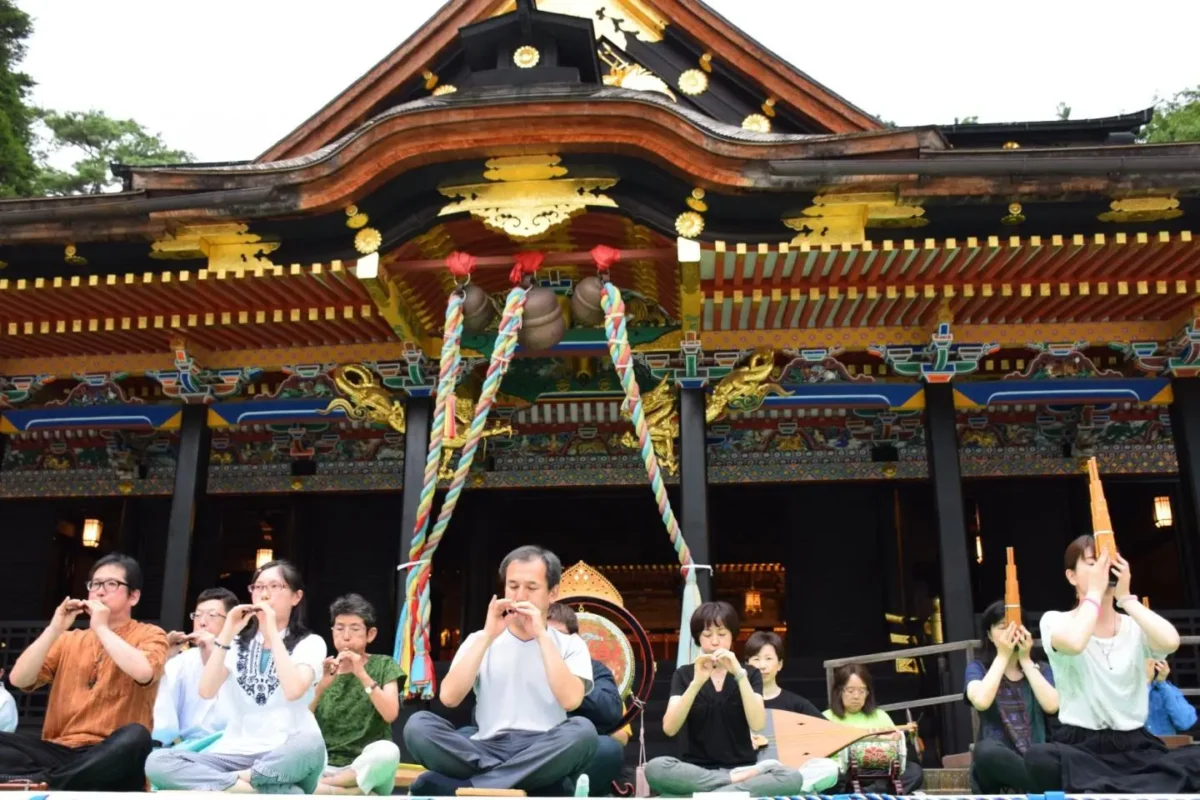
The performance area has traditionally been arranged near the main shrine buildings, allowing the audience to experience the music with the shrine architecture forming the backdrop. Earlier descriptions of the event specifically mention an open-air stage in front of the shrine’s main building.
The wider shrine grounds include pathways, traditional structures, wooded areas and ceremonial spaces. Visitors should allow some time before the performance to appreciate the shrine itself rather than arriving only for the music.
Full lineup
The complete 2027 artist lineup has not yet been announced.
The event is not structured around a large commercial festival lineup. Instead, the programme traditionally centers on Gagaku performers and musicians associated with the shrine and invited traditional-music specialists.
A recent official programme featured performers from Reigakusha together with Osaki Hachimangu personnel. This provides a useful indication of the type of ensemble that may appear in future editions, although the 2027 participants should not be considered confirmed until officially announced.
Potential programme elements include:
- Gagaku instrumental ensemble performances
- Traditional Japanese vocal pieces
- Kagura music
- Sacred dance
- Shrine-associated ceremonial music
- Traditional court-music repertoire
- Performances by invited Gagaku specialists
- Contributions from shrine personnel
The final lineup should be checked through the official shrine announcement before attending.
Headliners & featured artists
Unlike a contemporary music festival, Summer Gagaku Performance in Sendai does not normally use a headline-act format. The main attraction is the traditional ensemble and the ceremonial presentation of Gagaku itself.
Previous official programming has involved Reigakusha, a specialist ensemble dedicated to the performance and preservation of Japanese court music, together with performers connected with Osaki Hachimangu.
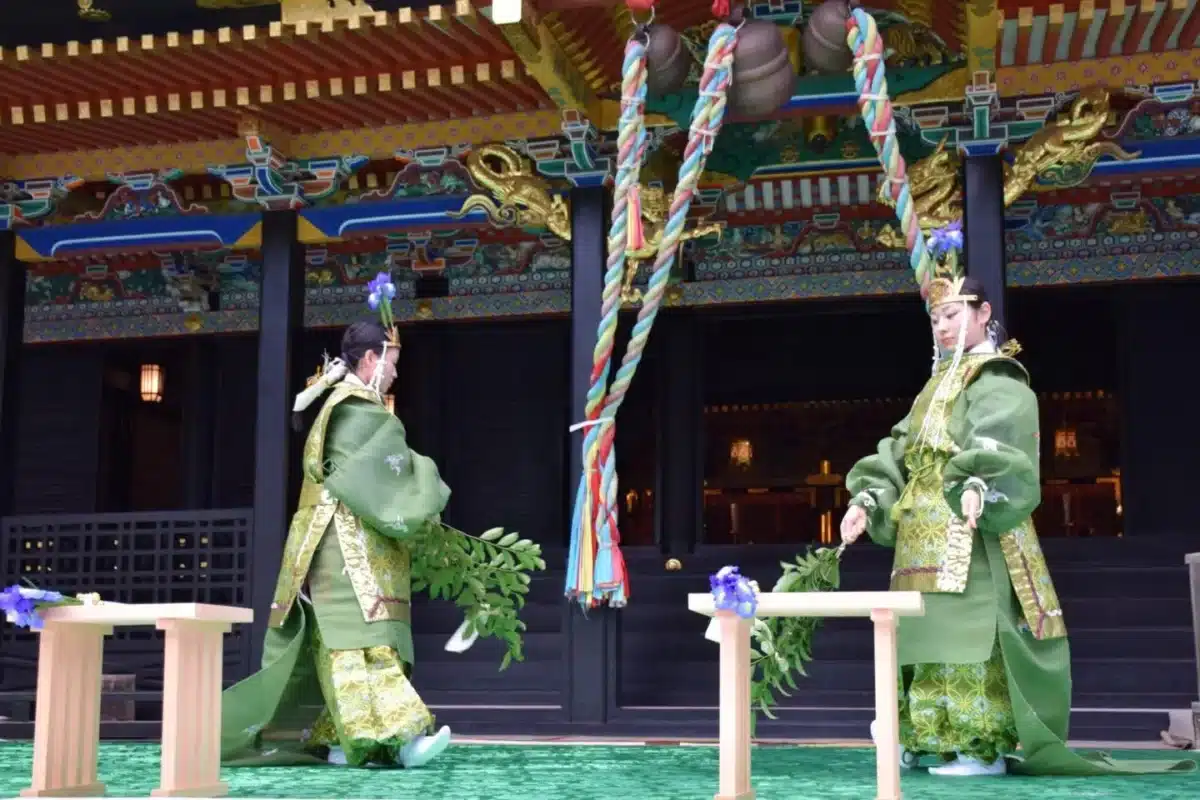
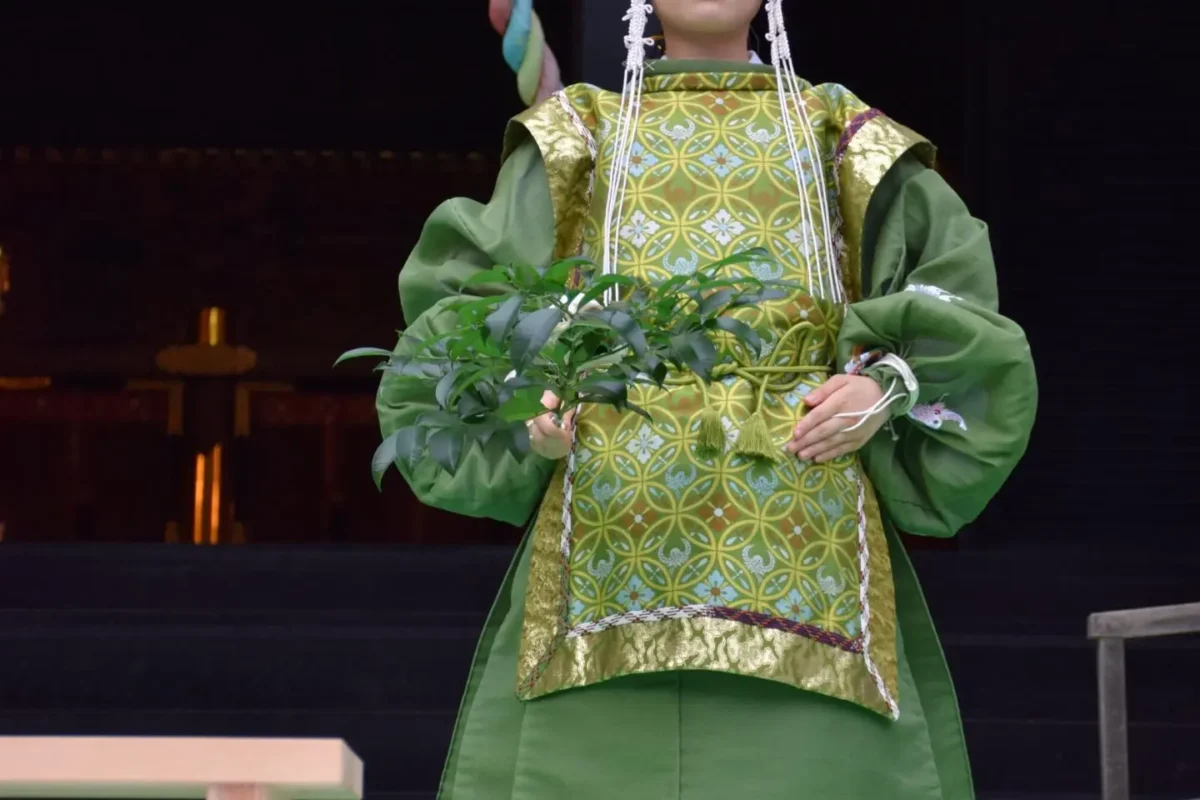
The programme has also featured traditional dance performed by shrine personnel. One of the notable examples is Aoba no Mai, a Kagura dance presented as an offering within the shrine setting.
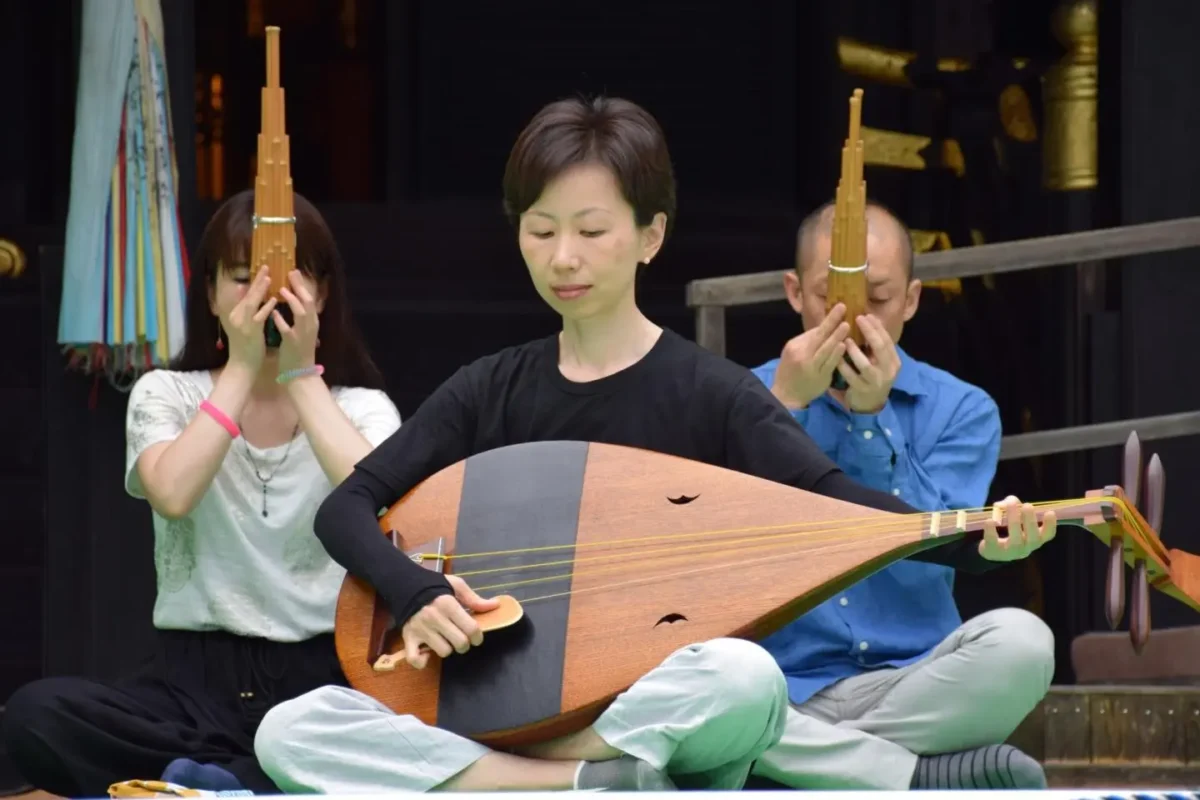
For visitors unfamiliar with Gagaku, the performance provides an introduction to several distinctive traditional instruments. The sho creates sustained, harmonically rich tones, while instruments such as the hichiriki and ryuteki provide characteristic melodic lines. String and percussion instruments add further layers to the ensemble.
The 2027 featured performers will be confirmed when the official programme is released.
Stages & performance areas
Main Gagaku performance area
The principal performance takes place within the Osaki Hachimangu grounds, traditionally using a specially arranged stage or performance space in front of the shrine’s main building.
This setting is an important part of the experience. Rather than placing traditional music inside a modern auditorium, the event connects the sound of the instruments with the shrine’s architecture, surrounding trees and ceremonial atmosphere.
Shrine ceremonial area
The wider shrine grounds are used for associated religious and ceremonial activities. Visitors attending the performance may encounter shrine rituals before the music begins.
Audience area
Audience arrangements depend on the official programme and the conditions established by the shrine. Seating or standing arrangements may vary, so visitors should follow instructions from shrine staff.
The event is relatively intimate compared with major Japanese music festivals, making the surrounding cultural environment an important part of the visit.
Stage-by-stage schedule
The 2027 detailed stage schedule has not yet been announced.
Based on previous editions, the programme is expected to follow a ceremonial sequence rather than a multi-stage festival format.
Shrine ceremony
The evening programme traditionally begins with a formal shrine ceremony connected with the event. This establishes the religious context before the musical performance.
Gagaku performance
The main Gagaku presentation follows the ceremonial portion. Traditional instrumental pieces are performed by the ensemble, showcasing the distinctive sound of Japanese court music.
Kagura performance
A traditional Kagura dance may form part of the programme. Previous performances have included shrine maidens presenting sacred dance in ceremonial attire.
Traditional finale
The programme may conclude with additional traditional music or a closing piece associated with the ceremony.
The final 2027 running order should be confirmed through Osaki Hachimangu before attending.
Set times
The exact 2027 set times have not been announced.
Previous editions have placed the main Gagaku performance in the evening, following the associated shrine ceremony. The official shrine programme indicates that the ceremony and Gagaku presentation are scheduled as connected parts of the same evening experience.
Visitors should plan to arrive early enough to locate the performance area, observe any entrance arrangements and experience the shrine surroundings before the main programme begins.
Because this is a traditional cultural event rather than a large outdoor music festival, set times may be presented as a ceremonial sequence instead of a conventional timetable of multiple artists.
Ticket types
The event is generally presented as a cultural and traditional shrine programme rather than a conventional ticketed music festival. JapanTravel currently lists the event as free, meaning visitors should not expect a standard festival admission ticket for ordinary attendance.
Possible arrangements include:
- General attendance: Free public participation where permitted by the organizers.
- Ceremonial participation: Certain shrine-related participation arrangements may have separate requirements.
- Reserved or special participation: If introduced for 2027, details should be confirmed directly with Osaki Hachimangu.
- Advance registration: Certain shrine activities may require advance reservation even when the general cultural programme is free.
A recent related official programme at Osaki Hachimangu listed a ceremonial contribution of approximately $20, but this should not be treated as a confirmed 2027 admission price.
VIP & premium options
Summer Gagaku Performance in Sendai does not operate like a commercial concert with standard VIP packages, backstage passes or premium festival lounges.
There is currently no confirmed 2027 VIP ticket programme.
If the organizers introduce reserved seating, special ceremonial participation or another premium arrangement, those details should be published through the shrine.
Visitors interested in a more formal cultural experience can also investigate shrine ceremonies and other official cultural programmes, but these should be considered separate from standard event admission unless the organizers explicitly combine them.
The best way to enjoy the performance is generally to arrive early, follow the shrine’s audience instructions and remain respectful of the religious setting.
Event rules
Because the performance takes place at an active Shinto shrine, visitors should treat the venue as both a cultural attraction and a religious site.
Respect the shrine
Keep voices low during ceremonies and performances, follow staff instructions and observe appropriate shrine etiquette.
Photography
Photography and recording may be restricted in particular areas or during certain portions of the ceremony. Visitors should follow signs and instructions from shrine personnel.
Remain in designated areas
Audience members should not enter restricted ceremonial or performance spaces. Do not cross barriers or approach performers while the programme is underway.
Dress appropriately
Comfortable summer clothing is practical, but visitors should choose respectful attire suitable for a shrine environment.
Keep the grounds clean
Take personal rubbish with you or use designated disposal facilities. Food and drinks should only be consumed where permitted.
Follow official instructions
The final rules for the 2027 programme may change depending on weather, crowd levels and shrine arrangements.
How to get there
Osaki Hachimangu is located in Aoba Ward in Sendai and is straightforward to reach from central Sendai.
The shrine’s official access information states that it is approximately a short drive from Sendai Station, while rail visitors can use the JR Senzan Line and continue on foot from a nearby station.
From Sendai Station
Travelers can take a taxi or use Sendai City buses. The shrine is a practical destination from central Sendai and can be incorporated into a wider city sightseeing itinerary.
By JR Senzan Line
The closest useful railway options include Kunimi Station and Tohoku Fukushi University-mae Station, both within walking distance of the shrine according to the official shrine access information.
By bus
Sendai City buses from the west-side bus terminal provide a convenient option. Visitors can use the designated bus stops serving Osaki Hachimangu and continue directly to the shrine entrance.
Public transport & parking
Public transport is the most practical choice for visitors attending an evening cultural programme.
Sendai City buses operate from the area around Sendai Station, with services stopping at Osaki Hachimangu-mae. The official shrine guidance specifically recommends the city bus route from the Sendai Station west bus terminal.
Visitors using rail can travel on the JR Senzan Line and walk from the nearby stations. The walking route provides an alternative to relying on buses during busy periods.
Parking availability around the shrine can be limited, particularly when ceremonies or special events attract additional visitors. Drivers should check the latest shrine instructions rather than assuming that ordinary parking arrangements will be available during the performance.
For international visitors staying in central Sendai, public transportation or a taxi is generally the simplest way to reach the shrine without dealing with event-period parking limitations.
Accommodation areas
Sendai Station
The area around Sendai Station offers the widest range of hotels, restaurants, shopping and transport connections. It is particularly convenient for visitors arriving by Shinkansen and planning to explore other parts of Miyagi.
Aoba Ward
Staying closer to the shrine can provide a quieter atmosphere and easier access to Osaki Hachimangu, although accommodation choices are more limited than around the main station.
Kokubuncho
This central entertainment district offers many restaurants, cafés and evening activities. It is suitable for travelers who want to combine the Gagaku performance with Sendai’s urban nightlife and dining scene.
Sendai city center
Central Sendai is a practical base for travelers visiting several attractions during their stay. The city’s transport network makes it possible to reach Osaki Hachimangu while keeping accommodation, restaurants and shopping within easy reach.
Food & drink
The Gagaku performance itself is primarily a cultural and ceremonial experience rather than a food festival, so visitors should not expect a large festival food market at the shrine.
Sendai, however, has an extensive local food scene that can be enjoyed before or after the performance.
Popular regional choices include:
- Sendai gyutan grilled beef tongue
- Zunda sweets and zunda desserts
- Zunda shakes
- Miyagi seafood
- Sendai-style sushi
- Japanese soba and udon
- Local rice dishes
- Seasonal Japanese sweets
- Traditional tea and café drinks
Visitors should avoid eating or drinking in areas where shrine etiquette or event instructions prohibit it. It is better to enjoy a meal in central Sendai before or after the performance and treat the shrine programme primarily as a cultural experience.
Accessibility
Osaki Hachimangu is a historic shrine with traditional outdoor grounds, pathways and architectural areas, so accessibility can differ from that of a modern concert venue.
Visitors with mobility requirements should consider contacting the shrine before attending to ask about the most suitable entrance, viewing location and available assistance.
The event may involve walking across outdoor surfaces and remaining in an audience area for an extended period. Evening conditions, summer heat and crowds may also affect comfort.
Visitors should allow additional time if they require accessible transportation or assistance. A taxi can be useful for reducing the amount of walking between public transportation and the shrine.
Accessibility arrangements for the 2027 performance should be confirmed with Osaki Hachimangu once the final event information is released.
Best days to attend
Because the 2027 programme is currently expected to take place as a specific summer cultural performance rather than a multi-day commercial festival, the best opportunity is the officially announced performance session itself.
Visitors interested in the complete cultural experience should arrive early enough to explore Osaki Hachimangu before the evening programme begins.
For traditional culture
Allow time to appreciate the shrine architecture and ceremonial surroundings before the performance.
For Gagaku enthusiasts
Prioritize the main performance period and stay through the complete programme, as the combination of instrumental music and Kagura provides a broader introduction to the tradition.
For first-time visitors
Arrive with enough time to understand the shrine layout, locate the audience area and settle before the performance begins.
For photographers
The evening atmosphere around the shrine can provide distinctive visual opportunities, but photography restrictions should always take priority over photography goals.
Previous year’s highlights
Recent editions have demonstrated the event’s emphasis on authentic Gagaku and shrine-based performance rather than commercial entertainment.
An official Osaki Hachimangu report describes a recent programme involving Reigakusha performers and shrine personnel. The repertoire included the vocal work Shira-Usuyō, the sacred Kagura dance Aoba no Mai, instrumental Gagaku pieces, Mikagura with Hitoshinaga dance, another sacred dance and a traditional closing piece.
The performance atmosphere is one of the event’s defining characteristics. The shrine has described the Gagaku presentation as taking place after the formal ceremony, with the performance unfolding in the evening surroundings of the shrine grounds.
JapanTravel has also highlighted the opportunity for visitors to experience Gagaku in a relatively relaxed concert atmosphere, including traditional singing and an authentic Kagura performance by shrine maidens.
The history of the programme is closely connected with Osaki Hachimangu itself. The shrine explains that the Gagaku evening was established as part of a commemorative programme and has become an established cultural feature of its summer activities.
For 2027, the exact repertoire, participating musicians and performance sequence remain subject to official confirmation.
Official tickets
Summer Gagaku Performance in Sendai is currently listed as a free event rather than a conventional ticketed festival.
For the latest 2027 information, visitors should check the official Osaki Hachimangu website and its Gagaku programme page before traveling. The shrine’s official information is the most reliable source for final performance arrangements, participation requirements, access instructions and any changes to the programme.
Official venue: Osaki Hachimangu
Official event information: https://www.oosaki-hachiman.or.jp/
Official Gagaku information: https://www.oosaki-hachiman.or.jp/festival/gagaku/
The 2027 performance details should be checked shortly before travel because the event page currently indicates that the exact schedule has not yet been confirmed.
Location
FAQ
What is Gagaku and where did this traditional art form originate?
Gagaku is Japan's oldest classical court music, originally imported from continental Asia during ancient times and refined within imperial and religious circles. Over centuries, it developed into a distinctly Japanese high art form deeply tied to shrine rituals and solemn state ceremonies.
What makes the concert experience at Osaki Hachimangu Shrine unique?
Unlike rigid, highly formal auditorium performances, this shrine concert offers a relaxed, casual atmosphere designed for community engagement. Attendees even have the rare opportunity to sing along with performers and witness authentic miko shrine maiden dances.
What role do traditional instruments play in creating the sound of Gagaku?
Instruments like the shō mouth organ, ryūteki flute, and hichiriki oboe produce a dense, microtonal soundscape without a steady Western beat. Musicians synchronize through shared breathing rhythms, creating an expansive, floating acoustic texture unlike other musical styles.
What is the difference between Kangen and Bugaku in Gagaku performances?
Kangen focuses purely on instrumental ensemble concert performance played by seated musicians in a circular formation. Bugaku pairs the court music with slow, majestic choreography performed by dancers wearing elaborate silk costumes and masks.
Are visitors allowed to take photographs and record video during the event?
Photography policies vary by specific segment, but flash photography and video recording are often restricted during sacred portions. Spectators should check event signage or ask shrine staff regarding permitted photo opportunities before the concert begins.
How should first-time visitors prepare for attending a live Gagaku concert?
First-time attendees should arrive early to secure good seating in the open-air courtyard and dress comfortably for warm summer weather. Patience is essential, as the slow-paced, meditative tempo requires quiet contemplation rather than fast-paced modern entertainment.
What is the significance of the miko dances featured during the summer program?
Shrine maidens perform traditional Kagura dances in elegant attire as a central highlight honoring local deities and seasonal blessings. This ancient ritual element connects contemporary audiences directly to the spiritual roots of Japanese shrine traditions.

Leave a Reply