




Tea Ceremony Traditions & Cultural Significance
The Japanese tea ceremony, known as Sado or Chado, is a profound traditional art form that emphasizes harmony, respect, purity, and tranquility. It is much more than simply drinking tea; it is a spiritual discipline and a choreographed ritual designed to foster a deep connection between the host, the guests, and the natural world. Every single movement, from the precise folding of the silk cloth to the gentle wiping of the lacquerware, has been refined over centuries to create an atmosphere of complete mindfulness and artistic grace.
The Tokyo Grand Tea Ceremony was established to bring this ancient ritual out of exclusive, closed environments and introduce it to a broad domestic and international audience. By presenting tea ceremonies in historic gardens and open-air architectural museums, the event preserves the authentic spirit of Japanese hospitality while making it entirely accessible. This approach ensures that the fundamental aesthetic principles of traditional Japanese culture are passed down to future generations and shared openly with visitors from all corners of the globe.
Participating in a traditional tea gathering offers a rare opportunity to step away from the fast-paced noise of modern urban life and immerse oneself in a moment of profound stillness. The seasonal arrangement of flowers, the selection of hanging scrolls, and the artisanal craftsmanship of the ceramic tea bowls all work together to tell a unique story. Through these elements, attendees experience the Japanese concept of Ichigo Ichie, which reminds participants to cherish every single meeting as a once-in-a-lifetime encounter that will never be repeated in exactly the same way.
Enjoy Your Event Stress-Free with Japan Travelo
Do you know? Planning events, festivals, concerts, and cultural experiences in Japan can be overwhelming. Japan Travelo brings everything together in one place, helping you manage your itinerary, transport, and accommodation with ease—so you can enjoy Japan without the stress of planning.
When to Attend
- Event Date: Mid-October 2026 (Dates TBD)
- Event Duration: Two-weekend event format spanning multiple days across designated cultural venues
Visiting this event? Don’t miss out on these amazing activities and local experiences while you’re here.
Japanese Sweets, Matcha & Tea Etiquette
Traditional Japanese confectionery, known as wagashi, plays an essential role in the tea ceremony by balancing the intense bitterness of the powdered green tea. These delicate sweets are handcrafted from natural ingredients like sweet bean paste, rice flour, and seasonal vegetable extracts, shaped meticulously to reflect the flora, fauna, and changing moods of the natural seasons. Eating a sweet just moments before drinking the matcha coats the palate, creating a harmonious chemical and sensory interplay that defines the ultimate taste experience of the ceremony.
Matcha itself is made from shade-grown green tea leaves that have been carefully dried and ground into an ultra-fine powder using traditional stone mills. When whisked vigorously with hot water, it creates a vibrant emerald-green beverage rich in antioxidants, umami flavor notes, and a deep cultural heritage. Preparing matcha requires exact water temperatures, precise measurements, and rhythmic wrist movements, turning a simple beverage preparation into a hypnotic, meditative performance that engages all the human senses simultaneously.
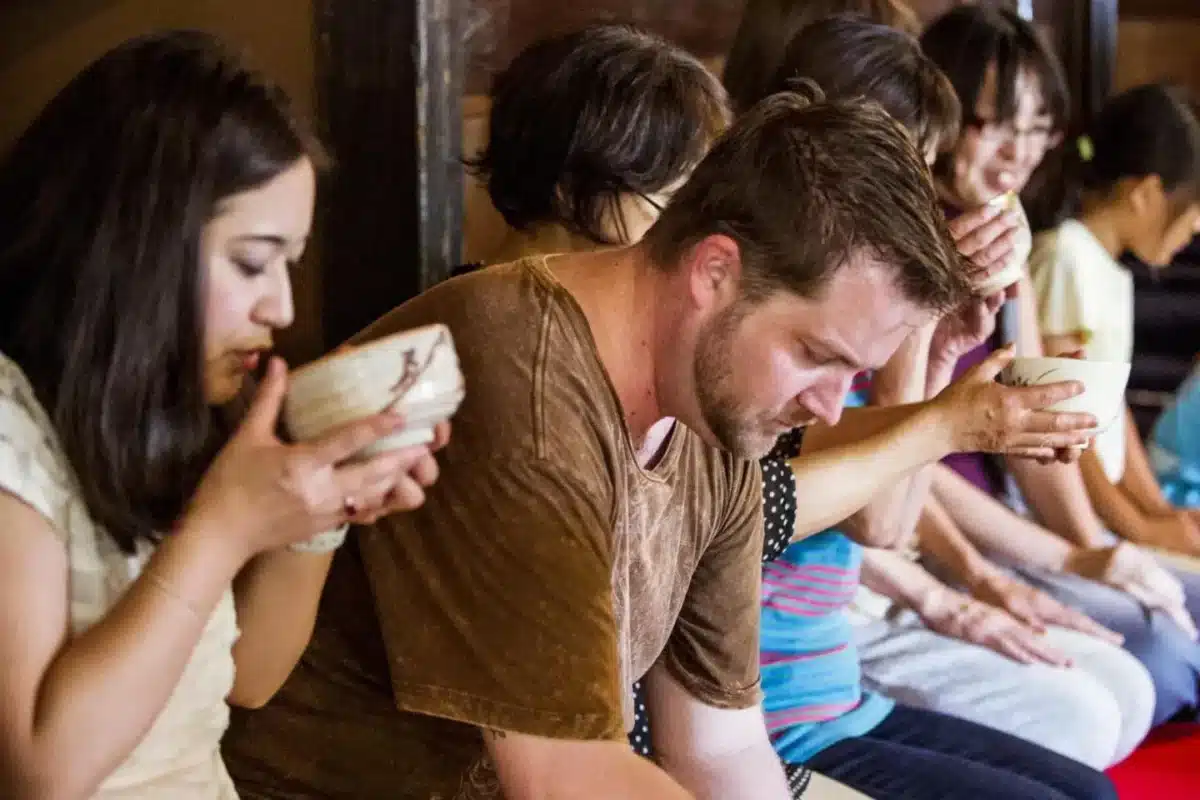
Mastering basic tea etiquette allows guests to fully participate in the respectful exchange between host and recipient without feeling intimidated. Simple gestures, such as bowing before accepting the bowl, rotating the bowl twice to avoid drinking from its decorated front face, and making a polite slurping sound on the final sip to signal completion, show deep appreciation for the host’s effort. These etiquette rules are designed to foster mutual respect, social harmony, and graceful mindfulness throughout the duration of the gathering.
- Selection of seasonal wagashi crafted to mirror natural changes
- Balancing sweet confection flavors with bitter green tea profiles
- Stone-milled shade-grown green tea leaf preparation methods
- Proper bowl rotation techniques during the formal drinking process
- Expressing gratitude to the host through traditional bowing gestures
- Understanding the cultural significance of the final sip sound
- Mindful handling of delicate lacquer and ceramic utensils
Admission Details
- How Tickets Are Sold: Tickets for specific tea ceremony sessions can be purchased directly at each location or through advance registration options where required
- Admission Type: General admission to the museum grounds is free, while participation in structured tea ceremony sessions requires a separate session ticket
- Ticket Pricing: Minimum price is $3.50 and maximum price is $5.50 (approximate conversion based on standard local tea session fees)
- Special Seating Options: Open-air nodate tea seats and beginner-friendly workshop seating are available for walk-up participants at both locations
- VIP Options: No specific VIP tiers are offered, as the event emphasizes egalitarian cultural access and traditional community participation for all visitors
Tea Ceremony for Beginners, Children & International Visitors
The Tokyo Grand Tea Ceremony is specifically designed to dismantle the intimidating barriers often associated with formal Japanese tea culture, welcoming complete novices with open arms. Special programs, including simplified outdoor nodate sessions and introductory workshops, provide a gentle entry point where questions are encouraged and rigid protocols are relaxed. This inclusive philosophy ensures that anyone, regardless of their prior knowledge or cultural background, can comfortably sit down, enjoy a bowl of freshly whisked matcha, and appreciate the serene art form.
Children are also given dedicated spaces and tailored sessions to experience the joy of traditional Japanese hospitality in a fun, engaging environment. By teaching kids how to properly hold a tea bowl, appreciate seasonal sweets, and respect their peers through polite bowing, the event plants the seeds of cultural appreciation at an early age. These child-friendly sessions use simplified explanations and interactive elements to keep young minds curious, enthusiastic, and fully immersed in the historical crafts of Japan.
International visitors receive exceptional support, with dedicated English-interpreted tea seats available to break down linguistic and cultural barriers effortlessly. Expert guides and hosts explain the philosophical symbolism behind the utensils, scroll choices, and preparation steps in English, allowing foreign guests to understand the deep meaning of what they are experiencing. This thoughtful international accommodation makes the festival a world-class cultural exchange destination, uniting people from diverse global backgrounds through a shared appreciation of peace, mindfulness, and hospitality.
Where to Go
- City and Country: Tokyo, Japan
- Venue Name: Edo-Tokyo Open Air Architectural Museum
- Google Maps Address: Japan, 〒184-0005 Tokyo, Koganei, Sakuracho, 3 Chome−7−1 内 都立小金井公園
Tea Seats, Nodate & Hands-On Experiences
- Formal indoor Cha-seki sessions requiring advance registration
- Casual outdoor Nodate open-air tea seats for walk-up guests
- Special English-interpreted tea ceremonies designed for international visitors
- Beginner-friendly introductory workshops tailored specifically for children
- Interactive demonstrations of traditional sweet making and craftsmanship
- Direct engagement with bamboo whisks and ceramic tea bowls
- Guided explanations of seasonal scroll choices and floral displays
Contact & Information
- Phone Number: 03-3813-1181
- Website: https://en.japantravel.com/tokyo/tokyo-grand-tea-ceremony/14249
Different Tea Schools & Tea Ceremony Styles
Japan’s tea culture is richly diverse, housing numerous distinct schools that each preserve their own unique lineages, historical interpretations, and stylistic nuances. The three principal historical traditions—Omotesenke, Urasenke, and Mushakojisenke—form the core of Japanese tea practice, descending directly from the legendary tea master Sen no Rikyu. At large cultural gatherings, these different schools come together side by side, offering guests a rare chance to observe contrasting techniques, varying whisking methods, and distinct ways of handling traditional utensils within a single unified venue.
Beyond the major lineages, many regional and specialized schools bring their own distinct flavors and aesthetic philosophies to the public space. Some schools favor a bold, vigorous whisking style that produces a thick, frothy layer of foam, while others emphasize a quieter, more subdued approach that highlights the natural imperfections of rustic ceramic bowls. These stylistic variations reflect centuries of artistic evolution, local patronage, and philosophical debate, all of which contribute to the vibrant tapestry of contemporary Japanese tea arts.
- Omotesenke school lineage and quiet aesthetic preferences
- Urasenke school focus on frothy preparation and global outreach
- Mushakojisenke traditions emphasizing minimalist spatial arrangements
- Contrasting utensil handling and folding techniques among schools
- Regional stylistic variations in bowl selection and room decoration
- Philosophical dialogues embedded within different school practices
Edo Culture, Traditional Arts & Cultural Activities
The cultural atmosphere of Edo-Tokyo forms the historical backdrop of the entire gathering, linking contemporary urban life to the vibrant merchant and samurai traditions of the Tokugawa shogunate period. During this historic era, arts such as woodblock printing, storytelling, fine textiles, and culinary crafts flourished under urban peace, creating a distinct aesthetic that still influences modern Japanese identity. The event deliberately integrates these neighborhood arts into the schedule, offering visitors a holistic view of the lifestyle that originally nurtured the growth of public tea culture.
- Exploration of historical Tokugawa shogunate urban arts and lifestyle
- Live performances of traditional folk dances and koto music
- Intricate demonstrations of traditional Japanese candy sculpture artistry
- Expert ikebana flower arrangement showcases and seasonal displays
- Marketplace stalls offering authentic green tea and ceramic tools
- Artisanal wagashi sweet sales for home souvenir collection
- Interactive cultural workshops bridging historic and modern Tokyo life
Video
Location
FAQ
What are the primary dates and operational hours for the event?
The event takes place over mid-October weekends with daily activities running generally from morning until late afternoon hours. Visitors should check the official schedule announcements beforehand to plan their specific venue visits accordingly.
Are reservations mandatory to attend all tea ceremony sessions?
Indoor formal tea ceremonies require advance registration due to limited seating capacities inside historic rooms. However, outdoor nodate tea seats and beginner workshops welcome walk-up participants directly at the location.
Can international visitors who do not speak Japanese attend easily?
Special English-interpreted tea seats are available at select locations to help foreign guests understand the rituals. Hosts provide clear explanations of the utensils, traditions, and philosophical meanings throughout the session.
Is it allowed to take photographs during the tea ceremony sessions?
Photography guidelines vary depending on the specific tea seat and host school rules to maintain a quiet atmosphere. Guests should always ask permission from the staff before taking photos inside active tea rooms.
What items should first-time attendees bring to the venue?
Participants are encouraged to bring comfortable socks since removing shoes is required inside traditional Japanese buildings. Bringing a small personal fan or handkerchief can also enhance comfort during outdoor autumn activities.
Are there food and souvenir shopping options available on site?
Traditional wagashi sweets, fresh green tea leaves, and artisanal tea tools are available for purchase. Visitors can browse various artisan stalls showcasing authentic crafts from local Tokyo makers and historic guilds.
How can visitors travel to the Edo-Tokyo Open Air Architectural Museum?
The venue is accessible via local train lines followed by a short connecting bus ride from the station. Clear directional signs and transport guides are provided on the official event portal for attendees.

Leave a Reply