
-
September 25, 2026
Event date:
-
September 26, 2026
Event end:
What to expect in 2026
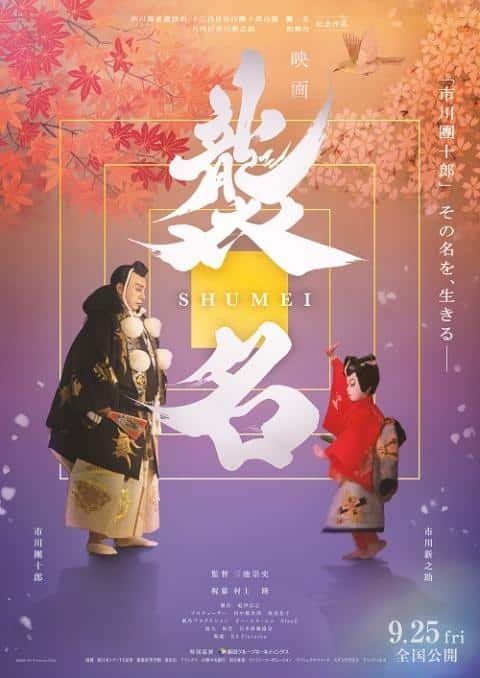
The Screening film “Succession of Names” 2026, Tokyo, Japan is part of the Japanese theatrical release of Shumei, the documentary film directed by Takashi Miike and centered on Ichikawa Danjuro XIII and the succession ceremony of the Ichikawa family. The film opens nationwide in Japan on Friday, September 25, 2026, and the Tokyo opening-day programme includes a special stage greeting at Marunouchi Piccadilly. Ticket Pia lists the Tokyo opening-day stage greeting for September 25, followed by additional release-commemorative stage greetings in Osaka and Nagoya on September 26.
Shumei is Takashi Miike’s first documentary feature. The film follows the historic succession of Ichikawa Danjuro XIII and the simultaneous first stage appearance associated with Ichikawa Shinnosuke VIII, documenting both the public ceremony and the private preparation behind it. Production continued for more than three years, allowing the documentary to examine the succession process over an extended period rather than focusing only on the final performances.
The documentary also records the difficult circumstances surrounding the succession. The ceremony had been postponed for approximately two and a half years during the COVID-19 pandemic before eventually taking place in 2022. The film uses this background to examine the relationship between inherited tradition and the individual responsibilities carried by Danjuro as both a father and the new head of an important Kabuki lineage.
Enjoy Your Event Stress-Free with Japan Travelo
Do you know? Planning events, festivals, concerts, and cultural experiences in Japan can be overwhelming. Japan Travelo brings everything together in one place, helping you manage your itinerary, transport, and accommodation with ease—so you can enjoy Japan without the stress of planning.
Another important element is the work of contemporary artist Takashi Murakami. Murakami created the ceremonial curtain used for the succession performance, and Miike’s documentary records aspects of its creation. This gives the film a visual-art dimension alongside its focus on Kabuki performance and family succession.
The 2026 release is also connected with international festival presentation. Shumei was officially selected for the Out of Competition section of the 83rd Venice International Film Festival, giving the documentary an international premiere context before its Japanese theatrical release.
For Tokyo audiences, the September 25 stage-greeting screening provides an opportunity to see the documentary around its official Japanese opening and participate in a cinema event featuring the film’s principal figures.
Festival dates
The main Japanese theatrical release begins on Friday, September 25, 2026.
The associated special stage-greeting programme extends across September 25 and September 26.
Tokyo opening day: September 25, 2026
Tokyo venue: Marunouchi Piccadilly, Tokyo
Osaka stage greeting: September 26, 2026
Osaka venue: Namba Parks Cinema
Nagoya stage greeting: September 26, 2026
Nagoya venue: Midland Square Cinema
Ticket Pia currently lists the Tokyo opening-day stage greeting as available through September 24 at 4:00 PM, while the Osaka and Nagoya release-commemorative stage-greeting allocations are listed as sold out.
The film itself begins regular theatrical release on September 25, meaning audiences who cannot attend one of the stage-greeting events can still look for ordinary screenings at participating cinemas.
The documentary has a reported running time of 97 minutes and is classified G in Japan.
Visiting this event? Don’t miss out on these amazing activities and local experiences while you’re here.
Venues & festival locations
The principal event supplied for this listing is the Tokyo opening-day stage greeting at Marunouchi Piccadilly.
Tokyo: Marunouchi Piccadilly, Yurakucho, Tokyo
Osaka: Namba Parks Cinema, Naniwa Ward, Osaka
Nagoya: Midland Square Cinema, Meieki, Nagoya
Marunouchi Piccadilly is located at 2-5-1 Yurakucho, Chiyoda City, Tokyo, inside Yurakucho Marion. The cinema complex provides multiple screens and is positioned in one of Tokyo’s major central entertainment and shopping districts. It is particularly convenient from JR Yurakucho Station and Tokyo Metro Ginza Station.
Namba Parks Cinema is located on the eighth floor of Namba Parks at 2-10-70 Nambanaka, Naniwa-ku, Osaka. The cinema is directly connected with Nankai Namba Station and is also accessible from several Osaka Metro, Kintetsu, Hanshin and JR stations.
Midland Square Cinema is located at 4-7-1 Meieki, Nakamura-ku, Nagoya, within the Midland Square commercial building. The cinema operates alongside Midland Square Cinema 2 at the Symphony Toyota Building.
These locations are cinemas rather than a single festival campus, so audiences attending different stage greetings will need to travel separately to the relevant city.
Full programme
The central programme is the screening of Shumei, followed by special stage-greeting appearances at selected release events.
The documentary focuses on the Ichikawa family’s major succession ceremony and the transition from Ichikawa Ebizo to Ichikawa Danjuro XIII. It also documents the simultaneous succession and first-stage milestone involving his son, Ichikawa Shinnosuke.
The film’s production extended over more than three years. This allows the documentary to move beyond the spectacle of the final Kabuki performances and examine preparation, family responsibilities and the pressure surrounding the succession.
The programme can be understood through several connected elements:
Main feature: Screening of Shumei
Subject: Ichikawa Danjuro XIII’s succession and the Ichikawa family
Supporting subject: Ichikawa Shinnosuke and the next generation of the family
Creative element: Takashi Murakami’s ceremonial curtain
Director: Takashi Miike
Narration: Anne
Special event: Stage greetings at selected release screenings
The Tokyo presentation is the opening-day stage greeting on September 25, while the Osaka and Nagoya presentations follow on September 26.
Featured films & premieres
The only featured film is Shumei, a 2026 Japanese documentary directed by Takashi Miike.
The film records the succession of Ichikawa Danjuro XIII and the historical events surrounding the Ichikawa family’s succession ceremony. It focuses particularly on the 2022 succession presentation, which finally took place after a two-and-a-half-year pandemic-related postponement.
The documentary also captures the creative process behind the ceremonial curtain created by contemporary artist Takashi Murakami. The curtain depicts the Kabuki Juhachiban repertoire and forms an important visual element of the succession celebrations.
The film has an international festival connection through its official selection for the Out of Competition section of the 83rd Venice International Film Festival. This was not a competition entry but an official festival presentation outside the main competition.
The Japanese theatrical release follows that international festival presentation, beginning September 25, 2026. The film has a running time of 97 minutes.
Directors, actors & guests
Takashi Miike is the director of Shumei. The film represents his first documentary feature, marking a departure from the fictional films for which he is internationally known.
Ichikawa Danjuro XIII is the principal figure at the center of the documentary. The film follows his succession and his responsibilities within the Ichikawa family, while also showing his role as a father preparing for the next generation.
Ichikawa Shinnosuke is also featured. The documentary records the family succession from both generational perspectives, connecting Danjuro’s inherited responsibilities with Shinnosuke’s emergence within the Kabuki tradition.
Takashi Murakami contributes another important dimension through the ceremonial curtain created for the succession performance.
Anne provides the film’s narration.
For the stage-greeting programme, Ichikawa Danjuro and Ichikawa Shinnosuke are confirmed as scheduled participants for the Osaka and Nagoya events. Midland Square Cinema specifically lists both names for the September 26 stage greeting, while Namba Parks Cinema also lists them as scheduled speakers.
Screening schedule
The special release schedule currently associated with the film is:
September 25, 2026: Tokyo opening-day stage greeting at Marunouchi Piccadilly.
September 26, 2026: Osaka release-commemorative stage greeting at Namba Parks Cinema.
September 26, 2026: Nagoya release-commemorative stage greeting at Midland Square Cinema.
The Tokyo Ticket Pia listing shows two opening-day screening times, 11:15 AM and 2:35 PM, associated with the Marunouchi Piccadilly stage-greeting event.
The Namba Parks Cinema programme has two stage-greeting sessions: the 12:20 PM screening with the greeting after the film and the 3:15 PM screening with the greeting before the film.
Midland Square Cinema lists the 4:50 PM screening on September 26 with the stage greeting after the main feature.
Regular theatrical screenings of the documentary begin from September 25, with individual cinema schedules varying by location.
Ticket types & accreditation
The film is primarily a public theatrical release, so ordinary movie tickets are the main form of admission.
For the special stage-greeting events, Ticket Pia provides dedicated ticket listings. The Tokyo opening-day stage greeting remains listed for general sale through September 24 at 4:00 PM, subject to availability. The Osaka and Nagoya special stage-greeting allocations are currently listed as sold out.
Standard theatrical admission: General cinema admission for Shumei
Stage-greeting admission: Reserved admission for designated special screenings
Professional accreditation: No separate industry accreditation is announced for the public release events
For the September 26 Osaka and Nagoya stage greetings, the published ticket price is 2,500 Japanese yen for a reserved seat. Using a September 19, 2026 exchange rate of approximately 1 JPY = $0.006374, this is about $15.94, or approximately $16.
Regular cinema admission varies by theatre and ticket type. Advance Movie Ticket information lists the general advance ticket at approximately $13 based on the September 19 exchange rate, while special screenings can have separate prices.
Industry & professional access
Shumei is a public theatrical documentary rather than an industry-only film market. There is no separate professional accreditation programme attached to the Tokyo, Osaka or Nagoya stage greetings in the published Ticket Pia information.
The film nevertheless has significant relevance for people researching Japanese traditional performing arts, documentary filmmaking, Kabuki, cultural heritage and contemporary Japanese cinema.
Its production combines several creative disciplines. Miike’s documentary filmmaking follows the Kabuki succession, while Murakami’s visual-art contribution provides a connection between traditional theatre and contemporary art.
The film’s selection for the Venice International Film Festival’s Out of Competition section also places it within an international festival context.
However, visitors should not assume that attendance at a public stage greeting provides professional accreditation, press access or industry networking privileges.
Red carpet & special events
The major special feature is the stage-greeting programme accompanying the theatrical release.
In Tokyo, the opening-day event takes place at Marunouchi Piccadilly on September 25. Ticket Pia identifies it specifically as the opening-day stage greeting.
In Osaka, the September 26 programme at Namba Parks Cinema includes two special screenings. The first has the stage greeting after the film, while the second has the greeting before the film. Ichikawa Danjuro and Ichikawa Shinnosuke are listed as scheduled participants.
In Nagoya, Midland Square Cinema has a 4:50 PM screening on September 26 with the stage greeting after the film. Danjuro and Shinnosuke are listed as scheduled participants, with the venue noting that appearances can change without notice.
The event is therefore centered on stage appearances rather than a conventional red-carpet premiere.
Festival rules
Although the event has festival-style elements through its international presentation and special stage greetings, the Japanese September events take place inside commercial cinemas and follow cinema-specific admission rules.
Ticket: A valid ticket is required for the designated screening and stage greeting.
Reserved seating: Special stage-greeting screenings use designated reserved seats.
Arrival: Attendees should arrive before the cinema’s stated admission time.
Mobile phones: Devices should be silenced during the film and stage programme.
Recording: Photography, video recording and audio recording should only be undertaken when expressly permitted.
Stage-greeting rules: Audience members should follow instructions from cinema staff and event organizers concerning photography, filming, seating and movement.
The Namba Parks Cinema announcement also notes that media organizations may conduct filming and recording during the event, with footage potentially appearing in television, magazines, websites and official social-media accounts.
Stage participants are subject to change, so visitors should check the latest organizer information before attending.
How to get there
The Tokyo event at Marunouchi Piccadilly is particularly accessible by rail. The cinema is located at 2-5-1 Yurakucho in Chiyoda City, within Yurakucho Marion. JR Yurakucho Station and Tokyo Metro Ginza Station are both close to the cinema.
Visitors arriving from Tokyo Station can travel one stop on the JR Yamanote or Keihin-Tohoku lines to Yurakucho, while visitors using the Tokyo Metro can reach the area through Ginza Station.
The Osaka event is at Namba Parks Cinema, located inside Namba Parks. Nankai Namba Station provides direct access, while Osaka Metro Namba Station is also within walking distance.
The Nagoya event is at Midland Square Cinema in Meieki, one of Nagoya’s main railway and business districts. The venue is close to Nagoya Station and can be reached using JR, Meitetsu, Kintetsu and subway services.
Public transport & parking
Public transportation is the most practical choice for all three special stage-greeting locations.
Tokyo: JR Yurakucho Station and Tokyo Metro Ginza Station provide convenient access to Marunouchi Piccadilly.
Osaka: Nankai Namba Station is directly connected with Namba Parks, while Osaka Metro Namba Station is approximately seven minutes away on foot.
Nagoya: Midland Square Cinema is in the Meieki area, making it convenient from Nagoya Station and the surrounding rail network.
Namba Parks provides underground and multi-storey parking. The cinema’s parking arrangements are connected with the wider Namba Parks and Namba CITY facilities.
Midland Square Cinema also has arrangements with selected nearby parking facilities, including Maruka Parking, Otake Parking and Daitokai Parking.
For the Tokyo opening-day event, rail travel is generally preferable because Marunouchi Piccadilly is in the central Yurakucho-Ginza area.
Accommodation areas
Visitors travelling specifically for the Tokyo opening can stay in central Tokyo areas such as Ginza, Yurakucho, Tokyo Station, Nihombashi or Shimbashi.
Ginza: Convenient for Marunouchi Piccadilly and surrounded by restaurants, department stores and shopping streets.
Tokyo Station: Useful for visitors arriving by Shinkansen and provides extensive connections across the capital.
Yurakucho: The closest area to the Tokyo screening venue and convenient for a short event-focused stay.
For the Osaka stage greeting, Namba is the most convenient accommodation district because Namba Parks Cinema is located directly within the Namba entertainment and shopping area.
Visitors attending the Nagoya presentation can consider Meieki, where Midland Square Cinema is located, or nearby Sakae for a wider range of hotels and restaurants.
Those attempting to attend events in more than one city should plan rail travel carefully because the Tokyo, Osaka and Nagoya stage greetings occur on consecutive days.
Food & dining
Each of the three screening locations is surrounded by substantial dining options.
In Tokyo, the Yurakucho and Ginza districts offer Japanese restaurants, cafés, department-store dining and international cuisine within easy walking distance of Marunouchi Piccadilly.
Namba provides particularly extensive dining choices. Namba Parks itself contains restaurants and cafés, while the surrounding Namba district is known for Osaka specialties such as takoyaki, okonomiyaki and kushikatsu.
The official Namba Parks information confirms that restaurants within the complex generally operate from late morning into the evening, although individual restaurant hours can vary.
Nagoya’s Meieki district also offers a wide selection of restaurants around Nagoya Station and Midland Square. Visitors can combine the screening with local dishes such as hitsumabushi, miso-based cuisine, kishimen noodles and tebasaki.
Because the special screenings have fixed times, visitors should allow sufficient time for security, ticket checks and seating rather than scheduling a meal immediately before admission.
Accessibility
Accessibility arrangements vary between the participating cinema complexes.
Namba Parks Cinema is located inside Namba Parks and can be reached through the building’s elevators and internal circulation areas. The cinema is part of a modern commercial complex with accessible facilities and multiple entrances.
Midland Square Cinema lists wheelchair seating as part of its theatre configuration. Its main cinema has multiple screens and dedicated wheelchair spaces, with individual screen specifications available from the cinema.
Visitors requiring accessible seating should make arrangements with the relevant cinema in advance, particularly for a special stage-greeting screening where seat availability may be limited.
Accessible facilities, companion seating, hearing assistance and other accommodations can vary by theatre and screen, so visitors should confirm their requirements before purchase.
Best screenings to attend
The Tokyo opening-day stage greeting on September 25 is the principal event for visitors specifically interested in the Tokyo presentation.
The event takes place at Marunouchi Piccadilly and is scheduled around the film’s Japanese theatrical opening. Ticket Pia currently lists the Tokyo opening-day stage greeting for general sale through September 24 at 4:00 PM, subject to availability.
The Osaka presentation on September 26 offers two stage-greeting opportunities at Namba Parks Cinema, while the Nagoya presentation offers a further stage greeting at Midland Square Cinema. Both Osaka and Nagoya allocations are currently listed as sold out through Ticket Pia.
For audiences primarily interested in the documentary rather than the stage appearance, regular theatrical screenings from September 25 provide an alternative way to see the 97-minute film.
The most relevant screening therefore depends on whether the visitor wants the standard theatrical experience or the additional stage-greeting programme.
Previous year’s highlights
There was no previous theatrical edition of Shumei because the film is a 2026 release.
The documentary’s historical subject, however, comes from events that took place in 2022. The Ichikawa family succession ceremony had been delayed by approximately two and a half years because of the COVID-19 pandemic before eventually taking place. The documentary follows this process and records the succession from preparation through the major performances.
The film was shot for more than three years, giving Miike access to a lengthy period surrounding the succession. This extended production period forms an important part of the documentary’s approach.
Another significant milestone came in July 2026, when Shumei was selected for the 83rd Venice International Film Festival’s Out of Competition section.
The film was subsequently presented during the Venice festival before its Japanese theatrical opening on September 25. The Venice presentation provides an international festival chapter immediately preceding the domestic release.
The film’s production also brought together Kabuki, documentary cinema and contemporary art through the participation of Ichikawa Danjuro, Takashi Miike and Takashi Murakami.
Official tickets & accreditation
The official Ticket Pia bundle for Shumei lists the Tokyo opening-day stage greeting at Marunouchi Piccadilly on September 25, followed by the Osaka and Nagoya release-commemorative stage greetings on September 26. The current listing shows Tokyo general sales continuing until September 24 at 4:00 PM, while the Osaka and Nagoya general allocations are sold out.
Official Ticket Pia: https://t.pia.jp/pia/event/event.do?eventBundleCd=b2669833
The published special stage-greeting ticket price for the Osaka and Nagoya events is 2,500 Japanese yen, equivalent to approximately $16 at the September 19, 2026 exchange rate.
Regular advance admission for the film is listed at 2,000 Japanese yen, approximately $13 at the same exchange rate, although individual cinemas may use different pricing or special-event conditions.
No separate industry accreditation is advertised for the public theatrical release or stage-greeting events. Visitors attending the special screenings should purchase the appropriate event ticket rather than expecting a general festival accreditation system.
The film’s official production and distribution information is available through K2 Pictures, which identifies Shumei as a Takashi Miike documentary featuring Ichikawa Danjuro and Ichikawa Shinnosuke.
Location
FAQ
What specific historical event does this documentary follow in detail?
The film chronicles the landmark 13th Ichikawa Danjuro Hakuen succession ceremony within the prestigious kabuki family. It provides an intimate look at the rituals, pressures, and preparations surrounding this major cultural transition.
Are there special guest speakers or introductions scheduled during the screenings?
Certain screening sessions may feature brief introductory remarks or post-film discussions regarding the history of kabuki. Attendees should check the venue's daily schedule updates for specific program details.
What is the significance of the venue hosting these special film screenings?
Mitsukoshi Theatre in Tokyo offers a historic and culturally resonant atmosphere that aligns perfectly with traditional Japanese performing arts. Its classic interior architecture enhances the overall viewing experience for cultural enthusiasts.
Can international visitors easily understand the dialogue and narrative context?
English subtitle provisions or supplementary guide pamphlets are typically made available for overseas guests attending the screenings. This ensures that non-Japanese speakers can fully grasp the complex cultural nuances of the documentary.
What measures are in place for individuals requiring mobility assistance?
The venue provides accessible seating areas and elevator access to accommodate patrons using wheelchairs or mobility devices. Guests are encouraged to notify ticket support in advance to ensure seamless seating arrangements.
How long is the total running time of the documentary presentation?
The complete screening program runs for approximately two hours, allowing audiences ample time to absorb the detailed backstage footage. This duration fits comfortably within standard afternoon and evening cultural itineraries.

Leave a Reply