

-
August 9, 2026
Event date:
-
September 27, 2026
Event end:
What to expect in 2026
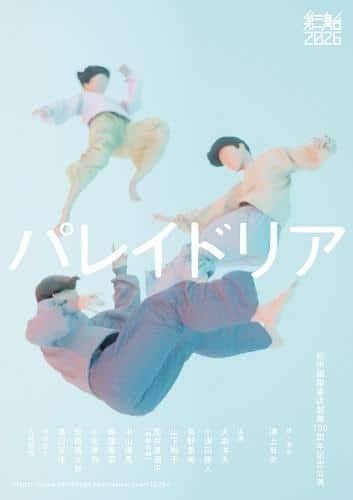
The Third Stage 2026 “Pareidolia” is a major Japanese theatre production written and directed by Koji Kōgami, bringing together available members of the influential Third Stage theatre company with a younger generation of performers. The production is presented as a new 2026 unit rather than an official revival of the original company, reflecting Kōgami’s intention to create a contemporary work with performers who could gather for the project in 2026. The production also forms part of a special performance marking the 100th anniversary of Kinokuniya Bookstore.
“Pareidolia” takes its title from a psychological phenomenon in which people perceive familiar shapes or images in otherwise meaningless patterns, such as seeing a face in clouds or an animal in a stain. The concept connects closely with the play’s themes of memory, identity, relationships and the way people reinterpret events from their past.
The story begins with a group of university friends who were once preparing a children’s theatre production through a volunteer circle. A particular incident caused them to separate, and they went their different ways. Forty-two years later, one of them, Inui, has been diagnosed with dementia and unexpectedly proposes that they perform the old play once again. His request begins to disturb lives that had remained separated for decades.
Enjoy Your Event Stress-Free with Japan Travelo
Do you know? Planning events, festivals, concerts, and cultural experiences in Japan can be overwhelming. Japan Travelo brings everything together in one place, helping you manage your itinerary, transport, and accommodation with ease—so you can enjoy Japan without the stress of planning.
The production brings together veteran Third Stage performers including Hiroo Otaka, Yasuto Kosuda, Satomi Nagano and Yuko Yamashita, alongside younger actors including Yuma Nakayama, Haruna Iikubo, Junya Komatsu and Shintaro Anzai. Mariko Tsutsui also appears through video.
The complete production runs for approximately two hours without an interval. Audience members should also be aware that the official production information states that preschool children cannot enter.
Event dates
The Third Stage 2026 “Pareidolia” tours across five Japanese performance locations between August and September 2026. The complete tour schedule is:
- Tokyo: August 9–30, 2026
- Osaka: September 4–6, 2026
- Niigata: September 19, 2026
- Ehime: September 23, 2026
- Kitakyushu: September 26–27, 2026
The Tokyo production at Kinokuniya Hall is the longest engagement, while the regional tour includes Osaka, Niigata, Ehime and Kitakyushu.
Doors generally open 30 minutes before the performance, while same-day ticket arrangements are generally handled from approximately one hour before the show.
Venue & performance locations
Kinokuniya Hall – Tokyo
The Tokyo performances take place at Kinokuniya Hall inside the Kinokuniya Shinjuku Main Store at 4F, 3-17-7 Shinjuku, Shinjuku-ku, Tokyo 160-0022. The theatre has a long association with Japanese theatre and is located in the centre of Shinjuku. JR Shinjuku Station’s East Exit is approximately five minutes away, while Shinjuku-sanchome Station provides another convenient access point.
Sankei Hall Breeze – Osaka
The Osaka performances are staged at Sankei Hall Breeze, Breeze Tower 7F, 2-4-9 Umeda, Kita-ku, Osaka 530-0001. The venue is especially convenient for visitors arriving by rail, with Osaka Station’s West Exit around four minutes away, Nishi-Umeda Station around two minutes away and Kitashinchi Station approximately two minutes away.
Niigata Prefectural Civic Center Main Hall – Niigata
The Niigata performance is held at Niigata Prefectural Civic Center Main Hall, 3-13 Ichibanboridori-cho, Chuo-ku, Niigata 951-8132. The large hall has 1,730 seats and is designed for a broad range of performing arts.
Niihama City Civic Cultural Center Main Hall – Ehime
The Ehime performance takes place at Niihama City Civic Cultural Center Main Hall, 8-65 Shigenobu-cho, Niihama, Ehime 792-0023. The venue is the main hall of the city’s cultural centre and has its own on-site parking, although spaces are limited.
J Kitakyushu Performing Arts Center Main Hall – Kitakyushu
The final regional performances take place at J Kitakyushu Performing Arts Center Main Hall inside Riverwalk Kitakyushu at 1-1-1-11 Muromachi, Kokurakita-ku, Kitakyushu, Fukuoka 803-0812. The theatre complex includes a large hall, middle theatre and small theatre, with the main hall seating 1,269 people.
Full programme
The central programme is the new stage production “Pareidolia,” with the entire tour built around the same theatrical work rather than a collection of separate shows.
The play follows people whose lives were shaped by an unresolved event in their youth. Decades later, an unexpected attempt to recreate their former children’s play forces old relationships and memories back into the present.
The official story introduces several interconnected characters:
- Inui, who has been diagnosed with dementia and proposes reviving the old play.
- Kagawa, who is preparing to run for election again.
- Hirowatari, who has chosen to live at a distance from other people.
- Shibayama, who remains connected to memories of her late husband.
- Kiichiro, Inui’s son, who becomes involved while trying to support his father.
- Misaki, Kagawa’s daughter, who struggles between the realities of her mother’s past and her father’s political ambitions.
- Eguchi, a children’s-centre employee who becomes involved in the developing situation.
- Hagiwara, an IT engineer who is also drawn into the strange reunion.
As the characters begin reconnecting, the play explores what it means to return to something that appeared to have ended decades earlier.
Featured productions & performers
The production is written and directed by Koji Kōgami, who founded Third Stage at the age of 22 and has continued to develop theatre around social and personal questions across different stages of life. For “Pareidolia,” he deliberately combines performers connected with the original Third Stage era and younger actors.
Main cast
- Hiroo Otaka
- Yasuto Kosuda
- Satomi Nagano
- Yuko Yamashita
- Mariko Tsutsui – video appearance
- Yuma Nakayama
- Haruna Iikubo
- Junya Komatsu
- Shintaro Anzai
- Yoshihiro Watanabe
- Tomohiro Uchida
- Tomoya Oshiro
The creative team also includes Rumi Matsui for set design, Takehiro Kawano for music, Etsuko Kawasaki for choreography, Shin Kitazawa for lighting, Koji Harada for sound and Naho Oshika for video.
Shows & performances
“Pareidolia” is structured as a full-length theatrical drama rather than a concert or variety programme. The production combines the emotional weight of characters who have lived for more than four decades with the energy of younger performers who become part of the story.
The contrast between generations is an important feature of the project. Kōgami has stated that the production is not intended simply as a reunion or nostalgia-driven event. Instead, he wanted to use the assembled cast to tell a story about the present and the issues faced by people at different points in life.
The title itself becomes a thematic element. The characters look at their shared past and attempt to decide what those memories mean now, much like pareidolia involves assigning recognisable meaning to an otherwise ambiguous pattern.
Performance schedule
The Tokyo run takes place from August 9 through August 30, with multiple afternoon and evening performances. Some dates have 13:00 starts, while evening performances begin at 18:30. There are scheduled rest days, and selected Tokyo performances are marked for recording cameras.
The Osaka schedule is:
- September 4, 18:30
- September 5, 13:00
- September 5, 18:30
- September 6, 13:00
The Niigata performance is September 19 at 17:30.
The Ehime performance is September 23 at 17:30.
The Kitakyushu performances are September 26 at 17:30 and September 27 at 13:00.
Doors open 30 minutes before each performance. The official site also indicates that same-day tickets may be offered from one hour before the performance, subject to availability.
Ticket types
Ticket categories vary slightly by venue, but the main structure consists of reserved seating, U25 tickets and, in Ehime, a student ticket.
Tokyo
- Reserved seat: approximately $73
- U25 ticket: approximately $32
Tokyo uses a single standard reserved-seat category, with U25 tickets available as limited same-day exchange tickets for audiences aged 25 or younger.
Osaka
- S seat: approximately $73
- A seat: approximately $61
- B seat: approximately $54
- U25 ticket: approximately $32
Niigata
- S seat: approximately $73
- A seat: approximately $61
- B seat: approximately $54
- U25 ticket: approximately $32
Ehime
- S seat: approximately $73
- A seat: approximately $61
- B seat: approximately $54
- Student ticket: approximately $32
Kitakyushu
- S seat: approximately $73
- A seat: approximately $61
- B seat: approximately $54
- U25 ticket: approximately $32
The dollar conversions use a reference rate of approximately 156.50 Japanese yen per US dollar published September 20, 2026. Actual card or bank exchange rates can differ.
Ticket release & booking
Tokyo general ticket sales opened July 11, 2026 at 10:00, while Osaka, Niigata, Ehime and Kitakyushu general sales opened August 1, 2026 at 10:00.
Tokyo tickets were distributed through Ticket Pia, ePlus, Lawson Ticket and Kinokuniya’s ticket services. Regional performances use combinations of Ticket Pia, Lawson Ticket, ePlus and local ticketing services.
For performances where advance tickets have sold out, the official production has also operated a same-day ticket reservation system. Reservations generally open online at noon on the day before the performance, with tickets collected and paid for at the theatre before the performance. A limited number of same-day tickets may also be offered at the theatre approximately one hour before the show.
VIP & premium seating
The production does not advertise a separate VIP hospitality package or premium experience. Instead, seating is organised through the standard reserved-seat categories.
In Tokyo, the production uses one general reserved-seat category. Osaka, Niigata and Kitakyushu divide the auditorium into S, A and B sections, with S seats occupying the principal seating areas. Ehime follows the same S, A and B structure.
For visitors seeking the most direct theatre experience, the S-seat category is the highest standard seating class officially offered by the production. U25 and student options are intended for younger audiences and are generally issued as same-day seat exchanges rather than advance assigned seats.
Event rules
Visitors should review the official conditions before attending because the theatre and ticketing rules form part of the admission conditions.
Age restriction
Preschool children are not permitted to enter the performances. Lap seating is therefore not available for preschool children.
U25 identification
U25 tickets are limited tickets for customers aged 25 or younger. Eligible visitors must present identification confirming their age when exchanging the ticket for a designated seat on the day of the performance.
Resale
Commercial or unauthorised ticket resale is prohibited. Visitors should use official ticket channels rather than unofficial resale services.
Cancellations and refunds
Tickets generally cannot be changed or cancelled after purchase, and refunds are not provided except where the organiser cancels a performance or otherwise determines that a refund applies.
Photography and recording
Selected Tokyo performances have notices indicating that recording cameras may be installed inside the auditorium. Visitors should follow theatre instructions regarding photography, recording and mobile-device use.
Gifts
The production asks audiences not to bring flowers, plants or food as performer gifts. A gift box is available for eligible non-perishable, non-food gifts.
How to get there
Tokyo
Kinokuniya Hall is located directly within the Kinokuniya Shinjuku Main Store. From JR Shinjuku Station, use the East Exit and walk for approximately five minutes. Shinjuku-sanchome Station is also convenient, with the B7 exit providing access to the area.
Osaka
Sankei Hall Breeze is particularly easy to reach by train. Osaka Station’s West Exit is around four minutes away, Nishi-Umeda Station is around two minutes away and Kitashinchi Station is around two minutes away. The underground connection is useful during bad weather.
Niigata
From Niigata Station, visitors can use a bus or taxi. The venue advises using public transportation where possible because surrounding parking can become busy during events.
Ehime
Niihama City Civic Cultural Center is in central Niihama at Shigenobu-cho. Visitors travelling by car can use the cultural centre’s own parking area, although capacity is limited and the venue recommends considering shared transportation when possible.
Kitakyushu
J Kitakyushu Performing Arts Center is inside Riverwalk Kitakyushu. JR Kokura Station is approximately 15 minutes away on foot, while JR Nishi-Kokura Station is approximately 10 minutes away. Bus users can use the Muromachi/Riverwalk-mae or Nishi-Kokura Station-mae stops.
Public transport & parking
Public transport is generally the most practical option for the Tokyo, Osaka and Niigata performances because all three venues are close to major urban transport networks.
Tokyo parking
Kinokuniya Hall does not operate a dedicated event parking facility, so visitors travelling by car should use nearby commercial parking facilities and allow extra time for Shinjuku traffic.
Osaka parking
Sankei Hall Breeze has shared parking in the B2 level of the Breeze Tower complex. The venue also has bicycle parking and accessible facilities.
Niigata parking
Niigata Prefectural Civic Center has no dedicated parking lot. Nearby paid facilities include Hakusan Park parking and surrounding event parking. Hakusan Park parking has approximately 580–600 spaces across several sections, but demand can increase substantially during events.
Ehime parking
Niihama City Civic Cultural Center has on-site parking, but spaces are limited and may fill depending on visitor numbers.
Kitakyushu parking
Riverwalk Kitakyushu has an approximately 800-space parking facility. The current published rate is $1.28 per 40 minutes on weekdays and $1.92 per 40 minutes on weekends and special days, based on the venue’s published parking rate converted using the same reference exchange rate.
Accommodation areas
Tokyo
For the Kinokuniya Hall performances, Shinjuku is the most convenient base because it keeps visitors close to the theatre and provides extensive rail connections. Shinjuku-sanchome, Kabukicho, Yoyogi and nearby areas can also work well for visitors seeking a wider selection of hotels.
Osaka
Umeda is the most practical area for the Osaka performances because Sankei Hall Breeze is located in the Umeda district. Osaka Station, Nishi-Umeda and Kitashinchi provide convenient access to other parts of the city.
Niigata
Visitors attending the Niigata performance can stay around Niigata Station or central Niigata. The station area provides convenient access to restaurants, shops and onward transport.
Ehime
For the single Ehime performance, staying in central Niihama keeps the journey to the civic cultural centre straightforward. Visitors combining the theatre trip with regional sightseeing may also consider accommodation elsewhere in eastern Ehime.
Kitakyushu
Kokura is the most convenient accommodation base for the final performances. The theatre is located near Kokura Castle and Riverwalk Kitakyushu, while Kokura Station provides connections for visitors travelling onward.
Dining & refreshments
The production itself is a theatre performance rather than a food-focused event, so visitors should plan meals around their chosen venue.
In Tokyo, the Shinjuku location offers a very large concentration of restaurants, cafés and convenience stores within walking distance of Kinokuniya Hall.
In Osaka, Sankei Hall Breeze has cafés and restaurants within the Breeze Tower complex, including café facilities on the B1 level and restaurants on upper floors.
In Niigata, the civic centre is located close to the central city and the wider Hakusan Park cultural district. The facility itself lists dining and café facilities among its broader amenities.
In Ehime, visitors can dine in central Niihama before or after the performance.
In Kitakyushu, Riverwalk Kitakyushu provides particularly convenient dining options because the theatre is integrated into the complex. The site includes a food court operating from 11:00 to 20:30 and restaurants operating into the evening.
Accessibility
Accessibility arrangements are available, but wheelchair users should make arrangements before attending rather than waiting until the performance date.
For Tokyo and Osaka, wheelchair-space users are asked to purchase tickets and then contact the relevant performance organiser in advance. The production specifically requests advance contact for wheelchair seating.
Niigata also provides wheelchair spaces, with advance contact required after purchasing a ticket. The venue has accessible parking spaces in the surrounding parking area.
The Osaka venue has wheelchair viewing spaces and an accessible multipurpose toilet on the first-floor theatre level. Guide dogs and assistance dogs can also be accommodated, subject to advance coordination with the organiser.
The production also offers a theatre-support arrangement for people with hearing disabilities. Eligible visitors can request an advance loan of the performance script, with requests needing to be submitted several days before the intended collection date.
Best performances to attend
The best date for each visitor depends largely on location and preferred atmosphere rather than a different programme, because “Pareidolia” is the same production throughout the tour.
For Tokyo theatre fans
The Tokyo run offers the greatest choice of dates and includes numerous afternoon and evening performances. Visitors staying in Tokyo can choose a weekday or weekend performance according to their schedule.
For an Osaka city break
The September 5 evening performance combines naturally with a weekend stay in Osaka, while the September 6 afternoon show provides an option for visitors who want to travel afterward.
For a Niigata theatre trip
The September 19 performance begins at 17:30, making it suitable for visitors planning an afternoon in central Niigata before heading to the theatre.
For an Ehime visit
The September 23 performance begins at 17:30 and is the only Ehime date, making advance planning especially important.
For the final tour performances
The September 26 evening and September 27 afternoon performances in Kitakyushu are the closing dates of the announced tour. The final Sunday afternoon performance is scheduled for 13:00.
Previous year’s highlights
There is no previous edition of “The Third Stage 2026 ‘Pareidolia’” because this production is a new 2026 work.
The project does, however, have a direct connection with Third Stage’s longer theatrical history. According to Kōgami’s official message, Third Stage was founded 45 years earlier and had been dissolved for 15 years before this new project. He emphasises that “Third Stage 2026” should not be treated as a conventional revival, because only members who could gather in 2026 are participating.
The project also follows “Asahi no Yōna Yūhi o Tsurete 2024,” a younger-generation production that was seen by Third Stage veterans Hiroo Otaka and Yasuto Kosuda. Kōgami says that seeing their reaction helped inspire his desire to work again with members associated with Third Stage.
Rather than recreating an earlier Third Stage production, “Pareidolia” therefore uses the history of the company as a starting point for a completely new story focused on ageing, memory, relationships and the present day.
Official tickets
Tickets should be purchased through the official production’s authorised ticket channels. Ticket Pia carries the event listings for the Tokyo, Osaka and regional performances, while the official Third Stage website provides the complete schedule, ticket information and same-day ticket announcements.
Official Ticket Pia listings: https://t.pia.jp/pia/event/event.do?eventBundleCd=b2669313
When buying close to the performance date, visitors should check the official production page for the latest availability, same-day ticket arrangements and any venue-specific notices. The official website states that limited same-day tickets may be available through advance web reservation or theatre reception, depending on the performance.
Location
FAQ
What is the primary psychological concept explored in the production?
The play explores pareidolia, the tendency of the human mind to perceive meaningful patterns or faces in random visual stimuli. The narrative uses this cognitive phenomenon as a metaphor for how people project internal anxieties onto their environments. Through this lens, characters grapple with loneliness, memory, and the universal search for personal meaning.
How does this 2026 revival differ from standard theatrical revivals?
This production marks a monumental reunion for members of the legendary Third Stage theater company who have gathered specifically for 2026. Rather than relying solely on nostalgia, the staging offers a fresh, contemporary reinterpretation tailored to modern urban anxieties. It bridges historical troupe excellence with vital, up-to-date artistic expression.
Who are the key creative leads steering the writing and direction?
The play is written and directed by theatrical master Koji Kougami, renowned for his intellectual wit and physical staging. His direction ensures that complex psychological themes remain fast-paced, accessible, and deeply entertaining for audiences. His creative vision anchors the entire multi-city touring production.
What can audiences expect from the multi-city tour schedule?
Following its flagship Tokyo run at Kinokuniya Hall, the production tours Niigata, Osaka, and Fukuoka prefectures. Each venue is selected for its acoustic and spatial suitability to handle the troupe's dynamic performance style. This extensive schedule allows regional theater fans across Japan to experience the historic reunion live.
What entry rules apply regarding age restrictions and ticket resales?
Children under school age are strictly prohibited from entering the auditorium to maintain an undisturbed viewing environment. Ticket transfers or unauthorized commercial resales are strictly banned under current Japanese anti-resale legislation. Patrons are advised to check official booking channels for specific venue admission guidelines.
How does the production balance cerebral themes with comedy?
Koji Kougami's script expertly weaves fast-paced banter and physical farce into deep philosophical and psychological explorations. Characters navigate existential dread through witty exchanges and absurd situational comedy that keep the audience laughing. This careful balance prevents the play from feeling clinical, ensuring a deeply engaging theatrical experience.

Leave a Reply