
-
January 8, 2027
Event date:
-
January 8, 2027
Event end:
What to expect in 2027
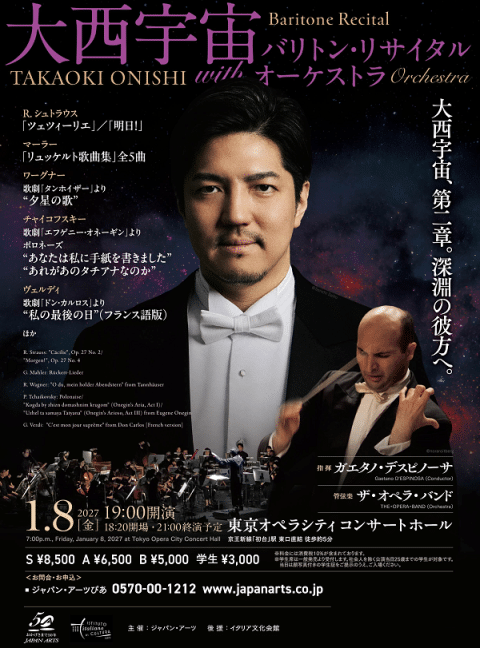
Hiroshi Onishi Baritone Recital with Orchestra 2027 will take place on Friday, January 8, 2027, at Tokyo Opera City Concert Hall: Takemitsu Memorial in Nishi-Shinjuku, Tokyo. The concert is presented under the title “Hiroshi Onishi, Chapter Two. Beyond the Abyss.” and brings together Japanese baritone Hiroshi Onishi, conductor Gaetano Despinosa and The Opera Band. The performance begins at 7:00 PM, with doors scheduled to open at 6:20 PM and the concert expected to finish at approximately 9:00 PM.
Rather than a conventional piano-accompanied baritone recital, this programme places Onishi alongside a full orchestra. The repertoire moves across German, Italian, French and Russian operatic and vocal traditions, combining orchestral songs with famous scenes and arias from major operas.
The announced programme includes Richard Strauss songs, all five songs from Mahler’s Rückert Lieder, Wagner’s “Song of the Evening Star” from Tannhäuser, selections from Tchaikovsky’s Eugene Onegin, and Verdi’s “My Last Day” from Don Carlos in the French version.
Enjoy Your Event Stress-Free with Japan Travelo
Do you know? Planning events, festivals, concerts, and cultural experiences in Japan can be overwhelming. Japan Travelo brings everything together in one place, helping you manage your itinerary, transport, and accommodation with ease—so you can enjoy Japan without the stress of planning.
The concert therefore provides a broad survey of baritone repertoire, from intimate late-Romantic songs to large-scale operatic writing. Mahler’s complete Rückert Lieder set is particularly significant because it forms a substantial central vocal cycle rather than a single standalone song.
The performance is also part of Onishi’s continuing artistic development following his earlier recital work. His official website describes the January 2027 performance as an orchestra-accompanied recital, with The Opera Band providing the orchestral forces.
Event dates
Hiroshi Onishi Baritone Recital with Orchestra 2027 is scheduled for one evening only.
Date: Friday, January 8, 2027
Doors open: 6:20 PM
Performance begins: 7:00 PM
Scheduled end: Approximately 9:00 PM
The performance takes place at Tokyo Opera City Concert Hall: Takemitsu Memorial in Tokyo. Japan Arts currently lists the concert as a single performance rather than a multi-day series.
The January timing makes the recital particularly suitable for visitors combining a classical music performance with a winter trip to Tokyo. Since it is an evening event, audiences have much of the day available for sightseeing before making their way to Hatsudai and Nishi-Shinjuku.
Visiting this event? Don’t miss out on these amazing activities and local experiences while you’re here.
Venue & festival site
The concert will be held at Tokyo Opera City Concert Hall: Takemitsu Memorial, located at 3-20-2 Nishi-Shinjuku, Shinjuku-ku, Tokyo 163-1403, Japan. The concert hall is located on the third floor of Tokyo Opera City Tower.
Tokyo Opera City is a major cultural complex in western Tokyo, incorporating the concert hall, recital hall, art gallery, theatres, restaurants and shops. The wider complex also sits close to the New National Theatre, Tokyo, making the area an important performing-arts district.
The Concert Hall: Takemitsu Memorial is designed specifically for classical music and orchestral performances. The venue’s scale and acoustic environment make it appropriate for a programme that requires both detailed vocal expression and substantial orchestral support.
The concert hall can also accommodate a significant audience, while its architecture places considerable emphasis on the relationship between the orchestra and auditorium. This is especially relevant for Onishi’s 2027 programme because Mahler, Strauss, Wagner, Tchaikovsky and Verdi all require an orchestral setting capable of supporting a powerful baritone without losing vocal clarity.
Full lineup
The announced artistic lineup consists of three principal elements.
Hiroshi Onishi – baritone
Onishi is the featured vocalist and the central artist of the evening. His programme covers German Lieder, French opera and Russian and Italian operatic repertoire, giving him the opportunity to demonstrate several different vocal and dramatic styles.
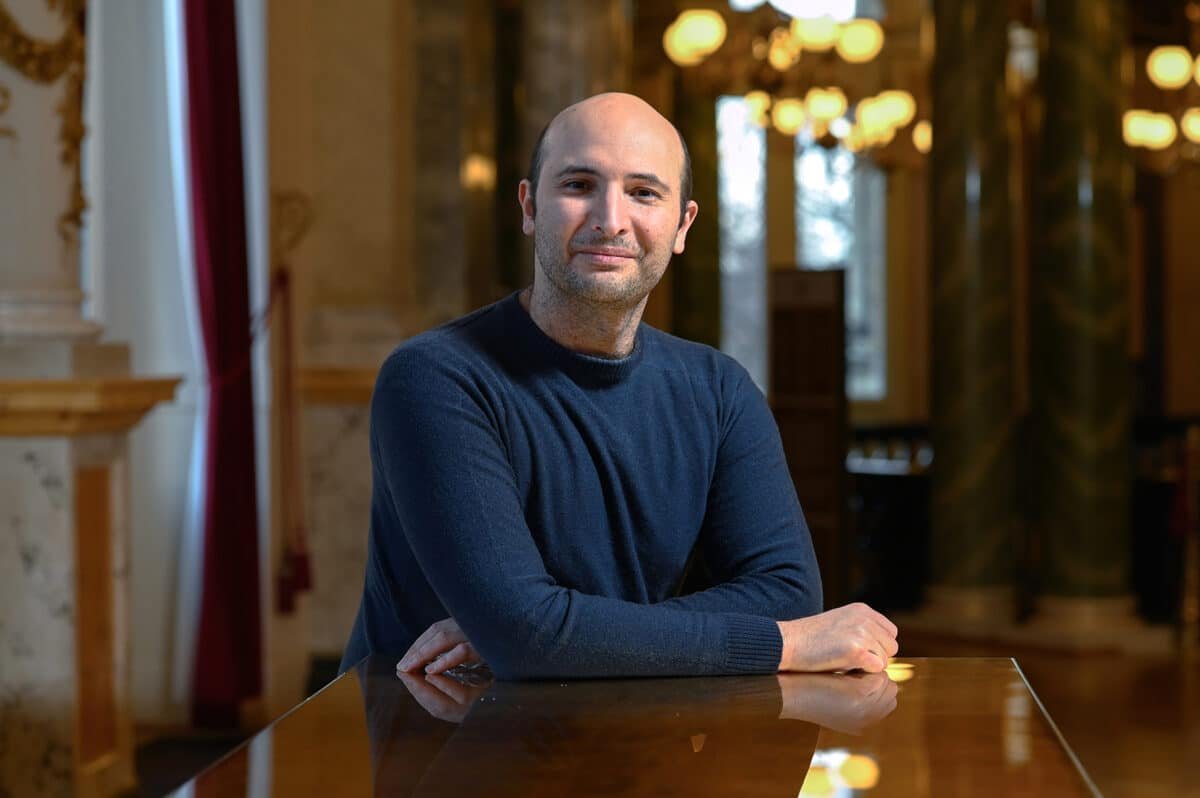
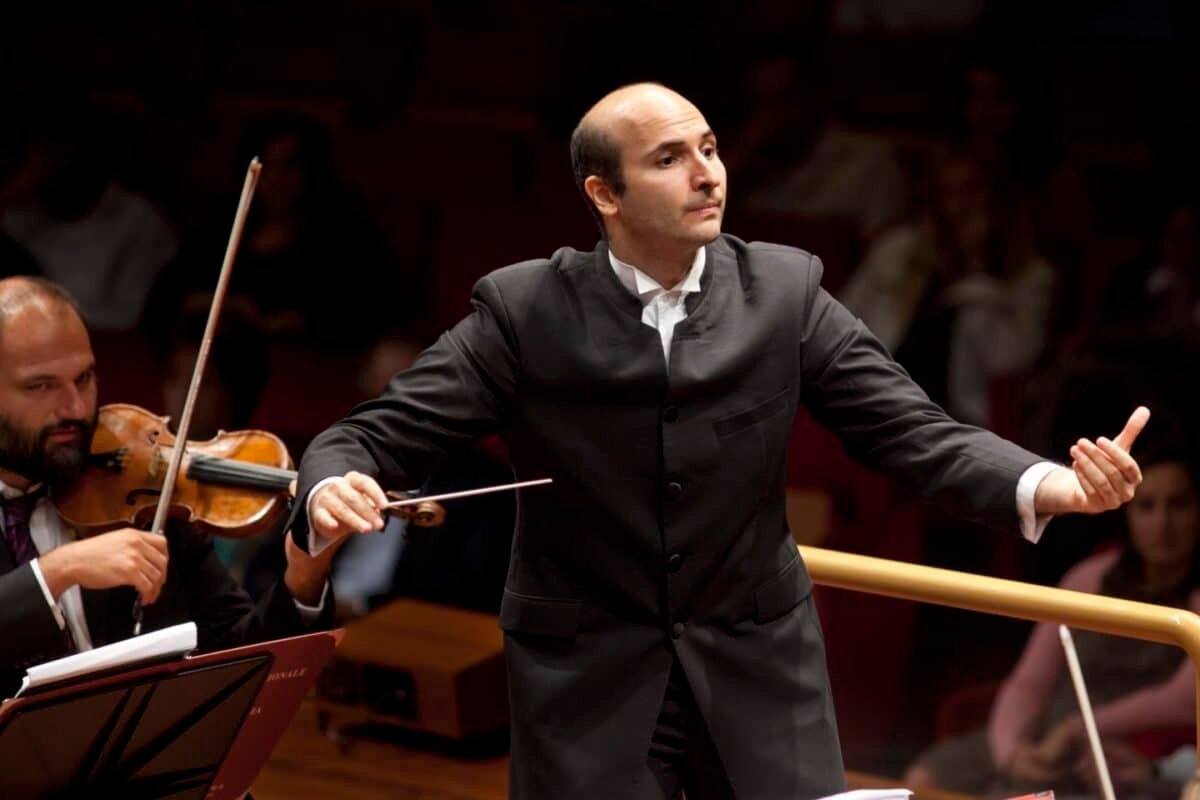
Gaetano Despinosa – conductor
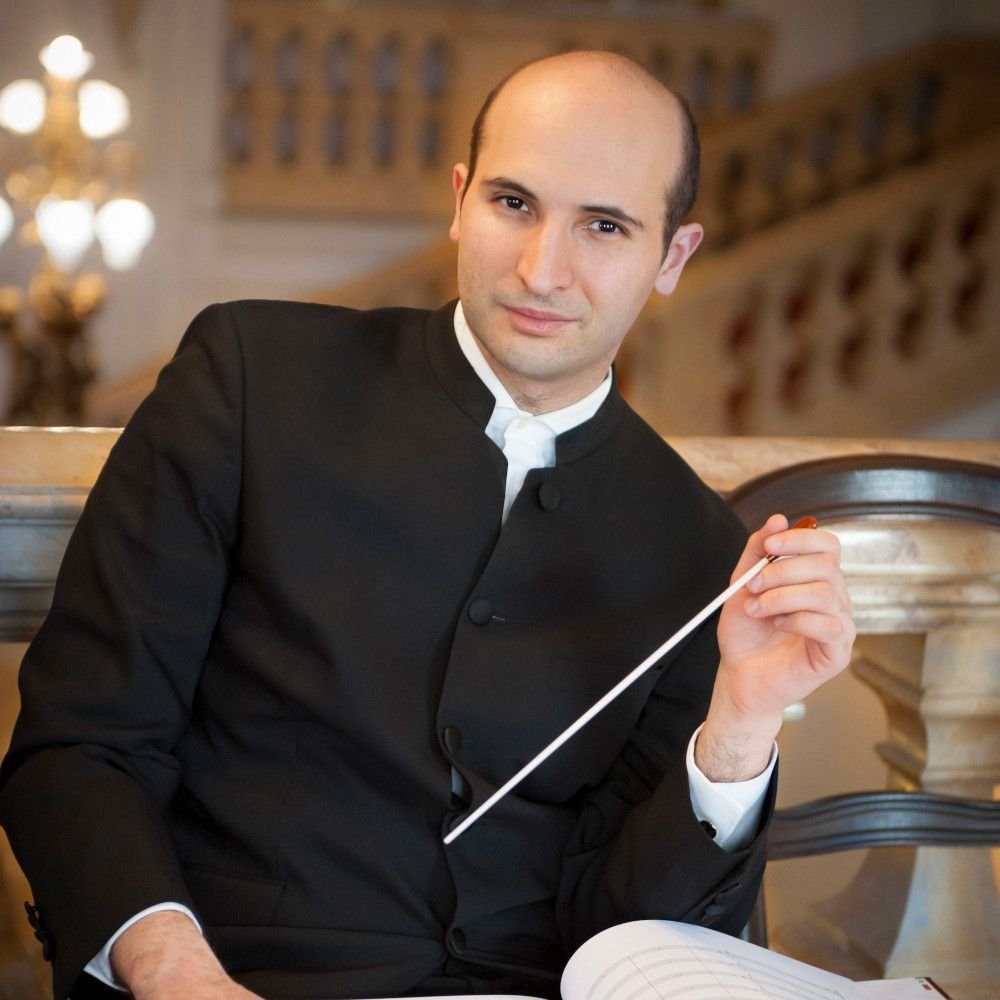
Gaetano Despinosa conducts the performance. His role is particularly important because the programme moves between orchestral song and opera repertoire from several different musical traditions.
The Opera Band – orchestra
The Opera Band provides the orchestral accompaniment. Unlike a conventional solo recital with piano, the presence of an orchestra allows the works to be performed with their broader instrumental textures and dramatic scale.
The current official listing does not identify additional guest soloists for the concert. The advertised performance is therefore centered on Onishi, Despinosa and The Opera Band.
Headliners & featured artists
Hiroshi Onishi
Hiroshi Onishi is a Japanese baritone whose repertoire includes opera, concert works, orchestral performances and solo recitals. His official artist profile lists his professional activity across concerts, opera productions and other musical performances.
The 2027 concert represents a substantial programme for the singer because it combines the complete five-song Rückert Lieder cycle with repertoire from Strauss, Wagner, Tchaikovsky and Verdi.
Gaetano Despinosa
Gaetano Despinosa serves as conductor for the evening. He leads The Opera Band through the various orchestral sections of the programme and helps shape the transitions between songs, opera excerpts and orchestral passages.
The Opera Band
The Opera Band is the orchestra engaged for the concert. Its role gives the recital a distinctly orchestral character and allows Onishi to perform repertoire in its larger concert and operatic context.
The collaboration is particularly relevant to the title “Beyond the Abyss,” as the programme moves through emotionally intense repertoire from several major Romantic and late-Romantic composers.
Stages & performance areas
This is a single-venue concert rather than a festival with multiple stages, so visitors should not expect separate performance areas or simultaneous shows.
Main concert stage
The entire programme will be presented on the main stage of Tokyo Opera City Concert Hall: Takemitsu Memorial. Onishi will perform from the concert stage with The Opera Band under the direction of Gaetano Despinosa.
Orchestral performance area
The orchestra occupies the main orchestral area behind and around the vocal performance position. This configuration supports the orchestral songs and opera excerpts included in the programme.
Audience areas
The hall provides multiple seating levels and viewpoints, allowing audiences to experience the performance from different parts of the auditorium. Visitors should follow their assigned seat information when entering the venue.
Stage-by-stage schedule
There is no stage-by-stage festival schedule because the event consists of one continuous concert at one venue.
Opening section
The evening begins with orchestral and vocal repertoire by Richard Strauss. The announced programme includes “Cecilière” and “Tomorrow!” These songs establish the vocal character of the recital before the programme moves into Mahler’s larger song cycle.
Mahler section
The concert then features all five songs of Gustav Mahler’s Rückert Lieder. The complete cycle provides one of the central musical sections of the evening and gives Onishi an opportunity to present contrasting moods within a unified sequence.
Wagner section
The programme continues with Wagner’s “Song of the Evening Star” from Tannhäuser. This famous operatic number shifts the concert from the world of art song toward Wagnerian drama.
Tchaikovsky section
The Tchaikovsky selections include the Polonaises and the baritone repertoire associated with Eugene Onegin, including “You wrote me a letter” and “Is that Tatiana?” as listed in the programme announcement. These selections introduce the Russian operatic tradition into the evening.
Verdi finale
The programme concludes with material from Verdi’s Don Carlos, including “My Last Day” in the French version. This gives the recital a major operatic finish.
The exact running order and any interval placement should be confirmed through the official event information before attending.
Set times
The official schedule currently gives the following overall timings:
- 6:20 PM – doors open
- 7:00 PM – concert begins
- Approximately 9:00 PM – scheduled conclusion
Individual start times for Strauss, Mahler, Wagner, Tchaikovsky and Verdi have not been published separately. The organisers may also adjust the detailed programme or running order.
Visitors should arrive before the advertised start time because late seating can be restricted during classical performances, particularly once a work has begun.
Ticket types
Japan Arts currently lists several reserved seating categories for the January 8 performance. The published prices are converted here to approximate USD using an exchange rate of about ¥158 per US dollar, close to the market level reported on September 18, 2026. Actual international card charges can vary with exchange rates and payment fees.
S Seat: approximately $54 USD
A Seat: approximately $41 USD
B Seat: approximately $32 USD
Student Seat: approximately $19 USD
The official listing currently shows S, A, B and student seats available, while SS, C, D and E categories are not currently showing available inventory on the Japan Arts page. Availability can change as sales continue.
Student ticket holders are required to present a photo student identification card when entering. If the required student identification cannot be presented, the difference between the student price and applicable general ticket price may be charged.
VIP & premium options
No separate VIP package, backstage experience, artist meet-and-greet or hospitality package is currently advertised for this performance.
The closest premium seating option currently listed is the S-seat category, approximately $54 USD based on the published ticket price and current exchange-rate conversion. The official event page does not currently list a separate VIP experience.
Visitors seeking a particular view of the orchestra and singer should select their preferred seating category while tickets remain available. Wheelchair users should contact the Japan Arts Pia call centre in advance regarding appropriate seating arrangements.
Event rules
Children below school age are not permitted to enter the performance according to the event precautions.
Late arrival: Audience members should follow staff instructions if they arrive after the performance has started. Depending on the musical programme, latecomers may have to wait before entering the auditorium.
Ticket requirements: Each visitor needs an appropriate ticket for admission. Student-ticket holders should carry the required photo student identification.
Photography and recording: Visitors should follow the concert hall’s rules concerning photography, video and audio recording. Recording should not be carried out unless specifically permitted.
Mobile phones: Mobile phones and other electronic devices should be silenced before entering the auditorium.
Ticket changes: Tokyo Opera City states that tickets generally cannot be changed or cancelled after reservation and purchase. Event-specific ticket conditions should therefore be checked before completing a booking.
How to get there
Tokyo Opera City Concert Hall is located in Nishi-Shinjuku, with the closest railway connection being Hatsudai Station on the Keio New Line.
From Hatsudai Station: Exit through the East Exit of Hatsudai Station. The station connects directly with Tokyo Opera City, and the official venue information gives a walking time of approximately five minutes or less.
Visitors travelling from Shinjuku should note that Hatsudai is served by the Keio New Line rather than the regular Keio Line. From the south side of JR Shinjuku Station, the Keio New Line provides a short connection to Hatsudai.
Public transport & parking
Public transportation is the most straightforward option for reaching the concert.
Train: Hatsudai Station on the Keio New Line is the closest station. The East Exit provides access to Tokyo Opera City in approximately five minutes or less.
Bus from Shibuya: Keio and Toei bus services operate from Shibuya toward the Tokyo Opera City area, with the journey taking approximately 20 minutes depending on traffic.
Bus from Shinjuku: Bus services from Shinjuku West Exit provide another option, with routes stopping around the Tokyo Opera City area.
Parking: Tokyo Opera City has an underground B2 parking facility. The published rate is ¥300 per 30 minutes, equivalent to approximately $1.90 USD per 30 minutes at the exchange rate used for this listing. The venue also provides concert visitors with a one-hour parking discount under its stated conditions.
The parking facility operates from 7:00 AM until 11:30 PM, making it possible for evening concert visitors to use it after the performance.
Accommodation areas
Visitors travelling to Tokyo for the concert have several practical accommodation areas to consider.
Shinjuku
Shinjuku offers extensive hotel choices, restaurants, shopping and transportation connections. It is particularly convenient for international visitors because of its major railway network and proximity to Hatsudai.
Nishi-Shinjuku
Nishi-Shinjuku places visitors closer to Tokyo Opera City and provides convenient access to the concert while remaining connected to the wider Shinjuku district.
Hatsudai
Staying around Hatsudai minimizes the journey to the venue. The area is suitable for visitors who want to walk to the concert rather than rely on another train connection.
Shibuya
Shibuya is a useful alternative for visitors who want access to Tokyo’s major shopping and entertainment district. Bus connections to Tokyo Opera City are available from Shibuya, although evening traffic can affect journey times.
Food & drink
Tokyo Opera City itself contains numerous restaurants, cafés and casual dining options, making it possible to eat before the concert without travelling far from the venue.
The complex includes restaurants and cafés in its lower and upper floors, including Japanese food, noodles, pasta, Indian and Thai food, cafés, bakeries and fast-food options.
For an evening performance beginning at 7:00 PM, visitors can arrive in Hatsudai early enough to have dinner or a light meal before entering the concert hall.
Cafés: Options include Excelsior Caffé, Italian Tomato Café Jr and Tsubakiya Coffee.
Restaurants: The complex includes Japanese, Chinese, Indian, Thai, Italian, ramen, soba, udon and other dining choices.
After the concert: Because the scheduled finish is approximately 9:00 PM, visitors can also continue into nearby Nishi-Shinjuku or Shinjuku for a later meal, although individual restaurant opening times should be checked.
Accessibility
Tokyo Opera City provides accessibility facilities for visitors with mobility requirements.
Wheelchair seating: The Concert Hall has eight wheelchair spaces on the first floor and two on the second floor. Visitors should communicate their wheelchair seating requirements to the organiser when purchasing tickets.
Accessible toilets: The Concert Hall has barrier-free toilets on the first and second floors.
Wheelchair rental: Wheelchairs are available for use within the hall, subject to availability. The venue recommends contacting the hall in advance because the number of available wheelchairs is limited.
Elevator: An elevator is available in the Concert Hall and is prioritized for visitors who need it, including wheelchair users, people with mobility difficulties and older visitors.
Assistance dogs: Guide dogs, assistance dogs and hearing dogs are permitted, with advance notification to the event organiser recommended.
Best days to attend
Since Hiroshi Onishi Baritone Recital with Orchestra is a one-night performance, there are no alternative dates or festival days to compare.
Friday, January 8: This is the only announced performance date and provides the complete programme featuring Onishi, Despinosa and The Opera Band.
The 7:00 PM start allows visitors to spend the daytime exploring Tokyo before travelling to Hatsudai. The scheduled 9:00 PM finish also leaves time for an evening meal or a return to accommodation in Shinjuku, Shibuya or another central Tokyo district.
For visitors staying elsewhere in Tokyo, planning the journey in advance is recommended because the performance finishes after 9:00 PM and the final train or bus connections may vary depending on the destination.
Previous year’s highlights
The closest recent solo recital listed by Japan Arts was Hiroshi Onishi’s “Beyond Classic – Performing Famous Musical and Film Songs,” held on July 11, 2025, at Hakuju Hall in Tokyo. That recital featured Onishi with pianist Shota Nakano.
The 2025 concert was presented as part of the Platinum Concert Series Vol. 19 and focused on musical-theatre and film music rather than the large-scale German, Russian and Italian repertoire announced for the 2027 orchestral recital.
Onishi’s more recent performance schedule also includes major orchestral and operatic engagements. His official schedule lists performances of Verdi’s Il Trovatore, Beethoven’s Ninth Symphony and Handel’s Messiah during late 2026, alongside other concert appearances.
These activities provide context for the 2027 recital, which expands the solo format by placing Onishi with The Opera Band under Despinosa and presenting an extensive programme of orchestral songs and operatic excerpts.
The official artist website also identifies the January 2027 concert as an orchestra-accompanied recital and specifically names The Opera Band as the orchestra.
Official tickets
Official tickets are available through Japan Arts and the listed authorised ticket outlets. Japan Arts states that its online ticket sales opened in July 2026, with general sales beginning July 25, 2026.
The official ticket channels listed for the performance include:
- Japan Arts Pia
- Tokyo Opera City Ticket Center
- Ticket Pia
- eplus
- Lawson Ticket
The Japan Arts listing currently shows S, A, B and student tickets, with availability subject to change as the concert approaches.
The published general ticket prices correspond approximately to $54 USD for S seats, $41 USD for A seats, $32 USD for B seats and $19 USD for student seats, based on the current exchange-rate conversion used above. The final amount paid in US dollars may vary depending on the payment provider’s exchange rate.
For wheelchair seating, Japan Arts asks visitors to contact its ticket centre in advance.
The official Japan Arts event page should be checked for the latest ticket availability, seating information, programme changes and admission instructions before travelling to Tokyo.
Location
FAQ
What is the conceptual significance behind the title Chapter Two and Beyond the Abyss?
The theme marks a bold artistic evolution in Hiroshi Onishi's career as he tackles deeply introspective, symphonically scaled repertoire. It frames the concert as an emotional journey navigating existential darkness toward ultimate artistic and spiritual transformation.
Why are Gustav Mahler's Rückert Lieder considered a cornerstone of this specific program?
All five songs are performed in full to provide a delicate, emotionally vulnerable exploration of human isolation and peace. They demand supreme technical finesse and establish a profound psychological foundation for the entire evening.
Are children under school age permitted to attend this orchestral recital?
Children under school age are strictly prohibited from entering the auditorium during performances to protect the quiet listening environment. This venue standard ensures absolute acoustic focus for delicate vocal passages and orchestral movements.
How should international fans secure tickets for this Tokyo Opera City concert?
Overseas visitors can purchase tickets online through Japan Arts Pia, the Tokyo Opera City Ticket Center, or major Japanese agencies. Securing reservations early is strongly recommended due to high demand for this prominent baritone showcase.
What special collaborative role does conductor Gaetano d'Espinosa play in the event?
Maestro Gaetano d'Espinosa leads The Opera Band, treating the orchestra as an equal dramatic participant rather than simple accompaniment. His precise baton technique ensures a transparent, unified dialogue between the baritone soloist and the instrumentalists.
What is the recommended arrival time for patrons attending the performance?
Concertgoers are strongly encouraged to arrive at least thirty minutes prior to the scheduled curtain time. Arriving early guarantees unhurried entry, coat check services, and seating before late-arrival restrictions are strictly enforced.

Leave a Reply