
-
January 8, 2027
Event date:
-
January 12, 2027
Event end:
Overview
Toka Ebisu Festival 2027, also known as Hatsu Ebisu, will take place at Kyoto Ebisu Shrine (Ebisu Jinja) in Kyoto’s Higashiyama district. The festival traditionally runs for five days from January 8 to January 12, with the main Toka Ebisu celebration on January 10. It is one of Kyoto’s best-known New Year traditions for praying for business prosperity, family prosperity and good fortune.
The shrine is dedicated to Ebisu, one of the Seven Lucky Gods of Japan and a deity strongly associated with business success and prosperity. During the festival, visitors come to receive fukusa bamboo branches, lucky decorations and other traditional items while praying for success in the coming year.
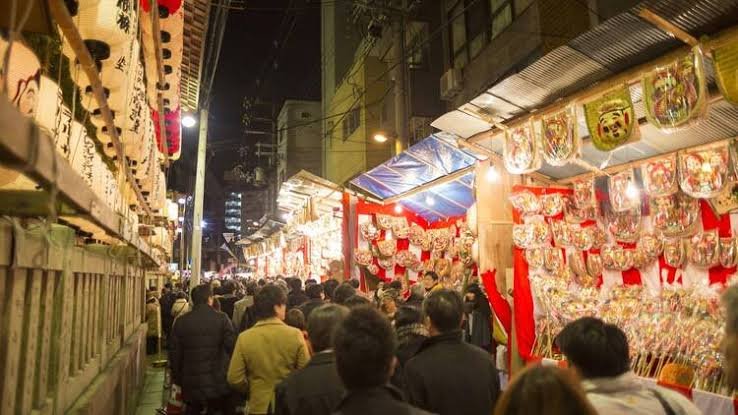
Toka Ebisu is also a lively street festival. The narrow streets around the shrine become crowded with worshippers, food stalls and shops selling traditional lucky charms, creating a very different atmosphere from an ordinary shrine visit.
Enjoy Your Event Stress-Free with Japan Travelo
Do you know? Planning events, festivals, concerts, and cultural experiences in Japan can be overwhelming. Japan Travelo brings everything together in one place, helping you manage your itinerary, transport, and accommodation with ease—so you can enjoy Japan without the stress of planning.
What Makes Toka Ebisu Special
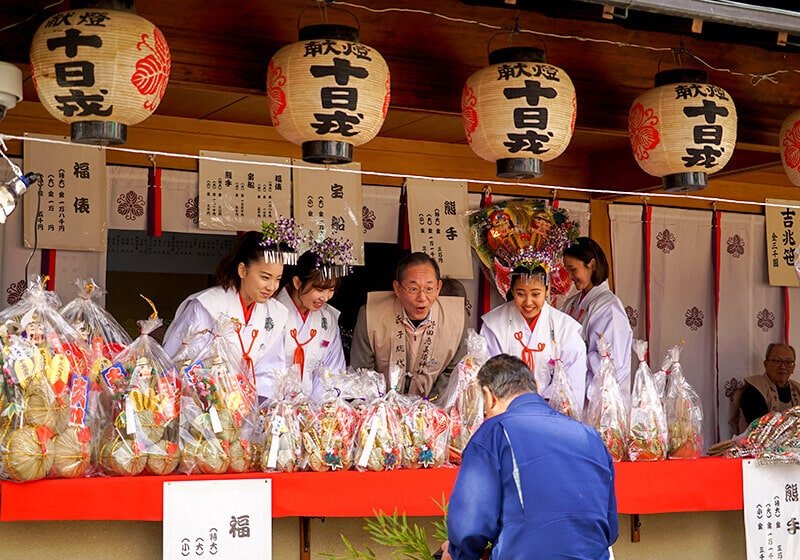
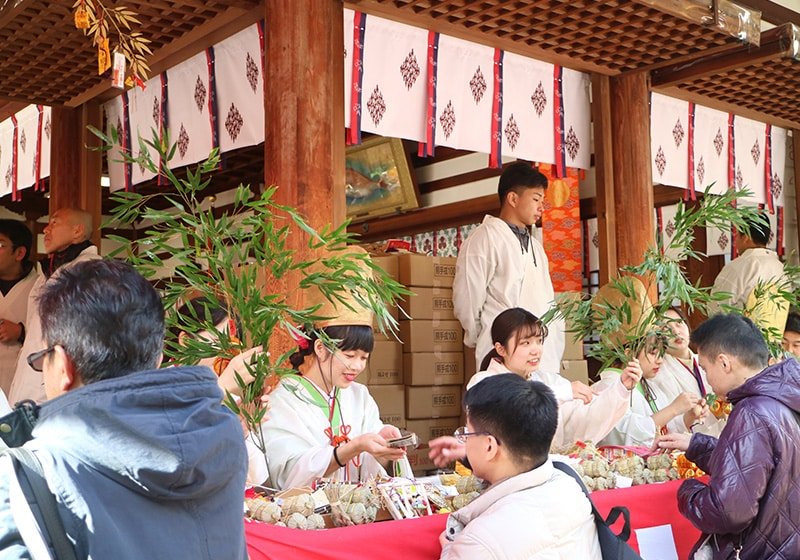
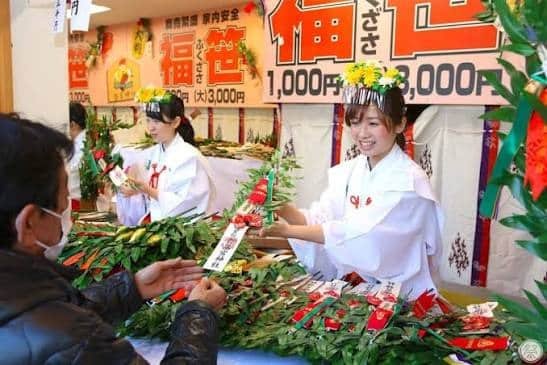
The festival’s central attraction is the fukusa, a lucky bamboo branch decorated with auspicious ornaments. Bamboo is regarded as a fortunate symbol because it grows straight and remains green, while the decorations attached to the branches represent wishes for prosperity and success.
Toka Ebisu is particularly important for business owners, shopkeepers and people starting a new business year. However, visitors do not need to be businesspeople to participate. Many people attend simply to pray for household prosperity, good fortune and a successful year ahead.
Another distinctive feature is the presence of fukumusume, or “lucky daughters,” who participate in distributing good-luck charms during the festival. Their traditional appearance and role have become one of the recognizable sights associated with Toka Ebisu.
Traditions & Festival Activities
Visitors generally begin by approaching the shrine to pray to Ebisu and then receive or purchase auspicious items associated with prosperity. The most recognizable is the decorated bamboo branch, which can be taken home and displayed as a symbol of good fortune.
The festival also features performances and ceremonial activities. On January 8, the Shofuku Festival includes a traditional yu-datte kagura purification performance, while January 9 is the Yoi Ebisu Festival, the eve of the main celebration. January 10 is the principal Toka Ebisu day, followed by January 11’s Nokori-fuku, or “remaining fortune,” and the closing festival on January 12.
One of the highlights for visitors is the opportunity to see maiko participating in the distribution of lucky bamboo branches and other auspicious items on January 11. This adds a strong connection with Kyoto’s traditional geisha culture to the New Year festivities.
Another well-known tradition is the Hoekago procession, in which decorated carriers associated with the festival travel through the city. Kyoto’s traditional sources describe the festival as having a long-established connection with these lively processions and the distribution of lucky bamboo.
Date & Schedule
Toka Ebisu Festival 2027 is expected to follow the traditional five-day schedule of January 8–12, 2027. The annual dates are fixed around January 10, the day associated with the main Ebisu celebration.
The traditional programme is:
January 8 – Shofuku Festival: The festival begins with ceremonies and the opening of the New Year celebrations. A yu-datte kagura performance has traditionally taken place in the afternoon.
January 9 – Yoi Ebisu: The eve of the main festival, when the shrine becomes particularly lively and remains open through the night under the traditional schedule.
January 10 – Toka Ebisu Grand Festival: This is the main day of the celebration and the busiest period for visitors seeking blessings for prosperity and success.
January 11 – Nokori-fuku: The “remaining fortune” day gives visitors another opportunity to pray and receive lucky items. Maiko traditionally participate in distributing auspicious bamboo and other items.
January 12 – Closing Festival: The final day brings the five-day celebration to a close.
Exact opening and closing times for each day should be confirmed with Kyoto Ebisu Shrine closer to January 2027, as the shrine can adjust arrangements from year to year. The 2026 schedule, for example, had the shrine open through the night on January 9 and 10.
Visiting this event? Don’t miss out on these amazing activities and local experiences while you’re here.
Location & Shrine Grounds
Toka Ebisu takes place at Kyoto Ebisu Shrine, officially known as Ebisu Jinja, at 125 Komatsu-cho, Yamato-Oji Shijo-sagaru, Higashiyama Ward, Kyoto. The shrine dates back to 1202, when it was established as a guardian shrine connected with Kennin-ji.
The shrine is relatively compact compared with some of Kyoto’s major temple complexes. During Toka Ebisu, however, the surrounding streets become an extension of the festival, with crowds moving through the approach to the shrine and nearby food and souvenir stalls.
The shrine worships Kotoshironushi no Okami, identified with Ebisu, along with other deities including Okuninushi no Okami and Sukunahikona no Okami. Its traditional benefits include business prosperity, family prosperity and travel safety.
Getting to Toka Ebisu Festival
Kyoto Ebisu Shrine is easy to reach using public transportation. The nearest major railway station is Gion-Shijo Station on the Keihan Line, approximately six minutes on foot from the shrine. Kyoto-Kawaramachi Station on the Hankyu Line is about eight minutes away.
Several Kyoto City Bus services also operate around the area, including stops near Shijo-Keihan. During the festival, however, roads and pedestrian areas can become very crowded, so walking from a nearby railway station is often more practical than trying to reach the shrine by taxi or private vehicle.
Public transportation is particularly advisable during the main festival days because large numbers of visitors gather around the shrine and surrounding streets.
Where to Stay Nearby
Staying in Gion, Higashiyama, Kawaramachi or central Kyoto makes it convenient to reach the festival while also exploring other major attractions.
Gion and Higashiyama are especially suitable for visitors who want to combine Toka Ebisu with traditional Kyoto streets, temples, shrines and evening walks. Kawaramachi offers a larger selection of hotels, restaurants and shopping areas and has excellent rail connections.
For visitors staying farther from central Kyoto, the city’s extensive train and subway network makes it relatively easy to reach Gion-Shijo or Kawaramachi and walk to the shrine.
What to Expect During the Festival
Toka Ebisu is a very crowded festival, particularly on January 9 and 10. Visitors should expect queues around the shrine and slow pedestrian movement through some of the surrounding streets.
The atmosphere is energetic rather than quiet. Food stalls, lucky-charm vendors, traditional decorations and large numbers of worshippers create a lively New Year environment that can continue well into the evening.
The Japan National Tourism Organization advises visitors to allow substantial extra time for the festival because crowds can make the approach to the shrine considerably slower than a normal visit.
For international visitors, this is an opportunity to experience a traditional Japanese New Year celebration in an environment that is strongly connected to everyday hopes for prosperity, rather than simply observing a ceremonial performance.
Things to Do Before or After the Festival
Because Kyoto Ebisu Shrine is in Higashiyama, visitors can easily combine Toka Ebisu with several major Kyoto attractions.
Kennin-ji, one of Kyoto’s important Zen temples, is located nearby, while the historic Gion district is also within walking distance. Visitors can continue toward Hanamikoji Street, Yasaka Shrine and Maruyama Park depending on their available time.
The nearby Kiyomizu-dera area is another option for a longer sightseeing walk, although visitors should allow additional time because the streets around Higashiyama can be crowded.
Toka Ebisu also fits naturally into a broader New Year itinerary. Travellers can combine it with other January traditions in Kyoto, including visits to major temples and shrines for New Year prayers.
Restaurants & Dining Nearby
The Higashiyama and Gion areas have an extensive selection of Japanese restaurants, cafés and traditional dining establishments. Visitors can find everything from casual noodle restaurants and sweets shops to more formal Kyoto cuisine.
During Toka Ebisu, the streets around the shrine also become lively with festival food stalls. These provide an opportunity to try popular Japanese festival foods while moving through the event.
Because January 9 and 10 can be particularly busy, visitors should expect queues at popular restaurants. Making a reservation for a specific restaurant can be useful, especially for dinner during the busiest festival evenings.
Ticket Information & Access
Toka Ebisu Festival is free to attend. Visitors do not need an admission ticket to enter Kyoto Ebisu Shrine or participate in ordinary festival prayers.
The main expenses come from optional items and offerings, including fukusa lucky bamboo branches and other auspicious decorations. Prices vary according to the type and size of the item. Previous festival information has listed different prices for individual lucky ornaments and bamboo branches, but visitors should check the shrine’s 2027 information for current amounts.
There is no need to purchase a ticket simply to walk through the festival area, observe the traditions or pray at the shrine.
Visitor Tips
Visit early if you prefer a more manageable crowd. January 9 and 10 are particularly popular, and the atmosphere can become extremely busy around the shrine.
If your main interest is seeing the traditional Kyoto cultural elements, January 11 can also be worthwhile because maiko participate in the distribution of lucky bamboo and other auspicious items during the Nokori-fuku celebrations.
Wear comfortable shoes and warm clothing. The festival involves walking and standing outdoors, while January temperatures in Kyoto can be cold.
Visitors should also remember that Kyoto Ebisu Shrine remains an active religious site. Follow the shrine’s instructions, avoid blocking worship areas and treat ceremonial activities and worshippers respectfully.
Official Event Information
Event: Toka Ebisu Festival 2027 / Hatsu Ebisu
Japanese name: 十日ゑびす大祭(初ゑびす)
Dates: January 8–12, 2027
Main day: January 10, 2027
Venue: Kyoto Ebisu Shrine, Kyoto, Japan
Address: 125 Komatsu-cho, Yamato-Oji Shijo-sagaru, Higashiyama-ku, Kyoto
Admission: Free
Official website: https://www.kyoto-ebisu.jp/
The detailed 2027 opening hours and individual ceremony schedule should be checked with the shrine before travelling, as daily arrangements can change.
Video
Location
FAQ
When is Toka Ebisu Festival 2027 in Kyoto?
Toka Ebisu Festival 2027 is scheduled for January 8–12, 2027, following the traditional five-day format. January 10 is the main Toka Ebisu celebration, with January 9 and 11 also being important days for visitors.
Where is Toka Ebisu held?
The festival takes place at Kyoto Ebisu Shrine in Higashiyama Ward, south of Shijo Street along Yamato-Oji. The shrine is approximately six minutes on foot from Gion-Shijo Station and around eight minutes from Kyoto-Kawaramachi Station.
What is Toka Ebisu Festival about?
Toka Ebisu is primarily associated with prayers for business prosperity, family prosperity and good fortune. Visitors worship Ebisu and receive auspicious items, especially decorated bamboo branches known as fukusa, which are traditionally displayed at home or in businesses.
Is Toka Ebisu Festival free to attend?
Yes. There is no general admission charge for the festival or shrine. Visitors can freely enter and participate in ordinary worship, while lucky charms, decorated bamboo branches and certain offerings have separate costs.
What is a Fukusa bamboo branch?
The fukusa is a bamboo branch decorated with auspicious objects representing wishes for prosperity and success.

Leave a Reply