
Overview
The Laos Festival brings the country’s overall vibe to Tokyo, and its laid-back, easy going atmosphere is a welcome relief in the bustling metropolis.
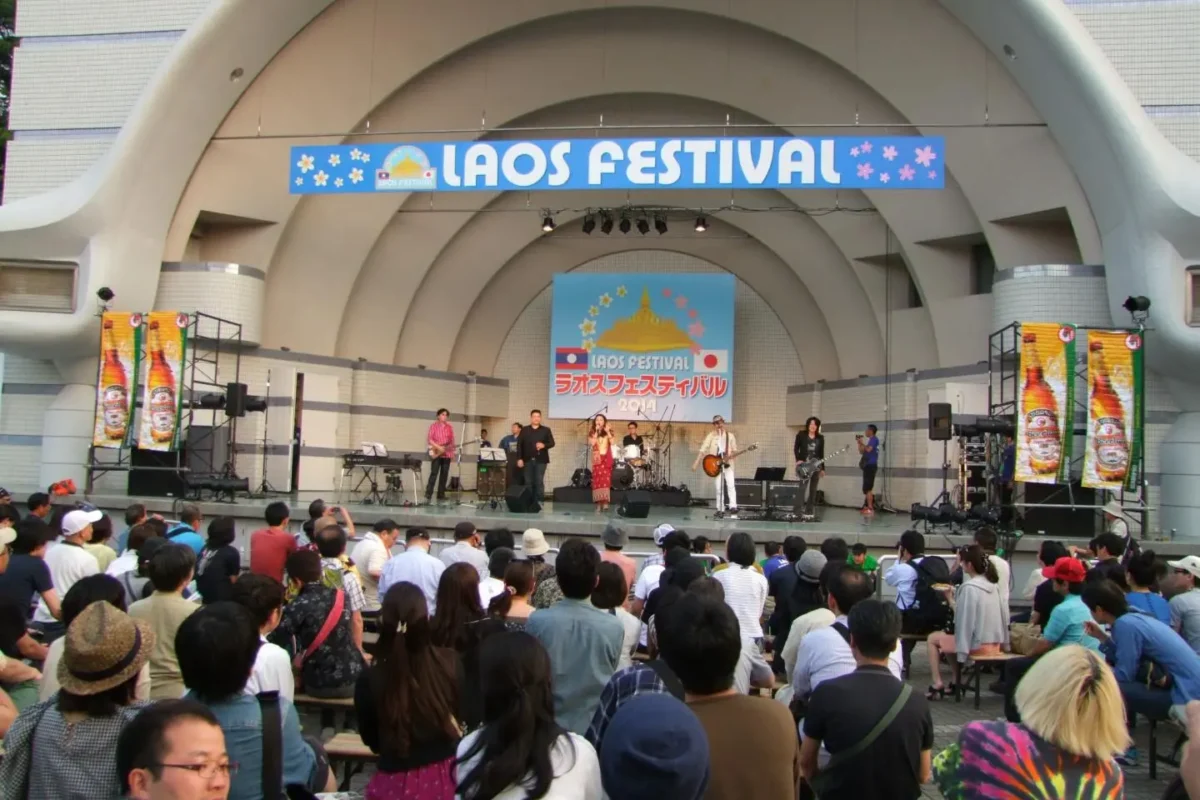
An early-season stop on Yoyogi Park’s summer-long series of international festivals, the Laos Festival puts on display the Southeast Asian nation’s culture, from its cuisine to its music, and including drinks, demonstrations, and handicrafts. The word that keeps coming to mind is nice. Everything about the festival seems nice. The people are nice. The food is nice. It is nice to walk around and soak up the atmosphere.
The festival is organized by the Embassy of the Lao People’s Democratic Republic and has been held since 2007 under the concept of A Day Trip to Laos. Since its initiation, the event has drawn approximately 180,000 people cumulatively and is considered one of the biggest Laos-related events in Japan. Its purpose is to deepen exchange between Laos and Japan, promote tourism, and celebrate Laotian heritage.
Enjoy Your Event Stress-Free with Japan Travelo
Do you know? Planning events, festivals, concerts, and cultural experiences in Japan can be overwhelming. Japan Travelo brings everything together in one place, helping you manage your itinerary, transport, and accommodation with ease—so you can enjoy Japan without the stress of planning.
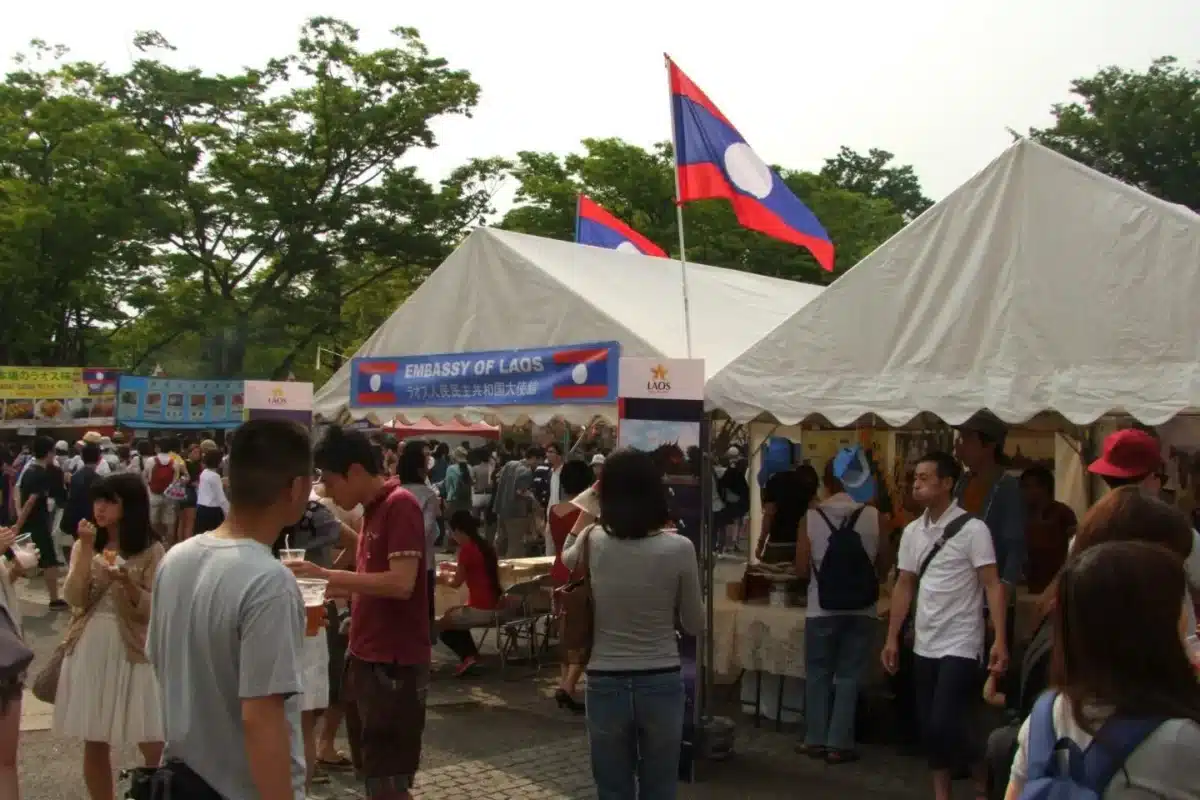
While not one of the major, enormous events that the park sees, what makes the festival is the obvious pride the Laotian people have in their country. If you don’t know what Laos’s flag looks like, you will soon after arriving. It’s everywhere. The blue, red and white circle flag with the white moon flutters above food stalls, stage backdrops, and traditional costume displays.
Key Highlights:
- Authentic National Showcase: Directly organized by the Laotian Embassy with cultural troupes, ministries, and tourism boards flown in from Vientiane and Luang Prabang.
- Free Outdoor Format: Held at Yoyogi Park Event Plaza with free admission, open to all ages, with stage performances, market stalls, and cultural exhibitions.
- Intimate Cultural Pride: Smaller than Thai or Vietnam festivals, creating a friendly, approachable atmosphere where you can talk directly with chefs, artisans, and dancers.
- Cross-Cultural Community: Mix of Laotian, Japanese, and regional Southeast Asian vendors and performers reflecting the real diaspora community in Tokyo.
Cultural Significance & Origins
Laos Festival was launched in 2007 to commemorate and strengthen the diplomatic relationship between Japan and Laos. The relationship marks its 70th anniversary in 2025 and 72nd anniversary in 2027, with the festival serving as the main public celebration in Japan.
The festival plays a pivotal role in fostering friendship and cultural exchange. Lao Minister of Information, Culture, and Tourism has described it as a catalyst for tourism between both countries. The event supports campaigns such as Visit Laos Year and helps drive Japanese tourism to Laos, which has seen significant growth in recent years with over 24,000 Japanese visitors annually.
Culturally, the festival is important for the Laotian diaspora in Japan, which is relatively small compared to other Southeast Asian communities. It provides a rare gathering space for Laotian families in Kanto to share language, Buddhist traditions, and ethnic diversity. Laos is home to 49 officially recognized ethnic groups, and the festival showcases this diversity through costumes from Lao Loum, Lao Theung, and Lao Soung communities.
The inclusion of Japanese imperial family attendance, such as Princess Aiko attending the opening ceremony in 2026 in a traditional Lao sinh costume, signals the festival’s growing diplomatic importance.
Traditions, Rituals & Customs
The festival brings to Tokyo several traditions that are central to Laotian spiritual life.
Baci Ceremony: Also known as Sou Khuan, this is a traditional ceremony to celebrate important occasions and to bind 32 spirits to the body. At the festival, visitors can observe a demonstration where white cotton strings are tied around wrists while elders chant blessings for good luck, health, and safe travel. The strings are meant to be worn until they fall off naturally.
Boun Bung Fai – Rocket Festival: A traditional festival to request rain for rice cultivation, showcased through decorative bamboo rockets, music, and dance. While real rockets are not launched in Yoyogi Park, the festival displays miniature versions and explains the custom of firing rockets to awaken the rain gods.
Lam Vong and Folk Dance: Traditional circle dancing where dancers move slowly in a circle around a central stage. The National Dance Troupe of Laos performs welcoming dances such as Fon Phone and Fon Leb, with graceful hand movements telling stories of rice planting, river life, and Buddhist Jataka tales.
Alms Giving and Buddhist Respect: Small exhibits explain the daily morning alms-giving tradition of Luang Prabang, where monks walk through streets collecting sticky rice. Respectful behavior, including removing shoes near sacred objects and not touching dancers’ costumes, is encouraged.
What to Expect at the Festival
Visitors should expect a relaxed, colorful, and sensory-rich weekend that feels like a village fair transported into central Tokyo.
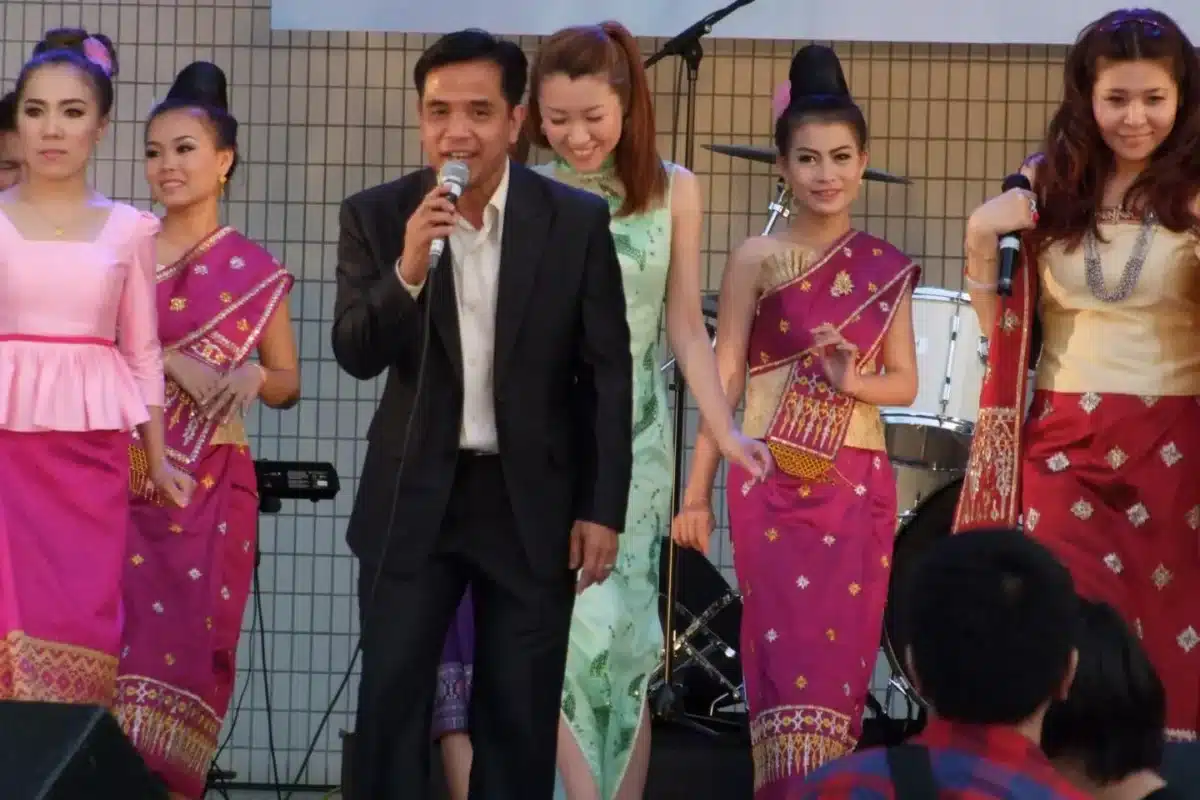
Stage Atmosphere: The main outdoor stage hosts continuous performances from morning until evening. Expect Laotian pop stars who are famous in Vientiane, traditional Khaen mouth-organ players, Moh Lam singers, and folk dance ensembles in shimmering sinh skirts and pha biang sashes. Between Laotian acts, Japanese artists who collaborate with Laos also perform.
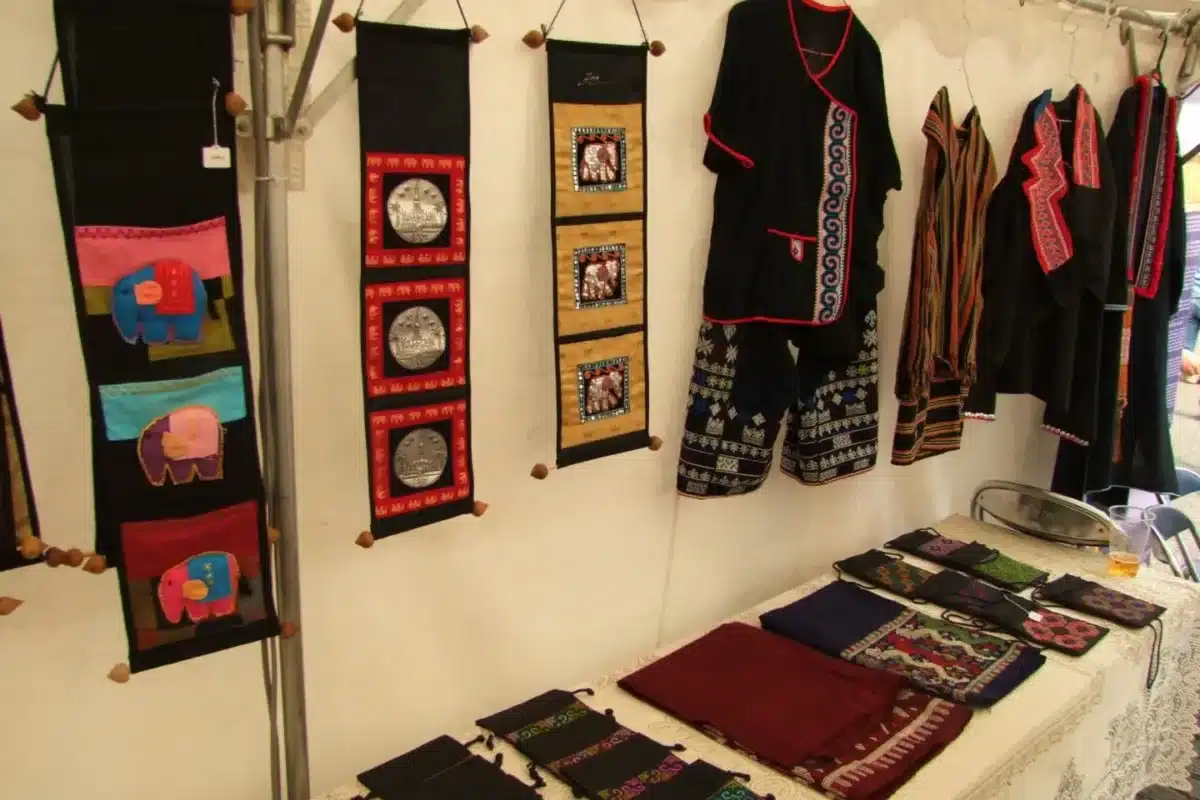
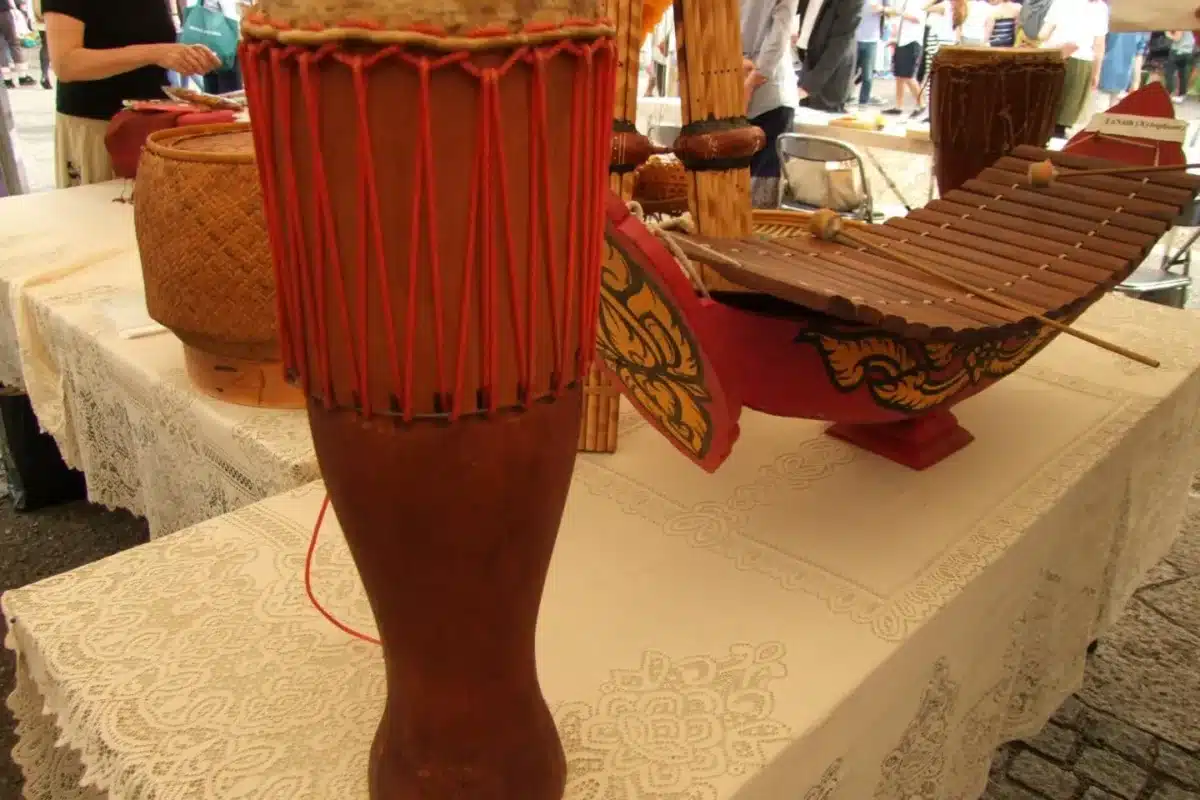
Market Aisles: Tents are lined up in rows exhibiting Laotian crafts, traditional clothing, and musical instruments. Sellers have clothes, silver jewelry from hill tribes, handmade cotton textiles woven on traditional looms, and carved wooden souvenirs. The air smells of lemongrass, grilled meats, and fresh herbs.
Flag-Filled Pride: The Laos flag is everywhere, from tablecloths to face paint. Travel and government organizations are set up with a mountain of information including maps of Vientiane, Luang Prabang UNESCO sites, and brochures for eco-tourism in southern Laos.
Crowd Flow: Unlike enormous festivals that require queuing for hours, Laos Festival allows easy movement. You can sample foods, watch a dance, shop for a textile, and return to the stage without stress. The crowd is a mix of Japanese families, Southeast Asian students, expats, and tourists.
Date & Schedule
Event Dates: Late May 2027 (Dates TBD)
The Laos Festival brings the country’s overall vibe to Tokyo, and its laid-back, easy going atmosphere is a welcome relief in the bustling metropolis.
An early-season stop on Yoyogi Park’s summer-long series of international festivals, the Laos Festival puts on display the Southeast Asian nation’s culture, from its cuisine to its music, and including drinks, demonstrations, and handicrafts.
Based on previous editions, the festival is a two-day weekend event held at Yoyogi Park Event Plaza. In 2024 it was held on May 25 to 26, in 2025 on May 24 to 25 from 10:00 AM to 7:00 PM, and in 2026 on May 23 to 24. The 2027 edition is expected to follow the same weekend pattern in late May.
Typical Daily Schedule:
- 10:00 AM – Opening and Market Open: Food stalls and craft tents open. Background Lao music plays.
- 10:30 AM – Opening Ceremony: Welcome speech by the Ambassador of the Lao People’s Democratic Republic, representatives from Shibuya Ward, and invited dignitaries. Includes ribbon cutting and Baci blessing.
- 11:00 AM to 6:30 PM – Stage Performances: Rotating program of traditional dance, Khaen performances, pop singers from Laos, and Japanese guest acts. Each act lasts 20 to 30 minutes.
- 7:00 PM – Closing: Market stalls close. Stage ends. Visitors move to Keyaki Namiki for evening drinks.
The festival is held rain or shine, but may be canceled in severe weather. Official times for 2027 will be announced on laos-festival.jp.
Visiting this event? Don’t miss out on these amazing activities and local experiences while you’re here.
Main Events & Programme
The program combines official diplomacy, cultural performance, and community market activities.
Opening Ceremony and Diplomatic Segment: Includes national anthems of Laos and Japan, speeches on bilateral relations, and a traditional welcoming dance by the Lao National Dance and Music Troupe. In recent years this has included high-level attendance.
Cultural Stage Lineup: The core of the program features continuous live entertainment. Examples from past programs include:
- Traditional Dance: Fon Lao Duang Deuan, Sabai Dee welcome dance.
- Music: Khaen solo, Moh Lam Lao, Lao pop and hip-hop artists from Vientiane.
- Special Demonstrations: Baci ceremony demonstration, ethnic costume fashion show, and Lao boxing demonstration.
Ethnic Costume Exhibition: A tent displays a variety of ethnic costumes from Laos, allowing visitors to see embroidery techniques from Hmong, Khmu, and Tai Lue communities. Visitors can try on a sinh for photos for a small donation.
Tourism Promotion Corner: Run by the Ministry of Information, Culture and Tourism of Laos and travel agencies. Offers quizzes about Laos, stamp rallies, and prize drawings for round-trip tickets and handicrafts.
Food Court Live Cooking: Chefs demonstrate how to make laap, pound papaya salad, and wrap mok pa fish in banana leaves.
Traditional Dress, Arts & Crafts
This section is central to understanding Lao aesthetics, which values handmade detail and natural materials.
Traditional Dress: The national dress for women is the sinh, a long tubular skirt woven with intricate geometric foot borders called tin sinh, paired with a pha biang shawl draped over the shoulder. For men, it is the salong, a sarong-like wrap and a collarless shirt. At the festival, dancers wear silk sinh in pale greens, deep indigos, and golds, often gifted by Laotian ministries.
Textile Arts: Laos is famous for hand-woven cotton and silk. Vendors sell naturally dyed scarves, table runners, and wall hangings woven on backstrap looms. Techniques include ikat called mat mii and supplementary weft called chok. Prices for authentic hand-woven pieces typically range from 20 USD to 120 USD.
Handicrafts: Other crafts include silver jewelry made by Hmong silversmiths, bamboo baskets, paper parasols made from saa paper, and Khaen instruments made from bamboo pipes and hardwood. Musical instruments are displayed but also for sale for collectors.
Art Demonstrations: Artisans demonstrate cotton spinning, natural indigo dyeing, and silver hammering. These demonstrations allow visitors to understand the time-intensive process behind each item.
Traditional Food & Local Specialties
If Lao cuisine strikes you as similar to some of its geographical neighbors, that’s because it leaked over the country’s borders and influenced the food culture of both northern Thailand and Cambodia. Laos’s food is heavy on sticky rice, fish oil, and lemongrass.
Laap / Larb: Perhaps the most famous dish is laap, a salad of lettuce, greens and spices with marinated meat or fish, often with a lime flavor. The laap is surprisingly spicy and completely delicious, made with toasted rice powder, padaek fermented fish sauce, chilies, and fresh mint and cilantro. Chicken, beef, duck, and fish versions are offered. Typical price 6 USD to 9 USD.
Sticky Rice – Khao Niao: The staple of every meal, served in small bamboo baskets called kratip. Eaten by hand, rolled into balls and dipped into laap or jeow. Price around 2 USD to 3 USD.
Papaya Salad – Tam Mak Hoong: Similar to Thai som tam but darker and more pungent due to padaek and crab paste. Pounded fresh with tomatoes, long beans, peanuts, and chilies.
Mok Pa and Mok Gai: Fish or chicken mixed with herbs, lemongrass, and dill, wrapped in banana leaves and steamed. Aromatic and moist.
Sai Oua – Lao Sausage: Herby pork sausage stuffed with lemongrass, kaffir lime leaves, galangal, and chili, grilled over charcoal.
Drinks: Wash down your sampling with Beerlao, a practically-named lager imported directly from Vientiane. It is crisp, light, and brewed with jasmine rice. Also available is Lao coffee from the Bolaven Plateau, served strong with condensed milk, and fresh coconut juice.
Fusion Notes: Though the festival is authentically Lao, due to the small size of the Laotian community in Tokyo, there were a fair amount of Thai food vendors and Japanese acts mixed in to fill out the festival space. This adds variety but the core Lao stalls remain the focus.
Location & Festival Areas
Primary Venue: Yoyogi Park Event Plaza, Yoyogi Kamizono-cho, Shibuya-ku, Tokyo 151-0052 Japan
Venue Layout:
- Main Stage Zone: Located at the southern end of the Event Plaza, with open standing and sitting area on the grass. Sound system faces north toward the crowd.
- Food Court Zone: Rows of food trucks and tents on the east side of the plaza, with shared benches and tables under tarps.
- Craft and Exhibition Zone: Western side of the plaza with white festival tents for textiles, jewelry, tourism information, and government exhibits.
- Baci and Cultural Workshop Corner: Smaller tent near the stage for intimate demonstrations and blessings.
Surrounding Park: Yoyogi Park itself is one of Tokyo’s largest parks, offering shaded areas under zelkova trees for rest. The nearby Keyaki Namiki avenue hosts Tokyo Night Market concurrently in some years.
Accessibility: The Event Plaza is flat, paved, and wheelchair accessible. Accessible toilets are located near the plaza entrance.
Getting to the Festival
Yoyogi Park is one of the most accessible festival locations in Tokyo.
By Train:
- JR Harajuku Station: 5-minute walk from West Exit, Yamanote Line.
- Meiji-Jingumae Station: 5-minute walk, Tokyo Metro Chiyoda and Fukutoshin Lines.
- Yoyogi-Koen Station: 5-minute walk, Chiyoda Line.
- Shibuya Station: 10-minute walk from Hachiko Exit, multiple lines.
- Yoyogi-Hachiman Station: 10-minute walk, Odakyu Line.
By Bus: Shibuya City buses and Toei buses stop at Yoyogi Koen and Harajuku stations.
By Bicycle: Bicycle parking is available at Yoyogi Park’s Jinnan side, but gets crowded on festival weekends. Use designated parking and not the plaza itself.
By Car: Not recommended. No public parking inside Yoyogi Park. Use coin parking in Shibuya or Harajuku at 4 USD to 10 USD per hour, and expect congestion.
Inside the Park: Follow signs for Event Plaza or Event Hiroba. The Laos Festival has large entrance arches with flags that are visible from the park’s main paths.
Where to Stay Nearby
Staying near Yoyogi Park allows easy access to the festival and to Harajuku, Shibuya, and Shinjuku nightlife after closing.
Luxury and Design Hotels:
- Trunk Hotel Yoyogi Park: Boutique design hotel 7 minutes walk, rooms from 250 USD to 450 USD per night.
- Shibuya Excel Hotel Tokyu: Connected to Shibuya Station, rooms from 180 USD to 350 USD per night.
Mid-Range Business Hotels:
- APA Hotel Shibuya Dogenzakaue: Rooms from 80 USD to 150 USD per night.
- Hotel Century Southern Tower Shinjuku: 20 minutes by train, rooms from 120 USD to 220 USD per night.
Budget and Hostels:
- Wise Owl Hostels Shibuya: Dorm beds from 25 USD to 40 USD, private rooms from 70 USD to 100 USD.
- Nui Tokyo Central Hostel: Popular among international travelers, beds from 30 USD per night.
Alternative Area: Staying in Ebisu or Daikanyama offers quieter surroundings with quick train access to Harajuku.
Booking early is advisable because late May is high season for Yoyogi Park international festivals including Thai, Cambodia, and Vietnam festivals on adjacent weekends.
What Visitors Can Participate In
The festival is highly participatory despite its cultural focus.
Baci Blessing Participation: Visitors can sit and receive the white string blessing from Lao elders. It is customary to offer a small wai gesture and keep the strings on for at least three days.
Dance Circle: During Lam Vong sessions, the audience is invited to join the outer circle and learn basic steps. Staff demonstrate hand movements and foot patterns slowly.
Food Tasting and Voting: Some editions have a popular vote for best dish. Visitors can sample multiple laap variations and vote.
Textile Weaving Try-On: Try on a sinh and have a photo taken by festival volunteers. Small weaving looms allow children to try basic weaving with guidance.
Language and Tourism Quiz: Tourism booths host quizzes about Lao language, with phrases like Sabaidee for hello. Winners receive small gifts like Beerlao coasters or woven bracelets.
Stamp Rally: Collect stamps from different booths including food, craft, and tourism tents to receive a small souvenir at the information desk.
Things to Do Before or After the Festival
Yoyogi Park’s location makes it ideal for combining with other Tokyo experiences.
Meiji Shrine: Located adjacent to Yoyogi Park, one of Tokyo’s most important Shinto shrines. Walk through the forested approach to see traditional weddings and iris gardens.
Harajuku and Takeshita Street: 5 minutes from the park, famous for street fashion, crepe shops, and vintage clothing stores.
Shibuya Crossing and Center Gai: 10 minutes walk, experience the world’s busiest crossing, Shibuya Sky observation deck, and countless restaurants.
Omotesando Hills: High-end architecture and design shopping street leading from Harajuku to Aoyama.
Evening Markets: If the festival coincides with Tokyo Night Market at Keyaki Namiki, you can continue to a night market with global street food and live music from 4:00 PM to 10:00 PM.
Cultural Museums: The Nezu Museum, Watarium Museum of Contemporary Art, and Japan Folk Crafts Museum are all within short train rides.
Local Food & Restaurants
Beyond festival stalls, the Harajuku and Shibuya area offers permanent Laotian and Southeast Asian restaurants to continue the culinary journey.
Lao Restaurants in Tokyo:
- Mekong Restaurant in Shinjuku: Offers authentic laap, tam mak hoong, and sticky rice, lunch sets from 8 USD to 12 USD, dinner from 15 USD to 25 USD per person.
- Soi Baiya in Shibuya: Thai-Lao fusion with good sai oua and Beerlao on tap.
Nearby Quick Eats:
- Yoyogi Park Food Trucks: During festival weekends, additional trucks sell Thai iced tea, mango sticky rice for 5 USD to 7 USD, and coconut ice cream.
- Harajuku Gyoza Lou: Famous for pan-fried gyoza, 4 USD for 6 pieces.
After-Festival Drinks: Beerlao is available at the festival for about 4 USD to 6 USD per can or cup. Outside the festival, many Southeast Asian bars in Shibuya stock it.
Ticket Information & Access
Admission: Free Admission. No tickets are required for entry to Laos Festival at Yoyogi Park Event Plaza.
Costs Inside Festival:
- Food: Dishes from 5 USD to 10 USD per plate, tasting sets from 12 USD to 18 USD.
- Drinks: Beerlao 4 USD to 6 USD, Lao coffee 3 USD to 5 USD, soft drinks 2 USD to 3 USD.
- Crafts: Textiles 20 USD to 120 USD, silver jewelry 15 USD to 80 USD, small souvenirs 5 USD to 15 USD.
- Workshops: Most cultural workshops and blessings are free, with donations appreciated.
Access Notes: The event is outdoors and will take place rain or shine. It may be canceled in case of severe weather. Check official website for updates on the day. Re-entry is allowed. Pets are allowed in Yoyogi Park but must be leashed and are not allowed close to the stage and food preparation areas.
Crowd Management: Free events at Yoyogi Park Event Plaza can attract large crowds. Arrive before noon for best food selection and to see opening performances. Evening hours are less crowded.
Official Event Information
Event Name: Laos Festival 2027 – Tokyo, Japan
Organizers: Embassy of the Lao People’s Democratic Republic / Sakura International High School Tokyo Campus, with support from Ministry of Information, Culture and Tourism of Laos and Laos Tourism Marketing Department
Venue: Yoyogi Park Event Plaza, 2-1 Yoyogi Kamizono-cho, Shibuya-ku, Tokyo
Official Website URL as text: laos-festival.jp and www.yoyogipark.info
Contact: Via official website contact form or Embassy of Laos in Tokyo. For park access inquiries, Yoyogi Park Service Center at tokyo-park.or.jp/park/yoyogi/
Disclaimer: Pricing and program have not yet been officially announced for 2027. All USD prices listed are based on previous editions from 2024 to 2026 and converted at current rates. Information is subject to change. Please confirm final dates and times on the official festival website closer to the event.
Video
Location
FAQ
Is the Laos Festival free and do I need to reserve tickets?
The Laos Festival is completely free to enter with no reservation needed. You can just walk into Yoyogi Park Event Plaza during opening hours and enjoy stage performances and exhibitions. Food, drinks, and crafts are paid individually inside, but there is no entrance gate or ticket check for the festival itself.
What kind of food should I try first if I have never eaten Lao food?
Start with laap, the national dish, which is a fragrant minced meat or fish salad with toasted rice powder, lime, chili, and fresh herbs. Pair it with sticky rice and a cold Beerlao. If you like spicy food, try tam mak hoong papaya salad and grilled sai oua sausage, which together give you the core flavors of sour, spicy, smoky, and herbal.
What cultural performances and activities can I expect to see?
You can expect traditional welcome dances by the Lao National Dance Troupe, Khaen bamboo mouth-organ music, Moh Lam singing, and performances by Lao pop artists. There are also demonstrations of the Baci string-tying blessing ceremony, ethnic costume displays from 49 ethnic groups, and participatory Lam Vong circle dancing where visitors are invited to join.
How is Laos Festival different from Thai or Vietnam festivals at Yoyogi Park?
Laos Festival is smaller, quieter, and more intimate, focusing on pride and education rather than sheer scale. While Thai and Vietnam festivals draw huge crowds and have many commercial vendors, Laos Festival feels like a community gathering where artisans and tourism officials personally explain their culture. The atmosphere is consistently described as nice, laid-back, and easy-going, reflecting Lao culture itself.
Is it suitable for children and families?
Yes, it is very family-friendly with wide open spaces, free cultural activities, and mild food options like sticky rice and grilled chicken for children. Kids enjoy stamp rallies, trying on traditional sinh skirts, watching dance performances, and playing in Yoyogi Park's open areas. The venue has accessible toilets, flat paths for strollers, and shaded rest areas under trees.

Leave a Reply