
Overview
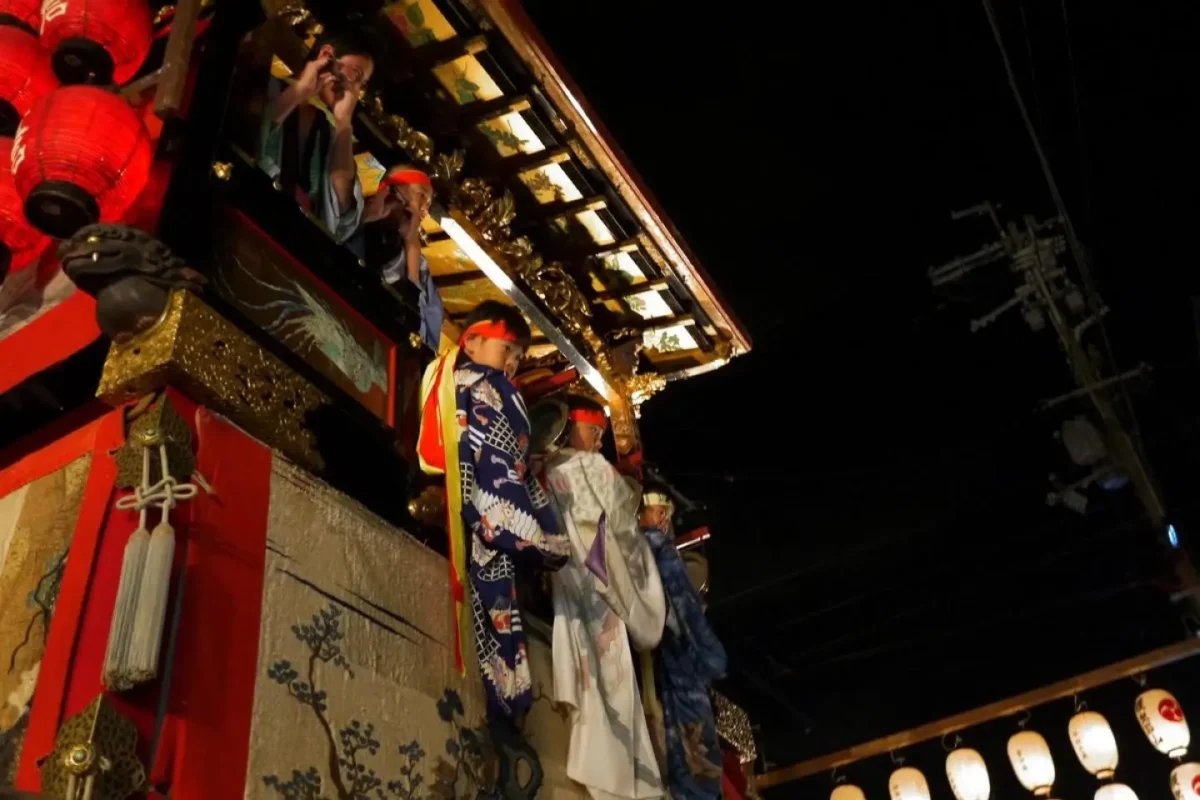
Otsu Matsuri takes place in early October, which is preferable to the sticky July heat of Kyoto’s Gion Matsuri. It features thirteen gorgeous tall lantern floats which can be viewed on the first day of the festival, and a parade which takes place the following day. The floats have ingenious mechanical puppets which move during the parade.
Otsu Festival, known as Otsu Matsuri, is one of Shiga Prefecture’s three major traditional festivals and a 400-year-old celebration associated with Tenson Shrine in central Otsu City. Established in the early Edo period and designated as an Important Intangible Folk Cultural Property of Japan, the festival is regarded as a more intimate and accessible version of Kyoto’s famous Gion Festival, from which its float tradition traces its roots.
The centerpiece is a procession of thirteen large, two-story hikiyama floats, each lavishly decorated with luxurious embroidered curtains, intricate ornaments, and tapestries imported through historic trade routes. Each float carries karakuri mechanical puppets that perform elaborate movements using mechanisms developed by Japanese craftsmen centuries ago, without any electronic power. These puppets reenact legends, Noh plays, and Shinto rituals.
Enjoy Your Event Stress-Free with Japan Travelo
Do you know? Planning events, festivals, concerts, and cultural experiences in Japan can be overwhelming. Japan Travelo brings everything together in one place, helping you manage your itinerary, transport, and accommodation with ease—so you can enjoy Japan without the stress of planning.
In December 2025, the festival’s float procession was added to UNESCO’s Intangible Cultural Heritage list, recognizing its cultural significance and the preservation of traditional Japanese craftsmanship and festival customs. This recognition has brought renewed international attention to Otsu City, located just 10 minutes by train from Kyoto and 40 minutes from Osaka on the shores of Lake Biwa.
Key Highlights:
- Thirteen Historic Hikiyama Floats: Gorgeously decorated tall floats built during Edo period, adorned with imported tapestries including Belgian and Chinese textiles.
- Karakuri Mechanical Puppets: Ingenious mechanical dolls that move, dance, and act out stories using wooden gears, strings, and springs.
- Free Community Festival: Entirely free to view, organized by Tenson Shrine and local preservation societies.
- UNESCO Recognition: Recently inscribed as UNESCO Intangible Cultural Heritage as part of Yama, Hoko, Yatai float festivals of Japan.
Cultural Significance & Origins
Otsu Festival’s origin story reflects the merchant culture of Otsu, which flourished as a post town on the Tokaido road and a port on Lake Biwa.
Salt Merchant Legend: According to historic records, the Otsu Festival began about 400 years ago in the early Edo era, when a salt merchant put on a tanuki mask and began to dance, and people gathered around to watch. This spontaneous performance evolved into a community celebration to pray for prosperity of the people and the spirits of Otsu. The merchant spirit remains central to the festival’s identity.
Connection to Gion Matsuri: The festival is closely linked to Kyoto’s Gion Matsuri. Otsu merchants who traveled to Kyoto brought back the concept of tall floats and adapted it for their own shrine. Tenson Shrine, also known as Tenson Shinomiya Daimyojin or Shinomiya Shrine, is the highest-ranking shrine system in Shiga, with Takebe Shrine as Ichinomiya, Hiyoshi Taisha as Ninomiya, Taga Taisha as Sannomiya, and Tenson Shrine as Shinomiya. As Shinomiya, it holds high status, and its festival was designed to rival Kyoto’s.
Spiritual Purpose: The festival honors the deities of Tenson Shrine and prays for protection from disease, good harvest, and prosperity for the town. The parade of floats through central Otsu is believed to purify the streets and spread divine blessing.
Designation and Preservation: The festival is designated as an Important Intangible Folk Cultural Property and since 2016 as part of Japan’s Yama, Hoko, Yatai floats which were inscribed on UNESCO’s Intangible Cultural Heritage list in 2025 for Otsu specifically. Thirteen neighborhood associations each preserve one float, passing down karakuri techniques, hayashi music, and tapestry conservation through generations.
Traditions, Rituals & Customs
The festival follows a strict ritual order preserved for centuries.
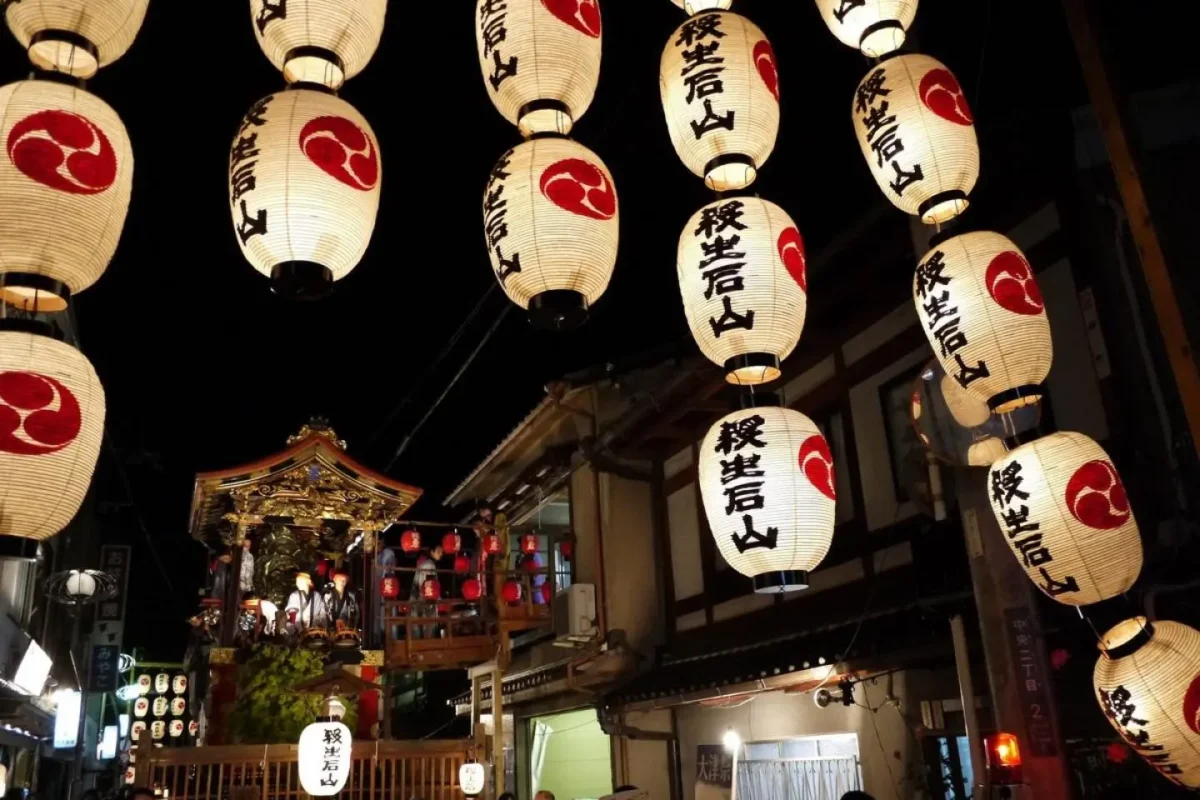
Yomiya Lantern Tradition: On the first day, known as Yomiya or Yogumi or Yoi-miya, lanterns are placed on thirteen floats decorated with brocade and mechanical dolls while flute and drum music is played. The puppets are removed from the floats for this evening display, and illuminated rows of paper chochin lanterns are displayed throughout the streets. The floats are lit from within and from hanging lanterns, creating a magical night museum effect. This evening starts at about 6:00 PM and continues until 9:00 PM.
Shinto Ceremony: The second day begins with a Shinto ceremony at Tenson Shrine. Priests offer prayers, purify the floats, and perform yudate ritual where boiling water is sprinkled to symbolize purification. After Tenson Shrine, the karakuri puppets reenact the shrine’s yudate Shinto ritual on the floats themselves.
Karakuri Performance Ritual: Each float stops at approximately 20 designated locations called karakuri performance spots along the parade route. At each spot, the mechanical puppets perform. Mechanisms are operated by skilled puppeteers hidden inside the float who pull strings and manipulate levers. Stories include Chinese legends, Japanese folklore, and Noh plays.
Chimaki Throwing: During the procession, participants throw chimaki, rice cakes wrapped in bamboo leaves and considered good luck charms, from the floats to the crowd. Catching a chimaki is believed to bring protection from illness and misfortune for the coming year.
Hayashi Music: Each float has its own hayashi band playing traditional festival music with flutes, drums, and small gongs. The music is different for each float and has been passed down orally.
What to Expect at the Festival
Visitors to Otsu Festival can expect an intimate, historic, and highly photogenic experience without the extreme crowds of Kyoto’s Gion Matsuri.
Float Viewing Experience: On the first day, thirteen floats are stationed on streets around central Otsu near Tenson Shrine and along Chuo-dori and Maruyamachi shopping district. You can walk up close, examine the embroidered curtains, see the lanterns glowing, and speak with preservation society members. The floats are two stories tall, so you look up to see detailed wood carvings and tapestries.
Parade Experience: On the second day, the floats are pulled through central Otsu by teams of local men in traditional happi coats. The parade is accompanied by hayashi music and occasional stops for karakuri performances that draw crowds into tight circles. The puppets move with surprising smoothness and humor, sometimes interacting with the crowd.
Atmosphere: The festival area is compact, centered within a short walk from Otsu Station on JR Biwako Line and 5-minute walk from Keihan Hamaotsu Station. Streets are lined with food stalls and local families. Unlike large city festivals, you can see all thirteen floats in one afternoon without rushing.
Cultural Depth: The Otsu Festival Hikiyama Exhibition Hall, located at 1 Chome-2-27 Central, Otsu, Shiga 520-0043, displays miniature floats and karakuri mechanisms year-round, providing context before seeing real floats.
Date & Schedule
Event Dates: Early – Mid October 2027 (Dates TBD)
Otsu Matsuri takes place in early October, which is preferable to the sticky July heat of Kyoto’s Gion Matsuri. It features thirteen gorgeous tall lantern floats which can be viewed on the first day of the festival, and a parade which takes place the following day. The floats have ingenious mechanical puppets which move during the parade.
Based on previous editions, the festival is held over two days in early to mid October. For reference, the 2025 edition was held from October 11 to October 12, 2025. The 2024 and 2023 editions were also held on the weekend preceding Sports Day holiday, typically the second weekend of October.
Typical Schedule:
- Day 1 Evening – Yomiya Festival Eve: From evening to 21:00, the festival eve called Yoimiya, the floats are lit up with lanterns and displayed on the streets at night. The puppets are removed, and illuminated rows of lanterns are displayed. Flute and drum music is played throughout central Otsu. This is the best time for photography of lantern-lit floats.
- Day 2 – Main Parade: From 9:00 to 17:30, the main procession. The day begins with a Shinto ceremony at Tenson Shrine, followed by a parade of the decorated floats through central Otsu. The thirteen floats stop at approximately 20 locations along the route for karakuri mechanical puppet performances. During procession, chimaki rice cakes are thrown from floats as good luck charms.
Access Information for Schedule: Access is a short walk from Otsu Station on JR Biwako Line, or 5-minute walk from Keihan Hamaotsu Station. Otsu Festival Hikiyama Exhibition Hall is open year-round for those who miss parade days.
All times are based on previous editions and may change. Please check official sources closer to event.
Visiting this event? Don’t miss out on these amazing activities and local experiences while you’re here.
Main Events & Programme
The programme is divided into two distinct days with different atmospheres.
Yoimiya Lantern Display:
- Time: Evening to 21:00 on first day.
- Content: All thirteen hikiyama floats are stationed on streets and illuminated with hundreds of paper lanterns. Karakuri puppets are removed and stored, allowing visitors to appreciate the float structure and tapestries. Hayashi musicians play from floats.
- Location: Central Otsu, around Tenson Shrine, Chuo-dori, Maruyamachi shopping district, and near NTT building.
Main Procession:
- Time: 9:00 to 17:30 on second day.
- Content: Shinto blessing at Tenson Shrine, then thirteen floats parade through city. Each float carries its karakuri puppet troupe. Performances occur at designated spots.
- Route: Circular route starting and ending at Tenson Shrine, passing Otsu Station area, Hamaotsu area, and central shopping arcades. Total length approximately 3 kilometers.
Karakuri Performance Spots:
Each float performs at spots including in front of Tenson Shrine, Otsu City Hall area, Hamaotsu, and Maruyamachi. The most popular spot is directly in front of Tenson Shrine where puppets reenact yudate ritual.
Chimaki Throwing Event:
Throughout parade, participants in traditional costumes throw chimaki from second story of floats. Crowds reach up to catch them. Children are given priority in front rows.
Traditional Dress, Arts & Crafts
The artistic value of Otsu Festival lies in its textiles and mechanical craftsmanship.
Hikiyama Float Art:
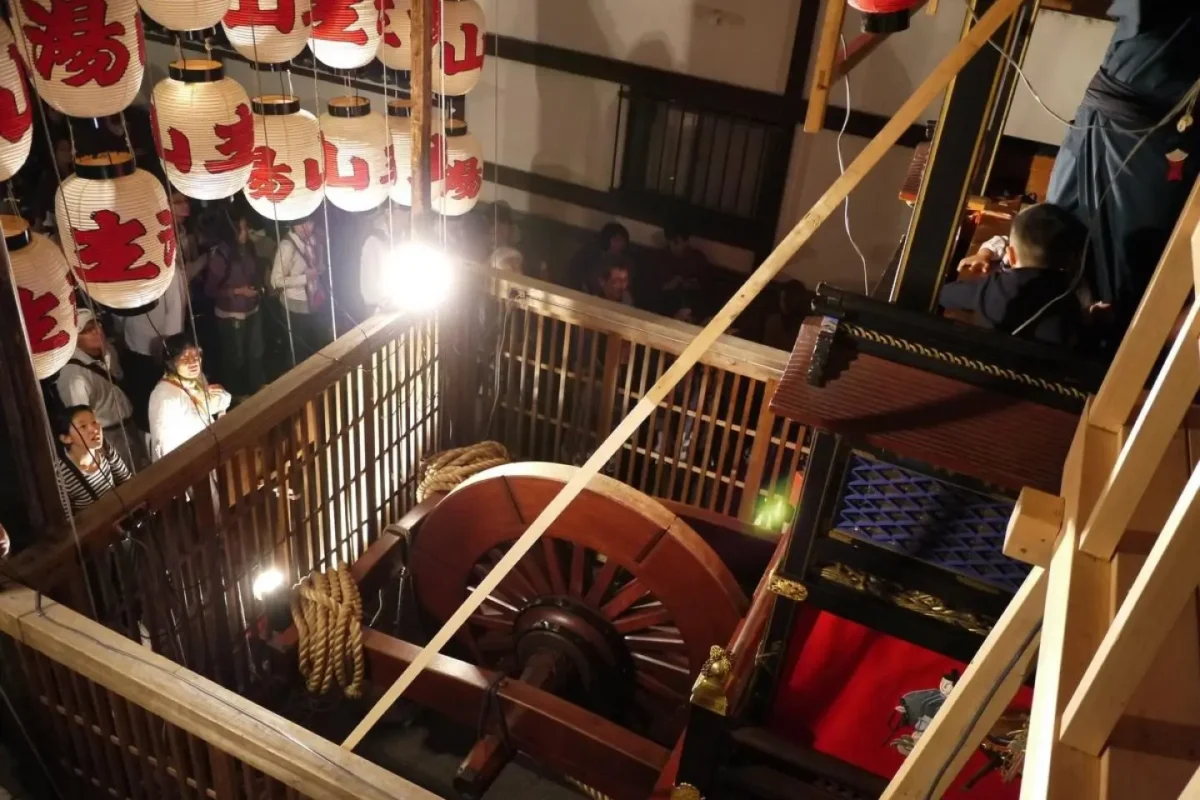
- Structure: Two-story wooden floats with wheels, built using traditional joinery without nails. Height approximately 6 to 7 meters, weight several tons, pulled by ropes.
- Tapestries: Floats are decorated with luxurious embroidered curtains called mizuhiki and imported tapestries. Many floats preserve 17th and 18th century Belgian Gobelin tapestries, Chinese Ming dynasty textiles, and Persian carpets that came to Japan via Dejima trade. These are considered cultural properties themselves.
- Wood Carvings: Upper stories feature intricate carvings of dragons, lions, and mythical beasts by Omi region craftsmen.
Karakuri Ningyo Mechanical Puppets:
- Mechanism: Puppets are made of wood, with internal mechanisms of strings, springs, and wooden gears. Puppeteers hidden inside manipulate them to walk, bow, dance, write calligraphy, and shoot arrows.
- Stories: Each float’s puppet tells a different story such as Chinese legend of Sima Guang breaking water jar, Japanese folk tale of Momotaro, or Noh play Hagoromo.
- Craftsmanship: Mechanisms developed by Japanese craftsmen centuries ago, using only natural materials. Preservation societies train apprentices for years to master operation.
Traditional Dress:
- Pullers: Wear matching happi coats with float’s crest, white tabi socks, and headbands.
- Hayashi Musicians: Wear traditional kimono and hakama with float colors.
- Shinto Priests: Wear white robes and black eboshi hats during opening ceremony.
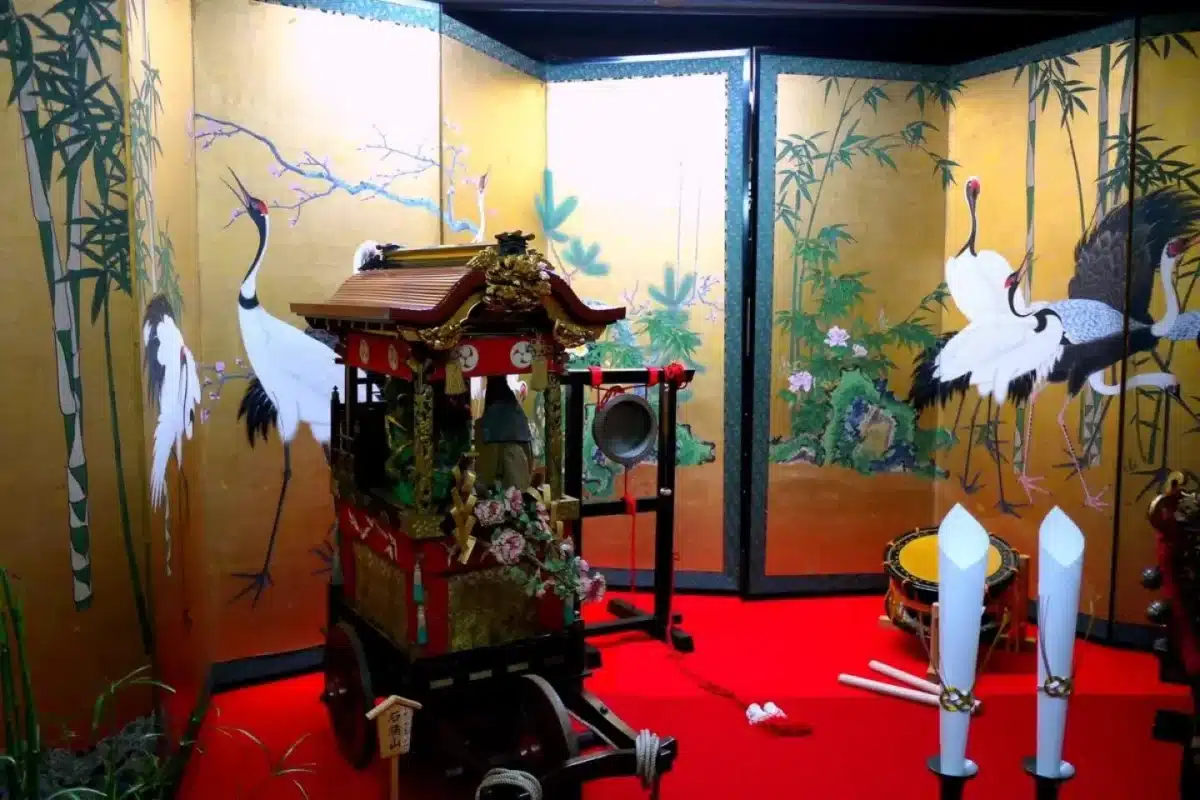
Preservation: Otsu Festival Hikiyama Exhibition Hall displays tools, miniature models, and videos explaining karakuri mechanisms and tapestry conservation.
Traditional Food & Local Specialties
Festival food reflects Otsu and Shiga’s location on Lake Biwa.
Festival Stall Foods:
- Omi Beef Skewers: Shiga’s famous wagyu beef, Omi beef, grilled on skewers. Price approximately 8 USD to 12 USD per skewer.
- Funazushi: Fermented crucian carp sushi, unique to Shiga, sold in small packs for adventurous eaters. Price around 5 USD to 8 USD.
- Chimaki: Rice cakes wrapped in bamboo leaves thrown from floats, also sold at stalls for 2 USD to 3 USD.
- Yakisoba, Takoyaki, Yakitori: Standard festival foods from 4 USD to 7 USD.
- Mitarashi Dango: Grilled rice dumplings with sweet soy glaze, popular in Otsu area, 3 USD to 5 USD.
Shiga Specialties:
- Omi Beef: One of Japan’s three major wagyu brands alongside Kobe and Matsusaka. Many restaurants in central Otsu serve Omi beef sukiyaki and steak.
- Biwamasu Trout: Lake Biwa’s endemic trout, served as sashimi or grilled.
- Biwako Shijimi Clams: Small freshwater clams from Lake Biwa used in miso soup.
Location & Festival Areas
Primary Shrine: Tenson Shrine, also known as Tenson Jinja or Shinomiya Shrine
Address: 1-2-27 Chuo, Otsu, Shiga 520-0043 Japan
Festival Zones:
- Tenson Shrine Precinct: Starting point for parade and location of morning Shinto ceremony. Small shrine grounds with main hall and kagura stage.
- Chuo-dori Central Street: Main parade avenue connecting Otsu Station to Lake Biwa, lined with shops and most crowded viewing area.
- Maruyamachi Shopping District: Historic shopping arcade where Otsu Festival Hikiyama Exhibition Hall is located. Floats are stationed here during Yoimiya evening.
- Hamaotsu Area: Lakeside area near Keihan Hamaotsu Station, where floats turn and perform facing Lake Biwa.
- Otsu Festival Hikiyama Exhibition Hall: Permanent exhibition at 1 Chome-2-27 Central, Otsu, displaying festival history and float models. Admission typically free or 2 USD donation.
Compact Area: All festival zones are within 500 meters radius from Otsu Station, making it walkable without transport.
Getting to the Festival
General Access: Otsu City is directly adjacent to Kyoto, on the western shore of Lake Biwa, Japan’s largest lake. It is easily accessible as day trip from Kyoto, Osaka, and Nagoya.
From Kyoto:
- JR Biwako Line: From Kyoto Station to Otsu Station, 9 minutes, fare approximately 2 USD. Fastest and most recommended. From Otsu Station, 3 minute walk to festival.
- Keihan Line: From Sanjo Station in Kyoto to Hamaotsu Station, 25 minutes, fare approximately 3 USD. Drops directly at Hamaotsu festival zone.
From Osaka:
- JR Special Rapid Service: From Osaka Station to Otsu Station via Kyoto, 55 minutes, fare approximately 6 USD.
- Keihan Line: From Yodoyabashi Station in Osaka to Hamaotsu via Sanjo, 80 minutes, fare approximately 7 USD.
From Tokyo:
- Tokaido Shinkansen: Tokyo to Kyoto 2 hours 15 minutes, then transfer to Biwako Line to Otsu. Total cost approximately 95 USD to 130 USD one way.
From Nagoya:
- Tokaido Shinkansen: Nagoya to Kyoto 35 minutes, then Biwako Line to Otsu. Or JR Tokaido Main Line direct to Otsu 90 minutes.
Where to Stay Nearby
Otsu City Hotels: Staying in Otsu allows early morning access to Shinto ceremony and evening Yoimiya without rushing for last train.
- Lake Biwa Hotel Biwako: Luxury hotel on lake shore, 5 minutes from Hamaotsu, rooms from 120 USD to 250 USD per night with lake view.
- Biwako Hotel: Modern hotel near Otsu Station, rooms from 80 USD to 150 USD per night.
- APA Hotel Biwako Otsu: Business hotel 2 minutes from Otsu Station, rooms from 50 USD to 90 USD per night.
Kyoto Hotels: Many visitors stay in Kyoto and visit Otsu as day trip due to proximity.
- Kyoto Station Area: Hotels like Hotel Granvia Kyoto, Mitsui Garden Hotel, and Piece Hostel offer range from 40 USD dorm to 300 USD luxury, 9 minutes train to Otsu.
Osaka Hotels: For those combining with Osaka sightseeing, Osaka hotels offer similar range and 55 minutes train to Otsu.
Booking Advice: Festival weekend coincides with autumn foliage season around Lake Biwa, so hotels in Otsu fill 2 to 3 months ahead. Kyoto hotels should be booked 4 months ahead during autumn season.
What Visitors Can Participate In
Chimaki Catching: The most interactive participation. Visitors crowd near floats and raise hands to catch chimaki rice cakes thrown from second story. Children are often given priority spots in front. Catching one is considered lucky.
Float Pulling Observation: While pulling is done by preservation society members, visitors can walk alongside floats, talk to pullers during rest stops, and take photos with permission. Some societies allow visitors to touch ropes for commemorative photos when float is stationary.
Karakuri Performance Viewing: Each performance spot gathers crowd in circle around float. Visitors are encouraged to cheer, clap, and react to puppet’s humorous movements. Performances are free and repeat at each stop.
Tenson Shrine Prayer: Visitors can enter Tenson Shrine precinct, offer prayers, purchase omamori charms for travel safety and good fortune, and receive goshuin stamp for 3 USD to 5 USD.
Hikiyama Exhibition Hall Visit: Visitors can try operating small karakuri models and learn about mechanisms hands-on. Staff often demonstrate how strings control puppet movements.
Photography: Photography and video of floats and puppets is allowed and encouraged. Best spots are at performance stops where puppets are at eye level.
Things to Do Before or After the Festival
Lake Biwa Attractions:
- Biwako Cruise: Sightseeing boats from Hamaotsu port cruise Lake Biwa, offering views of floats from water side during festival.
- Miidera Temple Onjoji: One of most important Tendai Buddhist monasteries, founded in 7th century, with national treasures and stunning grounds. 10 minutes walk from festival area. Admission approximately 5 USD.
- Ishiyama-dera Temple: Temple where Murasaki Shikibu wrote Tale of Genji, famous for autumn foliage and overlooking Lake Biwa. 15 minutes by train from Otsu.
- Hieizan Enryakuji: Mountain temple complex above Lake Biwa, UNESCO World Heritage site, accessible via cable car from Otsu side.
Otsu City Walks:
- Nagamachi Shopping Street: Historic street with sake breweries and traditional shops.
- Otsu-e Folk Art: Otsu is famous for Otsu-e, folk paintings of demons and humorous figures that were sold to travelers on Tokaido road. Workshops still exist.
Day Trips: Combined with Kyoto sightseeing, as Otsu is only 9 minutes from Kyoto Station, visitors can see Otsu Festival in morning and Arashiyama or Fushimi Inari in afternoon.
Local Food & Restaurants
Central Otsu Restaurants:
- Omi Beef Restaurants: Many restaurants around Otsu Station specialize in Omi beef.
- Matsukiya: Famous Omi beef sukiyaki restaurant operating since Meiji era, lunch sets from 25 USD to 50 USD, dinner courses from 60 USD to 120 USD.
- Kaneki: Casual Omi beef steak and hamburger, lunch from 12 USD to 20 USD.
- Lake Biwa Cuisine:
- Biwako Shokudo: Serves Biwamasu trout sashimi, funazushi, and shijimi miso soup, meals from 10 USD to 20 USD.
- Otsu-ya: Traditional restaurant near Hamaotsu serving Omi beef and lake fish set meals.
- Festival Street Food: During festival, central streets have 30 to 40 yatai stalls selling yakisoba, okonomiyaki, karaage, and sweets. Prices 3 USD to 8 USD.
- Cafes:
- Cafe de Biwako: Lakeside cafe with view of Hamaotsu, coffee and cake sets 5 USD to 8 USD.
- Tenson Shrine Tea House: Temporary tea house during festival serving matcha and wagashi for 4 USD to 6 USD.
Ticket Information & Access
Admission: Free
Otsu Festival is completely free to view. No tickets required for Yoimiya lantern display, main parade, karakuri performances, or Tenson Shrine ceremony. This includes all street viewing areas.
Paid Options:
- Otsu Festival Hikiyama Exhibition Hall: Admission is free or by donation of approximately 2 USD to 3 USD. Displays miniature floats, tapestry samples, and videos of karakuri mechanisms.
- Grandstand Seating: Some years, paid reserved seating is set up in front of Otsu City Hall for best view of karakuri performances. Price based on previous editions approximately 20 USD to 30 USD per seat. Most visitors watch standing for free.
- Goshuin and Charms: Tenson Shrine offers goshuin stamps for 3 USD to 5 USD and omamori charms for 5 USD to 10 USD.
- Food and Souvenirs: Food stall items 3 USD to 12 USD, Otsu-e paintings and chimaki souvenirs 5 USD to 20 USD.
Access Notes: Festival area is open public roads. Crowd control barriers create viewing corridors. Wheelchair accessible routes are available along Chuo-dori. Arrive 30 minutes early for good spots at popular performance locations.
Official Event Information
Event Name: Otsu Festival – Otsu Matsuri
Organizer: Tenson Shrine with Otsu Matsuri Hikiyama Preservation Association and Otsu City
Venue: Tenson Shrine and central Otsu City, 1-2-27 Chuo, Otsu, Shiga 520-0043 Japan
Access: Short walk from Otsu Station on JR Biwako Line, or 5-minute walk from Keihan Hamaotsu Station. Otsu Festival Hikiyama Exhibition Hall address is same as shrine area.
Official Website URL as text: en.japantravel.com/shiga/otsu-festival/10718 and www.otsu.or.jp/event/otsumatsuri/ and 2ponderful.com/calendar/otsu-matsuri-festival/
Contact: Otsu City Tourism Association, Otsu Festival Executive Committee. Phone inquiries via Otsu City Hall Tourism Division.
Notes: Pricing for grandstand seating and exhibition hall has not been announced for 2027. All USD prices based on previous editions from 2023 to 2025 converted at current rates. Event is held rain or shine but may be shortened in severe weather. Karakuri performances may be canceled in heavy rain to protect mechanisms. Please check official Otsu City website for latest schedule and float route map.
Video
Location
FAQ
What are karakuri mechanical puppets and how do they work?
Karakuri mechanical puppets are traditional Japanese moving dolls that operate using only wooden gears, strings, springs, and levers hidden inside the float, with no electricity. Skilled puppeteers inside the hikiyama manipulate them to perform elaborate movements such as walking, dancing, writing calligraphy, and shooting arrows. The mechanisms were developed centuries ago by Japanese craftsmen and each of the thirteen floats preserves a different story and movement technique passed down through neighborhood preservation societies.
Is Otsu Festival related to Kyoto's Gion Matsuri and what is the difference?
Otsu Festival originated from Kyoto's Gion Matsuri as Otsu merchants who traveled to Kyoto brought back the float concept for Tenson Shrine, making it a sister festival. While Gion Matsuri is held in sticky July heat with massive crowds and 33 floats, Otsu Festival takes place in cooler early October with thirteen floats and is much more intimate and less crowded. Otsu is distinctive for its karakuri mechanical puppets on every float, while Gion focuses more on tapestry displays, and Otsu allows visitors to view floats up close without extensive barriers.
Do I need tickets and where is the best place to watch the parade?
The festival is completely free with no tickets required for Yoimiya evening lantern display or main parade, including all karakuri performances. The best viewing spots are in front of Tenson Shrine for the yudate ritual reenactment, at Maruyamachi shopping district where floats are close together, and along Chuo-dori central street where chimaki throwing occurs. Arrive 30 minutes early for front row at performance stops, and consider staying for both evening lantern display and daytime parade to see different atmospheres of same floats.
What is chimaki throwing and can visitors participate?
Chimaki are rice cakes wrapped in bamboo leaves considered good luck charms for protection from illness, thrown from the second story of hikiyama floats during the parade. Catching a chimaki is believed to bring good fortune for the coming year and is the most interactive part of the festival. Visitors can participate by crowding near floats during performances and raising hands, with children often given priority in front rows, and extra chimaki are also sold at stalls for those who do not catch one.
How do I get to Otsu Festival from Kyoto and how long should I stay?
Otsu is extremely accessible from Kyoto, just 9 minutes by JR Biwako Line from Kyoto Station to Otsu Station with a 3 minute walk to festival, or 25 minutes by Keihan Line from Sanjo to Hamaotsu. The festival area is compact within 500 meters radius, so you can see all thirteen floats in one afternoon, but staying for both evening Yoimiya lantern display until 21:00 and next day parade from 9:00 to 17:30 offers complete experience. Many visitors combine Otsu Festival with Lake Biwa cruise and Miidera Temple visit as half-day or full-day trip from Kyoto.

Leave a Reply