
Overview
The Matsushima Oyster Festival (Kaki Matsuri) started over 40 years ago, and takes place in the peak of oyster season. In Matsushima, oysters are typically grilled. Japanese oysters can be quite massive especially in areas like Matsushima, Minamisanriku and Kesennuma.
Matsushima Bay is known as one of Japan’s three most scenic views, alongside Amanohashidate in Kyoto and Miyajima in Hiroshima. When visiting Matsushima during the winter months, don’t miss the town’s most popular winter treat, oysters. Matsushima is where Miyagi oyster farming began in the 1600s, with a long history of cultivating what is called the milk of the ocean. The oysters here reach their peak from October to March, plump, creamy, and rich from the nutrient mix of mountain rivers and ocean tides.
The festival is a celebration of the delicious bivalve and a community gathering in the cold February air of coastal Miyagi. It combines free samples, affordable grilled seafood, family entertainment, and the stark winter beauty of Matsushima Bay. Much of the entertainment that isn’t strictly food related is geared towards families and children, creating a warm, welcoming atmosphere despite the cold.
Enjoy Your Event Stress-Free with Japan Travelo
Do you know? Planning events, festivals, concerts, and cultural experiences in Japan can be overwhelming. Japan Travelo brings everything together in one place, helping you manage your itinerary, transport, and accommodation with ease—so you can enjoy Japan without the stress of planning.
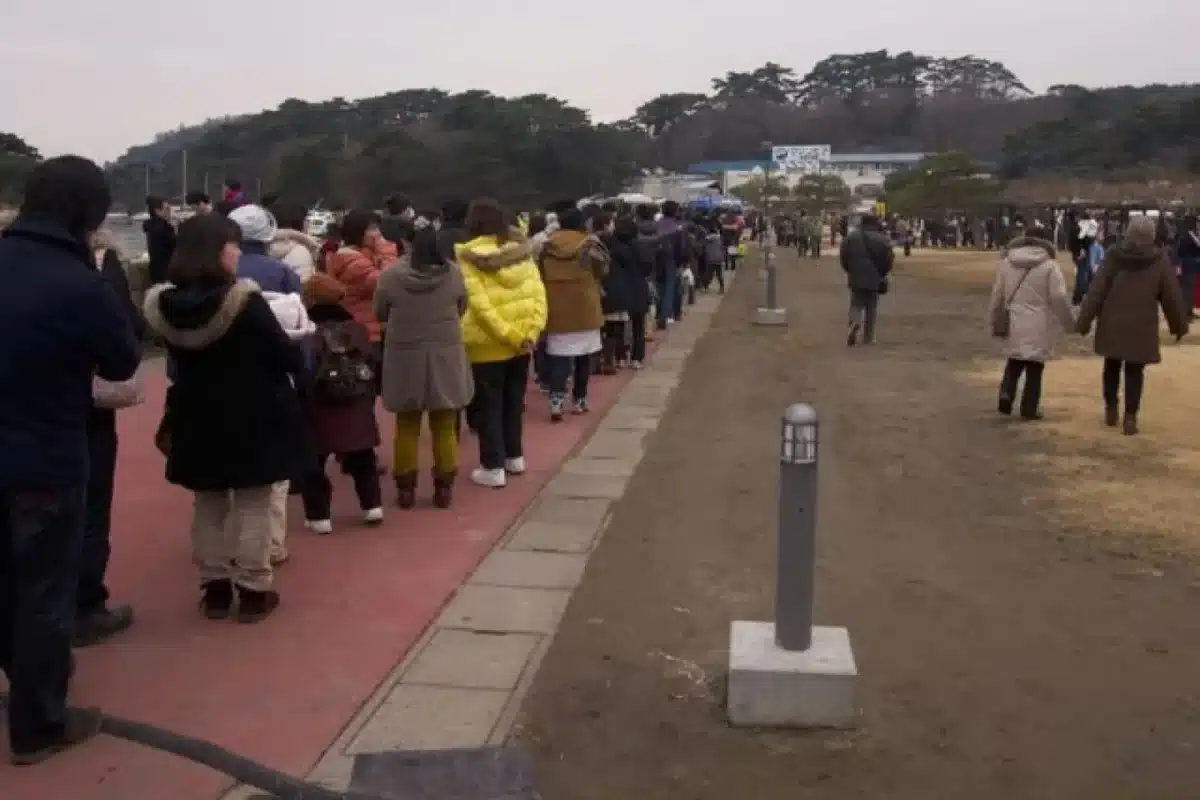
You can stand in a long line for one free grilled oyster as many times as you can make it through. They also give out free bowls of oyster soup kakinabe to those patient enough to make it through the long wait. The kakinabe is excellent and it is worth the wait. Even better, you get more oysters, three or four, from the kakinabe line.
Besides free grilled oysters and free oyster soup, there are both paid and complimentary grill stations where you can hang out and relax with your group of friends and family and grill out in the coastal air. Many food stalls have deals on bulk seafood and meat for grilling as well as single pre-cooked portions for those not interested in cooking their own food.
What Makes This Food Event Special
This food event stands out because it balances generosity, tradition, and hands-on grilling culture in one of Japan’s most beautiful bays.
Over 40 Years of Tradition: Started over four decades ago by local fishermen and the Matsushima tourism association to promote winter tourism, the festival has become a beloved Tohoku winter tradition that survives harsh weather and continues to draw thousands.
Free Oyster Culture: Unlike many food festivals that are purely commercial, Matsushima Oyster Festival maintains a strong free component. The free grilled oyster line and free kakinabe oyster soup line are central traditions. Visitors can line up multiple times, and the queues themselves become social events where strangers chat while waiting in the cold.
Massive Matsushima Oysters: Japanese oysters in this region are notably massive compared to Western varieties. Matsushima, Minamisanriku and Kesennuma oysters are large, meaty, and creamy, with a deep umami that comes from farming in Matsushima Bay’s mix of fresh and salt water. Tasting them freshly grilled over charcoal just minutes from the farm is a special experience.
DIY Grill Station Format: The festival offers both complimentary and paid grill stations where groups can rent a charcoal grill for 60 and 90 minute periods and cook their own seafood purchased from market stalls. This creates a barbecue party atmosphere in winter, with smoke rising over the square and families huddled around grills.
Winter Scenery: If there is a good snow storm before you go, Matsushima in winter can be just as beautiful as in other seasons. While trees are bare and missing spring flowers, summer greens or autumn fire, snow falling on pine-covered islands in such a serene place is lovely. The festival gives you a reason to experience this quiet season.
Food, Cuisine & Specialties
The cuisine is centered on oysters but extends to the full bounty of Miyagi’s coast.
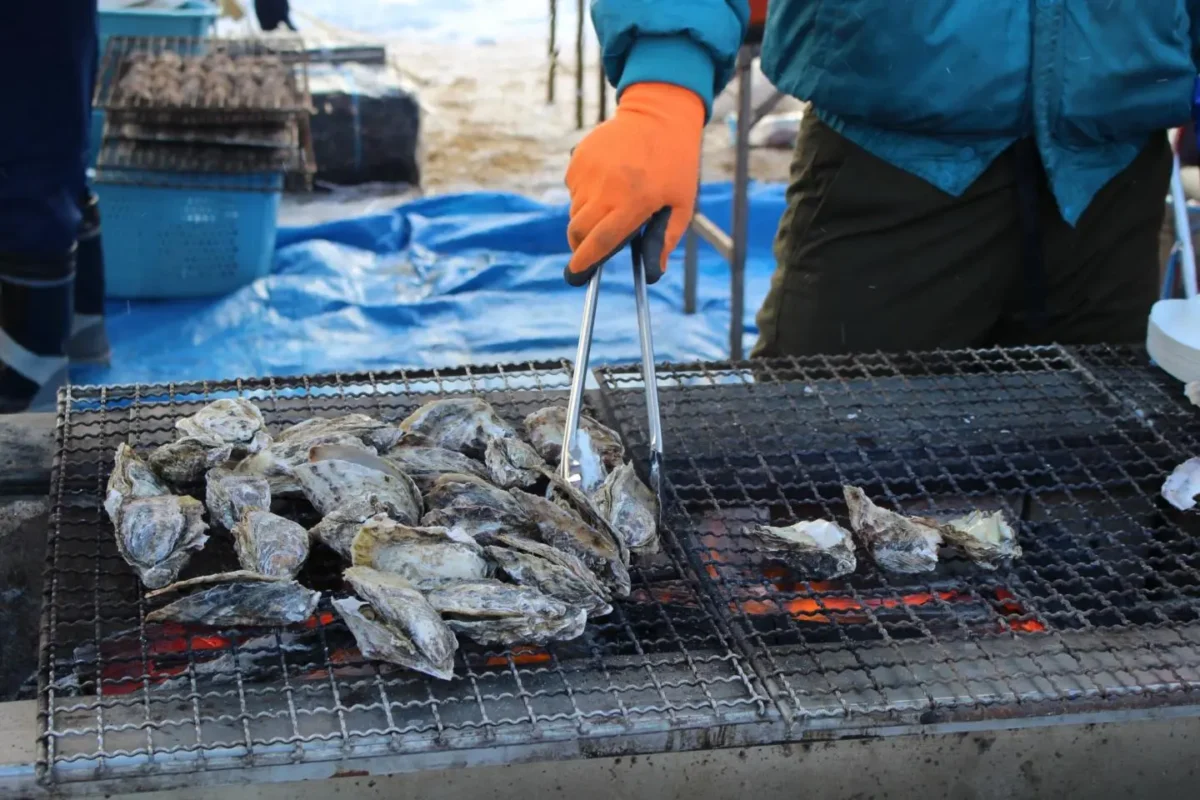
Grilled Oysters – Yakigaki: The signature item. In Matsushima, oysters are typically grilled whole in the shell over charcoal until they pop open, releasing savory juices. Served with a squeeze of lemon, ponzu, or simply with their own liquor. Texture is plump and juicy with smoky aroma. Free samples are grilled at central stations, while paid versions at stalls allow choice of toppings like cheese, garlic butter, or spicy miso.
Kakinabe Oyster Soup: Nabe is a stock soup that can be customized depending on ingredients. The festival’s kakinabe is a miso or soy-based hot pot filled with large oysters, tofu, Chinese cabbage, mushrooms, and leeks. Served steaming hot in paper bowls, it warms you from within in the cold air. Each free bowl contains three or four large oysters, more generous than the single free grilled oyster.
Oyster Rice Bowl – Kaki Meshi: Steamed rice cooked with oyster extract, topped with large grilled oysters and sometimes ikura. A limited winter item available at shops around town and at festival stalls.
Other Grilled Seafood:
- Grilled Scallops – Hotate: Large scallops grilled with butter and soy sauce, still in shell.
- Tsubu – Whelk Sea Snail: Chewy sea snail grilled with a toothpick for pulling meat.
- Abalone – Awabi: Premium item, sliced and grilled with butter, occasionally available at market stalls.
- Squid and Octmodel – Ika and Tako: Whole squid grilled and octmodel legs.
- Crab Soup – Kanijiru: Fantastic crab miso soup loaded with crab legs and vegetables, served hot.
Meat and Snacks:
- Cup O’ Pork: For 400 yen which is approximately 2.70 USD you got a cup of pork which included sausages, bacon and a good cut of ham. Excellent for non-seafood eaters.
- 5 Fried Oysters: Best value was probably the 5 fried oysters for 350 yen which is approximately 2.35 USD, they were very tasty and a real bargain. Crispy panko-breaded oysters with tartar sauce.
- Grilled Pork and Beef Skewers: Local Miyagi pork and beef.
Desserts: Numerous dessert stands selling crepes and chocolate-dipped bananas, as well as oyster-shaped manju.
Chefs, Restaurants & Food Vendors
The festival is run by local fishermen, fish markets, and restaurants rather than celebrity chefs, giving it an authentic fishing town character.
Matsushima Fish Market Vendors: The core vendors come from Matsushima Fish Market and nearby Kesennuma and Minamisanriku ports. They bring fresh catch directly from morning harvest, including oysters, scallops, and crab. They offer both bulk deals for grill stations and single pre-cooked portions.
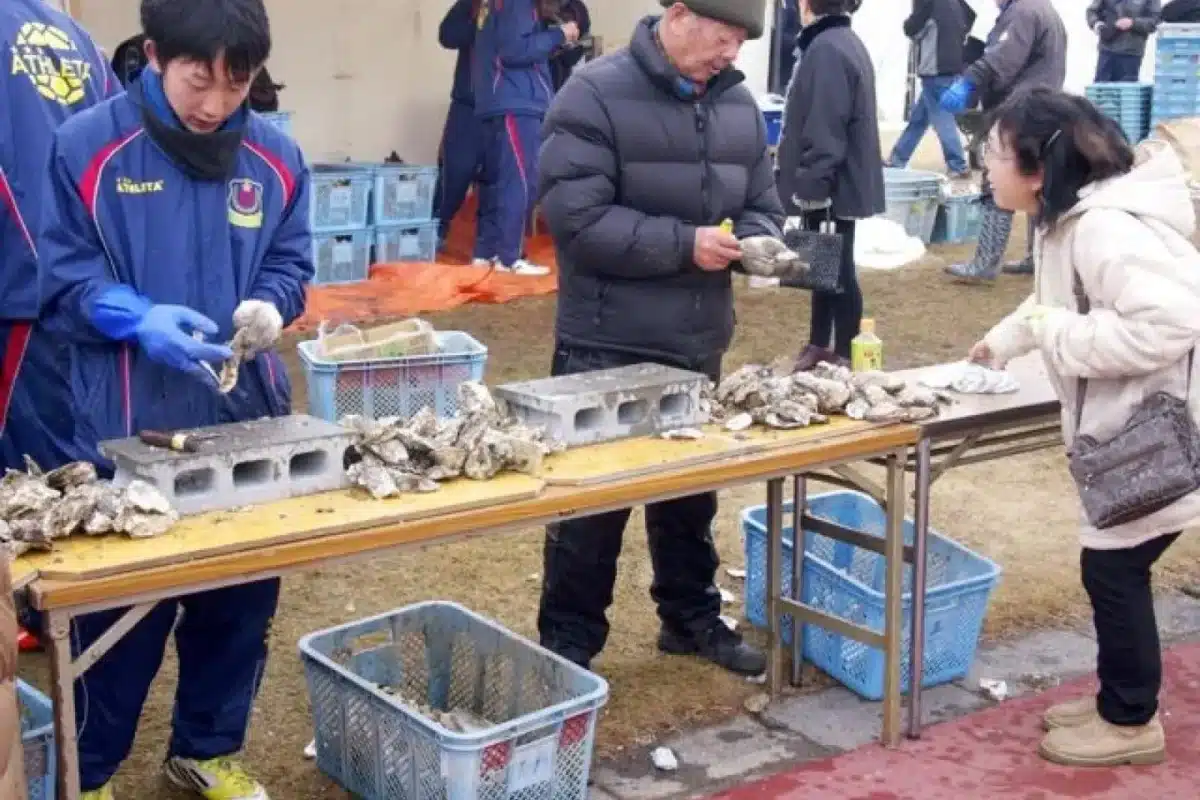
Local Fishermen’s Cooperative – Gyokyo: Members of the Miyagi oyster fishermen’s cooperative operate the free grilling stations and explain oyster farming history. Matsushima oyster farming began in the 1600s and uses hanging culture method where oysters grow on ropes suspended from rafts.
Grill Station Operators: Vendors manage the 60 and 90 minute grill rentals, providing charcoal, tongs, and sauces. They also sell bulk seafood packs for grilling at around 10 USD to 25 USD per pack containing mixed oysters, scallops, squid, and vegetables.
Sake Retailers: Local sake breweries from Shiogama and Matsushima area set up stalls giving out free samples on the street. Urakasumi Brewery, one of Miyagi’s most famous, often participates. Hot sake is available to warm you from within, sold for around 2 USD to 4 USD per cup.
Dessert and Snack Vendors: Independent crepe stands, chocolate banana stalls, and local bakery stalls selling oyster curry bread and sweets.
Restaurant Row: Restaurants around Matsushima Green Square and along Kaigan-dori street set up temporary branches at festival, offering sit-down oyster courses.
Food Experience
The experience is hands-on, communal, and designed for lingering despite cold.
Free Sample Queues: You can stand in a long line for one free grilled oyster as many times as you can make it through. Lines can be 30 to 60 minutes on peak days but move steadily. The free grilled oyster is handed over on shell, hot from grill. The free kakinabe line is separate, also long, but rewards you with larger portion and hot soup.
DIY Grill Experience: Rent a grill for 60 or 90 minutes, purchase seafood from stalls, and cook with friends and family. Tables are set up under tents and in open air. Smoke fills the square, creating lively barbecue atmosphere. This is where groups spend most time, chatting, grilling, and sharing.
Pre-Cooked Option: For those not interested in cooking their own food, many stalls sell pre-cooked grilled oysters, fried oysters, crab soup, and rice bowls ready to eat while standing or at communal benches.
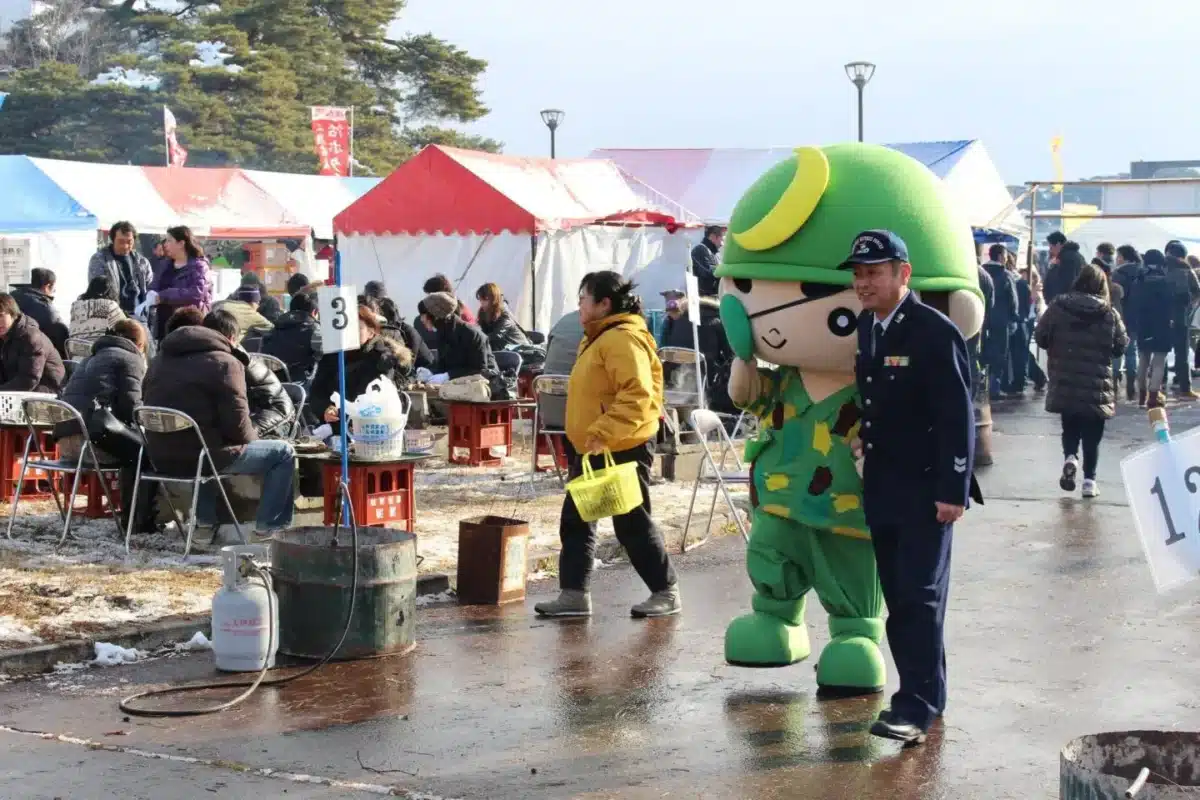
Family-Friendly Atmosphere: Much of the festival’s entertainment that isn’t strictly food related is geared towards families and children. There are PR teams, displays from the Japanese Self Defense Force, and those cut-out boards you can stick your face in to take pictures with. Sake retailers giving free samples add adult element.
Winter Comfort: The cold weather makes hot food taste better. Hot sake, hot kakinabe, and hot grilled oysters provide warmth. Dress warm with layers, hat, and gloves as you will be outside for hours.
Date & Schedule
Event Dates: Early February 2027 (Dates TBD)
The Matsushima Oyster Festival takes place annually on the first Sunday of February and features the tasty delights of the abundant oysters farmed in Matsushima Bay. The event takes place at Matsushima Green Square where stalls dish out grilled oysters, soups, and rice bowls beside the bay.
For reference, recent editions have been listed as Late January to Early March with main festival day in early February. The festival started over 40 years ago and takes place in peak oyster season. According to recent listings, Matsushima Oyster Festival 2026 is listed as Late Jan – Early Mar and Matsushima Oyster Festival 2027 is listed as Early Feb.
Typical Daily Schedule:
- 9:00 AM to 10:00 AM – Opening and Grill Setup: Vendors set up stalls, charcoal grills lit, free sample stations begin preparing.
- 10:00 AM to 3:00 PM – Main Festival Hours: Free grilled oyster line open, free kakinabe soup line open, paid grill stations operating on 60 and 90 minute rotations, food stalls selling bulk seafood and pre-cooked portions, sake samples available.
- 3:00 PM to 4:00 PM – Wind Down: Free lines close when supplies run out, stalls begin closing, grill rentals end.
The festival is held outdoors rain or shine, but may be shortened in severe snow or wind. Supplies of free oysters are limited and may run out early on busy days.
Visiting this event? Don’t miss out on these amazing activities and local experiences while you’re here.
Location & Venue
Main Venue: Matsushima Green Square – Matsushima Ryokuchi
Address: Matsushima, Matsushima-machi, Miyagi-gun, Miyagi 981-0211 Japan
Venue Details:
- Matsushima Green Square: Large open park area between Matsushima-kaigan Station and Matsushima Bay shoreline, with views of pine-covered islands. The square is flat, grassy in summer but hard ground in winter, with space for 30 to 50 stalls and grill stations.
- Layout: Central area holds free grilling stations and free kakinabe soup pots. Surrounding perimeter holds paid grill stations with tables and benches. Outer ring holds food stalls selling bulk seafood, meat, desserts, and drinks.
- Views: From the square you can see Matsushima Bay islands, sightseeing boats, and nearby Entsuin Temple and Zuiganji Temple rooftops.
Important Access Note: Make sure you don’t go to Matsushima Station on the Tohoku Main Line, it is much further away and not nearly as nice of a walk to get to the festival area. Use Matsushima-kaigan Station on Senseki Line for shortest walk.
Surrounding Area: The square is 5 minute walk from Matsushima-kaigan Station, 2 minutes from Matsushima Fish Market, and 10 minutes from Zuiganji Temple and Entsuin Temple.
Getting to the Event
Matsushima is located in Miyagi Prefecture, approximately 25 kilometers northeast of Sendai City, on the coast of Matsushima Bay.
From Sendai:
- JR Senseki Line: From Sendai Station to Matsushima-kaigan Station, approximately 40 minutes, fare around 4 USD to 5 USD. Most direct and scenic route, recommended for festival.
- JR Tohoku Main Line: From Sendai Station to Matsushima Station, approximately 30 minutes, but then 25 minute walk or bus to Green Square. Not recommended despite being slightly faster train.
From Tokyo:
- Tohoku Shinkansen: Tokyo Station to Sendai Station, 90 minutes, fare 70 USD to 110 USD one way, then transfer to Senseki Line to Matsushima-kaigan.
From Matsushima-kaigan Station:
- Walking: Exit station, walk straight toward bay, turn right along Kaigan-dori, Green Square is on left after fish market. 5 to 7 minute walk with signs and smoke from grills guiding you.
By Car: Route 45 from Sendai to Matsushima, approximately 40 minutes. Parking available at Matsushima Rikyu parking and nearby pay lots, but fills early on festival day.
Where to Stay Nearby
Staying overnight allows you to enjoy festival and winter scenery without rushing for last train.
Matsushima Town Hotels and Ryokan:
- Hotel Taikanso: Large resort hotel with onsen baths overlooking bay, 10 minute walk from Green Square, rooms from 120 USD to 250 USD per night including dinner and breakfast.
- Matsushima Ichinobo: Luxury ryokan with bay view and hot springs, rooms from 200 USD to 400 USD per night.
- Komatsu-kan Kofu-tei: Historic ryokan near Zuiganji, rooms from 100 USD to 180 USD per night.
- Matsushima Century Hotel: Mid-range hotel near bay, rooms from 80 USD to 150 USD per night.
Sendai City Hotels: For more options and lower prices, stay near Sendai Station with easy Senseki Line access.
- Richmond Hotel Premier Sendai: Rooms from 80 USD to 140 USD per night.
- Dormy Inn Sendai: With natural hot spring, rooms from 60 USD to 110 USD per night.
- APA Hotel Sendai: Budget business hotel, rooms from 45 USD to 80 USD per night.
Booking Advice: Early February is off-season except for oyster festival weekend, so hotels are generally available, but festival Sunday books early in Matsushima town. Book 1 to 2 months ahead for Matsushima, 2 weeks for Sendai.
Things to Do Before or After the Event
Matsushima offers many attractions beyond oysters, especially beautiful in winter snow.
Tohoku’s Oldest Zen Temple: Zuiganji Temple, founded in 828 and rebuilt by Date Masamune, is one of Tohoku’s most important Zen temples with national treasure main hall, museum, and caves carved with statues. Admission approximately 5 USD. 10 minute walk from festival.
Matsushima Bay Cruise: Sightseeing boats cruise among 260 pine-covered islands. In winter with snow, views are serene and less crowded. Boats depart from pier near Green Square, fare approximately 10 USD to 13 USD for 50 minute cruise.
Fukuurajima and Oshima Islands: Take a walk out to Fukuurajima or Oshima while you are there and check out beautiful island covered in snow. Fukuurajima is accessible via long red bridge called Fukuura Bridge, toll approximately 1.50 USD, with botanical garden and bay views. Oshima is small island with remaining of Date Masamune’s meditation hall.
Entsuin Temple: Famous for rose garden and autumn illumination, but also beautiful in winter with moss and stone gardens. Next to Zuiganji.
Matsushima Aquarium and Fish Market: Matsushima Fish Market sells fresh seafood, oyster packs to take home, and souvenirs. Aquarium shows local marine life.
Snow Scenery Walk: If snow falls, walk along bay shoreline for photos of snow-covered pine islands, one of Japan’s most poetic winter scenes.
Restaurants & Local Food to Try
Beyond festival stalls, Matsushima town restaurants offer oyster specialties year-round during season.
Matsushima Fish Market: Inside market, shops offer grilled oyster buffets, oyster rice bowls, and all-you-can-eat oyster courses. 45-minute grilled oyster buffet costs around 20 USD to 30 USD per person, including oyster soup and oyster gratin.
Local Restaurants:
- Matsushima Oyster Restaurant – Kakigoya: Specializes in grilled oysters, oyster hot pot, and oyster fry, lunch sets from 10 USD to 18 USD, dinner courses from 20 USD to 35 USD.
- Shokado: Serves oyster curry, oyster ramen, and oyster okonomiyaki, unique local twists.
- Ippin: Near Matsushima-kaigan Station, serves kaki meshi oyster rice and kakinabe set meals.
Other Miyagi Specialties:
- Gyutan Beef Tongue: Sendai specialty, grilled beef tongue with barley rice, available in Matsushima restaurants for 12 USD to 18 USD.
- Zunda Mochi: Edamame paste mochi, sweet snack, 3 USD to 5 USD.
- Sasa Kamaboko: Bamboo leaf shaped fish cake, grilled, 1 USD to 3 USD.
Sake: Urakasumi sake from Shiogama and Matsushima sake breweries pair perfectly with oysters, tasting sets 5 USD to 10 USD.
Dietary & Food Allergy Information
Allergen Awareness: Oysters are mollusks and major allergen. Festival is heavily seafood-focused with high risk of cross-contact.
Common Allergens Present:
- Shellfish: Oysters, scallops, whelk, abalone, crab, shrimp present everywhere including grills, soups, and fried items. Grills used for oysters are also used for other seafood.
- Fish: Fish paste in kamaboko, fish stock in soups.
- Gluten: Soy sauce, panko breading on fried oysters, flour in crepes and okonomiyaki.
- Eggs: Used in fried oyster batter, crepes, and some soups.
- Dairy: Butter used for grilled scallops and abalone, cheese topping on oysters, milk in crepes and chocolate bananas.
- Soy: Soy sauce, miso paste in kakinabe and crab soup, tofu in nabe.
Vegetarian and Vegan: Very limited options. Most dishes contain seafood, meat, or fish stock. Some dessert stands offer plain crepes without meat but may contain dairy and eggs. Plain rice and some vegetable sides may be available at grill stations.
Halal and Kosher: No halal or kosher certification at festival stalls. Seafood is not prepared according to halal standards and cross-contact with pork and alcohol (sake) is common.
Recommendations:
- Visitors with shellfish allergy should avoid festival entirely due to airborne proteins from grilling and shared cooking surfaces.
- Visitors with gluten or dairy allergies should ask vendors about ingredients, though English may be limited. Bring translation cards.
- Hand washing stations available but limited. Bring own wet wipes.
- Hot sake contains alcohol, free samples may contain alcohol.
Ticket Information
Admission: Free Entry
The Matsushima Oyster Festival itself is free to enter at Matsushima Green Square. No tickets required for entry, free grilled oyster line, or free kakinabe soup line.
Paid Costs Inside Festival Based on Previous Editions:
- Free Grilled Oyster: 1 per turn through line, unlimited turns while supplies last, free.
- Free Kakinabe Soup: 1 bowl per turn, 3 to 4 oysters per bowl, free.
- Grill Rental: 60 minute rental approximately 7 USD to 10 USD per grill, 90 minute rental approximately 10 USD to 15 USD per grill, includes charcoal and tongs, holds 4 to 6 people.
- Bulk Seafood Packs for Grilling: Mixed oyster and scallop packs from 10 USD to 25 USD, crab legs packs from 15 USD to 30 USD, meat packs from 8 USD to 15 USD.
- Pre-Cooked Single Items: Grilled oysters 3 USD to 5 USD each, grilled scallops 3 USD to 6 USD each, crab soup 4 USD to 6 USD per bowl, 5 fried oysters 350 yen approximately 2.35 USD, cup of pork 400 yen approximately 2.70 USD with sausages, bacon and ham.
- Desserts: Crepes 4 USD to 6 USD, chocolate bananas 2 USD to 3 USD.
- Drinks: Hot sake 2 USD to 4 USD per cup, cold beer 3 USD to 5 USD, soft drinks 1 USD to 2 USD.
Payment: Cash is primary payment method. Some stalls may accept IC cards like Suica, but cash ensures purchase. ATMs available at nearby convenience stores.
Supplies: Free items run out, especially in afternoon. Arrive early for guaranteed free samples.
Official Event Information
Event Name: Matsushima Oyster Festival – Matsushima Kaki Matsuri
Organizer: Matsushima Town Tourism Association, Matsushima Fishermen’s Cooperative, Miyagi Oyster Association
Venue: Matsushima Green Square, Matsushima, Matsushima-machi, Miyagi-gun, Miyagi 981-0211 Japan
Access: 5 to 7 minute walk from Matsushima-kaigan Station on JR Senseki Line. Do not go to Matsushima Station on Tohoku Main Line as it is much further.
Official Website URL as text: en.japantravel.com/miyagi/matsushima-oyster-festival/10245 and tohokukanko.jp/itineraries/detail_168.html
Contact: Matsushima Tourist Information Center, Phone 022-354-2618. Matsushima Town Office Tourism Division.
Notes: Pricing for 2027 has not been announced. All USD prices based on previous editions converted at current rates. Festival held in peak oyster season, annually on first Sunday of February, but 2027 dates listed as Early February Dates TBD. Event held rain or shine but may be shortened in severe weather. Free oyster supplies limited. Dress warm as coastal February air is cold and windy. Check official Matsushima tourism website for latest schedule and free sample availability.
Location
FAQ
Is the Matsushima Oyster Festival really free and how do the free lines work?
Yes, entry to Matsushima Green Square and participation in free grilled oyster and free kakinabe soup lines are completely free with no ticket needed. You can stand in a long line for one free grilled oyster as many times as you can make it through, and there is separate line for free oyster soup containing three or four oysters per bowl. Lines can be 30 to 60 minutes at peak times but are part of social experience, and supplies are limited so arriving early in morning increases chances of multiple turns.
What should I wear and how cold is it at the festival?
Early February in coastal Miyagi is cold, windy, and often near freezing with occasional snow, so dress warm in layers, hat, gloves, and waterproof shoes. The festival is entirely outdoors at Green Square with no indoor heating except tents around grill stations, and you will be standing in lines and sitting at open-air grills. Hot kakinabe soup and hot sake help warm you from within, but wind from Matsushima Bay can be biting, so thermal base layers and windproof outer layer are recommended.
Can I take oysters home and are there take-home options?
Yes, many fish market vendors sell bulk fresh oysters and shucked oysters in packs for take-home, ranging from small bags to large boxes kept cold with ice packs. Matsushima Fish Market near Green Square also sells oyster packs year-round and offers shipping service within Japan for oyster boxes. If you are staying in hotel without kitchen, pre-cooked grilled oysters and oyster rice bowls are easier to carry, but fresh oysters require refrigeration and should be eaten same day.
Is the festival suitable for children and non-seafood eaters?
Much of the entertainment that isn't strictly food related is geared towards families and children, including self-defense force displays, face cut-out photo boards, and dessert stands selling crepes and chocolate bananas. For non-seafood eaters, there are meat options like cup of pork with sausages, bacon and ham, grilled pork skewers, and vegetarian sides at some stalls, though cross-contact with seafood is high due to shared grills. Children often enjoy DIY grill experience and sweet snacks even if they do not eat oysters.
How is Matsushima in winter and what else can I do around the festival?
If there is a good snow storm before you go, Matsushima in winter can be just as beautiful as in other seasons, with snow-covered pine islands creating serene landscape different from spring cherry or autumn foliage. There is plenty else to do in area including visiting Tohoku's oldest Zen temple Zuiganji, taking a 50 minute bay cruise among islands, walking out to Fukuurajima or Oshima islands via red bridges, and visiting Matsushima Fish Market and aquarium. The area is much less crowded in winter than in peak spring or summer, offering peaceful experience.

Leave a Reply