
What to expect
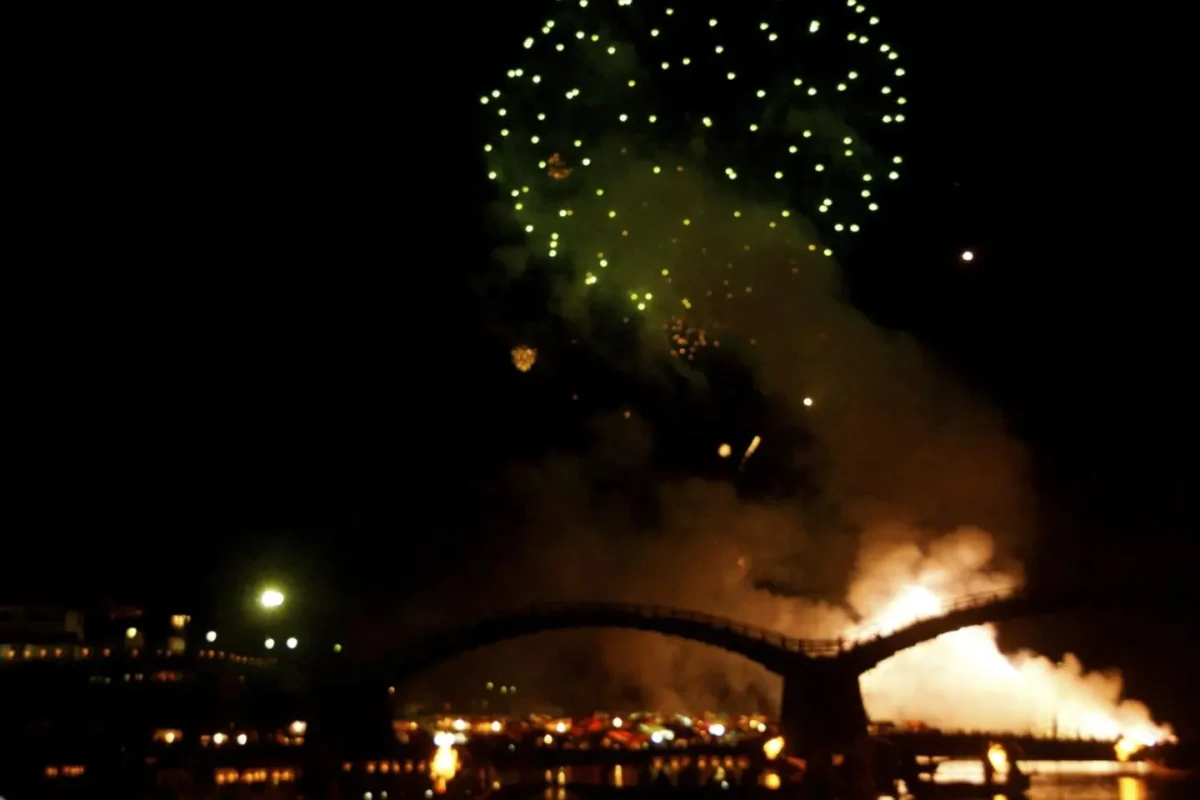
Historic bridge backdrop: One of Japan’s most traditional and historical bridges is located in Yamaguchi in the city of Iwakuni. The Kintai Bridge, or Kintaikyo, is a five-arch wooden bridge spanning the Nishiki River, first built in 1673 and restored as a symbol of the region. Every year this world heritage class site is the location of the annual fireworks festival held at the beginning of the hot season.
Beach style river festival: Although the weather is humid and hot, spending the day picnicking and splashing in the river is a great way to beat the summer heat. The Nishiki River has a wide sandy and gravelly riverbed where families spread sheets, children wade in shallow water, and friends enjoy cold drinks before the show.
Food and taiko: Food and game stalls are set up on the sandy area near the bridge and taiko performances start at dusk. The sound of Japanese drums echoes off the bridge arches, building anticipation as daylight fades.
Enjoy Your Event Stress-Free with Japan Travelo
Do you know? Planning events, festivals, concerts, and cultural experiences in Japan can be overwhelming. Japan Travelo brings everything together in one place, helping you manage your itinerary, transport, and accommodation with ease—so you can enjoy Japan without the stress of planning.
International crowd: The crowd is friendly and international as many residents from the nearby American base come to enjoy the festival as well as the locals. Marine Corps Air Station Iwakuni is just five kilometers from the bridge, so American families, Japanese locals, and international tourists mix together on the riverbank.
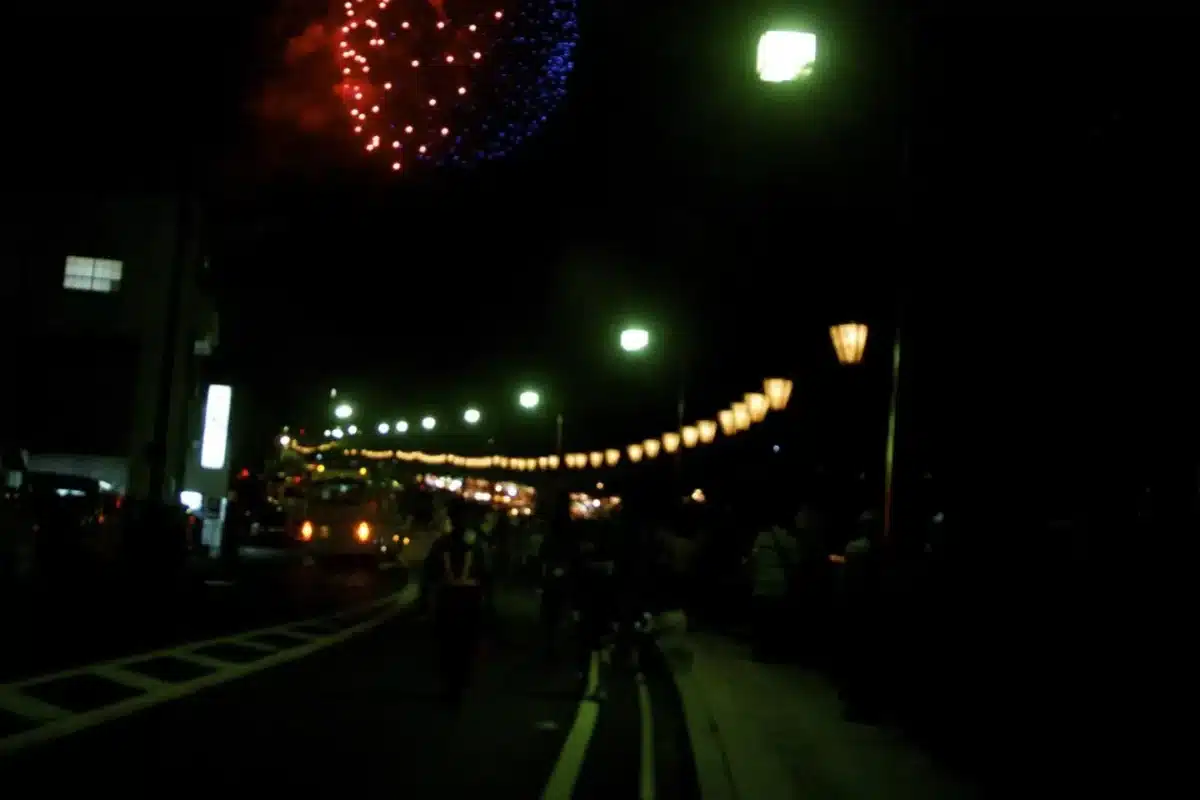
Fireworks display: The fireworks begin at 8pm and last for 90 minutes in the traditional large-scale format. In recent years, the format has shifted to multiple mini firework displays for the Nishikigawa Water Festival, each lasting approximately two minutes, held on many evenings throughout the season.
Event dates
Official timing: Early – Late August 2027 (Dates TBD)
Historical pattern: The traditional large-scale Kintaikyo Fireworks Festival was held annually on the first Saturday of August each year with dramatic backdrop of Kintai Bridge. In that format, the display ran from 8:00 PM to 9:30 PM with 6,000 blasts over an hour and a half. Most people viewed from the parking area along the side of the river and Kintai-kyo Bridge was closed to public during display.
Current format: In August 2026 and 2025, Iwakuni hosted multiple mini firework displays for the Nishikigawa Water Festival instead of one large show. Fireworks started at 8:05 PM and lasted approximately two minutes per evening. Days with fireworks included many dates spread across the month, such as Aug 1, 2, 4, 8, 9, 11, 20 to 23, 29, and 30 in 2026 example. Please note that the large-scale Kintaikyo Fireworks are no longer held in this new format, but the location and atmosphere remain the same.
2027 expectation: Based on recent editions, expect either a return of the large-scale 90-minute show or continuation of mini displays on multiple evenings. Check official city site for confirmation closer to season. Free viewing throughout.
Visiting this event? Don’t miss out on these amazing activities and local experiences while you’re here.
Venue & event locations
Main venue: Kintai Bridge, address 1 Iwakuni, Iwakuni-shi, Yamaguchi-ken, Japan. The bridge is located in Kikko Park area, spanning Nishiki River. The official event category is Family, Festivals, Fireworks, Free, Top.
Viewing areas:
Riverbed sandy area: The primary viewing area is the wide sandy and gravel parking area along the side of the river, directly facing the bridge. Visitors spread picnic sheets and sit on the ground. This area hosts food stalls and taiko stage.
Kikko Park side: Grassy park area on the castle side of the river, slightly elevated, offering panoramic views of bridge with fireworks behind it. Good for photography.
Bridge closure: Kintai-kyo Bridge is closed to public during display for safety, but is illuminated and serves as silhouette foreground for fireworks photos.
Secondary spots: Iwakuni Castle hill offers distant elevated view of fireworks over river, accessible by ropeway until early evening. Local hills and nearby riverbanks also provide less crowded options.
Full holiday programme
Daytime river leisure: The Nishiki River is shallow and clear, allowing children to splash and wade. Families arrive early to secure space on sandy area, picnic, and enjoy river cooling. No formal program during day, but beach-style leisure is central to festival.
Afternoon stall opening: Food and game stalls set up on sandy area near bridge from afternoon. Vendors offer festival foods and cold drinks. Local community groups sell crafts and souvenirs related to Kintai Bridge.
Dusk taiko performances: Taiko drum performances start at dusk, typically around 6:30 PM to 7:30 PM, performed by local groups including school teams and Marine base community groups. The powerful drumming creates festival mood as sun sets.
Fireworks show: In traditional format, fireworks begin at 8:00 PM and last for 90 minutes until 9:30 PM, with 6,000 blasts including star mines, chrysanthemum bursts, and finale barrage. In mini format, fireworks begin at 8:05 PM and last approximately two minutes, with several such mini displays held throughout the season on different evenings.
After show: Crowd dispersal along riverbank toward Iwakuni Station and Kintai Bridge bus stops. Bridge remains closed for short time after for safety.
Main attractions & highlights
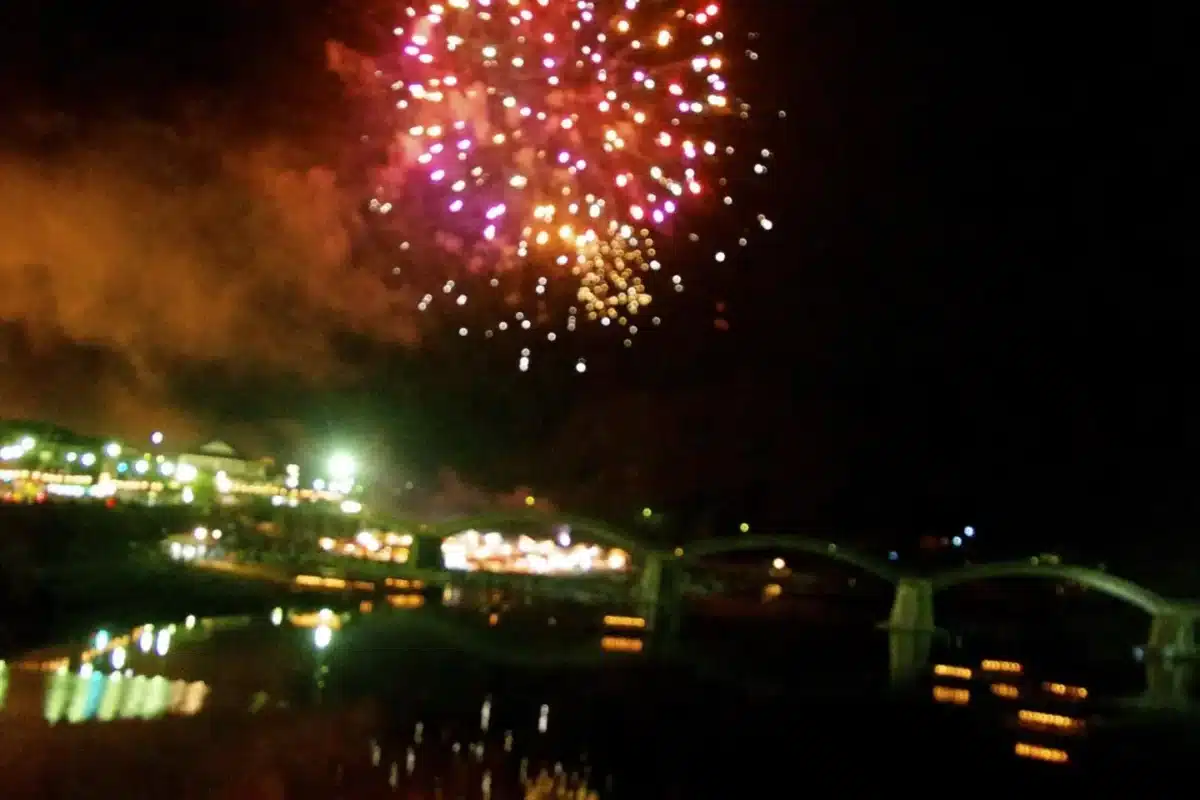
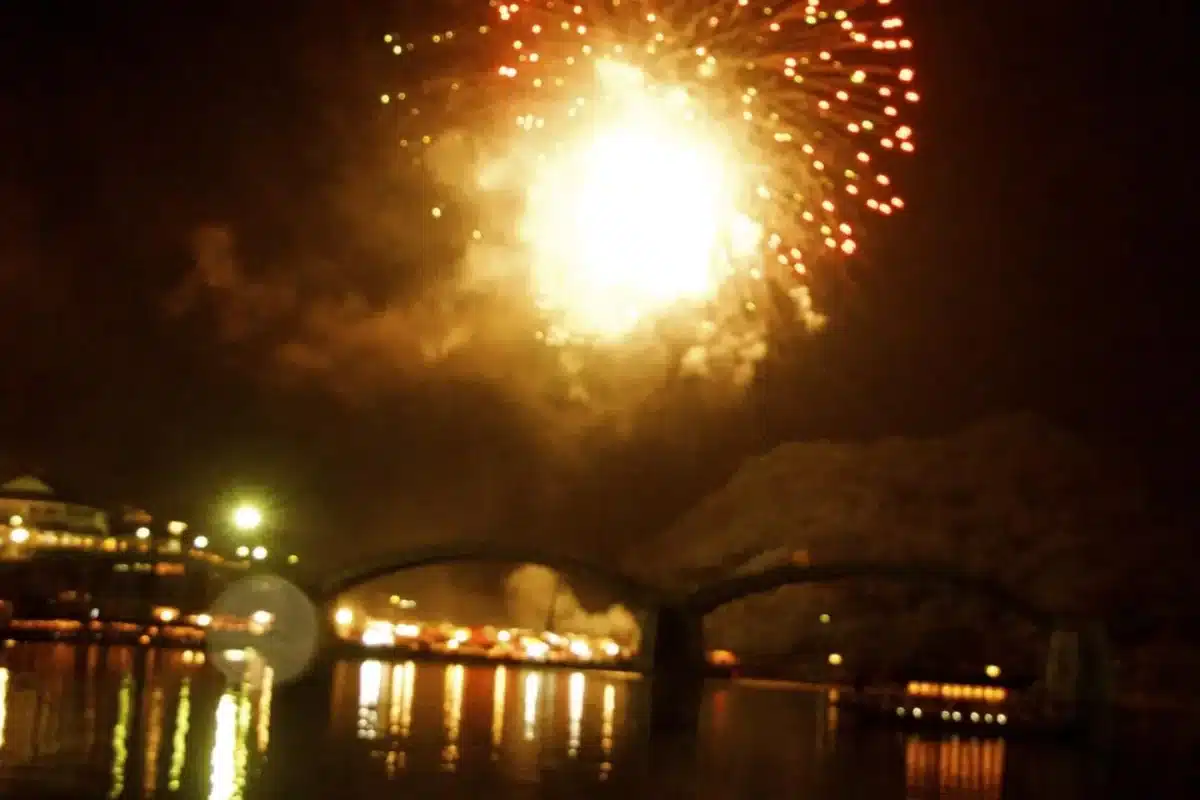
Kintai Bridge silhouette: The iconic five-arch wooden bridge illuminated at night provides one of the most photogenic fireworks backdrops in Japan. Fireworks burst directly behind and above the bridge arches, reflecting on Nishiki River.
6,000 blasts tradition: Traditional large show featured 6,000 fireworks over 90 minutes, including large shells, rapid fire star mines, and underwater style reflections on river surface. The scale filled sky over Kikko Park and castle mountain.
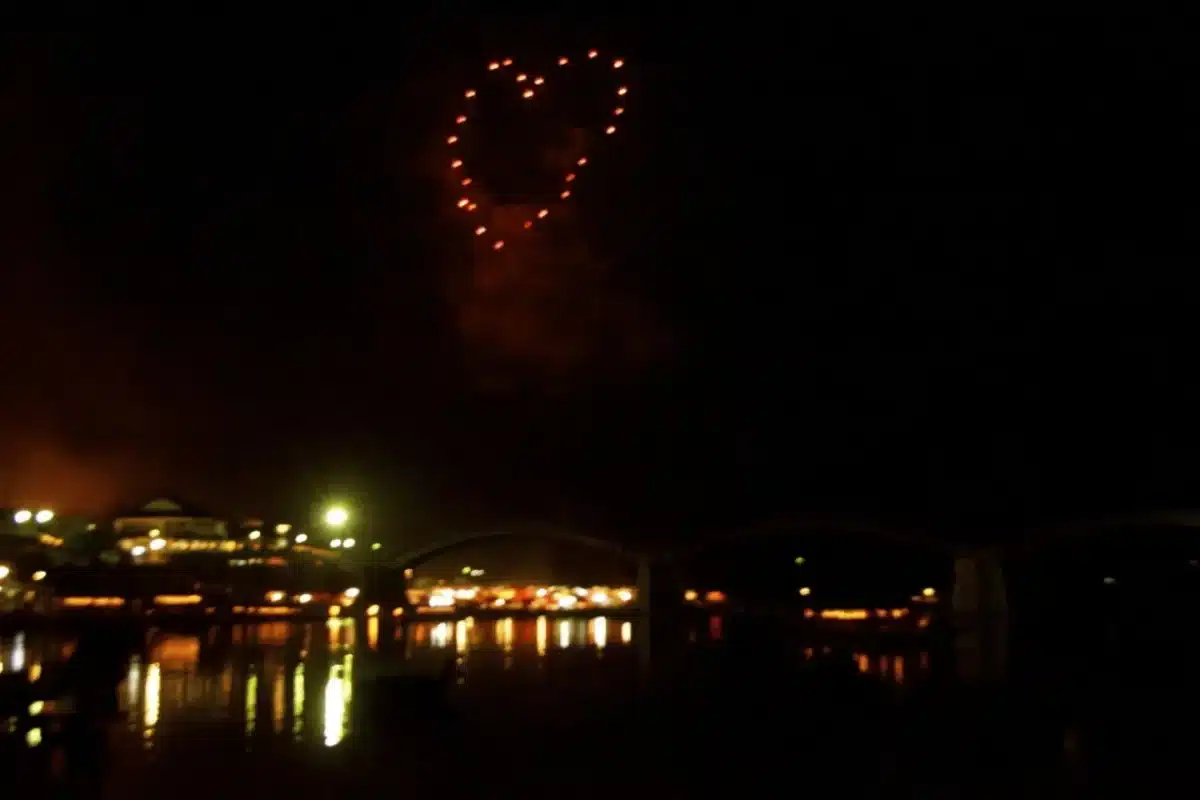
Mini displays charm: Current Nishikigawa Water Festival format offers intimate two-minute displays on many evenings, allowing visitors to enjoy fireworks without massive crowds. Each mini show includes about 100 to 200 shells with colorful variety.
Taiko and community: Taiko performances before fireworks highlight local culture and international friendship, with joint performances by Japanese and American base groups.
River picnic culture: Unique among Japanese fireworks festivals for its beach-like river wading and picnicking, beating summer heat by splashing in river before show.
Markets, decorations & themed areas
Sandy area market: Food and game stalls set up on sandy area near bridge form the main market. Stalls include yakisoba, karaage, frankfurters, takoyaki, kakigori shaved ice, and cold beer. Game stalls offer yo-yo fishing and super ball scooping.
Bridge illumination: Kintai Bridge is illuminated with warm lights during festival period, creating golden arch reflections on river. The illumination is part of Kintai Bridge Festival celebrations.
Kikko Park decorations: Paper lanterns and string lights decorate Kikko Park paths leading to bridge. Local school children sometimes create paper decorations displayed near park entrance.
Mizu no Saiten theme: The Nishiki River Water Festival theme includes decorations celebrating water, with blue banners and river conservation displays near bridge museum.
Events & entertainment schedule
Typical evening flow for large format:
Afternoon: Arrival and river wading, market opening.
6:30 PM to 7:30 PM: Taiko drum performances on stage near sandy area.
8:00 PM to 9:30 PM: Main fireworks display, 6,000 blasts, with Kintai Bridge closed to public during display.
For mini format:
7:30 PM to 8:00 PM: Taiko or background music, announcements.
8:05 PM to 8:07 PM: Two-minute mini fireworks display.
Evenings repeat: Multiple evenings throughout season with same short display, allowing visitors to choose date.
Admission & ticket information
General admission: Free, 0 JPY, approximately 0 USD. Viewing from riverbed, Kikko Park, and surrounding public areas is free and open to all.
Paid seating: No formal paid seating in traditional format. Visitors bring own picnic sheets and low chairs. Some years, paid reserved tarp areas were offered by local tourism association for around 10 USD to 20 USD per person, including space and small cushion.
Bridge entry: Kintai Bridge itself normally requires a small toll for crossing, about 2 USD to 3 USD for adults based on previous pricing, but bridge is closed during fireworks, so toll not applicable during show.
Food costs: Market foods range 3 USD to 7 USD per item, drinks 2 USD to 5 USD. No ticket needed for taiko performances.
Where to buy: If paid tarp areas offered, sold via Iwakuni City tourism site and local convenience stores from mid-July. Check official site for 2027 arrangements.
Special experiences & activities
River wading and picnicking: Spend day splashing in Nishiki River to beat humid and hot weather. The river is shallow, clear, and safe for children with supervision. Bring water shoes as riverbed is rocky in parts.
Yukata and international mix: Many locals wear beautiful yukata, and American base families also participate in yukata, creating friendly international atmosphere. Yukata rental available in Iwakuni and Hiroshima for around 25 USD to 40 USD.
Photography of bridge and fireworks: Kintai Bridge with fireworks behind it is one of Japan’s most classic fireworks photos. Best photo spot from Kikko Park side riverbank where bridge arches frame bursts.
Castle and park combo: Combine fireworks with daytime visit to Iwakuni Castle via ropeway, Kikko Park, and local museums including Chokokan and Imai House.
Family & children’s activities
Safe river play: During daytime, children can splash in shallow parts of Nishiki River under lifeguard and parent supervision. Sandy area provides space for building sand structures.
Game stalls: Yo-yo fishing, goldfish scooping, cotton candy, and shooting games priced 2 USD to 5 USD per play, popular with children in sandy market area.
Taiko interaction: After taiko performances, children sometimes invited to try small drums or take photos with performers.
Family viewing: Family areas on riverbed are spacious and allow strollers, though ground is sandy and uneven. Bring picnic sheets and low chairs for comfort. Loud fireworks may require ear protection for small children.
Event rules
Bridge closure: Kintai-kyo Bridge is closed to public during display for safety and to prevent crowding on historic wooden structure. Follow staff guidance and barriers.
No swimming after dusk: Swimming and wading prohibited after sunset and during fireworks for safety due to darkness and crowd.
Prohibited items: Drones, personal fireworks, glass bottles in crowded areas, and open fires are prohibited. Smoking only in designated areas away from crowds.
Space reservation: Large tarps reserving excessive space before allowed time may be removed. Follow volunteer instructions for sheet placement.
Trash: Take trash home or use designated bins near food stalls. Keep river clean as Nishiki River is protected water source.
Weather policy: In case of rain, event may go ahead with light rain. In case of stormy weather, heavy rain or strong winds, event is canceled. Mini displays may be canceled individually.
How to get there
City location: Iwakuni City is in Yamaguchi Prefecture, on border with Hiroshima Prefecture, about 45 kilometers southwest of Hiroshima City.
General access: Take JR Sanyo Main Line to Iwakuni Station, then bus to Kintai Bridge. Or take bus from Shin-Iwakuni Station on Sanyo Shinkansen.
Public transport & parking
By train: From Hiroshima Station, take JR Sanyo Main Line to Iwakuni Station, about 45 to 55 minutes, fare approximately 6 USD to 9 USD one way. From Iwakuni Station, take Iwakuni Bus bound for Kintai Bridge, about 20 minutes, fare around 2 USD to 3 USD. Bus frequency increased on festival day.
By Shinkansen: Take Sanyo Shinkansen to Shin-Iwakuni Station, then bus to Kintai Bridge about 15 minutes.
From Marine Corps Air Station Iwakuni: Shuttle or taxi about 10 minutes, many American families walk or bike.
Parking: Limited coin parking near Kintai Bridge and Kikko Park fills early, by early afternoon. Traffic regulation may be implemented around bridge area during festival. No dedicated festival parking. Use public transportation.
After event: Buses and trains become extremely crowded after fireworks. Expect waiting time of 30 to 60 minutes for buses from Kintai Bridge to Iwakuni Station. Walking to Iwakuni Station takes about 40 to 50 minutes along river.
Accommodation areas
Iwakuni city center: Business hotels near Iwakuni Station and Shin-Iwakuni Station offer rates from 50 USD to 90 USD per night based on previous pricing. Walking distance to bus stops for bridge.
Kintai Bridge and Kikko Park area: Ryokan and small inns near bridge, such as Kintai Bridge area guesthouses, rates from 60 USD to 130 USD per night, with views of bridge and river. Sell out quickly for fireworks season.
Hiroshima City: Many visitors stay in Hiroshima City and make day trip to Iwakuni, as train access is easy. Hotels in Hiroshima Station area from 60 USD to 120 USD per night.
Miyajima: For extended stay, Miyajima Island with ryokan rates from 100 USD to 250 USD per night, combining Itsukushima Shrine with Iwakuni fireworks via short train ride.
Booking tip: Fireworks season is peak summer travel in Yamaguchi and Hiroshima. Book at least two months in advance, especially for bridge area accommodations.
Food, drinks & seasonal specialties
Festival market foods: Yakisoba 4 USD to 6 USD, okonomiyaki 5 USD to 8 USD, karaage fried chicken 4 USD to 7 USD, takoyaki 4 USD to 6 USD, kakigori shaved ice 3 USD to 5 USD, grilled corn 3 USD to 4 USD.
Iwakuni specialties:
Iwakuni sushi: Unique pressed sushi with layers of rice, fish, and vegetables in wooden mold, sold as Iwakuni zushi, about 8 USD to 12 USD per box.
Iwakuni renkon: Lotus root from Hasu fields near Kintai Bridge, famous for large holes, served as tempura or chips, 4 USD to 7 USD.
Sake: Local sake from Nishiki River area, including Dassai brand from nearby brewery, available at stalls and restaurants, 5 USD to 10 USD per cup.
Drinks: Draft beer 5 USD to 7 USD, Ramune soda 2 USD to 3 USD, cold tea 2 USD.
Restaurants: Around Kintai Bridge and Kikko Park, restaurants serve Iwakuni sushi, soba noodles, and river fish dishes. Dinner budget 12 USD to 25 USD per person.
Accessibility
Riverbed terrain: Sandy and gravel riverbed is uneven and difficult for wheelchairs and strollers. Paved paths in Kikko Park and along promenade are more accessible.
Accessible toilets: Temporary toilets including accessible units installed near sandy area and Kikko Park entrance during festival. Permanent accessible toilets in Kikko Park and near bridge museum.
Transport accessibility: Iwakuni Bus from Iwakuni Station includes low-floor accessible buses, but crowding makes boarding difficult after event. JR Iwakuni Station has elevators.
Viewing for mobility impaired: Recommended to view from Kikko Park paved area or promenade behind sandy area, where fireworks still visible above bridge, rather than deep sandy area.
Assistance: Volunteer staff provide guidance. Service animals allowed but loud fireworks may be stressful, ear protection advised.
Best days & times to visit
Single or multiple evenings: If traditional large format returns, the one evening is the only chance for 90-minute show. If mini format continues, multiple evenings throughout season offer flexibility to choose less crowded date.
Best arrival time: Arrive early afternoon to enjoy river wading, secure good sandy area spot, and enjoy food stalls before taiko performances at dusk.
Best viewing time: The finale in last 15 minutes of large show is most spectacular with continuous barrage. For mini shows, the entire two minutes is highlight.
Weather consideration: Summer evenings are humid and hot, but river breeze provides some cooling. Bring hat, sunscreen for daytime, and light jacket or towel for evening sand.
Previous year’s highlights
2024 and 2025 shift: The 44th and 45th editions transitioned from traditional 6,000-blast 90-minute show to Nishikigawa Water Festival format with multiple mini displays. The 2025 schedule included mini fireworks on Aug 1 to 3, 6, 10 to 12, 19, 23 to 24, and 30, each starting at 8:05 PM for about two minutes.
Visitor feedback: Visitors praised the friendly international crowd with American base residents and locals mixing, taiko performances at dusk, and ability to picnic and splash in river during day to beat heat. The illuminated Kintai Bridge as backdrop remains the main attraction even in mini format.
Community impact: The change to mini displays allowed more evenings of fireworks throughout the season, reducing single-night crowding and allowing more visitors to enjoy bridge and river at different times, while preserving tradition of fireworks over Kintai Bridge.
Official event information
Event name: Kintaikyo Fireworks Festival 2027 – Iwakuni, Japan, also called Nishiki River Water Festival Fireworks and Nishiki-gawa Kintai-kyo Bridge Mizu-no-Saiten Fireworks Festival
Venue: Kintai Bridge, 1 Iwakuni, Iwakuni-shi, Yamaguchi-ken 741-0062 Japan, Nishiki River riverbed and Kikko Park
Organizer: Iwakuni City and Iwakuni City Tourism Association, Nishikigawa Water Festival Executive Committee
Access: 20 minutes by bus from JR Iwakuni Station, 15 minutes from Shin-Iwakuni Station, 5 kilometers from Marine Corps Air Station Iwakuni
Official website text: en.japantravel.com/yamaguchi/fireworks-over-kintaikyo-bridge/5921 and city site www.city.iwakuni.lg.jp and tourism site kintai-bridge official
Cost: Free, tickets 0 JPY
Duration: Traditional format 90 minutes, 8:00 PM to 9:30 PM, 6,000 blasts. Mini format 2 minutes per evening, 8:05 PM start.
Note: Kintai-kyo Bridge closed to public during display. No parking around bridge, use public transportation. Event canceled in case of stormy weather.
Video
Location
FAQ
Is the Kintaikyo Fireworks Festival free and where is the best place to watch?
Yes, the festival is completely free with no tickets required for viewing from the sandy riverbed and Kikko Park areas. Most people view from the parking area along the side of the river directly facing Kintai Bridge, which offers direct frontal views. Kikko Park side provides slightly elevated panoramic views perfect for photography with bridge silhouette in foreground.
Why are there now many mini fireworks shows instead of one large show?
In recent years Iwakuni City shifted from one large-scale 6,000-blast 90-minute show to multiple mini displays as part of the Nishikigawa Water Festival to reduce single-night crowding and heat risks. The mini shows last about two minutes each but occur on many evenings throughout the season, allowing more visitors to enjoy fireworks. The city notes that large-scale Kintaikyo Fireworks are no longer held in traditional format, but atmosphere and location remain same.
Can I swim in the Nishiki River during the festival?
Yes, during daytime before evening festivities, the Nishiki River is shallow and clear, and many families picnic and splash in the river to beat humid and hot weather. Children wade in shallow areas under supervision, which is a unique feature of this festival. Swimming is prohibited after dusk and during fireworks for safety due to darkness and crowd movement.
How do I get to Kintai Bridge from Hiroshima or Iwakuni Station?
From JR Iwakuni Station, take Iwakuni Bus bound for Kintai Bridge, about 20 minutes and fare around 2 USD to 3 USD, with increased frequency on festival day. From Hiroshima Station, take JR Sanyo Main Line to Iwakuni Station, about 45 to 55 minutes, fare around 6 USD to 9 USD, then transfer to bus. After fireworks, buses and trains become extremely crowded, so expect 30 to 60 minutes waiting time.
What makes Kintaikyo Fireworks special compared to other Japanese fireworks?
The festival is special because it is held at one of Japan's most traditional and historical bridges, a five-arch wooden bridge first built in 1673 and considered a heritage site. Fireworks bursting behind the illuminated bridge create an iconic silhouette reflection on the Nishiki River. The friendly international crowd with American base residents and locals, combined with river picnicking and taiko drum performances at dusk, creates a beach-like, community atmosphere rare among Japanese hanabi.

Leave a Reply