


Overview
Every summer, the famous Kawasaki Daishi Temple holds a Furin-ichi, or Wind Chime Market. Approximately 900 beautiful and unique varieties, from 50 locations around Japan, can be purchased. Check out their English website for future dates. Each day, the market opens around 10 am and closes around 6 pm. As the weather is extremely hot and humid during this time, be sure to wear sunscreen and a hat, and drink lots of water.
Kawasaki Daishi Furin Ichi is recognized as the largest scale wind chime market in the country. An assortment of about 30,000 wind chimes, of 900 types, brought by wind chime vendors around the country, from Hokkaido to Okinawa, fills the temple grounds with refreshing sounds and bright colors. During this time, a place is set up to pay for wind chimes, and Horaku is performed.
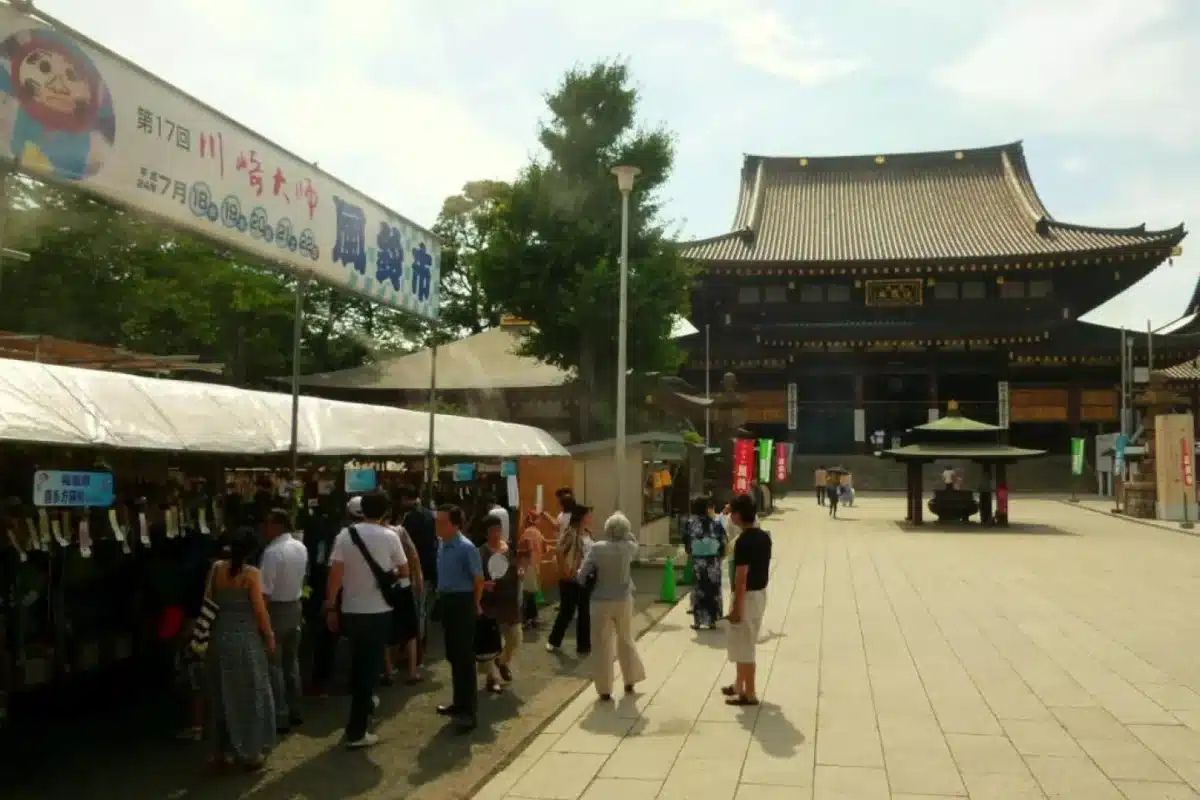
The market takes place at Kawasaki Daishi, a renowned Buddhist temple established in 1128, during Japan’s ancient to medieval period. The temple has historically garnered deep faith not only from the general public but also from the imperial family and the shoguns of the Edo period. It is famous for offering protection from misfortune to those who visit, known as yakuyoke.
Enjoy Your Event Stress-Free with Japan Travelo
Do you know? Planning events, festivals, concerts, and cultural experiences in Japan can be overwhelming. Japan Travelo brings everything together in one place, helping you manage your itinerary, transport, and accommodation with ease—so you can enjoy Japan without the stress of planning.
Wind chimes are a symbol of summer in Japan. Throw on a yukata, enjoy the twinkling of these little wind chimes in the warm summer breeze, and find the perfect one to take home. The gentle and refreshing sounds of furin resonate from all directions, creating a truly enchanting atmosphere that embodies Japanese aesthetic of finding coolness through sound.
Cultural Significance & Origins
Furin have deep roots in Japanese spiritual and seasonal culture.
Origin as Futaku: The origin of furin is believed to trace back to a metal bell called futaku, which was hung from the eaves of Buddhist temples to ward off evil spirits. Originally introduced by Chinese monks, futaku produced a loud clanging sound described as garangaran. They were hung in bamboo forests and temple eaves to protect sacred spaces.
Edo Period Transformation: The transition from futaku to furin remains mysterious, but by the Edo period from 1603 to 1868, furin were already in existence. Initially, like futaku, they were used as talismans to ward off evil spirits and were hung year-round. Gradually, they became associated with summer, as Japanese sought ways to make hot and humid summers more bearable through clothing, cuisine, and home design.
Psychological Cooling Effect: The sound of furin makes people aware of breeze, creating illusion of cooling sensation. Interestingly, the cooling effect might not entirely be an illusion. Studies have shown that listening to sound of furin can actually lower a person’s surface body temperature. This phenomenon occurs because from early age, hearing sound of furin in summer creates mental association with coolness, leading to genuine physiological response.
Fluctuating Sound Theory: Analysis of furin sound reveals it comprises both high and low tones, with lower tones consisting of multiple frequencies that resonate and cancel each other in complex interplay. Unlike mechanical consistency of alarm, sound is irregular, created by ever-changing natural wind. This irregular multi-layered sound known as fluctuating sound is particularly pleasing to human ear and provides sense of comfort and relaxation.
Kawasaki Daishi Connection: Kawasaki Daishi, formally known as Heiken-ji Temple, is one of Kanto’s three major Daishi temples dedicated to Kobo Daishi. Its wind chime market began as a way to bring regional crafts together and offer visitors protection charms. The yaku-yoke daruma furin, an original wind chime inspired by famous daruma dolls of Kawasaki Daishi, which are believed to ward off evil and bring good luck, has become symbol of market.
Traditions, Rituals & Customs
The Furin Ichi blends market tradition with temple ritual.
Collecting Regional Furin: Approximately 900 varieties from 50 locations around Japan can be purchased, representing 20,000 to 30,000 individual chimes. Vendors from Hokkaido to Okinawa bring their local styles, allowing visitors to hear difference between iron chime from north and glass one from Tokyo in single afternoon.
Horaku Offering Ceremony: During market period, a place is set up to pay for wind chimes, and Horaku is performed. Horaku is a Buddhist memorial service for broken or old wind chimes and pottery, where they are thanked for service and ritually purified before disposal. Visitors can bring old furin to be blessed.
Daruma Furin Custom: The market’s original yaku-yoke daruma furin is crafted by artisans specializing in Edo Furin, traditional glass wind chime from Tokyo with roots tracing back to Edo period. Today only two studios still produce Edo Furin, one of which is Shinohara Maruyoshi Furin. Artisans inscribe names onto wind chimes on site.
Choosing by Sound: Since each furin is hand-made by artisans, sound varies slightly with each piece, and tone can change depending on shape and size of chime. Tradition says to choose furin based on sound you prefer by hearing them firsthand, not just appearance. Visitors spend time listening carefully before purchase.
Hanging Custom: Traditionally, wind chimes are meant to ring occasionally, hung under eaves on lower floors of houses where gentle breeze is most likely to blow during summer season known for its stillness. Modern adaptations include hanging from curtain rails and special stands for interior decoration in apartments without eaves.
What to Expect at the Festival
Expect a sensory immersion in color, sound, and craftsmanship within a historic temple setting.
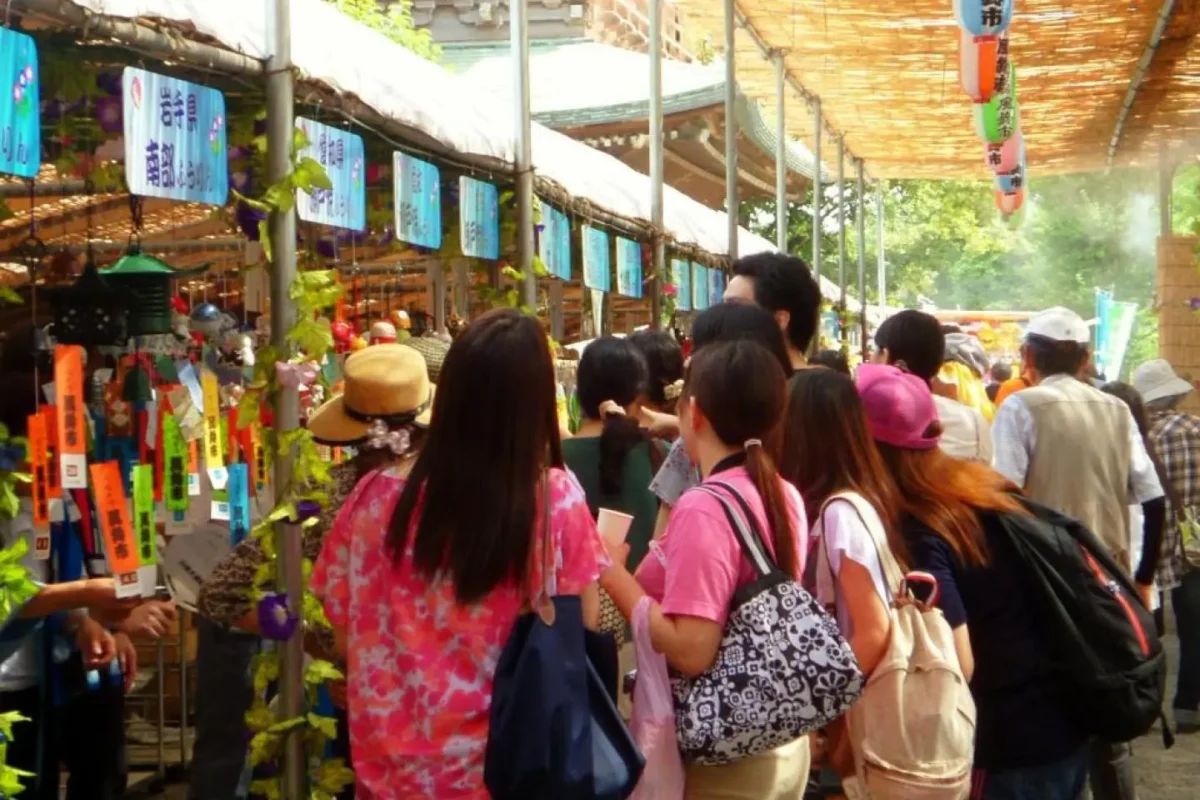
During the wind bells market, the temple grounds and the approach to the temple are adorned with countless furin, creating mesmerizing display that attracts many visitors. On a bright and hot day, just after tsuyu rainy season, you are greeted by gentle and refreshing sounds resonating from all directions. The temple approach from Kawasaki-Daishi Station is lined with stalls, each displaying hundreds of chimes that tinkle simultaneously as wind passes.
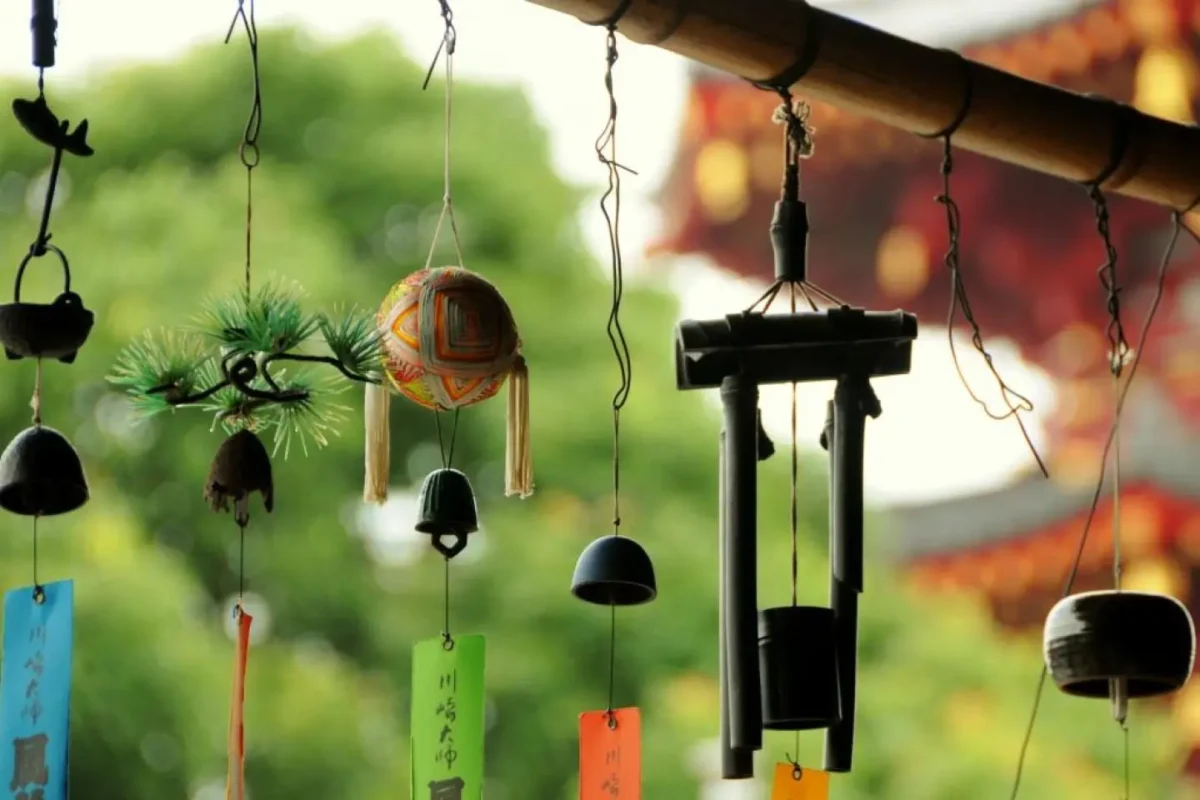
At many stalls, wind chimes from regions all over Japan are displayed and sold. You will see iron furin made from Nambu tekki, traditional craft from Iwate Prefecture dating back to late Heian period, known for dense material producing clear high-pitched sound with designs inspired by summer fruits like watermelon and melon, as well as turtle shells. Copper and stainless steel chimes produce sharper tones. Porcelain and ceramic furin such as Imari ware from Saga Prefecture fired at 1300 degrees produce clear glass-like high-pitched tone with bluish-white base and colorful patterns. Bizen ware from Okayama with high iron content produces more subdued sound and rustic appearance with hidasuki pattern from straw wrapping.
Glass furin stand out most, with smooth clean appearance and cool touch. Edo Furin are made by blowing molten glass without molds, creating refined sound through deliberately jagged edge of opening, and beautiful lightweight appearance achieved by painting designs from inside. Brushwork conveys sense of motion, with about fifty different motifs including Mt. Fuji and cherry blossoms popular among international customers.
The atmosphere is both festive market and spiritual retreat. Temple monks chant, incense drifts, and crowd moves slowly, listening. Many visitors wear yukata.
Date & Schedule
Event Dates: Mid – Late July 2027 (Dates TBD)
Official Schedule Information: Every summer, the famous Kawasaki Daishi Temple holds a Furin-ichi, or Wind Chime Market. Approximately 900 beautiful and unique varieties, from 50 locations around Japan, can be purchased. Check out their English website for future dates. Each day, the market opens around 10 am and closes around 6 pm.
Previous Edition References:
- 2023 Edition: July 17 to July 23, 28th edition, with more than 20,000 wind chimes in almost 800 shapes, colors, and sizes. Hours 10:00 to 17:00, with July 20 extended to 19:00. Free admission.
- 2019 Edition: July 17 to July 21, yearly event described as largest scale wind chime market in country with about 30,000 wind chimes of 900 types.
- Market was canceled for 4 years in a row due to pandemic before returning in 2023.
Typical Daily Hours: Based on previous editions, market opens around 10 am and closes around 6 pm, with one evening often extended to 7 pm for night viewing with illuminated chimes.
Duration: Week-long market, typically 5 to 7 days, held annually in July, right after tsuyu rainy season.
Venue Address: 4-48 Daishimachi, Kawasaki Ward, Kawasaki, Kanagawa. Access 8 min from Kawasaki-Daishi Station. Contact 044-266-3420.
Visiting this event? Don’t miss out on these amazing activities and local experiences while you’re here.
Main Events & Programme
The program is centered on market but includes temple ceremonies.
Main Wind Chime Market: Largest scale wind chime market in country, held at Kawasaki Daishi. An assortment of about 30,000 wind chimes of 900 types, brought by wind chime vendors around country, from Hokkaido to Okinawa. During this time, temple grounds are filled with refreshing sounds and bright colors. Approximately 900 beautiful and unique varieties from 50 locations can be purchased.
Horaku Memorial Service: Place is set up to pay for wind chimes, and Horaku is performed. This Buddhist ritual thanks old wind chimes and pottery before disposal, reflecting Japanese mottainai spirit of respect for objects.
Artisan Demonstrations: Artisans from Shinohara Maruyoshi Furin and other studios demonstrate glass blowing without molds, painting designs from inside, and inscribing names onto chimes. Visitors can watch brushwork that conveys sense of motion.
Yaku-yoke Daruma Furin Special Stall: Original wind chime of market inspired by daruma dolls of Kawasaki Daishi, believed to ward off evil and bring good luck. Special edition only available here.
Temple Prayers for Yakuyoke: Kawasaki Daishi is famous for yakuyoke protection from misfortune. Many visitors combine market visit with prayer at main hall.
Evening Illumination: On extended evening hours, wind chimes are illuminated, creating magical light and sound display as glass chimes sparkle.
Cultural Workshops: Occasionally, workshops on how to hang furin properly and how to listen for fluctuating sound are held by temple.
Traditional Dress, Arts & Crafts
The market itself is a showcase of regional Japanese crafts.
Edo Furin – Tokyo Glass Craft: Defining features include technique of blowing molten glass without molds, creating refined sound through deliberately jagged edge of opening, and beautiful lightweight appearance achieved by painting designs from inside. Aim for slightly lower calming tone that makes you want to take nap, achieved by ensuring glass bell is uniformly about 1mm thick. Only two studios remain producing authentic Edo Furin.
Nambu Tekki Iron Furin: From Iwate Prefecture, traditional ironware dating back to late Heian period. Dense iron produces clear high-pitched sound. Designs include watermelon, melon, turtle shells.
Imari Porcelain Furin: Traditional porcelain from Saga Prefecture, fired at high temperatures of 1300 degrees Celsius, resulting in clear glass-like high-pitched tone with bluish-white base and colorful patterns.
Bizen Ceramic Furin: Historic ceramic from Okayama Prefecture with high iron content producing subdued sound, unglazed rustic appearance enhanced by hidasuki pattern created by wrapping straw around clay before firing, leaving light brown streaks.
Metal Varieties: Copper, brass, and stainless steel chimes from various regions, each with distinct tone – copper warm, brass bright, stainless sharp.
Tanzaku Paper Strips: Strips attached to clapper that catch wind, often made from washi paper with calligraphy or seasonal motifs, similar to bookmarker. Designs include wishes for achievement or health, and Japanese motifs like Mt. Fuji and cherry blossoms particularly popular among international customers.
Craftsmanship Value: Each furin is hand-made, sound varies slightly, tone changes with shape and size. Choosing based on sound firsthand is traditional approach.
Traditional Food & Local Specialties
While furin are focus, temple area offers classic monzen town food.
Monzen Town Sweets: Kawasaki Daishi approach is famous for kuzumochi, a traditional Japanese sweet made from fermented wheat starch, served with kinako soybean powder and kuromitsu syrup. Shops like Sumiyoshi sell it for 4 USD to 8 USD per serving. Also famous is tontoko ame candy, cut with hammer in performance.
Daruma Themed Sweets: Daruma shaped cakes and manju steamed buns with sweet bean paste, referencing temple’s daruma dolls, for 3 USD to 6 USD.
Summer Festival Foods: During market, stalls offer kakigori shaved ice with syrup for 3 USD to 5 USD, ramune soda 2 USD to 4 USD, and yakitori 4 USD to 7 USD.
Kawasaki Local Specialties: Area known for craft beer and sake. Restaurants near station serve tonkotsu ramen and gyoza for 7 USD to 11 USD.
Temple Vegetarian Cuisine: Shojin ryori vegetarian Buddhist cuisine available at nearby restaurants, set meals from 15 USD to 30 USD.
Tea Houses: Traditional tea houses on temple grounds offer matcha and wagashi for 5 USD to 9 USD while listening to furin.
Location & Festival Areas
Main Venue: Kawasaki Daishi, formally Heiken-ji Temple, 4-48 Daishimachi, Kawasaki Ward, Kawasaki, Kanagawa 210-8521
Temple Grounds: Market occupies main approach called Nakamise and inner temple grounds. Stalls are set up along both sides of approach from station to temple gate, and in courtyard in front of main hall. The temple grounds and approach are adorned with countless furin.
Nakamise Approach: Historic shopping street leading to temple, lined with shops selling kuzumochi, daruma dolls, and souvenirs. During market, wind chime stalls fill street, creating tunnel of sound.
Main Hall Area: Area in front of main hall where Horaku service area is set up and special yaku-yoke daruma furin stall located.
Kawasaki Daishi Park Area: Adjacent park offers shade and rest area, important as weather is extremely hot and humid during this time.
Access Points: 8 min from Kawasaki-Daishi Station on Keikyu Daishi Line. From Kawasaki Station, transfer to Keikyu Daishi Line.
Surrounding District: Kawasaki Daishi is tranquil and relaxing area short train ride from Kawasaki Station, with traditional shops and small shrines.
Getting to the Festival
Kawasaki Daishi is easily accessible from Tokyo and Yokohama, making it popular day trip.
By Train – Keikyu Line: From Shinagawa Station in Tokyo, take Keikyu Main Line to Keikyu Kawasaki Station, transfer to Keikyu Daishi Line to Kawasaki-Daishi Station. Total time about 30 to 40 minutes from Shinagawa, fare approximately 4 USD to 6 USD. From Yokohama, take Keikyu Main Line to Keikyu Kawasaki then Daishi Line, about 25 minutes, fare about 4 USD.
By Train – JR: From Tokyo or Kawasaki Station on JR Tokaido Line or Keihin-Tohoku Line, transfer to Keikyu at Kawasaki. JR Kawasaki Station to Keikyu Kawasaki Station is 5 minutes walk.
On Foot: From Kawasaki-Daishi Station, 8 min walk along Nakamise shopping street to temple. Follow sound of wind chimes.
By Car: From Tokyo via Route 131 or Bayshore Route, parking at temple is limited and expensive during festival, about 10 USD to 15 USD per day. Use public transport recommended.
From Airports: From Haneda Airport, take Keikyu Line directly to Keikyu Kawasaki then Daishi Line, about 30 minutes total, fare about 5 USD. From Narita, take Narita Express to Shinagawa then Keikyu.
Accessibility: Temple grounds are mostly flat with some steps at main hall. Nakamise street is paved and wheelchair accessible, though crowded during market.
Where to Stay Nearby
Kawasaki Daishi area has limited accommodation, but Kawasaki Station and Yokohama offer extensive options.
Near Kawasaki-Daishi Station:
- Local Business Hotels: Small business hotels near Kawasaki-Daishi Station and Kawasaki Station offer rooms from 60 USD to 110 USD per night.
Kawasaki Station Area – 10 minutes by train:
- Hotel Metropolitan Kawasaki: Directly connected to JR Kawasaki Station, rooms from 120 USD to 200 USD.
- Kawasaki Nikko Hotel: Near station, with city views, rooms from 110 USD to 180 USD.
- APA Hotel Kawasaki Ekimae: Budget business hotel, rooms from 60 USD to 95 USD.
Yokohama Area – 15 minutes by train:
- Yokohama Bay Hotel Tokyu: Luxury with bay views, from 180 USD to 350 USD.
- InterContinental Yokohama Grand: Famous for sails shape, from 200 USD to 400 USD.
- Budget in Yokohama: Business hotels around Yokohama Station from 70 USD to 120 USD.
Tokyo – Day Trip Option: Many visitors come as day trip from Tokyo, as travel time is under 1 hour. No need to stay overnight unless combining with other Kanagawa sightseeing.
Booking Tip: Market is popular but spread over week, so hotels do not fill as quickly as single-day festivals. However, summer is peak travel season in Tokyo area, so book early.
What Visitors Can Participate In
Furin Ichi is highly participatory market where visitors actively choose and engage.
Purchase and Listen: Main activity is listening to hundreds of chimes and choosing perfect one. Vendors encourage you to gently tap chimes and listen to difference between iron, glass, ceramic, and porcelain tones.
Name Inscription: At Edo Furin stalls, artisan Shinohara Michihiro and others inscribe names onto wind chimes on site, creating personalized souvenir.
Horaku Offering: Bring old or broken wind chimes and pottery to place for Horaku memorial service, thanking them for service.
Yakuyoke Prayer: Combine market visit with yakuyoke prayer at main hall of Kawasaki Daishi, famous for protection from misfortune. Purchase daruma doll and have one eye painted when making wish.
Yukata Wearing: Throw on a yukata, enjoy twinkling of little wind chimes in warm summer breeze. Many visitors wear yukata, creating colorful summer atmosphere. Rental available in Tokyo and Yokohama.
Photography: Temple grounds filled with refreshing sounds and bright colors offer excellent photo opportunities, especially close-ups of glass chimes with painted Mt. Fuji inside.
Things to Do Before or After the Festival
Kawasaki and nearby areas offer industrial heritage and cultural sites.
Kawasaki Daishi Temple Exploration: Beyond market, explore main hall, Yakushi Hall, and garden. Temple established in 1128 has deep history with imperial family and shoguns.
Nakamise Shopping: Browse kuzumochi shops, daruma doll shops, and traditional craft stores along approach. Try tontoko ame candy cutting performance.
Kawasaki Warehouse District and Factories: Take night cruise from Kawasaki to see illuminated factories, famous as art.
Nihon Minka-en Open Air Museum: In nearby Kawasaki, museum with 25 traditional folk houses from across Japan, entry about 4 USD.
Yokohama Sightseeing: 15 minutes away, visit Chinatown, Minato Mirai waterfront, Cup Noodles Museum, and Yamashita Park.
Kamakura and Enoshima: 45 minutes to 1 hour south, offering Great Buddha, temples, and beaches.
Tokyo Day Trip: Combine with Asakusa, Ueno, or Odaiba as Kawasaki is between Tokyo and Yokohama.
Summer Cooling: After market, enjoy kakigori shaved ice or visit nearby pool to cool down, as weather is extremely hot and humid during this time.
Local Food & Restaurants
Kawasaki Daishi monzen town is famous for specific sweets and everyday foods.
Kuzumochi: Signature sweet of Kawasaki Daishi, made from fermented wheat starch, chewy texture, served with kinako and kuromitsu. Shops like Sumiyoshi and Matsuya have over 100 years history. Price 4 USD to 8 USD per plate, 10 USD to 20 USD for souvenir box.
Tontoko Ame: Traditional candy cut with rhythmic hammering, performance itself is attraction. Bags for 3 USD to 6 USD.
Daruma Sweets: Daruma shaped manju and castella cakes for 3 USD to 6 USD.
Temple Area Restaurants: Small restaurants along Nakamise serve soba noodles 7 USD to 11 USD, tempura rice bowls 9 USD to 14 USD, and oden hot pot in winter.
Kawasaki Station Area: Extensive dining options including ramen, yakitori, and izakaya. Ramen from 7 USD to 12 USD, izakaya dinner 15 USD to 30 USD.
Yokohama and Kawasaki Craft Beer: Local breweries offer craft beer tasting for 5 USD to 9 USD per glass.
Hydration Warning: As weather is extremely hot and humid during this time, be sure to wear sunscreen and hat, and drink lots of water. Vending machines along approach sell water and tea for 1 USD to 2 USD.
Ticket Information & Access
Price of Admission: FREE
Tickets are listed as 0 JPY which converts to 0 USD. The Kawasaki Daishi Wind Chime Market has free admission to temple grounds and market. This has been consistent across previous editions including 2023 edition with free admission noted.
Furin Prices: Wind chimes themselves are for sale at varying prices based on material and craftsmanship.
- Small glass Edo Furin: 10 USD to 25 USD
- Medium glass with hand-painted inside: 20 USD to 40 USD
- Nambu Tekki iron furin: 25 USD to 50 USD
- Porcelain Imari and Bizen ceramic furin: 30 USD to 60 USD
- Special yaku-yoke daruma furin: 25 USD to 45 USD
- Large decorative or limited edition: 60 USD to 120 USD
Hours: Based on previous editions, market opens around 10 am and closes around 6 pm, with one evening often extended to 7 pm for night viewing. Hours 10:00 to 17:00, with July 20 extended to 19:00 in 2023.
Additional Costs: Name inscription service often included in price or extra 3 USD to 5 USD. Horaku offering free.
Access: 8 min from Kawasaki-Daishi Station. Free entry. Canceled for 4 years due to pandemic before returning, now fully operational.
Official Event Information
Event Name: Kawasaki Daishi Furin Ichi 2027 – Japan
Venue: Kawasaki Daishi, Heiken-ji Temple, 4-48 Daishimachi, Kawasaki Ward, Kawasaki, Kanagawa 210-8521
Organizer: Kawasaki Daishi Temple and Furin Ichi Executive Committee with vendors from 50 locations around Japan
Official Website: https://en.japantravel.com/kanagawa/kawasaki-daishi-furin-ichi/4783
Additional Official Site: http://www.fuurinichi.com/
Description: Every summer, the famous Kawasaki Daishi Temple holds a Furin-ichi, or Wind Chime Market. Approximately 900 beautiful and unique varieties, from 50 locations around Japan, can be purchased. The largest scale wind chime market in the country, held at Kawasaki Daishi every July. An assortment of about 30,000 wind chimes of 900 types filling temple grounds with refreshing sounds and bright colors.
Contact: 044-266-3420, Kawasaki Daishi Temple office
Notes: As weather is extremely hot and humid during this time, be sure to wear sunscreen and hat, and drink lots of water.
Video
Location
FAQ
What makes Kawasaki Daishi Furin Ichi different from other wind chime markets?
Kawasaki Daishi Furin Ichi is recognized as the largest scale wind chime market in the entire country, with about 30,000 wind chimes of 900 types brought by vendors from Hokkaido to Okinawa. Unlike small local markets, it gathers 50 regional varieties in one place, allowing you to hear the difference between iron, glass, porcelain, and ceramic chimes in a single afternoon. It also features the exclusive yaku-yoke daruma furin inspired by Kawasaki Daishi's famous daruma dolls and includes the traditional Horaku memorial service for old chimes.
How do I choose the right furin among 900 varieties?
Traditional advice is to choose by sound first, not appearance, since each hand-made furin has slightly different tone depending on shape, size, and material thickness. Vendors encourage you to listen carefully as you gently tap chimes, comparing clear high-pitched tones of Imari porcelain fired at 1300 degrees, subdued tones of Bizen ware with straw patterns, and calming lower tones of Edo Furin made 1mm thick to make you want to nap. Consider where you will hang it, as lighter glass chimes ring with gentle breeze while heavier iron needs stronger wind, and interior hanging requires special stands.
What is the meaning behind hanging furin in summer?
Furin originated from futaku temple bells hung to ward off evil spirits and later became a tool for psychological cooling during Japan's hot and humid summers. The sound makes people aware of breeze and creates illusion of coolness, and studies have shown listening can actually lower surface body temperature due to mental association built from childhood. The irregular multi-layered fluctuating sound is particularly pleasing to human ear, providing comfort and relaxation that helps mitigate stress of summer heat and eases weary minds.
What are Edo Furin and why are they special?
Edo Furin are traditional glass wind chimes from Tokyo with roots tracing back to Edo period, defined by blowing molten glass without molds, deliberately jagged edge of opening for refined sound, and beautiful lightweight appearance achieved by painting designs from inside. Today only two studios still produce authentic Edo Furin, including Shinohara Maruyoshi Furin which makes the market's original yaku-yoke daruma furin. Their brushwork conveys sense of motion with about fifty motifs including Mt. Fuji and cherry blossoms popular among international visitors, and each piece is hand-made with uniform 1mm thickness for calming tone.
Can I bring my old wind chimes to the market?
Yes, during the market period a place is set up for Horaku, a Buddhist memorial service where old and broken wind chimes and pottery are thanked for their service and ritually purified before disposal. This reflects Japanese cultural value of respecting objects that have served you. You can bring old furin to be included in ceremony, which is performed by temple monks, and it is considered proper way to part with cherished items rather than simply throwing them away.

Leave a Reply