
Overview
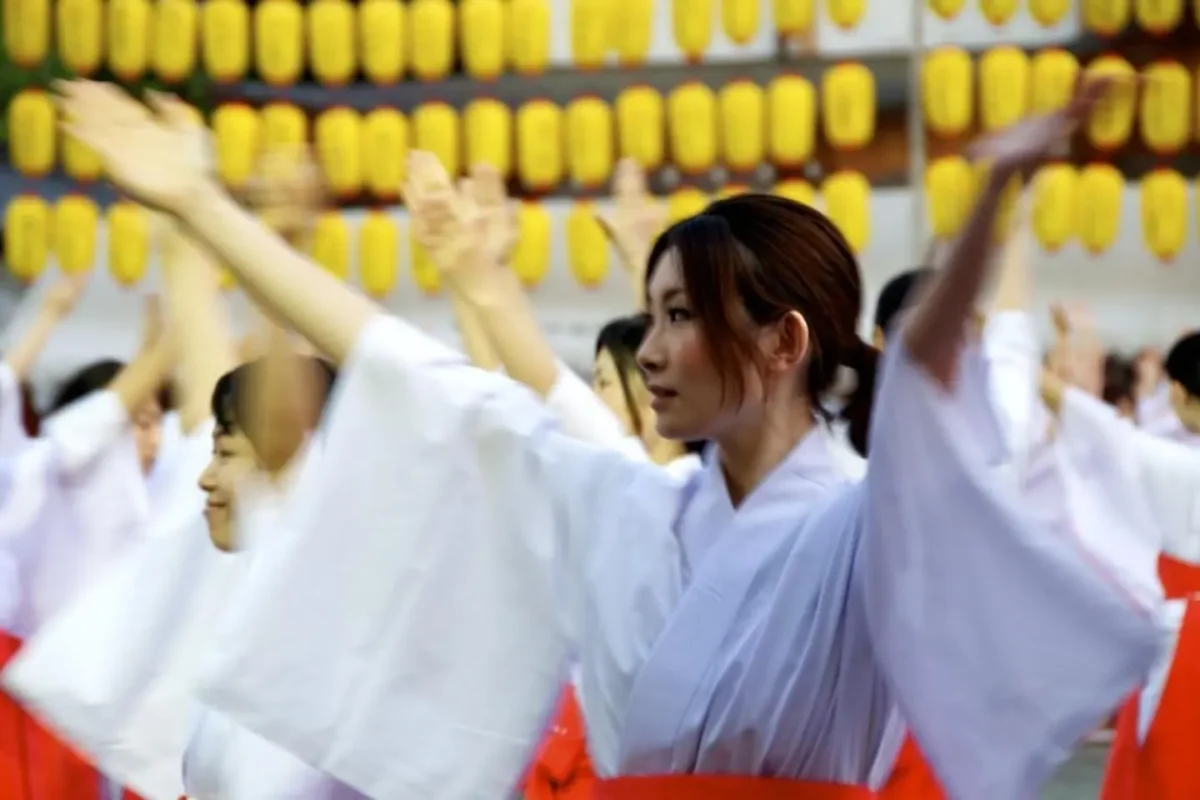
Once a year, the spectacle of 100 shrine maidens dancing by lantern light can be seen in the forecourt of Hiroshima Gokoku-jinja Shrine. This is part of the Mantou Mitama Matsuri, a shrine festival that began in 1975 on the occasion of Showa Emperor Hirohito’s 50th birthday. Ostensibly to assuage the spirits of the war dead enshrined in the shrine, the festival also seems to have incorporated an opportunity for young unmarried women to wish for making a good marital match.
In many ways the event resembles the Festival of Lights Mitama Matsuri held at the shrine that sits at the top of the national network of Gokoku Shrines established to enshrine Japan’s war dead at the end of the 19th century, the controversial Yasukuni-jinja Shrine in Tokyo. Hiroshima’s Mantou Mitama Matsuri, however, is a far more intimate affair, without the stalls, haunted houses, stars singing karaoke, and without the 300,000 visitors. Here, you might find around 200 or 300 people, a mixture of relatives of the young women taking part, amateur photographers, otaku shrine maiden fans, and a few somewhat bemused tourists.
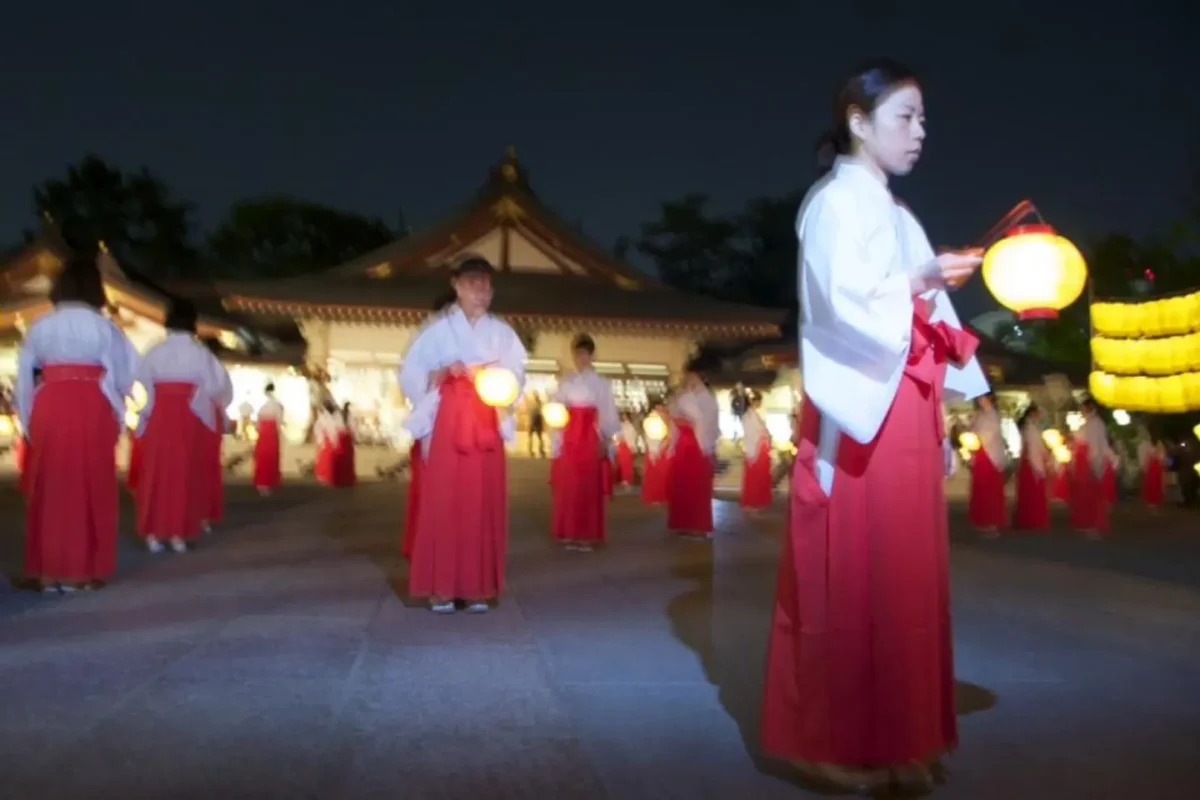
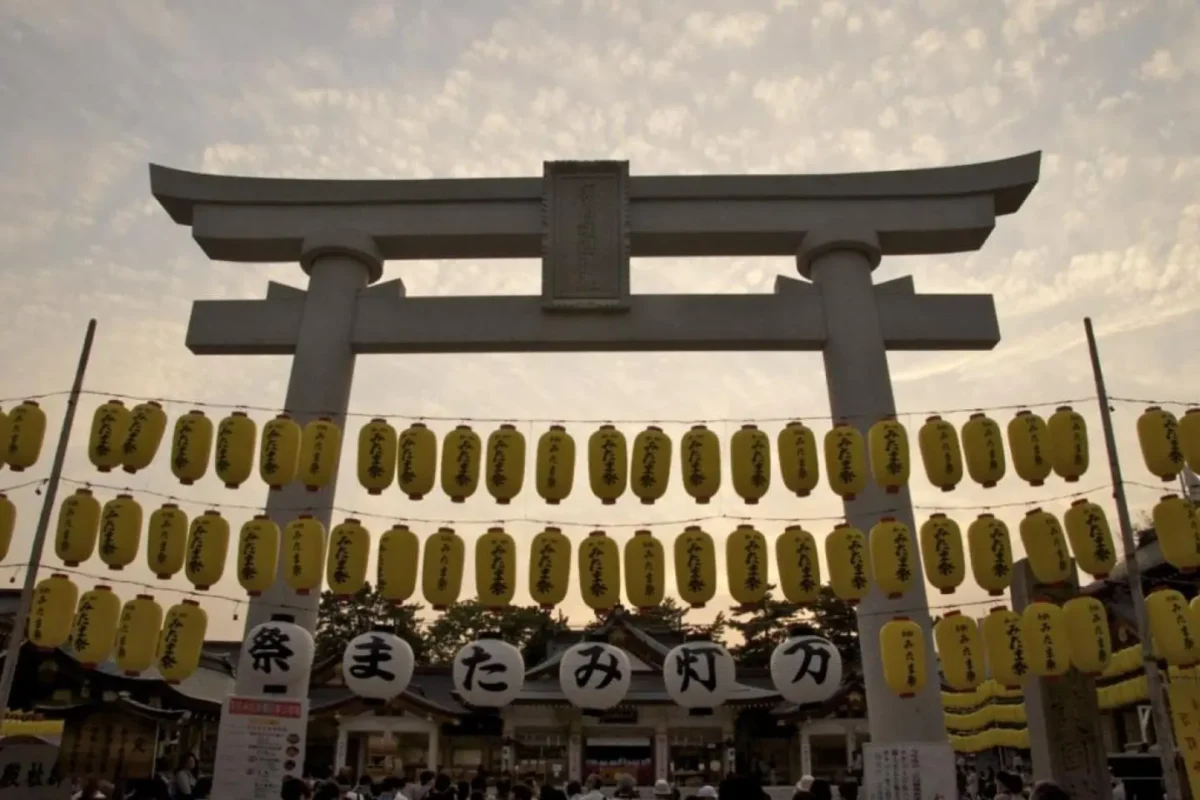
As far as the public is concerned, the festival starts on Saturday evening just before dusk. Things begin with a ceremony in the main shrine building, followed by the ceremonial lighting of fires in iron baskets, called kagaribi, set up in the forecourt. Then, the 100 or more young ladies dressed in the flowing red and white robes of miko shrine maidens, pour through the large stone torii gate into the forecourt that stands at the entrance to the shrine.
Enjoy Your Event Stress-Free with Japan Travelo
Do you know? Planning events, festivals, concerts, and cultural experiences in Japan can be overwhelming. Japan Travelo brings everything together in one place, helping you manage your itinerary, transport, and accommodation with ease—so you can enjoy Japan without the stress of planning.
The participants are all unmarried women under the age of 30 who have signed up to take part in the event, having seen the call for dancers on the shrine website, in local newspapers or on posters around their neighborhoods. Some of them travel some distance to take part.
Cultural Significance & Origins
Mantou Mitama Matsuri is a modern shrine festival with deep connections to Japan’s memorial culture.
Foundation in 1975: The festival began in 1975 on the occasion of Showa Emperor Hirohito’s 50th birthday anniversary of enthronement, known as Gozaii 50th anniversary. It was created as Mantou Mitama Matsuri, Festival of Ten Thousand Lights for Mitama Spirits, at Hiroshima Gokoku Shrine.
Gokoku Shrine Network: Hiroshima Gokoku Shrine is part of the national network of Gokoku Shrines established at the end of the 19th century to enshrine Japan’s war dead from the prefecture. The top shrine of this network is Yasukuni-jinja Shrine in Tokyo. While Yasukuni Mitama Matsuri is famous for 300,000 visitors, stalls, haunted houses, and celebrity karaoke, Hiroshima’s version is intentionally intimate and spiritual, focusing on prayer rather than commercial festival atmosphere.
Purpose – Assuaging Spirits: Ostensibly to assuage the spirits of the war dead enshrined in the shrine, the festival lights thousands of lanterns to guide and comfort mitama, the honorable spirits. The lighting of mantou, ten thousand lights, symbolizes guiding spirits with light, a common Buddhist and Shinto practice.
Marriage Wish Tradition: The festival also seems to have incorporated an opportunity for young unmarried women to wish for making a good marital match, known as enmusubi. By dancing as miko shrine maidens, participants pray for good match and household happiness. This dual purpose of memorial and marriage wish gives festival unique blend of solemnity and hopeful youth.
Location in Peace City: Held in Hiroshima, city of peace, the festival carries additional weight as memorial for war dead within Hiroshima Castle grounds, near Atomic Bomb Dome, creating quiet space for reflection on war and peace.
Traditions, Rituals & Customs
The festival’s rituals unfold over two days with precise ceremonial order.
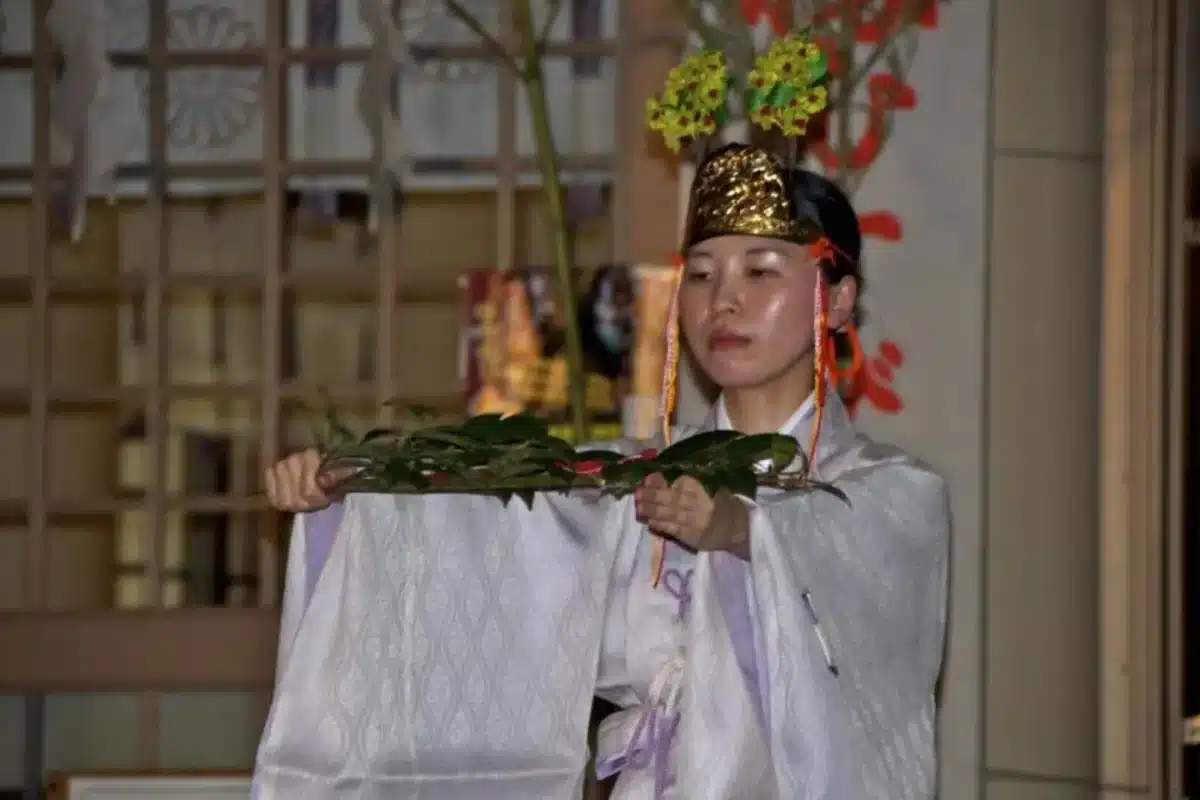
Shinto Ceremony – Manto-mitama Shinto Ceremony: Things begin with a ceremony in the main shrine building. Priests perform norito prayers and offerings to enshrined spirits. This private ceremony is followed by public events.
Kagaribi Fire Lighting: Ceremonial lighting of fires in iron baskets, called kagaribi, set up in the forecourt. These large flaming baskets are traditional lighting used in ancient court and shrine ceremonies, casting flickering light across shrine grounds and marking start of evening festivities.
Miko Procession Through Torii: The 100 or more young ladies dressed in flowing red and white robes of miko shrine maidens pour through large stone torii gate into forecourt that stands at entrance to shrine. The torii at Gokoku Shrine is imposing stone structure, and seeing 100 miko streaming through it in unison is highlight.
Three Bon-like Dances: Participants perform three dances which resemble summer bon dances, to music that ranges from very militaristic-sounding to Showa-era pop. The women do a 3-hour practice a week or so before event. Dances are simple circular movements, easy to follow, with hand gestures.
Lantern Dance Finale: For festival finale just before 9pm, young women perform dances once more, this time however small lanterns are incorporated into routine. Little lights bobbing up and down, with shrine buildings and forecourt decorated with many more lanterns as backdrop, makes lovely sight.
Austere Miko Kagura: After first performance, focus shifts back to area in front of main shrine building. After more austere dance performed by full time shrine maidens, a formal kagura sacred dance is performed.
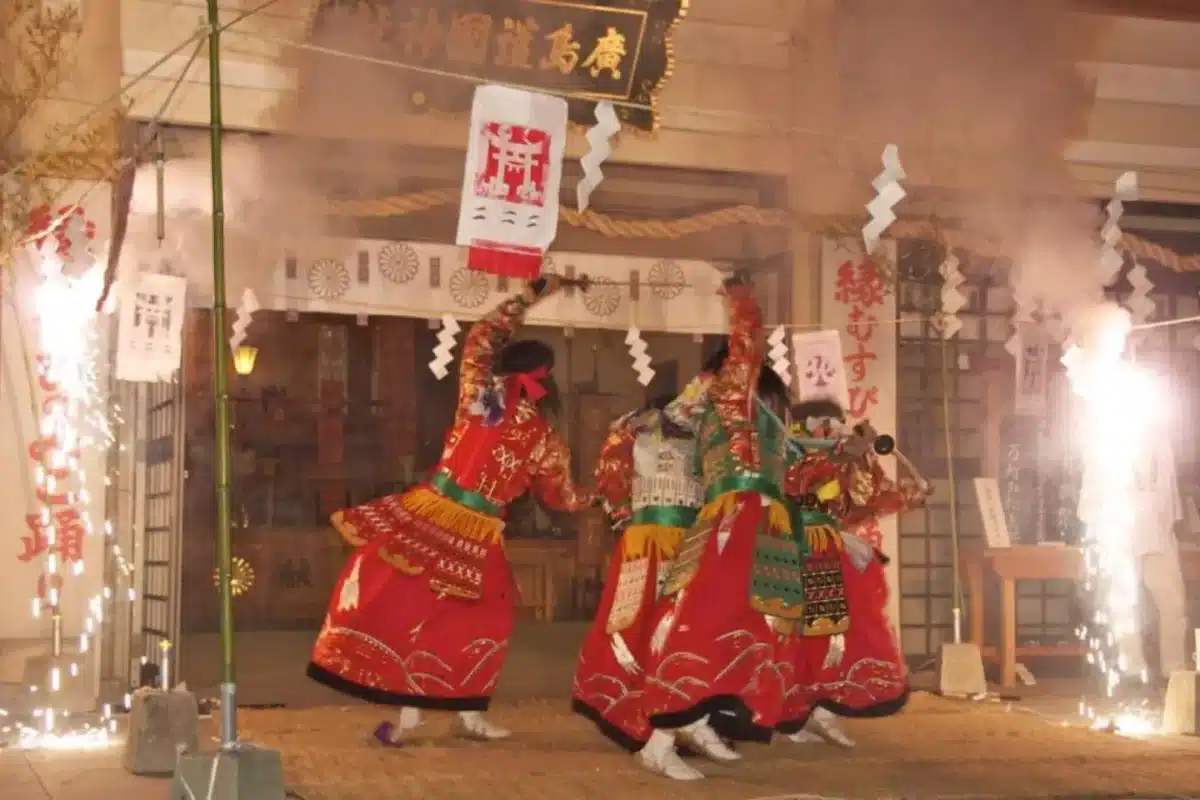
Taiko and Ato Kagura Sword Dance: Local taiko drum group ramps up tempo with energetic display. Four members of Ato Kagura troupe performing elaborate sword dance, complete with fireworks, showcasing Hiroshima Kagura tradition.
Children’s Sumo Tournament: Festival continues following day with children’s sumo tournament, where local children compete in sacred sumo ring in shrine forecourt, praying for healthy growth.
What to Expect at the Festival
Expect intimate, photogenic, and spiritual evening rather than rowdy street fair.
Unlike Tokyo’s Yasukuni Mitama Matsuri with 300,000 visitors, stalls, and karaoke stars, Hiroshima’s Mantou Mitama Matsuri is far more intimate affair with around 200 or 300 people in attendance, creating quiet, respectful atmosphere. Audience consists of mixture of relatives of young women taking part, amateur photographers with tripods, otaku shrine maiden fans, and few somewhat bemused tourists who stumbled upon event.
The shrine forecourt is decorated with hundreds of paper lanterns and kagaribi fire baskets, casting warm glow on shrine buildings located inside Hiroshima Castle grounds. The stone torii gate frames entrance, and surrounding trees of castle moat create secluded feeling despite central city location.
When 100 miko appear, they fill forecourt with swirl of red hakama trousers and white haori tops. Their dance is synchronized but gently imperfect, reflecting that they are volunteers not professional dancers. During break, shrine maidens for day are enjoying break, wandering around, eating shaved ice, chatting and having photos taken by family members, creating relaxed behind-scenes atmosphere.
Evening progresses from solemn Shinto ceremony to lively taiko, then to dramatic Kagura sword dance with fireworks sparks flying in darkness, then to final lantern dance that is most photogenic. The little lights bobbing up and down against dark shrine create ethereal effect.
There are no food stalls typical of larger festivals, though shaved ice is available, emphasizing spiritual focus over commercial.
Date & Schedule
Event Dates: Late May 2027 (Dates TBD)
Official Schedule Information: The Mantou Mitama Matsuri is a shrine festival that began in 1975. It is typically held over a weekend in late May. The 2027 edition is listed as Late May 2027 and dates are to be confirmed. For exact dates, check official site and shrine phone 082-221-5590.
Previous Edition Schedule References:
- 2026 Edition: Friday May 29 to Sunday May 31, with events starting 18:00
- Friday May 29: 18:00 Shinto ceremony
- Saturday May 30: 18:00 Manto-mitama Shinto Ceremony, 19:00 Shrine maiden lantern and yosakoi dances
- Sunday May 31: 10:00 Children’s sumo tournament, 17:00 Hiroshima Kagura 1st performance, 18:00 Manto Mitama Shinto Ceremony, 19:00 Hiroshima Kagura 2nd and 3rd performances
- General Public Schedule: Festival starts on Saturday evening just before dusk with ceremony in main shrine building, followed by ceremonial lighting of kagaribi fires, then 100 miko pouring through torii gate. They perform three dances. Sun having gone down during first performance, focus shifts to area in front of main shrine building. After austere dance by full time shrine maidens, local taiko group and Ato Kagura troupe perform. Finale just before 9pm with lantern dance.
Typical Hours: Evening events from around 18:00 to 21:00 on Saturday, daytime children’s sumo on Sunday morning from 10:00. Temple grounds decorated with lanterns throughout weekend.
Venue: Gokoku Shrine, 2-21 Motomachi, Naka-ku, Hiroshima-shi, Hiroshima-ken 730-0011, inside Hiroshima Castle grounds. Phone 082-221-5590.
Visiting this event? Don’t miss out on these amazing activities and local experiences while you’re here.
Main Events & Programme
The two-day program balances memorial ceremonies with community performances.
Manto-mitama Shinto Ceremony: Formal Shinto ritual to assuage spirits of war dead enshrined in shrine. Priests in traditional robes offer tamagushi branches, recite prayers, and light kagaribi fires in iron baskets. This occurs both Friday and Saturday evenings at 18:00.
100 Miko Lantern Dance – Main Spectacle: Once a year, spectacle of 100 shrine maidens dancing by lantern light can be seen in forecourt. Participants are unmarried women under age of 30 who signed up via shrine website, local newspapers, or posters. They perform three bon-like dances, then finale with small lanterns incorporated into routine. The dance is highlight that draws photographers.
Full-Time Miko Kagura: More austere, highly refined sacred dance performed by professional shrine maidens of Gokoku Shrine, showcasing classical Kagura forms passed down through generations, in contrast to volunteer miko dances.
Taiko Drum Performance: Local taiko drum group ramps up tempo with energetic display, using large odaiko drums whose deep resonance fills castle grounds.
Ato Kagura Sword Dance with Fireworks: Four members of Ato Kagura troupe performing elaborate sword dance complete with fireworks. Hiroshima Kagura is known for dramatic masks and fast-paced storytelling from Japanese mythology, often featuring demon slaying.
Children’s Sumo Tournament: Following day, children’s sumo tournament held in shrine forecourt, where children in mawashi sumo belts compete, with priests acting as referees. Traditional event praying for children’s healthy growth and strength.
Lantern Display: Throughout weekend, shrine buildings and forecourt decorated with many lanterns, creating mantou ten thousand lights effect that gives festival its name.
Traditional Dress, Arts & Crafts
Costume focus is miko attire, one of most iconic images in Japanese shrine culture.
Miko Attire – Red and White Robes: The 100 young ladies dress in flowing red and white robes of miko shrine maidens. The attire consists of white haori kimono top with red himo ties, bright red hakama divided skirt that allows easy movement, white tabi socks, and sometimes kanmuri headpiece with red and white ribbons. The red and white color combination symbolizes purity and protection from evil.
Lanterns – Chochin and Andon: Small handheld paper lanterns used in finale dance, and larger chochin lanterns decorating shrine forecourt. Each lantern hand-painted with shrine crest and illuminated by candle or LED, creating warm glow.
Kagaribi Fire Baskets: Iron baskets on tall stands holding burning wood, traditional lighting used in imperial ceremonies. Their flickering flames create dramatic shadows and are central to festival’s ancient atmosphere.
Kagura Costumes and Masks: Ato Kagura performers wear elaborate costumes with gold embroidery, representing deities and demons from mythology, and carved wooden masks with exaggerated expressions. Sword dance uses real steel swords with choreographed sparks.
Taiko Drum Decoration: Taiko drums decorated with shrine crests and rope, with bachi drumsticks.
Ema and Omamori: Shrine sells ema wooden prayer boards and omamori amulets for enmusubi good match and yakuyoke, popular among participating women. Ema boards often feature miko illustrations.
Call for Dancers: The call for dancers posted on shrine website, local newspapers, and neighborhood posters is itself a tradition, inviting community participation.
Traditional Food & Local Specialties
Unlike large matsuri with hundreds of stalls, Mantou Mitama Matsuri is notably without stalls, but small refreshments and surrounding area offer food.
Shaved Ice – Kakigori: During break, shrine maidens for day are enjoying break, wandering around, eating shaved ice, chatting. Kakigori stalls near shrine sell ice with syrup for 2 USD to 4 USD, providing cool relief.
Gokoku Shrine Vicinity – Hiroshima Castle Area: Inside castle grounds, there are no permanent food stalls, but surrounding Motomachi area offers cafes and convenience stores.
Hiroshima Specialties Nearby: After festival, visitors can walk 10 minutes to Hondori and Hatchobori areas for Hiroshima okonomiyaki layered with cabbage and noodles for 8 USD to 13 USD, oysters grilled for 6 USD to 12 USD, and momiji manju maple cakes for 5 USD to 10 USD per box.
Festival Food Absence as Tradition: The absence of haunted houses, karaoke stars, and extensive food stalls is intentional, distinguishing Hiroshima’s intimate memorial festival from Tokyo’s commercial version. This lack of stalls emphasizes spiritual focus.
Tea and Sweets: Small tea stand sometimes offers matcha and wagashi for 4 USD to 6 USD during daytime.
Location & Festival Areas
Venue: Gokoku Shrine, 21-2 Motomachi, Naka Ward, Hiroshima, 730-0011, Japan, also listed as 2-21 Motomachi, Naka-ku, Hiroshima-shi, Hiroshima-ken 730-0011
Location Context: Gokoku Shrine is located inside Hiroshima Castle grounds, in Naka-ku, central Hiroshima. The shrine is hidden between trees and moss, small building hidden between trees. Entrance is through large stone torii gate that stands at entrance to shrine, leading to forecourt where dances occur.
Festival Areas:
- Main Shrine Building – Honden: Where Shinto ceremony takes place, private but visible from forecourt.
- Forecourt – Keidai: Central performance space where kagaribi fire baskets are set up, where 100 miko dance, taiko and kagura performed, and children’s sumo ring erected on Sunday.
- Stone Torii Gate: Dramatic entrance where miko procession begins, pouring through gate into forecourt.
- Castle Moat and Trees: Surrounding forest creates secluded atmosphere despite city center location.
- No Stalls Area: Unlike other festivals, no stall area, keeping grounds clean and solemn.
Nearby Landmarks: Hiroshima Castle main keep 2 minutes walk, Hiroshima Museum of Art, and central business district.
Getting to the Festival
Gokoku Shrine’s central location inside castle makes access easy.
By Streetcar – Hiroden: Take Hiroden streetcar to Kamiyacho-nishi or Kamiyacho-higashi or Genbaku Dome-mae stop, then walk 8 minutes through castle grounds to shrine. From Hiroshima Station, about 15 minutes, fare approximately 2 USD.
By Bus: Hiroshima Bus Center to Motomachi area, fare 2 USD to 3 USD. Many buses stop at Motomachi and Naka Ward office.
On Foot: From Peace Memorial Park and Atomic Bomb Dome, walk northeast about 12 minutes through Honkawa area to castle. From Hondori shopping arcade, walk north 10 minutes.
From Airport: Hiroshima Airport to city via limousine bus to Hiroshima Bus Center, about 50 minutes, fare about 11 USD, then streetcar or walk.
Parking: No parking at shrine itself. Use coin parking around Motomachi, typically 6 USD to 12 USD per evening. Castle area parking limited.
Access During Festival: Forecourt can accommodate only 200 to 300 spectators, so arrive early for Saturday evening events before dusk to secure spot near torii gate.
Where to Stay Nearby
Staying in Naka-ku puts you within walking distance of intimate evening festival.
Hotels Near Castle:
- Rihga Royal Hotel Hiroshima: 7 minutes walk from castle, near Peace Memorial Park, rooms from 100 USD to 180 USD per night.
- ANA Crowne Plaza Hiroshima: On Peace Boulevard, 10 minutes walk to Gokoku Shrine, rooms from 110 USD to 200 USD.
- Hotel Granvia Hiroshima: Connected to Hiroshima Station, 15 minutes streetcar to shrine, rooms from 120 USD to 220 USD.
Business Hotels: APA Hotel Hiroshima Ekimae, Hotel Mystays Hiroshima Peace Park, Comfort Hotel Hiroshima Otemachi offer rooms from 55 USD to 95 USD.
Budget: J-Hoppers Hiroshima Guesthouse, K’s House Hiroshima Hostel near Peace Park, dorm beds from 25 USD to 40 USD, private rooms from 60 USD to 90 USD.
Ryokan: Mitaki-so and other ryokan in outskirts from 90 USD to 160 USD.
Booking Advice: Festival is intimate with only 200 to 300 spectators, so hotels do not fill due to festival alone, but central Hiroshima always busy. Book at least 1 month ahead for weekend.
What Visitors Can Participate In
While main miko dance is for registered women, visitors have participatory roles.
Watch and Photograph: Main participation is as respectful audience. Amateur photographers are welcome, but flash photography during Shinto ceremony is discouraged. Tripods allowed in designated areas.
Sign Up as Miko Dancer: Participants are all unmarried women under age of 30 who have signed up to take part, having seen call for dancers on shrine website, local newspapers, or posters. Some travel some distance. If you meet criteria, you can apply via shrine website www.h-gokoku.or.jp. Includes 3-hour practice a week before event. This is rare opportunity to wear authentic miko robes and perform sacred dance.
Pray for Enmusubi: Visitors can purchase ema boards and write wishes for good marital match, hanging them at shrine. Also purchase omamori charms for love and protection.
Children’s Sumo: Families can enroll children in Sunday children’s sumo tournament. Contact shrine at 082-221-5590 for registration. Even as spectator, cheering children is participatory.
Kagura and Taiko Appreciation: After austere miko dance, audience is encouraged to cheer taiko group and Kagura troupe, clapping in rhythm.
Lantern Lighting Wish: Some years, visitors can sponsor or light small lanterns that decorate shrine, writing names of war dead or personal prayers.
Things to Do Before or After the Festival
Central location allows combination with Hiroshima’s major historical sites.
Hiroshima Castle: Explore reconstructed castle main keep, museum, and surrounding moat and gardens. Entry about 3 USD. Shrine is inside castle grounds, so visit before evening festival.
Peace Memorial Park: 10 minutes walk southwest, visit Atomic Bomb Dome, Peace Memorial Museum entry 2 USD, Children’s Peace Monument, and river cruises.
Shukkeien Garden: Historic Japanese garden near Hiroshima Station, beautiful for afternoon stroll, entry 3 USD.
Hondori and Hatchobori: Shopping arcades with department stores, cafes, and okonomimura building with over 20 okonomiyaki stalls.
Hiroshima Museum of Art: Located near castle, featuring European and Japanese art, entry about 9 USD.
Evening After Festival: After finale just before 9pm, walk to Nagarekawa entertainment district for dinner and drinks, 10 minutes away.
Day After – Miyajima: Take day trip to Itsukushima Shrine floating torii, 45 minutes via train and ferry, to continue shrine pilgrimage.
Local Food & Restaurants
No festival stalls, but surrounding Naka-ku offers excellent dining.
Near Gokoku Shrine – Motomachi: Cafes in Motomachi and Kamiyacho areas serve coffee and light meals for 6 USD to 10 USD.
Okonomiyaki: Hiroshima style layered with noodles is must-try. Recommended shops include Mitchan, Reichan, Hassho near Hondori and Okonomimura building. Price 8 USD to 13 USD.
Oysters: Hiroshima is Japan’s largest oyster producer. Grilled oysters 6 USD to 12 USD, raw oysters 8 USD to 15 USD at restaurants like Uoichi and Kanava near Peace Park.
Hiroshima Tsukemen: Cold dipping noodles with spicy sauce, specialty for 7 USD to 10 USD at Bakudanya.
Izakaya: Evening izakaya pubs in Nagarekawa near Shintenchi area offer yakitori, sashimi, drinks, dinner from 15 USD to 30 USD per person.
Shaved Ice During Festival: Kakigori at shrine for 2 USD to 4 USD, providing traditional summer refreshment.
Convenience Stores: Lawson, FamilyMart near castle for affordable drinks and snacks.
Ticket Information & Access
Price of Admission: FREE
Tickets are listed as 0 JPY which converts to 0 USD. The Mantou Mitama Matsuri is free to attend, including Shinto ceremonies, miko dances, taiko, and kagura performances. This is consistent across previous editions. Tickets: 0 USD noted in listings.
Registration for Miko Dance: Free to participate for eligible women, but must apply in advance via shrine website. Costume rental of miko robes provided by shrine for free, though small cleaning fee of about 15 USD to 25 USD may apply based on previous participant reports.
Children’s Sumo: Free to enter and watch, registration via phone 082-221-5590.
No Paid Seating: Forecourt has no paid seating, first-come standing and sitting on ground. Arrive early for best view.
Access Hours: Based on previous editions, evening events start around 18:00 and run until 21:00. Shinto ceremony at 18:00, miko dances at 19:00, finale before 9pm.
Donations: Shrine accepts donations for lanterns and maintenance, typically 5 USD to 20 USD, and sells omamori charms for 5 USD to 10 USD.
Official Event Information
Event Name: Mitama Festival 2027 – Hiroshima, Japan, also called Mantou Mitama Matsuri or Mantō Mitama Matsuri
Venue: Gokoku Shrine, 21-2 Motomachi, Naka Ward, Hiroshima, 730-0011, also 2-21 Motomachi, Naka-ku, Hiroshima-shi, Hiroshima-ken 730-0011, located inside Hiroshima Castle grounds
Organizer: Hiroshima Gokoku Shrine and Mantou Mitama Matsuri Executive Committee
Official Website: https://en.japantravel.com/hiroshima/mitama-festival/4637
Shrine Official Website: www.h-gokoku.or.jp
Phone: 082-221-5590
Description: Once a year, spectacle of 100 shrine maidens dancing by lantern light can be seen in forecourt of Hiroshima Gokoku-jinja Shrine. Part of Mantou Mitama Matsuri, shrine festival that began in 1975 on occasion of Showa Emperor Hirohito’s 50th birthday. Ostensibly to assuage spirits of war dead enshrined in shrine, festival also incorporates opportunity for young unmarried women to wish for good marital match. Two days of events and commemorations at Hiroshima’s shrine to war dead, Gokuku-jinja, decorated with lanterns.
Location
FAQ
Who can become one of the 100 miko dancers?
Participants are all unmarried women under the age of 30 who sign up to take part after seeing the call for dancers on the shrine website, in local newspapers, or on posters around their neighborhoods. Some travel some distance to take part, indicating the appeal beyond Hiroshima city. They attend a single 3-hour practice a week or so before the event to learn three dances that resemble summer bon dances, and the shrine provides the red and white miko robes for the performance.
How is Hiroshima's Mantou Mitama Matsuri different from Tokyo's Yasukuni Mitama Matsuri?
While both are Gokoku shrine lantern festivals to assuage spirits of war dead, Hiroshima's version is far more intimate, with around 200 or 300 spectators compared to 300,000 in Tokyo, and without stalls, haunted houses, or celebrity karaoke. Hiroshima focuses on the 100 miko dance by lantern light, kagaribi fire baskets, and solemn Shinto ceremony inside castle grounds, creating a quiet reflective atmosphere. Tokyo's festival at Yasukuni is a massive commercial summer festival, while Hiroshima's remains a community memorial.
What happens during the evening schedule?
As far as the public is concerned, the festival starts on Saturday evening just before dusk with a ceremony in the main shrine building followed by ceremonial lighting of kagaribi fires in iron baskets set up in the forecourt. Then the 100 or more miko pour through the large stone torii gate and perform three dances. After sunset, a more austere dance by full-time shrine maidens is followed by energetic taiko drums and an elaborate sword dance by Ato Kagura troupe complete with fireworks. For the finale just before 9pm, the young women perform again incorporating small lanterns that bob up and down against shrine backdrop.
Is the festival suitable for tourists and photographers?
Yes, though intimate, the festival welcomes tourists, amateur photographers, and even otaku shrine maiden fans who come to photograph the 100 miko. The mixture of relatives, photographers, fans, and bemused tourists creates a respectful but relaxed audience of a few hundred. Tripods are generally tolerated in designated areas, but flash during Shinto ceremony is discouraged. The lantern finale provides stunning photo opportunities with little lights bobbing against shrine buildings decorated with many more lanterns.
What happens on the second day of the festival?
The festival continues the following day with a children's sumo tournament held in the shrine forecourt, where local children compete in sacred sumo bouts to pray for healthy growth. The second day also includes additional Hiroshima Kagura performances, with first performance in afternoon and second and third performances in evening after another Manto Mitama Shinto Ceremony. This family-oriented day contrasts with the previous evening's miko-focused memorial, emphasizing community continuity and future generations.

Leave a Reply