
-
January 20, 2027
Event date:
-
January 20, 2027
Event end:
Overview
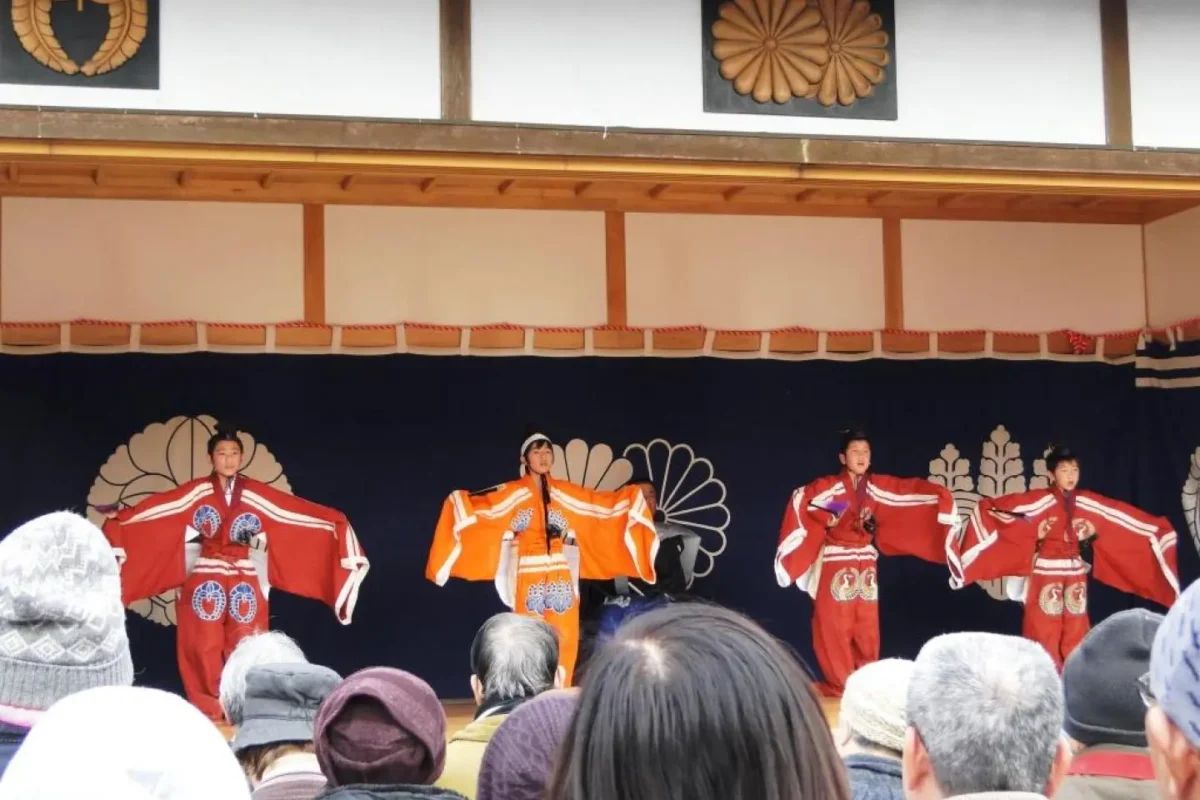
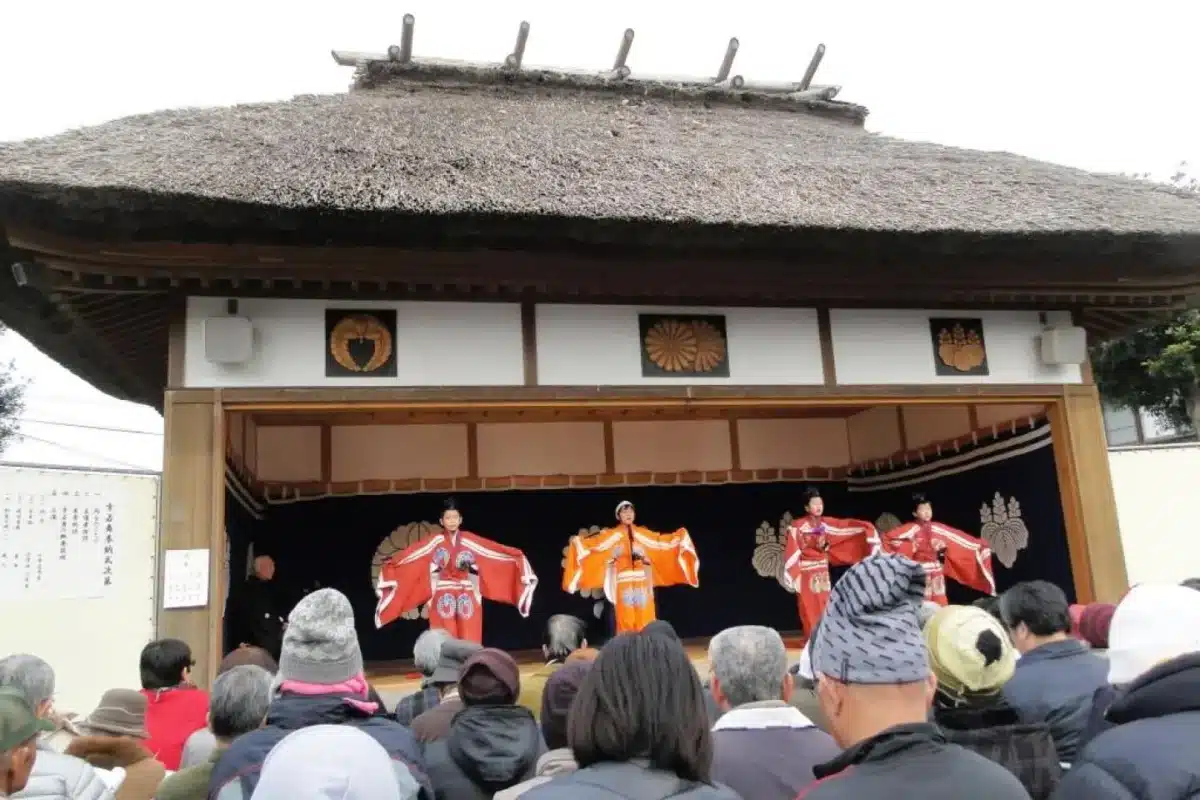
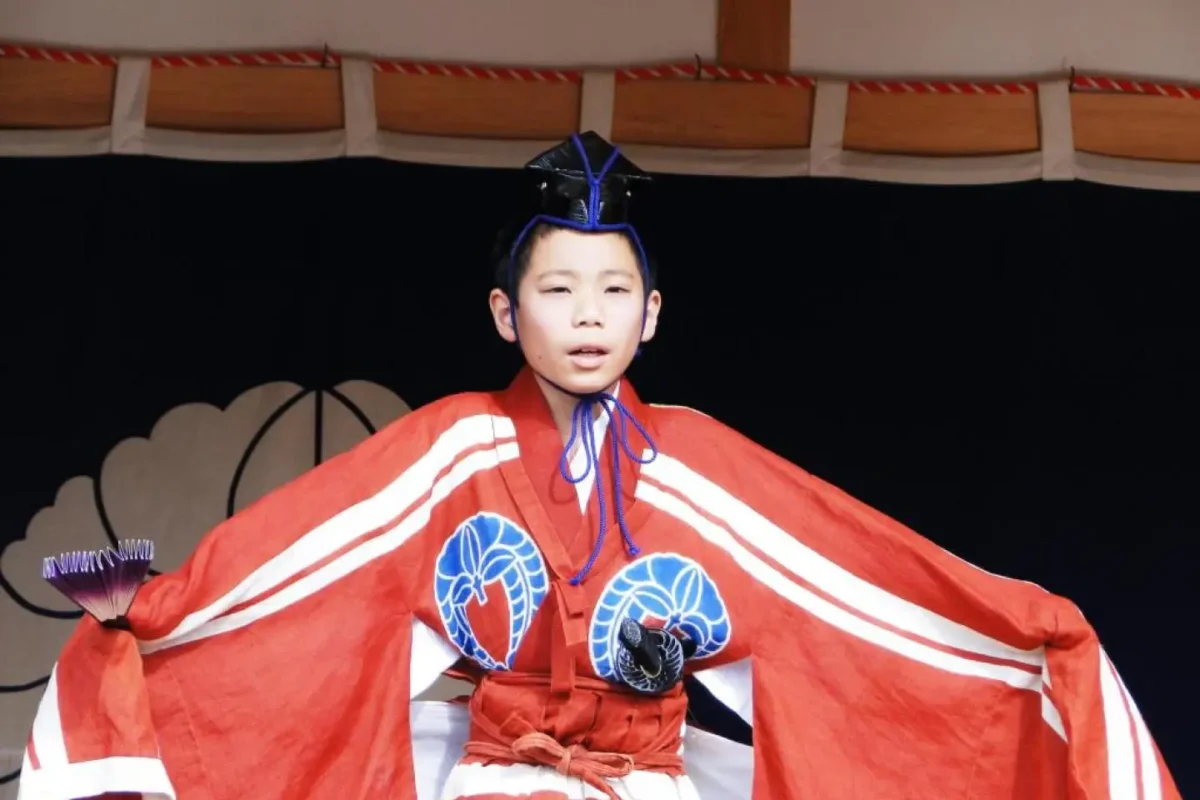
Every year on January 20th, Japan’s oldest form of dance comes alive at the tiny Oe Tenmangu Shrine in Miyama, a village of southern Fukuoka prefecture. Kowakamai, whose name is borrowed from its alleged creator, is a dance style that predates Noh and Kabuki; in fact, you can see elements of kowakamai in both of the later art forms.
The performance is long – at least a few hours with several acts – and involves fans and chanting to praise the gods. While it’s mostly incomprehensible to foreigners, the costumes are beautiful and the small crowd that gathers in Miyama to celebrate this 700 year old tradition is extremely welcoming.
Kowakamai is a Japanese recitative dance, originating in the 15th century and popular during the Sengoku and early Edo periods. Although kowakamai has dance and musical components, scholars consider its textual component as an independent literary genre. A remnant of the kowakamai is performed every year on January 20 at Tenman-jinja, a Shinto shrine in Oe.
Enjoy Your Event Stress-Free with Japan Travelo
Do you know? Planning events, festivals, concerts, and cultural experiences in Japan can be overwhelming. Japan Travelo brings everything together in one place, helping you manage your itinerary, transport, and accommodation with ease—so you can enjoy Japan without the stress of planning.
The Japanese government has designated kowakamai to be an intangible cultural heritage, important intangible folk cultural property, practiced in the town Setakamachi Oe in Miyama City, Fukuoka Prefecture. The folk custom is maintained by the Kowakamai Preservation Society in Setakamachi Oe, which has restored instrumental melodic arrangements of eight ballads as well as method of oral recitation.
Cultural Significance & Origins
Kowakamai holds a foundational place in Japanese performing arts history.
Creator – Kowakamaru: When considering kowakamai lineage and creation of kowaka dance pieces, one Momonoi Naoaki is usually accredited. Momonoi Naoaki claimed to be grandson of Momonoi Naotsune, who in turn was descendant of Minamoto no Yoshiie. Momonoi Naoaki’s childhood name was Kowakamaru, from which it is said term kowakamai gets its name. Kowakamaru was born in Nyu district, Echizen Province. After father’s death he entered Mt. Hiei probably Enryaku-ji temple. At age 16, he accompanied chief priest of Enryaku-ji to imperial court in Kyoto, and then became employed by court by Retired Emperor Shoko’s decree. In Kyoto, his talents in music and dance became renowned.
Development from Kusemai: Kowakamai may have evolved from dance form called kusemai of the 14th century, sharing its origins in traditional court dance and music with Noh and Kabuki. One basis of connection are records stating kusemai being performed by certain Kowaka-tayu of Tanaka Village in Echizen Province. This plausibly referred to Kowakamaru or one of his immediate successors. In early period, kowakamai was not starkly distinguishable from kusemai, both involved two players and both were apparently interchangeably called two person dance.
Peak Under Warlords: Kowakamai along with Noh is a form of entertainment enjoyed by warrior-class families during Japan’s medieval age. Kowakamai reached its peak during the 16th century when actors received small fiefdoms from warlords Oda Nobunaga, Toyotomi Hideyoshi and the like. When Tokugawa Ieyasu founded shogunate, clan received 300 koku of rice as stipend, and three families took turns serving in rotation. Performances were celebratory but also cause for sorrow, many pieces are sorrowful tales dealing with loss of life and defeat. Piece titled Atsumori which depicts Taira no Atsumori and Kumagai Naozane at Battle of Ichi-no-Tani is especially popular.
Echizen Kowaka Troupe and Daigashira School: Founder founded Kowaka troupe, family had three branches Hachirokuro, Yajiro, and Kohachiro, based in Nyu district of Echizen Province, called Echizen Kowaka troupe. The Daigashira School was founded by Yamamoto Shirozaemon, who learned art from Kowaka Yajiro Naoshige, passed to disciple Mukadeya Zenbe then to Osawa Jisuke Yukitsugu. In Tensho 10, 1582, Yukitsugu was invited to Kyushu by lord of Chikugo Province’s Yamashita Castle, Kamachi Shigeharu, and his cousin lord of Yanagawa Castle, Kamachi Shigenami where he taught performance style and transmitted art form to lords and their vassals. That style became Oe kowakamai.
Decline and Survival: In early parts of Edo period, kowakamai performances were given annually at court of shogunate. But art had gone into obscurity by Genroku era 1688-1704, and had fallen into complete oblivion by Meiji period in 19th century. The Daigashira School Oe kowakamai has been transmitted to present day, surviving in Oe district of Miyama, Fukuoka.
Traditions, Rituals & Customs
The Oe Tenmangu performance preserves medieval ritual form.
Shrine Dedication: Performances are held annually as part of local festival at Oe Tenmangu Shrine, also called Tenman-jinja, a Shinto shrine dedicated to Sugawara no Michizane, deity of learning. Dedication is during New Year festival and autumn festival at shrine, with dance dedicated to praise gods.
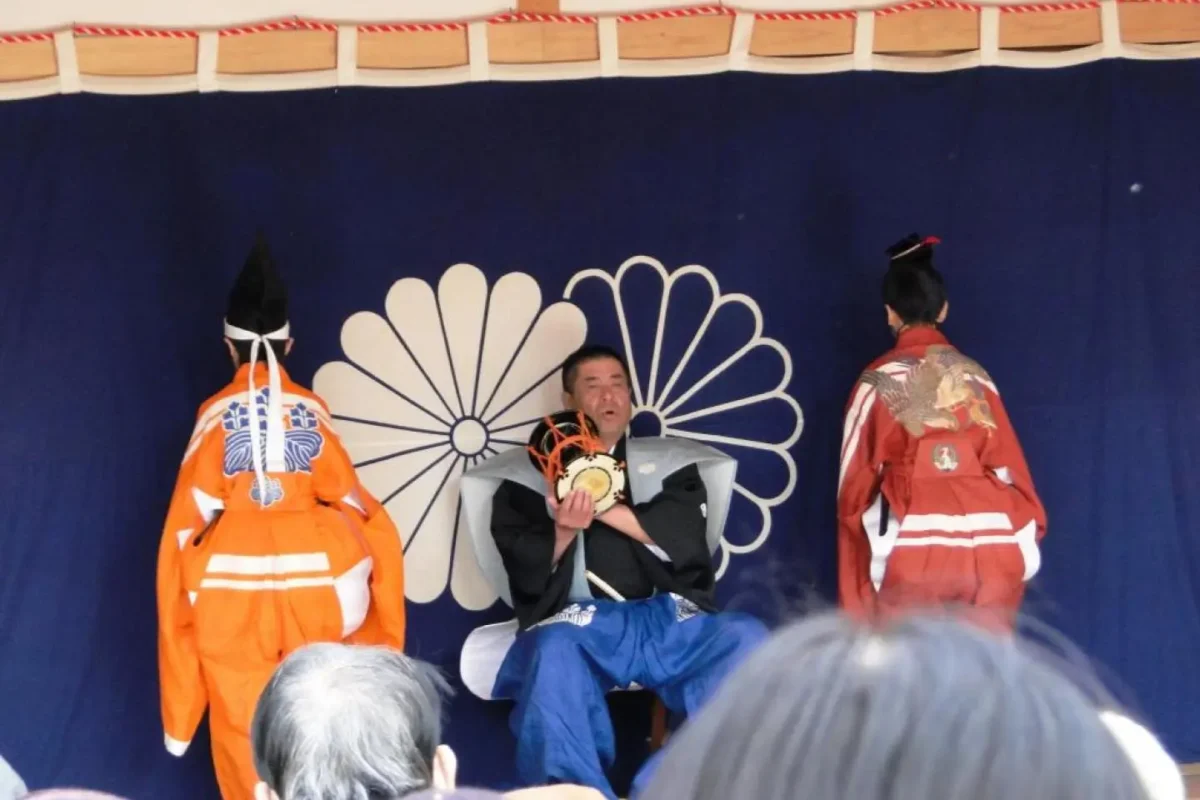
Three Performers Structure: The surviving kowakamai form transmitted in Oe region involves three players, principal tayu and two supporting actors named waki and shite, or tayu, shite, and sashi. Principal and supporters were dressed alike, suwo top, long version of hakama trouser, and no mask, but they wore different types of eboshi hats. Principal wore tate eboshi designating higher status, supporters wore ori eboshi.
No Impersonation: Kowakamai performers do not impersonate characters, and do not act, they merely narrate lines spoken by personae dramatis. Also there are no choreographic movements that can be recognized as dance in usual European sense. Instead, they use fans and subtle foot movements, chanting text in recitative style.
Repertoire: Kowakamai originally had sanju-roku-ban thirty-six numbers in standard repertoire. Anecdotally, there were thirty-six otogi-zoshi storybooks at imperial court that founder set to music. There were outside-the-canon pieces added, raising total to forty-two pieces. Some fifty total texts survive today. Categories include Ancient tales like Nihongi, Minamoto tales, Heike tales like Atsumori and Kagekiyo, Yoshitsune tales like Fushimi Tokiwa and Yashima, Soga tales, and miscellaneous tales like Choryo.
Preservation by Age Groups: Instrumental melodic arrangements of eight ballads as well as method of oral recitation have been restored by Kowakamai Preservation Society. On 20 January 2008, Atsumori, Takadachi, and Yochi Soga were performed by adult troupe, Atsumori by young adult troupe, and Hamaide and Nihongi by elementary school-age troupe. This intergenerational transmission ensures survival.
Fan and Chant: Performance is long, at least a few hours with several acts, involving fans and chanting to praise gods. Fans are opened and closed rhythmically to punctuate narrative.
What to Expect at the Festival
Expect quiet, profound, and intimate encounter with Japan’s oldest dance, far from tourist crowds.
The tiny Oe Tenmangu Shrine in Miyama, a village of southern Fukuoka prefecture, is small wooden shrine surrounded by rice fields and mountains. On performance day, a small crowd gathers, mostly local residents, preservation society families, and few researchers and photographers. The crowd is extremely welcoming to outsiders.
Performance takes place inside shrine hall or on temporary stage in front of main hall, with audience seated on tatami or wooden floor close to performers. There is no large sound system, voice is natural recitative, with small drum and flute accompaniment.
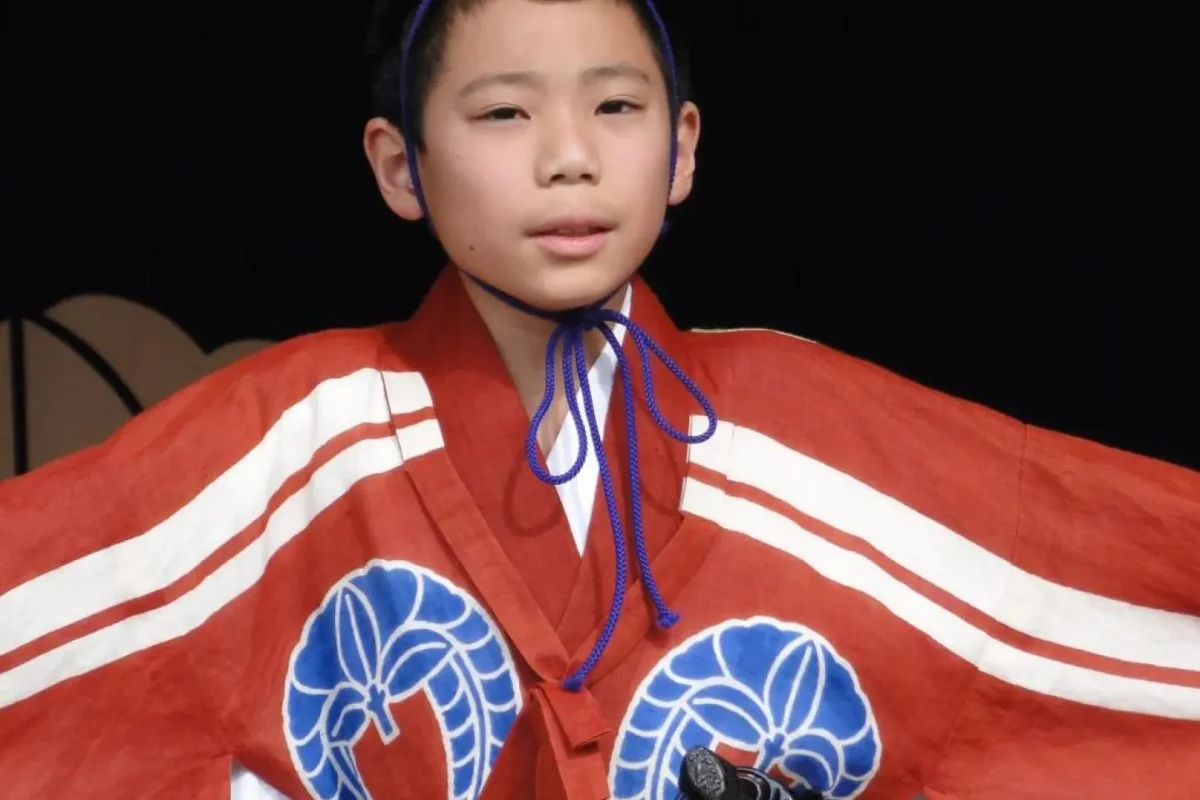
Costumes are beautiful, suwo tops in deep colors like indigo, crimson, and gold, long hakama trousers that sweep floor, and eboshi hats. Performers hold fans and move slowly, deliberately, with minimal footwork but expressive upper body.
While mostly incomprehensible to foreigners because text is medieval Japanese and chanting style is archaic, visual beauty and historical weight are palpable. You can see elements of kowakamai in both Noh and Kabuki that came later, such as fan usage, narrative recitation, and sorrowful warrior tales.
The performance lasts several hours with breaks, during which audience can talk to preservation society members, view old manuscripts of Mai no hon Texts for Kowaka dances, wood-block printed storybooks.
It is not a lively festival with food stalls, but a sacred dedication, offering rare chance to see intangible cultural heritage in its original ritual context.
Date & Schedule
Event Dates: Wednesday – January 20th 2027
Official Timing: Every year on January 20th, Japan’s oldest form of dance comes alive at the tiny Oe Tenmangu Shrine in Miyama, a village of southern Fukuoka prefecture. The 2027 edition is scheduled for Wednesday – January 20th 2027.
Historical Pattern: A remnant of the kowakamai is performed every year on January 20 at Tenman-jinja, a Shinto shrine in Oe. This date is fixed annually for New Year festival dedication at Oe Tenmangu Shrine. In recent years, performances have included:
- 2008 Edition January 20: Atsumori, Takadachi, and Yochi Soga performed by adult troupe, Atsumori by young adult troupe, Hamaide and Nihongi by elementary school-age troupe
- 2009 February Kyoto performance: Atsumori and Ataka staged and recorded on CD and DVD by Kyoto City University of the Arts Research Centre for Japanese Traditional Music
Typical Day Schedule Based on Previous Editions:
- Morning: Shinto purification ceremony at Oe Tenmangu Shrine main hall
- Late Morning to Early Afternoon: First act – Ancient tales like Nihongi
- Early Afternoon: Second act – Heike tales like Atsumori
- Mid Afternoon: Third act – Yoshitsune tales and Soga tales
- Late Afternoon: Closing dedication and community gathering
Duration: At least a few hours with several acts, typically 3 to 5 hours with intermissions.
Venue: Oe Tenmangu Shrine, Oe district, Setakamachi, Miyama City, Fukuoka Prefecture, also referred to as Tenman-jinja in Oe.
Note: Performance is free and open to public, but seating is limited inside small shrine hall.
Visiting this event? Don’t miss out on these amazing activities and local experiences while you’re here.
Main Events & Programme
The programme consists of sequential ballads performed by different age troupes.
Opening Purification: Shinto priest performs harai purification, blessing performers and audience, invoking Sugawara no Michizane deity of shrine.
Adult Troupe Performances: Main troupe of Kowakamai Preservation Society performs core repertoire pieces such as Atsumori, Takadachi, and Yochi Soga. Atsumori is particularly well known because of its depiction of Oda Nobunaga. Before Oda departs for Battle of Okehazama, he does choreographed dance and recites famous lines, Although a man may be alive on earth for fifty years, in heaven those fifty years are but an instant, a dream.
Young Adult Troupe: Younger adults perform same or similar pieces with slightly simpler recitation, demonstrating transmission.
Elementary School-age Troupe: Children perform Hamaide Beach Outing and Nihongi Chronicle of Japan, preserving art through youngest generation, wearing smaller versions of suwo and hakama.
Fan and Recitation Focus: Each piece involves fan movements and chanting to praise gods, with tayu principal narrator and waki and shite supporting with chorus.
Community Celebration: After performances, small gathering with tea and local sweets, where preservation society explains history and shows manuscripts.
Photography and Recording: Both performances in 2009 were recorded on CD and DVD by Kyoto City University of the Arts. Photography allowed without flash, but audience asked to remain silent during recitation.
Traditional Dress, Arts & Crafts
Costume is medieval warrior-class attire preserved unchanged.
Suwo Top: Performers wear suwo top, long version of traditional Japanese outer robe, made from silk with family crests, in colors indicating status. Principal wears more elaborate pattern than supporters.
Long Hakama: Long version of hakama trouser that trails on floor, requiring careful shuffling walk. Colors are deep indigo, crimson, or brown.
Eboshi Hats: Different types of eboshi hats distinguish roles. Principal wears tate eboshi tall pointed hat designating higher status, supporters wear ori eboshi folded eboshi. Made from black lacquered paper or cloth.
Fans – Ogi: Performers hold folding fans, used to punctuate narrative, indicate character speech, and symbolize swords or other objects. Fan handling is core of minimal choreography.
No Masks: Unlike Noh, performers wear no mask, face is visible, emphasizing recitation over impersonation.
Manuscripts – Mai no Hon: Wood-block printed storybooks called Texts for Kowaka dances, Mai no hon, contain standard thirty-six texts. Original manuscripts survive in Tenri Central Library and private collections. Preservation society displays replicas.
Craft Preservation: Kowakamai is designated intangible cultural heritage, and Preservation Society maintains costume sewing and fan making using traditional methods.
Traditional Food & Local Specialties
Miyama area offers rural Fukuoka cuisine, though festival itself has no food stalls.
Miyama Local Food: Village of southern Fukuoka prefecture is agricultural area known for rice, mikan citrus, and tea. Local farmhouses offer homemade pickles and rice cakes.
Fukuoka Prefecture Specialties:
- Mentaiko: Spicy cod roe, specialty of Fukuoka, served with rice for 5 USD to 9 USD
- Hakata Ramen: Tonkotsu pork bone ramen for 7 USD to 12 USD
- Motsunabe: Offal hot pot for 15 USD to 25 USD per person
- Umegae Mochi: Rice cake sweets sold at Tenmangu shrines, grilled mochi with sweet bean paste inside, for 2 USD to 4 USD
Shrine Area: Small shops near Oe Tenmangu sell tea and manju buns for 2 USD to 5 USD. Bring own lunch as options limited in village.
Miyama Tea: Local green tea from Yame region nearby, high-quality gyokuro and sencha, available for 6 USD to 15 USD per pack.
Location & Festival Areas
Venue: Oe Tenmangu Shrine, also called Tenman-jinja or Oe Temman Shrine, Oe district, Setakamachi, Miyama City, Fukuoka Prefecture, Kyushu
Miyama City: Miyama is city in southern Fukuoka prefecture, formed from merger of former towns Setaka, Yamakawa, and Takata. Oe district is rural area within Setakamachi, surrounded by rice fields and low mountains.
Shrine Setting: Tiny shrine, small building hidden between trees, typical rural Tenmangu shrine dedicated to Sugawara no Michizane, scholar deity. Shrine has small torii gate, main hall, and open courtyard where performance occurs. Location is tranquil, far from urban crowds.
Address: Oe Temman Shrine, Miyama, Fukuoka Prefecture, 835-0000 area. For navigation, search Oe Tenmangu Shrine Miyama or Tenman-jinja Oe.
Festival Area: Single area – shrine hall and forecourt. Audience sits on floor inside or on benches outside. No multiple stages.
Surrounding Area: Nearby Yanagawa city known for canal boat rides, and Dazaifu Tenmangu, most popular shrine in Fukuoka, about 1 hour away.
Getting to the Festival
Miyama is rural, requiring combination of trains and buses.
By Train – From Hakata Station: Take JR Kagoshima Main Line from Hakata Station to Setaka Station, about 60 to 70 minutes, fare approximately 12 USD to 16 USD. From Setaka Station, take local bus or taxi to Oe district, about 15 minutes, fare 4 USD to 8 USD for taxi.
By Train – From Kumamoto: Take JR Kagoshima Main Line north to Setaka, similar time.
By Bus: Local buses from Setaka Station to Oe Tenmangu area operate infrequently, check schedule in advance. Taxi recommended.
By Car: From Fukuoka City via Kyushu Expressway, exit at Miyama Yanagawa IC, then local roads to Setakamachi Oe. Parking at shrine limited, use nearby community center parking. Rental car from Fukuoka Airport costs about 50 USD to 80 USD per day.
On Foot in Village: Shrine is within small village, walkable from Oe bus stop.
Accessibility: Shrine hall has steps, may be difficult for wheelchair users. Contact Miyama City tourism in advance for assistance.
Language: English not widely spoken in village, bring translation app. Preservation society members are extremely welcoming and often have English explanation sheets.
Where to Stay Nearby
Miyama is rural with limited accommodation, most visitors stay in nearby cities.
In Miyama City:
- Local Ryokan and Minshuku: Small family-run inns in Setaka and Yamakawa areas offer tatami rooms from 60 USD to 110 USD per night including breakfast. Book via Japanese travel sites or phone.
Yanagawa City – 20 minutes away:
- Yanagawa Hotels: Yanagawa offers hotels like Yanagawa Grand Hotel and Yanagawa Hakusui-tei, rooms from 80 USD to 150 USD, famous for canal town.
Kurume City – 30 minutes away:
- Business Hotels: Route Inn, APA Hotel in Kurume from 60 USD to 100 USD per night, larger city with more options.
Fukuoka City – Hakata – 1 hour away:
- Extensive Options: Hotel Nikko Fukuoka, Grand Hyatt Fukuoka from 120 USD to 250 USD. Budget hostels from 25 USD to 45 USD dorm.
Dazaifu Area: Hotels near Dazaifu Tenmangu for combining shrine visits, from 70 USD to 130 USD.
Booking Tip: For this small festival, accommodation does not fill, but rural inns have few rooms, so book at least 2 weeks ahead if staying locally.
What Visitors Can Participate In
Participation is limited as performance is sacred dedication, but audience involvement is valued.
Watch and Listen: Main participation is respectful watching and listening. While mostly incomprehensible to foreigners, you can appreciate beautiful costumes and 700 year old tradition.
Q&A with Preservation Society: After performance, Preservation Society members often explain history, show manuscripts, and answer questions. Extremely welcoming to small crowd that gathers.
Photography: Photography allowed without flash, video often permitted for personal use. Ask before recording.
Children’s Participation: Local elementary school-age troupe performs, showing community involvement. Visitors with children can speak to society about youth training.
Prayer at Tenmangu: Offer prayer to Sugawara no Michizane for academic success, purchase omamori charm for learning for 5 USD to 8 USD, and ema board for 3 USD to 6 USD.
Learn Fan Movements: After formal performance, society sometimes demonstrates basic fan handling for interested visitors.
Things to Do Before or After the Festival
Southern Fukuoka offers historic and natural attractions.
Yanagawa Canal Cruise: Famous kawakudari punting boat ride through canals of Yanagawa, about 20 minutes from Miyama, with boatman singing. Cost about 12 USD to 18 USD per person.
Dazaifu Tenmangu Shrine: Most popular shrine in Fukuoka, dedicated to same deity Sugawara no Michizane, with beautiful plum trees and museum. Free entry.
Kurume and Yame Tea Plantations: Visit Yame region, one of Japan’s top green tea producing areas, with tea fields and tasting.
Miyama Countryside: Walk through rice fields, visit local farms, and enjoy rural Kyushu landscape.
Kora Taisha Shrine: Another historic shrine in Kurume area where Kora Fellows dance is dedicated during New Year and autumn festivals.
Hakata and Fukuoka City: For urban contrast, visit Hakata Station, Canal City shopping, and Fukuoka Tower.
Hot Springs: Nearby Yanagawa and Chikugo area have small onsen hot springs for relaxation after long performance.
Local Food & Restaurants
Southern Fukuoka is food rich region.
Near Oe Tenmangu: Few restaurants, mostly local noodle shops serving udon and soba for 6 USD to 10 USD, and set meals teishoku for 8 USD to 13 USD.
Miyama Local: Farm restaurants serve seasonal vegetables, rice, and miso soup made from local produce.
Fukuoka City Food: If returning to Hakata, try Hakata ramen tonkotsu for 7 USD to 12 USD, mentaiko spicy cod roe, motsunabe hot pot 15 USD to 25 USD, and Mizutaki chicken hot pot.
Yanagawa Specialty: Yanagawa is famous for unagi eel steamed in basket called unagi no seiro mushi for 15 USD to 25 USD.
Sweets: Umegae mochi rice cakes at Tenmangu shrines for 2 USD to 4 USD.
Tea: Yame tea tasting at local tea shops for 4 USD to 8 USD per pot.
Ticket Information & Access
Price of Admission: FREE
Tickets are listed as 0 JPY which converts to 0 USD. The Kowakamai Dance in Miyama is free to watch at Oe Tenmangu Shrine. This has been consistent across previous editions as shrine festival dedication. No tickets required.
Seating: Free seating on tatami or floor inside shrine hall, first-come first-served. Small shrine hall accommodates only few dozen people inside, others watch from outside courtyard. Arrive early.
Donations: Donation box at shrine for preservation society and shrine maintenance, suggested 5 USD to 10 USD. Purchase of omamori and ema supports shrine.
Access Hours: Performance starts late morning and lasts few hours with several acts. Based on 2008 edition, performances throughout day with breaks.
Preservation Society: Kowakamai Preservation Society maintains art as intangible cultural heritage. Contact via Miyama City cultural affairs department for group visits.
Accessibility: Tiny shrine with limited facilities, no food stalls, bring own water and snacks. Restrooms at community center nearby.
Official Event Information
Event Name: Kowakamai Dance in Miyama 2027 – Japan
Venue: Oe Tenmangu Shrine, also called Tenman-jinja, Oe district, Setakamachi, Miyama City, Fukuoka Prefecture 835-0000, Kyushu
Organizer: Kowakamai Preservation Society in Setakamachi Oe, Miyama City, and Oe Tenmangu Shrine, with support of Miyama City and Agency for Cultural Affairs as important intangible folk cultural property
Official Website: https://en.japantravel.com/fukuoka/kowakamai-dance-in-miyama/4408
Additional Info: https://en.wikipedia.org/wiki/K%C5%8Dwakamai and Miyama City official site for cultural heritage
Description: Every year on January 20th, Japan’s oldest form of dance comes alive at tiny Oe Tenmangu Shrine in Miyama, village of southern Fukuoka prefecture. Kowakamai, whose name is borrowed from its alleged creator, is dance style that predates Noh and Kabuki; you can see elements of kowakamai in both later art forms. Performance is long, at least few hours with several acts, involves fans and chanting to praise gods. Costumes are beautiful and small crowd that gathers in Miyama to celebrate this 700 year old tradition is extremely welcoming.
Contact: Miyama City Board of Education Cultural Affairs Division and Oe Tenmangu Shrine. For details, check preservation society via Miyama City.
Location
FAQ
What is Kowakamai and why is it considered Japan's oldest dance?
Kowakamai is a Japanese recitative dance originating in 15th century, founded by Momonoi Naoaki known as Kowakamaru, and is considered oldest surviving dance-drama form that predates Noh and Kabuki. Scholars consider its textual component as independent literary genre, and it was popular entertainment for warrior-class families during Sengoku and early Edo periods. A remnant is performed every year on January 20 at Tenman-jinja in Oe, and Japanese government designated it as important intangible folk cultural property practiced in Miyama City.
How is the Oe performance different from Noh and Kabuki?
The surviving Oe kowakamai involves three players, principal tayu and two supporting waki and shite, dressed alike in suwo top and long hakama trouser with no mask but different eboshi hats, while Noh uses masks and elaborate costumes. Performers do not impersonate characters or act, they merely narrate lines spoken by personae dramatis, with no choreographic movements recognized as dance in European sense, using only fans and subtle footwork. You can see elements of kowakamai in both later art forms, such as fan usage, recitative chanting, and sorrowful warrior tales like Atsumori.
How long is the performance and what stories are told?
The performance is long, at least a few hours with several acts, involving fans and chanting to praise gods, and includes multiple ballads from repertoire of thirty-six standard numbers plus additional pieces totaling around fifty surviving texts. Stories range from Ancient tales like Nihongi, Minamoto tales, Heike tales like Atsumori depicting Taira no Atsumori at Battle of Ichi-no-Tani, Yoshitsune tales, and Soga tales. In recent editions, adult troupe performed Atsumori, Takadachi, and Yochi Soga, while elementary school troupe performed Hamaide and Nihongi, showing intergenerational transmission.
Can foreigners understand the performance?
While mostly incomprehensible to foreigners because text is medieval Japanese and chanting style is archaic recitative, visual beauty of costumes and historical significance are accessible without language. The small crowd that gathers in Miyama to celebrate 700 year old tradition is extremely welcoming and Preservation Society members often provide English explanation sheets and answer questions after performance. Even without understanding words, you can appreciate fan movements, beautiful suwo and hakama costumes, and atmosphere of ancient shrine dedication.
Do I need to buy tickets or reserve seating?
No tickets or reservations are required as performance at tiny Oe Tenmangu Shrine is free and open to public, consistent with shrine festival tradition. Seating is limited inside small hall with audience seated on tatami, first-come first-served, with overflow watching from courtyard outside, so arriving early is recommended. The shrine accepts donations for preservation society and sells omamori charms and ema boards, which help support maintenance of this intangible cultural heritage and its transmission to future generations.

Leave a Reply