
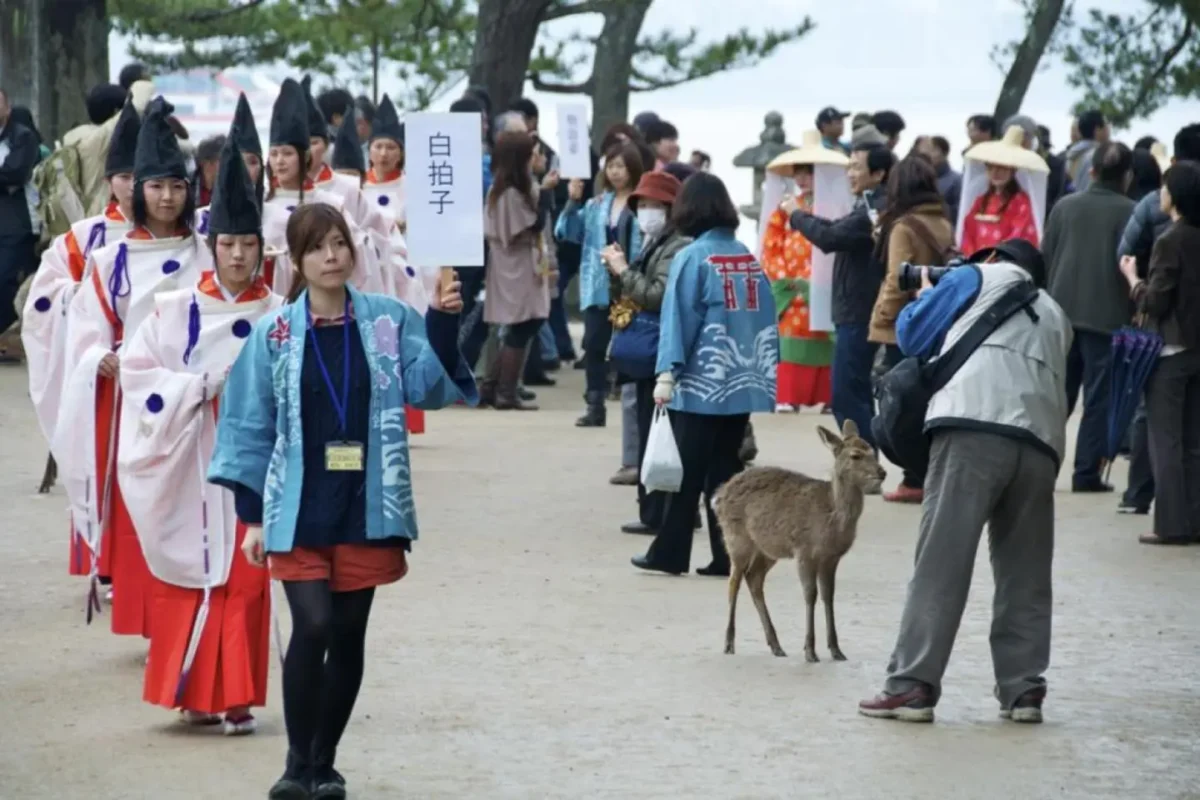
Overview
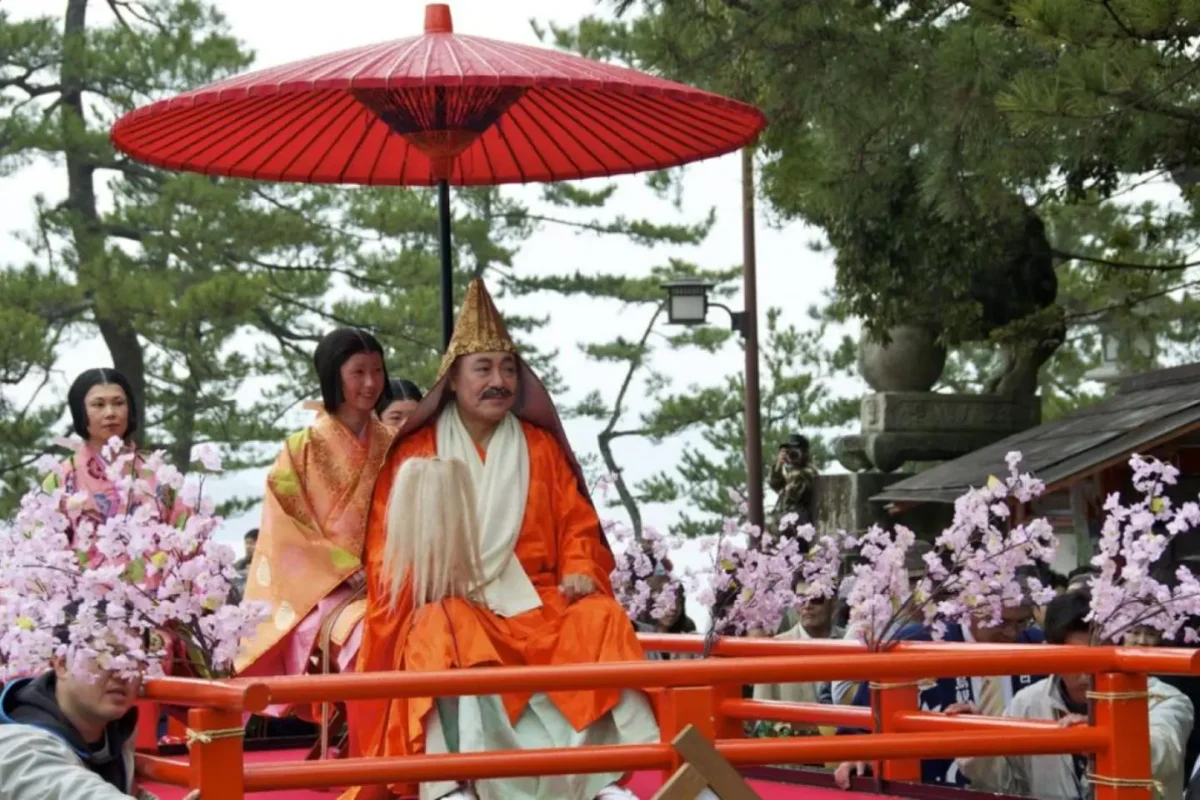
Every March local people dress up in medieval Heian costume to pay thanks to the powerful Heike clan leader, Taira no Kiyomori, responsible for turning the floating Itsukushima Shrine on the sacred island of Miyajima into the stunning piece of unique architecture that remains today.
On March 20th, his memorial day, the Kiyomori Shrine Festival is held to comfort his spirit. Around the same time, the Miyajima Kiyomori Festival is also held, where the procession of the Heike clan visiting Itsukushima Shrine is reenacted. This is a Heian scroll come to life at Itsukushima Shrine.
The Kiyomori Festival reproduces a visit from the Heike clan to Itsukushima Shrine and is held to commemorate Taira no Kiyomori, who laid the foundation for Miyajima’s prosperity. The parade route is Square in front of Miyajima pier to Omotesando Shopping Arcade to Mikasahama beach to Itsukushima Shrine to Kiyomori Shrine.
Enjoy Your Event Stress-Free with Japan Travelo
Do you know? Planning events, festivals, concerts, and cultural experiences in Japan can be overwhelming. Japan Travelo brings everything together in one place, helping you manage your itinerary, transport, and accommodation with ease—so you can enjoy Japan without the stress of planning.
Latest on Itsukushima Shrine, every March local people dress up in medieval Heian costume to pay thanks to the powerful Heike clan leader. The festival is free, colorful, and deeply connected to the World Heritage Site of Itsukushima Shrine.
Cultural Significance & Origins
The festival honors the man who made Miyajima what it is today.
Taira no Kiyomori and Heike Clan: Taira no Kiyomori was the powerful leader of the Heike clan, also known as Taira clan, who dominated Japanese politics in the late Heian period. As a devout believer in Itsukushima’s deity, he lavishly patronized Itsukushima Shrine and transformed it from a small local shrine into a magnificent complex worthy of imperial visits.
Transformation of Itsukushima Shrine: Through his devotion, Kiyomori transformed the island into a stage where divinity and power intertwined, the reflection of an empire upon water. He developed the shrine’s famous floating architecture, where buildings appear to float on water at high tide, creating the stunning piece of unique architecture that remains today and is now UNESCO World Heritage Site.
Foundation for Prosperity: Kiyomori laid foundation for Miyajima’s prosperity by establishing the shrine as center of Heike faith, attracting pilgrims, traders, and imperial patronage. He introduced court dance and music, gagaku, from Kyoto to Miyajima, enriching island’s cultural life.
Memorial Day: On March 20th, his memorial day, the Kiyomori Shrine Festival is held to comfort his spirit. Kiyomori Shrine stands at Nishi-no-Matsubara, a breakwater built in the Edo period using earth and sand carried by the Mitaraigawa River. The shrine is usually quiet place, but every year on anniversary of Kiyomori’s death, shrine festival is held.
Reenactment Purpose: Around same time, Miyajima Kiyomori Festival is held, where procession of Heike clan visiting Itsukushima Shrine is reenacted. It reproduces Itsukushima Shrine prayer parade of Heike family, allowing modern residents to give thanks to Kiyomori who developed Itsukushima Shrine during 12th century.
Heian Culture Flourishing: Heian period from 794 to 1185 is era in Japanese history during which arts flourished. The festival showcases Heian aristocratic culture that Kiyomori brought to Miyajima.
Traditions, Rituals & Customs
The festival blends Shinto memorial rites with colorful historical reenactment.
Kiyomori Shrine Festival – Memorial Rite: On memorial day, priests at Kiyomori Shrine perform Shinto ceremony to comfort spirit of Taira no Kiyomori. Offerings of sake, rice, and sacred branches are made, and norito prayers recited for peace of his soul and prosperity of island.
Heian Costume Parade: Every March local people dress up in medieval Heian costume. Participants include men, women, and children from Miyajima community who volunteer to wear Heian period costumes prepared by Miyajima Tourist Association and local preservation groups. Costumes are rented and carefully maintained.
Itsukushima Shrine Prayer Parade: The parade reproduces visit from Heike clan to Itsukushima Shrine. Participants walk from square in front of Miyajima pier through Omotesando Shopping Arcade to Mikasahama beach to Itsukushima Shrine to Kiyomori Shrine. Inside Itsukushima Shrine, they walk through corridors of shrine, offering prayers at main hall, just as Heike clan would have done.
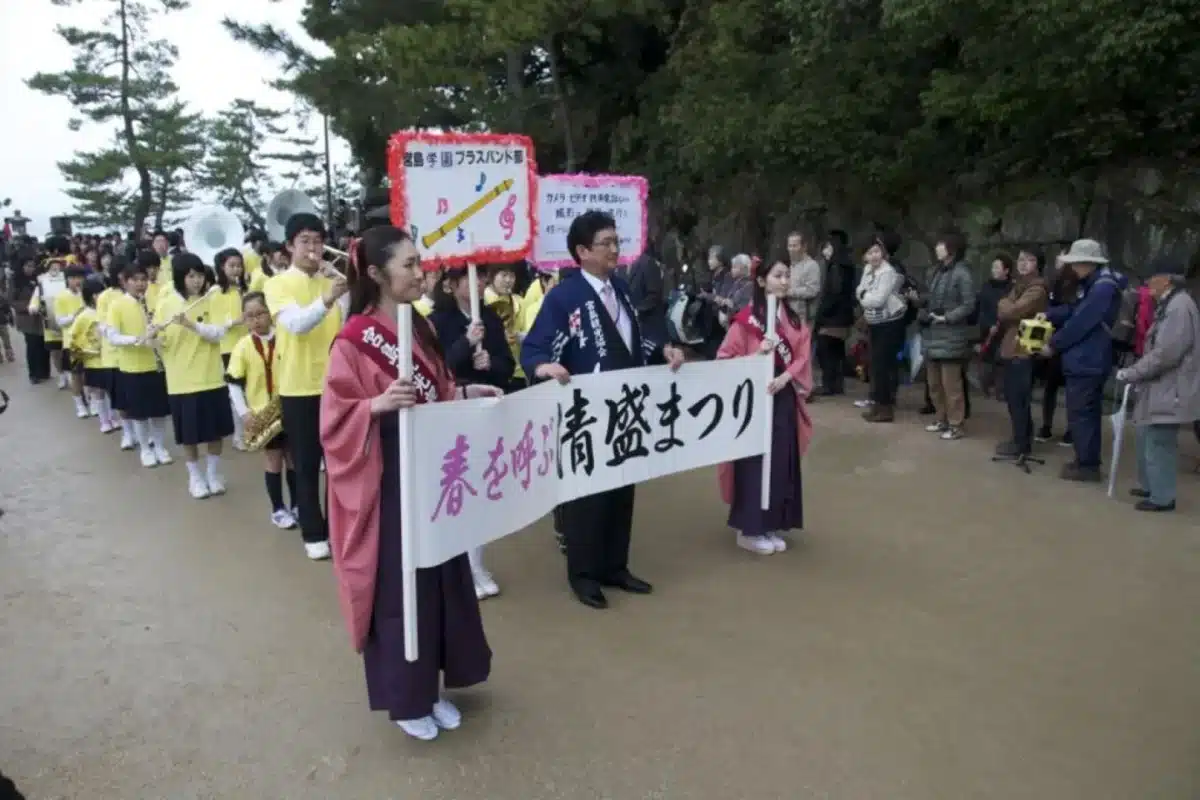
Parade Order: Traditional order includes banners and brass bands to kick things off, followed by shirabyoshi court dancers, blind biwa hoshi lute priests who spread epic tale of rise and fall of Heike clan throughout Japan, children in colorful costumes, court ladies in conical hats and kimono, and finally main man Taira no Kiyomori, great leader of Heike clan, often portrayed by respected local elder or guest.
Deer Interaction: Miyajima’s sacred deer often wander into parade route, and shirabyoshi court dancers and deer create iconic photo.
Community Participation: Blog post from 2007 by man who took part in parade describes experience of wearing Heian costume and feeling transported to past. Local people take pride in participating, with families passing down roles.
What to Expect at the Festival
Expect a living picture scroll moving through one of Japan’s most scenic islands.
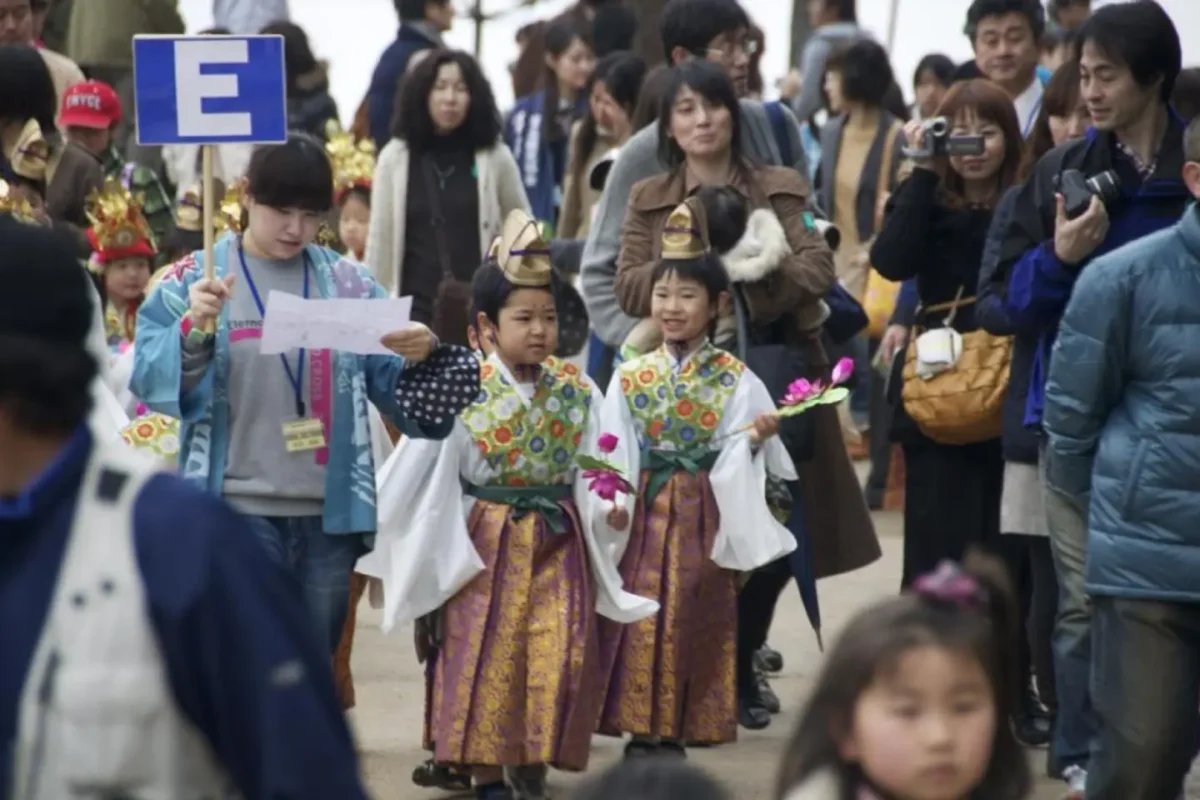
The square in front of Miyajima pier is starting point, where participants gather in full Heian attire. Banners and brass bands kick things off, creating festive atmosphere for ferry arrivals. Cute kids in colorful costumes wave to tourists, and amateur photographers gather.
The procession moves slowly through Omotesando Shopping Arcade, the main shopping street lined with souvenir shops selling momiji manju, oyster snacks, and wooden rice scoops. Shopkeepers come out to watch and cheer.
At Mikasahama beach, with view of floating torii gate, parade pauses for photos, with Itsukushima Shrine and sea as backdrop. This is most photogenic spot.
Entering Itsukushima Shrine, parade walks through vermillion corridors over water, creating stunning reflection. Inside shrine, brief prayer ceremony occurs, with participants bowing to deity. Visitors already inside shrine can watch up close.
Final destination is Kiyomori Shrine at Nishi-no-Matsubara, quiet pine grove where memorial ceremony takes place. Here, atmosphere becomes solemn as offerings made.
The entire event is free, intimate compared to larger city festivals, with few hundred participants and few thousand spectators. You can follow parade entire route, walking alongside Heian nobles. After parade, participants often pose for photos with tourists, allowing close examination of costumes.
Date & Schedule
Event Dates: March 2027
Official Timing Information: Every March local people dress up in medieval Heian costume to pay thanks to powerful Heike clan leader Taira no Kiyomori. Latest listings indicate Late March 2027 for Miyajima Kiyomori Festival, also referenced as March 2027.
Previous Edition References:
- 2026 Edition: March 22, 1:00 pm to 3:30 pm, Free, venue Miyajima, Hatsukaichi-shi, Hiroshima-ken. Parade route Square in front of Miyajima pier to Omotesando Shopping Arcade to Mikasahama beach to Itsukushima Shrine to Kiyomori Shrine.
- 2025 Edition: March 23, streets of Miyajima came alive with grand Heian costume parade.
- Kiyomori Shrine Festival proper: On March 20th, memorial day, ceremony held to comfort spirit, around same time Miyajima Kiyomori Festival also held.
Typical Day Schedule Based on Previous Editions:
- 13:00 – Gathering at square in front of Miyajima pier, opening greetings, banners and brass bands
- 13:15 – 14:00 – Parade through Omotesando Shopping Arcade to Mikasahama beach
- 14:00 – 14:45 – Procession through Itsukushima Shrine corridors and prayer at main hall
- 14:45 – 15:30 – Final procession to Kiyomori Shrine and memorial ceremony at Kiyomori Shrine
Notice: Dates not yet confirmed. Page will be updated once official dates announced by event organizers. Check official event site for latest info.
Venue: Itsukushima Shrine, 1-1 Miyajimacho, Hatsukaichi, Hiroshima 739-0588 and Kiyomori Shrine, 28-1 Miyajima-cho, Hatsukaichi City, Hiroshima Prefecture 739-0588
Visiting this event? Don’t miss out on these amazing activities and local experiences while you’re here.
Main Events & Programme
The programme centers on parade and memorial ceremonies.
Main Parade – Itsukushima Shrine Prayer Parade: The Kiyomori festival in motif of Itsukushima Shrine prayer parade of Heike family. Reenactment of Heike clan visiting Itsukushima Shrine, with participants in medieval Heian costume. Parade route: Square in front of Miyajima pier to Omotesando Shopping Arcade to Mikasahama beach to Itsukushima Shrine to Kiyomori Shrine. Duration about 2.5 hours.
Kiyomori Shrine Festival Memorial Ceremony: On memorial day, Kiyomori Shrine Festival held to comfort spirit. Shinto priests perform ceremony with offerings and prayers at Kiyomori Shrine that stands at Nishi-no-Matsubara breakwater.
Itsukushima Shrine Prayer: Inside Itsukushima Shrine, parade participants offer prayers at main hall, replicating historical Heike pilgrimage. Visitors can observe ceremony from shrine corridors.
Shirabyoshi and Biwa Hoshi Performances: Shirabyoshi court dancers perform subtle dance, and blind biwa hoshi lute priests recite epic tale of rise and fall of Heike clan, known as Heike Monogatari, adding musical narrative to visual parade.
Children’s Roles: Cute kids in colorful costumes take part, often as child attendants of Heian nobles, adding charm and involving next generation in preservation.
Photo Opportunities: After parade, participants pose for photos with tourists, allowing close view of costumes. Tourists can also try Heian costume experience at local shops.
Evening Atmosphere: While main parade is daytime, Kiyomori Shrine area remains quiet and atmospheric in late afternoon light through pine trees.
Traditional Dress, Arts & Crafts
Heian costume is highlight, representing peak of Japanese aristocratic fashion.
Heian Period Costume: This festival offers rentals of male or female kimono stylized after patterns and colors worn in Heian period 794-1185, era in which arts flourished. Since costume coat is, you do not need to get dressed specially, outer coat worn over regular clothes for experience.
Female Costumes:
- Juni-hitoe: Twelve-layered kimono for high-ranking ladies, with layers of different colors visible at collar and hem, representing seasons
- Ichimegasa: Conical hats worn by court ladies to hide faces, creating mysterious elegance
- Kimono with Large Sleeves: Long flowing sleeves, bright colors like red, purple, and green, with embroidered motifs of flowers and birds
Male Costumes:
- Sokutai and Ho: Formal court attire for Taira no Kiyomori and senior Heike members, consisting of black lacquered hat eboshi, outer robe with wide sleeves, and hakama trousers
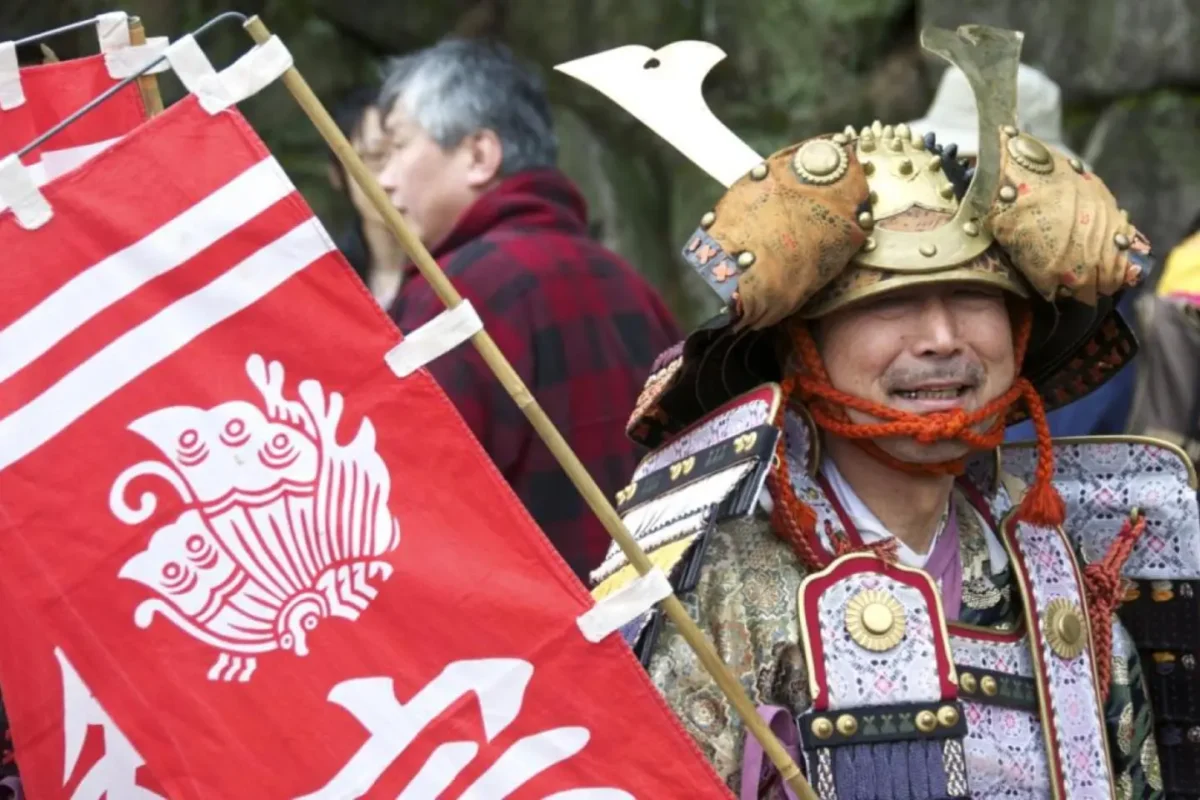
- Armor: Some participants wear Heike clan armor, red laced armor symbolizing Taira
Shirabyoshi Attire: White-suited court dancer costume with male hat and sword, worn by female entertainers who performed for Heian aristocracy.
Biwa Hoshi: Blind lute priests wear simple Buddhist robes and carry biwa lute, representing traveling storytellers who spread Heike epic.
Crafts:
- Heian Pattern Textiles: Costumes feature woven patterns called yusoku monyo, reserved for aristocracy
- Banners and Flags: Heike clan flags with red and white, and banners with clan crest
- Momiji Manju Molds: Wooden molds for maple leaf cakes sold as souvenirs, craft tradition of Miyajima
Costume Preparation: Costumes are preserved by Miyajima Tourist Association and local women’s groups who spend months repairing and fitting.
Traditional Food & Local Specialties
Miyajima is famous for several foods enjoyed during festival.
Miyajima Specialties:
- Momiji Manju: Maple leaf shaped cakes filled with sweet bean paste, chocolate, custard, or cheese, signature souvenir for 5 USD to 10 USD per box
- Grilled Oysters: Miyajima is famous for oysters, festival gives chance to enjoy this delicious food. Grilled oysters for 6 USD to 12 USD per serving, oyster festival in February also celebrates them
- Anago Eel: Conger eel rice bowl, anago meshi, for 10 USD to 15 USD
- Miyajima Beer and Lemon Products: Local craft beer and Setouchi lemon products
Omotesando Shopping Arcade Foods:
- Oyster Curry Bread: Fried bread with oyster curry inside for 3 USD to 5 USD
- Miyajima Coffee and Sweets: Cafes offer momiji manju with coffee for 4 USD to 7 USD
Festival Foods: While Kiyomori Festival itself does not have extensive food stalls like larger matsuri, Omotesando shops sell festival snacks, and nearby restaurants offer Heian-inspired meals.
Heian Aristocratic Cuisine: Some ryokan offer Heian period inspired meals with multiple small dishes, for 20 USD to 40 USD.
Location & Festival Areas
Main Venues: Miyajima Pier Square, Omotesando Shopping Arcade, Mikasahama Beach, Itsukushima Shrine, Kiyomori Shrine
Itsukushima Shrine: 1-1 Miyajimacho, Hatsukaichi, Hiroshima 739-0588, World Heritage Site, floating shrine famous for large red torii gate standing in sea. Shrine corridors over water are part of parade route.
Kiyomori Shrine: 28-1 Miyajima-cho, Hatsukaichi City, Hiroshima Prefecture 739-0588, located at Nishi-no-Matsubara, breakwater built in Edo period using earth and sand carried by Mitaraigawa River. Shrine is usually quiet place, but during festival becomes focal point of memorial.
Miyajima Pier Square: Square in front of Miyajima pier where ferry arrives, starting point of parade, with open space for gathering and banners.
Omotesando Shopping Arcade: Main shopping street from pier to shrine, lined with souvenir shops, about 300 meters long, where parade passes through crowds.
Mikasahama Beach: Small beach near Itsukushima Shrine with direct view of floating torii, photogenic pause point for parade.
Miyajima Island: Sacred island in Seto Inland Sea, part of Hatsukaichi City, accessible by ferry, known for deer that roam freely.
Getting to the Festival
Miyajima is one of Japan’s most accessible sacred islands.
By Train and Ferry: From Hiroshima Station, take JR Sanyo Main Line to Miyajimaguchi Station, about 25 minutes, fare about 4 USD. Then take JR ferry or Matsudai ferry to Miyajima Pier, about 10 minutes, fare about 2 USD to 4 USD round trip. From Miyajimaguchi, follow crowds to ferry.
By Streetcar: From central Hiroshima, take Hiroden streetcar line 2 to Miyajima-guchi, about 60 minutes from Hatchobori, fare about 2 USD, then ferry.
By Direct Ferry: From Peace Memorial Park, direct sightseeing boats to Miyajima during tourist season, about 45 minutes, fare about 15 USD to 20 USD.
On Island: Parade route is walkable, from pier square to Kiyomori Shrine about 15 minutes walk at parade pace. Follow banners.
From Airport: Hiroshima Airport to Hiroshima Station via limousine bus 50 minutes fare 11 USD, then train and ferry.
Accessibility: Miyajima Pier and Omotesando arcade are flat and accessible. Itsukushima Shrine has some steps but main corridors accessible. Kiyomori Shrine path through pine grove is flat.
Deer Caution: Sacred deer may block path, do not feed with parade costumes.
Where to Stay Nearby
Staying on Miyajima allows early morning and evening atmosphere after day-trippers leave.
On Miyajima Island:
- Miyajima Grand Hotel Arimoto: Traditional hotel near Itsukushima Shrine, rooms from 150 USD to 300 USD with sea views, onsen.
- Iwaso Ryokan: Historic ryokan with 160 years history, near Momijidani Park, rooms from 200 USD to 450 USD including kaiseki dinner.
- Guest House Kikugawa: Budget ryokan near pier, rooms from 80 USD to 130 USD.
- Miyajima Seaside Hotel: Mid-range with views of torii, from 120 USD to 200 USD.
In Hatsukaichi and Miyajimaguchi:
- Grand Prince Hotel Hiroshima: On sea near Miyajimaguchi, from 130 USD to 250 USD.
- Business Hotels: APA Hotel Hiroshima Ekimae and others near Miyajimaguchi from 60 USD to 100 USD.
In Hiroshima City:
- Rihga Royal Hotel Hiroshima: Near Peace Park, from 100 USD to 180 USD.
- ANA Crowne Plaza Hiroshima: On Peace Boulevard, from 110 USD to 200 USD.
- Hotel Granvia Hiroshima: At Hiroshima Station, from 120 USD to 220 USD.
Booking Tip: Miyajima accommodations fill quickly for festival weekend, especially ryokan with torii views. Book at least 2 months ahead.
What Visitors Can Participate In
Visitors can do more than watch.
Watch Parade: Free to watch along entire route from pier square to Kiyomori Shrine. Best spots are pier square for start, Mikasahama beach for torii backdrop, and Itsukushima Shrine corridors for close-up.
Heian Costume Experience: Store in Miyajima offers rentals of male or female kimono stylized after Heian period for commemorative photo wearing costume of Heian aristocracy. Since costume coat is, you do not need to get dressed specially. Basic charge for adult single rider preferred about 30 USD to 50 USD for one hour including small items to create more atmosphere. Tourist memorial to Miyajima.
Prayer at Shrines: Offer prayers at Itsukushima Shrine main hall and Kiyomori Shrine during festival, purchase omamori charms for protection and prosperity for 5 USD to 10 USD.
Volunteer as Participant: Some years, tourist association recruits a few international participants to join parade if you apply in advance via Miyajima Tourist Association website miyajima.or.jp. Requires fitting day before.
Photography: Festival is extremely photogenic, with colorful costumes against vermillion shrine. Amateur photographers welcome, but do not block parade.
Shopping Arcade Participation: Shopkeepers and visitors cheer parade together, creating community feeling.
Things to Do Before or After the Festival
Miyajima offers many attractions beyond festival.
Itsukushima Shrine Exploration: Spend time exploring World Heritage shrine beyond parade, including main hall, corridors, and Noh stage over water. Entry about 3 USD.
Floating Torii Gate: At high tide, torii appears floating, at low tide walk out to base. Check tide times.
Mount Misen Hike: Hike or take ropeway to Mount Misen summit, 535 meters, with panoramic views of Seto Inland Sea, about 15 USD round trip ropeway.
Daisho-in Temple: Large Shingon Buddhist temple near Mount Misen base, with hundreds of statues and famous Henjyokutsu Cave.
Momijidani Park: Maple valley park beautiful for walks, especially with cherry blossoms in spring.
Miyajima Omotesando Shopping: Buy momiji manju, wooden rice scoops shakushi, and oyster products.
Hiroshima City: After island, visit Peace Memorial Park, Atomic Bomb Dome, Hiroshima Castle, and try okonomiyaki.
Oyster Tasting: Since Miyajima is famous for oysters, enjoy oyster lunch after parade.
Local Food & Restaurants
Miyajima’s food scene is centered on island specialties.
Miyajima Specialties:
- Momiji Manju: Available everywhere, from 1 USD per piece to 8 USD box
- Grilled Oysters: At Kakiya oyster bars for 6 USD to 12 USD
- Anago Meshi: Conger eel rice bowl at Ueno and other shops for 12 USD to 18 USD
- Miyajima Ramen and Udon: Small shops near pier for 7 USD to 11 USD
Festival Day Options:
- Omotesando Shops: Oyster curry bread, fried momiji manju, and soft cream for 3 USD to 6 USD, perfect while following parade
- Cafes with Torii View: Cafes near Mikasahama beach offer coffee and cake with torii view for 5 USD to 9 USD
Ryokan Dinner: If staying overnight, ryokan kaiseki dinner featuring Setouchi seafood for 40 USD to 80 USD included or extra.
Hatsukaichi and Miyajimaguchi: After ferry back, restaurants near station offer Hiroshima okonomiyaki for 8 USD to 13 USD and fresh oysters.
Hiroshima City: Extensive options including okonomimura building with 20 okonomiyaki stalls, and Nagarekawa entertainment district.
Ticket Information & Access
Price of Admission: FREE
Tickets are listed as 0 JPY which converts to 0 USD. Kiyomori Festival on Miyajima is free to watch, including parade and memorial ceremonies at Itsukushima Shrine and Kiyomori Shrine. Itsukushima Shrine itself requires entry fee for main shrine building.
Shrine Entry Fees:
- Itsukushima Shrine: 3 USD for adults, 2 USD for high school students, 1 USD for children, based on previous editions
- Kiyomori Shrine: Free, usually quiet place
- Costume Experience: 30 USD to 50 USD for Heian costume rental experience for commemorative photo
Parade Access: Square in front of Miyajima pier to Omotesando to Mikasahama to Itsukushima Shrine to Kiyomori Shrine route is public and free, no reservations needed.
Hours: Based on previous edition March 22, 1:00 pm to 3:30 pm. Parade lasts about 2.5 hours.
Crowds: Festival attracts several thousand spectators, less crowded than autumn foliage season, but Itsukushima Shrine area can be busy. Arrive at pier square 30 minutes early for front spot.
Official Event Information
Event Name: Kiyomori Festival on Miyajima 2027 – Hatsukaichi, Japan, also called Miyajima Kiyomori Festival, Miyajima Kiyomori Matsuri
Venue: Itsukushima Shrine, 1-1 Miyajimacho, Hatsukaichi, Hiroshima 739-0588 and Kiyomori Shrine, 28-1 Miyajima-cho, Hatsukaichi City, Hiroshima Prefecture 739-0588, with parade starting at square in front of Miyajima pier
Organizer: Miyajima Tourist Association, Kiyomori Shrine, Itsukushima Shrine, and Hatsukaichi City
Official Website: https://en.japantravel.com/hiroshima/kiyomori-festival-on-miyajima/4032
Additional Official Site: http://miyajima.or.jp/english/event/event01.html
Description: Every March local people dress up in medieval Heian costume to pay thanks to powerful Heike clan leader Taira no Kiyomori, responsible for turning floating Itsukushima Shrine on sacred island of Miyajima into stunning piece of unique architecture that remains today. Medieval Heian parade to pay thanks to powerful Heike clan leader. Parade route Square in front of Miyajima pier to Omotesando Shopping Arcade to Mikasahama beach to Itsukushima Shrine to Kiyomori Shrine.
Contact: Miyajima Tourist Association, 1-1 Miyajimacho, Hatsukaichi.
Location
FAQ
What does the Kiyomori Festival reenact?
The festival reenacts the Itsukushima Shrine prayer parade of the Heike family, reproducing a visit from Heike clan to Itsukushima Shrine to commemorate Taira no Kiyomori who laid foundation for Miyajima's prosperity. Participants in medieval Heian costume walk from square in front of Miyajima pier through Omotesando Shopping Arcade to Mikasahama beach to Itsukushima Shrine and finally to Kiyomori Shrine. The procession mirrors historical pilgrimages that Heike clan made to offer thanks after transforming shrine into floating architecture.
Where does the parade go and where is the best place to watch?
Parade route is square in front of Miyajima pier to Omotesando Shopping Arcade to Mikasahama beach to Itsukushima Shrine to Kiyomori Shrine, lasting about two and a half hours. Best viewing spots are pier square for opening with banners and brass bands, Mikasahama beach with floating torii gate as backdrop for most photogenic photos, and corridors of Itsukushima Shrine where parade walks over water creating reflection. Kiyomori Shrine at Nishi-no-Matsubara breakwater offers more solemn memorial atmosphere away from crowds.
Can tourists wear Heian costumes and join the parade?
Tourists can experience Heian aristocracy costume through rental shop on Miyajima that offers male or female kimono stylized after patterns and colors worn in Heian period for commemorative photos, with basic charge including small items to create atmosphere and no need to get dressed specially as costume coat goes over regular clothes. For actual parade participation, Miyajima Tourist Association sometimes recruits international participants if you apply in advance via miyajima.or.jp website, requiring fitting day before. Most visitors watch and pose for photos with participants after parade.
What is the difference between Kiyomori Shrine Festival and Miyajima Kiyomori Festival?
Kiyomori Shrine Festival is solemn Shinto memorial held on March 20th, anniversary of Kiyomori's death, at Kiyomori Shrine to comfort his spirit with offerings and prayers, usually quiet. Miyajima Kiyomori Festival is larger colorful Heian costume parade held around same time that reenacts Heike clan's visit to Itsukushima Shrine, with procession from pier to shrine to Kiyomori Shrine. Both honor same figure, with shrine festival being spiritual core and island festival being public celebration that lays foundation for understanding Miyajima's prosperity.
Is there an entry fee for the festival and shrines?
The Kiyomori Festival parade itself is free to watch along entire route from square in front of Miyajima pier to Kiyomori Shrine, with no tickets required and event categories listed as free. Itsukushima Shrine main building requires separate admission fee of about three dollars for adults to enter corridors and main hall, while Kiyomori Shrine is usually free and quiet. Heian costume experience for tourists costs extra for rental, and ferry to Miyajima requires fare, but parade and memorial ceremonies are free.

Leave a Reply