
Overview
If you’re in Tokyo at the end of August, make sure you save some time to see the Koenji Awa-Odori. Over 12,000 dancers in 180 groups perform in the streets of Koenji and more than a million revellers gather over the weekend to join in the party, usually from 5pm to 8pm.
Koenji is an area of Tokyo, popular with students, that has developed its own Awa Odori. It was started in 1956 by immigrants from Tokushima and has become the second largest dance festival in Japan with 12,000 dancers, 188 groups and over 1 million visitors.
At the end of every summer, Koenji plays host to Tokyo’s largest Awa Odori. This Japanese traditional dance festival originally started in Tokushima and was later adopted in Koenji post-war by urban migrants from Tokushima Prefecture. Every year it attracts as many as 12,000 dancers and 1.2 million visitors over the course of just two days.
Enjoy Your Event Stress-Free with Japan Travelo
Do you know? Planning events, festivals, concerts, and cultural experiences in Japan can be overwhelming. Japan Travelo brings everything together in one place, helping you manage your itinerary, transport, and accommodation with ease—so you can enjoy Japan without the stress of planning.
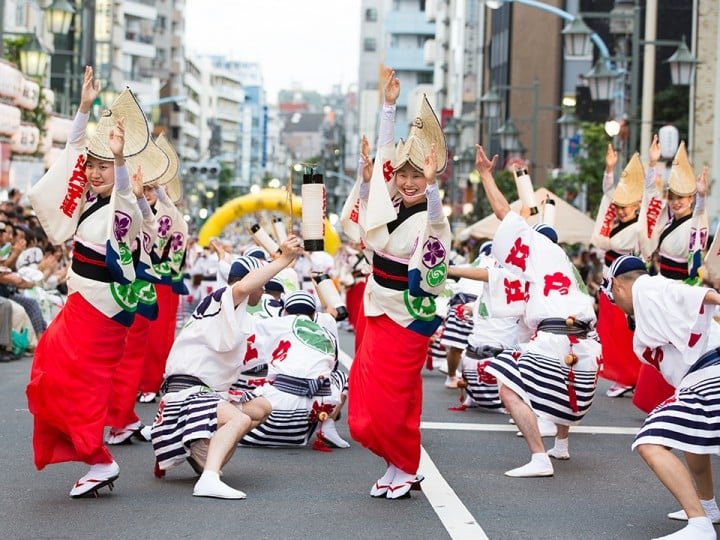
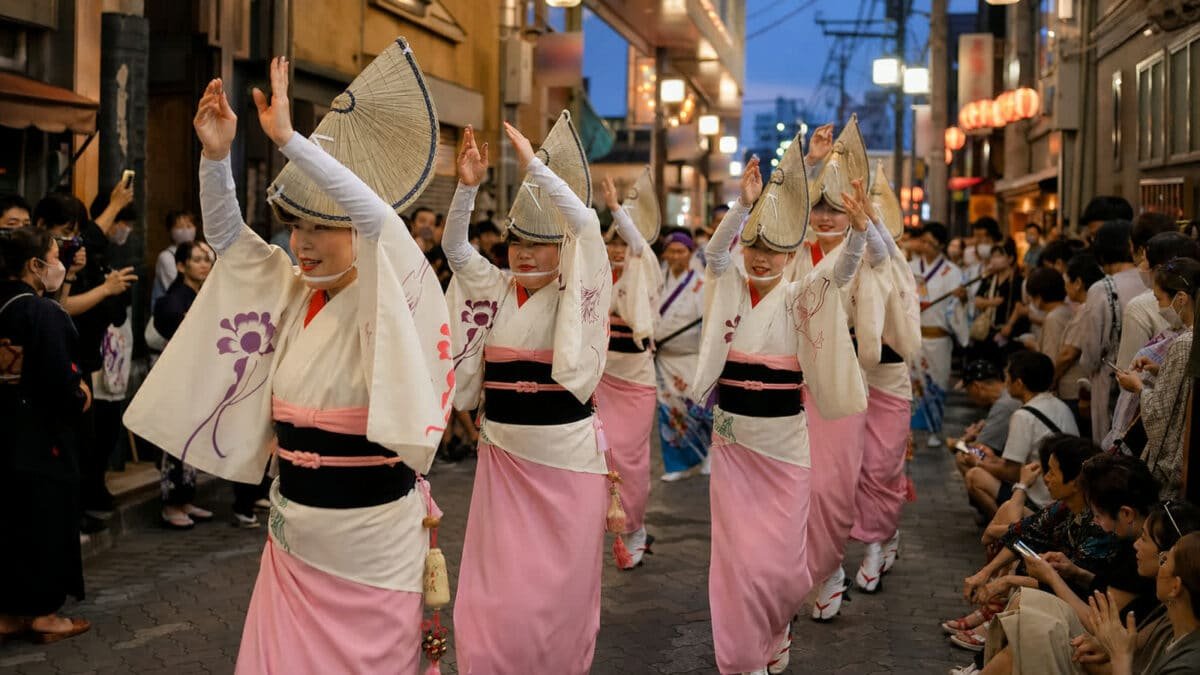
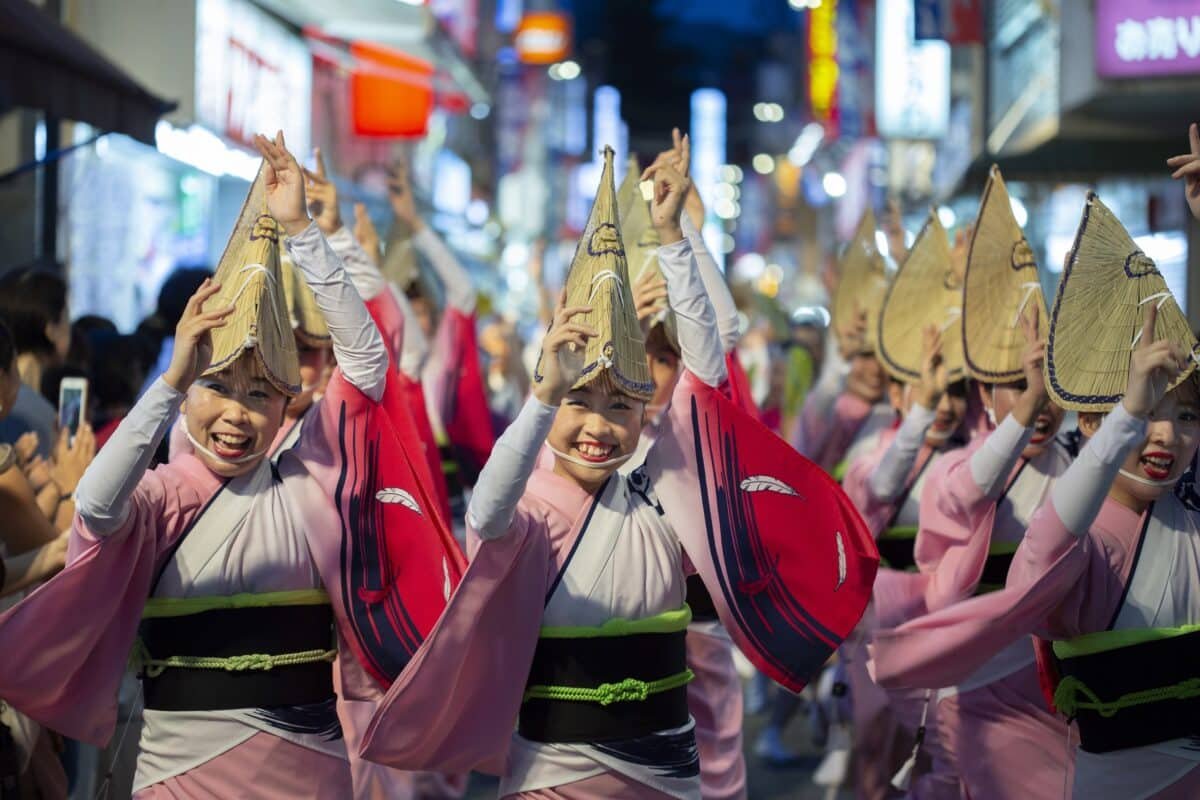
Known to many as being the birthplace of Japanese punk music, Koenji is a trendy neighbourhood in Tokyo, just west of Shinjuku. It is home to many boutique shops, live houses, and small restaurants. During the Awa Odori, its streets are lined with happy spectators, festival revellers, and thousands of dancers parading in colorful Japanese traditional costumes.
The procession is made up of around 200 local dance troupes weaving their way through the shopping streets on the north and south side of Koenji, accompanied by shamisen lute, traditional drums, shinobue flutes and cymbals. The rhythm of the procession builds up to a dramatic and exciting conclusion at the event’s finishing line.
Cultural Significance & Origins
Koenji Awa-Odori is a transplanted tradition that became Tokyo’s own summer symbol.
Tokushima Origins – 400 Year History: Awaodori is the traditional dance of Tokushima with a history that spans over 400 years. Historically, the Awa Odori festival probably originated and evolved from the Obon festivals in Tokushima, which have existed since the 16th century. It is said to have started more specifically in 1586 when the Lord Hachisuka Iemasa of Awa Province organized a celebration for the opening of Tokushima Castle. Fueled by great amounts of sake, the drunken revellers on that night started to sing and dance. Some of the locals picked up musical instruments and improvised music for the festivities.
Name Meaning: Awa is the old feudal administration name for Tokushima Prefecture and Odori means dance. Today, Awaodori is enjoyed throughout Japan with local festivals adopting the name and preserving the culture.
Koenji Transplant – 1957: Tokyo’s Koenji Awaodori first began in 1957 as a festival to revitalize the small shopping streets throughout the town. It was started by immigrants from Tokushima who moved to Tokyo post-war, wanting to bring hometown Obon celebration to new home. To revitalize local town, first Koenji Awaodori was held. However, shortly after, festival faced and survived numerous crisis, including noise complaints and funding issues.
Growth Periods:
- Early Period early 1960ies: Festival held only within local shopping street
- Developmental Period 1970ies: Initially festival was only held within local shopping street, however quickly grew and encompassed more local shopping districts. By 1960ies, course grew to Koenji station north exit and then by 1969 with completion of Koenji station festival grew into larger roads surrounding it. Many new Awaodori teams were established and within Tokyo many new Awaodori festivals emerged. New technologies allowed better communication with Tokushima resulting in Awaodori teams fostering new relationships.
- Fulfilling Period 1990ies: In 1991 IAAF World Championships in Athletics was held in Tokyo and over 300 Koenji Awaodori dancers performed and performance was broadcast throughout world. Through Awaodori, new opportunities for cultural exchange, education, ambassadorial activities became frequent.
- 2000ies: With Awaodori through TV and other media, opportunities for culture continue to grow year by year. Each year in January at Tokyo Dome over 250 Koenji Awaodori performers participate in Hometown Festival Tokyo. In 2013 group was asked by Hong Kong Tourism Board to join Lunar New Year International Parade, in 2014 by Macau Government Tourism Office, in 2015 to commemorate cultural agreement between Suginami Ward and Taiwan National Drama Academy, performances held in Taipei.
Community Pride: Through these efforts, tradition born in Tokushima has grown to represent culture progression of Japan. Organizers of Tokyo Koenji Awaodori state they will be tool that not only represents pride of people, local and regional, but also one that connects regions, connects peoples, and fosters and nurtures bonds that go beyond country.
Traditions, Rituals & Customs
Koenji Awa-Odori preserves Tokushima traditions while creating its own Koenji style.
Ren – Dance Troupe: Teams known as ren create and develop their own unique performances. One aspect of Awaodori’s charm is rich variety and dazzling performances that have grown from simple dance. Each ren has own costumes, music arrangement, and choreography. Ren includes dancers, musicians, and staff, typically 30 to 100 members.
Two Main Dance Types:
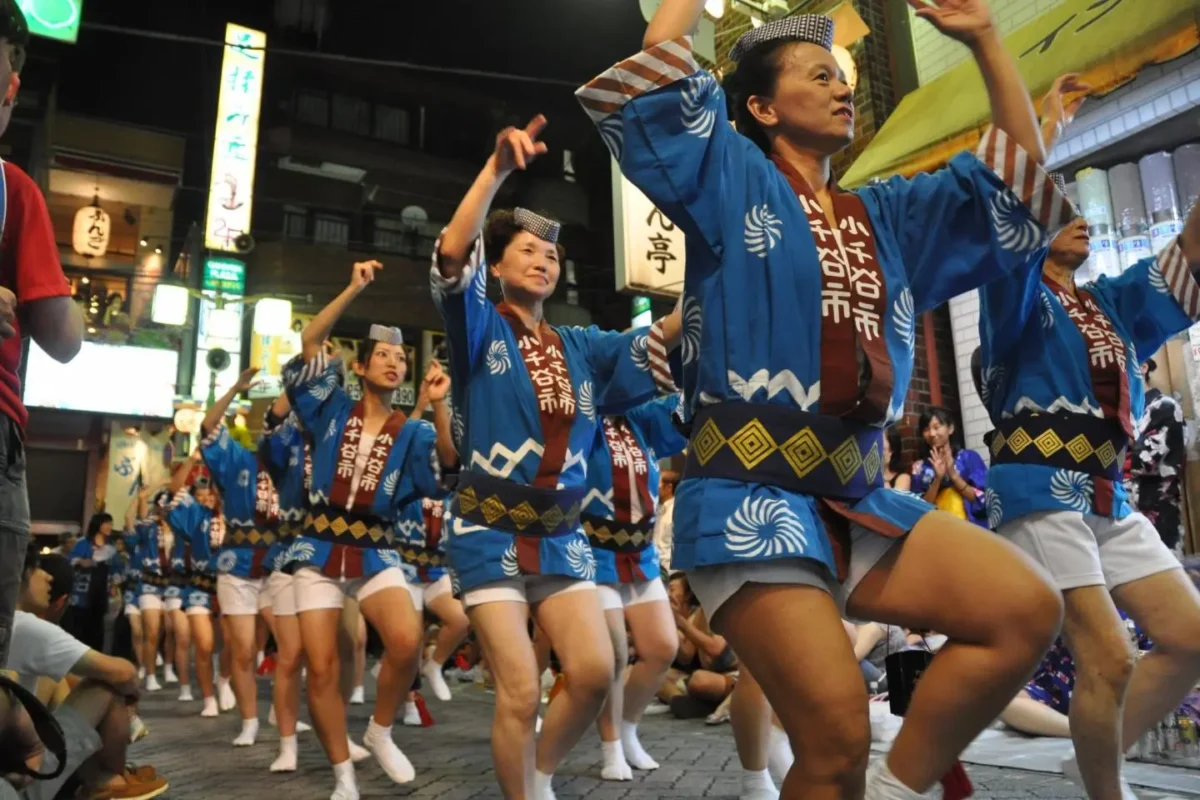
- Men’s Dance – Otoko Odori: Deeply bent at waist and low to ground, dynamic, energetic, legs wide, arms reaching forward. Many females participate in too, despite name. Requires stamina, dancers move in crouched position for long distances.
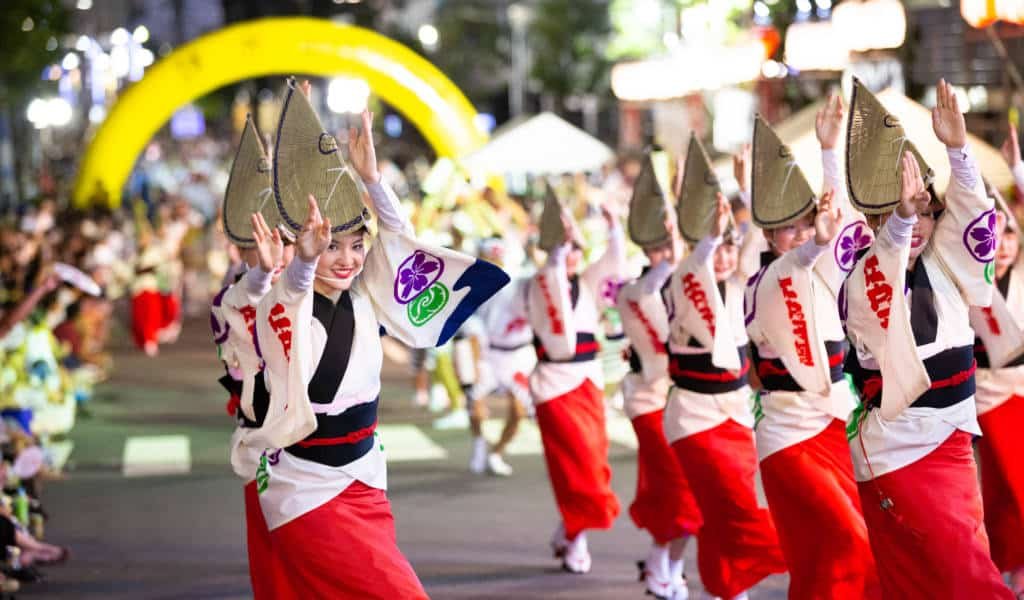
- Ladies Dance – Onna Odori: Done on raised geta sandals wearing braided hats, elegant, upright posture, small steps, graceful arm movements. Amigasa hats made of woven straw cover faces partially, creating mysterious beauty.
Fundamental Step: Fundamentally dance is simple, you only need to raise your hands and lead with same hand and foot as you move forward. Despite simple nature, ren create complex formations, with dancers moving forward in unison, chanting Yoshikono or Ayaya.
Narimono – Musical Accompaniment: Flutes, shamisen, chimes, large and small taiko fill air with enchanting rhythms as charm of Awaodori consumes town of Koenji. Shamisen lute provides fast rhythmic strumming, shinobue bamboo flute plays high melody, o-daiko large drums, shime-daiko small drums, and kane hand cymbals create wall of sound.
Zomeki – Frenzied Groove: Koenji is famous for zomeki, the ecstatic groove that builds as dancers and musicians enter trance-like state. Music starts slow then accelerates to frenzied climax.
Obon Roots: As Obon dance to welcome ancestral spirits, Awa Odori retains spiritual meaning of celebrating return of ancestors, though in Koenji it is more festive.
8 Dance Areas: Surrounding JR Koenji station and Metro Shin Koenji station, 8 dance areas erupt in unison. Dancers flow through town across 8 routes that form shape of giant 8, auspicious number in Japan.
What to Expect at the Festival
Expect Tokyo’s biggest street party, with retro shopping streets turned into dance highway.
Surrounding JR Koenji station and Metro Shin Koenji station, 8 dance areas erupt in unison. Flutes, shamisen, chimes, large and small taiko fill air with enchanting rhythms as charm of Awaodori consumes town of Koenji. Moved by roar of passionate crowds, over 10,000 dancers will flow through town.
More than a million revellers gather over weekend to join party. Streets are lined with happy spectators, festival revellers, and thousands of dancers parading in colorful Japanese traditional costumes. Koenji’s boutique shops, live houses, and small restaurants stay open, with shop owners watching from doorsteps.
You will see around 200 local dance troupes weaving through shopping streets on north and south side of Koenji. Costumes are vivid: women in bright yukata robes with amigasa braided hats tilted low, men in happi coats with headbands, children in matching mini costumes.
Music is loud and fast, driven by wall of sound from shamisen, drums, flutes, cymbals. Dancers chant and shout, crowd claps along. The rhythm builds up to dramatic and exciting conclusion at event’s finishing line, where all ren converge for finale.
Food stalls line streets, selling yakitori, takoyaki, kakigori, and beer. Smoking is prohibited at Koenji Awaodori and local area, designated smoking areas located around festival. Placing plastic sheets or other items to secure space on road is prohibited. During festival, do not enter dance areas, follow instructions of staff and security personnel.
The 59th edition held in recent years was organized under theme of Spreading Smiles with hope that infectious smiles of many thousands of participating dancers would lift spirits of all visitors and local community.
Date & Schedule
Event Dates: Late August 2027 (Dates TBD)
Official Timing: If you’re in Tokyo at the end of August, make sure you save some time to see the Koenji Awa-Odori. Over 12,000 dancers in 180 groups perform in streets of Koenji and more than a million revellers gather over weekend to join party, usually from 5pm to 8pm.
Historical Schedule Pattern: Tokyo’s Koenji Awaodori first began in 1957 as festival to revitalize small shopping streets. Now over 10,000 dancers and over 1,000,000 spectators come making it festival that represents charms of Tokyo’s summer. Koenji Awaodori is held every year on last weekend of August.
Based on previous editions:
- Festival typically runs Saturday and Sunday on last weekend of August
- Performance hours usually from 5pm to 8pm each evening
- 8 dance areas around JR Koenji station and Metro Shin Koenji station erupt in unison
- Opening ceremony at central stage near JR Koenji station north exit
- Each ren performs for about 30 to 45 minutes per route, rotating through 8 routes that form shape of giant 8
Typical Daily Timeline Based on Previous Editions:
- 17:00 – Opening, ren begin entering dance areas, narimono musicians start playing
- 17:00 to 20:00 – Continuous dancing through 8 routes, 12,000 dancers in 188 groups perform in waves
- 20:00 – Finale gathering at main routes near Koenji station, all ren converge for last zomeki crescendo
Notice: Dates for this event are not yet confirmed for 2027. Page will be updated once official dates announced by event organizers. Please check official event site https://koenji-awaodori.com/language/eng.html for latest info.
Venue: Koenji, Suginami Ward, Tokyo, surrounding JR Koenji Station and Shin Koenji Metro Station, Tokyo, Japan
Visiting this event? Don’t miss out on these amazing activities and local experiences while you’re here.
Main Events & Programme
Programme is continuous dancing across multiple stages.
8 Performance Routes – Giant 8 Shape: Surrounding JR Koenji station and Metro Shin Koenji station, 8 dance areas erupt in unison. Routes are laid out through north and south shopping streets of Koenji, forming shape of giant 8, considered lucky. Each route has own spectator barriers and seating.
Ren Parade – 12,000 Dancers: Over 12,000 dancers in 180 to 188 groups perform. Procession made up of around 200 local dance troupes weaving way through shopping streets. Each ren has 30 to 100 dancers plus musicians. Famous ren include Koenji’s oldest ren and university student ren from Waseda, Meiji, and other Tokyo universities.
Narimono Bands: Shamisen lute, traditional drums, shinobue flutes and cymbals accompany each ren. Some ren have all-female narimono bands, others have powerful o-daiko drummers leading.
Opening and Finale: Festival begins with opening at central stage where organizers give greetings under theme like Spreading Smiles. Finale at finishing line where rhythm builds to dramatic and exciting conclusion, with all dancers dancing together and crowd cheering.
Smiles Theme: Each year has theme, such as Spreading Smiles, to lift spirits of visitors and local community.
After Party in Koenji: After official dancing ends, Koenji’s live houses, izakaya, and bars continue party with Koenji’s reputation as birthplace of Japanese punk music adding underground vibe.
Traditional Dress, Arts & Crafts
Costume and craft showcase Tokushima tradition with Koenji street fashion twist.
Amigasa Hat: Braided hats made of woven straw, shallow, wide brim that tilts to cover face of female dancers, creating elegant anonymity. Handmade in Tokushima, costs about 20 USD to 40 USD.
Yukata and Happi: Women wear colorful yukata summer kimono with bright patterns, red, blue, yellow, with obi sash. Men wear happi coats with ren logo and headbands, shorts and tabi socks, allowing low crouched dance.
Geta Sandals: Ladies dance done on raised geta sandals, wooden clogs with two teeth, making distinctive clacking sound as dancers move, height adds grace.
Narimono Instruments: Shamisen three-string lute, shinobue bamboo flute, o-daiko large drum made from cowhide, shime-daiko small rope-tuned drum, kane small cymbal. Instruments handmade by artisans in Tokushima.
Ren Banners: Each ren carries own nobori banners with calligraphy and emblem, hand-painted.
Craft Stalls: During festival, stalls sell mini amigasa hats for 10 USD to 15 USD, tenugui hand towels with Awa Odori prints for 5 USD to 10 USD, and fans for 8 USD to 12 USD.
Punk Influence: Koenji is trendy neighbourhood known as birthplace of Japanese punk, so some ren incorporate punk elements into costumes, mixing traditional with modern street fashion.
Traditional Food & Local Specialties
Koenji food scene mixes festival yatai and trendy eateries.
Yatai Street Stalls:
- Yakitori: Grilled chicken skewers for 3 USD to 6 USD
- Takoyaki: Octopus balls for 5 USD to 8 USD per tray
- Yakisoba: Fried noodles for 5 USD to 8 USD
- Kakigori: Shaved ice for 3 USD to 5 USD, essential for summer heat
- Beer and Highballs: Draft beer for 4 USD to 7 USD, lemon sour highballs for 4 USD to 6 USD
Koenji Local Eateries: Koenji is home to many boutique shops, live houses, and small restaurants. Trendy neighbourhood west of Shinjuku popular with students, offers:
- Izakaya: Small izakaya with craft beer and sake for 15 USD to 25 USD per person
- Ramen and Curry: Koenji is famous for used clothing shops and curry rice shops, curry for 7 USD to 11 USD, ramen for 8 USD to 12 USD
- Vegan and Organic Cafes: Many in Koenji due to young population
Tokushima Foods at Festival: Some stalls sell Tokushima specialties like Sudachi citrus juice for 3 USD to 5 USD and Tokushima ramen with pork and raw egg for 8 USD to 12 USD.
Convenience Stores: Lawson and FamilyMart near stations sell water and snacks for crowds.
Location & Festival Areas
Main Location: Koenji, Suginami Ward, Tokyo, Japan, just west of Shinjuku on JR Chuo Line
8 Dance Areas:
- JR Koenji Station North Exit Main Street: Main route, wide road where largest ren perform, most crowded
- South Exit Pal Shopping Street: Covered shopping arcade south of station, intimate, close-up viewing
- North Central Shotengai: Retro shopping streets north of station, lined with old shops and bars
- Shin Koenji Station Areas: Near Metro Marunouchi Line Shin Koenji station, quieter routes
- Look Shotengai and Other Side Streets: Smaller alleys where smaller ren and children’s ren perform
Station Access Points:
- JR Koenji Station: On JR Chuo Line, central hub, 8 routes erupt around it
- Metro Shin Koenji Station: On Tokyo Metro Marunouchi Line, southern hub
Koenji Character: Trendy neighbourhood, birthplace of Japanese punk music, home to many boutique shops, live houses, small restaurants. Streets are lined with happy spectators, festival revellers, and thousands of dancers during festival.
Festival Facilities: Smoking prohibited, use designated smoking areas. No plastic sheets allowed to reserve space. Follow staff instructions, do not enter dance areas, take all garbage with you.
Getting to the Festival
Koenji is one of most accessible festival locations in Tokyo.
By JR Train: Take JR Chuo Line or Chuo-Sobu Line from Shinjuku to Koenji Station, about 8 minutes from Shinjuku, fare about 2 USD. From Tokyo Station, about 25 minutes, fare about 3 USD to 4 USD. Trains extremely crowded during festival, allow extra time.
By Metro: Take Tokyo Metro Marunouchi Line to Shin Koenji Station or Higashi Koenji Station, about 2 USD to 3 USD from central Tokyo. Short walk to dance areas.
On Foot from Neighboring Areas: Koenji is walkable from Asagaya and Ogikubo, each 10 minutes away, both also have shopping streets.
From Airports: From Haneda Airport, take Tokyo Monorail to Hamamatsucho then JR Yamanote to Shinjuku then Chuo to Koenji, about 60 minutes total fare about 8 USD to 12 USD. From Narita, take Narita Express to Shinjuku then Chuo, about 90 minutes fare about 20 USD to 28 USD.
During Festival Crowd: Over 1 million visitors over two days, stations extremely crowded from 5pm to 8pm. Use south exit for Pal Shopping Street, north exit for main street. Expect queues to exit station.
Bicycle and Car: No parking near dance areas, roads closed. Use train. Bicycle parking limited, use Koenji Station bicycle parking for 2 USD per day.
Accessibility: Shopping streets are flat but extremely crowded, difficult for wheelchair during peak hours. Early arrival recommended.
Where to Stay Nearby
Koenji is residential, most visitors stay in Shinjuku or central Tokyo.
In Koenji: Few small guesthouses and business hotels like Koenji Share House and small hostels, rooms from 50 USD to 90 USD per night. Book months ahead as Koenji accommodation fills during festival due to 1.2 million visitors.
Shinjuku – 8 minutes by train: Largest hotel area in Tokyo.
- Business Hotels: APA Hotel Shinjuku Kabukicho, Hotel Gracery Shinjuku from 80 USD to 150 USD
- Mid-range: Shinjuku Granbell Hotel, Citadines Shinjuku from 120 USD to 220 USD
- Luxury: Keio Plaza Hotel Tokyo, Park Hyatt Tokyo from 250 USD to 500 USD
Asagaya and Ogikubo – Neighboring Stations: Small business hotels and guesthouses from 60 USD to 110 USD, quieter than Shinjuku, 2 to 5 minutes train to Koenji.
Central Tokyo: Shibuya, Ikebukuro, Tokyo Station areas offer wide range from hostels dorm beds 25 USD to 40 USD to luxury hotels.
Booking Tip: During festival weekend, Tokyo hotels overall not affected except Koenji immediate area, but 1 million visitors means trains crowded, staying in Suginami Ward like Koenji or Asagaya allows walking to festival, avoiding train crush.
What Visitors Can Participate In
Primarily spectator event, but some participation possible.
Watch and Cheer: Main participation is as spectator. More than a million revellers gather over weekend to join party. Cheer ren, clap to rhythm, shout Kakeyas and other calls.
Join a Ren: Some Koenji ren recruit new members year-round, including foreigners living in Tokyo. Training starts months before festival. Contact Koenji Awaodori Group via official site koenji-awaodori.com/language/eng.html. Requires commitment to practice and costume purchase about 100 USD to 200 USD.
Street Food Enjoyment: Enjoy yatai stalls selling yakitori, takoyaki, beer, while watching dancing.
After Festival Exploration: After official dancing 5pm to 8pm, explore Koenji’s boutique shops, live houses, and small restaurants, birthplace of Japanese punk music.
Photography: Photography allowed from spectator areas, but do not enter dance areas. Flash discouraged as it blinds dancers wearing amigasa hats.
Follow Festival Rules: Follow instructions of staff and security personnel at all times, enjoy festival without inhibiting local stores and ability to conduct business, take all garbage with you.
International Exchange: Koenji Awaodori teams conduct media appearances, participate in variety of events, foreign relations parties, keeping joy of Awaodori season year-round. Visitors can attend pre-festival workshops sometimes held in Suginami Ward.
Things to Do Before or After the Festival
Koenji and neighboring areas offer trendy Tokyo experiences.
Koenji Shopping: Before dancing starts, explore Koenji’s famous used clothing shops, vintage stores, and vinyl record shops, birthplace of Japanese punk music. Pal Shopping Street and side alleys have boutique shops.
Asagaya and Ogikubo: Neighboring stations on Chuo Line with their own shotengai shopping streets, quieter than Koenji, with cafes and small temples.
Shinjuku: 8 minutes away, visit Shinjuku Gyoen National Garden entry 4 USD, Kabukicho nightlife, Golden Gai tiny bars.
Nakano Broadway: One stop from Koenji, famous for anime, manga, and subculture shopping.
Suginami Animation Museum: Free museum showcasing Japanese animation history, near Ogikubo.
After Festival: After 8pm finale, Koenji’s live houses host punk and indie bands, izakaya stay open late, allowing continued party.
Daytime Tokyo Sightseeing: Combine with daytime visits to Meiji Shrine, Shibuya Crossing, Asakusa, before heading to Koenji for evening festival.
Local Food & Restaurants
Koenji food scene is eclectic and affordable, reflecting student and artist population.
Festival Yatai: As mentioned, yakitori 3 USD to 6 USD, takoyaki 5 USD to 8 USD, yakisoba 5 USD to 8 USD, kakigori 3 USD to 5 USD, beer 4 USD to 7 USD.
Koenji Famous Eats:
- Curry: Koenji has over 50 curry shops, from Japanese curry to Indian curry, for 7 USD to 11 USD
- Ramen: Small ramen shops like Daisho and others for 8 USD to 12 USD
- Izakaya: Tachinomi standing bars with cheap drinks and snacks for 10 USD to 20 USD per person
- Live House Cafes: Cafes that double as live music venues, with drinks for 5 USD to 8 USD
Suginami Ward Specialties: Suginami is known for craft beer breweries and organic cafes.
Supermarkets and Convenience Stores: Seiyu supermarket near Koenji Station for cheap drinks and snacks for festival.
Ticket Information & Access
Price of Admission: FREE
Tickets are listed as 0 JPY which converts to 0 USD. Koenji Awa-Odori is free to watch in streets of Koenji, including all 8 dance areas. No tickets required, standing room along shopping streets, first-come first-served.
Paid Elements:
- Food and Drink: Yatai stalls and local restaurants charge as listed, 3 USD to 12 USD per item
- Seating: Some local shops and buildings offer paid reserved seating on balconies or second floors for 20 USD to 50 USD per person, book via local shops or Koenji association
- Costume Participation: Joining ren requires costume purchase about 100 USD to 200 USD, plus membership fee for some ren about 50 USD to 100 USD annually
Hours: Usually from 5pm to 8pm each evening, based on previous editions, across two days weekend.
Access: Surrounding JR Koenji station and Metro Shin Koenji station, 8 dance areas erupt in unison. No entry gates, simply walk into shopping streets.
Crowd Management: Over 1 million visitors, most crowded festival in Suginami Ward. Police control crowd flow, follow staff instructions, do not enter dance areas, do not place plastic sheets to secure space, smoking prohibited.
Contact: NPO Tokyo Koenji Awaodori Promotion Association via koenji-awaodori.com/language/eng.html
Official Event Information
Event Name: Tokyo Koenji Awa-Odori 2027 – Japan, also called Koenji Awa Odori, Koenji Awaodori
Venue: Koenji, Suginami Ward, Tokyo, surrounding JR Koenji Station and Shin Koenji Metro Station, Tokyo, Japan
Organizer: NPO Tokyo Koenji Awaodori Promotion Association, Koenji Awaodori Group, Suginami Ward, and local shopping street associations
Official Website: https://koenji-awaodori.com/language/eng.html
Description: If you’re in Tokyo at the end of August, make sure you save some time to see the Koenji Awa-Odori. Over 12,000 dancers in 180 groups perform in streets of Koenji and more than a million revellers gather over weekend to join party, usually from 5pm to 8pm. Tokyo’s Koenji Awaodori first began in 1957 as festival to revitalize small shopping streets throughout town. Now over 10,000 dancers and over 1,000,000 spectators come making it festival that represents charms of Tokyo’s summer. Held every year on last weekend of August.
Contact: Via official site koenji-awaodori.com/language/eng.html
Video
Location
FAQ
What is the difference between Koenji Awa-Odori and Tokushima Awa-Odori?
Tokushima Awa-Odori is original 400-year-old Obon dance festival held in Tokushima, Shikoku, birthplace of tradition, with massive scale of over 1 million visitors and thousands of dancers, lasting four days during Obon season. Koenji Awa-Odori is second largest dance festival in Japan, transplanted to Tokyo in 1956 by immigrants from Tokushima in 1957 as shopping street revitalization event, now with 12,000 dancers in 188 groups and over 1 million visitors over two days. Both share same dance forms, music, and ren troupe system, but Koenji version adds Tokyo street culture and punk music birthplace vibe.
What are the two main dance styles I will see?
There are two main types of dance: men's dance which many females participate in too that is deeply bent at waist and low to ground, dynamic and energetic, and ladies dance which is done on raised geta sandals wearing braided amigasa hats, elegant and graceful. Fundamentally dance is simple, you only need to raise hands and lead with same hand and foot as you move forward. Despite simple nature, teams known as ren create and develop own unique performances, with rich variety and dazzling performances that have grown from simple dance.
Do I need tickets and where is the best place to watch?
No tickets are needed as Koenji Awa-Odori is free street festival surrounding JR Koenji station and Metro Shin Koenji station where 8 dance areas erupt in unison. Best places are north exit main street for widest view and largest ren, south Pal Shopping Street covered arcade for close-up and protection from summer heat, and side alleys for smaller ren and children's troupes. Arrive before 5pm to secure spot as more than a million revellers gather and placing plastic sheets to secure space is prohibited, so standing room only.
Can tourists join the dancing?
Tourists cannot join official ren parade without prior membership, as each ren has practiced choreography and wears matching costumes costing 100 USD to 200 USD, and entering dance areas during festival is prohibited by festival rules. However, some Koenji ren recruit new members year-round including foreigners living in Tokyo, with training starting months before festival, contact via koenji-awaodori.com. For casual participation, crowd often dances on sidelines after official ren pass, and Koenji's live houses and izakaya continue party after 8pm finale with informal dancing.
What should I bring and what are the festival rules?
Bring water, towel, and cash for yatai stalls as summer in Tokyo is hot and humid, wear comfortable shoes for standing for hours, and bring camera without flash. Festival rules require following instructions of staff and security at all times, smoking prohibited at Koenji Awaodori and local area with designated smoking areas, enjoying festival without inhibiting local stores business, not placing plastic sheets to secure space, not entering dance areas, and taking all garbage with you for clean festival. Trains from Shinjuku to Koenji are extremely crowded during festival hours.

Leave a Reply