
Overview
The Saijo Festival is held at the Kamo, Ishioka, Isono and Iizumi shrines in the middle of October, to give thanks for an abundant autumn harvest.
The origin of the festival is uncertain, but it is a traditional event which goes back as far as 1757. Isono Shrine owns a scroll depicting the Saijo Festival with details of the festival as it was held in the Edo period. It is said that the feudal lord of Saijo sent the scroll to Lord Date to boast about the exciting things that happen in Saijo. The festival enjoyed the support of successive lords of Saijo, and although it experienced a decline after World War II, it is more vigorous than ever today.
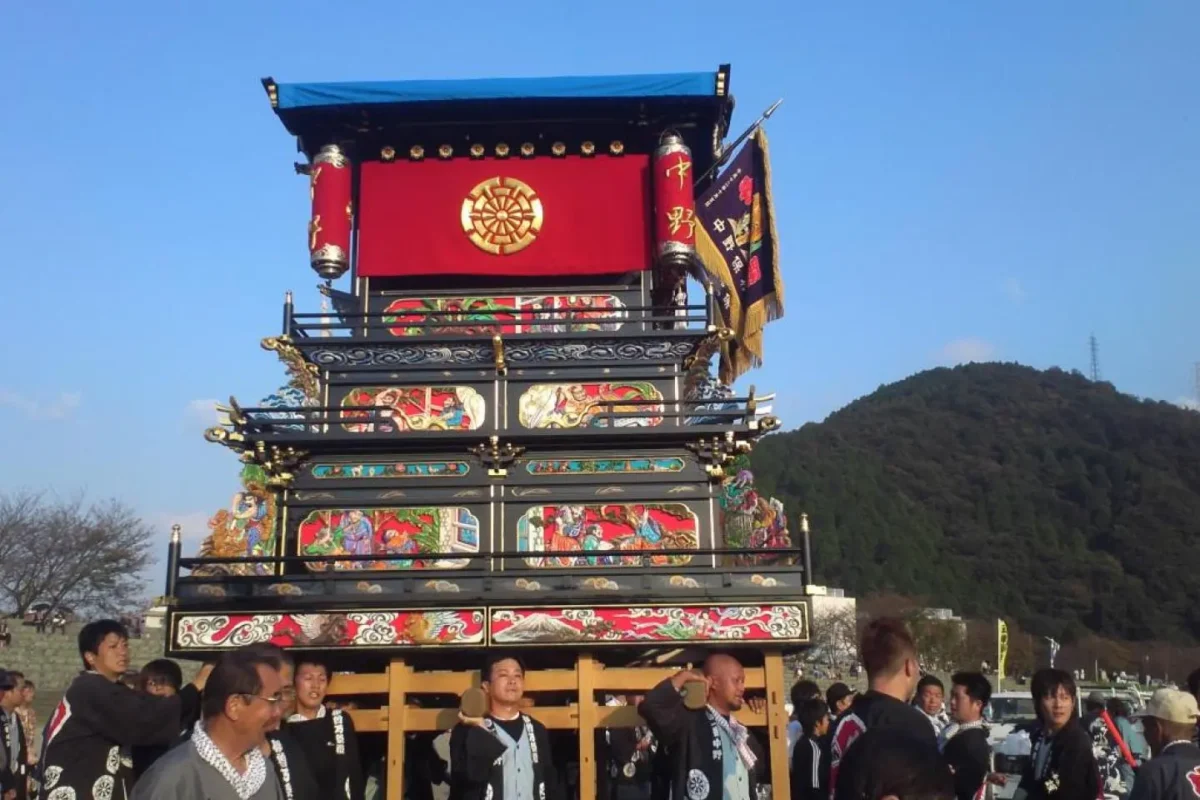
In modern times, the Saijo Festival features more than 120 danjiri, a kind of festival juggernaut, mikoshi portable shrines, and taikodai drum wagons. The biggest drum wagon is over five meters high and weighs about two and half tons. The festival involves pushing these immensely heavy structures through the streets of the city, gathering here and there for displays called kakikurabe, which translates roughly as comparing who can trolley about with the most glory and bravado. Not content with wheeling the juggernauts up and down in various formations, they are also hoisted into the air by one hundred men or more, who struggle and grunt under the four huge poles that support the danjiri. Much beer and sake is consumed to keep everybody in tip-top kakikurabe condition.
Enjoy Your Event Stress-Free with Japan Travelo
Do you know? Planning events, festivals, concerts, and cultural experiences in Japan can be overwhelming. Japan Travelo brings everything together in one place, helping you manage your itinerary, transport, and accommodation with ease—so you can enjoy Japan without the stress of planning.
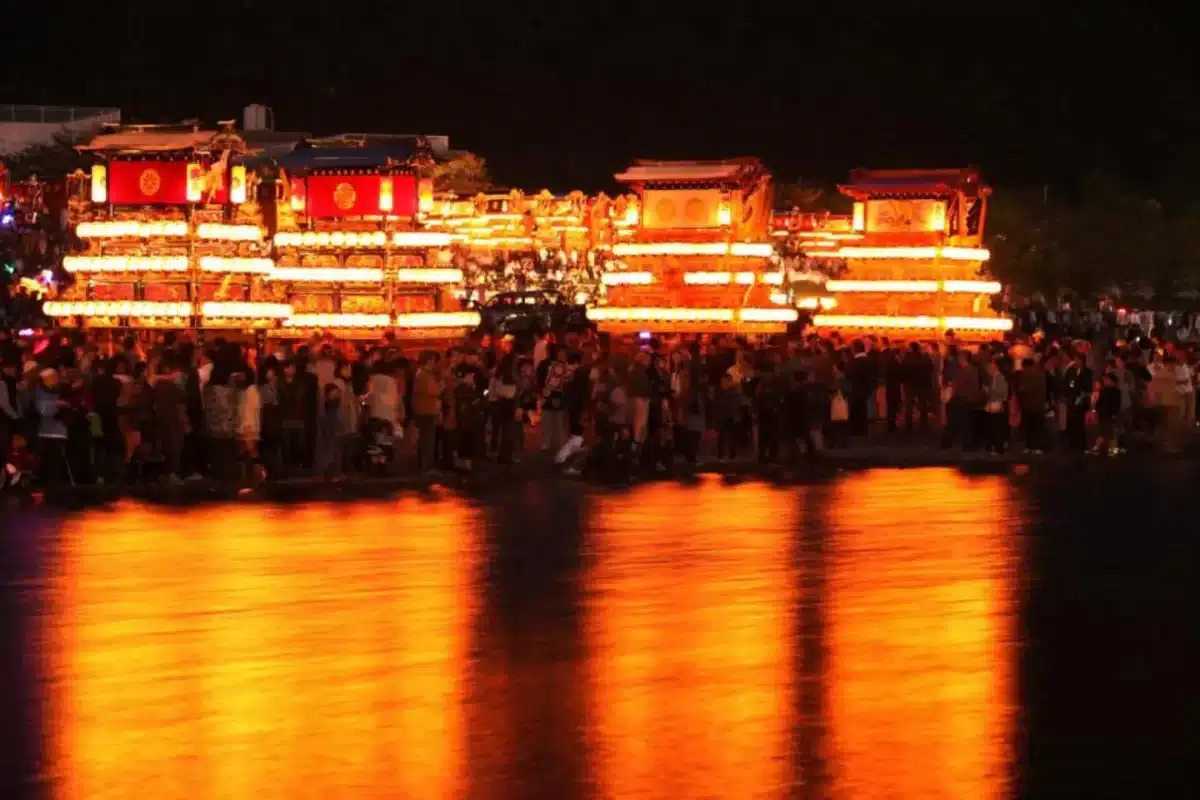
Besides their enormous size, the danjiri and mikoshi are notable for their dynamic carving and quilted reliefs, and their brocade decorations and tassels. When they are lit up at night with numberless lanterns, they present a fantastic spectacle indeed.
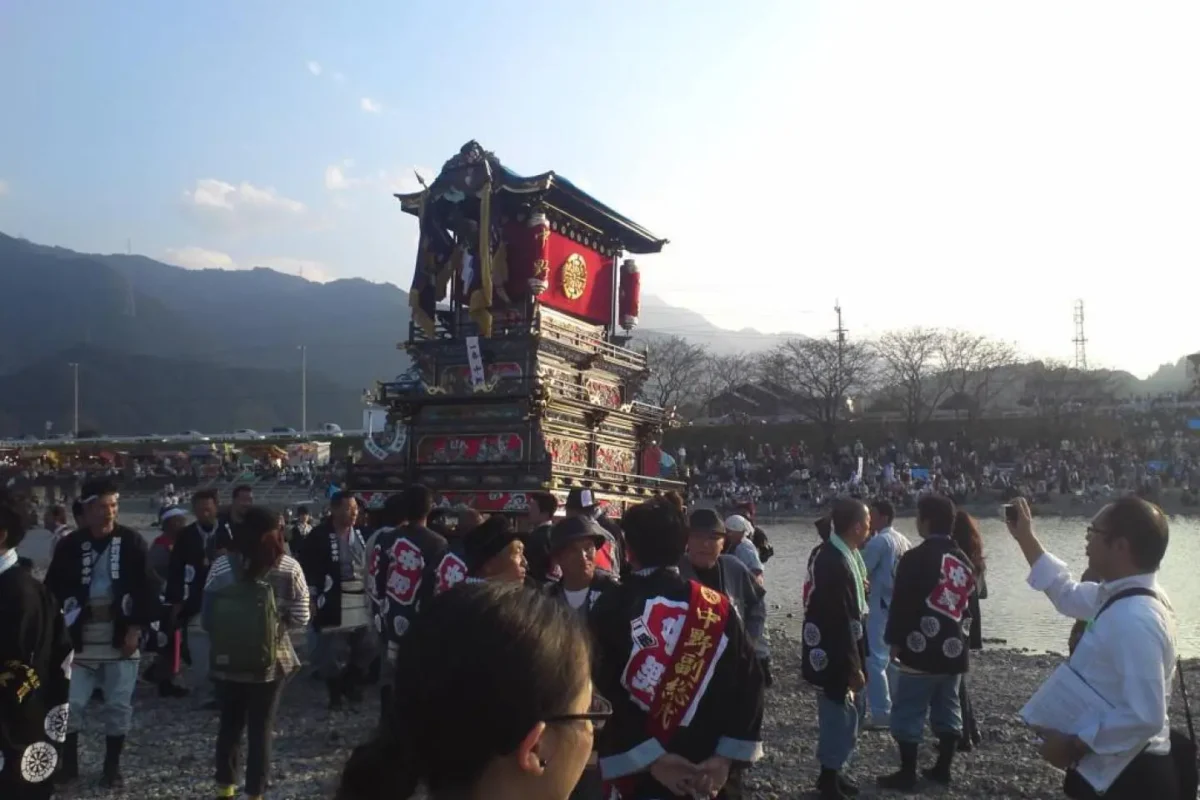
The climax of the festival is the kawairi or getting into the river. The mikoshi gather on the banks of the Kamo River after completing their perambulations in Saijo city, and they seek to cross the river to enter the shrine on the other side, in a procedure called miyairi. Sorry to be parted from their companions, the danjiri teams try to prevent them, but eventually the mikoshi cross the river somehow, and the beautiful and powerful spectacle of the Saijo Festival comes to an end.
Cultural Significance & Origins
Saijo Festival is one of Shikoku’s most vigorous autumn harvest thanksgiving festivals, with samurai lord patronage.
Harvest Thanksgiving: The Saijo Festival is held at the Kamo, Ishioka, Isono and Iizumi shrines in the middle of October, to give thanks for an abundant autumn harvest. At autumn festivals in Saijo, Niihama, and Shikokuchuo cities in Toyo region, each district prepares huge yatai floater, 5 meters high, 12 meters long, and weighing 2 to 3 tons called danjiri or taikodai depending on city, and tens or hundreds of people parade it through town to give thanks for good harvest for that year. In Japan, where four seasons are distinct, autumn with pleasant climate is known as time when people can easily devote themselves to various activities, described as autumn of appetite, autumn of art, autumn of reading, autumn of sports, and in Ehime people enjoy autumn leaves at Ishizuchi Mountain and Matsuyama Castle.
Uncertain Origin – 1757: Origin uncertain, but traditional event which goes back as far as 1757. Isono Shrine owns scroll depicting Saijo Festival with details of festival as held in Edo period. It is said feudal lord of Saijo sent scroll to Lord Date to boast about exciting things that happen in Saijo. Festival enjoyed support of successive lords of Saijo.
Isono Shrine Scroll: Isono Shrine, Shinto shrine located in Saijo, Shikoku, Ehime Prefecture, Japan, Beppyo shrine, notable for two festivals Saijo Matsuri and Isono Jinja Sairei. Saijo Matsuri held between October 15 and 16. Festival existed since Edo period and used to promote disaster awareness. Isono Shrine owns scroll depicting Saijo Festival as held during Edo period, showing danjiri dedication began in Edo period. A shrine where dedication of Danjiri Mikoshi began in Edo period.
Feudal Lord Boast: Lord of Saijo sent scroll to Lord Date, powerful lord of Sendai, to boast about exciting things happening in Saijo, indicating pride and competitiveness among domains.
Post-War Decline and Revival: Although it experienced decline after World War II, it is more vigorous than ever today, with more than 120 danjiri now, compared to fewer in past, showing community revitalization.
Four Shrines: Held at Kamo, Ishioka, Isono and Iizumi shrines, each with own neighborhood danjiri teams, representing different districts of Saijo city, unified under Saijo Matsuri name.
Traditions, Rituals & Customs
Festival centers on powerful physical display of juggernauts and river crossing climax.
120 Danjiri, Mikoshi, Taikodai: In modern times, Saijo Festival features more than 120 danjiri, kind of festival juggernaut, mikoshi portable shrines, and taikodai drum wagons. Biggest drum wagon is over five meters high and weighs about two and half tons, with some yatai 5 meters high, 12 meters long, weighing 2 to 3 tons. Festival involves pushing immensely heavy structures through streets of city, gathering here and there for displays called kakikurabe.
Kakikurabe – Comparing Glory: Kakikurabe translates roughly as comparing who can trolley about with most glory and bravado. Teams gather at intersections and shrine plazas, pushing danjiri in various formations, spinning, shaking, showing off strength and coordination. Not content with wheeling juggernauts up and down in various formations, they are also hoisted into air by one hundred men or more, who struggle and grunt under four huge poles that support danjiri. Much beer and sake consumed to keep everybody in tip-top kakikurabe condition.
Dynamic Carving and Decorations: Besides enormous size, danjiri and mikoshi notable for dynamic carving and quilted reliefs, and brocade decorations and tassels. When lit up at night with numberless lanterns, they present fantastic spectacle indeed. Carvings depict dragons, samurai, mythical beasts, quilted reliefs show detailed stitching.
Kawairi – River Entering: Climax of festival is kawairi or getting into river. Mikoshi gather on banks of Kamo River after completing perambulations in Saijo city, and they seek to cross river to enter shrine on other side, in procedure called miyairi. Sorry to be parted from companions, danjiri teams try to prevent them, but eventually mikoshi cross river somehow, and beautiful and powerful spectacle comes to end. Mikoshi bearers wade into river, sometimes chest-deep, carrying portable shrines.
Miyairi – Shrine Entering: After kawairi, miyairi shrine entering, mikoshi enter shrine on other side, completing pilgrimage.
Night Lantern Spectacle: When lit up at night with numberless lanterns, fantastic spectacle, with brocade shining.
Sake and Community Fuel: Much beer and sake consumed to keep in tip-top kakikurabe condition, reflecting festival’s masculine energy and community bonding.
What to Expect at the Festival
Expect thunderous, masculine, high-energy parade of giant floats weighing tons pushed by hundred shouting men.
In modern times, festival features more than 120 danjiri, mikoshi, taikodai drum wagons. Biggest drum wagon over five meters high and weighs about two and half tons. Festival involves pushing immensely heavy structures through streets, gathering here and there for kakikurabe displays, comparing who can trolley about with most glory and bravado.
Not content with wheeling juggernauts up and down in various formations, they are also hoisted into air by one hundred men or more, who struggle and grunt under four huge poles that support danjiri. Much beer and sake consumed to keep everybody in tip-top condition.
Besides enormous size, danjiri and mikoshi notable for dynamic carving and quilted reliefs, and brocade decorations and tassels. When lit up at night with numberless lanterns, they present fantastic spectacle indeed.
Climax is kawairi, getting into river. Mikoshi gather on banks of Kamo River after completing perambulations, and seek to cross river to enter shrine on other side, in procedure called miyairi. Sorry to be parted from companions, danjiri teams try to prevent them, but eventually mikoshi cross river somehow.
You will hear thunderous drumming from taikodai, shouting of teams, and see brocade glittering under lanterns at night. Crowds line streets, with food stalls and sake stands.
Date & Schedule
Event Dates: Early – Mid October 2027 (Dates TBD)
Official Timing: The Saijo Festival is held at the Kamo, Ishioka, Isono and Iizumi shrines in the middle of October, to give thanks for abundant autumn harvest. Origin uncertain, but traditional event goes back as far as 1757. Isono Shrine owns scroll depicting Saijo Festival with details as held in Edo period. It is said feudal lord of Saijo sent scroll to Lord Date to boast about exciting things that happen in Saijo.
Isono Shrine, Beppyo shrine in Saijo, Shikoku, Ehime Prefecture, notable for two festivals Saijo Matsuri and Isono Jinja Sairei. Saijo Matsuri held between October 15 and 16, based on previous editions, used to promote disaster awareness. Festival existed since Edo period.
In modern times, festival features more than 120 danjiri, mikoshi, taikodai drum wagons. Biggest drum wagon over five meters high and weighs about two and half tons. Festival involves pushing immensely heavy structures through streets, gathering for kakikurabe displays. Besides enormous size, notable for dynamic carving and quilted reliefs, brocade decorations and tassels. When lit up at night with numberless lanterns, fantastic spectacle.
Climax is kawairi or getting into river. Mikoshi gather on banks of Kamo River after completing perambulations in Saijo city, and seek to cross river to enter shrine on other side, in procedure called miyairi. Sorry to be parted from companions, danjiri teams try to prevent them, but eventually mikoshi cross river somehow.
Typical Daily Schedule Based on Previous Editions:
- Morning: Danjiri teams gather at Kamo, Ishioka, Isono, Iizumi shrines, purification rituals, then start pushing danjiri through districts
- Midday: Kakikurabe gatherings at central intersections, teams hoist danjiri into air by hundred men or more, struggle under four huge poles, display carvings and brocade
- Afternoon: Continued parade through city, with drumming from taikodai, beer and sake consumption
- Evening: Danjiri and mikoshi lit up at night with numberless lanterns, fantastic spectacle, brocade and tassels illuminated
- Late Evening: Climax kawairi at Kamo River, mikoshi gather on banks, cross river to enter shrine miyairi, danjiri teams try to prevent separation, ending with powerful river crossing
Venue: Saijo City, Ehime Prefecture, Shikoku, at Kamo, Ishioka, Isono, Iizumi shrines, and Kamo River banks
Contact: (089) 56-5151 Saijo City Tourist Association
Visiting this event? Don’t miss out on these amazing activities and local experiences while you’re here.
Main Events & Programme
Four shrine festivals combine into city-wide juggernaut showcase.
120 Danjiri Parade: More than 120 danjiri, kind of festival juggernaut, parade through streets, each district prepares huge yatai floater 5 meters high, 12 meters long, weighing 2 to 3 tons, tens or hundreds of people parade it through town to give thanks for good harvest.
Taikodai Drum Wagons: Taikodai drum wagons, biggest over five meters high and weighs about two and half tons, with massive taiko drums played while being pushed, creating thunderous rhythm.
Mikoshi Portable Shrines: Mikoshi portable shrines carried by teams, representing deities from four shrines, moving between shrines.
Kakikurabe Glory Competition: Displays called kakikurabe, comparing who can trolley about with most glory and bravado, held at intersections. Teams wheel juggernauts up and down in various formations, hoist into air by hundred men or more, who struggle and grunt under four huge poles that support danjiri. Much beer and sake consumed to keep in tip-top condition.
Night Lantern Illumination: When lit up at night with numberless lanterns, fantastic spectacle indeed, with dynamic carving and quilted reliefs, brocade decorations and tassels illuminated.
Kawairi River Crossing – Climax: Climax is kawairi or getting into river. Mikoshi gather on banks of Kamo River after completing perambulations in Saijo city, and seek to cross river to enter shrine on other side, in procedure called miyairi. Sorry to be parted from companions, danjiri teams try to prevent them, but eventually mikoshi cross river somehow, beautiful and powerful spectacle comes to end. Bearers wade into river, sometimes chest-deep.
Miyairi Shrine Entry: After kawairi, miyairi shrine entering procedure.
Traditional Dress, Arts & Crafts
Art is in massive wooden carvings and textile decoration, with traditional festival wear.
Danjiri Carvings: Besides enormous size, danjiri and mikoshi notable for dynamic carving and quilted reliefs. Carvings depict dragons, lions, samurai battles, mythical creatures, crafted by local master carpenters, with deep relief and gold leaf.
Brocade and Tassels: Brocade decorations and tassels, colorful, expensive, showing wealth of district, with embroidered dragons and phoenixes, when lit up at night with numberless lanterns, fantastic spectacle.
Quilted Reliefs: Quilted reliefs, elaborate stitched pictures on danjiri curtains, depicting historical scenes.
Festival Dress – Happi and Haragake: Participants wear traditional happi coats with district crest, haragake aprons, tabi socks, headbands hachimaki, and for hoisting, use shoulder pads. Mikoshi bearers wear white.
Taiko Drums: Massive taiko drums on taikodai wagons, with drumheads made of cowhide, decorated with crests.
Lantern Art: Numberless lanterns, chouchin paper lanterns with district names, lit at night.
Isono Shrine Scroll Art: Isono Shrine owns scroll depicting Saijo Festival with details as held in Edo period, traditional Japanese painting, showing Edo period festival.
Mikoshi Decoration: Mikoshi portable shrines decorated with gold, lacquer, and brocade.
Traditional Food & Local Specialties
Saijo is known for water and sake, with festival food fueling heavy lifting.
Festival Fuel – Beer and Sake: Much beer and sake consumed to keep everybody in tip-top kakikurabe condition. Sake from Saijo’s famous spring water, known as uchinuki spring water, gushing from ground, one of Japan’s 100 famous waters. Saijo sake for 4 USD to 8 USD per cup.
Street Food Stalls:
- Yakitori: Grilled chicken skewers for 3 USD to 6 USD
- Yakisoba: Fried noodles for 4 USD to 7 USD
- Takoyaki: Octopus balls for 4 USD to 6 USD
- Oden: Hot pot for 4 USD to 8 USD
Ehime and Saijo Specialties:
- Saijo Uchinuki Water: Famous spring water, free to drink at spots, used for sake brewing
- Saijo Sake: Many breweries, sake tasting for 5 USD to 10 USD
- Iyo Citrus: Ehime famous for mikan mandarins, juice for 3 USD to 5 USD, mikan sweets for 3 USD to 7 USD
- Taimeshi: Sea bream rice, Ehime specialty, for 12 USD to 18 USD
- Jakoten: Fried fish cake for 3 USD to 6 USD
Harvest Foods: To give thanks for abundant autumn harvest, festival features new rice, taro, sweet potatoes, chestnuts, sold at stalls for 3 USD to 8 USD.
Matsuyama and Imabari Nearby: For wider dining, Matsuyama 1 hour away offers many restaurants.
Location & Festival Areas
Location: Saijo City, Ehime Prefecture, Shikoku, Japan, in Toyo region eastern Ehime, at foot of Mount Ishizuchi
Four Shrines:
- Isono Shrine: Beppyo shrine, located in Saijo, notable for Saijo Matsuri and Isono Jinja Sairei, owns scroll depicting festival in Edo period, where dedication of Danjiri Mikoshi began in Edo period
- Kamo Shrine: Main shrine for kawairi climax, located near Kamo River
- Ishioka Shrine: Shrine in central Saijo
- Iizumi Shrine: Shrine in Saijo area
Kamo River: Climax location for kawairi river entering and miyairi shrine entering, river crossing where mikoshi gather on banks after completing perambulations, seeking to cross to enter shrine on other side. Located in central Saijo, wide but shallow in October, suitable for wading.
City Streets: Festival involves pushing immensely heavy structures through streets of city, gathering here and there for kakikurabe displays at intersections, especially central shopping streets and around shrines.
Saijo City: Located between Niihama and Imabari, at foot of Mount Ishizuchi, highest mountain in western Japan, known for uchinuki spring water, sake, and autumn festivals. Each district prepares huge yatai.
Toyo Region: At autumn festivals in Saijo, Niihama, Shikokuchuo cities in Toyo region, each district prepares huge yatai, parade to give thanks for good harvest.
Getting to the Festival
Saijo is accessible from Matsuyama and Okayama via Shikoku trains.
From Matsuyama: Take JR Yosan Line limited express Shiokaze or Ishizuchi from Matsuyama to Iyo-Saijo Station, about 1 hour 15 minutes, fare about 15 USD to 25 USD. From Iyo-Saijo Station, walk 10 minutes to festival areas at shrines.
From Okayama and Honshu: Take JR Seto-Ohashi Line and Yosan Line from Okayama to Iyo-Saijo, about 2 hours 30 minutes, fare about 35 USD to 50 USD, with Great Seto Bridge crossing.
From Tokyo: Fly to Matsuyama Airport, 1 hour 30 minutes fare about 80 USD to 180 USD, then bus or train to Saijo 1 hour 30 minutes. Or fly to Takamatsu then train.
By Car: From Matsuyama via Matsuyama Expressway to Saijo Interchange, about 1 hour, parking limited during festival, use public transport as streets filled with danjiri.
Local Transport During Festival: Festival involves pushing immensely heavy structures through streets, so traffic restrictions in central Saijo, especially around Kamo, Ishioka, Isono, Iizumi shrines and Kamo River banks.
On Foot: City center walkable, shrines within 15 minute walk of each other, Kamo River 10 minutes from Isono Shrine.
Contact: (089) 56-5151 Saijo City Tourist Association for access info.
Where to Stay Nearby
Saijo is small city, but Matsuyama and Niihama offer more options.
In Saijo City:
- Business Hotels: Hotel Route Inn Saijo, Hotel Select Inn Saijo from 60 USD to 95 USD per night, book early as festival is biggest event, more vigorous than ever today
- Saijo Grand Hotel: From 70 USD to 110 USD
- Ryokan: Small ryokan with uchinuki water baths from 80 USD to 140 USD
Nearby Cities:
- Niihama City: 20 minutes east, Niihama also has famous taikodai festival in same period, hotels from 60 USD to 100 USD, such as Rihga Royal Hotel Niihama, APA Hotel Niihama
- Imabari City: 40 minutes north, gateway to Shimanami Kaido, hotels from 60 USD to 110 USD
- Matsuyama City: 1 hour west, prefectural capital, many options from business hotels 60 USD to 120 USD to Dogo Onsen ryokan 100 USD to 300 USD, such as Dogo Onsen Honkan area hotels
Dogo Onsen: Famous hot spring in Matsuyama, 1 hour away, perfect for relaxing after festival, entry about 4 USD to 8 USD, with accommodation.
Camping: No camping in city center during festival.
Booking Tip: Festival in middle of October is peak autumn season, with autumn leaves at Ishizuchi Mountain and Matsuyama Castle, and events like Cycling Shimanami, so book 2 months ahead for Saijo, or stay in Matsuyama and take train.
What Visitors Can Participate In
Festival is community-driven but visitors can watch closely and join evening festivities.
Watch Kakikurabe: Watch displays called kakikurabe, comparing who can trolley about with most glory and bravado, at intersections where teams hoist danjiri into air by hundred men or more, struggle and grunt under four huge poles. Best viewing at central crossings and shrine plazas.
Night Lantern Viewing: When lit up at night with numberless lanterns, fantastic spectacle, with brocade decorations and tassels illuminated, great for photography.
Kawairi River Crossing Watching: Climax kawairi at Kamo River, mikoshi gather on banks after perambulations, seek to cross river to enter shrine on other side, danjiri teams try to prevent, eventually cross. Watch from riverbanks, powerful and beautiful spectacle, wear boots as area may be muddy.
Drink and Eat with Teams: Much beer and sake consumed to keep in tip-top condition, visitors can buy sake and join drinking with teams at stalls, experiencing community bonding.
Visit Four Shrines: Visit Kamo, Ishioka, Isono, Iizumi shrines during festival, see scroll at Isono Shrine depicting festival in Edo period, if on display.
Photograph Carvings: Admire dynamic carving and quilted reliefs, brocade decorations up close when danjiri parked.
Disaster Awareness: Festival used to promote disaster awareness, as per Isono Shrine info, learn about disaster preparedness from displays.
Things to Do Before or After the Festival
Eastern Ehime offers dramatic festivals and nature.
Other Toyo Festivals: At autumn festivals in Saijo, Niihama, and Shikokuchuo cities in Toyo region, each district prepares huge yatai. Visit Niihama Taikodai Festival, held same period mid October, with even larger taikodai, and Shikokuchuo festivals.
Mount Ishizuchi: Highest mountain in western Japan, 1982 meters, at foot of Saijo, famous for autumn leaves at Ishizuchi Mountain, climbing and pilgrimage, 40 minutes from Saijo city, with shrine at top.
Matsuyama Castle and Dogo Onsen: Matsuyama Castle famous for autumn leaves, Dogo Onsen oldest hot spring in Japan, 1 hour from Saijo.
Shimanami Kaido: Cycling Shimanami, inter-island cycling route from Imabari to Onomichi, popular in autumn, 40 minutes from Saijo to Imabari start.
Uchinuki Spring Water Tour: Tour Saijo’s famous uchinuki spring water spots, gushing from ground, free, used for sake brewing, 100 famous waters.
Isono Shrine Scroll: Try to view scroll depicting Saijo Festival as held in Edo period, owned by Isono Shrine, if exhibited at shrine museum.
Ehime Sightseeing: Visit Saijo’s sake breweries, with tasting, and citrus orchards.
Cycling and Sports: Autumn known as time when people can easily devote themselves to sports, enjoy cycling around Saijo plain.
Local Food & Restaurants
Saijo and Ehime offer harvest foods and sake.
Festival Stalls: During festival, stalls sell yakitori, yakisoba, takoyaki, oden for 3 USD to 8 USD, with beer and sake for 4 USD to 8 USD to keep in tip-top kakikurabe condition.
Saijo Specialties:
- Uchinuki Water and Sake: Saijo famous for uchinuki spring water, sake breweries like Kameizumi, Ishizuchi sake for 5 USD to 10 USD per cup, sake tasting sets
- Citrus: Ehime famous for mikan mandarins, juice 3 USD to 5 USD, mikan sweets 3 USD to 7 USD
- Taimeshi: Sea bream rice, Ehime specialty, for 12 USD to 18 USD at local restaurants
- Jakoten: Fried fish cake for 3 USD to 6 USD
- Imo-taki: Taro hot pot, autumn specialty for 8 USD to 14 USD
Restaurants in Saijo:
- Izakaya near Iyo-Saijo Station: Serving taimeshi, jakoten, sake for 15 USD to 30 USD per person
- Ramen Shops: Saijo ramen for 7 USD to 11 USD
Matsuyama Foods: If staying in Matsuyama, try Botchan dango for 3 USD to 5 USD, and Dogo area restaurants.
Harvest Thanksgiving Foods: To give thanks for abundant autumn harvest, new rice, sweet potatoes, chestnuts available at markets for 3 USD to 8 USD.
Ticket Information & Access
Price of Admission: FREE for street viewing
Saijo Festival is free community festival held at Kamo, Ishioka, Isono and Iizumi shrines, with more than 120 danjiri, mikoshi, taikodai drum wagons parading through streets. Biggest drum wagon over five meters high and weighs about two and half tons.
Costs Based on Previous Editions:
- General Viewing: Free, watch kakikurabe displays at intersections, night illumination with numberless lanterns, and kawairi river crossing at Kamo River
- Shrine Offerings: Optional offering at four shrines for 1 USD to 5 USD
- Food and Drink: Beer and sake for 4 USD to 8 USD, yakitori, yakisoba for 3 USD to 8 USD at stalls
- Transport: From Matsuyama to Iyo-Saijo 15 USD to 25 USD by limited express, from Okayama 35 USD to 50 USD
- Accommodation: Business hotels in Saijo from 60 USD to 95 USD, in Matsuyama from 60 USD to 120 USD, Dogo Onsen ryokan from 100 USD to 300 USD
- Sake Tasting: At breweries for 5 USD to 10 USD
Hours: Based on previous editions, Saijo Matsuri held between October 15 and 16, with daytime parade, kakikurabe at intersections, night illumination, and late evening kawairi climax at Kamo River.
Access: Iyo-Saijo Station on JR Yosan Line, 1 hour 15 minutes from Matsuyama, 10 minute walk to festival areas. Kamo River 10 minutes from shrines.
Contact: (089) 56-5151 Saijo City Tourist Association, and Isono Shrine for scroll info.
Official Event Information
Event Name: Ehime Saijo Festival 2027 – Japan, also called Saijo Matsuri, Saijo Festival
Venue: Saijo City, Ehime Prefecture, Shikoku, at Kamo, Ishioka, Isono and Iizumi shrines, and Kamo River banks, Toyo region eastern Ehime
Organizer: Saijo City, Kamo Shrine, Ishioka Shrine, Isono Shrine, Iizumi Shrine, and Saijo Festival Preservation Associations for each district
Official Website: https://en.japantravel.com/ehime/saijo-festival/3349
Description: Saijo Festival is held at Kamo, Ishioka, Isono and Iizumi shrines in middle of October, to give thanks for abundant autumn harvest. Origin uncertain, but traditional event which goes back as far as 1757. Isono Shrine owns scroll depicting Saijo Festival with details as held in Edo period. It is said feudal lord of Saijo sent scroll to Lord Date to boast about exciting things that happen in Saijo. Festival enjoyed support of successive lords of Saijo, and although it experienced decline after World War II, more vigorous than ever today. In modern times, festival features more than 120 danjiri, kind of festival juggernaut, mikoshi portable shrines, and taikodai drum wagons. Biggest drum wagon over five meters high and weighs about two and half tons.
Festival involves pushing immensely heavy structures through streets, gathering here and there for displays called kakikurabe, which translates roughly as comparing who can trolley about with most glory and bravado. Not content with wheeling juggernauts up and down in various formations, they are also hoisted into air by one hundred men or more, who struggle and grunt under four huge poles that support danjiri. Much beer and sake consumed to keep everybody in tip-top kakikurabe condition. Besides enormous size, danjiri and mikoshi notable for dynamic carving and quilted reliefs, and brocade decorations and tassels. When lit up at night with numberless lanterns, they present fantastic spectacle indeed. Climax is kawairi or getting into river.
Mikoshi gather on banks of Kamo River after completing perambulations in Saijo city, and seek to cross river to enter shrine on other side, in procedure called miyairi. Sorry to be parted from companions, danjiri teams try to prevent them, but eventually mikoshi cross river somehow, and beautiful and powerful spectacle comes to end.
Contact: (089) 56-5151
Video
Location
FAQ
What are danjiri and taikodai and how big are they?
Danjiri is kind of festival juggernaut, huge yatai floater, 5 meters high, 12 meters long, weighing 2 to 3 tons, with biggest drum wagon over five meters high and weighing about two and half tons, featuring dynamic carving, quilted reliefs, brocade decorations and tassels. Taikodai are drum wagons with massive taiko drums played while being pushed, while mikoshi are portable shrines carrying deities from Kamo, Ishioka, Isono, Iizumi shrines. In modern times festival features more than 120 such structures, each district preparing its own, paraded through town to give thanks for good harvest, with tens or hundreds of people pushing each one.
What is kakikurabe and why do they lift danjiri?
Kakikurabe translates roughly as comparing who can trolley about with most glory and bravado, displays held at intersections where danjiri teams gather to show off strength and coordination. Not content with wheeling juggernauts up and down in various formations, they are also hoisted into air by one hundred men or more who struggle and grunt under four huge poles that support danjiri, demonstrating team unity and power. Much beer and sake consumed to keep everybody in tip-top kakikurabe condition, with shouting, drumming, and brocade glittering, and when lit up at night with numberless lanterns they present fantastic spectacle.
What is kawairi and why is it the climax?
Climax of festival is kawairi or getting into river, where mikoshi gather on banks of Kamo River after completing perambulations in Saijo city and seek to cross river to enter shrine on other side in procedure called miyairi. Sorry to be parted from companions, danjiri teams try to prevent them, but eventually mikoshi cross river somehow, with bearers wading chest-deep carrying portable shrines, creating beautiful and powerful spectacle that brings festival to end. This river crossing symbolizes purification and return of deities to shrine, with dramatic struggle between danjiri teams wanting to keep mikoshi and mikoshi teams determined to cross.
What is the history behind the 1757 origin and scroll?
Origin uncertain but traditional event goes back as far as 1757, with Isono Shrine owning scroll depicting Saijo Festival with details as held in Edo period, showing dedication of Danjiri Mikoshi began in Edo period. It is said feudal lord of Saijo sent scroll to Lord Date powerful lord of Sendai to boast about exciting things that happen in Saijo, indicating pride and support of successive lords of Saijo. Isono Shrine is Beppyo shrine notable for Saijo Matsuri held between October 15 and 16 and used to promote disaster awareness, and festival experienced decline after World War II but is more vigorous than ever today with over 120 danjiri.
Can tourists participate and where is best to watch?
Saijo Festival is free community festival held at four shrines Kamo, Ishioka, Isono, Iizumi and Kamo River banks, with general viewing free at street intersections for kakikurabe and at riverbanks for kawairi. Tourists can watch danjiri hoisted by hundred men, night illumination with numberless lanterns showing brocade and carvings, and join drinking of beer and sake at stalls, though pushing danjiri is reserved for district teams. Best spots are central intersections in Saijo for kakikurabe glory competition and Kamo River banks for kawairi river crossing climax, with Iyo-Saijo Station 10 minute walk to festival areas and contact at 089 56-5151 for details.

Leave a Reply