
-
April 12, 2027
Event date:
-
April 15, 2027
Event end:
Overview
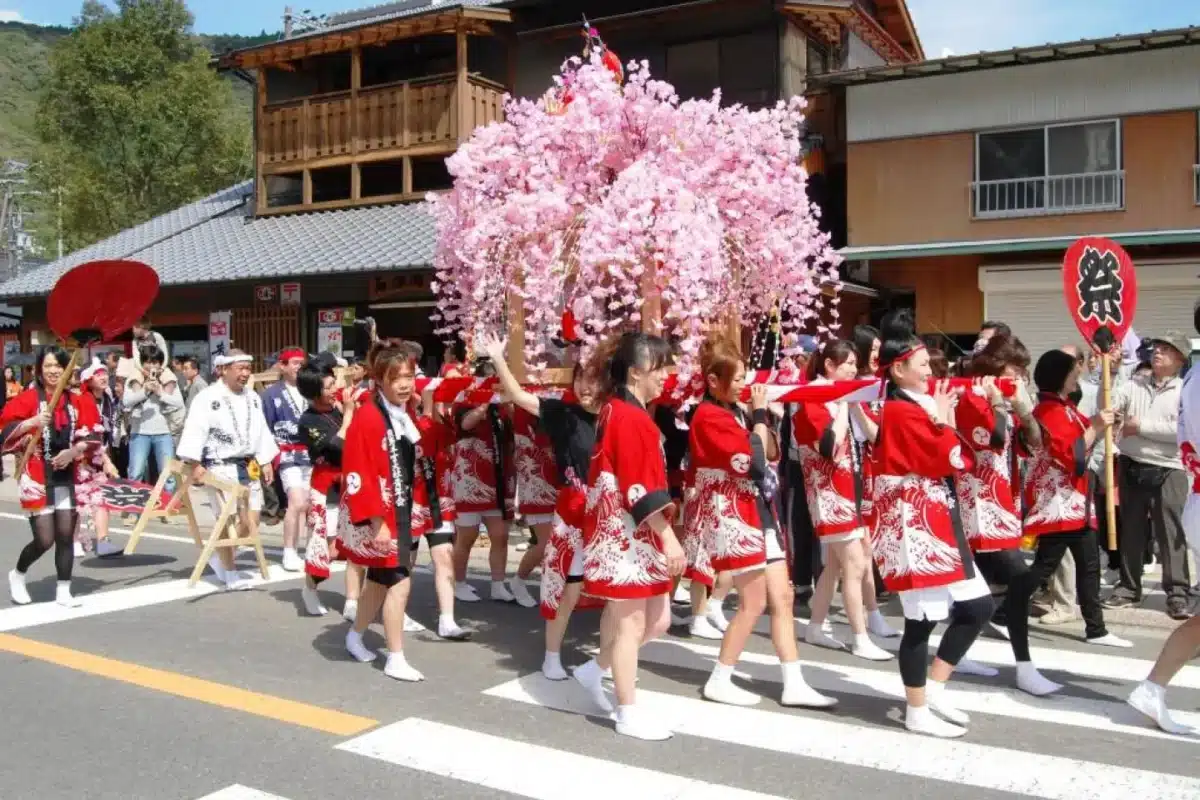
When you walk the Kumano Kodo pilgrimage trails, located in the south of Wakayama Prefecture, you come to Hongu Town and the Hongu Taisha, one of the Three Kumano Grand Shrines. If your walk happens in mid-April, then you might have a chance to witness the Hongu Taisha Spring Festival.
This is a local spectacle that does not draw millions of visitors like spring festivals elsewhere in Japan. This allows you to see everything close-up. The crowd consists mainly of locals which gives you a chance for a chat. After the prayer rituals and spiritual ceremonies comes the fun, which consists of eating, drinking and playing. Some local delicacies and local sake is shared around and soon all participants are in a festive mood.
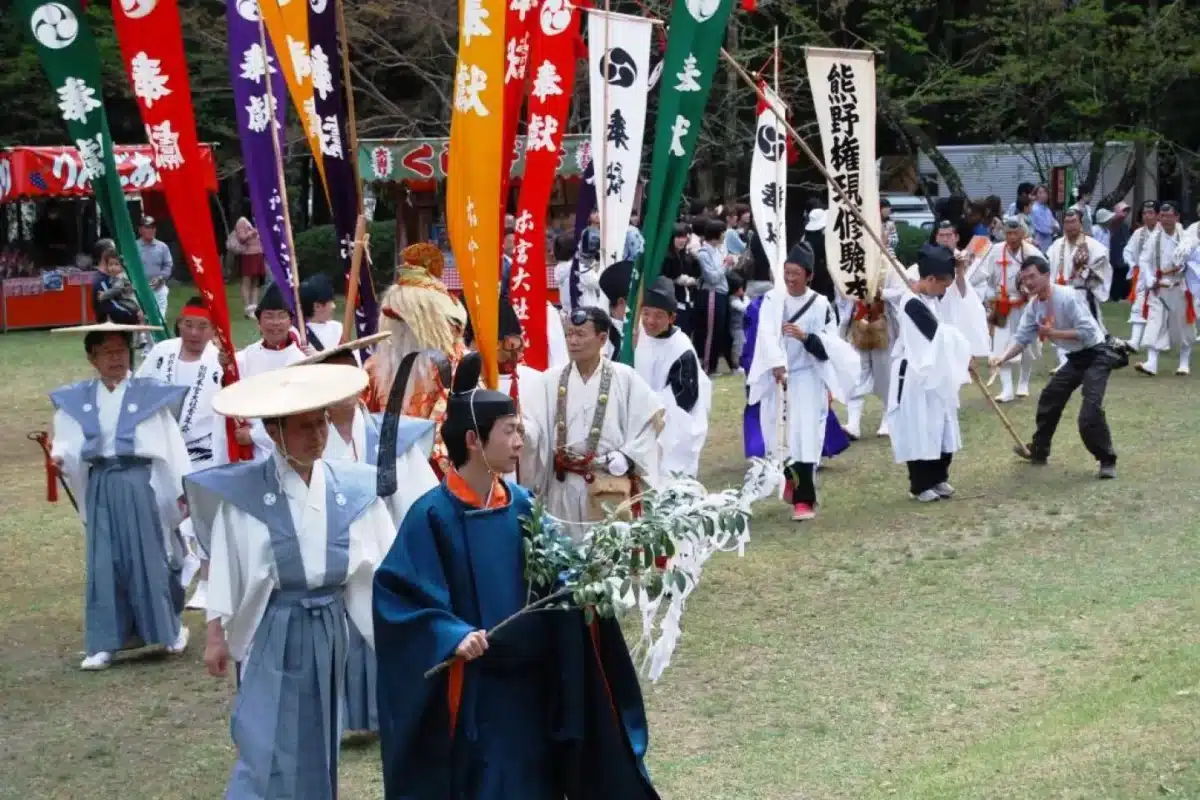
The spring festival at the Hongu Taisha gets absolutely everyone in Hongu Town, from the young to the old, to participate to keep traditions alive. First a ceremony takes place at Hongu where a procession is forming. Then this procession makes its way from the shrine to Oyunohara, a sandbank in the Kumano River and one of Kumano’s most holy sites.
Enjoy Your Event Stress-Free with Japan Travelo
Do you know? Planning events, festivals, concerts, and cultural experiences in Japan can be overwhelming. Japan Travelo brings everything together in one place, helping you manage your itinerary, transport, and accommodation with ease—so you can enjoy Japan without the stress of planning.
Oyunohara is now a wide open space but it used to be the place where the Hongu Shrine once stood before it got washed away by a flooding in the late 19th century. Here a series of sacred ceremonies are performed to honor the Kumano Deities and the tradition of the Kumano Kodo pilgrimage.
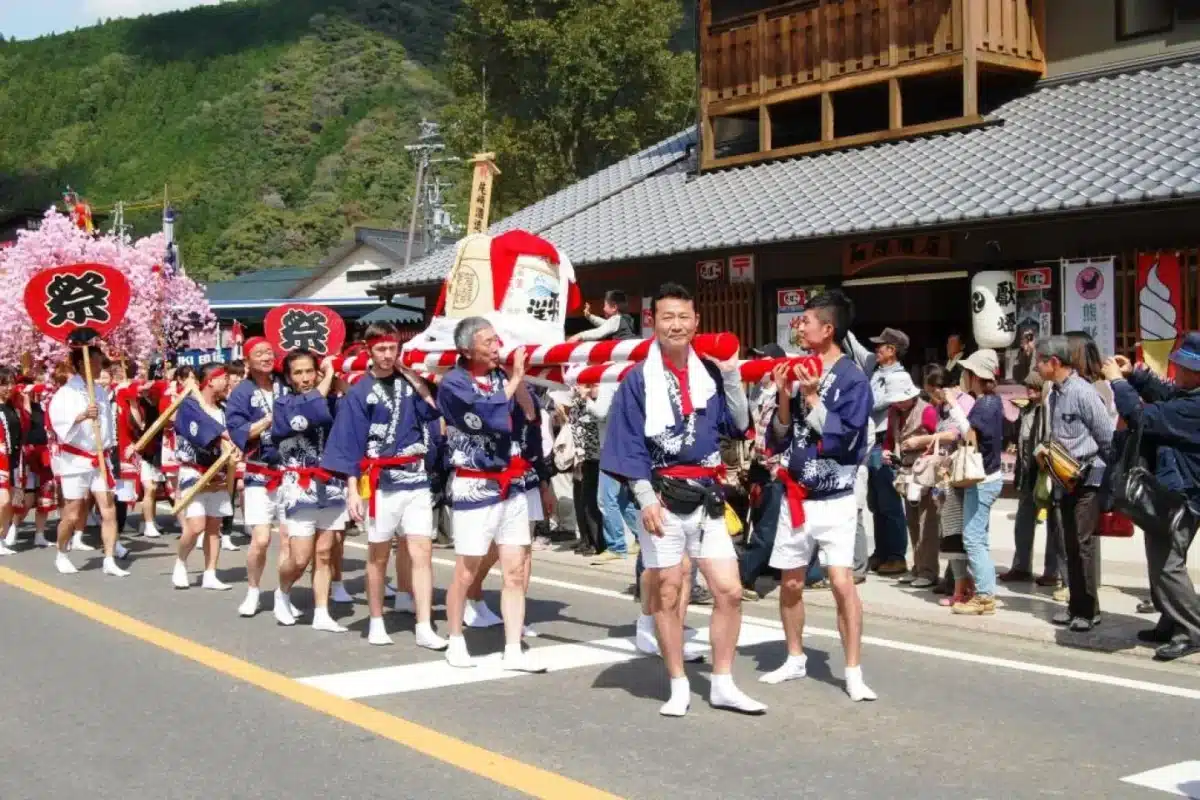
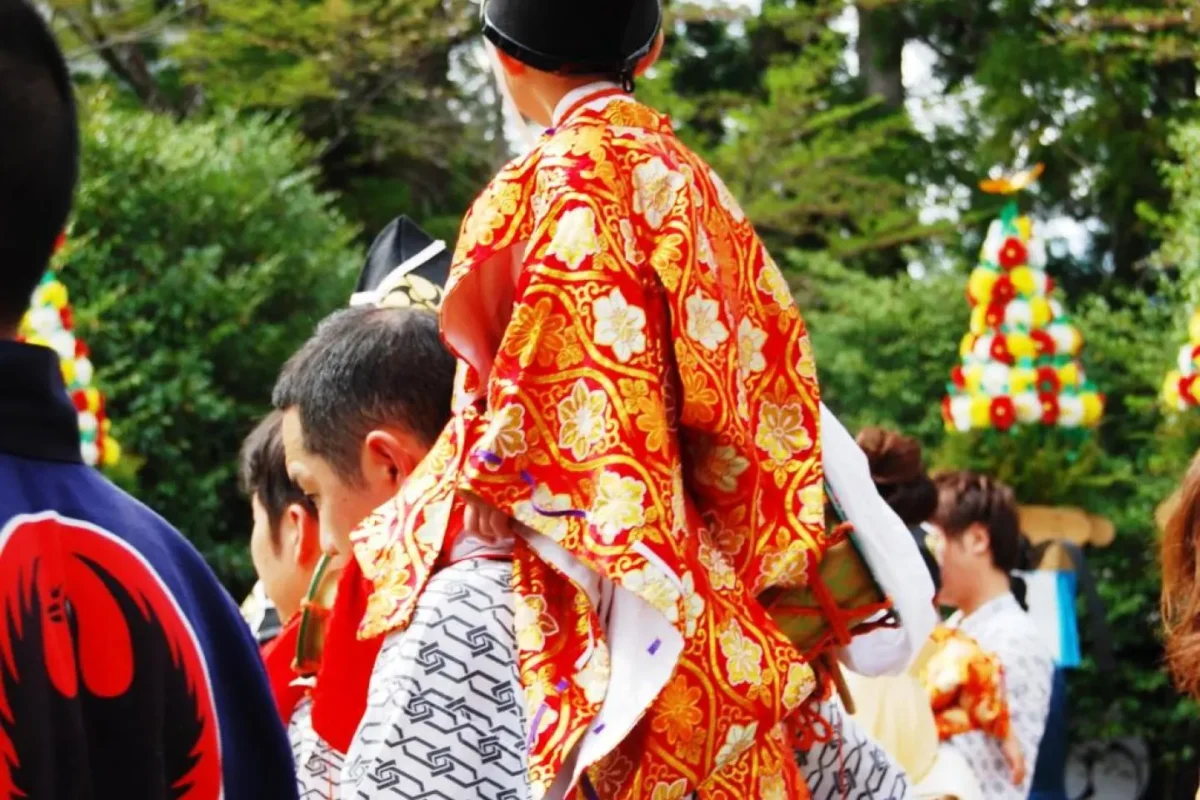
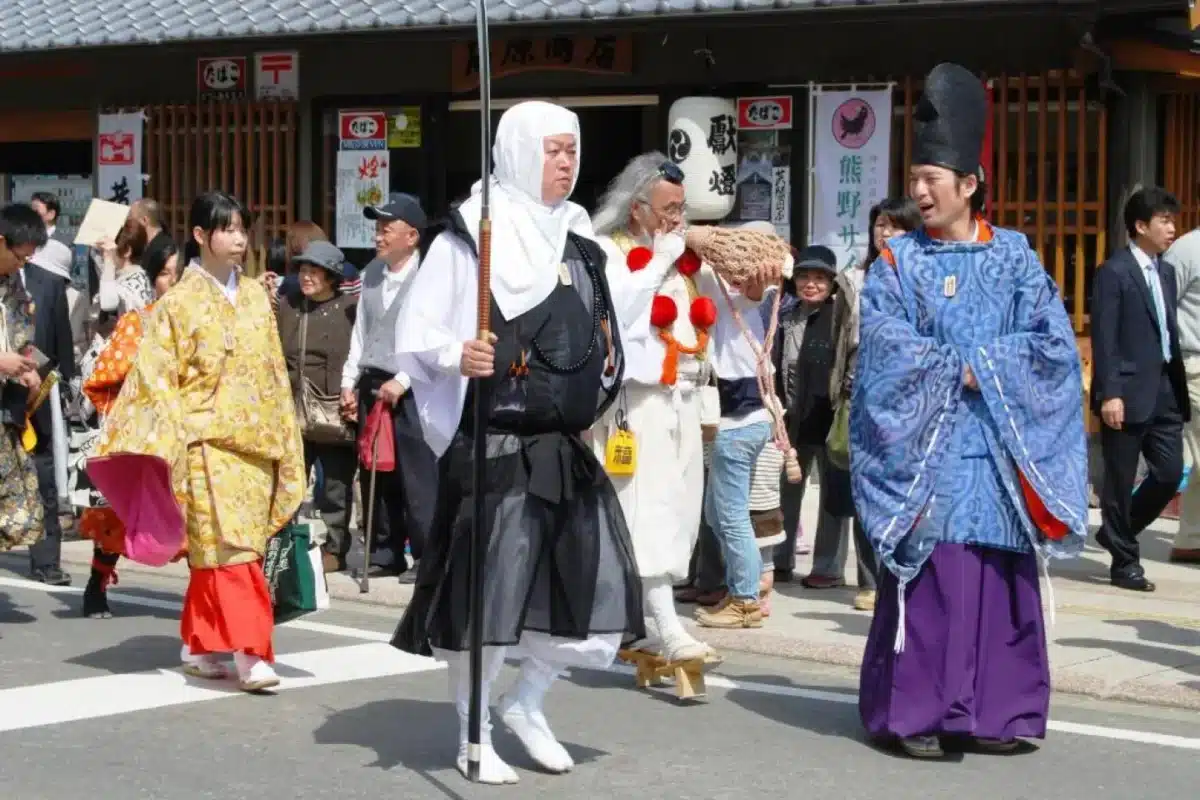
Participants wear Heian-style period costumes making for an authentic experience much to the enjoyment of visitors who join the locals in their festivities. The Heian Period of Japanese history 9th to 12th century is when the Kumano Kodo pilgrimage became popular amongst aristocrats and retired emperors who did the long journey all the way from Kyoto. Actually, Kyoto and Kumano are still linked nowadays and many visitors to Kumano come from Kyoto with a stop at Koyasan, the mountain monastery in the north of the Kii Peninsula, before walking the Kumano Kodo trails in the south. Both Koyasan and Kumano are considered the spiritual heartland of Japan and they are located in Wakayama Prefecture.
Cultural Significance & Origins
Kumano Hongu Taisha Spring Festival is annual Reitaisai Grand Festival honoring Kumano deities at spiritual heartland of Japan.
Three Kumano Grand Shrines: Kumano Hongu Taisha is one of Three Kumano Grand Shrines, along with Kumano Hayatama Taisha and Kumano Nachi Taisha, forming Kumano Sanzan sacred sites. Located in Hongu Town, Tanabe City, south Wakayama Prefecture, on Kumano Kodo pilgrimage trails UNESCO World Heritage.
Oyunohara Holy Site: Oyunohara is now wide open space but it used to be place where Hongu Shrine once stood before it got washed away by flooding in late 19th century. Here series of sacred ceremonies are performed to honor Kumano Deities and tradition of Kumano Kodo pilgrimage. Oyunohara is sandbank in Kumano River and one of Kumano’s most holy sites, marked by Japan’s largest torii gate, 33.9 meters high, 42 meters wide, standing in rice field where old shrine once stood.
Heian Period Pilgrimage: Heian Period of Japanese history 9th to 12th century is when Kumano Kodo pilgrimage became popular amongst aristocrats and retired emperors who did long journey all the way from Kyoto. Kyoto and Kumano are still linked nowadays and many visitors to Kumano come from Kyoto with stop at Koyasan, mountain monastery in north of Kii Peninsula, before walking Kumano Kodo trails in south. Both Koyasan and Kumano are considered spiritual heartland of Japan and located in Wakayama Prefecture.
Kumano Gokou Recreation: Procession recreates Kumano Gokou, imperial pilgrimage of retired emperors and aristocrats who walked from Kyoto to Kumano, wearing Heian style clothing. Most important event Hondensai Honden Festival and Togyo Festival in which 400 people dressed in Heian style clothing participate.
Local Community Preservation: Spring festival at Hongu Taisha gets absolutely everyone in Hongu Town, from young to old, to participate to keep traditions alive. This is local spectacle that does not draw millions like spring festivals elsewhere, allowing close-up viewing. Crowd consists mainly of locals which gives chance for chat. After prayer rituals and spiritual ceremonies comes fun, eating, drinking and playing. Local delicacies and local sake shared around and soon all participants in festive mood.
Yunomine Onsen Purification: Fathers and sons purify themselves in nearby Yunomine Onsen before walking over Dainichi-goe part of Kumano Kodo pilgrimage path to Oyunohara while carrying traditional costumes. Yunomine is oldest hot spring in Japan, used for purification before visiting shrine.
Traditions, Rituals & Customs
Festival follows ancient imperial pilgrimage sequence with sacred dances.
Funatama Taisai – Eve Ritual: Event called Funatama Taisai Ship Jewel Grand Festival and eve of main festival are held at Kumano Hongu Taisha on first day. Ritual to pray for safety of boats on Kumano River, historically important transport route for pilgrims.
Hondensai – Main Shrine Festival: Most important event Hondensai Honden Festival held at Hongu Taisha main hall. Ceremony takes place at Hongu where procession is forming, with Shinto priests performing prayers to Kumano deities.
Togyo Festival – Sacred Procession: Togyo Festival in which 400 people dressed in Heian style clothing for performance participate. Procession recreates Kumano Gokou then heads to Oyunohara to perform sacred dances such as Yamatomai and Mikomai. Participants wear Heian-style period costumes making authentic experience.
Procession from Hongu to Oyunohara: Procession makes its way from shrine to Oyunohara, sandbank in Kumano River and one of Kumano’s most holy sites. Route follows Dainichi-goe part of Kumano Kodo pilgrimage path, fathers and sons purify themselves in Yunomine Onsen before walking.
Yamatomai and Mikomai Sacred Dances: At Oyunohara, series of sacred ceremonies performed to honor Kumano Deities and tradition of Kumano Kodo pilgrimage. Sacred dances such as Yamatomai ancient court dance and Mikomai shrine maiden dance performed in front of giant torii.
Oyunohara Ceremonies: Oyunohara now wide open space but used to be place where Hongu Shrine once stood before washed away by flooding in late 19th century. Here sacred ceremonies honor Kumano Deities. Instruments line up and head to Otabisho temporary shrine.
Community Feast: After prayer rituals and spiritual ceremonies comes fun, eating, drinking and playing. Local delicacies and local sake shared around and soon all participants in festive mood. Gets absolutely everyone in Hongu Town from young to old to participate.
What to Expect at the Festival
Expect intimate, authentic imperial procession in deep forest town, not crowded tourist spectacle.
This is local spectacle that does not draw millions of visitors like spring festivals elsewhere in Japan. This allows you to see everything close-up. Crowd consists mainly of locals which gives you chance for chat. After prayer rituals and spiritual ceremonies comes fun, which consists of eating, drinking and playing. Some local delicacies and local sake is shared around and soon all participants in festive mood.
First ceremony takes place at Hongu where procession is forming. Then procession makes its way from shrine to Oyunohara, sandbank in Kumano River and one of Kumano’s most holy sites. Oyunohara now wide open space but used to be place where Hongu Shrine once stood before washed away by flooding in late 19th century. Here series of sacred ceremonies performed to honor Kumano Deities and tradition of Kumano Kodo pilgrimage.
Participants wear Heian-style period costumes making authentic experience much to enjoyment of visitors who join locals in festivities. Procession recreates Kumano Gokou imperial pilgrimage, with 400 people dressed in Heian style clothing, with instruments line up and head to Otabisho.
You will see sacred dances Yamatomai and Mikomai performed at Oyunohara under giant torii gate. Fathers and sons purify themselves in nearby Yunomine Onsen before walking over Dainichi-goe part of Kumano Kodo.
Atmosphere is spiritual yet warm, with locals eager to explain traditions. Food stalls share local delicacies and sake.
Date & Schedule
Event Dates: April 12th – April 15th 2027
Official Timing: When you walk Kumano Kodo pilgrimage trails, located in south of Wakayama Prefecture, you come to Hongu Town and Hongu Taisha, one of Three Kumano Grand Shrine. If your walk happens in mid-April, then you might have chance to witness Hongu Taisha Spring Festival.
The spring festival at Hongu Taisha gets absolutely everyone in Hongu Town from young to old to participate to keep traditions alive. First ceremony takes place at Hongu where procession is forming. Then procession makes its way from shrine to Oyunohara, sandbank in Kumano River and one of Kumano’s most holy sites.
Spring festival at Hongu Taisha April 13th to 15th based on previous editions, with Funatama Taisai eve held on April 14th, and most important event Hondensai and Togyo Festival held April 15th, where 400 people dressed in Heian style clothing participate, procession recreates Kumano Gokou then heads to Oyunohara to perform sacred dances such as Yamatomai and Mikomai.
For 2027 edition: April 12th – April 15th 2027 at Kumano Hongu Taisha, Hongu Town, Tanabe City, Wakayama Prefecture.
Typical Schedule Based on Previous Editions:
- Day 1 – April 12th to 13th: Preparations, purification in Yunomine Onsen, fathers and sons purify themselves before walking Dainichi-goe part of Kumano Kodo
- Day 2 – April 14th: Funatama Taisai Ship Jewel Grand Festival and eve of main festival held at Kumano Hongu Taisha, prayers for safety, instruments line up and head to Otabisho
- Day 3 – April 15th: Most important day, Hondensai Honden Festival at main shrine morning, Togyo Festival with 400 people dressed in Heian style clothing, procession forming at Hongu, making way to Oyunohara sandbank, sacred ceremonies to honor Kumano Deities, Yamatomai and Mikomai dances at Oyunohara, followed by community eating, drinking and playing with local delicacies and sake
- Evening: Community feast with locals and visitors
Venue: Kumano Hongu Taisha, Hongu Town, Tanabe City, Wakayama, and Oyunohara sandbank with giant torii gate
Note: This is local festival, does not draw millions, allowing close-up viewing.
Visiting this event? Don’t miss out on these amazing activities and local experiences while you’re here.
Main Events & Programme
Four-day programme culminating in imperial procession to sacred sandbank.
Funatama Taisai – Ship Jewel Festival: Event called Funatama Taisai and eve of main festival held at Kumano Hongu Taisha on first days. Ritual to pray for safety of boats on Kumano River, with prayers at Hongu Taisha main hall, instruments line up and head to Otabisho temporary shrine. Historical importance as Kumano River was pilgrimage route.
Hondensai – Main Hall Festival: Most important event Hondensai Honden Festival held at Hongu Taisha. Ceremony takes place at Hongu where procession is forming, with Shinto priests, 400 participants in Heian costumes, prayers for Kumano deities. Source YouTube screenshot shows instruments line up and head to Otabisho.
Togyo Festival – Imperial Procession: Togyo Festival in which 400 people dressed in Heian style clothing for performance participate, are held on main day. Procession that recreates Kumano Gokou then heads to Oyunohara to perform sacred dances such as Yamatomai and Mikomai. Procession makes way from shrine to Oyunohara, sandbank in Kumano River and one of Kumano’s most holy sites.
Dainichi-goe Purification Walk: Fathers and sons purify themselves in nearby Yunomine Onsen before walking over Dainichi-goe part of Kumano Kodo pilgrimage path to Oyunohara while carrying traditional costumes. Dainichi-goe is steep stone steps connecting Yunomine and Hongu.
Oyunohara Sacred Ceremonies: Oyunohara now wide open space but used to be place where Hongu Shrine once stood before washed away by flooding in late 19th century. Here series of sacred ceremonies performed to honor Kumano Deities and tradition of Kumano Kodo pilgrimage. Under giant torii gate, 33.9 meters high.
Yamatomai and Mikomai Dances: Sacred dances Yamatomai ancient court dance and Mikomai shrine maiden dance performed at Oyunohara, recreating Heian imperial court entertainment for deities.
Community Feast: After prayer rituals and spiritual ceremonies comes fun, eating, drinking and playing. Local delicacies and local sake shared around and soon all participants in festive mood. Gets absolutely everyone in Hongu Town from young to old to participate.
Traditional Dress, Arts & Crafts
Costume is Heian aristocratic pilgrimage attire, recreated authentically.
Heian-Style Period Costumes: Participants wear Heian-style period costumes making authentic experience. Heian Period 9th to 12th century when Kumano Kodo pilgrimage became popular amongst aristocrats and retired emperors who did long journey from Kyoto. Costumes include juni-hitoe twelve-layered kimono for women, sokutai and eboshi for men, with long flowing sleeves, elaborate headgear.
400 Person Procession: 400 people dressed in Heian style clothing for performance participate, including imperial court members, shrine priests, musicians with instruments, guards, and shrine maidens.
Kumano Gokou Recreation: Procession recreates Kumano Gokou, imperial pilgrimage of retired emperors, with authentic Heian court dress, as worn by emperors traveling from Kyoto.
Yunomine Purification Attire: Fathers and sons purify themselves in Yunomine Onsen before walking, wearing white pilgrimage clothes.
Sacred Dance Costumes: Yamatomai and Mikomai dancers wear traditional shrine maiden attire, white and red, with kagura bells and fans.
Kumano Kodo Pilgrim Staff: Some participants carry pilgrim staffs and wear oizuru white vests.
Giant Torii Craft: Oyunohara giant torii gate, 33.9 meters high, is craft itself, steel gate built 2000, marking holy site where shrine once stood.
Miko Kagura Instruments: Instruments line up and head to Otabisho, including koto, biwa, flutes, drums for sacred music.
Traditional Food & Local Specialties
Hongu Town offers mountain and pilgrimage cuisine, shared during festival.
Festival Feast – Eating, Drinking, Playing: After prayer rituals and spiritual ceremonies comes fun, eating, drinking and playing. Local delicacies and local sake shared around and soon all participants in festive mood. Gets absolutely everyone in town from young to old.
Local Delicacies:
- Mehari Sushi: Pickled mustard leaf wrapped rice balls, specialty of Kumano Kodo region, for 4 USD to 7 USD
- Sanzoku Yaki: Mountain bandit grilled chicken for 6 USD to 10 USD
- Kumano Beef: Local wagyu for 15 USD to 25 USD per plate
- Amego: Sweetfish from Kumano River grilled with salt for 5 USD to 8 USD
- Mikan: Wakayama famous mandarins and juice for 3 USD to 5 USD
Yunomine Onsen Eggs: Eggs boiled in Yunomine hot spring water for 2 USD to 3 USD, eaten for purification.
Local Sake: Local sake shared around, Kumano sake breweries like Choryo and Koyama for 4 USD to 8 USD per cup, made from Kumano water.
Pilgrim Food – Hohan Style: Similar to soldiers’ food, rice with boiled vegetables and soup, served during festival, reflecting warring states period common food.
Mochi and Sweets: Mochi grilled for 2 USD to 4 USD, and Kumano Kodo pilgrimage sweets.
Koyasan Connection: Many visitors come from Kyoto with stop at Koyasan mountain monastery, where shojin ryori vegetarian cuisine for 10 USD to 18 USD available.
Location & Festival Areas
Location: Kumano Hongu Taisha, Hongu Town, Tanabe City, Wakayama Prefecture, Japan, south Wakayama, spiritual heartland
Kumano Hongu Taisha: One of Three Kumano Grand Shrines, located in Hongu Town, on Kumano Kodo pilgrimage trails. Main shrine building with cypress bark roof, enshrining Kumano deities.
Oyunohara: Sandbank in Kumano River and one of Kumano’s most holy sites, now wide open space but used to be place where Hongu Shrine once stood before washed away by flooding in late 19th century. Here series of sacred ceremonies performed to honor Kumano Deities. Marked by Japan’s largest torii gate, 33.9 meters high, 42 meters wide, standing in rice field, 10 minute walk from Hongu Taisha via Dainichi-goe.
Dainichi-goe: Part of Kumano Kodo pilgrimage path connecting Yunomine Onsen and Hongu, steep stone steps through forest, fathers and sons purify themselves in Yunomine before walking.
Yunomine Onsen: Nearby hot spring, oldest in Japan, used for purification before visiting shrine, fathers and sons purify themselves in nearby Yunomine Onsen before walking to Oyunohara.
Hongu Town: Small town in mountains of Tanabe City, with population about 3,000, where everyone from young to old participates. Town considered spiritual heartland with Koyasan.
Kumano Kodo Trails: Located in south of Wakayama Prefecture, pilgrimage trails UNESCO World Heritage, linking Koyasan mountain monastery in north of Kii Peninsula and Kumano in south.
Koyasan Link: Kyoto and Kumano still linked nowadays and many visitors come from Kyoto with stop at Koyasan before walking Kumano Kodo trails. Both Koyasan and Kumano considered spiritual heartland.
Getting to the Festival
Hongu is remote mountain town, but accessible via pilgrimage routes and buses.
From Kyoto: Many visitors come from Kyoto with stop at Koyasan, mountain monastery in north of Kii Peninsula, before walking Kumano Kodo trails in south. From Kyoto to Koyasan by Nankai Railway, then bus to Hongu about 4 hours total. Or Kyoto to Tanabe via JR, then bus to Hongu.
From Tanabe City: Take Ryujin Bus from Kii-Tanabe Station to Hongu Taisha, about 1 hour 30 minutes, fare about 15 USD to 20 USD. Buses run few times per day.
From Shirahama: From Nanki-Shirahama Airport or Shirahama Station, bus to Hongu about 1 hour 30 minutes.
By Car: From Osaka via Hanwa Expressway and National Route 311 to Hongu, about 4 hours, parking at Hongu Taisha and Oyunohara parking lots, free.
Walking Kumano Kodo: When you walk Kumano Kodo pilgrimage trails, located in south of Wakayama Prefecture, you come to Hongu Town and Hongu Taisha. Popular route is Nakahechi route from Takijiri to Hongu, 2 to 3 days walk.
Yunomine to Hongu: Fathers and sons purify themselves in nearby Yunomine Onsen before walking over Dainichi-goe part of Kumano Kodo to Oyunohara, about 30 minute walk.
Oyunohara Access: Oyunohara 10 minute walk from Hongu Taisha, with giant torii visible, wide open space.
Where to Stay Nearby
Hongu Town has traditional pilgrimage lodgings.
In Hongu Town:
- Kumano Hongu Ryokan and Minshuku: Small family-run guesthouses from 70 USD to 130 USD per night including dinner and breakfast, many run by locals who participate in festival, allowing chat with locals
- Yunomine Onsen Ryokan: Yunomine Onsen has many ryokan with hot spring baths, from 80 USD to 180 USD, such as Yunomine Kanko Hotel, Adumaya, perfect for purification before festival
- Kawayu Onsen: Nearby hot spring town where you can dig own hot spring bath in Kumano River bed, ryokan from 80 USD to 160 USD
Guesthouses for Pilgrims:
- Kumano Kodo Guesthouses: Simple pilgrim lodgings along Nakahechi route from 30 USD to 60 USD per night dorm, 60 USD to 100 USD private
Tanabe City:
- Tanabe City Hotels: Business hotels near Kii-Tanabe Station from 60 USD to 100 USD, such as Hotel Check In Tanabe
Koyasan:
- Koyasan Temple Lodging – Shukubo: Many visitors come from Kyoto with stop at Koyasan before walking Kumano Kodo, temple lodgings from 80 USD to 200 USD including shojin ryori vegetarian dinner and morning prayers, considered spiritual heartland
Booking Tip: This is local spectacle that does not draw millions, so accommodation available even during festival, but book Yunomine and Hongu ryokan 1 month ahead for spring festival, as town small and everyone from young to old participates.
What Visitors Can Participate In
Festival is community-based, visitors welcome to join closely.
Join Procession Viewing: First ceremony takes place at Hongu where procession is forming, then procession makes way from shrine to Oyunohara, sandbank in Kumano River. Watch close-up as crowd consists mainly of locals, allowing chat. This allows you to see everything close-up.
Purification in Yunomine: Fathers and sons purify themselves in nearby Yunomine Onsen before walking over Dainichi-goe part of Kumano Kodo pilgrimage path to Oyunohara while carrying traditional costumes. Visitors can also purify in Yunomine, oldest hot spring in Japan, before festival.
Walk Dainichi-goe: Walk Dainichi-goe part of Kumano Kodo from Yunomine to Hongu Taisha and to Oyunohara, following Heian-costumed participants.
Sacred Dances Viewing: At Oyunohara, series of sacred ceremonies performed to honor Kumano Deities, with sacred dances such as Yamatomai and Mikomai performed, watch under giant torii.
Community Feast: After prayer rituals and spiritual ceremonies comes fun, eating, drinking and playing. Local delicacies and local sake shared around and soon all participants in festive mood. Join locals in eating mehari sushi, drinking sake, chatting.
Wear Heian Costume: Some visitors can apply to wear Heian-style period costumes and join procession, contact Hongu Taisha or Tanabe Tourist Association in advance, usually free for participants willing to keep traditions alive.
Photography: Photography allowed of procession and dances, with authentic Heian costumes.
Things to Do Before or After the Festival
Kumano is spiritual heartland with many pilgrimage trails and hot springs.
Kumano Kodo Walking: Walk Kumano Kodo pilgrimage trails, located in south of Wakayama Prefecture, UNESCO World Heritage, Nakahechi main route from Takijiri-oji to Hongu Taisha, 2 to 3 days, passing through forest, villages, and shrines.
Yunomine Onsen: Purify in nearby Yunomine Onsen, oldest hot spring in Japan, with Tsuboyu bath UNESCO World Heritage, small wooden bath where you can bathe alone, entry about 5 USD to 8 USD, and public baths.
Kawayu Onsen: Nearby hot spring where you can dig own bath in Kumano River bed in winter, free, and Sennin-buro giant open-air bath in river.
Oyunohara Giant Torii: Visit Oyunohara sandbank, now wide open space where Hongu Shrine once stood before washed away by flooding in late 19th century, with Japan’s largest torii gate, 33.9 meters high, impressive photo spot.
Kumano Sanzan: Visit Three Kumano Grand Shrines, Kumano Hongu Taisha, Kumano Hayatama Taisha in Shingu, and Kumano Nachi Taisha with Nachi Falls, highest waterfall in Japan, 133 meters.
Koyasan: Many visitors come from Kyoto with stop at Koyasan, mountain monastery in north of Kii Peninsula, before walking Kumano Kodo trails in south. Koyasan is spiritual heartland with over 100 temples, Okunoin cemetery with 200,000 tombstones, temple lodgings.
Kumano River Boat Tour: Traditional boat tour on Kumano River from Hongu to Shingu, following pilgrimage route, for 20 USD to 30 USD.
Tanabe and Shirahama: Visit Tanabe City for fresh seafood, and Shirahama Beach with white sand and hot springs.
Local Food & Restaurants
Hongu and Kumano region offer mountain and river cuisine.
Festival Foods: During festival, local delicacies and local sake shared around, including:
- Mehari Sushi: Pickled mustard leaf wrapped rice balls for 4 USD to 7 USD
- Sanzoku Yaki: Grilled chicken for 6 USD to 10 USD
- Amego Salt Grilled: Sweetfish from Kumano River for 5 USD to 8 USD
- Mochi: Grilled mochi for 2 USD to 4 USD
- Local Sake: For 4 USD to 8 USD per cup
Hongu Town Restaurants:
- Small Izakaya and Shokudo: Near Hongu Taisha and Yunomine, serving Kumano beef for 15 USD to 25 USD, mehari sushi, and mountain vegetables sansai for 8 USD to 14 USD
- Yunomine Onsen Restaurants: At ryokan, meals including onsen eggs boiled in hot spring for 2 USD to 3 USD
Kawayu Onsen: Restaurants with river fish and hot spring cooked foods.
Wakayama Specialties:
- Wakayama Ramen: For 7 USD to 11 USD
- Mikan: Wakayama famous for mandarins, juice for 3 USD to 5 USD
- Kumano Beef: For 15 USD to 25 USD
Koyasan Shojin Ryori: If visiting Koyasan, temple vegetarian cuisine shojin ryori for 10 USD to 18 USD, with tofu, mountain vegetables.
Tanabe City: Fresh seafood from Pacific Ocean, tuna and shirasu whitebait for 10 USD to 20 USD.
Ticket Information & Access
Price of Admission: FREE for festival viewing
Kumano Hongu Taisha Spring Festival is local spectacle that does not draw millions, allowing close-up viewing, with crowd mainly locals. Free to watch ceremony at Hongu where procession forming, procession to Oyunohara sandbank, and sacred ceremonies honoring Kumano Deities.
Costs Based on Previous Editions:
- General Viewing: Free, watch Funatama Taisai, Hondensai, Togyo Festival with 400 people in Heian style, Yamatomai and Mikomai dances at Oyunohara
- Hongu Taisha Entry: Free entry to shrine grounds, main hall viewing free
- Yunomine Onsen: Purification bath Tsuboyu UNESCO World Heritage, entry about 5 USD to 8 USD, public baths about 3 USD to 5 USD
- Kawayu Onsen Sennin-buro: Giant river bath, entry about 5 USD to 8 USD in winter
- Bus from Tanabe: Kii-Tanabe to Hongu Taisha about 1 hour 30 minutes, fare about 15 USD to 20 USD
- Kumano Kodo Boat: Boat tour on Kumano River about 20 USD to 30 USD
- Food: Local delicacies and sake shared around, mehari sushi 4 USD to 7 USD, sake 4 USD to 8 USD, Kumano beef 15 USD to 25 USD
- Accommodation: Hongu ryokan and minshuku from 70 USD to 130 USD including dinner and breakfast, Yunomine ryokan from 80 USD to 180 USD, Koyasan temple lodgings from 80 USD to 200 USD including vegetarian dinner
Hours: Spring festival at Hongu Taisha, first ceremony takes place at Hongu where procession forming, then procession makes way to Oyunohara. Funatama Taisai and eve held on earlier day, Hondensai and Togyo Festival held on main day with 400 people, sacred dances at Oyunohara, followed by eating, drinking and playing.
Access: Kumano Hongu Taisha in Hongu Town, Tanabe City, Wakayama Prefecture, accessible via Ryujin Bus from Kii-Tanabe Station 1 hour 30 minutes, or walking Kumano Kodo pilgrimage trails.
Official Event Information
Event Name: Kumano Hongu Taisha Spring Festival 2027 – Tanabe, Japan, also called Hongu Matsuri, Kumano Hongu Taisha Reitaisai Festival, Kumano Hongu Taisha Spring Pageant, Hongu Taisha Spring Festival
Venue: Kumano Hongu Taisha, Hongu Town, Tanabe City, Wakayama Prefecture, Japan, one of Three Kumano Grand Shrine, and Oyunohara sandbank in Kumano River, one of Kumano’s most holy sites, where Hongu Shrine once stood before washed away by flooding in late 19th century
Organizer: Kumano Hongu Taisha, Hongu Town Community, Tanabe City Kumano Tourism Bureau
Official Website: https://en.japantravel.com/wakayama/hongu-matsuri/3311
Additional Official Sites: https://www.hongu.jp/ Kumano Hongu Tourist Association and https://www.tb-kumano.jp/ Tanabe City Kumano Tourism Bureau and https://www.kumano-kodo.jp/ Kumano Kodo official
Description: When you walk Kumano Kodo pilgrimage trails, located in south of Wakayama Prefecture, you come to Hongu Town and Hongu Taisha, one of Three Kumano Grand Shrine. If your walk happens in mid-April, then you might have chance to witness Hongu Taisha Spring Festival. This is local spectacle that does not draw millions of visitors like spring festivals elsewhere in Japan. This allows you to see everything close-up.
Crowd consists mainly of locals which gives you chance for chat. After prayer rituals and spiritual ceremonies comes fun, which consists of eating, drinking and playing. Some local delicacies and local sake shared around and soon all participants in festive mood. Spring festival at Hongu Taisha gets absolutely everyone in Hongu Town from young to old to participate to keep traditions alive. First ceremony takes place at Hongu where procession is forming. Then procession makes its way from shrine to Oyunohara, sandbank in Kumano River and one of Kumano’s most holy sites. Oyunohara now wide open space but used to be place where Hongu Shrine once stood before washed away by flooding in late 19th century. Here series of sacred ceremonies performed to honor Kumano Deities and tradition of Kumano Kodo pilgrimage.
Participants wear Heian-style period costumes making authentic experience much to enjoyment of visitors who join locals in festivities. Heian Period of Japanese history 9th to 12th century is when Kumano Kodo pilgrimage became popular amongst aristocrats and retired emperors who did long journey all the way from Kyoto. Actually, Kyoto and Kumano are still linked nowadays and many visitors to Kumano come from Kyoto with stop at Koyasan, mountain monastery in north of Kii Peninsula, before walking Kumano Kodo trails in south. Both Koyasan and Kumano are considered spiritual heartland of Japan and located in Wakayama Prefecture.
Contact: Kumano Hongu Taisha, Hongu Tourist Association
Video
Location
FAQ
What is Oyunohara and why is it important?
Oyunohara is now wide open space but used to be place where Hongu Shrine once stood before it got washed away by flooding in late 19th century, and is now sandbank in Kumano River and one of Kumano's most holy sites where series of sacred ceremonies are performed to honor Kumano Deities and tradition of Kumano Kodo pilgrimage. It is marked by Japan's largest torii gate 33.9 meters high standing in rice field, where procession recreating Kumano Gokou heads to perform sacred dances Yamatomai and Mikomai. Oyunohara's history as original shrine location before flood makes it deeply sacred, and its open space allows community gathering for festival.
What are Heian-style costumes and why are they worn?
Participants wear Heian-style period costumes making authentic experience, as Heian Period 9th to 12th century is when Kumano Kodo pilgrimage became popular amongst aristocrats and retired emperors who did long journey all the way from Kyoto. Togyo Festival features 400 people dressed in Heian style clothing recreating Kumano Gokou imperial pilgrimage, with juni-hitoe twelve-layered kimono, sokutai, eboshi, allowing close-up viewing of imperial court attire. Kyoto and Kumano are still linked nowadays and many visitors come from Kyoto with stop at Koyasan before walking Kumano Kodo, both considered spiritual heartland, so costumes link past aristocratic pilgrimage to present.
Can visitors join the festival and eat with locals?
This is local spectacle that does not draw millions like spring festivals elsewhere, allowing you to see everything close-up, with crowd consisting mainly of locals giving chance for chat, and getting absolutely everyone in Hongu Town from young to old to participate to keep traditions alive. After prayer rituals and spiritual ceremonies comes fun consisting of eating, drinking and playing, with local delicacies and local sake shared around and soon all participants in festive mood, so visitors are welcomed to join community feast. Fathers and sons purify themselves in Yunomine Onsen before walking Dainichi-goe part of Kumano Kodo, and visitors can also purify and walk with procession, with some able to wear Heian costumes by applying in advance.
What are Funatama Taisai, Hondensai and Togyo Matsuri?
Funatama Taisai Ship Jewel Grand Festival and eve of main festival are held at Kumano Hongu Taisha on first days, ritual praying for safety of boats on Kumano River historically important transport route, with instruments lining up and heading to Otabisho temporary shrine. Hondensai Honden Festival is most important event with ceremony at Hongu where procession forming, main shrine prayers to Kumano Deities. Togyo Festival is sacred procession where 400 people dressed in Heian style clothing participate, recreating Kumano Gokou imperial pilgrimage, heading to Oyunohara to perform sacred dances Yamatomai ancient court dance and Mikomai shrine maiden dance honoring deities.
How does this festival relate to Koyasan and Kumano Kodo?
Both Koyasan and Kumano are considered spiritual heartland of Japan located in Wakayama Prefecture, with Koyasan mountain monastery in north of Kii Peninsula and Kumano Kodo trails in south, and Kyoto and Kumano still linked nowadays with many visitors coming from Kyoto with stop at Koyasan before walking Kumano Kodo. Heian Period when Kumano Kodo pilgrimage became popular amongst aristocrats and retired emperors who did long journey from Kyoto is recreated in festival, and Kumano Kodo pilgrimage trails UNESCO World Heritage connect Koyasan and Kumano Sanzan Three Grand Shrines. When you walk Kumano Kodo trails you come to Hongu Town and Hongu Taisha, and if walk happens in mid-April you might witness spring festival, combining pilgrimage walking with festival participation.

Leave a Reply