
Overview
Every year on the 3rd Saturday and Sunday of October it’s time for the exciting Kawagoe Matsuri, Kawagoe Festival. Inscribed on UNESCO’s Representative List of the Intangible Cultural Heritage of Humanity since 2016, it’s one of the biggest festivals in the Kanto region and maintains a history of more than 370 years.
Lots of huge and beautifully decorated floats dashi accompanied by traditional Japanese music ohayashi are pulled around the old town center, which is also known as Little Edo, as it still holds a very traditional atmosphere. You will be overwhelmed by the sheer scale of the floats, it’s absolutely amazing! However, you should also know that it gets very crowded during that time.
Kawagoe Matsuri has its origin as far back as 1648 when Lord Matsudaira Nobutsuna donated a portable shrine Mikoshi to Hikawa Shrine, one of the main shrines in Kawagoe. In later years floats created by neighboring towns started to participate. Until today the festival has become a large and very popular event; this year there were as many as 29 floats pulled through the streets.
Enjoy Your Event Stress-Free with Japan Travelo
Do you know? Planning events, festivals, concerts, and cultural experiences in Japan can be overwhelming. Japan Travelo brings everything together in one place, helping you manage your itinerary, transport, and accommodation with ease—so you can enjoy Japan without the stress of planning.
There’s always lots of entertainment and food stalls around Renkeiji Temple. Try takoyaki ball-shaped octopus snack or have a drink at one of many temporary izakayas Japanese bars, and of course you could have some sake at the temple! Gold fish scooping is so much fun, too. This year there was even a Japanese Monster House, which has become very rare in Japan.
At the Naka-cho intersection off the main street the special preserved area of Kurazukuri clay-walled warehouse-style buildings from Edo period begins. And, more importantly, there’re no utility poles in this area! That means you can enjoy old houses, beautiful floats, traditional music without usual poles and wires, and you feel like having slipped into 17th or 18th century of Edo period.
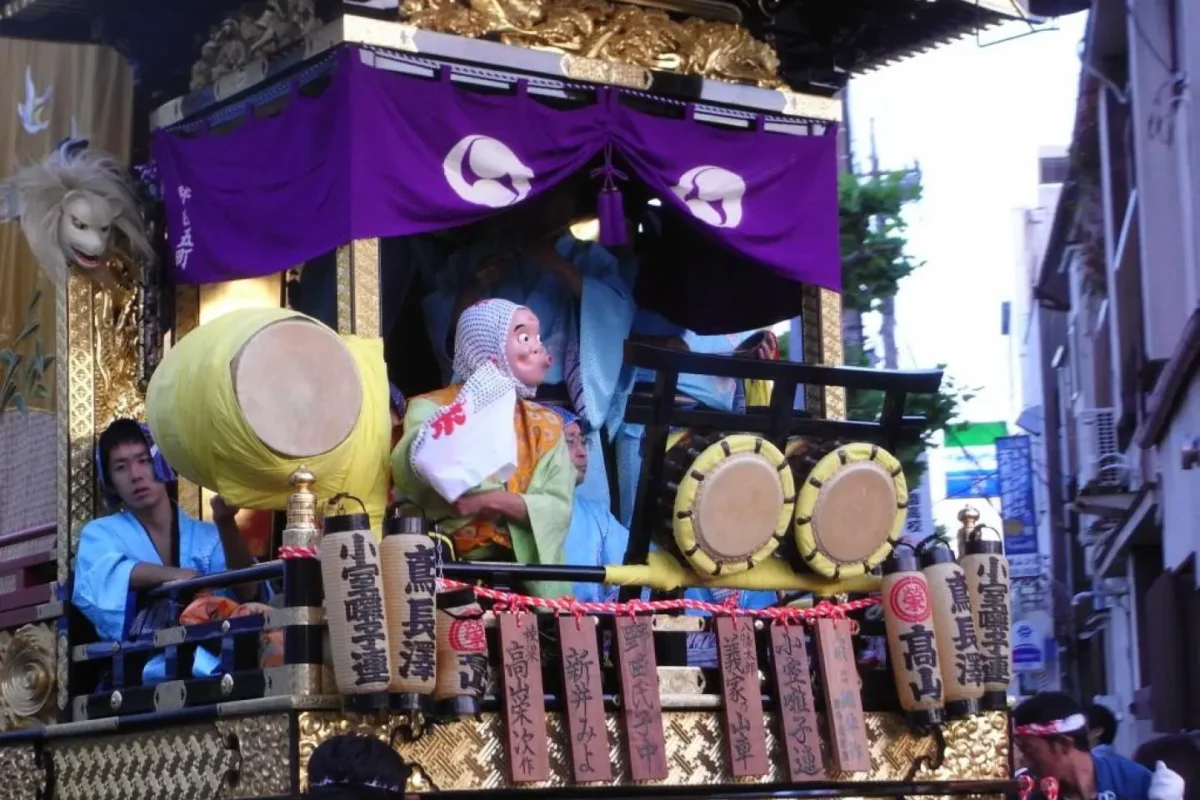
To admire detail of amazing floats it’s best to go during day. Structure of festival floats has developed in Edo style consisting of 2 levels with doll on top, usually featuring historical people. Sides are decorated with delicate carvings and beautifully embroidered curtains.
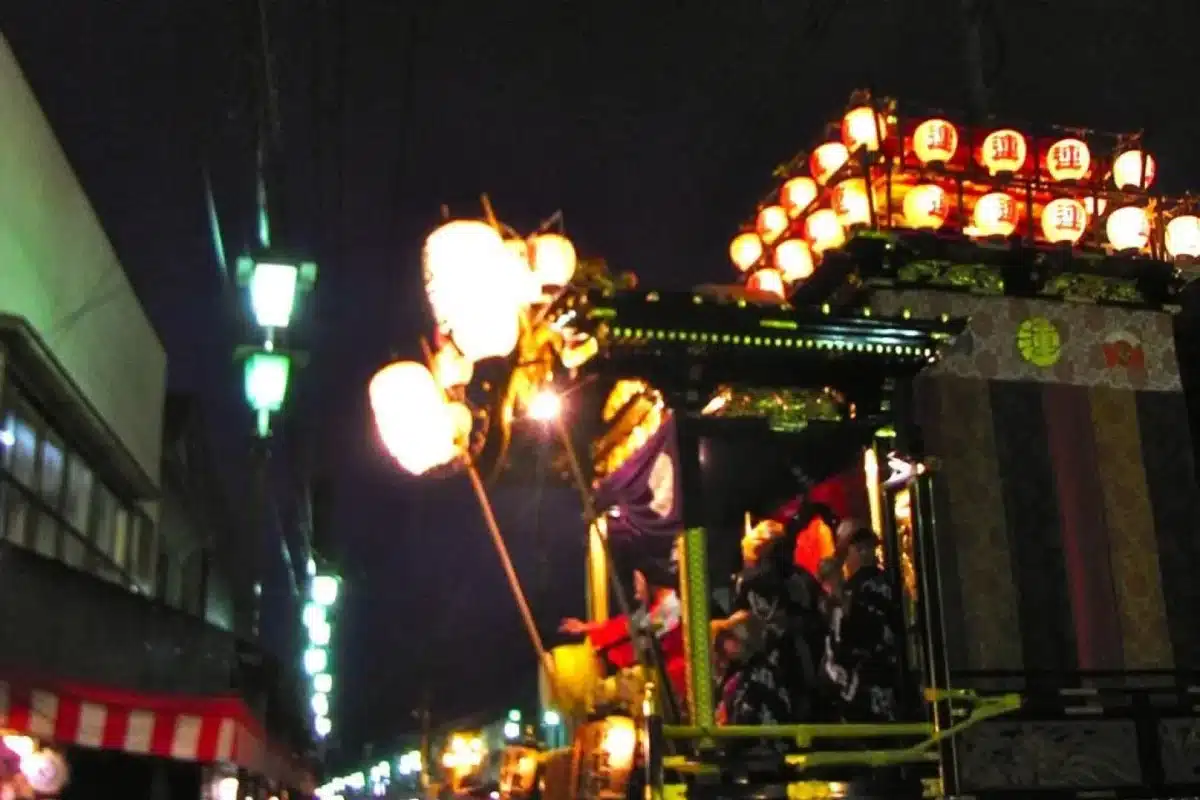
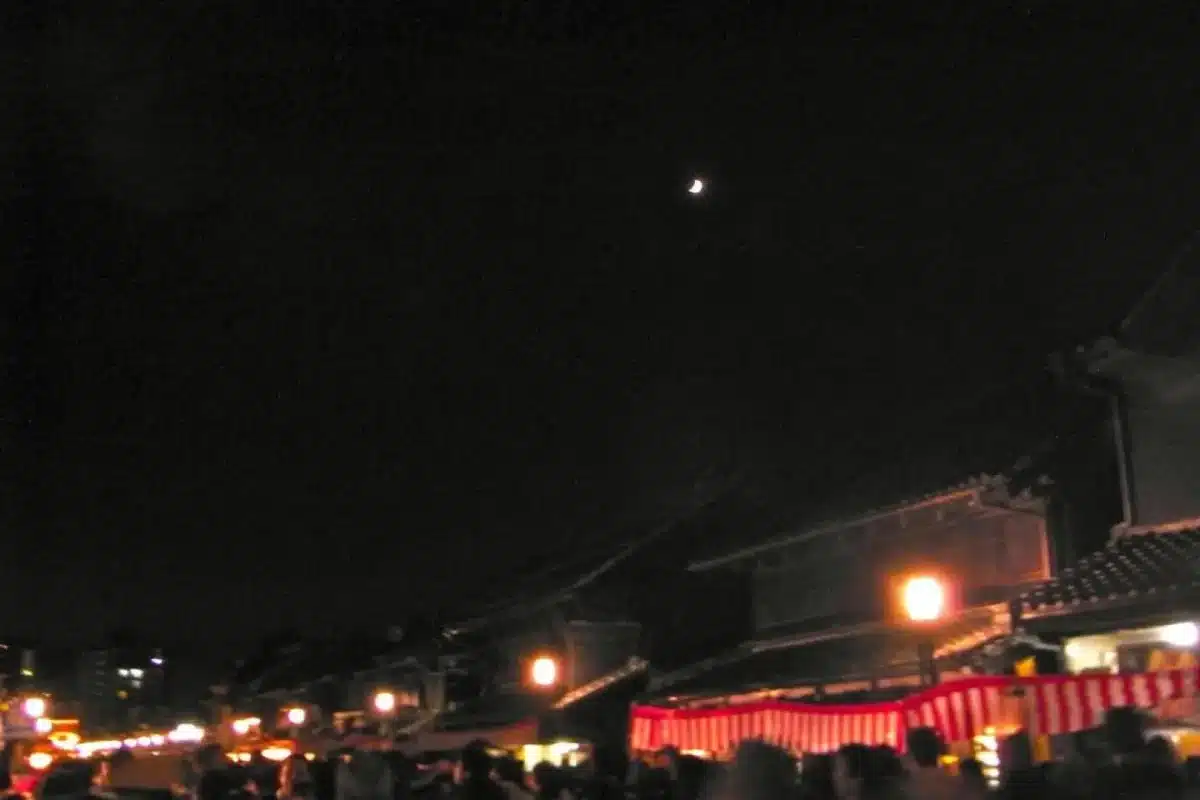
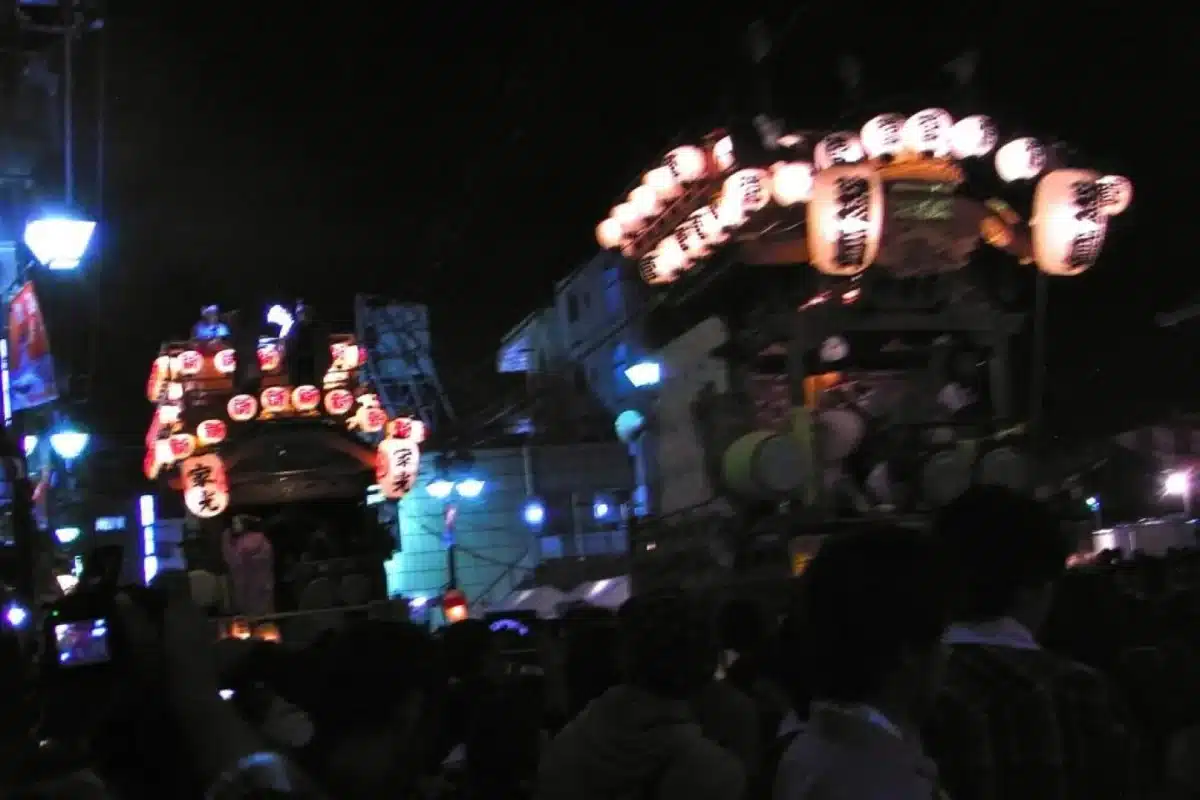
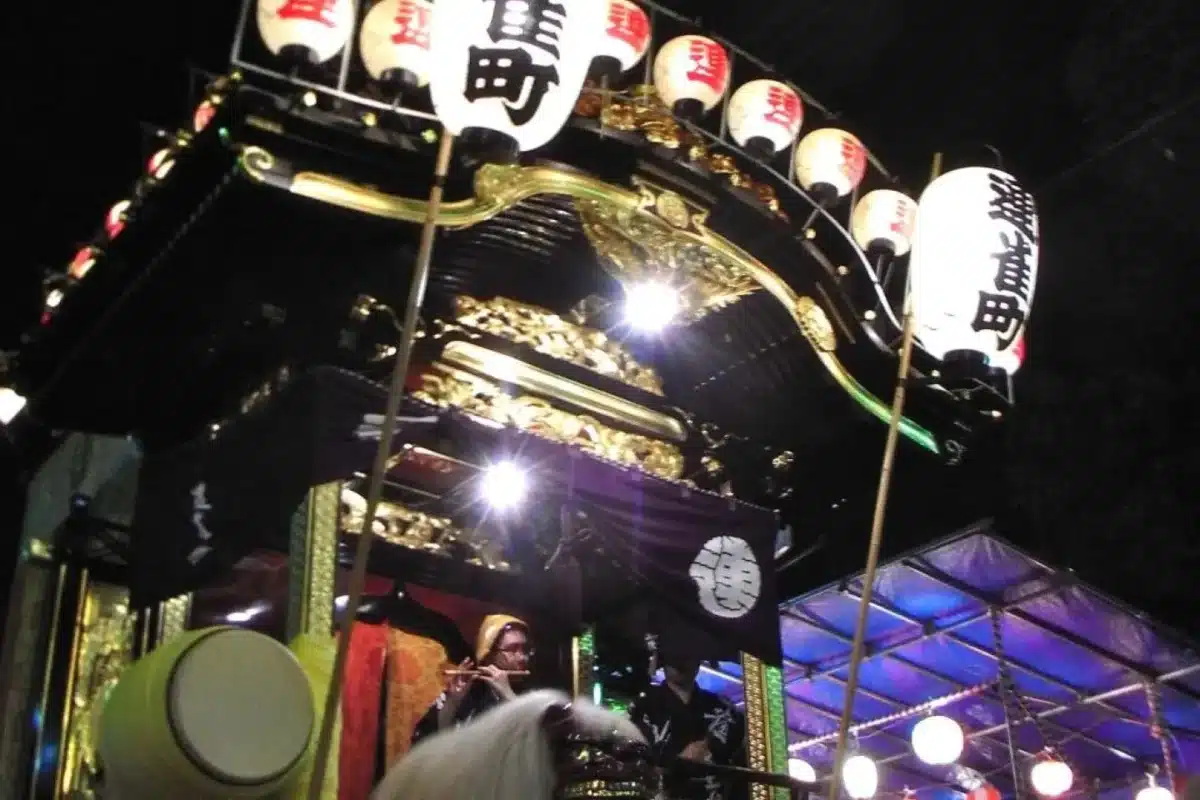
The highlight of festival however, starts after sunset when lots of lanterns on floats are lit. With lots of excited musicians and dancers on top of floats, people start to pull them along streets again. When a float overtakes another, they face each other, music gets louder, and they get into kind of competition. This is called Hikkawase and it feels like battle of music, cheered by excited spectators. I think it’s very unique and atmosphere is simply amazing.
Cultural Significance & Origins
Kawagoe Festival is UNESCO Intangible Cultural Heritage with over 370 years history, rooted in Edo period lord’s donation.
1648 Origin: Festival started in 1648 Keian period when Matsudaira Nobutsuna, lord of Kawagoe Domain at time, contributed lion’s face masks, mikoshi portable shrines and taiko drums to Hikawa Shrine, one of main shrines in Kawagoe. Neighborhood processions began in 1651, and celebration has continued growing richer and more elaborate for well over three centuries.
Hikawa Shrine Autumn Festival: Rooted in autumn festival of Kawagoe Hikawa Shrine, celebration’s main feature is so-called hikkawase. First Kawagoe Festival was held in 1648 and has evolved over last three centuries into magnificent spectacle that engulfs about three square miles of central Kawagoe.
Important Intangible Folk Cultural Property: Kawagoe Festival was designated as Important Intangible Folk Cultural Property of Japan in February 2005 under name Float Festival of Kawagoe Hikawa Matsuri Festival. Was included on UNESCO Intangible Cultural Heritage List in December 2016. Yama, Hoko, Yatai float festivals are UNESCO cultural heritage.
Little Edo – Kawagoe: Old town center known as Little Edo, as it still holds very traditional atmosphere, with special preserved area of Kurazukuri clay-walled warehouse-style buildings from Edo period, with no utility poles in area. That means you can enjoy old houses, beautiful floats, traditional music without usual poles and wires, and you feel like having slipped into 17th or 18th century of Edo period.
29 Neighborhood Floats: Towering two-story festival floats with oversized dolls representing 29 neighborhoods of Kawagoe parade through streets, tradition as old as festival itself. Floats as tall as nine meters and weighing up to 3.4 tons, many crafted as early as Edo period 1603 to 1867. This year there were as many as 29 floats pulled through streets, confirmed 26 dashi in 2026 lineup published by association.
Lord Matsudaira Nobutsuna: Known as Chie Izu, wise lord, donated mikoshi to Hikawa Shrine to pray for peace and prosperity of domain, establishing festival that maintains history more than 370 years.
Traditions, Rituals & Customs
Festival combines Shinto procession, Edo float craftsmanship, and musical battle.
Dashi Floats – Two Levels: Structure of festival floats has developed in Edo style consisting of 2 levels with doll on top, usually featuring historical people. Sides decorated with delicate carvings and beautifully embroidered curtains. Floats 26 to 29 confirmed lineup, towering two-story festival floats with oversized dolls representing neighborhoods.
Ohayashi Traditional Music: Lots of huge and beautifully decorated floats dashi accompanied by traditional Japanese music ohayashi pulled around old town center. Ohayashi played by musicians on top of floats, with flutes, drums, shamisen.
Hikkawase – Float Musical Battle: Highlight starts after sunset when lots of lanterns on floats are lit. With lots of excited musicians and dancers on top of floats, people start to pull them along streets again. When float overtakes another, they face each other, music gets louder, and they get into kind of competition. This is called Hikkawase and it feels like battle of music, cheered by excited spectators. When float passes another float, they perform Hikkawase as greeting between townspeople, stage rotates to face.
Daytime Detail Viewing: To admire detail of amazing floats it’s best to go during day, with delicate carvings and embroidered curtains visible.
Renkeiji Temple Entertainment: There’s always lots of entertainment and food stalls around Renkeiji Temple. Try takoyaki ball-shaped octopus snack or have drink at many temporary izakayas Japanese bars, and of course you could have some sake at temple! Gold fish scooping is fun, too. Japanese Monster House which has become very rare in Japan sometimes appears.
Hikawa Shrine Ritual: Festival rooted in Hikawa Shrine autumn festival, with Shinto priests blessing mikoshi and floats at Hikawa Shrine before parade.
Kurazukuri Preservation Area: At Naka-cho intersection off main street special preserved area of Kurazukuri clay-walled warehouse-style buildings begins, with no utility poles, allowing authentic Edo atmosphere.
What to Expect at the Festival
Expect overwhelming scale of huge decorated floats pulled through Little Edo streets, with music battle at night.
Lots of huge and beautifully decorated floats dashi accompanied by traditional Japanese music ohayashi pulled around old town center, which is also known as Little Edo, as it still holds very traditional atmosphere. You will be overwhelmed by sheer scale of floats, absolutely amazing! However, you should also know that it gets very crowded during that time.
Festival has origin as far back as 1648 when Lord Matsudaira Nobutsuna donated portable shrine Mikoshi to Hikawa Shrine, one of main shrines. In later years floats created by neighboring towns started to participate. Until today festival has become large and very popular event; this year there were as many as 29 floats pulled through streets.
There’s always lots of entertainment and food stalls around Renkeiji Temple. Try takoyaki or have drink at many temporary izakayas, and of course you could have some sake at temple! Gold fish scooping is fun. Japanese Monster House which has become very rare.
At Naka-cho intersection off main street special preserved area of Kurazukuri clay-walled warehouse-style buildings from Edo period begins. And, more importantly, there’re no utility poles in this area! That means you can enjoy old houses, beautiful floats, traditional music without usual poles and wires, and you feel like having slipped into 17th or 18th century.
To admire detail of amazing floats it’s best to go during day. Structure has developed in Edo style consisting of 2 levels with doll on top, usually featuring historical people. Sides decorated with delicate carvings and beautifully embroidered curtains.
Highlight starts after sunset when lots of lanterns on floats are lit. With lots of excited musicians and dancers on top of floats, people start to pull them along streets again. When float overtakes another, they face each other, music gets louder, and they get into kind of competition. This is called Hikkawase and it feels like battle of music, cheered by excited spectators. Very unique and atmosphere simply amazing.
Date & Schedule
Event Dates: October 2027 (Dates TBD)
Official Timing: Every year on 3rd Saturday and Sunday of October it’s time for exciting Kawagoe Matsuri, Kawagoe Festival. Inscribed on UNESCO’s Representative List of Intangible Cultural Heritage of Humanity since 2016, it’s one of biggest festivals in Kanto region and maintains history more than 370 years.
Kawagoe Festival is held annually on third Sunday of October and preceding Saturday. Floats 26 dashi confirmed 2026 lineup published by association. Cost free streets no general admission; extras are paid. Pedigree UNESCO-listed since 2016; roots dating to 1648. Access 3 stations Kawagoe Tobu JR, Kawagoe-shi, Hon-Kawagoe.
For 2027: October 2027 Dates TBD, expected 3rd Saturday and Sunday of October, at Kawagoe City, Saitama Prefecture, Little Edo old town center, Kurazukuri preserved area, Naka-cho intersection, Renkeiji Temple area, Hikawa Shrine.
Typical Daily Schedule Based on Previous Editions:
- Saturday – Day 1: Morning Hikawa Shrine rituals, blessing of mikoshi, 10:00 to 17:00 daytime parade of 29 floats pulled through streets of old town center Little Edo, best time to admire detail of amazing floats with 2 levels and doll on top with delicate carvings and embroidered curtains. Afternoon entertainment and food stalls around Renkeiji Temple, takoyaki, izakayas, sake at temple, gold fish scooping, Monster House.
- Saturday Evening: After sunset lots of lanterns on floats lit, musicians and dancers on top, floats pulled again, Hikkawase musical battles when floats face each other at intersections like Naka-cho, music gets louder, battle of music cheered by spectators, continues until 21:00 to 22:00
- Sunday – Day 2: Similar daytime parade 10:00 to 17:00, with floats in Kurazukuri area with no utility poles, allowing Edo atmosphere, evening Hikkawase highlight again until 21:00
- Note: Gets very crowded, especially evening Hikkawase at main intersections
Venue: Kawagoe old town center, Little Edo, Kurazukuri preserved area, Naka-cho intersection, Renkeiji Temple, Hikawa Shrine, Saitama Prefecture
Visiting this event? Don’t miss out on these amazing activities and local experiences while you’re here.
Main Events & Programme
Two-day programme of float parades and night musical battles.
29 Dashi Float Parade Daytime: Lots of huge and beautifully decorated floats dashi accompanied by traditional Japanese music ohayashi pulled around old town center Little Edo. Floats as tall as nine meters and weighing up to 3.4 tons, many crafted as early as Edo period, towering two-story festival floats with oversized dolls representing 29 neighborhoods, 26 dashi confirmed 2026 lineup. Best to go during day to admire detail.
Kurazukuri Historic Street Parade: At Naka-cho intersection special preserved area of Kurazukuri clay-walled warehouse-style buildings from Edo period begins, with no utility poles, allowing enjoyment of old houses, beautiful floats, traditional music without poles and wires, feeling like slipped into 17th or 18th century.
Renkeiji Temple Festival Market: Lots of entertainment and food stalls around Renkeiji Temple, with takoyaki ball-shaped octopus snack, temporary izakayas Japanese bars, sake at temple, gold fish scooping, Japanese Monster House very rare in Japan.
Hikkawase – Musical Battle – Night Highlight: Highlight starts after sunset when lots of lanterns on floats lit, with lots of excited musicians and dancers on top, people pull floats again. When float overtakes another, they face each other, music gets louder, and they get into kind of competition called Hikkawase, battle of music cheered by excited spectators. When float passes another, they perform Hikkawase as greeting between townspeople, stage rotates to face, floats gather at intersection.
Hikawa Shrine Ritual: Origin 1648 when Lord Matsudaira Nobutsuna donated portable shrine Mikoshi to Hikawa Shrine, with morning Shinto rituals blessing floats and mikoshi.
UNESCO Heritage Celebration: Inscribed on UNESCO Representative List of Intangible Cultural Heritage of Humanity since 2016, one of biggest festivals in Kanto, maintains history more than 370 years, with Yama Hoko Yatai float festivals as UNESCO cultural heritage, designated Important Intangible Folk Cultural Property in February 2005 under name Float Festival of Kawagoe Hikawa Matsuri Festival.
Traditional Dress, Arts & Crafts
Float craftsmanship is Edo period art with dolls, carvings, textiles.
Dashi Float Structure – Edo Style: Structure developed in Edo style consisting of 2 levels with doll on top, usually featuring historical people. Sides decorated with delicate carvings and beautifully embroidered curtains. Floats as tall as nine meters and weighing up to 3.4 tons, many crafted as early as Edo period 1603 to 1867, towering two-story festival floats with oversized dolls representing 29 neighborhoods.
Doll Art – Ningyo: Doll on top featuring historical people, legendary heroes, Kabuki characters, crafted with elaborate costumes, some 2 to 3 meters tall, representing neighborhood pride.
Delicate Carvings: Sides decorated with delicate carvings, dynamic carving of dragons, lions, mythical beasts, created by Edo master carpenters, with gold leaf and lacquer.
Embroidered Curtains: Beautifully embroidered curtains with gold thread, depicting scenes from history, nature, with brocade and tassels.
Ohayashi Musician Costumes: Musicians wear traditional happi coats with neighborhood crest, hachimaki headbands, playing flutes, taiko drums, shamisen on top of floats.
Hikawa Shrine Mikoshi: Portable shrine Mikoshi donated 1648 by Lord Matsudaira Nobutsuna, with lion’s face masks and taiko drums, decorated with gold and lacquer.
Kurazukuri Architecture: Clay-walled warehouse-style buildings from Edo period preserved area, with no utility poles, traditional kura-zukuri style with thick clay walls to protect against fire.
Lantern Art: Lots of lanterns on floats lit after sunset, paper chouchin lanterns with neighborhood names, creating glowing parade.
Traditional Food & Local Specialties
Kawagoe known as Little Edo with sweet potato and traditional Edo foods.
Renkeiji Temple Food Stalls:
- Takoyaki: Ball-shaped octopus snack for 4 USD to 7 USD, popular at festival
- Temporary Izakayas: Japanese bars serving beer for 4 USD to 7 USD, sake for 5 USD to 9 USD, at temple area, have some sake at temple
- Gold Fish Scooping: Kingyo sukui game for 3 USD to 5 USD, fun for children
- Japanese Monster House: Obake yashiki haunted house for 5 USD to 8 USD, very rare in Japan
Kawagoe Local Specialties:
- Kawagoe Sweet Potato – Satsumaimo: Kawagoe famous for sweet potatoes, with sweet potato chips for 3 USD to 6 USD, sweet potato ice cream for 4 USD to 6 USD, sweet potato cakes for 5 USD to 8 USD
- Coedo Beer: Local craft beer from Kawagoe for 5 USD to 8 USD
- Unagi: Eel dishes for 12 USD to 20 USD, Kawagoe famous for eel
- Kawagoe Ramen and Udon: For 7 USD to 11 USD
- Imo Koi: Sweet potato and red bean paste sweets for 3 USD to 5 USD
Edo Period Atmosphere Foods:
- Dango: Grilled rice dumplings for 3 USD to 5 USD
- Yakitori: For 3 USD to 6 USD
- Oden: For 4 USD to 8 USD
Kurazukuri Area Cafes: In preserved area with no utility poles, cafes serving matcha for 4 USD to 6 USD and traditional sweets, allowing Edo period feeling.
Location & Festival Areas
Location: Kawagoe City, Saitama Prefecture, Japan, Kanto region, known as Little Edo, 30 km northwest of Tokyo
Old Town Center – Little Edo: Old town center known as Little Edo, as it still holds very traditional atmosphere, with three square miles of central Kawagoe engulfed by festival, with 29 floats parading.
Kurazukuri Preserved Area: At Naka-cho intersection off main street special preserved area of Kurazukuri clay-walled warehouse-style buildings from Edo period begins, with no utility poles, allowing enjoyment of old houses, beautiful floats, traditional music without poles and wires, feeling like slipped into 17th or 18th century.
Renkeiji Temple Area: Lots of entertainment and food stalls around Renkeiji Temple, with takoyaki, izakayas, sake, gold fish scooping, Monster House, located south of Kurazukuri area.
Hikawa Shrine: One of main shrines in Kawagoe, where Lord Matsudaira Nobutsuna donated portable shrine Mikoshi in 1648, origin of festival, located north of old town, with rituals before parade.
Naka-cho Intersection: Key intersection where Kurazukuri area begins, main spot for Hikkawase musical battles when floats face each other, with no utility poles, best photo spot.
Honkawagoe and Kawagoe Stations Area: Three stations access Kawagoe Tobu JR, Kawagoe-shi, Hon-Kawagoe, with festival area 10 to 15 minute walk from stations.
Kawagoe City: City with Edo period history, former castle town of Kawagoe Domain, lord Matsudaira Nobutsuna, known as Chie Izu wise lord.
Getting to the Festival
Kawagoe is easily accessible from Tokyo as Little Edo day trip.
From Tokyo to Kawagoe:
- Tobu Tojo Line: From Ikebukuro to Kawagoe Station, express 30 minutes, fare about 5 USD to 7 USD, or to Kawagoe-shi Station, then 10 minute walk to festival
- JR Kawagoe Line: From Shinjuku or Ikebukuro via JR Saikyo Line to Kawagoe Station, 45 to 60 minutes, fare about 6 USD to 9 USD
- Seibu Shinjuku Line: From Seibu Shinjuku to Hon-Kawagoe Station, express 45 minutes, fare about 5 USD to 8 USD, closest to Kurazukuri area, 5 minute walk to Naka-cho intersection
Three Stations: Access 3 stations Kawagoe Tobu JR, Kawagoe-shi, Hon-Kawagoe, all within 10 to 15 minute walk to old town center and festival.
On Foot in Festival: Old town center engulfs about three square miles, floats pulled through streets, walkable between Hikawa Shrine, Kurazukuri area, Renkeiji Temple, Naka-cho intersection.
By Car: From Tokyo via Kan-Etsu Expressway to Kawagoe Interchange, 45 minutes, but parking very limited during festival, gets very crowded, use public transport, with parking lots closed or restricted, fee 10 USD to 20 USD per day if available.
From Other Areas: From Saitama City 30 minutes, from Yokohama 1 hour 30 minutes via JR.
Accessibility: Festival area flat, but crowded, especially evening Hikkawase at Naka-cho intersection, arrive early for daytime detail viewing.
Where to Stay Nearby
Kawagoe is day trip from Tokyo, but staying overnight allows enjoying night Hikkawase.
In Kawagoe City:
- Kawagoe Prince Hotel: Near Hon-Kawagoe Station, 5 minute walk to Kurazukuri area, from 90 USD to 150 USD per night, popular during festival, book early
- Hotel Kawagoe Max: Business hotel near Kawagoe Station, from 60 USD to 95 USD
- APA Hotel Kawagoe: From 60 USD to 90 USD
- Ryokan and Guesthouses: Small ryokan in old town from 80 USD to 140 USD, with Edo atmosphere, but limited
Nearby – Saitama City and Omiya: 20 to 30 minutes from Kawagoe by train, many business hotels from 60 USD to 110 USD, such as Palace Hotel Omiya.
Tokyo: 30 to 60 minutes from Kawagoe, many options from budget hostels 25 USD to 50 USD dorm to luxury hotels 150 USD to 400 USD, such as in Ikebukuro or Shinjuku near Tobu and Seibu lines, convenient for day trip.
Booking Tip: Festival is one of biggest in Kanto region, maintains history more than 370 years, inscribed UNESCO 2016, gets very crowded, book Kawagoe hotels 2 months ahead for October weekend, as 29 floats attract millions, with 26 dashi confirmed 2026 lineup.
Alternative – Stay in Kurazukuri: No hotels inside preserved Kurazukuri area with no utility poles, but nearby.
What Visitors Can Participate In
Festival is viewing-focused but visitors can join in food, games, and musical battle cheering.
Daytime Float Detail Viewing: To admire detail of amazing floats it’s best to go during day, with structure Edo style 2 levels with doll on top featuring historical people, sides decorated with delicate carvings and beautifully embroidered curtains, take photos, talk to neighborhood teams pulling floats.
Night Hikkawase Cheering: Highlight after sunset when lots of lanterns on floats lit, with excited musicians and dancers on top, floats pulled again, when float overtakes another they face each other, music gets louder, competition Hikkawase, battle of music cheered by excited spectators, join cheering at Naka-cho intersection.
Renkeiji Temple Entertainment: Lots of entertainment and food stalls around Renkeiji Temple, try takoyaki ball-shaped octopus snack, have drink at many temporary izakayas Japanese bars, have some sake at temple, gold fish scooping fun, Japanese Monster House very rare in Japan.
Kurazukuri Walking Without Poles: At Naka-cho intersection special preserved area of Kurazukuri clay-walled warehouse-style buildings begins, with no utility poles, enjoy old houses, beautiful floats, traditional music without poles and wires, feeling like slipped into 17th or 18th century.
Ohayashi Music Listening: Listen to traditional Japanese music ohayashi played on floats, with flutes, drums, shamisen, musicians on top.
Hikawa Shrine Visit: Visit Hikawa Shrine one of main shrines, where Lord Matsudaira Nobutsuna donated Mikoshi in 1648, see Shinto rituals.
Sweet Potato Tasting: Kawagoe famous for sweet potatoes, try various sweets, ice cream, chips from stalls.
Photography: Overwhelmed by sheer scale of floats, absolutely amazing, take photos of 9 meter tall floats weighing up to 3.4 tons, with lanterns at night.
Things to Do Before or After the Festival
Kawagoe Little Edo offers many Edo period attractions.
Kurazukuri Warehouse Walking: Before festival, explore special preserved area of Kurazukuri clay-walled warehouse-style buildings from Edo period with no utility poles, with shops selling sweet potato sweets, crafts, and Coedo Beer.
Toki no Kane – Bell of Time: Iconic bell tower in Kurazukuri area, symbol of Kawagoe, rings four times a day, near Naka-cho intersection.
Kashiya Yokocho – Candy Alley: Alley with many candy shops selling traditional Japanese sweets, for 2 USD to 5 USD, nostalgic.
Hikawa Shrine: Visit Hikawa Shrine origin of festival, with large torii and ema tunnel with wind chimes, and famous for love fortune.
Kawagoe Castle Honmaru Goten: Only remaining palace building of Kawagoe Castle where Lord Matsudaira Nobutsuna lived, entry about 1 USD to 2 USD.
Kita-in Temple: Famous temple with 500 Rakan statues, and room where Tokugawa Ieyasu born.
Kawagoe Matsuri Kaikan – Festival Museum: Museum displaying two full-size dashi floats with dolls, carvings, embroidered curtains, with Hikkawase show on screen, entry about 4 USD to 6 USD, allows seeing detail of amazing floats up close anytime.
Koedo Beer Tasting: Visit Coedo Brewery, craft beer tasting for 5 USD to 10 USD.
Day Trip from Tokyo: Kawagoe is Little Edo, 30 km northwest of Tokyo, perfect day trip combining festival with Edo atmosphere.
Local Food & Restaurants
Kawagoe is food town with sweet potato and eel specialties.
Festival Stalls at Renkeiji Temple:
- Takoyaki: Ball-shaped octopus snack for 4 USD to 7 USD
- Izakayas Temporary: Japanese bars with beer 4 USD to 7 USD, sake 5 USD to 9 USD, at temple area
- Gold Fish Scooping: Game for 3 USD to 5 USD, with small goldfish prize
- Monster House: Obake yashiki for 5 USD to 8 USD
Kawagoe Local Foods:
- Sweet Potato – Satsumaimo: Kawagoe famous, with many forms:
- Sweet potato chips for 3 USD to 6 USD
- Sweet potato ice cream for 4 USD to 6 USD
- Imo Koi sweet potato red bean sweets for 3 USD to 5 USD
- Sweet potato cakes for 5 USD to 8 USD
- Coedo Beer: Local craft beer, six varieties, for 5 USD to 8 USD per bottle, brewery near old town
- Unagi Eel: Kawagoe famous for eel, eel rice box for 12 USD to 20 USD at restaurants like Klein or Ueno
- Kawagoe Ramen and Udon: For 7 USD to 11 USD
- Monja: Savory pancake for 8 USD to 14 USD
Kurazukuri Area Restaurants:
- Traditional Cafes: In clay-walled warehouses with no utility poles, serving matcha for 4 USD to 6 USD and sweet potato sweets, with Edo period feeling
- Izakaya: Serving Coedo Beer and sake for 15 USD to 30 USD per person
Saitama Foods: Nearby Saitama famous for negi onions and river fish.
Ticket Information & Access
Price of Admission: FREE for street viewing
Kawagoe Festival is free streets no general admission; extras are paid. Every year on 3rd Saturday and Sunday of October it’s time for exciting Kawagoe Matsuri, inscribed UNESCO Representative List of Intangible Cultural Heritage of Humanity since 2016, one of biggest festivals in Kanto region and maintains history more than 370 years.
Costs Based on Previous Editions:
- General Street Viewing: Free, with lots of huge and beautifully decorated floats dashi accompanied by traditional Japanese music ohayashi pulled around old town center Little Edo, overwhelmed by sheer scale
- Kurazukuri Area Walking: Free, with no utility poles area, enjoy old houses, beautiful floats, traditional music
- Renkeiji Temple Entertainment: Food stalls takoyaki 4 USD to 7 USD, temporary izakayas beer 4 USD to 7 USD sake 5 USD to 9 USD, gold fish scooping 3 USD to 5 USD, Monster House 5 USD to 8 USD
- Kawagoe Matsuri Kaikan Museum: Entry about 4 USD to 6 USD for adults, 2 USD to 3 USD for children, to see two full-size dashi floats anytime
- Hikawa Shrine: Free entry, with rituals
- Transport from Tokyo: Tobu Tojo Line from Ikebukuro to Kawagoe 5 USD to 7 USD, JR Kawagoe Line 6 USD to 9 USD, Seibu Shinjuku Line to Hon-Kawagoe 5 USD to 8 USD, 30 to 60 minutes
- Food: Sweet potato sweets 3 USD to 8 USD, Coedo Beer 5 USD to 8 USD, unagi 12 USD to 20 USD
Hours: Daytime parade 10:00 to 17:00 best to admire detail, night Hikkawase after sunset lanterns lit until 21:00 to 22:00
Access: 3 stations Kawagoe Tobu JR, Kawagoe-shi, Hon-Kawagoe, 10 to 15 minute walk to old town center, Naka-cho intersection, Renkeiji Temple, Hikawa Shrine
Official Event Information
Event Name: Kawagoe Festival 2027 – Japan, also called Kawagoe Matsuri, Kawagoe Hikawa Matsuri Float Festival
Venue: Kawagoe old town center, Little Edo, Saitama Prefecture, Japan, with Kurazukuri preserved area clay-walled warehouse-style buildings from Edo period with no utility poles, Naka-cho intersection, Renkeiji Temple area, Hikawa Shrine one of main shrines
Organizer: Kawagoe Festival Association, Kawagoe City, Hikawa Shrine, and 29 neighborhood associations
Official Website: https://www.kawagoematsuri.jp/English/index.html
Description: Every year on 3rd Saturday and Sunday of October it’s time for exciting Kawagoe Matsuri Kawagoe Festival. Inscribed on UNESCO’s Representative List of Intangible Cultural Heritage of Humanity since 2016, it’s one of biggest festivals in Kanto region and maintains history more than 370 years. Lots of huge and beautifully decorated floats dashi accompanied by traditional Japanese music ohayashi pulled around old town center, which is also known as Little Edo, as it still holds very traditional atmosphere. You will be overwhelmed by sheer scale of floats, absolutely amazing! However, you should also know that it gets very crowded during that time.
Kawagoe Matsuri has its origin as far back as 1648 when Lord Matsudaira Nobutsuna donated portable shrine Mikoshi to Hikawa Shrine, one of main shrines in Kawagoe. In later years floats created by neighboring towns started to participate. Until today festival has become large and very popular event; this year there were as many as 29 floats pulled through streets. There’s always lots of entertainment and food stalls around Renkeiji Temple. Try takoyaki ball-shaped octopus snack or have drink at many temporary izakayas Japanese bars, and of course you could have some sake at temple! Gold fish scooping is so much fun, too. This year there was even Japanese Monster House, which has become very rare in Japan. At Naka-cho intersection off main street special preserved area of Kurazukuri clay-walled warehouse-style buildings from Edo period begins. And, more importantly, there’re no utility poles in this area! That means you can enjoy old houses, beautiful floats, traditional music without usual poles and wires, and you feel like having slipped into 17th or 18th century of Edo period.
To admire detail of amazing floats it’s best to go during day. Structure of festival floats has developed in Edo style consisting of 2 levels with doll on top, usually featuring historical people. Sides decorated with delicate carvings and beautifully embroidered curtains. Highlight however, starts after sunset when lots of lanterns on floats are lit. With lots of excited musicians and dancers on top of floats, people start to pull them along streets again. When float overtakes another, they face each other, music gets louder, and they get into kind of competition. This is called Hikkawase and it feels like battle of music, cheered by excited spectators. Very unique and atmosphere simply amazing.
Contact: Kawagoe City Tourist Association via official website
Video
Location
FAQ
What is UNESCO status of Kawagoe Festival and how old is it?
Festival started in 1648 Keian period when Matsudaira Nobutsuna lord of Kawagoe Domain contributed lion's face masks mikoshi portable shrines and taiko drums to Hikawa Shrine, with neighborhood processions beginning 1651, maintaining history more than 370 years. Kawagoe Festival was designated Important Intangible Folk Cultural Property of Japan in February 2005 under name Float Festival of Kawagoe Hikawa Matsuri Festival and was included on UNESCO Intangible Cultural Heritage List in December 2016. Yama Hoko Yatai float festivals are UNESCO cultural heritage, with towering two-story floats with oversized dolls representing 29 neighborhoods, tradition as old as festival itself, engulfing three square miles of central Kawagoe.
What are dashi floats and how big are they?
Lots of huge and beautifully decorated floats dashi accompanied by traditional Japanese music ohayashi pulled around old town center Little Edo, structure developed in Edo style consisting of 2 levels with doll on top usually featuring historical people, sides decorated with delicate carvings and beautifully embroidered curtains. Floats as tall as nine meters and weighing up to 3.4 tons, many crafted as early as Edo period 1603 to 1867, towering two-story festival floats with oversized dolls representing 29 neighborhoods, 26 dashi confirmed 2026 lineup. You will be overwhelmed by sheer scale of floats absolutely amazing, best to go during day to admire detail, with lanterns lit after sunset for night parade.
What is Hikkawase musical battle and when does it happen?
Highlight starts after sunset when lots of lanterns on floats are lit, with lots of excited musicians and dancers on top of floats, people start to pull them along streets again. When float overtakes another, they face each other, music gets louder, and they get into kind of competition called Hikkawase, battle of music cheered by excited spectators, very unique and atmosphere simply amazing. When float passes another float they perform Hikkawase as greeting between townspeople, stage rotates to face, several floats gather at intersection like Naka-cho, with no utility poles area allowing authentic Edo feeling, continuing until 21:00 to 22:00 during festival nights.
Where is Kurazukuri area and why are there no utility poles?
At Naka-cho intersection off main street special preserved area of Kurazukuri clay-walled warehouse-style buildings from Edo period begins, and more importantly there're no utility poles in this area, meaning you can enjoy old houses beautiful floats traditional music without usual poles and wires and feel like having slipped into 17th or 18th century of Edo period. Kurazukuri area is Little Edo old town center which still holds very traditional atmosphere, with thick clay-walled warehouses built to protect against fire, now housing shops cafes selling sweet potato sweets and Coedo Beer. This area is main route for dashi floats, best for daytime detail viewing and nighttime Hikkawase battles with authentic backdrop.
Can I eat and drink at festival and what about crowds?
There's always lots of entertainment and food stalls around Renkeiji Temple, try takoyaki ball-shaped octopus snack or have drink at many temporary izakayas Japanese bars and of course you could have some sake at temple, gold fish scooping fun too, with Japanese Monster House very rare in Japan. However you should also know that it gets very crowded during that time, especially evening Hikkawase at Naka-cho intersection, as it's one of biggest festivals in Kanto region inscribed UNESCO 2016 with 29 floats and history more than 370 years. To admire detail of amazing floats it's best to go during day, while highlight after sunset with lanterns lit offers musical battle atmosphere, so arrive early, use three stations Kawagoe Tobu JR Kawagoe-shi Hon-Kawagoe, and expect crowds.

Leave a Reply