
Overview
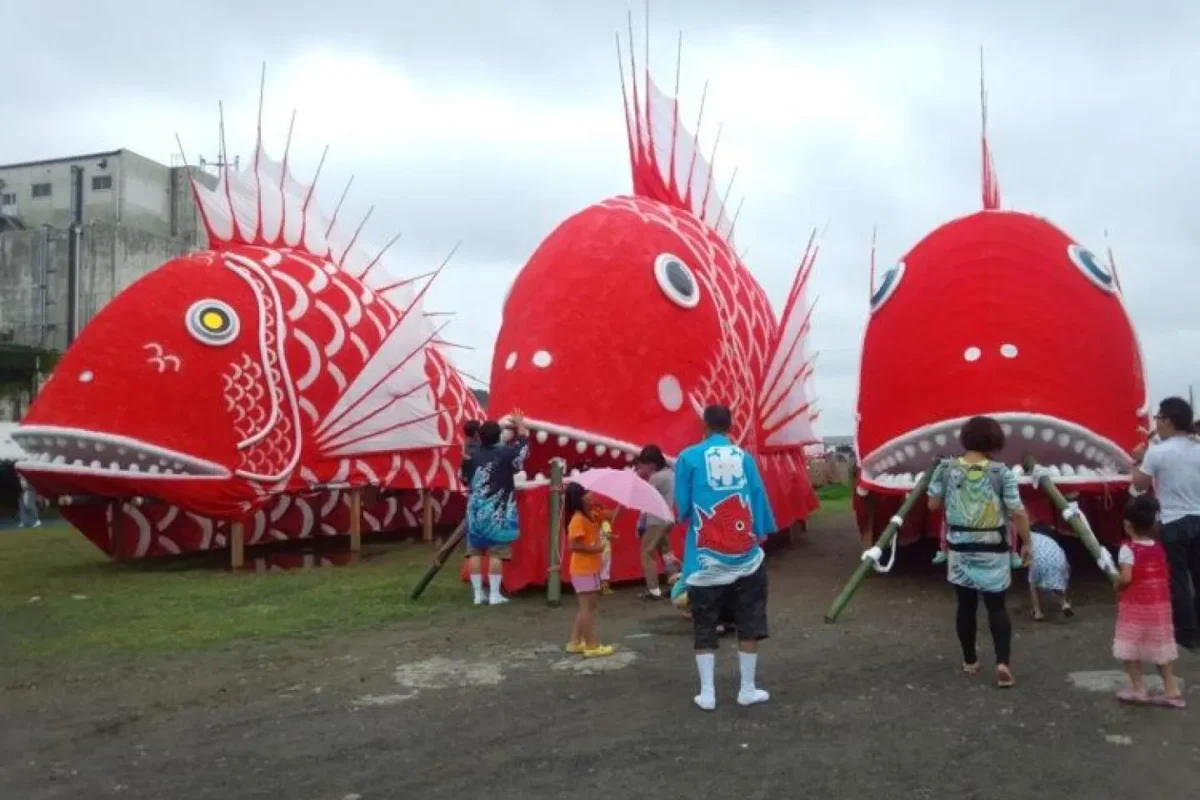
Toyohama Sea Bream Festival, known locally as Toyohama Tai Matsuri, is one of Japan’s most bizarre and spectacular fishermen’s festivals. Held in the fishing port town of Toyohama, about 50 kilometers south of Nagoya City on the southernmost tip of the Chita Peninsula in Aichi Prefecture, the festival looks like something out of a Godzilla movie, or a fishy version of King Kong.
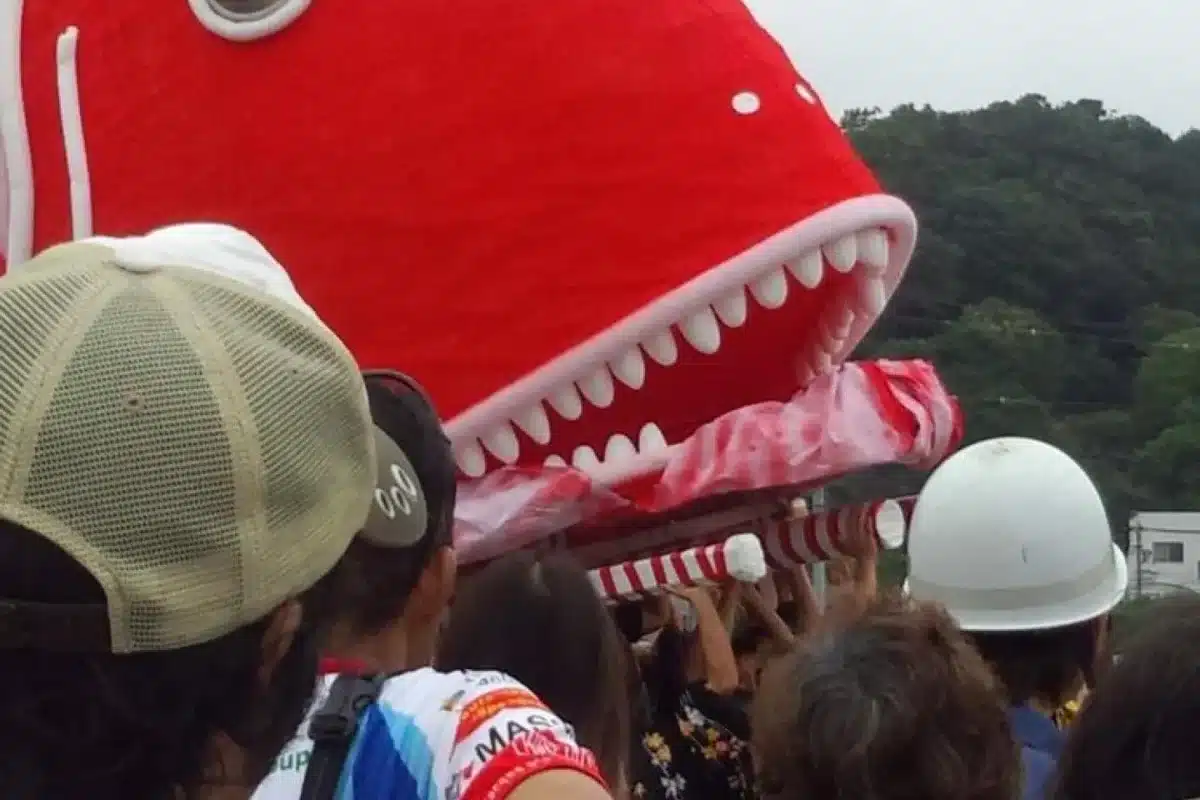
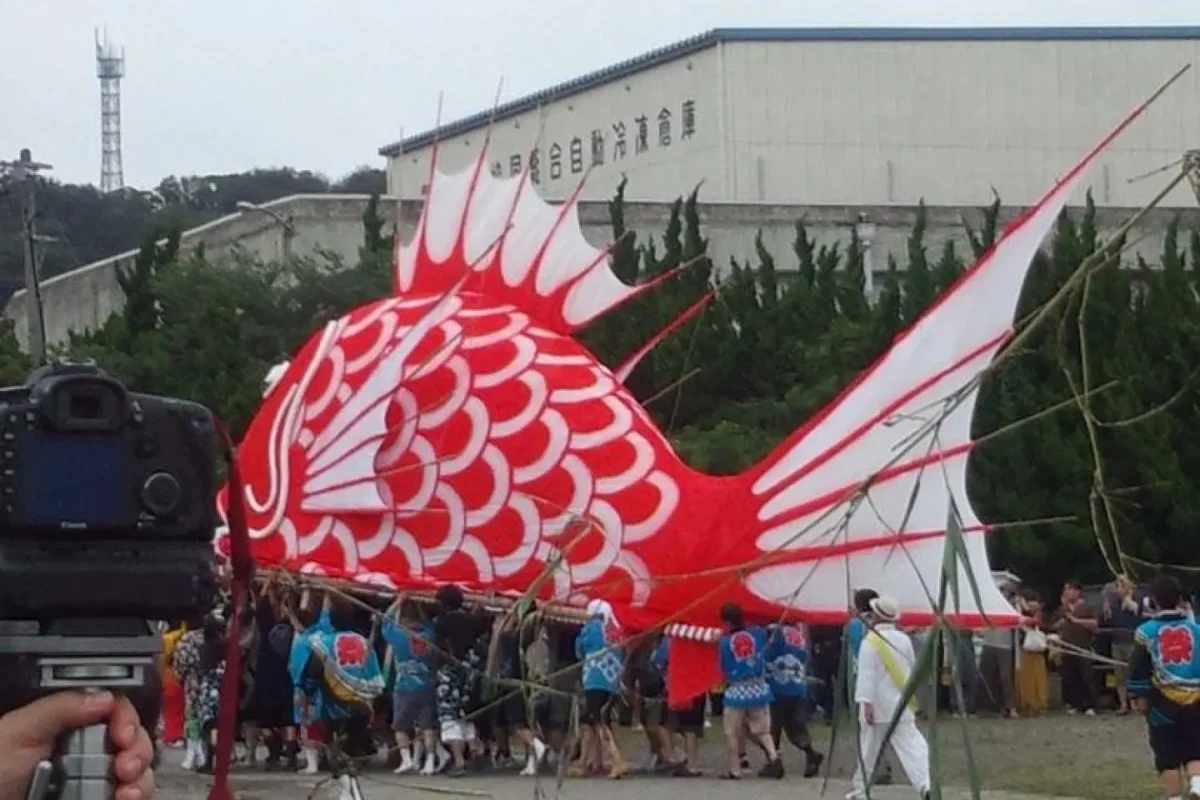
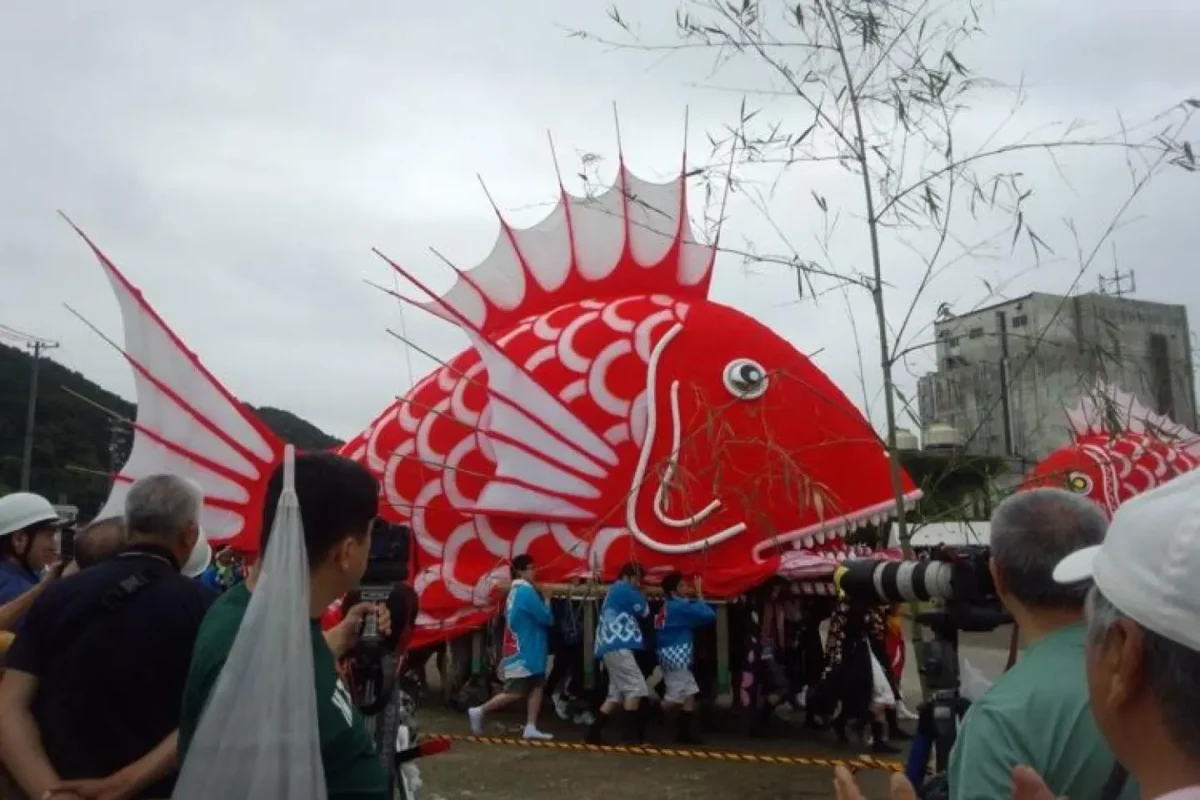
The spectacle centers on giant land-based sea bream up to 18 meters long and six meters high, charging and attacking each other in clouds of sand and dust while being chased by near-naked men before returning to the sea, where they splash and bob about. These enormous fish are not boats or mechanical floats but hand-built mikoshi shrines made from frames of bamboo and timber and wrapped in dyed cotton cloth, carried on the shoulders of up to 60 young men.
The festival is held to pray for maritime safety and an abundant catch, a vital concern for Toyohama, which is one of the best commercial fishing ports in Aichi and located within the Mikawa Bay Quasi-National Park. The town is divided into five wards, Hangetsu-Ku, Nakamura-Ku, Nakasu-Ku, Tobu-Ku, and Torii-Ku, and each ward makes its own huge bream. Smaller fish are carried by child participants, adding charm to the boisterous event. Other elements include girls shrine maiden dance, boys drumming performances, hundreds of food and drink stalls, and a massive fireworks display.
Enjoy Your Event Stress-Free with Japan Travelo
Do you know? Planning events, festivals, concerts, and cultural experiences in Japan can be overwhelming. Japan Travelo brings everything together in one place, helping you manage your itinerary, transport, and accommodation with ease—so you can enjoy Japan without the stress of planning.
Cultural Significance & Origins
The Toyohama Tai Matsuri has a history stretching back more than a century and is rooted in ancient Japanese beliefs about the sea bream, or tai, as a symbol of good fortune and celebration. In Japanese culture, tai is associated with medetai, meaning auspicious or joyous, and is traditionally served at weddings, New Year, and other celebrations.
As a fishing town facing the open Pacific and Mikawa Bay, Toyohama’s prosperity has always depended on the sea. The festival originated as a prayer to the sea gods for safe voyages, protection from storms, and bountiful catches of fish. The act of building a giant representation of the most auspicious fish and carrying it to the sea is a form of sympathetic magic, encouraging the real sea bream to come into the nets.
The five-ward structure is central to its cultural meaning. Toyohama is divided into Tobu-Ku, Torii-Ku, Hangetsu-Ku, Nakamura-Ku, and Nakasu-Ku. Each community builds its fish independently in the weeks leading up to the spectacle, fostering intergenerational bonding as elders teach younger men bamboo bending, carpentry, and cloth dyeing techniques. The competition between wards for the most beautiful or most vigorous fish strengthens local identity.
The festival also incorporates elements of Shinto purification. After parading through town, the giant bream are taken to the seaside and eventually symbolically returned to the sea and taken to the shrine as sacrificial offerings, completing a cycle of creation, celebration, and offering. The festival’s timing is traditionally determined by the tides at Toyohama Beach, ensuring the fish can enter the water safely, reflecting deep knowledge of local maritime conditions.
Traditions, Rituals & Customs
The festival follows a ritual sequence that blends Shinto ceremony, community craftsmanship, and wild folk performance.
Bream Construction Ritual: In the weeks before the festival, you can see locals gathering in community workshops in each ward to work on their area’s giant fish. The frame is built from locally sourced bamboo and timber, lashed together with rope. The body is then wrapped in specially dyed cotton cloth in red, black, and white patterns representing real sea bream markings. The head is carved and painted with fierce eyes. The largest bream is approximately 18 meters long, 6 meters high, and weighs around 1 ton. Smaller versions for children are also built.
Parade and Isamikomi Charge: The giant bream are borne by local young men dressed in traditional festival garb, happi coats, headbands, and fundoshi loincloths, all working in rotation. The parade begins with a slow, dignified procession through the town, with carriers chanting to synchronize steps. This transitions into the isamikomi, a mad dash where teams charge at each other, making the fish appear to attack and battle in clouds of sand.
Nerikomi Town Circulation: Each ward’s fish parades through its own streets first, receiving offerings of sake and salt from residents, before converging at central meeting points.
Umi Ire Sea Entry: The climax involves taking the fish into the sea. Carriers wade into the water up to their chests, making the giant fish splash, bob, and appear to swim. This is believed to please the sea gods.
Children’s Bream: Smaller fish, typically 2 to 4 meters long, are carried by child participants. This tradition ensures the festival is passed to the next generation and adds a certain charm to the boisterous event.
Shrine Maiden Dance and Boys Drumming: As secondary rituals, girls perform Miko mai shrine maiden dance at the local shrine, offering prayers for safety, while boys perform taiko drumming performances to energize the carriers.
Illumination: In the evening, the sea bream are illuminated from within with lights, creating glowing giant fish against the night sky.
What to Expect at the Festival
Expect a loud, chaotic, dusty, and utterly unforgettable folk event that feels both ancient and completely surreal.
The main action begins with the parade of the fish, carried by up to 60 men per bream. The carriers move in unison, swaying the fish side to side, making it appear alive. As teams approach each other near Toyohama Fishing Port, they charge, and the giant fish collide in mock battles, kicking up sand. The crowd cheers wildly. Near-naked men running alongside guide the fish and keep the crowd back.
The best place to see the action is just east of the Toyohama intersection on Route 247 just before midday, and from about 12:30pm at Toyohama Fishing Port, where all five fine fishy festival floats fall in to fight. The fishing port becomes a natural arena with spectators lining the seawall, harbor steps, and beach.
Between battles, you can watch the fish being rested on wooden trestles, with carriers taking turns drinking water and receiving cheers. The children’s bream parade separately, often drawing the loudest affectionate cheers.
In the evening, the atmosphere shifts to a summer night matsuri with hundreds of small food and drink stalls, attractions, and specialty stands popping up along the route and near the main beach area. The fish are lit up, and the port is filled with the smell of grilled seafood.
The festival ends on the second day with a spectacular plunge into the ocean led by the Nakasu Ward’s float, followed by what could be described as a giant fish dance announcing the end of the festival.
Date & Schedule
Event Dates: Mid-July 2027 (Dates TBD)
Typical Schedule Based on Previous Editions:
Weeks Before: Public viewing of bream construction at Toyohama Fishing Port area on Saturdays and Sundays in June and early July. By early July, the breams are almost completed.
Saturday Program:
10:00 AM: Departure of giant bream from each ward workshop. Parade of fish through town streets by men in happi coats and headbands, working in rotation.
Before Midday: Best viewing just east of Toyohama intersection on Route 247.
12:30 PM Onward: Convergence at Toyohama Fishing Port for isamikomi charging battles and sea entry. All five fish meet for fight and splash in sea.
Evening: Illumination of giant bream floats. Food stalls and attractions around port.
Night: Massive fireworks display over Toyohama Fishing Harbor area.
Sunday Program:
Morning: Repeat of parade through town, similar route as Saturday.
Afternoon: Continued battles at fishing port.
3:00 PM: Special event led by Nakasu Ward float with spectacular plunge into ocean and giant fish dance announcing end of festival.
Please note schedule depends on tides at Toyohama Beach and is confirmed by Toyohama Tourism Association closer to event.
Visiting this event? Don’t miss out on these amazing activities and local experiences while you’re here.
Main Events & Programme
Giant Sea Bream Parade: The core event featuring five giant sea bream mikoshi, each built by one of the five wards. Each fish is carried by up to 60 men and paraded around the whole Toyohama district. The fish are made of wood, bamboo, and dyed cotton cloth and are approximately 18 meters in length, 6 meters in height, and weigh 1 ton.
Isamikomi Charging Battles: The most dramatic moment when all five big sea breams meet at Toyohama Fishing Port. Teams charge at each other, making the fish appear to fight, ram, and attack in clouds of sand while being chased by participants.
Sea Entry and Swimming: The bream are carried into the water to swim and bob about, splashing the crowd. This ritual is meant to return the fish to the sea and pray for abundant catches.
Children’s Bream Procession: Smaller fish carried by child participants parading through town in their own groups, wearing matching happi coats.
Illumination Light-Up: After sunset, the giant sea bream are illuminated from inside, creating glowing fish sculptures that reflect on the harbor water.
Miko Dance and Taiko Drumming: Girls shrine maiden dance performances at the local shrine and boys drumming performances on stage near the port.
Fireworks Display: The Toyohama Fireworks Display held on Saturday night over Toyohama Fishing Harbor area, featuring several hundred fireworks launched from the bay.
Ocean Plunge Finale: On Sunday afternoon, the Nakasu Ward float leads a final spectacular plunge into the ocean, followed by a coordinated fish dance marking the festival’s conclusion.
Traditional Dress, Arts & Crafts
Carrier Attire: The traditional dress for adult male carriers is a colorful happi coat with their ward name printed on the back, a white or colored hachimaki headband, tight-fitting momohiki pants or fundoshi loincloth, and jika-tabi split-toe boots for grip on sand. The near-naked appearance comes from wearing minimal clothing under the happi to endure heat and water entry. Women participants wear matching happi and shorts.
Bream Construction Craft: The art of building the giant bream is a community craft passed down through generations. Bamboo bending techniques create the curved body, timber joinery forms the internal skeleton, and cotton dyeing creates the distinctive red, black, and white patterns. The cloth is wrapped and stitched by hand. The eyes are painted with bold black and white designs to give fierce expressions.
Miniature Bream Souvenirs: Local artisans sell small wooden and cloth miniature sea bream models, approximately 30 to 50 centimeters long, for approximately 15 USD to 30 USD. These are popular as good luck charms for fishermen and businesses.
Fishermen Flags: Alongside the giant fish, the festival features traditional Tairyo Bata fishermen’s flags, long colorful banners with fish and wave motifs that flutter above the crowd.
Shrine Crafts: The local shrine sells ema wooden plaques shaped like sea bream for approximately 3 USD to 5 USD, and omamori amulets for maritime safety.
Traditional Food & Local Specialties
As a fishing port town, Toyohama’s food offerings focus on ultra-fresh seafood from Mikawa Bay and Ise Bay.
Seafood from the Port: During the festival, food stalls and local restaurants serve freshly caught seafood including grilled sea bream shioyaki for approximately 7 USD to 10 USD, sashimi platters of bream and octmodel, boiled shrimp, and grilled squid. Toyohama is famous for its octmodel and tiger prawns.
Festival Yatai Stalls: Hundreds of small food and drink stalls line the route from the town center to the beach. Standard items include yakisoba for approximately 5 USD, takoyaki for approximately 4 USD, yakitori for approximately 3 USD, kakigori shaved ice for approximately 3 USD, and cold beer for approximately 4 USD.
Chita Peninsula Specialties: The region is known for Chita beef, Akashi octmodel, and Shirasu whitebait. Look for Shirasu-don whitebait rice bowls for approximately 8 USD and Chita beef skewers for approximately 8 USD to 12 USD.
Dried Seafood Products: Shops near the fishing port sell dried sea bream, himono dried fish packs for approximately 10 USD to 15 USD, and locally made fish sauce.
Sweets: Local sweets include sea bream-shaped taiyaki filled with sweet bean paste for approximately 2 USD to 3 USD and manju buns with sea bream patterns.
Location & Festival Areas
Town Location: Toyohama, Minamichita Town, Chita District, Aichi Prefecture 470-3412, Japan. Located on the southernmost tip of the Chita Peninsula, about 50 kilometers south of Nagoya City, within Mikawa Bay Quasi-National Park.
Five Ward Areas: The town is divided into Hangetsu-Ku, Nakamura-Ku, Nakasu-Ku, Tobu-Ku, and Torii-Ku. Each ward has its own workshop and parade starting point, but all converge at central areas.
Primary Viewing Zones:
Route 247 East of Toyohama Intersection: Best place for daytime parade viewing before midday.
Toyohama Fishing Port: Main arena for charging battles and sea entry, located at Toyohama Tsukinoura, Minamichita-cho. This is where all five fish meet to fight.
Toyohama Beach: Adjacent to fishing port, where sea entry occurs.
Town Shopping Streets: Where individual ward parades circulate in morning.
Festival Plaza: Tai Matsuri Hiroba Hanahiroba-mae is the designated festival plaza near the port with stage, food stalls, and information booth.
Surrounding Area: The port is surrounded by sightseeing spots including Utsumi Beach, Noma Lighthouse, and Himaka Island ferry terminal.
Getting to the Festival
From Nagoya: The most common access. Take the Meitetsu Limited Express from Meitetsu Nagoya Station to Kowa Station, the terminus of the Chita Peninsula, approximately 60 to 70 minutes, cost approximately 10 USD to 12 USD. From Kowa Station, take the Umikko Bus bound for Morozaki-ko and get off at Tai Matsuri Hiroba Hanahiroba-mae, approximately 20 minutes, cost approximately 3 USD.
By Car: Take the Chita Peninsula Road from Nagoya to Toyohama, approximately 90 minutes. During festival, traffic is heavy and temporary parking lots are set up near Toyohama Fishing Harbor area, free of charge based on previous editions, but spaces fill early. Follow signs for Tai Matsuri Parking.
From Chubu Centrair International Airport: Toyohama is near the airport. Take the Meitetsu bus or train to Kowa Station then local bus, total approximately 60 minutes, cost approximately 8 USD to 10 USD.
Local Shuttle: During festival, community shuttle buses operate between wards and the fishing port.
On Foot: The town is compact and walkable. From Toyohama intersection to fishing port is approximately 10 minutes walk.
Where to Stay Nearby
Accommodation in Toyohama itself is limited, so many visitors stay in surrounding resort areas.
Minamichita Hot Spring Villages: Minamichita is a famous hot spring resort area. Ryokans and hotels such as Genjikoh, Kaiei, and Ishinoyu offer ocean-view rooms with hot springs and kaiseki seafood dinners featuring sea bream for approximately 120 USD to 250 USD per night per person including two meals.
Utsumi and Morozaki Area: Beach resorts and business hotels near Utsumi Beach and Morozaki Port charge approximately 70 USD to 120 USD per night for Western rooms.
Himaka Island and Shinojima Island: Fishing island guesthouses offer rustic minshuku stays with fresh seafood for approximately 60 USD to 100 USD per night per person including dinner.
Nagoya City Base: Many visitors stay in Nagoya City near Nagoya Station and travel to Toyohama as a day trip. Nagoya business hotels cost approximately 50 USD to 80 USD per night, and early morning trains allow arrival before parade start.
Camping: The Minamichita area has campgrounds near the beach for approximately 15 USD to 25 USD per night.
What Visitors Can Participate In
While carrying the giant 18-meter bream is reserved for local ward members due to weight and training, visitors have many participatory options.
Carrying Children’s Bream: Visitors, especially families with children, can often join the children’s smaller fish groups by registering at the ward workshop in the morning. Happi coats are provided.
Pulling Ropes: Some wards allow visitors to help pull guide ropes that steady the giant fish during parade.
Cheering and Splashing: The crowd participation is essential. Cheer on the fish, clap during battles, and be prepared to get splashed during sea entry.
Workshops: In June, on Saturdays and Sundays, visitors can come to Toyohama Gyoko fishing port to see how to make the bream and sometimes help with cloth wrapping. In early July when breams are almost completed, visitors can observe final painting.
Miko Dance Offering: Visitors can purchase small ema plaques and write prayers for maritime safety and hang them at the local shrine.
Photo with Bream: After the sea entry, the fish are often rested on the beach where visitors can take photos next to them, with permission from ward leaders.
Food Stall Enjoyment: Participate in the festival food culture by trying local seafood and buying souvenirs.
Things to Do Before or After the Festival
Mikawa Bay Quasi-National Park: Toyohama is located within this park. Enjoy swimming at Toyohama Beach, snorkeling, and views of Ise Bay and Mikawa Bay.
Himaka Island and Shinojima Island: Take a ferry from Morozaki Port, 15 minutes from Toyohama, to these famous octmodel and tiger prawn islands. The islands offer cycling, fishing, and fresh seafood restaurants.
Utsumi Beach: One of Aichi’s most popular beaches, located a few kilometers north of Toyohama, with clear water and beach houses.
Noma Lighthouse: The iconic white lighthouse at the tip of the peninsula, a romantic spot with views of Ise Bay.
Minamichita Onsen: Relax in natural hot springs with ocean views at resorts like Goza onsen and Utsumi onsen after a day in the sun.
Chita Peninsula Seafood Markets: Visit the morning markets at Toyohama Fishing Port and Morozaki Port to buy fresh fish to take home.
Chita Peninsula Flower Line: Drive along the coastal flower fields that bloom year-round.
Local Food & Restaurants
Toyohama Fishing Port Restaurants: The port area has several seafood restaurants serving ultra-fresh catches. Try Toyohama Teishoku set meals featuring grilled sea bream, sashimi, and miso soup for approximately 12 USD to 18 USD.
Minamichita Specialty Restaurants: Restaurants like Yamasho and Maruha Shokudo are famous for large prawn fry ebi fry, tiger prawns, and octmodel dishes. Large ebi fry set meals cost approximately 15 USD to 20 USD.
Beachside Cafes: During summer, beach houses serve kakigori, cold beer, and light meals with ocean views.
Nagoya Meshi in Minamichita: Try Chita Peninsula specialties like Shirasu whitebait bowl for approximately 8 USD, Himaka octmodel takoyaki, and Ise Bay oysters in winter.
Festival Stalls: During festival, try grilled sea bream skewers, octmodel skewers, and tai chazuke sea bream tea rice for approximately 5 USD to 7 USD.
Convenience Stores: Lawson and FamilyMart near Toyohama intersection provide cold drinks, onigiri for approximately 1 USD to 2 USD, and ice cream.
Ticket Information & Access
Festival Viewing: The Toyohama Sea Bream Festival is free to observe. No tickets are required to watch the parade, battles, sea entry, or illumination. This free access has been maintained throughout its century-long history.
Participation: Joining the parade as a rope puller or children’s bream carrier is free, but requires registration at ward community centers and wearing provided happi coat.
Fireworks Display: The Toyohama Fireworks Display on Saturday night is free to watch from the fishing port area and beach.
Parking: Temporary parking at Toyohama Fishing Harbor area is available free of charge based on previous editions. Note that spaces are limited and early arrival is recommended. Details are available on Minamichita Town Tourism Association website.
Bream Construction Viewing: Viewing construction at Toyohama Gyoko in June is free and open to public.
Transportation Costs: Meitetsu train from Nagoya to Kowa approximately 10 USD to 12 USD one way. Bus from Kowa to festival plaza approximately 3 USD. Taxi from Kowa to Toyohama approximately 25 USD to 30 USD.
Food and Souvenirs: Budget approximately 20 USD to 40 USD for food, drinks, and souvenirs for a full day.
Official Event Information
The festival is organized by Toyohama District Community Associations, Minamichita Town Tourism Association, and Toyohama Fisheries Cooperative.
Official Website URL as text: https://en.japantravel.com/aichi/toyohama-sea-bream-festival/2116
Minamichita Town Tourism Association Official URL as text: https://www.minamichita-kanko.jp/
Aichi Now Official Tourism URL as text: https://aichinow.pref.aichi.jp/spots/detail/233/
Location Address as text: Toyohama, Minamichita-cho, Chita-gun, Aichi 470-3412, Japan, Toyohama Fishing Harbor area, 470-3412 Toyohama Tsukinoura, Minamichita-cho
Inquiries Phone as text: 0569-65-0711 Toyohama Tourism Association, 0569-62-3100 Minamichita Town Tourism Association, 0569-65-0004 Toyohama Shokokai
Access Information: From Kowa Station, take Umikko Bus for Morozaki-ko, get off at Tai Matsuri Hiroba Hanahiroba-mae
NHK World Feature URL as text: https://www3.nhk.or.jp/nhkworld/en/shows/2004411/
Video
Location
FAQ
Can visitors touch or help carry the giant 18-meter sea bream floats?
The giant 18-meter bream weighing one ton are carried by experienced local teams due to safety and weight, so general visitors cannot carry the main floats. Visitors can participate by carrying smaller children's fish, helping pull stabilizing ropes with permission, and joining the cheering crowd during battles and sea entry. Workshops in June allow visitors to see construction up close and sometimes assist with cloth wrapping.
What is the best time and location to see the fish fighting and entering the sea?
The most dramatic battles occur at Toyohama Fishing Port where all five ward fish converge for isamikomi charging fights. Arrive just east of Toyohama intersection on Route 247 before midday to see the parade, then move to the fishing port from about twelve thirty for the main battles and sea entry. Stay for the illuminated fish in the evening and the fireworks display at night.
Is the festival suitable for children and families despite the large floats and crowds?
The festival is very family friendly with dedicated children's bream that are smaller and carried by kids in matching happi coats. The fishing port area has wide open spaces for viewing safely, and there are hundreds of food stalls, attractions, and shallow beach areas for children to play. Ear protection is recommended for young children during taiko drumming and fireworks due to loud noises.
Do I need to pay for viewing and where can I park during the festival?
Viewing the entire festival including parades, battles, sea entry, and fireworks is free with no ticket required, maintaining the community tradition. Temporary parking is available free of charge at Toyohama Fishing Harbor area based on previous editions, but spaces are limited and fill early. Using public transport via Kowa Station and the Umikko bus is recommended to avoid traffic congestion on narrow peninsula roads.
What happens if the tides are high or weather is bad during the festival weekend?
The festival date is traditionally chosen based on tides at Toyohama Beach to allow safe sea entry, so tide conditions are factored into scheduling. In case of heavy rain, typhoon, or dangerously high waves, the sea entry portion may be shortened or canceled while town parades and illuminations continue. Check the Minamichita Town Tourism Association website or call the inquiry numbers for real-time updates during festival weekend.

Leave a Reply