
Overview
Uchiko’s Sasa Matsuri, or bamboo festival, is the signature summer celebration of Uchiko Town, a beautifully preserved historic town in Ehime Prefecture on Shikoku Island. This vibrant community festival is a major part of the town’s calendar for months before it starts, with businesses, schools, and local officials all preparing decorations in their separate groups.
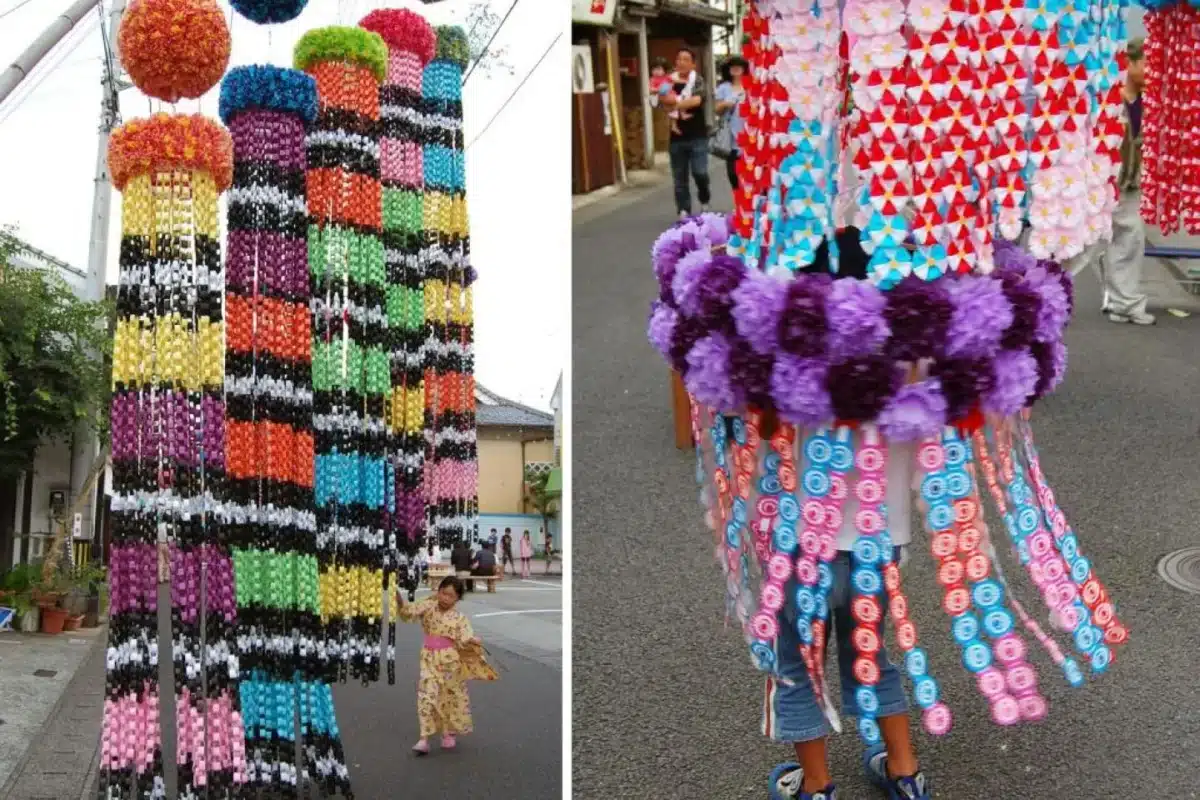
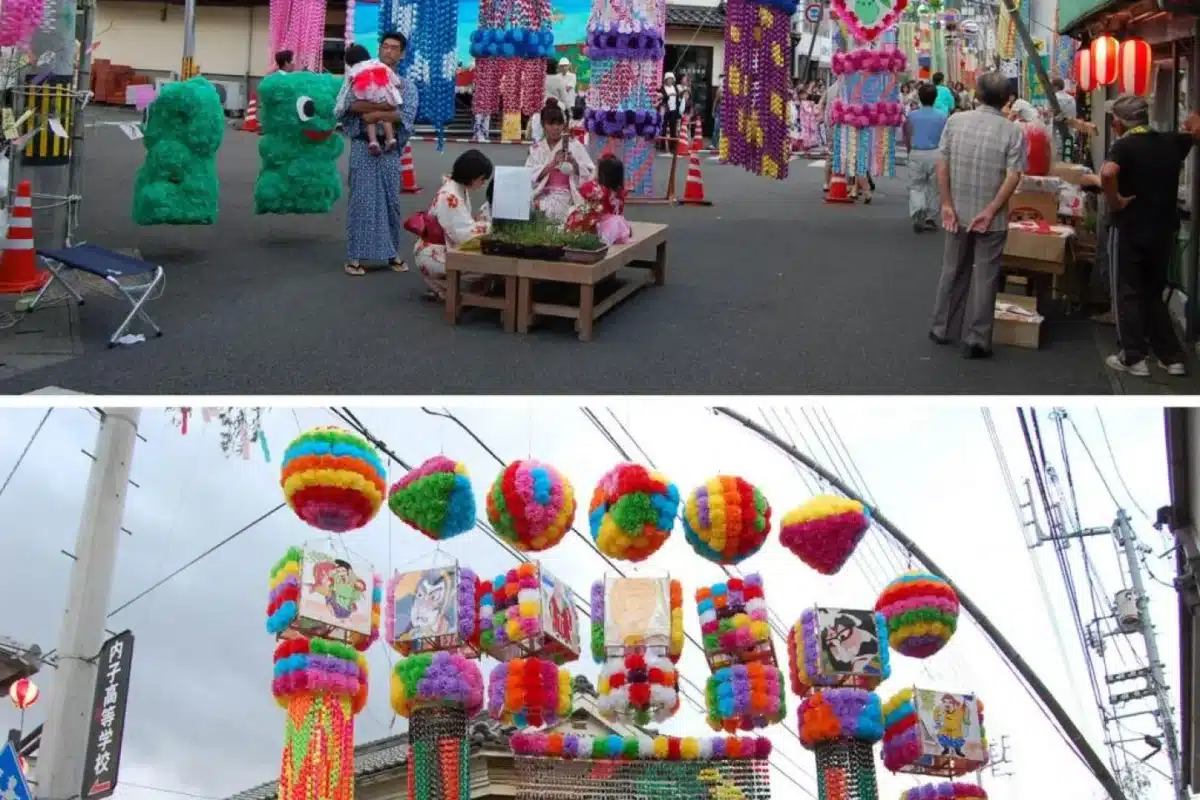
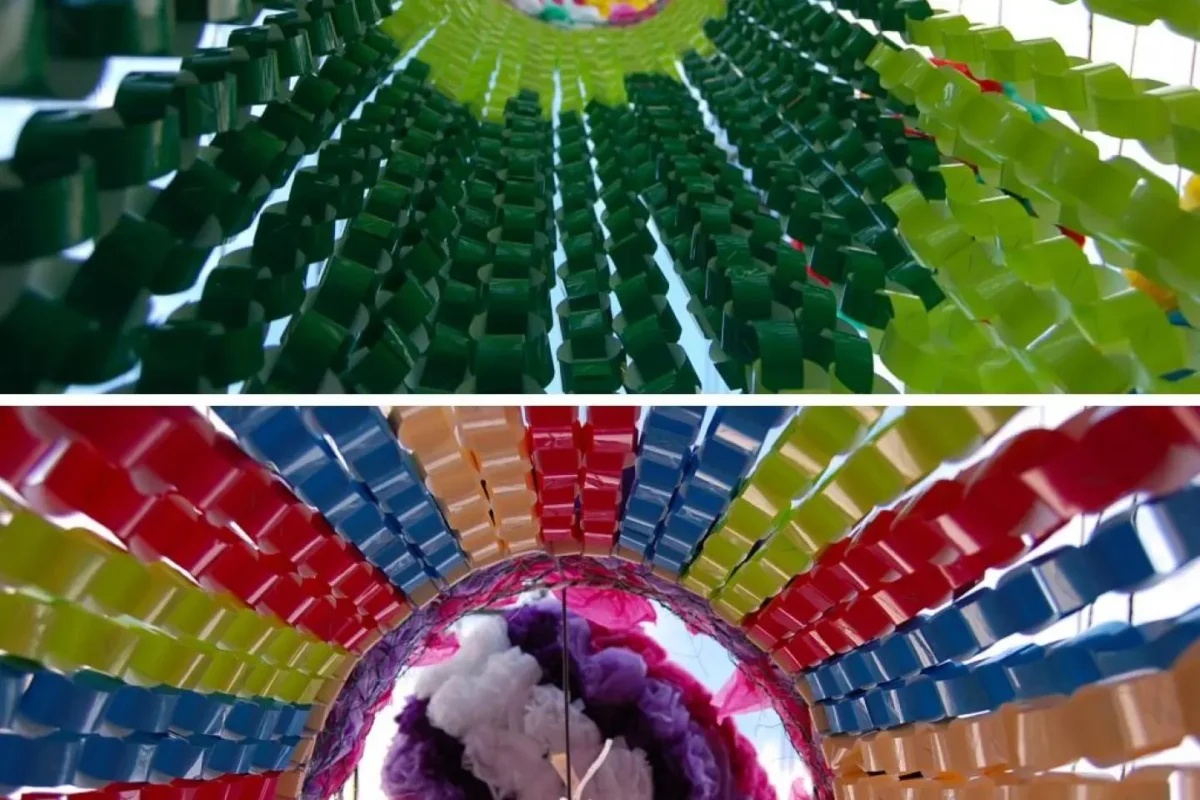
The main venue is Uchiko Town Shotengai, the shop-lined main street that runs through the center of town. During the festival, 1.5 kilometers of this street, lined with traditional wooden machiya buildings and modern shops alike, is decked in every color of the rainbow. Thick bamboo poles are erected on both sides of the street and bent over to form arches, veiling the street with colorful decorations called sasa kazari or sasa gazari.
The festival was established by the businesses of Uchiko who wanted to thank their customers for their patronage and so started the decoration tradition in 1957. It coincides with the Tanabata star festival celebrated all over Japan, blending local community spirit with the romantic legend of the stars. Today it is considered one of the biggest bamboo festivals in Ehime Prefecture, attracting visitors from across Shikoku who come to see the elaborate decorations and participate in dancing and family events.
Enjoy Your Event Stress-Free with Japan Travelo
Do you know? Planning events, festivals, concerts, and cultural experiences in Japan can be overwhelming. Japan Travelo brings everything together in one place, helping you manage your itinerary, transport, and accommodation with ease—so you can enjoy Japan without the stress of planning.
The atmosphere is lively, inclusive, and deeply local, with onlookers bunching together to watch dancers and shout encouragement, children carrying lanterns, and judges evaluating dance teams along the route.
Cultural Significance & Origins
Uchiko Town has a rich history that provides deep context for the Sasa Matsuri. Since ancient times, Uchiko developed as a post town on the pilgrimage route and the Konpira Kaido, and prospered due to trade in leaf tobacco and later Japanese wax, known as mokuro, produced from sumac trees grown nearby. At its peak at the end of the Edo period, Uchiko became one of Shikoku’s wealthiest towns, leaving behind a legacy of grand merchant houses such as the Kamihaga Residence and the Uchiko-za Kabuki theater, both preserved as national cultural properties.
The Sasa Matsuri began in 1957 when the shotengai shopping street association sought a way to revitalize the town center and express gratitude to customers. Inspired by Tanabata, where wishes written on colorful tanzaku strips are hung on bamboo branches, they created oversized bamboo decorations that could transform the entire main street into a festive canopy.
The name sasa refers to small bamboo or bamboo grass, which in Japanese folklore is considered a pure plant that wards off evil and carries prayers to the heavens. The ball-shaped bamboo framework decorated with colored paper, known as kusudama, symbolizes good fortune and community unity.
Falling with the Tanabata festival, the Sasa Matsuri incorporates the Tanabata legend of Orihime and Hikoboshi, the star-crossed lovers represented by the stars Vega and Altair who are allowed to meet only once a year across the Milky Way. Writing wishes on tanzaku and hanging them on bamboo is a central Tanabata custom that Uchiko amplifies to monumental scale.
More than 50 years after its founding, the festival has evolved from a simple shopping street promotion into a major cultural event that involves the entire town, from kindergarten children to elderly artisans, preserving both Tanabata traditions and local folk dance.
Traditions, Rituals & Customs
The festival is built around three core traditions that unfold over three days.
Sasa Kazari Decoration Making: This is the most labor-intensive tradition. Each business, school class, and community group is responsible for creating its own sasa kazari. Pieces of colored paper are arranged on a ball-shaped bamboo framework, often forming kusudama paper balls, and long paper strings, fukinagashi streamers, and tanzaku wish strips hang from them. The balls and strings are then suspended from thick bamboo poles. The poles bend over the main street, creating a tunnel of color. Preparation begins months in advance, with groups gathering in community centers to cut paper and assemble frameworks. Judging of the best decorations is performed by local officials.
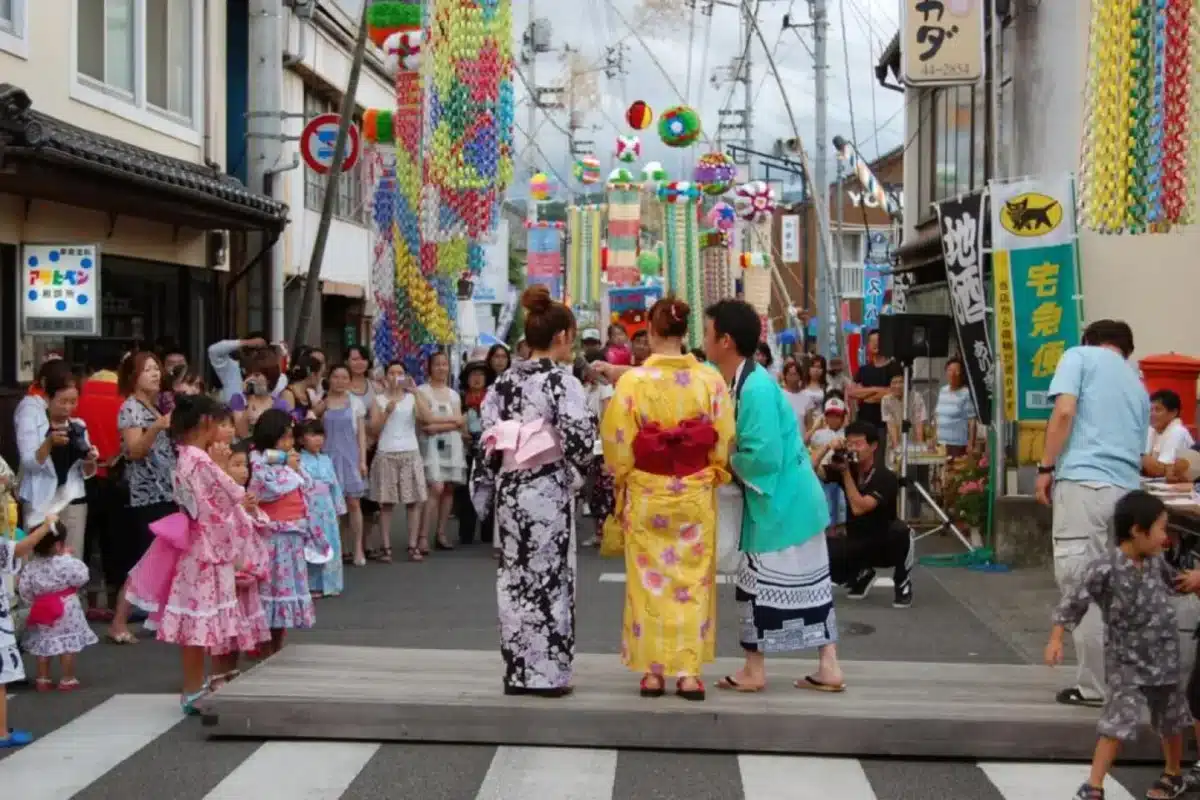
Yukata Contest and Children’s Lantern Procession: On the first day, traditions include a yukata contest where participants model summer kimono, judged for elegance and coordination, and a children’s lantern procession where elementary school children carry handmade paper lanterns down the decorated street at dusk. The lanterns are painted with Tanabata stars and local motifs.
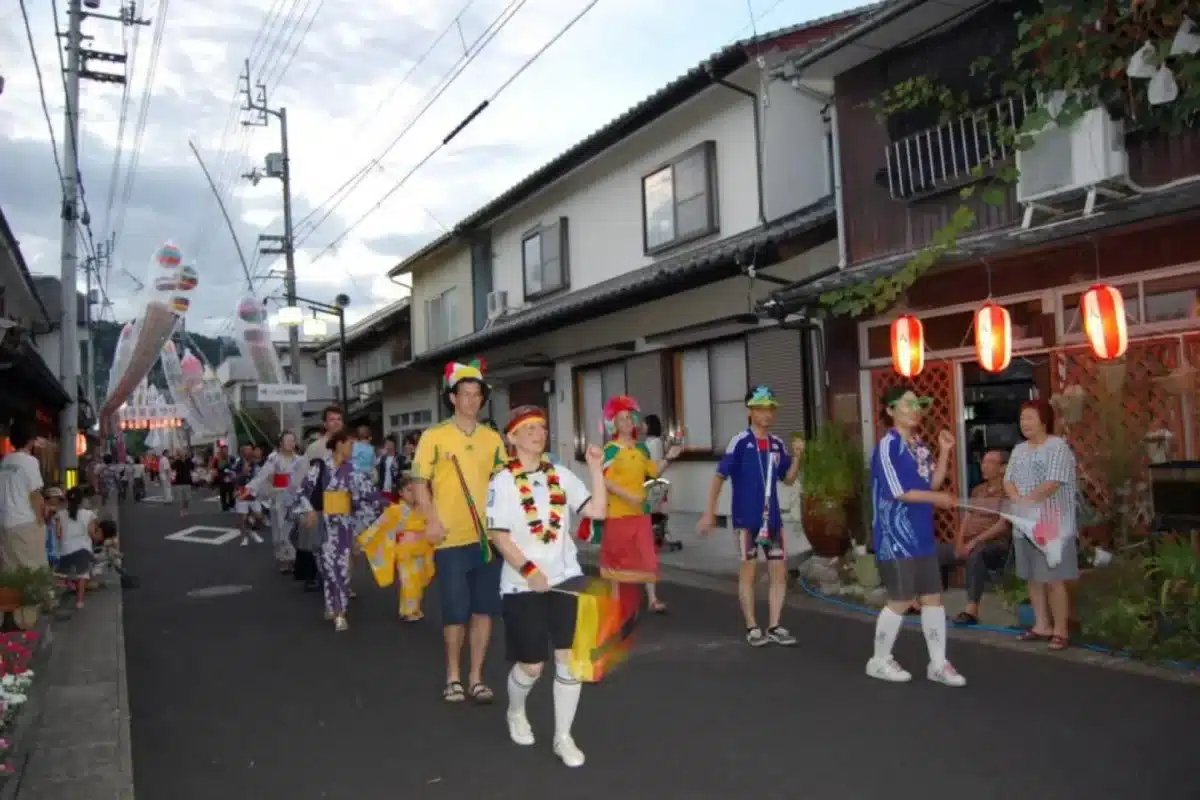
Sasa Odori Dancing: The main event on the second day is teams dancing the traditional sasa odori down the street. This is a form of Bon Odori folk dance specific to Uchiko, performed to the rhythm of taiko drums, shamisen, and folk singers. Teams of 20 to 50 dancers in matching yukata perform synchronized choreography as they process down the 1.5 kilometer street. Onlookers line both sides, shouting encouragement. Dancing for an hour or more in summer heat can be exhausting, so dancers rotate and hydrate. The dancers’ moves and costumes are evaluated by judges who sit at tables along the way, awarding prizes for best dance, best costume, and best spirit.
Taiko Drum Performances: Events on the third day include taiko-drum performances by various local groups in the Uchiko-za theater and on outdoor stages. The Uchiko-za theater, a historic wooden Kabuki theater built in 1916, provides a dramatic backdrop for drumming, with its revolving stage and traditional acoustics.
What to Expect at the Festival
Visitors should expect a colorful, community-driven street festival that is both visually stunning and highly participatory, set against the backdrop of beautifully preserved Edo and Meiji period architecture.
During the day, the main street is transformed into a rainbow tunnel. More than 80 large sasa kazari decorations line the street, each different in color and design. Some feature traditional red, white, and blue Tanabata colors, others use modern pop colors and character motifs created by schoolchildren. Walking under the bamboo arches, you are surrounded by rustling paper streamers and wish strips fluttering in the breeze.
The street is closed to traffic and becomes a pedestrian promenade. Shop owners set up small stalls in front of their stores selling drinks, shaved ice, and local snacks. The historic Yokaichi and Gokoku streets nearby, with their traditional buildings, the Uchiko-za theater, and the Kamihaga Residence Mokuro Museum, remain open and are less crowded, offering quiet exploration between festival events.
In the evening, the atmosphere intensifies. Paper lanterns illuminate the decorations, and the children’s lantern procession creates a magical river of lights. The sasa odori dancing is energetic and loud, with drum beats echoing off wooden facades. Spectators bunch together in front of shops, some sitting on folding stools, shouting kakegoe encouragement calls to their favorite teams.
The festival is family-friendly, with many local families returning year after year. The pace is relaxed during the day and festive at night, with opportunities to write your own tanzaku wish and hang it on a community bamboo branch.
Date & Schedule
Event Dates: August 2027 (Dates TBD)
Typical Three-Day Program Based on Previous Editions:
First Day Evening: Opening ceremony at Uchiko Town Shotengai. Lighting of sasa kazari decorations. Yukata contest on main stage. Children’s lantern procession at dusk, with children carrying handmade lanterns from one end of the shopping street to the other. Community tanzaku writing stations open.
Second Day All Day: Sasa kazari decorations illuminated from morning until night. Main event of teams dancing the traditional sasa odori down the 1.5 kilometer shop-lined main street, starting in late afternoon and continuing into evening. Judges seated at tables along the route evaluate dancers’ moves and costumes. Onlookers gather along both sides to watch and cheer.
Third Day Afternoon and Evening: Continued display of bamboo decorations. Taiko-drum performances by various local groups in the Uchiko-za theater and on outdoor stages in the shotengai. Closing ceremony and announcement of decoration and dance contest winners.
Please note final schedule is announced by Uchiko Town Office and Shotengai Association closer to event.
Visiting this event? Don’t miss out on these amazing activities and local experiences while you’re here.
Main Events & Programme
Sasa Kazari Display: The continuous display of approximately 80 colorful papered bamboo decorations lining more than one kilometer of the main street. The decorations include kusudama paper balls, long fukinagashi streamers, and tanzaku wish strips suspended from thick bamboo poles bent over the street. This forms the visual centerpiece throughout the festival.
Yukata Contest: Participants of all ages model summer yukata on a stage set up in the shotengai. Judging criteria include coordination of obi sash, geta sandals, and overall summer elegance. Winners receive prizes from local businesses.
Children’s Lantern Procession: Elementary school children parade down the main street carrying handmade washi paper lanterns illuminated with LED candles. The lanterns feature hand-painted stars, bamboo leaves, and Tanabata motifs.
Sasa Odori Dance Parade: The headline performance where multiple teams of 20 to 50 dancers each perform the traditional sasa odori folk dance as they process down the street. Each team has distinct matching yukata and choreography. The dance incorporates movements mimicking bamboo swaying, star crossing, and celebratory gestures. Teams dance for over an hour covering the full length of the street.
Taiko Drum Festival in Uchiko-za Theater: Local taiko groups including school clubs, adult preservation groups, and professional guest groups perform powerful drumming concerts inside the historic wooden theater. The theater’s acoustics amplify the drums dramatically. Outdoor mini-taiko performances also occur in the shopping street.
Community Tanzaku Corner: Visitors can write wishes on colorful tanzaku paper strips and hang them on community bamboo branches placed at intervals along the street, participating in the Tanabata tradition.
Traditional Dress, Arts & Crafts
Yukata Summer Kimono: The standard dress for participants and many visitors is yukata, a lightweight cotton summer kimono. During the festival, you will see hundreds of yukata in indigo, white, pink, and light blue patterns featuring bamboo, stars, and morning glory motifs. Women’s yukata are paired with wide obi sashes and geta wooden sandals, men’s with simpler patterns and narrow obi. Rental yukata are available in town for approximately 20 USD to 35 USD including dressing.
Sasa Kazari Craftsmanship: The creation of sasa kazari is a folk craft in itself. Artisans use bamboo framework construction, washi paper cutting, origami folding for kusudama balls, and traditional paper string making. The techniques are taught in local schools as part of cultural education.
Tanabata Tanzaku Wishes: The tanzaku strips are made from colored washi paper. Visitors write wishes for health, good harvest, academic success, and love, following Tanabata custom.
Uchiko Washi and Wax Crafts: Uchiko is famous for Japanese wax and washi paper. During the festival, shops sell Uchiko-za theater-themed tenugui hand towels for approximately 8 USD to 12 USD, handmade washi postcards, and mokuro wax candles for approximately 10 USD to 15 USD. The Kamihaga Residence Museum displays historic wax production tools.
Lantern Making: Children’s lanterns are made from bamboo frames and washi paper, painted by hand with natural dyes.
Traditional Food & Local Specialties
Shotengai Street Food: During the festival, the shopping street hosts yatai stalls selling yakisoba fried noodles for approximately 5 USD, takoyaki octmodel balls for approximately 4 USD, yakitori chicken skewers for approximately 3 USD to 4 USD, kakigori shaved ice with local citrus syrup for approximately 3 USD, and frankfurters.
Uchiko Local Cuisine: Uchiko is known for its mountain vegetables, yuzu citrus, and traditional preservation foods. Look for dishes such as tarai udon, a large shared bowl of udon noodles served in a wooden basin for approximately 8 USD to 10 USD, and satoimo taro croquettes. Local sake brewed with Uchiko rice is available for approximately 5 USD to 7 USD per cup.
Wax and Citrus Products: Unique to Uchiko, products include yuzu kosho pepper paste, yuzu juice, and mikan orange jellies sold as souvenirs for approximately 4 USD to 8 USD.
Tea and Sweets: Shops in the historic district sell matcha green tea with wagashi sweets shaped like bamboo leaves and stars for approximately 4 USD to 6 USD. Uchiko’s famous karin sugar candies made from wax-era recipes are sold for approximately 5 USD per bag.
Farm Produce: Farmers from surrounding mountains sell fresh vegetables, shiitake mushrooms, and bamboo shoots directly from stalls.
Location & Festival Areas
Primary Venue: Uchiko Town Shotengai, the main shopping street in Uchiko Town, Kita District, Ehime Prefecture. The festival occupies 1.5 kilometers of this street, from near Uchiko Station approach to the Yokaichi historic district.
Historic District Extension: The Yokaichi and Gokoku preservation districts, designated as Important Preservation Districts for Groups of Traditional Buildings, form a secondary venue. These streets feature traditional buildings, the Uchiko-za theater, and the Kamihaga Residence Mokuro Museum. They are less crowded and offer cultural exploration between festival events.
Uchiko-za Theater: Located at the edge of the shotengai, this 1916 wooden Kabuki theater serves as the main stage for taiko performances and opening ceremonies. The theater retains its original revolving stage and is open for tours for approximately 3 USD to 4 USD outside performance times.
Community Centers: Schools and community centers around town serve as preparation areas for sasa kazari making in the months before the festival.
Tanzaku Stations: Small bamboo branches set up at intervals along the shotengai where visitors can hang wishes.
Getting to the Festival
By Train: Take the JR Yosan Line from Matsuyama City to Uchiko Station. The journey from Matsuyama takes approximately 40 to 50 minutes by limited express, cost approximately 7 USD to 10 USD, or approximately 70 minutes by local train, cost approximately 5 USD to 7 USD. From Uchiko Station, the shotengai main street is a 5 to 10 minute walk.
From Major Cities: From Okayama or Hiroshima, take Shinkansen to Okayama then JR trains to Matsuyama via the Seto Ohashi Bridge, then transfer to Yosan Line. From Tokyo, fly to Matsuyama Airport then take limousine bus to Matsuyama Station and train to Uchiko.
By Car: Uchiko is accessible via the Matsuyama Expressway Uchiko Interchange. During the festival, the main street is closed to vehicles from late afternoon until night. Temporary parking lots are set up at Uchiko Town Hall, Uchiko Junior High School, and along the riverbank, with free shuttle buses to the shotengai. Parking fee is typically free or approximately 3 USD to 5 USD per day.
On Foot: The town is compact and walkable. The entire festival area can be explored on foot. The historic district is flat and suitable for strollers.
Bicycle: Rental bicycles are available at Uchiko Station tourist information center for approximately 7 USD to 10 USD per day, useful for exploring surrounding countryside.
Where to Stay Nearby
Uchiko offers small-scale accommodation that reflects its historic character.
Historic Guesthouses and Machiya Stays: Renovated traditional merchant houses in the Yokaichi district offer overnight stays with tatami rooms, irori hearths, and breakfast for approximately 60 USD to 100 USD per night per person. Examples include Uchiko Machiya Guesthouse and Yokaichi Guesthouse.
Business Hotels: Small business hotels near Uchiko Station such as Business Hotel Uchiko and Uchiko Kanko Hotel offer Western rooms for approximately 50 USD to 75 USD per night.
Ryokan: Traditional ryokans in the town center such as Ishidatami no Yado offer Japanese rooms with kaiseki dinner featuring local mountain vegetables for approximately 90 USD to 140 USD per night per person including two meals.
Matsuyama City Base: Many visitors stay in Matsuyama City, which offers a wide range of hotels from business hotels for approximately 50 USD to 80 USD to luxury resorts like Dogo Onsen area ryokans for approximately 150 USD to 300 USD per night. Matsuyama to Uchiko is a short train ride.
Farm Stays: Surrounding villages offer farm stay experiences where you can stay with farming families and experience bamboo crafts for approximately 70 USD to 100 USD per night including meals.
What Visitors Can Participate In
The Sasa Matsuri is designed for visitor participation beyond observation.
Tanzaku Wish Writing: Free participation at community stations along the shotengai. Write your wish on a tanzaku strip and hang it on the community bamboo. English instructions are available.
Sasa Odori Open Participation: After the judged teams finish, there is often an open dance segment where visitors in yukata can join the circle and learn basic sasa odori steps from local instructors. No registration required.
Yukata Contest Entry: Visitors can enter the yukata contest by registering at the shotengai association booth on the first day. Rental yukata are acceptable. Judging is friendly and prizes include local product sets.
Sasa Kazari Making Workshop: During the day, workshops in community centers allow visitors to help make small sasa kazari decorations or origami kusudama balls to take home for approximately 3 USD to 5 USD material fee.
Lantern Procession Viewing and Support: While the children’s lantern procession is for local children, visitors can line the route, cheer, and take photos. Some years, small adult lanterns are provided for visitors to join at the end of the procession.
Taiko Experience: After performances in Uchiko-za theater, short taiko drumming trial sessions are offered for approximately 5 USD.
Things to Do Before or After the Festival
Uchiko-za Theater Tour: Visit this historic 1916 Kabuki theater, one of the few remaining wooden theaters in Japan. Guided tours explain the revolving stage, trap doors, and wooden construction. The theater museum displays old playbills.
Kamihaga Residence and Mokuro Museum: Explore the grand residence of a wealthy wax merchant family and learn about Japanese wax production that made Uchiko rich. The museum houses tools and documents.
Yokaichi and Gokoku Historic Streets: Stroll through the preservation district with its white-walled storehouses, latticed windows, and traditional shops selling wax candles, washi paper, and local sake.
Ishidatami Village: A short drive from central Uchiko, this mountain village features a beautifully preserved stone-paved road lined with cherry trees and traditional houses, ideal for hiking.
Oda and Ikazaki Areas: Visit nearby areas known for Japanese paper production and terraced rice fields.
Dogo Onsen in Matsuyama: Combine your visit with a trip to Dogo Onsen, one of Japan’s oldest hot springs, approximately 45 minutes by train.
Local Food & Restaurants
Shotengai Eateries During Festival: The shopping street has several permanent restaurants that set up outdoor seating during festival. Try Uchiko’s tarai udon at local udon shops for approximately 8 USD to 10 USD, and yakitori at izakaya.
Historic District Restaurants: Restaurants in Yokaichi serve traditional Japanese set meals featuring local mountain vegetables, river fish, and Uchiko pork for approximately 10 USD to 18 USD.
Cafes: Vintage cafes in renovated machiya buildings offer coffee, homemade cakes with yuzu flavor, and views of the festival decorations for approximately 4 USD to 7 USD.
Sake Breweries: Uchiko has small sake breweries offering tastings of sake made from local rice for approximately 3 USD to 5 USD per tasting set.
Souvenir Food Shops: Shops sell Uchiko specialty foods including yuzu jam for approximately 6 USD, karin sugar candies, and mokuro wax-themed sweets.
Convenience and Supermarkets: For budget options, local supermarkets near the station sell bento boxes for approximately 4 USD to 6 USD and onigiri for approximately 1 USD to 2 USD.
Ticket Information & Access
Festival Viewing: Viewing the sasa kazari decorations and street events along Uchiko Town Shotengai is free of charge. No ticket is required to walk under the bamboo arches or watch the sasa odori parade from the roadside. This free access has been maintained since the festival began in 1957.
Uchiko-za Theater Performances: Taiko drum performances inside Uchiko-za theater may require a small admission fee of approximately 5 USD to 10 USD per performance, with some free outdoor performances.
Uchiko-za Theater Tour: Regular guided tours of the historic theater cost approximately 3 USD to 4 USD for adults and 2 USD for children.
Kamihaga Residence Museum: Admission is approximately 4 USD for adults and 2 USD for children.
Parking: Temporary festival parking lots are typically free or charge approximately 3 USD to 5 USD per day.
Workshops: Small craft workshops such as sasa kazari making and tanzaku decoration cost approximately 3 USD to 5 USD for materials.
Transportation: Train from Matsuyama to Uchiko costs approximately 5 USD to 10 USD one way depending on train type.
Official Event Information
The festival is organized by Uchiko Town, Uchiko Town Shotengai Association, and Uchiko Town Tourism Association.
Official Website URL as text: https://en.japantravel.com/ehime/uchikos-sasa-matsuri/2065
Uchiko Town Official Tourism URL as text: https://www.we-love-uchiko.jp/
Uchiko Town Office Official URL as text: https://www.town.uchiko.ehime.jp/
Location Address as text: Uchiko Town Shotengai, Uchiko, Kita District, Ehime Prefecture 791-3301, Japan
Tourist Information Center: Uchiko Town Tourist Information Center, located near Uchiko Station and in Yokaichi district, Phone: +81 893-44-2111
Uchiko-za Theater Information URL as text: https://www.town.uchiko.ehime.jp/site/uchikoza/
Video
Location
FAQ
Can visitors participate in the sasa odori dancing or is it only for local teams?
The main judged sasa odori parade is performed by registered local teams, but after the official teams finish there is usually an open participation segment where visitors wearing yukata can join. You can also learn basic steps from instructors at community centers during the day. No prior registration is needed for the open dance, and locals are encouraging to beginners.
Do I need to reserve tickets to see taiko performances inside Uchiko-za theater?
Most taiko performances inside the historic Uchiko-za theater are free or have a small entrance fee collected at the door, with no advance reservation required due to the theater's limited capacity of about six hundred seats. Arrive early to secure a seat, especially for evening performances which are popular. Outdoor taiko performances in the shotengai are free and open to all.
Are the bamboo decorations illuminated at night and what is the best time for photography?
The sasa kazari decorations are illuminated from early evening until around ten at night, creating a magical tunnel of colored lights. The best photography time is during the blue hour just after sunset when natural light fades and lanterns glow, capturing both decoration details and atmosphere. Daytime offers clearer views of paper craft details and vibrant colors against wooden facades.
Is Uchiko Town accessible for a day trip from Matsuyama and how long should I stay?
Uchiko is ideal for a day trip from Matsuyama, with direct trains taking forty to seventy minutes depending on type. Staying for an afternoon and evening allows you to see decorations in daylight and experience the lantern procession and dancing at night. If you want to see taiko performances in Uchiko-za and explore historic districts thoroughly, consider an overnight stay in a machiya guesthouse.
What should I bring and wear to comfortably enjoy the festival?
Wear comfortable walking shoes as you will be standing and walking along the one point five kilometer street for several hours, and bring a hat and water for daytime heat. Many visitors rent or wear yukata to enhance the festive feeling and for better photos under the bamboo arches. A small folding stool is useful for securing a viewing spot for the dance parade, and cash is recommended as many stalls are cash only.

Leave a Reply