

-
July 2, 2027
Event date:
-
July 4, 2027
Event end:
Overview
Shonan Hiratsuka Tanabata Festival is recognized as one of the three major Tanabata festivals in Japan and stands as the largest and most spectacular Tanabata celebration in the Kanto region. Established as a citizen-driven commercial revitalization effort, the festival has grown from a local post-war initiative into a world-famous summer event that draws more than one million visitors annually to the streets around Hiratsuka Station.
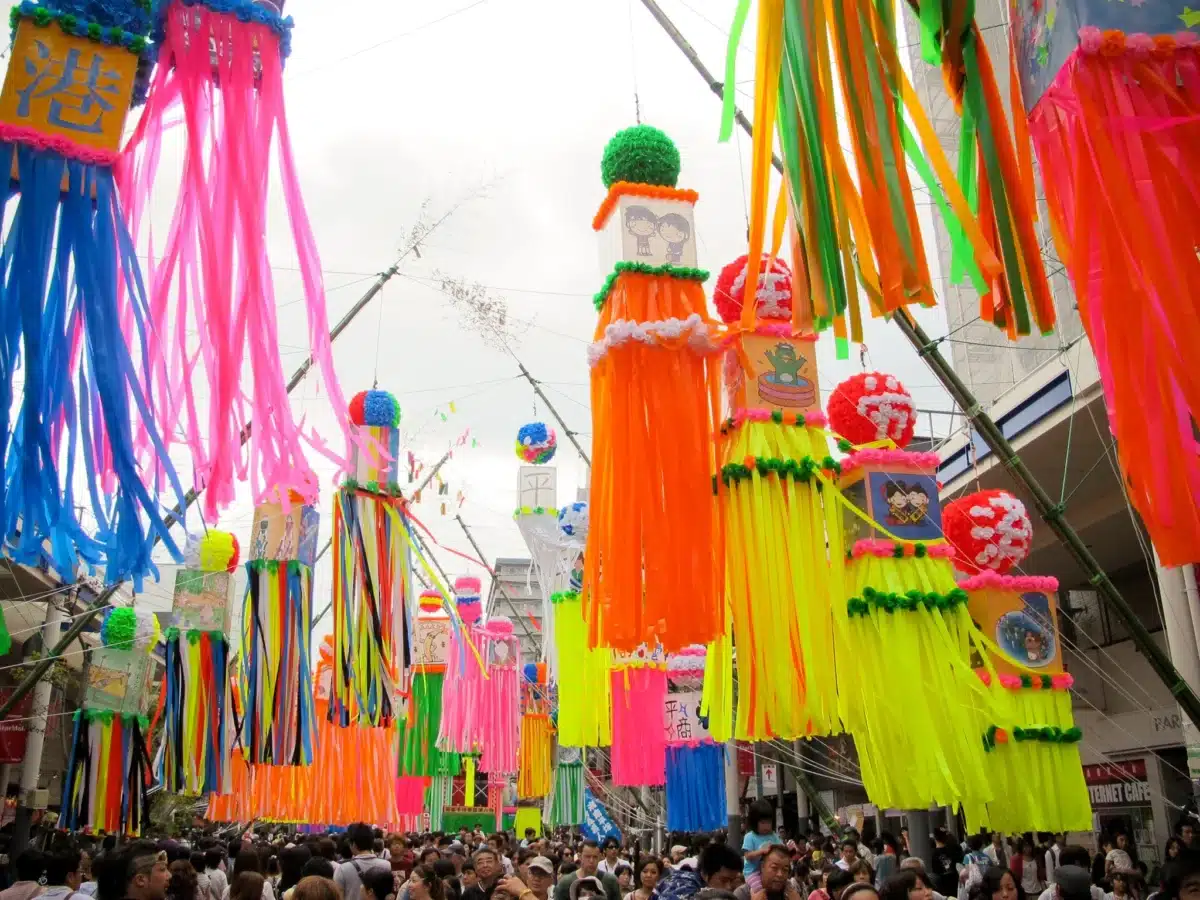
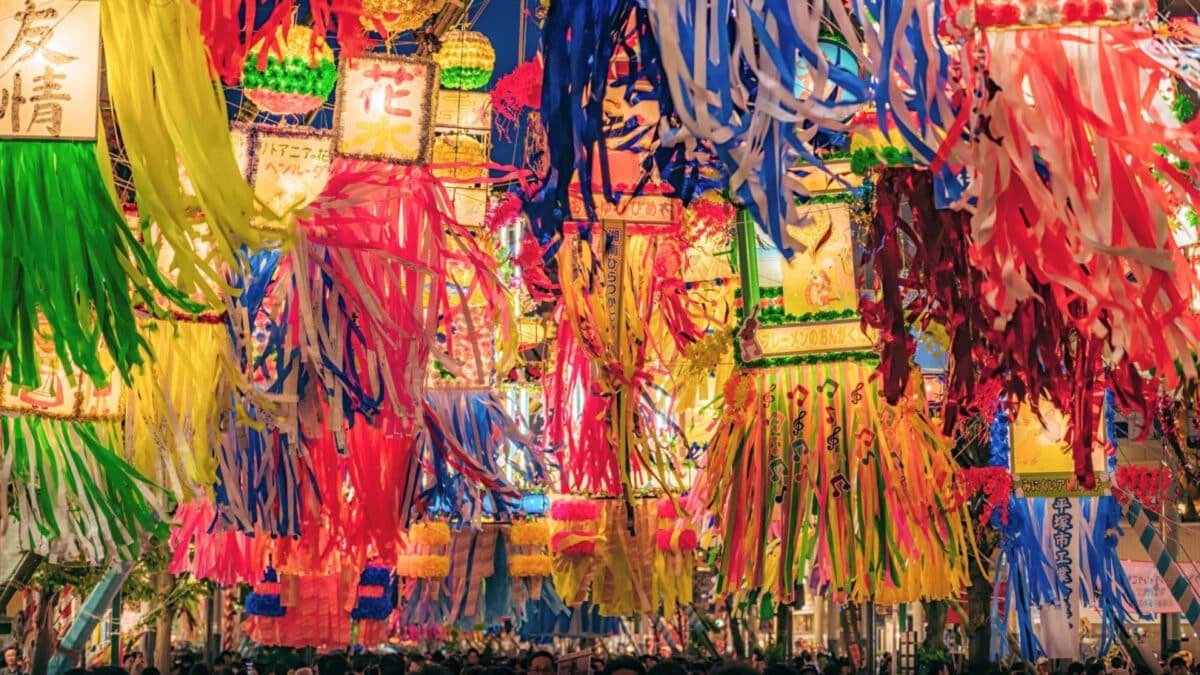
The core identity of the festival is its overwhelming scale of decoration. More than 500 kinds of decorations adorn the shopping arcades, with official counts often listing around 300 large-scale centerpieces and up to 3,000 smaller community decorations throughout the city center. The main venue is Shonan Star Mall and Beniya Pearl Road, both located just outside JR Hiratsuka Station North Exit, which become fully pedestrianized during the event.
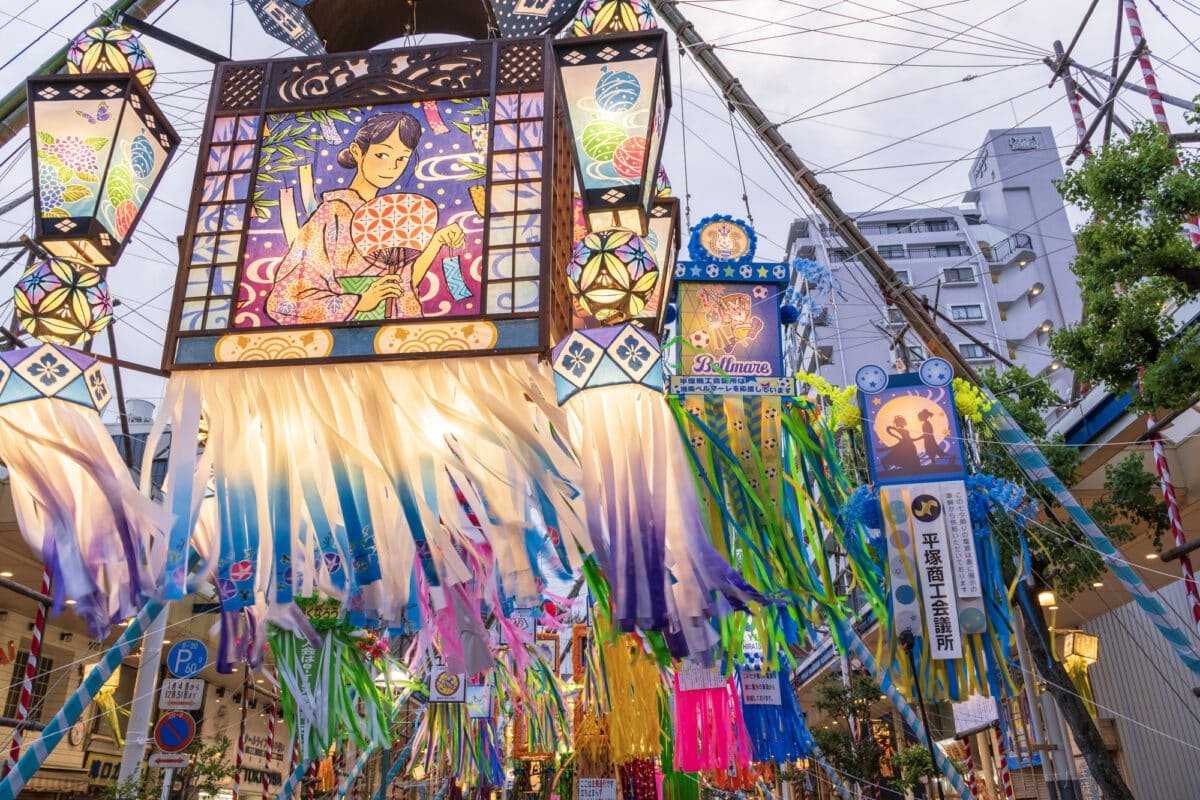
What makes it unique: The decorations are not traditional bamboo and paper streamers alone. Hiratsuka is famous for incorporating pop culture, sports icons, and contemporary trends into massive 10-meter tall displays that create a dense, colorful canopy over the street.
Enjoy Your Event Stress-Free with Japan Travelo
Do you know? Planning events, festivals, concerts, and cultural experiences in Japan can be overwhelming. Japan Travelo brings everything together in one place, helping you manage your itinerary, transport, and accommodation with ease—so you can enjoy Japan without the stress of planning.
Scale and atmosphere: The festival is a full-city experience. The commercial power of Hiratsuka allows for lavish, competitive displays that are considered the most extravagant in Japan. Beyond decorations, the program includes parades, stage performances, and a massive street food zone.
Visitor profile: It is a highly accessible day trip from Tokyo, Yokohama, and the wider Shonan coastal area, blending traditional folklore with modern Japanese street festival culture.
Cultural Significance & Origins
The roots of Tanabata lie in the ancient Chinese legend of the Cowherd and the Weaver Girl, represented by the stars Altair and Vega, who are separated by the Milky Way and allowed to meet only once a year on the seventh day of the seventh month. This star legend merged with Japanese Obon traditions and the concept of writing wishes on paper.
Post-war revival purpose: The Shonan Hiratsuka Tanabata Festival was launched in 1951 by the Hiratsuka Chamber of Commerce and Industry and local shopping associations as a measure to revive the city after World War II. The city had suffered extensive damage, and the organizers modeled their effort on the Sendai Tanabata Festival to restore commercial vitality.
Evolution to citizen festival: What began as a commercial promotion has transformed into a citizen-participatory festival held throughout the entire city of Hiratsuka. It symbolizes resilience, community craftsmanship, and the commercial spirit of Shonan.
National status: Alongside Sendai and Ichinomiya, Hiratsuka is now counted among Japan’s top three Tanabata festivals. It holds particular importance in Kanto as the earliest major summer festival, marking the start of the summer festival season for many residents of the Tokyo metropolitan area.
Traditions, Rituals & Customs
Tanzaku wish writing: The central custom is writing wishes on small strips of colored paper called tanzaku and hanging them on bamboo branches. Visitors will see thousands of these wishes fluttering beneath the large decorations, ranging from children’s dreams to prayers for health and success.
Kazari decoration craft: Local shop owners, schools, companies, and community groups spend months creating massive kazari. The tradition involves seven classic paper ornaments representing different prayers, including paper kimonos for protection from illness, nets for good fishing and harvests, and streamers for weaving skill.
Orihime tradition: The festival selects a Shonan Hiratsuka Orihime, ambassadors dressed as the Weaver Princess, who play a central role in parades and ceremonial appearances, blessing the festival and the city.
Decoration contest: A formal contest judges all large decorations for creativity, craftsmanship, and beauty. This competitive element drives the extraordinary quality and has become a tradition in itself, encouraging innovation year after year.
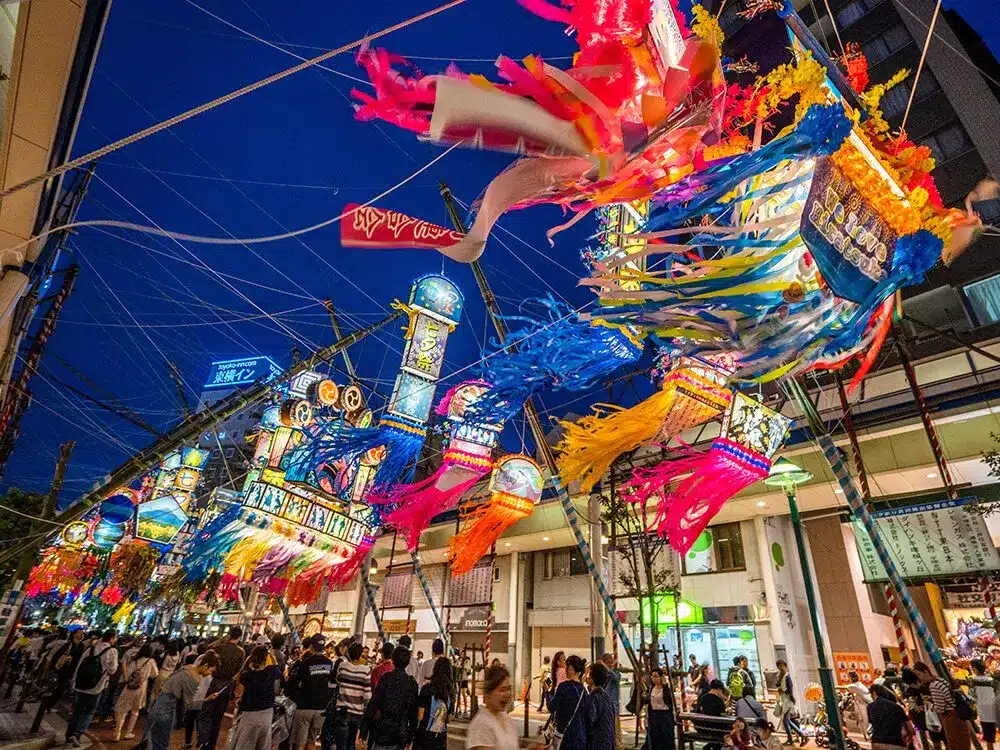
Evening illumination: As night falls, the decorations are lit up, creating a different spiritual atmosphere. This illumination is seen as a way to guide the two star-crossed lovers together and to light up the wishes of the visitors.
What to Expect at the Festival
Expect an intensely crowded, vibrant, and colorful street festival that is both visual and sensory. The shopping arcades are completely covered by towering decorations that sway overhead, creating an immersive tunnel of color and paper art.
Visual density: Some decorations exceed 10 meters in height and often feature elaborate mechanisms and contemporary characters alongside traditional motifs. Photography is spectacular but requires patience due to crowds.
Sounds and performances: The streets are filled with festival music, taiko drums from stage events, and announcements from the parades. The atmosphere is lively and family-friendly, with children and elderly residents participating together.
Crowd levels: With over 1.7 million visitors over three days in peak years, the central Shonan Star Mall can become extremely congested, especially during parade times and evening illumination. Movement is slow, and the experience is about soaking in the crowd energy rather than quick sightseeing.
Food and stalls: Around 100 to 400 food stalls and kitchen cars line the streets, offering a full festival food experience.
Date & Schedule
Event Dates: July 2–4, 2027
Daily operating hours: Events typically run from 10:00 AM to 8:00 PM, with some evening illumination continuing until 9:00 PM on the main days.
Schedule breakdown:
Day 1: Opening ceremony at Shonan Star Mall, decoration lighting ceremony, stage performances at multiple venues around Hiratsuka Station North Exit, and evening illumination.
Day 2: Main parade day featuring the 1,000-person parade starting at 10:30 AM, Orihime procession, continuous stage events, and the decoration contest judging. This is typically the most crowded day.
Day 3: Final day includes smaller community parades, the Tanabata Wedding ceremony, closing stage performances, and a slightly earlier finish with dismantling beginning after 7:00 PM. Public transport becomes extremely crowded immediately following the evening sessions.
Visiting this event? Don’t miss out on these amazing activities and local experiences while you’re here.
Main Events & Programme
Thousand-Person Parade: The signature event is the Sennin Parade, where approximately 1,000 dancers, musicians, local groups, and costumed participants dance through the decorated streets. It kicks off the festival and sets the festive tone.
Shonan Hiratsuka Orihime Appearance: The selected Orihime ambassadors appear on floats and in parades, interacting with visitors and participating in ceremonial events. Their appearance is a highlight for photography.
Tanabata Decoration Contest: All large decorations are entered into an official contest. Categories include grand prize, creativity award, and traditional craft award. Visitors can vote for favorites in some years.
Stage Events: Multiple stages are erected around the North Exit area, hosting local dance schools, hula performances reflecting Shonan culture, taiko drumming, brass bands, and pop performances.
Tanabata Wedding: A unique closing tradition where couples selected from public applications hold a wedding ceremony under the Tanabata decorations, believed to bring blessings from Orihime and Hikoboshi for a strong marriage.
Haunted House and Children’s Attractions: Family-oriented attractions such as a traditional obakeyashiki haunted house and craft workshops are set up in side streets.
Traditional Dress, Arts & Crafts
Festival attire: While not mandatory, many visitors and participants wear summer kimono known as yukata. The sight of families in matching yukata under the towering streamers is iconic to the festival.
Decoration craftsmanship: The art form is unique to Hiratsuka. Large decorations are constructed on bamboo frames using washi paper, wire, and modern materials. Workshops demonstrate how the giant kusudama paper balls and long fukinagashi streamers are made.
Bamboo and paper art: Local artisans display techniques for cutting intricate paper nets and origami cranes that are incorporated into the larger works. Visitors can observe the structural engineering required to suspend 10-meter pieces safely over a shopping street.
Community craft participation: Schools and neighborhood associations create their own smaller tanzaku trees, teaching children the traditional knotting and writing methods. Some booths offer hands-on sessions where visitors can create a small tanzaku to take home.
Traditional Food & Local Specialties
Festival stall food: The roughly 100 stalls along Tokaido Hondori and surrounding streets offer classic Japanese matsuri food. Expect yakisoba, takoyaki, yakitori, okonomiyaki, karaage, chocolate-covered bananas, and kakigori shaved ice.
Shonan local products: Hiratsuka is a coastal Shonan city, so stalls often feature shirasu whitebait dishes, ham and sausages from local producers, and craft beer from Kanagawa breweries.
Sweets and novelty: Tanabata-themed sweets are common, including star-shaped monaka, colorful dango skewers, and soft cream served in bamboo holders. Many shops sell limited-edition Tanabata manju and cookies.
Kitchen cars: In addition to traditional yatai, modern kitchen cars offer international fusion foods, reflecting the young family demographic of the Shonan area.
Location & Festival Areas
Main venue: The festival is centered throughout the city centered on the JR Hiratsuka Station North Exit mall, Beniyacho, Hiratsuka-shi, Kanagawa 254-0043. The primary pedestrian zone is Shonan Star Mall Shopping Street and Beniya Pearl Road.
Extended areas: Decorations spread into adjacent shotengai shopping streets, including areas around Koya Town, creating a wider festival zone that can be explored to escape the main crowds.
Pedestrianization: During operating hours, the North Exit area becomes pedestrian-only, with vehicle traffic diverted. Maps and barriers are set up to guide the flow of over a million visitors.
Viewing zones: The best concentration of large-scale contest decorations is along Shonan Star Mall, while smaller community decorations and food stalls are denser along Tokaido Hondori between the OK Supermarket and the Machizukuri Foundation intersections.
Getting to the Festival
From Tokyo: Take the JR Tokaido Line bound for Kozu from Tokyo Station to Hiratsuka Station. The journey is approximately 60 to 70 minutes. From Hiratsuka Station North Exit, it is about a 2-minute walk to the venue.
From Yokohama: JR Tokaido Line bound for Kozu directly to Hiratsuka Station, about 30 to 40 minutes. Follow the North Exit signs.
From Haneda Airport: Take the Keikyu Line to Yokohama Station, then transfer to the JR Tokaido Line for Hiratsuka Station.
From Shonan area: The Shonan-Shinjuku Line also serves Hiratsuka, providing direct access from Shinjuku, Shibuya, and Enoshima.
Crowd advisory: Trains and station exits become extremely crowded, especially between 11:00 AM and 3:00 PM and after 6:00 PM. Consider arriving early morning or using IC cards to avoid ticket lines.
Where to Stay Nearby
Hiratsuka city center: Business hotels within 5 minutes of the North and South Exits offer the closest access. These include standard Japanese business hotel chains that provide compact, clean rooms ideal for festival-goers who plan to stay out late for illuminations.
Shonan coastal area: Resorts and hotels in nearby Chigasaki, Fujisawa, and Enoshima provide a beach resort atmosphere combined with easy train access to the festival. This is popular for families who want to combine beach and festival activities.
Yokohama and Tokyo: Many international visitors base themselves in Yokohama or Tokyo due to greater hotel availability. Both cities are within one hour by train, making day trips feasible, though return trains will be very crowded.
Booking tip: Hotels in Hiratsuka sell out months in advance for festival weekends. Rates typically range from 70 USD to 150 USD per night for business hotels and 120 USD to 300 USD for coastal resort properties during this period.
What Visitors Can Participate In
Wish writing: Free tanzaku stations are set up where visitors can write their own wishes and hang them on communal bamboo trees. English-language tanzaku are often available at the tourist information booth.
Parade participation: While the main thousand-person parade is pre-registered, some community dance segments allow spontaneous participation. Visitors can learn the simple Tanabata Odori dance steps from volunteers.
Decoration voting: Visitors can participate in the people’s choice aspect of the decoration contest by collecting stamps or voting via QR codes displayed under each large decoration.
Craft workshops: Small workshops offer 30-minute sessions to make mini fukinagashi streamers or origami decorations for 3 USD to 8 USD, allowing visitors to take a piece of the festival home.
Yukata dressing: Local kimono shops offer same-day yukata rental and dressing services for approximately 30 USD to 60 USD, including accessories, enabling visitors to fully immerse themselves in the visual culture.
Things to Do Before or After the Festival
Hiratsuka Museum of Art: Located a short bus ride from the station, this museum features contemporary Japanese art and often holds Tanabata-themed exhibitions during the festival season.
Shonan Beach: Hiratsuka Beach and nearby Southern Beach in Chigasaki are within cycling distance. The Shonan coastline is famous for surfing and sunset views over Mt. Fuji on clear days.
Hiratsuka Hachiman Shrine: A historic shrine within walking distance of the festival area that offers a quiet contrast to the crowded main venue. Visitors often go to pray before writing their tanzaku wishes.
Odawara and Hakone: Hiratsuka is on the gateway to Odawara Castle and the Hakone hot spring region, both accessible via the Tokaido Line, making it easy to extend a cultural trip.
Local shopping: The Lumine and Lasca shopping facilities at Hiratsuka Station offer air-conditioned breaks and souvenir shopping, including official Tanabata Festival merchandise.
Local Food & Restaurants
Around North Exit: The immediate festival area is surrounded by izakaya, ramen shops, and family restaurants that operate extended hours. Many offer Tanabata-limited lunch sets featuring star-shaped tempura or colorful chirashi sushi.
Shonan seafood: Recommended local specialties include shirasu-don raw whitebait rice bowls, maguro tuna from nearby Misaki port, and hamaguri clam dishes. Prices for lunch sets typically range from 8 USD to 15 USD.
Cafes and sweets: Kissaten coffee shops along Beniya Pearl Road serve anmitsu and cream soda, providing cool resting spots. Prices range from 4 USD to 7 USD for drinks.
Evening dining: After the decorations are illuminated, many visitors move to the South Exit area where quieter restaurants offer less crowded dining. Reservations are advised for groups, with dinner courses ranging from 20 USD to 50 USD.
Ticket Information & Access
Admission: Access to the festival grounds and all street decorations is entirely free. This has been consistent across all previous editions, including 2024, where the official listing stated Price Free.
Paid elements: While general access is free, some specific experiences have nominal fees. Craft workshops cost 3 USD to 8 USD, haunted house entry is typically 5 USD, and reserved seating for parade viewing in some years has been offered for 10 USD to 15 USD.
Crowd control: No tickets are required for entry, but staff may implement one-way flow restrictions in Shonan Star Mall when density exceeds safety limits. Follow staff instructions and avoid large luggage.
Accessibility: The main streets are flat and paved, suitable for wheelchairs and strollers, though extremely crowded conditions may make movement difficult. Accessible toilets are available inside Hiratsuka Station and department stores.
Official Event Information
Organizer: Shonan Hiratsuka Tanabata Festival Executive Committee, Hiratsuka Chamber of Commerce and Industry, City of Hiratsuka
Contact: 0463-35-8107
Official website: https://tanabata-hiratsuka.com/
Venue address: Shonan Star Mall, 12-29 Beniyacho, Hiratsuka, Kanagawa 254-0043, Japan and throughout central Hiratsuka around JR Hiratsuka Station North Exit
Access: 2 minutes on foot from JR Hiratsuka Station North Exit via JR Tokaido Line
Note: All information is based on previous editions and official announcements. For the most current program, parade times, and any traffic regulations, please check the official website.
Video
Location
FAQ
Is the Shonan Hiratsuka Tanabata Festival free to attend?
Yes, the festival is completely free to enter and view all decorations along the shopping streets. This open-access policy has been maintained since its founding to encourage community participation and commercial revitalization. Only optional activities like craft workshops or food purchases require payment, and there is no general admission fee at any gate.
How crowded does the festival get and what is the best time to visit?
The festival attracts around 1.7 million visitors over three days, making midday the most congested period in Shonan Star Mall. The best times for photography and comfortable viewing are early morning right after opening at 10:00 AM and after 6:00 PM when evening illuminations begin. Weekday mornings tend to be slightly less crowded than weekends.
What is the difference between Hiratsuka Tanabata and Sendai Tanabata?
Both are counted among Japan's three major Tanabata festivals, but Hiratsuka is known for its extravagant, pop-culture-influenced large decorations and its urban shopping street setting near Tokyo. Sendai is larger in total scale and more traditional in style, while Hiratsuka is celebrated for its lavishness and modern creativity powered by local commercial competition. Hiratsuka also aligns with the July calendar rather than August.
Can international visitors participate in wish writing and other activities?
Yes, international visitors are very welcome to participate. Tanzaku writing stations often provide English instructions and multilingual tanzaku, and volunteers can help translate wishes. Workshops, parade viewing, and yukata rentals are open to everyone, and the festival atmosphere is highly inclusive for families and overseas tourists who want to experience authentic summer festival culture.
What should I bring and how should I prepare for the festival?
Bring comfortable walking shoes, as you will stand and walk on paved shopping streets for several hours, and bring water and a hat because early July in Kanagawa is hot and humid with strong sun. An IC card like Suica for train travel, cash for food stalls, and a portable fan or towel are highly recommended, since crowds and limited shade can make conditions warm.

Leave a Reply