
Overview
Matsuyama Spring Festival, locally known as Oshiro Matsuri or Castle Festival, is the signature spring celebration of Matsuyama City in Ehime Prefecture and one of the most beloved cultural events on Shikoku Island. Centered around the iconic Matsuyama Castle, which is listed among Japan’s 100 finest cherry blossom spots, the festival blends samurai heritage, citizen participation, and seasonal hanami culture into a single, highly photogenic city-wide event.
The festival transforms the castle hill and the downtown shopping streets into a living history stage. At its core is the Daimyo Musha Gyoretsu, a meticulously costumed procession of a feudal lord and his warriors marching from the castle summit down through the heart of modern Matsuyama. Unlike many shrine festivals that focus on portable shrines, this event is explicitly about historical reenactment and community pride.
Scale and character: It is not a quiet temple observance but a lively, slightly bizarre and deeply enjoyable street celebration. The city becomes filled with families picnicking under cherry trees, children in kendo armor practicing with bamboo swords as petals drift down, photographers crowding around period costumes, and food stalls promoting the latest local gourmet innovations. The contrast between authentic historical clothing and contemporary backdrops like trams, coffee chains, and shopping arcades creates a uniquely Japanese charm.
Enjoy Your Event Stress-Free with Japan Travelo
Do you know? Planning events, festivals, concerts, and cultural experiences in Japan can be overwhelming. Japan Travelo brings everything together in one place, helping you manage your itinerary, transport, and accommodation with ease—so you can enjoy Japan without the stress of planning.
Why visit: Visitors experience Matsuyama Castle at its most beautiful, with the Honmaru Hiroba main tower square and the ridge avenue lined with approximately 200 cherry trees in full bloom, combined with direct access to samurai culture without needing to travel to a major metropolis.
Cultural Significance & Origins
Matsuyama Castle was constructed during the early Edo period and served as the seat of the Matsuyama Domain. The spring festival honors this feudal legacy and celebrates the renewal of spring, a concept deeply embedded in Japanese culture through hanami flower viewing.
Historical roots of the procession: The Daimyo Musha Gyoretsu tradition was established in 1968 to commemorate the completion of the reconstruction of the castle’s sub-tower. It reenacts the sankin kotai system, the mandatory processions in which feudal lords were required to travel to Edo to pay respects to the Tokugawa Shogunate. This historical obligation shaped Japanese road culture and castle town development.
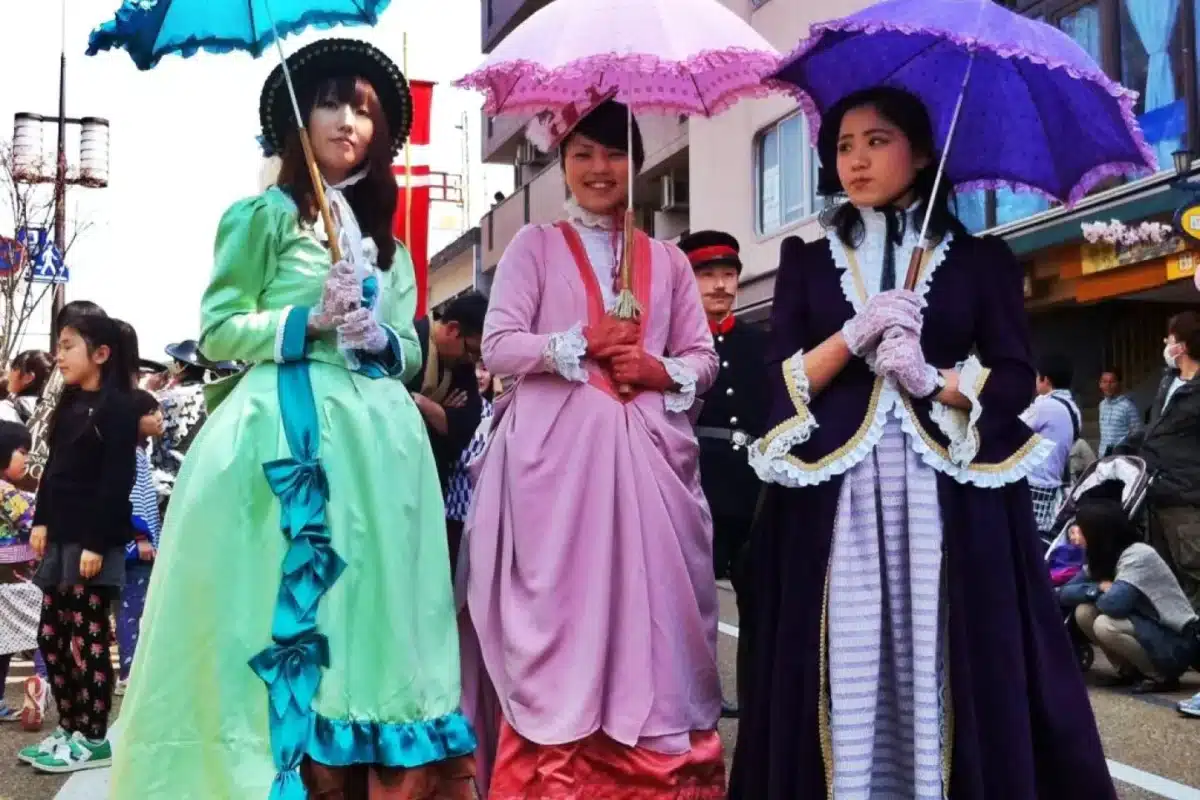
Cultural synthesis: The festival represents multiple historical periods in one parade. The procession is deliberately organized to move backward in time, starting with Meiji era Victorian-style Western clothing that was fashionable during Japan’s modernization, followed by Edo period attire, and culminating with Warring States period armor. This chronological layering educates spectators about the evolution of Japanese dress and status.
Community identity: Over decades, the festival has grown beyond historical commemoration into a civic festival that marks the start of the local festival calendar. Events like Shinonome Noh, Yakyuken, and Iyo-bushi contests are integrated, showcasing intangible folk arts that originated in Matsuyama.
Traditions, Rituals & Customs
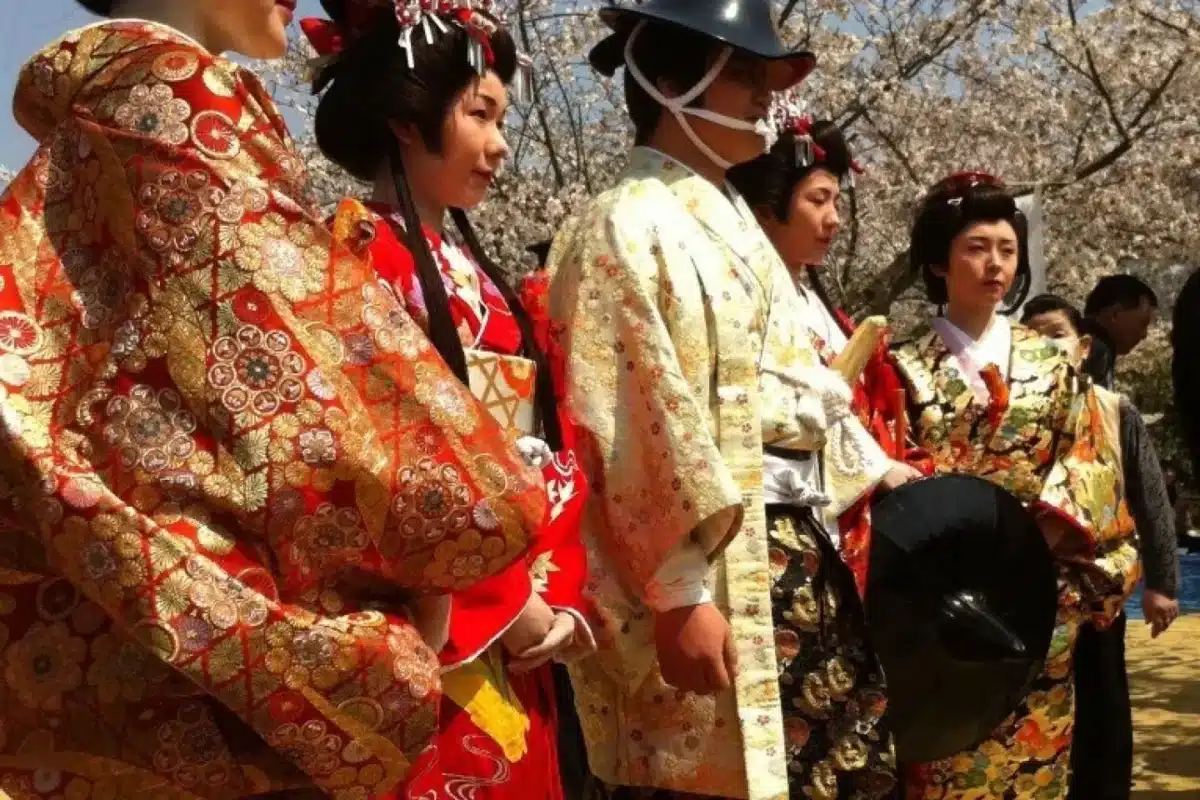
Daimyo procession ritual: The central ritual begins at the castle’s Honmaru Hiroba. The Lord of Matsuyama, portrayed by a selected local participant, appears accompanied by ladies in kimono, attendants, and warriors. After a formal photo session at the castle summit, the group rides the ropeway cable car down the mountain, symbolizing the lord’s descent from his fortress to his people.
Shinonome Noh: A core traditional event of the spring festival is Shinonome Noh, performed at Shinonome Shrine up the stairs at the north end of Ropeway Dori. This classical Noh drama was revived after a 13-year interval by local enthusiasts and represents the spiritual aspect of castle culture.
Yakyuken and Iyo-bushi: The festival hosts the National Yakyuken Contest and the National Iyo-bushi Contest. Yakyuken is a stylized jan-ken-pon dance that originated in Matsuyama, using gestures borrowed from baseball hand signals. Iyo-bushi is a traditional folk song of Ehime, preserved through competition.
Cherry blossom rituals: Hanami picnicking under the castle’s cherry avenue is itself a ritual. Families spread blue sheets, share bento, and watch youth martial arts demonstrations. Children in dark blue kendo outfits and armor gather for a youth martial arts meet, practicing forms as petals fall.
Princess palanquin custom: A highlight is the appearance of an Ohimesama princess wheeled on a palanquin. Each year a guest celebrity or local ambassador is selected, waving to crowds along the route, a tradition that connects modern popular culture with feudal pageantry.
What to Expect at the Festival
Expect a city that is simultaneously historic and contemporary, where costumed samurai pose willingly for photographers in front of modern storefronts. The atmosphere is festive, crowded, and informal.
Visual experience: The castle ridge avenue of cherry trees creates a tunnel of white-pink petals. Against this backdrop, hundreds of participants in authentic, carefully researched costumes provide endless photographic opportunities. The effort invested in costume authenticity is high, and close-up photography can easily exclude modern elements.
Street energy: Once the procession leaves the ropeway station area, it moves slowly down Ropeway Dori, through the Okaido Arcade, and down Chifune Dori. The Okaido is a covered shopping arcade that becomes a runway for history, with spectators lining both sides three to four people deep.
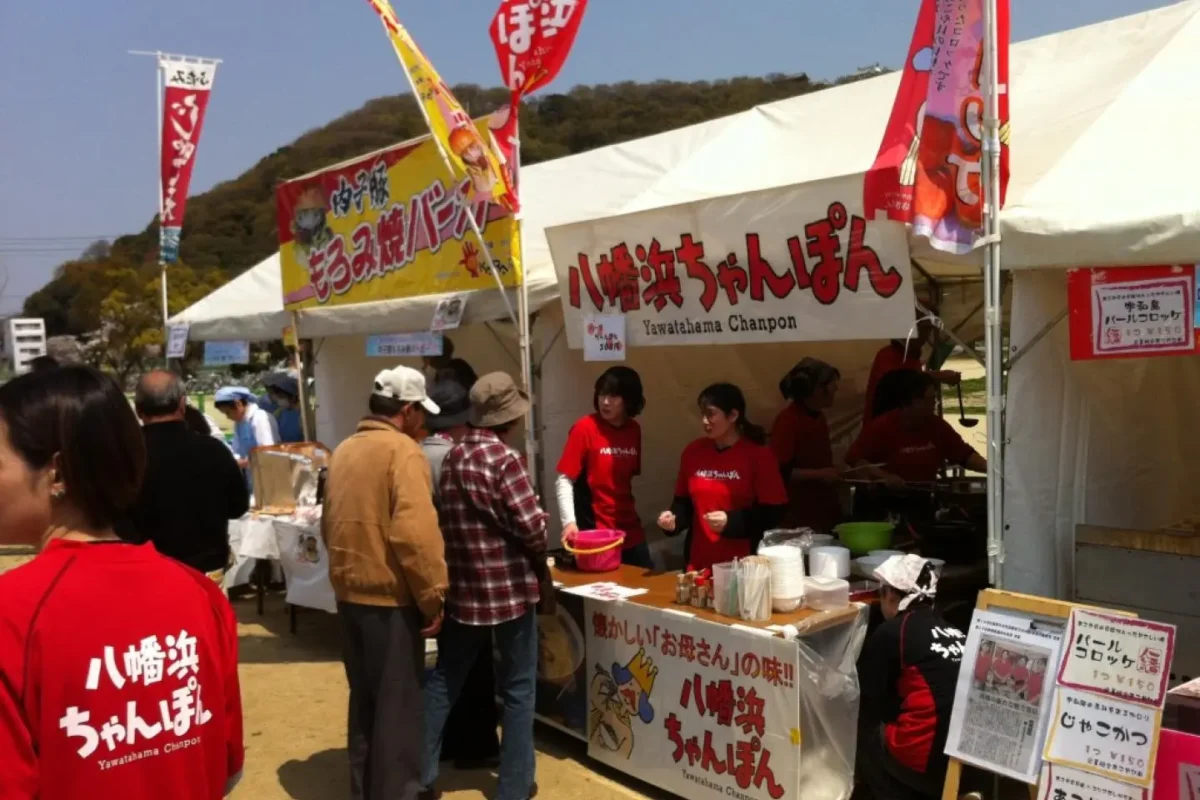
Family-friendly buzz: In the park within the moat at the bottom of the castle hill, known as Horinouchi, there are extensive food and drink booths, stage events, and casual gatherings. The entire downtown becomes pedestrian-focused, with locals and visitors mingling freely.
Photography bonanza: The long preparation time before the procession starts allows for detailed shots of armor, kimono layers, and hair ornaments. Participants are accustomed to and enjoy being photographed.
Date & Schedule
Event Dates: Early April 2027 (Dates TBD)
Typical schedule structure based on previous editions:
Preliminary events: Shinonome Noh at Shinonome Shrine, evening yozakura illumination of cherry blossoms around the main tower square and castle paths from sunset to 8:50 PM, tea ceremony at the gondola station second floor, and flower arrangement exhibitions.
Main parade day: Matsuyama Citizen Parade from 11:00 AM to 12:50 PM on Okaido and Chifunemachi streets. Daimyo Musha Gyoretsu from 11:40 AM to 1:20 PM starting in front of the chairlift and gondola station, proceeding down Ropeway Street to Okaido and Chifune-machi. In case of rain, the route shifts to Okaido and Gintengai streets.
Castle park events: Spring Festival in Horinouchi at Castle Park Horinouchi from 10:00 AM to 4:00 PM, including stage events, food and drink booths, Showa-no-komachi mikoshi portable shrine rope rolling, and extended gondola and chairlift service operating at night until 9:00 PM.
Competitions: National Yakyuken Contest at Honmaru Hiroba, National Iyo-bushi Contest at Shimin Kaikan Chu Hall.
Visiting this event? Don’t miss out on these amazing activities and local experiences while you’re here.
Main Events & Programme
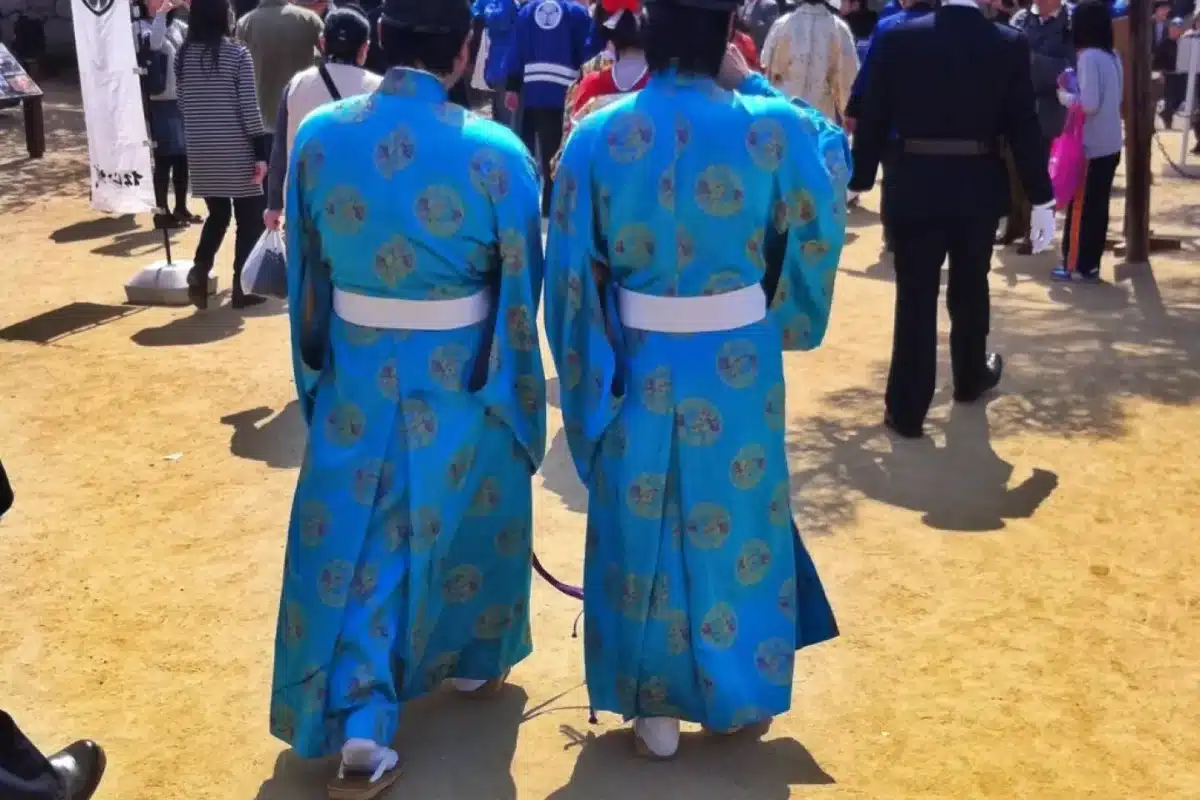
Daimyo Musha Gyoretsu: The flagship event features over a hundred participants portraying a feudal lord, samurai warriors in full yoroi armor, spear bearers, flag bearers, ladies-in-waiting, and attendants. The procession represents a complete daimyo retinue and is the most anticipated spectacle.
Matsuyama Citizen Parade: A broader citizen parade precedes the samurai procession, with local companies, schools, and community groups marching in themed costumes, including Meiji era Victorian dress, creating a time-travel effect.
Shinonome Noh Performance: Held at Shinonome Jinja shrine, this Noh performance is a ticketed cultural event with day tickets typically priced around 14 USD in previous editions, showcasing masked drama with deep roots in samurai patronage.
Yakyuken Contest: This lively competition features teams performing the Matsuyama-born Yakyuken dance, a rhythmic, playful contest of rock-paper-scissors with stylized movements, held in the main tower square.
Iyo-bushi Contest: A traditional folk singing competition where performers from across Japan compete in the local ballad style. Admission in past editions was 4 USD for adults and free for elementary and junior high students.
Spring Festival in Horinouchi: A full-day fair in Shiroyama Park featuring local stage performances, food stalls, and family activities, providing a relaxed base for visitors between parades.
Traditional Dress, Arts & Crafts
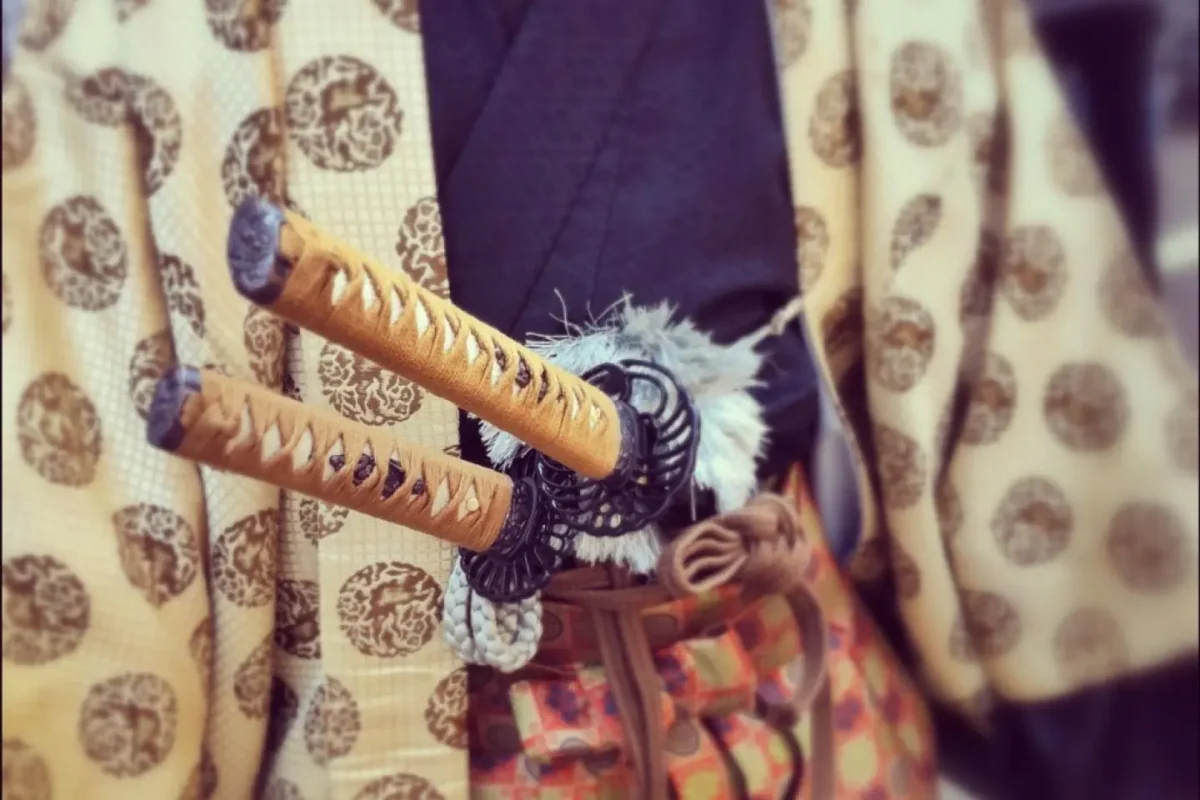
Samurai armor and kimono: The festival is a showcase for authentic Japanese textile arts. Yoroi armor is constructed with lacquered plates, silk lacing, and iron helmets, while women’s kimonos display seasonal motifs appropriate to the cherry blossom period. The procession’s attention to period accuracy is a point of local pride.
Meiji Victorian clothing: A unique feature is the inclusion of Meiji era Western clothing, including bustled dresses, top hats, and military uniforms, illustrating Japan’s rapid modernization. This adds a distinctive layer not seen in most samurai festivals.
Tea ceremony and flower arrangement: Traditional arts are presented at the Matsuyama Castle gondola station second floor Koryu Hall. Tea ceremony sessions cost approximately 3 USD and include matcha and wagashi, while ikebana exhibitions display spring arrangements using castle-grown cherry branches.
Tobe-yaki pottery: Although centered in neighboring Tobe town, Tobe-yaki porcelain, famous for its durability and indigo-blue patterns, is often sold at craft stalls during the festival period. Workshops allow visitors to paint their own designs.
Kendo and martial arts display: Youth kendo practitioners wear traditional dark blue keikogi and bogu armor, demonstrating respect and discipline that is central to samurai heritage.
Traditional Food & Local Specialties
Gotochi Gourmet Festa: The food area in Horinouchi park within the castle moat features Ehime’s B-Class Gourmet, a term for affordable, locally invented comfort foods that have gained national attention. These stalls are run by local producers and offer inventive dishes.
Signature Ehime dishes: Expect Imabari yakibuta tamago meshi grilled pork and egg rice, a representative B-class gourmet of Ehime priced around 5 USD to 8 USD, Matsuyama’s famous mikan orange juice and sweets, jakoten fried fish cakes, and taimeshi sea bream rice, a local specialty.
Festival classics: Alongside gourmet innovations, standard festival foods like yakisoba, okonomiyaki, karaage, and yakitori are available, with prices typically from 3 USD to 6 USD per item.
Sweets and citrus: Matsuyama is Japan’s citrus capital. Stalls along Ropeway Dori sell mikan daifuku, tart orange jelly, and citrus soft cream. Many shops offer free samples of mikan juice.
Location & Festival Areas
Main venue: Matsuyama Castle, 1 Marunouchi, Matsuyama, Ehime 790-0008, Japan. The castle is situated on Mount Katsuyama at the center of the city, dominating the skyline and accessible via ropeway.
Procession route: The parade starts at Matsuyama Castle Gondola Station upper area, descends via ropeway to Ropeway Dori shopping street, continues through Okaido Arcade, the main covered shopping arcade, and finishes down Chifune Dori. Total walking distance is approximately 1.2 kilometers.
Sub-venues: Shinonome Shrine at the north end of Ropeway Dori, Matsuyama Castle Honmaru Hiroba main tower square, Horinouchi Shiroyama Park within the moat, and Matsuyama Shimin Kaikan civic hall for contests.
Viewing recommendations: For photography, position near the ropeway station for close-up costume shots before crowds build, or at the intersection of Ropeway Dori and Okaido where the procession turns and pauses.
Getting to the Festival
To Matsuyama Castle: The most popular access is via Matsuyama Castle Ropeway or chairlift from the lower station at the end of Ropeway Dori. The ropeway operates extended hours during the festival. Round-trip tickets in previous editions cost approximately 4 USD for adults and 2 USD for children.
City transport: Matsuyama has an extensive tram network. The Okaido stop on the city tram is the closest to the parade route. Iyotetsu trams and buses connect Matsuyama Station, Matsuyama City Station, and Dogo Onsen.
From outside Matsuyama: Matsuyama Airport offers flights from Tokyo and Osaka, with limousine buses to the city center. From Okayama, the Shiokaze limited express connects via the Seto Ohashi Bridge. Highway buses from major Shikoku cities arrive at Matsuyama City Station.
Walking: The downtown festival areas are highly walkable. The distance from Okaido Arcade to the ropeway station is about 10 minutes on foot, allowing easy movement between parade viewing and castle events.
Where to Stay Nearby
Dogo Onsen area: Many visitors stay in Dogo Onsen, Japan’s oldest hot spring resort, located 15 minutes by tram from the castle. Ryokan and hotels here range from 80 USD to 250 USD per night and offer hot spring bathing after festival activities.
Okaido and Ropeway Dori area: Business hotels and city hotels around Okaido and Matsuyama City Station provide direct access to the parade route. Rates typically range from 60 USD to 120 USD per night. Booking early is essential due to cherry blossom season demand.
Castle view hotels: Several hotels on the castle hill slopes offer rooms with views of the illuminated cherry blossoms at night. These premium rooms range from 150 USD to 300 USD.
Budget options: Guesthouses and hostels in the central city offer dormitory beds from 20 USD to 35 USD, popular with domestic travelers during the festival.
What Visitors Can Participate In
Hanami picnicking: Visitors are encouraged to bring a picnic sheet and join locals sitting under the avenue of cherry trees on the castle ridge. Convenience stores sell bento boxes and drinks for this purpose.
Photography with participants: Unlike many formal processions, Daimyo Musha Gyoretsu participants are very willing subjects. Visitors can ask for photos during the long pre-start period.
Tea ceremony: Visitors can join the public tea ceremony at the gondola station, where for approximately 3 USD they can experience formal tea preparation in a casual festival setting.
Citizen parade: Local residents can apply in advance to join the citizen parade segment in costume. International residents of Matsuyama often participate through community associations.
Food voting: The Gotochi Gourmet Festa often includes a voting system for favorite B-class gourmet dishes, allowing visitors to support local vendors.
Things to Do Before or After the Festival
Matsuyama Castle exploration: Beyond the festival, the castle itself is one of Japan’s twelve original surviving castles, with an extensive collection of armor and artifacts. The main keep offers panoramic views of the Seto Inland Sea.
Dogo Onsen Honkan: Visit the famous bathhouse that inspired Studio Ghibli, located a short tram ride away. The Honkan offers a historic bathing experience and a museum about haiku poet Masaoka Shiki.
Ishite-ji Temple: Part of the Shikoku 88 Temple Pilgrimage, this temple is renowned for its unusual architecture and is also a famous cherry blossom spot with weeping cherry trees.
Shimanami Kaido cycling: For active travelers, the Shimanami Kaido cycling route connecting Ehime and Hiroshima starts near Imabari, an hour from Matsuyama, offering island-hopping over the Seto Inland Sea.
Mikan picking and shopping: Ropeway Dori and Okaido Arcade are lined with citrus specialty shops offering juice stands, confectionery, and souvenirs that showcase Ehime’s status as Japan’s leading mikan producer.
Local Food & Restaurants
Ropeway Dori: This shopping street leading to the castle is packed with local restaurants. Escobar on Ropeway Dori serves South American fusion lunch, while traditional shops offer taimeshi and jakoten. Lunch prices range from 7 USD to 12 USD.
Okaido Arcade: The covered arcade contains everything from ramen shops to upscale kaiseki restaurants. Many establishments offer spring-limited menus featuring cherry-blossom-themed wagashi and bento.
Dogo Onsen district: After the festival, Dogo offers high-quality restaurants specializing in Ehime ingredients, including sea bream, citrus pork, and sake from local breweries. Dinner courses range from 15 USD to 40 USD.
B-class gourmet stalls: For the most authentic local taste during the festival, the Horinouchi park stalls provide innovative dishes created by Ehime chefs competing for regional recognition, with most items priced between 3 USD and 8 USD.
Ticket Information & Access
General admission: Access to Matsuyama Castle park, Horinouchi, Ropeway Dori, Okaido Arcade, and all parade routes is free. Viewing the Daimyo Musha Gyoretsu procession requires no ticket.
Castle keep: Entry to the castle’s main keep requires a separate ticket. In previous editions, the castle entry fee was approximately 4 USD for adults and 2 USD for children, with combined ropeway and castle tickets around 7 USD for adults.
Special events: Shinonome Noh performance tickets were 14 USD in recent editions. Tea ceremony participation was 3 USD. Iyo-bushi contest admission was 4 USD for adults, free for students. National Yakyuken Contest was free to watch.
Transport: Ropeway and chairlift round-trip tickets cost approximately 4 USD for adults and 2 USD for children. City trams cost a flat 2 USD per ride, with day passes available for 5 USD.
Official Event Information
Event name: Matsuyama Spring Festival, also known as Oshiro Matsuri, Castle Festival
Venue: Matsuyama Castle, 1 Marunouchi, Matsuyama, Ehime 790-0008, Japan and Ropeway Dori, Okaido Arcade, Chifune Dori, Horinouchi Shiroyama Park
Contact: Matsuyama Spring Festival Executive Committee, Tel. (089) 948-6556, also listed as 089-948-6556
Official website information source: https://en.japantravel.com/ehime/matsuyama-spring-festival/1296
Organizer: City of Matsuyama, Matsuyama Tourism Association
Access: Matsuyama Castle Ropeway Station, 2-minute walk from Ropeway Dori, 5-minute walk from Okaido tram stop
Note: Program details including guest celebrity Ohimesama, contest schedules, and exact illumination times are announced closer to the festival on the official Matsuyama City website and tourist information channels.
Video
Location
FAQ
What is the Daimyo Musha Gyoretsu and why is it famous?
The Daimyo Musha Gyoretsu is a historical reenactment parade of a feudal lord and his samurai retinue marching from Matsuyama Castle through downtown. It was started in 1968 to commemorate the reconstruction of the castle's sub-tower and recreates the Edo period sankin kotai journeys to Edo. It is famous because it is one of the few places where you can see such an authentic, large-scale samurai procession moving through a modern shopping arcade.
Do I need to pay to see the parade and castle cherry blossoms?
No, viewing the parade along Ropeway Dori, Okaido, and Chifune Dori is completely free, as is hanami picnicking in the castle park and Horinouchi area. You only need to pay if you want to enter the castle's main keep itself or use the ropeway chairlift, and for optional cultural events like Noh and tea ceremony. The open street atmosphere is designed to be accessible to all visitors.
What makes Matsuyama Castle a top cherry blossom spot during the festival?
What makes Matsuyama Castle a top cherry blossom spot during the festival?
Matsuyama Castle is recognized as one of Japan's 100 best sakura spots with around 200 cherry trees, including Somei Yoshino and weeping varieties lining the ridge avenue and Honmaru square. The castle's elevation provides stunning contrast between pink blossoms, white castle walls, and blue sky, and evening yozakura illuminations create a magical atmosphere. The combination of historic architecture and full bloom is considered exceptional even within Ehime Prefecture.
Is the festival suitable for families and international visitors?
Yes, the festival is extremely family-friendly, with children participating in kendo demonstrations and craft areas in Horinouchi park. International visitors find it very welcoming because participants are happy to pose for photos and many food stalls offer visual menus. The compact downtown layout makes it easy to navigate with strollers, and the mix of history, food, and cherry blossoms appeals across age groups and cultures.
How can I get the best photos of the procession?
Arrive early near the ropeway gondola station where the procession assembles and participants wait for a long time, providing a bonanza for close-up shots without crowd barriers. Use a telephoto lens to isolate authentic costume details and blur out modern backgrounds like trams and shops. After the start, move quickly to Okaido Arcade where lighting is softer and the covered arcade frames the parade beautifully.

Leave a Reply