
Overview
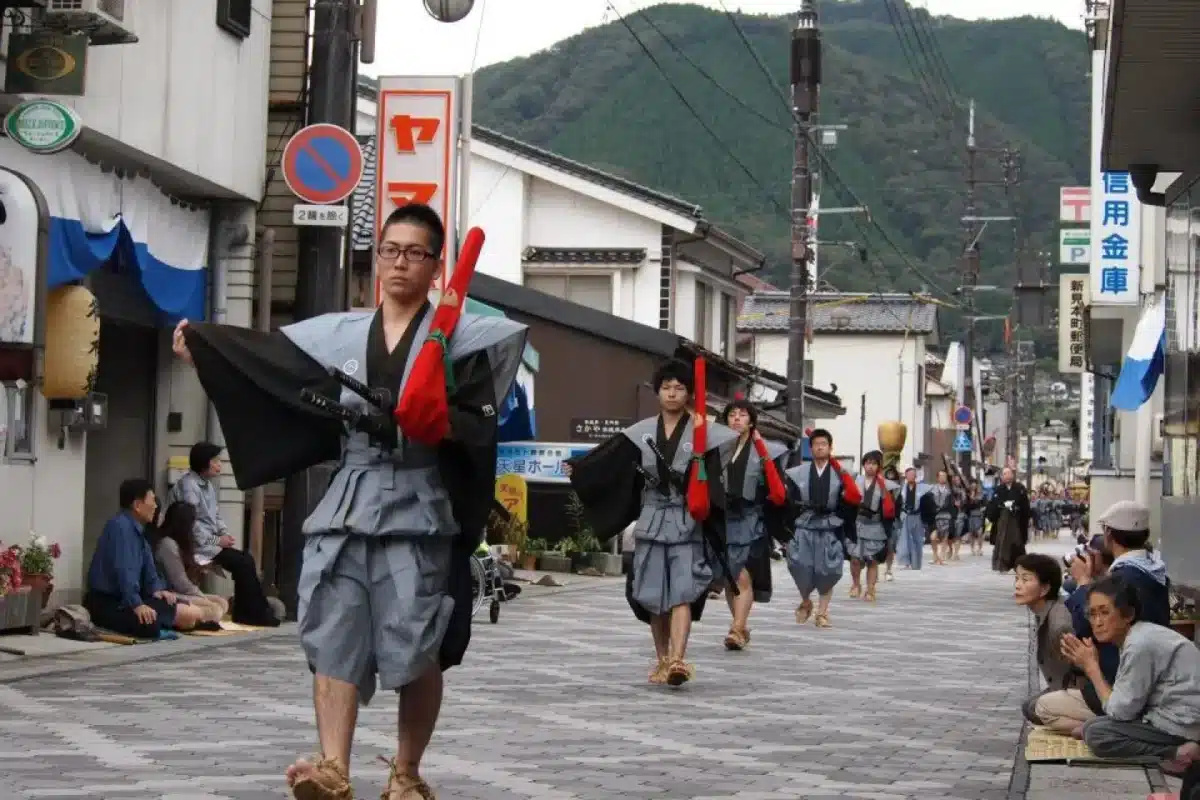
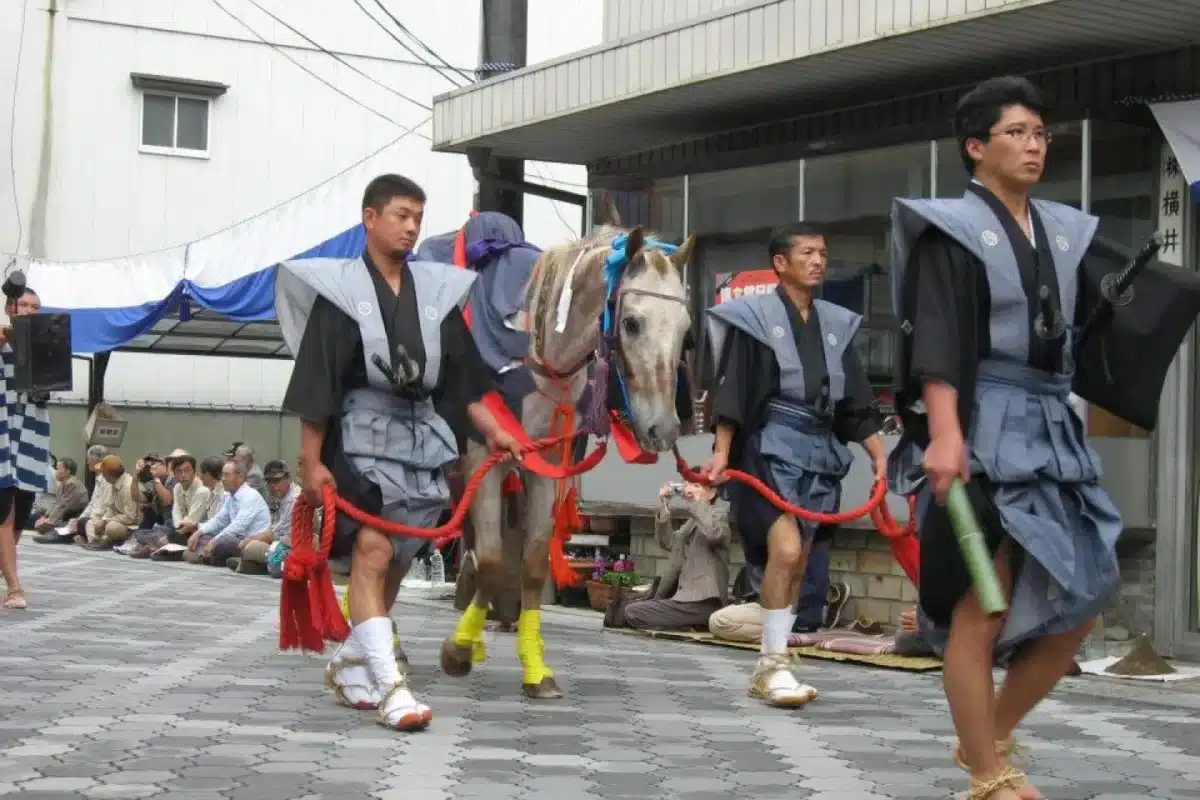
Niimi City Samurai Parade, also known locally as the Dogeza Festival or Daimyo Gyoretsu Festival of Funakawahachimangu Shrine, is one of the most authentic and historically significant samurai processions in western Japan. Located at the northern edge of Okayama Prefecture bordering Tottori Prefecture, Niimi is a quiet mountain city surrounded by forested hills and the headwaters of the Takahashi River, and this parade is its most important living cultural heritage event.
The parade is a full re-creation of the Daimyo procession that once traveled to Edo to pay respect to the Shogun. Unlike larger, more theatrical city festivals, Niimi’s version is intimate, community-driven, and remarkably faithful to historical form. It is formally classified as a Goshinko Buki Gyoretsu Matsuri, a festival of transporting the kami with a procession of arms, and is also known as the Dogeza Matsuri or kneeling festival because of its unique audience custom.
What makes it distinctive: Spectators, including locals and tourists, are required to kneel or sit on straw mats and cushions with heads bowed as the armed procession passes. Calls of Shitaaa! Shitaaa! meaning Get your head down, echo through the streets. If anyone stands or moves, the procession halts on the spot, a rule still enforced today.
Enjoy Your Event Stress-Free with Japan Travelo
Do you know? Planning events, festivals, concerts, and cultural experiences in Japan can be overwhelming. Japan Travelo brings everything together in one place, helping you manage your itinerary, transport, and accommodation with ease—so you can enjoy Japan without the stress of planning.
Community scale: Schools allow students a half-day holiday as many participate directly. Residents save viewing spots early despite the event falling on a weekday, demonstrating deep local pride in a tradition that has continued for more than three centuries.
Cultural Significance & Origins
The origins of the Niimi Samurai Parade are traced to the founding of the Niimi Domain in 1697. Local historians agree the tradition is at least 300 years old. According to historical records reported by the Yomiuri Shimbun, the festival started when the first lord of the Niimi Domain held a procession in which a portable shrine was guarded with weapons to pray for a good harvest and the peace of his people.
Sankin Kotai system: During the Edo period, the Tokugawa Shogunate required regional lords to alternate residence between their domain and Edo, present-day Tokyo. This system, known as sankin kotai, was codified in 1635 and forced daimyo to spend vast sums on travel and gifts to the Shogun, preventing them from accumulating wealth that could fund rebellion. The Daimyo did not wish to travel because of the enormous financial burden, but compliance was essential to maintain the right to reign over their district.
Shogunal strategy and Japanese societal values: The requirement exemplifies the Tokugawa strategy of maintaining order by controlling regional finances. It also reflects a core aspect of Japanese societal fiber, the prioritization of group peace and order over individual preference. The procession was both a political obligation and a spiritual mission, carrying the shrine’s kami for protection.
Survival as tribute: That this armed shrine procession continues today after more than 300 years is considered a tribute to the city of Niimi and its residents. The domain of the Seki family, the lords of Niimi, preserved this form of the daimyo procession as a fall festival of thanksgiving for the harvest.
Traditions, Rituals & Customs
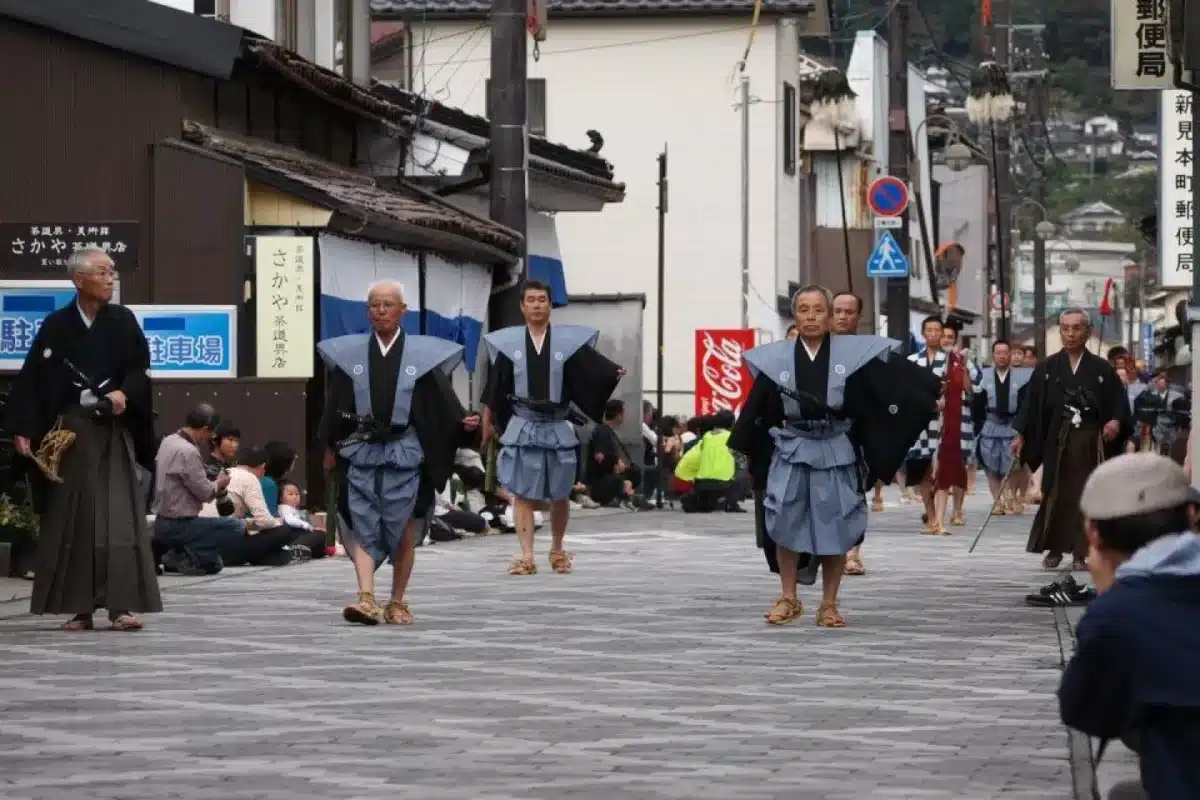
Armed shrine procession: The core ritual involves 53 participants in recent editions, carrying large spears, naginata halberds, bows and other traditional weapons, slowly making their way through the historic townscape while guarding a portable mikoshi shrine.
Dogeza kneeling ritual: In ages past, common people encountering a procession of dignitaries had to get down on their knees and were forbidden to look up until the procession passed. This dogeza posture of submission is reenacted today. Parishioners of Funakawahachimangu Shrine wait for the procession sitting or kneeling on straw mats and cushions, and all visitors must do the same.
Shitaa calls: As the procession approaches, attendants shout Shitani, Shitani or Shitaaa, commanding the crowd to bow their heads. This vocal tradition is believed to have roots in similar calls used by Ryukyuan delegations that witnessed daimyo processions.
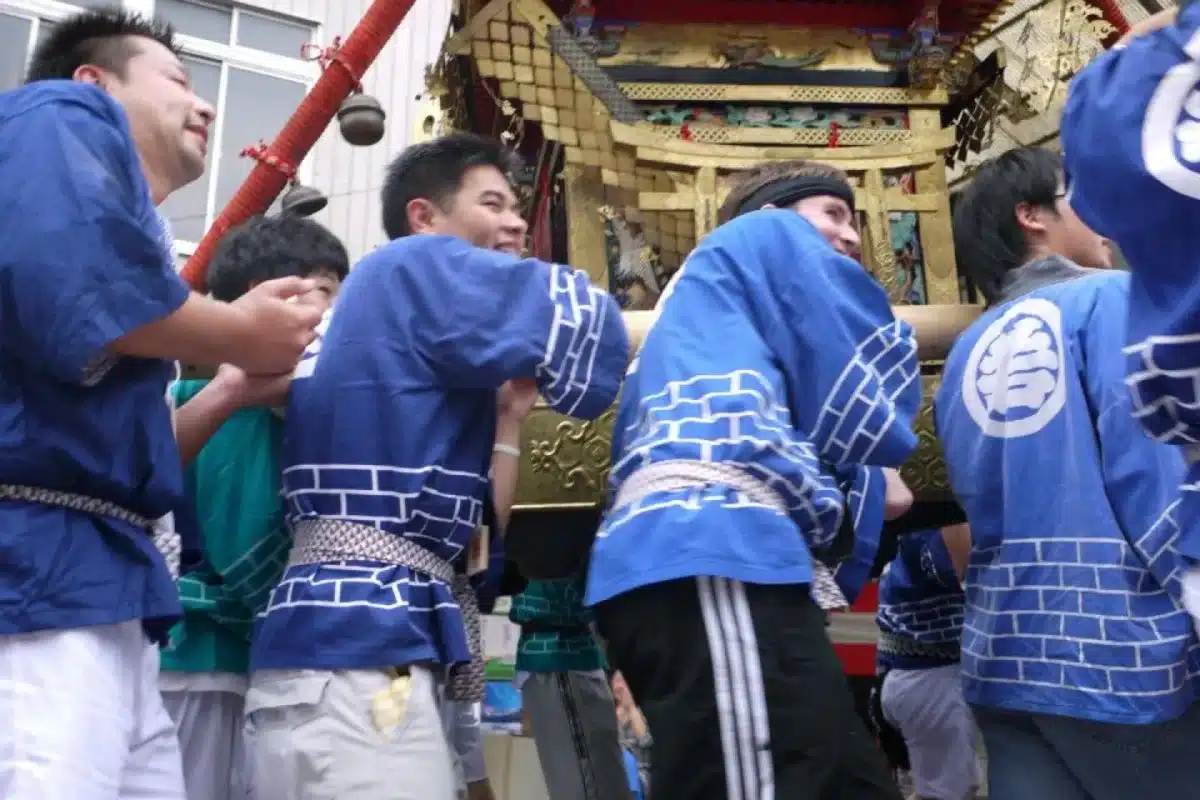
Mikoshi bearing: A key element is the mikoshi, a fairly large and heavy shrine borne on the shoulders of marchers. The route culminates in the ascent of a steep hill to Funakawahachimangu Shrine, requiring significant physical effort and coordination.
Harvest thanksgiving: The procession retains its original purpose as a prayer for a good harvest and peace. Offerings are made at the shrine before and after the procession, linking martial display with agricultural gratitude.
What to Expect at the Festival
Expect a quiet city transformed by living history. Niimi is otherwise a calm gateway city where spring colors scatter across hills once winter recedes, and the Takahashi River runs through town on its way to the Seto Inland Sea. During the parade, the central streets become a solemn yet festive stage.
Atmosphere: The mood is reverent rather than carnival-like. There is no loud music or large food fair. Instead, the focus is on the slow, deliberate movement of armed guards, the creak of the mikoshi, and the silence of the kneeling crowd. Photographers will find willing subjects in period clothes, but must also kneel when the procession passes.
Local participation: You will see schoolchildren in uniform participating or watching on half-day holiday, elderly residents who have watched the parade for decades, and families who have lived in Niimi for generations. The city has a strong hometown pride, and visitors often comment on the warmth of locals eager to explain the history.
Scenic backdrop: The historic townscape, surrounding mountains, and river valley provide a natural setting that feels unchanged from the Edo period, allowing visitors to imagine the original journey to Edo.
Date & Schedule
Event Dates: October 15, 2027
Schedule details:
Morning preparation: Early morning purification ceremony at Funakawahachimangu Shrine, dressing of participants in armor and period attire, and arrangement of weapons including spears, naginata, and bows.
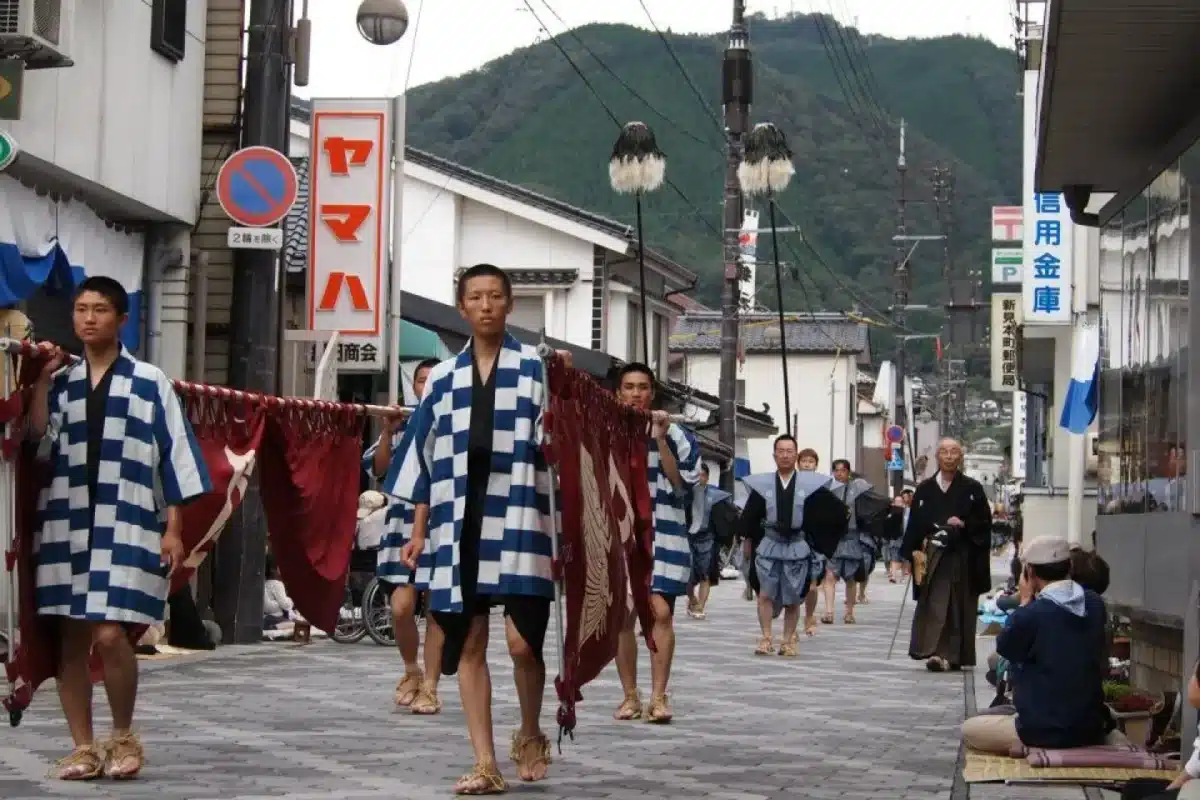
Procession start: Late morning departure from the shrine precinct, proceeding through central Niimi streets. Participants march in traditional order, with spear carriers at the front, followed by archers, flag bearers, and mikoshi bearers.
Main procession: Midday passage through the city center with repeated halts for dogeza observance. Duration is approximately one to two hours depending on crowd size and adherence to kneeling rules.
Return and closing: Early afternoon ascent back to Funakawahachimangu Shrine, final prayers for harvest and peace, and community gathering at the shrine grounds.
Note: The parade is held the same day each year regardless of weekday. It was held after a two-year cancellation during the pandemic and resumed with full participation.
Visiting this event? Don’t miss out on these amazing activities and local experiences while you’re here.
Main Events & Programme
Goshinko Buki Gyoretsu: The main armed procession is the sole major program, but it is divided into distinct sections. The advance guard carries large spears to clear the path, followed by warriors with naginata halberds demonstrating defensive formations.
Mikoshi procession: The central section features the portable shrine of Funakawahachimangu carried by teams in white festival coats. The shrine is considered the embodiment of the kami and is treated with utmost reverence.
Dogeza observance: The most interactive program element is the enforced kneeling. Spectators are provided with cushions and straw mats in sheltered viewing areas. The procession leaders monitor compliance and will stop if protocol is broken.
Shrine rituals: Before departure and upon return, Shinto priests perform purification and thanksgiving rituals inside Funakawahachimangu, including prayers for the Takahashi River watershed and the surrounding agricultural lands.
Community reception: After the procession, local community groups often host small gatherings where participants can view the armor and weapons up close and speak with the bearers about the history of the Niimi Domain.
Traditional Dress, Arts & Crafts
Armor and weapons: Participants wear authentic reproductions of Edo period armor including dou chest plates, kabuto helmets with family crests of the Seki clan, and suneate shin guards. Weapons are not props but carefully crafted reproductions of historical arms, including yari spears over two meters long and yumi longbows.
Daimyo attire: The lord’s role is represented by a participant in kamishimo formal samurai wear with hakama trousers and a jingasa hat, reflecting the status of a minor domain lord.
Mikoshi craftsmanship: The portable shrine itself is a work of traditional woodworking, lacquer, and metalwork, maintained by local artisans. Its decorations include carvings of Hachiman, the god of war and protector of warriors.
Textile arts: Straw mats, cushions, and noren curtains used in viewing areas are woven by local craftspeople. The white hapi coats worn by bearers feature hand-stenciled crests of Funakawahachimangu.
Calligraphy and signage: Wooden placards bearing the names of the domain and shrine are carried at the front, written in traditional sumi calligraphy.
Traditional Food & Local Specialties
Niimi mountain cuisine: As a mountain city prone to cold weather in winter, Niimi’s food culture emphasizes hearty, warming dishes. Local specialties include wagyu beef from Okayama Prefecture, mountain vegetables, and freshwater fish from the Takahashi River headwaters.
B-class gourmet influence: While the parade itself does not feature a large food fair like urban festivals, nearby shops offer Okayama favorites such as Kibi dango millet dumplings, Tsuyama horumon offal dishes, and Niimi’s own yuzu and chestnut sweets.
Shrine area stalls: Small stalls near Funakawahachimangu typically sell amazake sweet rice drink, grilled ayu sweetfish, and seasonal persimmons from surrounding hills.
Okayama fruits: The region is famous for white peaches and Pione grapes. During the harvest thanksgiving period, many shops offer fruit daifuku and fruit-based confectionery.
Location & Festival Areas
Main shrine: Funakawahachimangu, 858 Niimi, Niimi City, Okayama Prefecture. The shrine is situated on a hill overlooking the city center, requiring a steep ascent that forms the climax of the procession.
City center route: The procession moves through the historic townscape in the center of Niimi, along streets that follow the old Edo-period road alignment. The route passes near the Takahashi River, which originates from Chiya Hanamiyama and runs through Niimi toward the Seto Inland Sea.
Viewing zones: Official sheltered viewing areas with cushions are set up along the main street, where visitors are escorted to kneel or sit cross-legged. These provide the best perspective and are managed by local volunteers, including English-speaking ALT teachers in some years.
Surrounding nature: The city is surrounded by hills and mountains that serve as the gateway to Niimi. The Chiya Hanamiyama area, source of the Takahashi River, offers hiking and scenic views of spring colors once the cold season ends, though the city is known for its natural beauty throughout the year.
Getting to the Festival
By train: Niimi Station is served by the JR Hakubi Line and Geibi Line. From Okayama Station, the limited express Yakumo reaches Niimi in approximately 90 minutes. From Yonago in Tottori Prefecture, local trains connect via the Hakubi Line.
By car: Niimi is located on the Chugoku Expressway and National Route 180. Parking near the city center is limited during the parade and traffic controls are implemented along the procession route.
Local transport: The city center is compact and walkable. The walk from Niimi Station to Funakawahachimangu Shrine takes approximately 20 minutes, with the final ascent being steep.
Accessibility: The viewing areas require sitting or kneeling on the ground, which may be challenging for those with mobility issues. Sheltered seating with chairs may be available for elderly visitors upon request to the shrine office.
Where to Stay Nearby
Niimi city center: Small business hotels and ryokan in Niimi offer basic accommodation within walking distance of the parade route. Prices typically range from 50 USD to 90 USD per night for a single room. These fill quickly due to family returns for the festival.
Takahashi and Soja: Larger cities to the south along the Takahashi River offer more hotel options, including chain business hotels from 60 USD to 110 USD per night, with train connections to Niimi.
Yonago and Tottori: To the north, Yonago City offers resort hotels near Kaike Onsen and Mount Daisen, with rates from 80 USD to 180 USD per night, suitable for combining the parade with San’in region sightseeing.
Okayama City: For those traveling from the Seto Inland Sea side, Okayama City provides extensive hotel options from 70 USD to 200 USD per night, with easy access via the Hakubi Line.
What Visitors Can Participate In
Dogeza participation: All visitors are expected to participate in the kneeling ritual. This is not optional and is considered a sign of respect for the tradition. Volunteers provide guidance on proper posture, either kneeling or sitting cross-legged with head bowed.
Mikoshi bearing: In some years, local foreign residents and invited guests have been honored to participate as mikoshi bearers. This requires advance application through Niimi City Hall and physical fitness for carrying the heavy shrine up the hill.
Photography before and after: While photography during the passage requires kneeling, extensive opportunities exist before departure and after return to photograph participants, armor details, and the shrine.
English support: Niimi has a small but active international community through its sister city relationships. ALT teachers and city volunteers often provide English explanations at viewing areas.
Post-procession shrine visit: After the procession returns, visitors can approach Funakawahachimangu Shrine to offer prayers and view the weapons and shrine up close during the closing ceremony.
Things to Do Before or After the Festival
Takahashi River exploration: Follow the Takahashi River from its origin at Chiya Hanamiyama through Niimi. The upper reaches offer mountain stream fishing, clear water pools, and forest trails that showcase the spring colors scattered in the hills.
Ikura Cave and Maki Cave: Niimi is famous for its limestone caves, including Ikura Cave and Maki Cave, located a short drive from the city center. These caves feature dramatic stalactite formations and underground streams.
Domaine Tetta Winery: The Niimi area has gained attention for its wine production, particularly Domaine Tetta which produces unique wines from mountain grapes grown on limestone soil, offering tastings that reflect the terroir of the Chugoku Mountains.
Bitchu Matsuyama Castle: Not to be confused with the more famous Matsuyama Castle in Ehime, Bitchu Matsuyama Castle in nearby Takahashi City is Japan’s highest mountain castle with an original keep, accessible via a hike.
Okayama and Kurashiki: Combine the trip with visits to Okayama Korakuen Garden, one of Japan’s three great gardens, and the historic Kurashiki Bikan quarter, both located downstream along the Takahashi River system.
Local Food & Restaurants
Niimi wagyu and mountain ingredients: Local restaurants specialize in Chiya beef and pork, served as yakiniku or shabu-shabu, with lunch sets from 10 USD to 18 USD and dinner from 20 USD to 45 USD.
Soba and river fish: Mountain soba shops offer handmade soba noodles using local buckwheat, served with tempura of mountain vegetables. Grilled ayu and amago trout from the Takahashi River are seasonal specialties priced around 8 USD to 15 USD.
Okayama style: In Niimi’s shopping streets, you will find restaurants serving Okayama’s famous demi-katsu pork cutlet with demi-glace sauce, and Hiruzen yakisoba, a local fried noodle dish with miso-based sauce and chicken, typically 6 USD to 10 USD.
Cafes and sweets: Coffee shops near Niimi Station serve handmade cakes using local chestnuts and yuzu. The area’s limestone water is said to produce excellent coffee, with drinks from 3 USD to 6 USD.
Ticket Information & Access
Admission: Viewing the Niimi City Samurai Parade and access to Funakawahachimangu Shrine grounds are completely free. No tickets are required for any part of the event. This free access has been consistent in all recent editions.
Participation: General spectator participation in dogeza viewing is free and cushions are provided. Any special participation as a mikoshi bearer is by invitation and free of charge.
Transport costs: Round-trip train from Okayama to Niimi costs approximately 30 USD to 50 USD depending on limited express use. Local bus fares within Niimi are 2 USD to 4 USD.
Shrine offerings: Visitors may choose to make a small offering at Funakawahachimangu Shrine, typically 1 USD to 5 USD, though this is voluntary.
Facilities: Portable toilets and first aid stations are set up along the route. The shrine office provides information in Japanese with some English support.
Official Event Information
Event name: Niimi City Samurai Parade, also known as Dogeza Festival, Daimyo Gyoretsu, Goshinko Buki Gyoretsu Matsuri
Venue: Funakawahachimangu, 858 Niimi, Niimi City, Okayama Prefecture, Japan and central Niimi city streets
Organizer: Funakawahachimangu Shrine, Niimi City, Niimi City Tourism Association
Official website: https://en.japantravel.com/okayama/niimi-city-samurai-parade/1178
Contact: Niimi City Hall, Tourism Division, local area code 0867
Access: 20-minute walk from JR Niimi Station, or 5-minute taxi ride to shrine approach. Procession route is through Niimi city center.
Historical note: The exact date of origin is not known but local historians confirm the tradition is at least 300 years old, dating to the establishment of the Niimi Domain in 1697.
Location
FAQ
What is the Dogeza Festival and why do spectators have to kneel?
The Dogeza Festival is the local name for the Niimi City Samurai Parade, called so because spectators must perform dogeza, a kneeling bow of submission. In the Edo period commoners were required to kneel and not look up when a daimyo procession passed, and Niimi preserves this rule to maintain historical accuracy. Today the act is a respectful participation in living history, and the procession will actually stop if anyone remains standing, so compliance is essential.
Is the Niimi Samurai Parade different from other samurai parades in Japan?
Yes, while many places in Japan hold daimyo gyoretsu reenactments, Niimi's is distinctive for its intimate scale, its 300-year continuity, and the strict enforcement of the dogeza custom. It is formally a Goshinko Buki Gyoretsu, a festival transporting the kami with armed guard, not just a costume parade. Its location in a small mountain city rather than a large castle town also gives it a more authentic, community-focused atmosphere.
Can tourists participate in carrying the mikoshi or wearing armor?
General tourists cannot spontaneously join as armored warriors, as roles are assigned to local preservation society members and residents. However, Niimi has a history of inviting foreign residents, such as English teachers, to participate as mikoshi bearers carrying the heavy portable shrine. This requires advance contact with Niimi City Hall and is considered a great honor. Spectators can participate fully through the kneeling ritual and photography sessions.
What is the significance of Funakawahachimangu Shrine and the Takahashi River?
Funakawahachimangu is the tutelary shrine of the Niimi Domain and the spiritual center of the festival, dedicated to Hachiman, the protector of warriors. The Takahashi River originates from Chiya Hanamiyama near Niimi and flows to the Seto Inland Sea, defining the geography and agriculture of the region. The shrine's festival prayers for harvest and peace are directly linked to the river watershed that sustained the domain.
Is Niimi City worth visiting beyond the parade?
Absolutely, Niimi offers limestone caves, mountain wineries, river fishing, and access to the Chugoku Mountains that many visitors discover only after arriving for the parade. The city is described by long-time visitors as a place where even after nearly two decades you still discover new places and facts. Its location bordering Tottori Prefecture makes it a gateway to both the San'in and Sanyo regions of western Japan, with a quiet charm distinct from major tourist centers.

Leave a Reply