
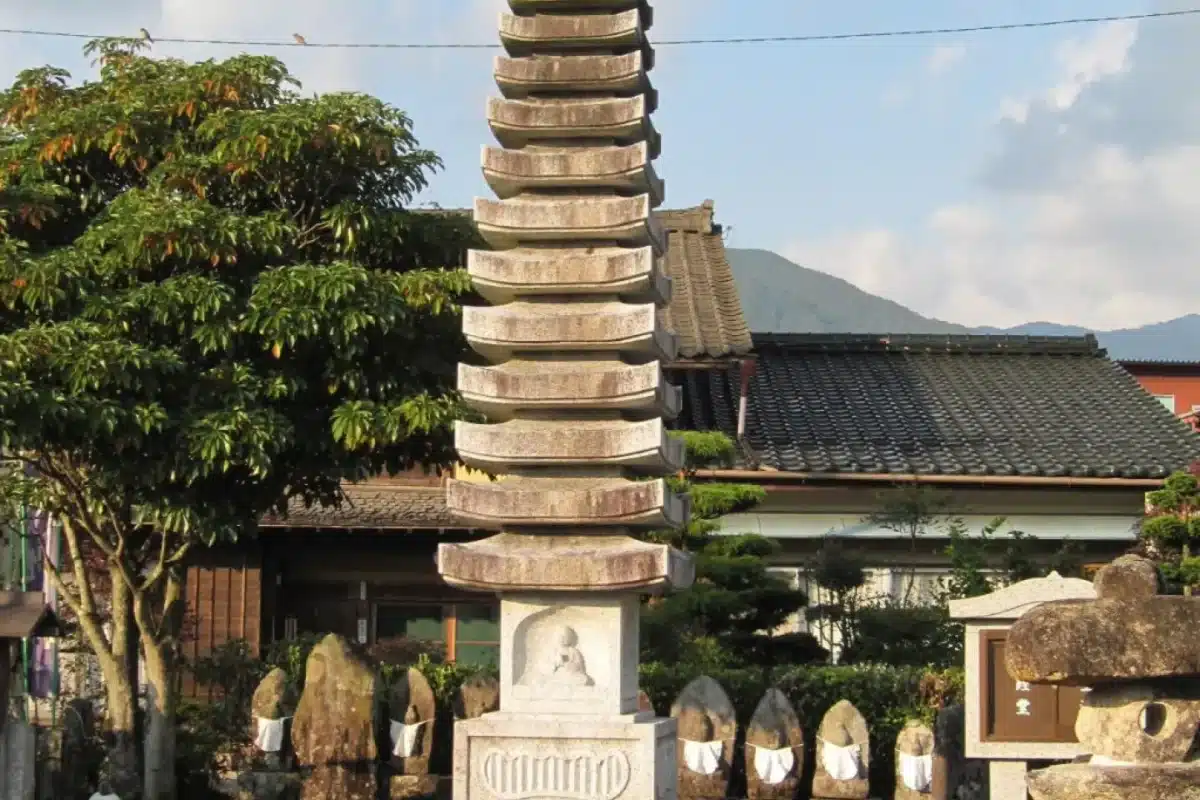
Overview
Slug Festival, known locally as Namekuri Matsuri, is one of Japan’s most unusual and intimate folk festivals, held in the sleepy mountain hamlet of Kashimo in Nakatsugawa City, Gifu Prefecture. While Japan is famous for fight festivals, firework festivals, fertility celebrations, and rituals to discipline children, Kashimo’s festival honors something far more humble and mysterious, the slug.
This is not a wildly famous national event nor does it attract large tourist crowds from across the country. Its audience is primarily locals and visitors from within Gifu Prefecture, which is precisely what preserves its authenticity. The festival has a story that captures the imagination, blending tragic love, betrayal, atonement, and a natural mystery that continues to defy explanation.
Core identity: The festival commemorates a centuries-old tale of forbidden love between a soldier and his friend’s wife, a self-sacrifice, and the subsequent spiritual journey of the soldier who became a monk of high virtue. The slug is believed to be the reincarnation of the woman, marked by a black line on its back said to be a sword scar.
Enjoy Your Event Stress-Free with Japan Travelo
Do you know? Planning events, festivals, concerts, and cultural experiences in Japan can be overwhelming. Japan Travelo brings everything together in one place, helping you manage your itinerary, transport, and accommodation with ease—so you can enjoy Japan without the stress of planning.
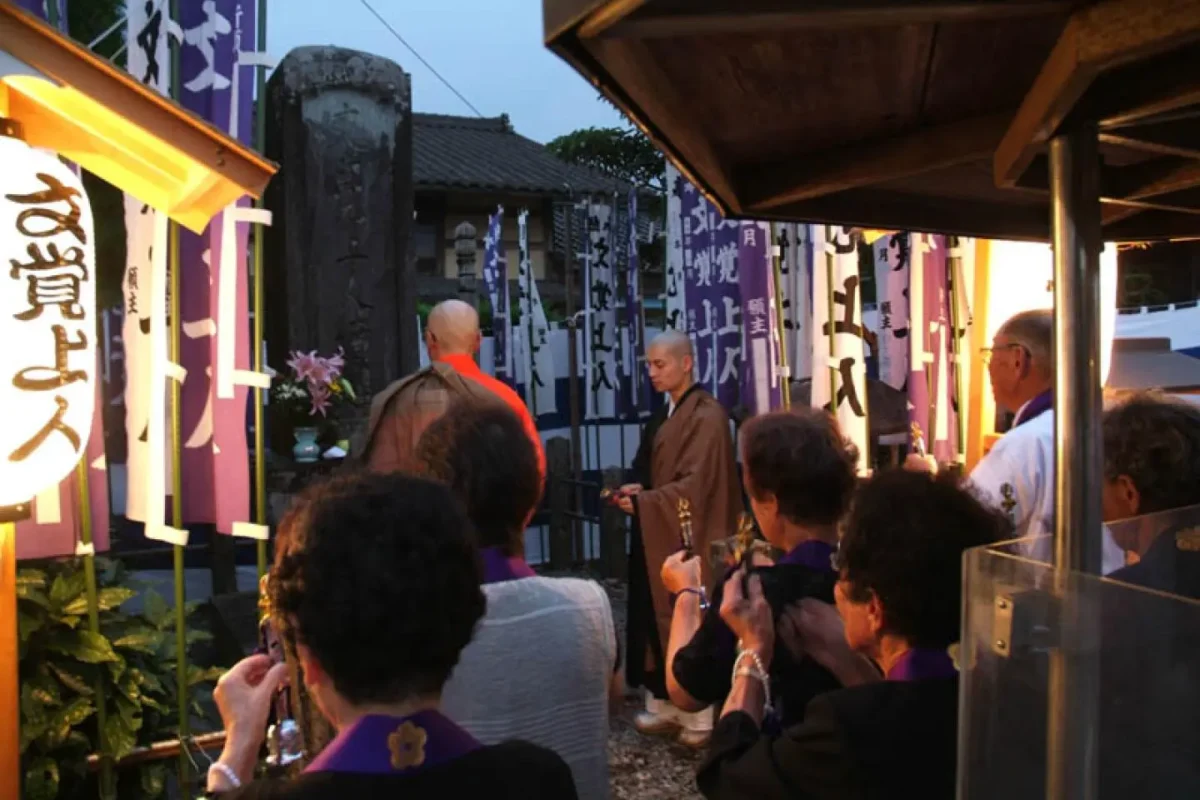
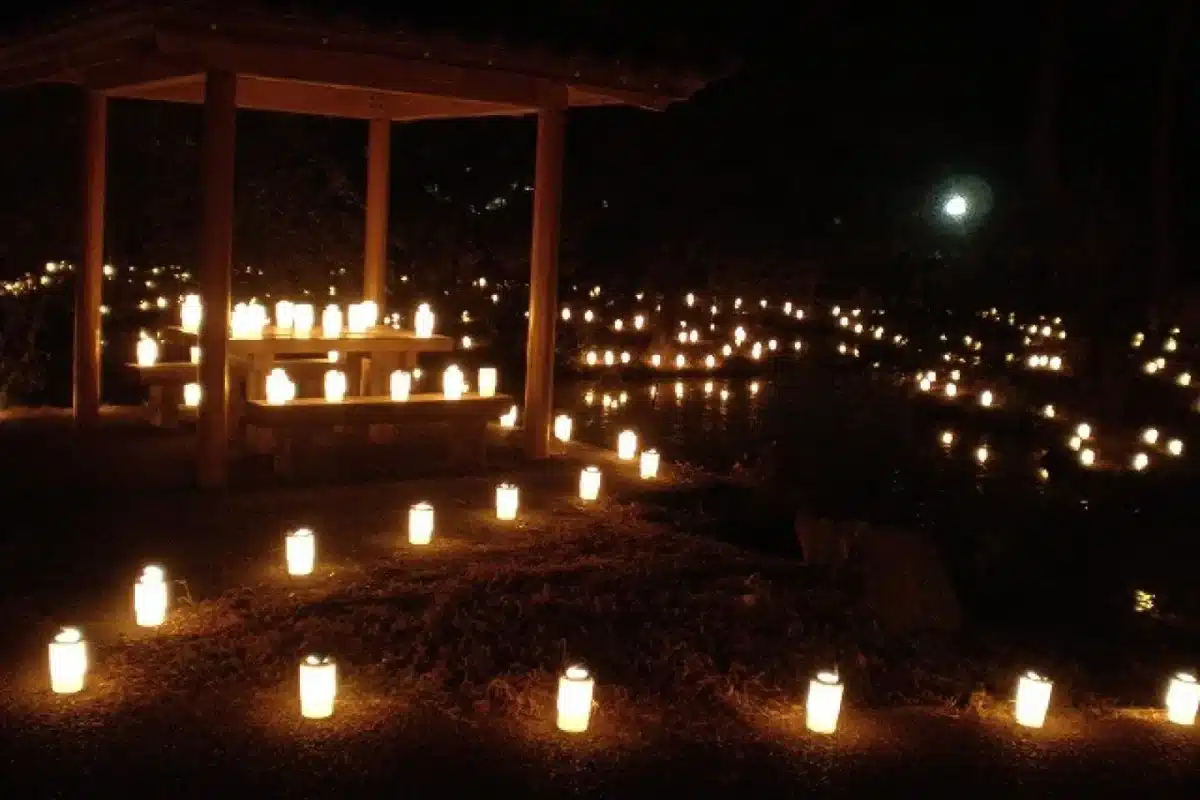
Atmosphere: On the evening of the festival, the narrow hamlet streets are transformed into a field of lanterns and torches. Taiko drums play, stalls sell festival fare, and a young monk from the main temple walks to an ancient tomb as people bow in silence. As prayers are said, slugs led by one large slug with a distinct black mark appear and climb over the tomb, a phenomenon that locals insist happens naturally without human intervention.
Why it matters: It is a perfect example of Japan’s minkan densho, folk legends where nature, morality, and spirituality intertwine, and where a small community maintains a ritual that larger cities have long abandoned.
Cultural Significance & Origins
The origins of the festival lie between the Heian and Kamakura Periods, a formative era in Japanese history when samurai culture was emerging and imperial court power was shifting.
Sacred forest guardians: Kashimo’s northern district of Ogo, locally called ojatta-mura, held strategic importance. A small garrison of soldiers was stationed there with the specific duty of protecting the sacred forest and Japanese cypress, known as Kiso hinoki, from the surrounding daimyo of Takayama and Naegi. Kiso hinoki is one of Japan’s three finest woods and was reserved for building palaces, castles, temples and shrines. The name Kiso cypress comes from the fact that this area was historically called Kiso or Ura-Kiso, and it remains mostly found in the Kiso Valley of Nagano and Kashimo district of Nakatsugawa today.
The legend of Moritoo and Kesa-gozen: A soldier named Moritoo Endo stationed in Kashimo fell in love with his friend’s wife, Kesa-gozen. He pursued her affection and eventually convinced her to be with him, but this required removing her husband, who was also Moritoo’s friend. Kesa-gozen instructed him to come to her house at midnight on a specified night when her husband would be sleeping alone. Moritoo entered and cut off the head of the figure in the futon. The next day, news spread that the wife had been killed. Kesa-gozen had tricked Moritoo, taking her husband’s place in the futon and sacrificing herself to save her husband.
Atonement and priesthood: Overwhelmed by guilt and remorse, Moritoo became a monk to atone for his sin. He undertook severe ascetic training and later became known as Mongaku-shounin, a priest of high virtue revered for his discipline and spiritual power. His story appears in several Japanese historical tales as an example of extreme atonement.
The slug reincarnation belief: After Moritoo’s death, villagers began noticing slugs appearing on the anniversary evening of Kesa-gozen’s death at her tomb. The black line on the back was interpreted as the sword scar from that night. The belief that Moritoo had completed his apprenticeship and had been forgiven by Kesa-gozen led to the establishment of an annual memorial where nature itself participates in remembrance.
Traditions, Rituals & Customs
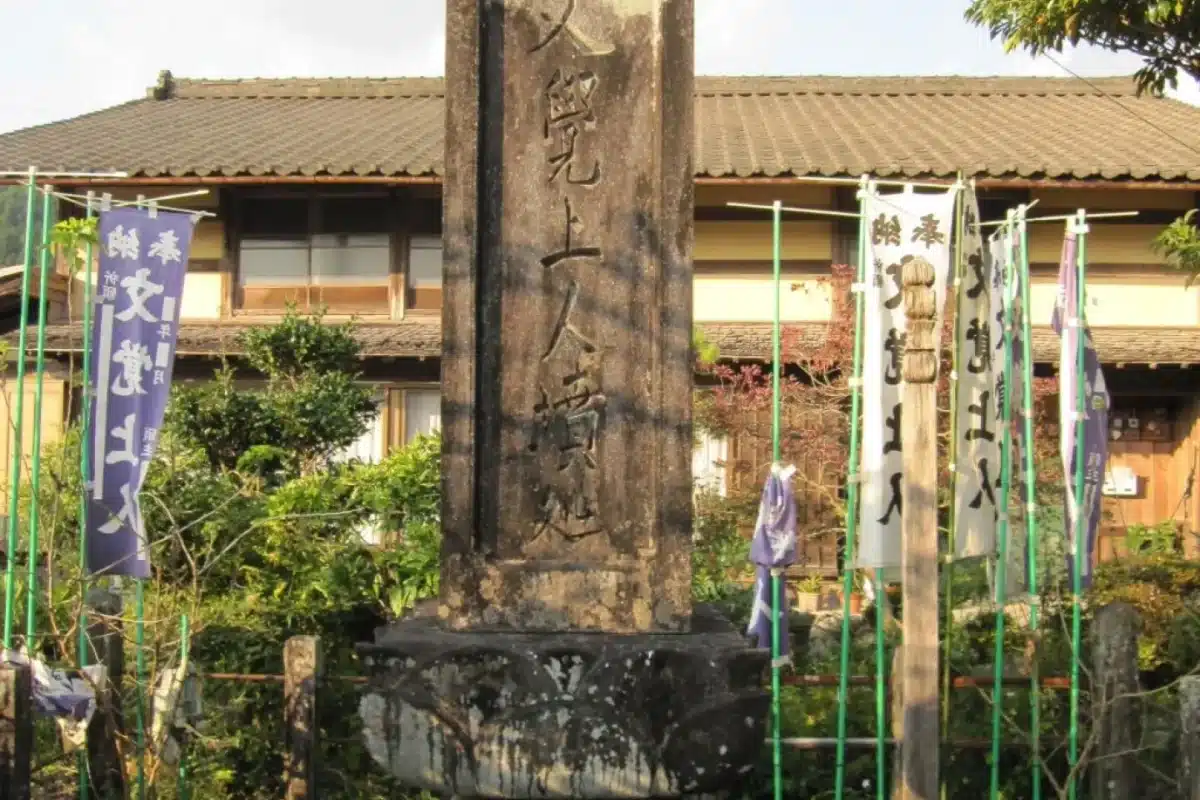
Tomb prayer ritual: The central ritual is conducted at the tomb of Kesa-gozen in Kashimo. The current monk from the main temple now located in the center of the community, often a young man in his mid-thirties who inherits the role, walks in formal robes up to the tomb. The crowd falls silent and bows as a prayer is offered for Kesa-gozen, for Moritoo, and for forgiveness and peace in relationships.
Slug appearance mystery: As the prayer is spoken, slugs emerge and climb all over the tomb. According to attendees who have witnessed the festival dozens of times, no one collects or places the slugs. They appear naturally each year on that specific evening, led by one notably large slug bearing a long black mark. People scramble gently to observe this mystery of nature, considering it a sign that the spirits are present.
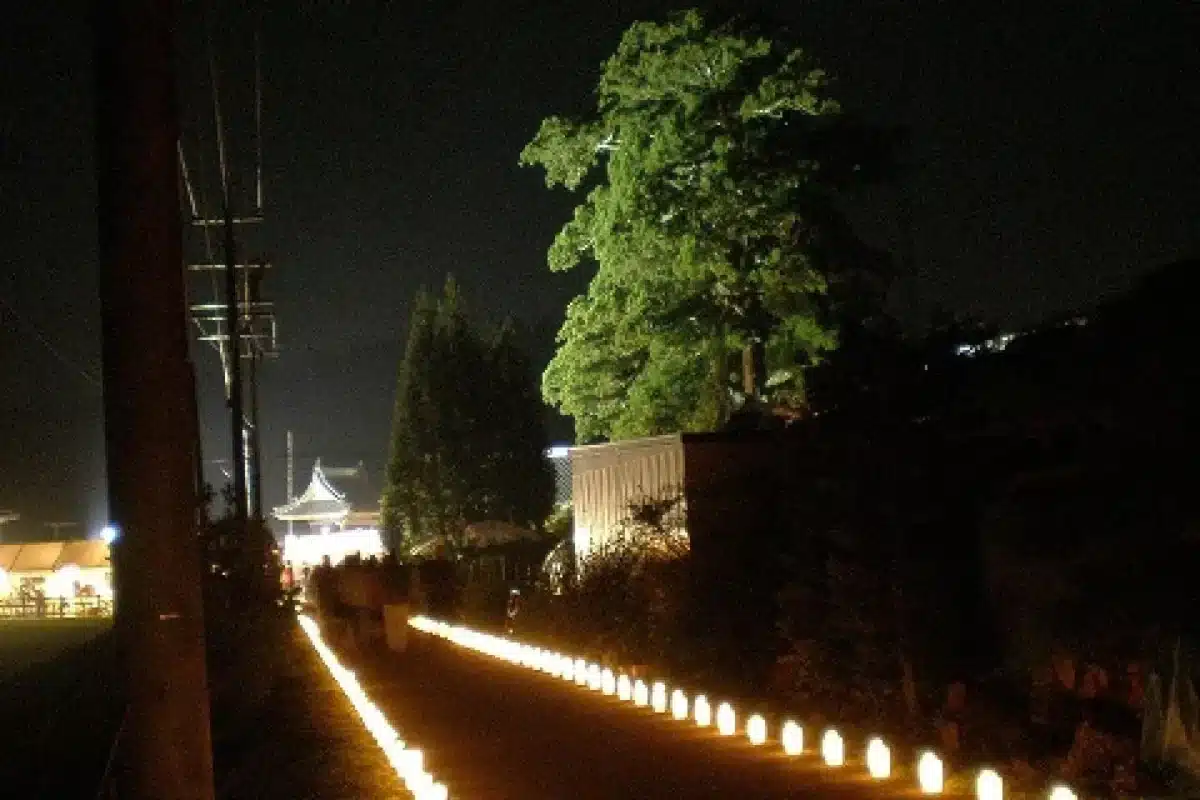
Torch and lantern lining: The street leading to the tomb is lined with torches and paper lanterns, creating a warm, flickering path through the otherwise dark mountain hamlet. This lighting tradition symbolizes guiding spirits and creating a sacred boundary between daily life and the memorial space.
Taiko and communal silence: The evening alternates between jovial taiko drumming that brings the community together and profound silence during the prayer. This contrast between celebration and solemnity is characteristic of Japanese memorial festivals, where joy in community life and respect for the dead coexist.
Oral storytelling: Elders retell the story of Moritoo and Kesa-gozen to younger generations, often with assistance from local historians. The story is told not as simple entertainment but as a moral lesson about desire, loyalty, sacrifice, and atonement.
What to Expect at the Festival
Expect a transformation of a quiet hamlet into a communal sacred space. Kashimo is normally a sleepy village where daily life moves slowly, surrounded by sacred cypress forests and steep mountain slopes. During the festival, all residents emerge.
Intimate scale: Unlike urban festivals with thousands of stalls, this festival features a modest number of stalls selling festival fare such as yakisoba, grilled skewers, and sweet sake. The focus remains on the ritual rather than commerce.
Sensory experience: The air is filled with woodsmoke from torches, the deep resonance of taiko, and the cool mountain air of the highlands. The sight of dozens of slugs moving across an ancient stone tomb in lantern light is both eerie and deeply moving.
Community participation: Everyone knows everyone else. Visitors are welcomed as guests rather than tourists, and locals are eager to share the story. It is common for visitors to be invited to share tea or sake after the prayer.
Natural setting: Kashimo sits at over 500 meters elevation, and even in warm seasons evenings are cool. The surrounding Kiso hinoki forest, once protected by soldiers, still dominates the landscape and contributes to the sacred atmosphere.
Date & Schedule
Event Dates: Late August 2027 (Dates TBD)
Festival timing: The festival always takes place on the 9th day of the 7th month of the lunar calendar. In the modern calendar this converts to a late summer evening. The official date for 2027 will be announced closer to the event and corresponds to Late August 2027.
Evening schedule:
Late afternoon: Vendors set up along the approach to the tomb, torches and lanterns are placed, taiko drums are tuned in the community center.
Early evening: Community gathering, informal storytelling, food stalls open, children play in lantern light.
Main ritual: As dusk deepens, the monk processes to the tomb. Crowd falls silent, prayer is offered. Slugs appear on the tomb during the prayer, observed by attendees.
Post-ritual: Quiet dispersal, continued light socializing, lanterns remain lit until late evening.
Historical note: The date commemorates the anniversary evening of Kesa-gozen’s death and the atonement of Moritoo Endo, who later became Mongaku-shounin.
Visiting this event? Don’t miss out on these amazing activities and local experiences while you’re here.
Main Events & Programme
Monk’s procession to the tomb: The sole formal program is the procession of the current temple monk from the main temple in the center of Kashimo to the tomb site. Dressed in traditional robes, he walks slowly, followed by temple assistants carrying incense and prayer items.
Prayer at the tomb: The monk recites sutras and offers a memorial prayer for Kesa-gozen and Mongaku-shounin. The prayer emphasizes forgiveness, the impermanence of desire, and gratitude for the protection of the sacred forest that defines Kashimo’s identity.
Slug observation: The most anticipated moment is not scheduled but occurs naturally during the prayer. Attendees gather closely yet respectfully around the tomb to watch slugs, particularly the large leader with a black line, move across the stone. This is considered the spiritual climax.
Taiko performance: Local taiko groups perform before and after the prayer to mark the transition between festive and sacred time. The drumming is not loud festival competition style but steady and ceremonial.
Community stalls: A small number of stalls offer local foods and drinks, including Gifu specialties such as gohei mochi, grilled river fish, and sake made with mountain water.
Traditional Dress, Arts & Crafts
Monastic robes: The presiding monk wears formal black or deep indigo robes with a kesa stole, representing the lineage of Mongaku-shounin. The attire reflects Shingon or Tendai ascetic traditions associated with mountain priests.
Village festival wear: Locals wear simple yukata or work clothes rather than elaborate costumes, emphasizing the festival’s nature as a community memorial rather than a costume parade. Elderly women often wear aprons with traditional Kashimo weaving patterns.
Kiso hinoki craft: Kashimo is the heartland of Kiso hinoki woodcraft. Artisans known as kijishi woodturners use local persimmon, cherry, horse chestnut, and the cherished Kiso hinoki to create bowls, trays, and sake cups. During the festival period, small craft displays may be found in the community center, with items priced from 10 USD to 80 USD.
Lantern making: Paper lanterns and torches are handmade by community members using washi paper and bamboo frames, a craft passed down through families responsible for maintaining the sacred forest.
Stone care tradition: The tomb itself is maintained by local stonemasons who use traditional techniques to clean and preserve the stone without chemicals, ensuring it remains hospitable to the natural environment.
Traditional Food & Local Specialties
Mountain hamlet fare: Food reflects Nakatsugawa’s mountain location and historical role as a post town on the Nakasendo. Signature dishes include gohei mochi, pounded rice cakes coated with sweet miso and walnut sauce grilled on cedar sticks, priced around 3 USD to 5 USD.
Kuri kinton: Nakatsugawa is nationally famous for kuri kinton, a sweet chestnut paste dessert made from local chestnuts, especially celebrated in autumn but available year-round. Shops near Kashimo sell it for 8 USD to 15 USD per box.
River and forest products: Stalls offer salt-grilled amago trout from mountain streams, wild boar skewers, and tempura of mountain vegetables such as bracken and bamboo shoots.
Sake and amazake: Local breweries using water from the Kiso Mountains produce dry, clean sake that pairs with mountain foods. During the festival, warm amazake sweet sake is served for 2 USD to 4 USD.
Festival basics: Standard festival foods like yakisoba, frankfurters, and kakigori shaved ice are also available, providing familiar options for children.
Location & Festival Areas
Main location: 683 Kashimo, Nakatsugawa-shi, Gifu-ken, 508-0421, Japan. The specific ritual site is the tomb of Kesa-gozen in the northern Ogo district of Kashimo, locally called ojatta-mura.
Kashimo district: Kashimo was formerly an independent village and was merged into Nakatsugawa on February 13, 2005, along with Tsukechi, Fukuoka, Sakashita, Hirukawa, Kawaue, and Yamaguchi from Nagano. It retains a distinct village identity, surrounded by sacred cypress forests that were once protected by soldiers from Takayama and Naegi domains.
Approach route: The festival is linear, centered on the road leading to the tomb. Torches line both sides, with stalls clustered near the community center and the main temple in the center of the hamlet.
Sacred forest backdrop: The surrounding forest is part of the protected Kiso hinoki reserve, mostly found in the Kiso Valley of Nagano and Kashimo district. The forest is not open for casual logging but can be viewed from forest roads and contributes to the cool, fragrant air of the festival.
Getting to the Festival
By car: Kashimo is approximately 45 minutes by car from central Nakatsugawa City via Route 19 and Prefectural Route 68. Parking is limited to community center lots and roadside spaces managed by volunteers. Arrive early to secure a spot.
By public transport: Take the JR Chuo Main Line to Nakatsugawa Station, then transfer to the Kita-Ena Kotsu bus bound for Kashimo. Buses are infrequent, with only a few services per day, so check timetables in advance. The bus stop is a short walk from the festival site.
From Nagoya: Nakatsugawa is about 90 minutes by limited express train from Nagoya Station, making it accessible for a day trip though overnight stay is recommended due to the evening timing.
Walking within Kashimo: The hamlet is small and best explored on foot. The walk from the bus stop to the tomb takes about 10 minutes along a gently uphill paved road.
Where to Stay Nearby
Kashimo and Nakatsugawa onsen: Small minshuku family inns and ryokan in Kashimo and nearby Tsukechi offer traditional stays with home-cooked mountain meals. Prices range from 60 USD to 120 USD per night including dinner and breakfast.
Nakatsugawa city center: Business hotels and city hotels around Nakatsugawa Station provide more conventional accommodation from 55 USD to 95 USD per night, with easy access to restaurants and convenience stores.
Kiso Valley: To combine the festival with historic post town tourism, stay in Magome or Tsumago, preserved Nakasendo post towns located 30 minutes from Kashimo. Ryokan here range from 80 USD to 200 USD per night and offer atmospheric wooden buildings.
Camping and glamping: The forested areas around Kashimo have campsites that allow visitors to experience the sacred forest environment. Sites typically cost 20 USD to 40 USD per night.
What Visitors Can Participate In
Silent prayer: All visitors are invited to bow in silence alongside locals during the monk’s prayer at the tomb. This is the most important participation, showing respect for Kesa-gozen’s sacrifice and Mongaku-shounin’s atonement.
Story listening: Elders welcome questions about the legend of Moritoo Endo and Kesa-gozen after the formal ritual. Listening and asking respectful questions is considered active participation.
Lantern carrying: In some years, visitors may be invited to help carry or light torches and lanterns along the approach, a simple but meaningful contribution to the sacred lighting.
Food and community: Purchasing from local stalls and sharing food with neighbors is encouraged. The jovial atmosphere after the prayer is a time when visitors can converse with residents, many of whom have attended the festival dozens of times.
Photography with respect: Photography of the tomb and slugs is generally allowed but without flash and without touching the slugs or tomb. Visitors should follow the monk’s instructions and maintain quiet during the prayer.
Things to Do Before or After the Festival
Kiso hinoki forest walk: Explore the sacred forest that soldiers once protected. Guided walks explain how Japanese cypress was selected for palace, castle, and temple construction and how sustainable forestry is practiced today.
Nakasendo trail: Hike the preserved Nakasendo trail between Magome and Tsumago, two of Japan’s most beautiful post towns, located in the Kiso Valley near Nakatsugawa. The trail passes through similar forests to those protected by Kashimo’s garrison.
Nakatsugawa city: Visit the Nakatsugawa City Museum and the Kurikinton shops. The city is known for its chestnut sweets and its role as a gateway to the Kiso Valley.
Ena and Iwamura: Nearby Ena Gorge offers boat rides through dramatic cliffs, and Iwamura Castle Town features a well-preserved mountain castle and traditional sake breweries.
Onsen relaxation: After the evening festival, nearby onsen such as Tsukechi Gorge Onsen offer outdoor baths surrounded by forest, ideal for reflecting on the legend.
Local Food & Restaurants
Kashimo area: The hamlet has a few small eateries serving soba made with mountain water and set meals featuring wild vegetables. Lunch sets cost 8 USD to 12 USD.
Nakatsugawa city: The city center offers a wide range of restaurants. Recommended local dishes include kei-chan chicken, a Gifu specialty of marinated chicken grilled with cabbage, priced around 7 USD to 12 USD, and Hida beef when available from neighboring Hida region, ranging from 20 USD to 40 USD for a steak.
Chestnut specialties: For dessert, visit any of the numerous wagashi shops selling kuri kinton, kuri yokan chestnut jelly, and chestnut Mont Blanc. Prices range from 4 USD for a single serving to 20 USD for gift boxes.
Cafes: Cafes along the Nakasendo in Magome serve coffee roasted with mountain water and chestnut cakes, with drinks from 3 USD to 6 USD.
Ticket Information & Access
Admission: The Slug Festival is completely free to attend. No tickets are required for the prayer, observation, or community areas. This has been consistent across all recent editions, where official listings state Tickets 0 JPY.
Costs: Food stalls and drinks are the only expenses. Budget 10 USD to 20 USD for food and drinks. Craft items made from Kiso hinoki range from 10 USD to 80 USD depending on size.
Access: The tomb site is outdoors on slightly uneven ground. Wear sturdy shoes suitable for mountain roads and bring a light jacket as evenings in Kashimo are cool even in warm seasons. Flashlights are useful for the walk back after lanterns are extinguished.
Parking and transport: Community parking is free but limited. Bus fare from Nakatsugawa Station to Kashimo costs approximately 7 USD one way. Taxi from central Nakatsugawa costs around 35 USD to 50 USD.
Official Event Information
Event name: Slug Festival, Namekuri Matsuri
Venue: 683 Kashimo, Nakatsugawa-shi, Gifu-ken, 508-0421, Japan. Tomb site in Ogo district, ojatta-mura, northern Kashimo.
Organizer: Kashimo Community Association, Main temple of Kashimo, Nakatsugawa City Tourism Association
Official website: https://en.japantravel.com/gifu/slug-festival/1162
Contact: Nakatsugawa City Tourism, Kashimo General Office. Special thanks noted in official descriptions to Seiko Hata for assistance with understanding the story of Moritoo and Kesa-gozen.
Access: Kita-Ena Kotsu bus from JR Nakatsugawa Station to Kashimo, or car via Route 19. Final approach on foot along torch-lit road.
Note: The festival is a living folk belief centered on natural phenomena. Appearance of slugs is considered a natural mystery and not staged. Visitors are asked to respect the tomb, not to collect or disturb slugs, and to follow the monk’s guidance.
Video
Location
FAQ
What is the Slug Festival and why is it about slugs?
The Slug Festival commemorates the tragic love story of Moritoo Endo and Kesa-gozen and the monk Mongaku-shounin, who atoned for his sin after being tricked into killing Kesa-gozen who sacrificed herself for her husband. After Moritoo died, slugs began appearing on the anniversary evening at her tomb, believed to be the reincarnation of Kesa-gozen marked by a black line representing a sword scar. The festival honors forgiveness and the mystery of nature where slugs appear naturally each year without human intervention.
Is the appearance of slugs real or staged?
According to long-time attendees who have visited a dozen times, no one collects or spreads the slugs and they appear naturally each year on that specific evening at the tomb. The phenomenon is considered a mystery of nature by locals, with a large slug leading smaller ones across the tomb during prayers. The community insists the event is not staged and that the slugs' appearance is part of the spiritual significance of the memorial.
What should I expect as a visitor to this small village festival?
Expect an intimate, authentic community event rather than a large commercial festival, with a street lined with torches, a few stalls selling festival fare, and taiko drums creating a jovial yet respectful atmosphere. The main ritual involves silence as the monk walks to the tomb and prays while slugs climb the tomb, followed by quiet socializing among residents. The hamlet is transformed into a field of lanterns where locals and visitors commune together.
What is the historical importance of Kashimo and Kiso hinoki?
Kashimo's northern district Ogo was once a garrison protecting the sacred forest and Japanese cypress, Kiso hinoki, used for building palaces, castles, temples and shrines from surrounding daimyo of Takayama and Naegi. Kiso hinoki is mostly found in the Kiso Valley and Kashimo district and is considered one of Japan's finest woods. The protection of this forest was the reason soldiers like Moritoo Endo were stationed there between the Heian and Kamakura Periods.
Can international visitors easily attend and participate?
Yes, international visitors are welcome though the festival is not widely famous outside the prefecture, and English information is limited. Participation involves bowing in silence during prayers, observing the slugs respectfully without touching, and enjoying local foods from stalls. Staying in Nakatsugawa or nearby post towns and using a rental car or infrequent community buses is recommended due to Kashimo's remote mountain location and limited public transport.

Leave a Reply