
Overview
The Uono River in Niigata is a tributary of the Shinano River – Japan’s longest and widest river – and is also a popular spot for fishing. One of the most prolific catches here is ayu, or sweet fish, which you will often see at festival events across Japan. The fish are skewered, salted and grilled, and are regularly deemed as one of the country’s tastiest fish when served this way.
The Uono River Ayu Festival is a chance to enjoy these fish alongside a few mugs of ice-cold beer — the perfect antidote to the heat and humidity of the Japanese summer months. Even if you’re not a fan of fish or beer, the event has a host of other festival food to enjoy and games for children to partake in.
The Uono River Sweetfish Festival is held on the Uono riverbank by the Sakato Bridge in Muikamachi. The bridge is approximately a ten minute walk from JR Muikamachi Station. Muikamachi is in Minamiuonuma City, Niigata Prefecture, a region famous for heavy winter snowfall, pure snow-melt water, and Koshihikari rice, but in summer it transforms into a river playground.
Enjoy Your Event Stress-Free with Japan Travelo
Do you know? Planning events, festivals, concerts, and cultural experiences in Japan can be overwhelming. Japan Travelo brings everything together in one place, helping you manage your itinerary, transport, and accommodation with ease—so you can enjoy Japan without the stress of planning.
Ayu, sweetfish, is a small fish found in rivers, caught in summer when its meat is the juiciest and when it has developed a sweet, watermelon-like scent. The traditional way of eating ayu is shioyaki, the fish is salted, mounted on wooden skewers and grilled over a charcoal fire. It is a popular fish at summer festivals.
What Makes This Food Event Special
What makes the Uono River Ayu Festival special is its pure riverbank setting, focus on one fish done perfectly, and classic Japanese summer festival atmosphere.
Riverbank Festival on Japan’s Longest River System: The Uono River is a tributary of the Shinano River, Japan’s longest and widest river. The festival is held directly on the Uono riverbank by the Sakato Bridge, with views of clear water, gravel bars, and surrounding mountains. You can hear the river flowing right next to you, and the river breeze blows through the festival area.
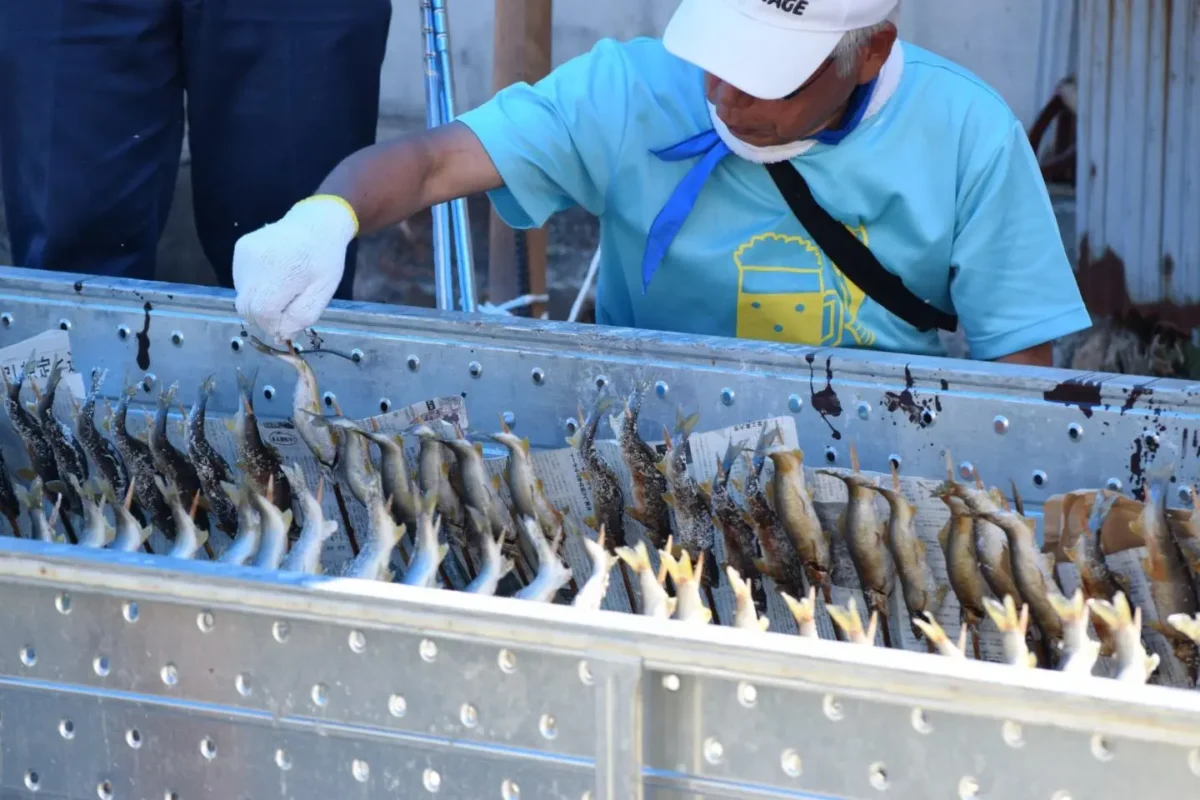
Salt-Grilled Ayu Shioyaki Perfection: Ayu is also known as kogyo fragrant fish because it feeds on river-bottom moss, giving it a refreshing aroma reminiscent of watermelon or cucumber. It is called kougyo literally fragrant fish in Japanese. The most delicious way to eat ayu is grilled with salt. This method enhances its elegant aroma and delicate flavor. At the festival, fish are dusted with salt, skewered whole in a wave-like shape to mimic swimming, and grilled over charcoal, preferably served over smoldering bamboo leaves to give extra depth of smoky flavor.
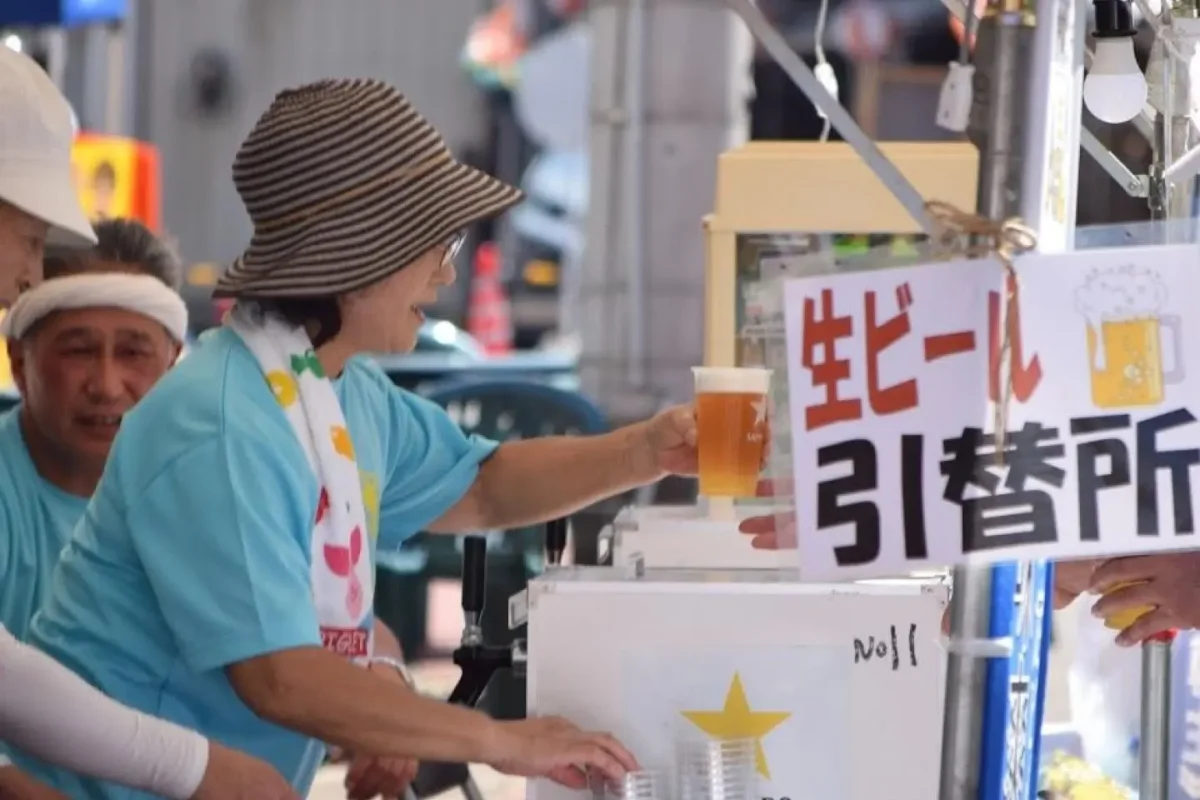
Beer and Fish Summer Antidote: The festival is marketed as chance to enjoy fish alongside a few mugs of ice-cold beer, the perfect antidote to heat and humidity of Japanese summer months. The combination of salty grilled fish and cold beer is classic Japanese summer.
Family Friendly with Games: Even if you are not a fan of fish or beer, the event has a host of other festival food to enjoy and games for children to partake in, including yo-yo fishing, target shooting, and ayu catching experiences where catching sweetfish requires reservations on day.
Whole Fish Eating Culture: Ayu shioyaki is usually served as street food, it can be eaten straight off the skewer, bones, head, guts, and all. Even the internal organs of the fish can be eaten. Small ayu are suitable for tempura and deep frying. In early summer, early July, the ayu is young, so you can eat it whole including bones from head to tail.
Food, Cuisine & Specialties
The cuisine centers on ayu sweetfish but includes other festival foods.
Ayu no Shioyaki – Salt-Grilled Sweetfish: The star. Ayu are small fish in salmon family, and when heavily salted, skewered and grilled over open charcoal fire, they are considered delicacy reminiscent of summertime, camping and festivals. Preparation: light coat of salt over whole body, rest five to six minutes, pack extra salt onto fins and tail so they crisp instead of burning over coals. Skewer from head to tail in gentle curve to mimic swimming shape. Grill over charcoal until skin is crisp and flesh is tender. Serve with lemon or sudachi wedges. Since ayu no shioyaki is usually served as street food, it can be eaten straight off skewer.
Ayu Variations: Beyond shioyaki, you may find ayu no dengaku grilled with sweet miso, ayu tempura, ayu fry, ayu sashimi, young ayu tsukudani simmered in sweet soy, and ayu no shioyaki dog which sandwiches whole salt-grilled sweetfish in hot dog bun, offered at cafes for limited time.
Festival Food for Non-Fish Fans: Even if not fan of fish, other festival foods include yakisoba fried noodles, takoyaki octopus balls, yakitori grilled chicken skewers, kakigori shaved ice, frankfurters, and fried potatoes. These are standard Japanese festival foods that children enjoy.
Beer and Drinks: Ice-cold draft beer is main drink, served in mugs, with soft drinks, ramune soda, and mineral water for children and drivers.
Ayu Catching Experience: Some editions include ayu catching where participants wade into shallow pools to catch ayu by hand. Details: catching sweetfish requires reservations on day, fish fee 300 yen per fish, grilled sweetfish with salt 100 yen per fish, release prohibited, similar to ayu catching 300 yen per person for 20 minutes experiences.
Chefs, Restaurants & Food Vendors
The vendors are local fishermen, river fishing cooperatives, and festival food stalls.
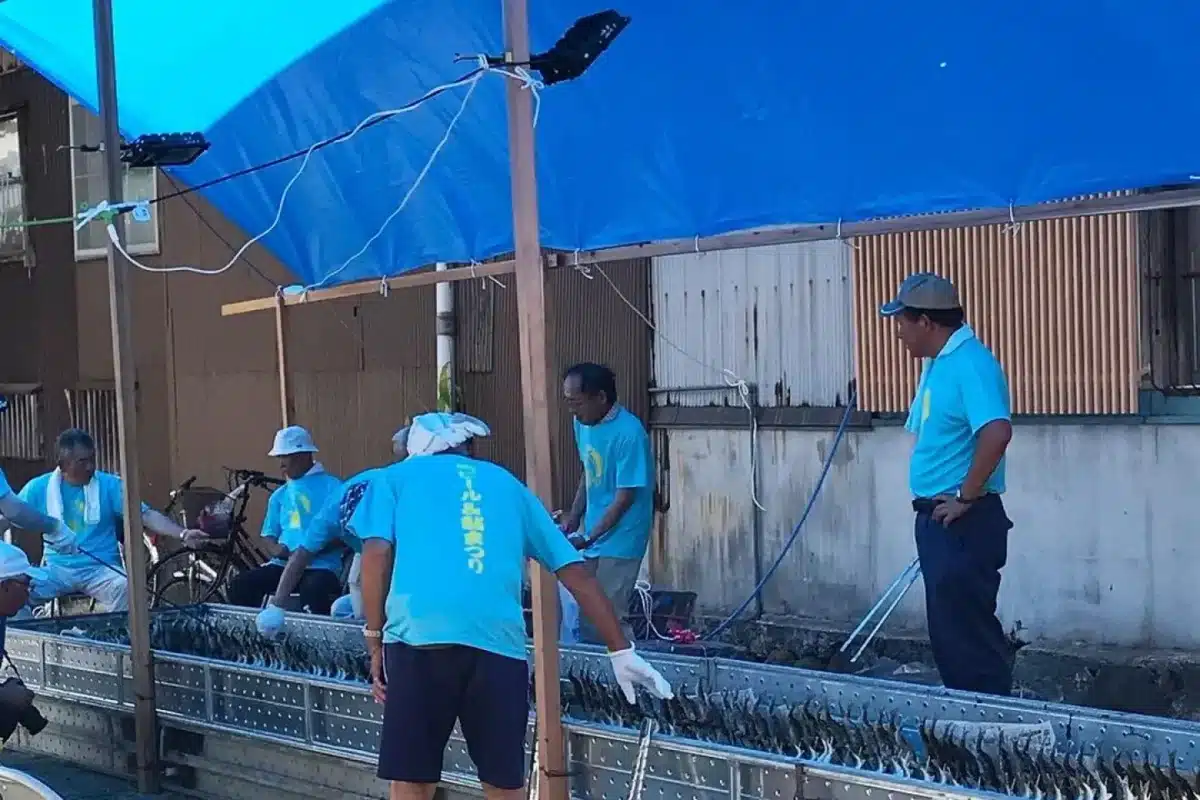
Uono River Fishing Cooperative: Local fishermen who fish Uono River, a popular spot for fishing, bring freshly caught ayu. They are experts in ayu fishing using traditional methods like tomozuri decoy fishing.
Muikamachi Local Shops: Local restaurants and shops from Muikamachi town set up stalls grilling ayu. These include sake shops, soba shops, and izakaya that serve ayu seasonally.
Festival Food Vendors: Standard Japanese festival vendors with tents selling yakisoba, takoyaki, and other festival foods, many from Minamiuonuma City.
Ayu Aquaculture: Some ayu are brought in from aquaculture ponds that recreate natural river, combining best of both wild and farmed fish. For example, sweetfish brought in from Omonogawa River and raised in aquaculture pond that recreated natural river were very delicious.
Beer Vendors: Local sake breweries from Uonuma region such as Hakkaisan Brewery also serve beer and sake at festival.
Food Experience
The food experience is riverside, smoky, and hands-on.
Riverside Grilling: The festival is held on riverbank by Sakato Bridge, with grills set up on gravel. You sit on benches or tarps near river, listening to sound of water, feeling river breeze, and watching ayu being grilled over charcoal. Having baked fish next to river is fun.
Eating Whole Fish: Learning to eat ayu whole is part of experience. You eat straight off skewer, head to tail, including bones for young fish. Fins and tail dusted with salt become crispy. You dip bites into tatezu herb vinegar or squeeze sudachi citrus over it. Bright acidity brings out rich, slightly bitter flavors of grilled ayu.
Beer and River Cooling: Enjoying ice-cold beer with salty grilled fish while feet are near cool river water is perfect antidote to heat and humidity. Children play games nearby.
Ayu Catching and Grilling: For families, ayu catching experience where children catch fish by hand then have it grilled on spot creates memorable summer vacation memory.
Terrace Seats: Some local restaurants near river offer terrace seats near river where you can enjoy ayu cuisine with river view. At this time of year, early July, ayu is young so you can eat whole including bones.
Photogenic Skewers: Salt-grilled sweetfish skewers sold at food stalls are photogenic, with wave-like shape and salt crystals glistening.
Date & Schedule
Location: Muikamachi Ohashishita
Official Period: August 2027 (Dates TBD)
The Uono River Ayu Festival is a summer festival held in August, during peak ayu season when fish meat is juiciest and has developed sweet scent.
Typical Schedule Based on Previous Editions:
Duration: The festival is typically a one-day event held on a Saturday or Sunday in early to mid-August, though some editions run over two days on weekend.
Daily Hours: Festival usually runs from 10:00 AM to 4:00 PM or 5:00 PM, with ayu grilling starting from opening and continuing throughout day. Beer service runs same hours.
Ayu Grilling: Grilling starts early morning and continues until sold out. Best to arrive early for freshest fish. Grilled sweetfish with salt is cooked to order.
Games and Activities: Children’s games like yo-yo fishing and target shooting run throughout day, with ayu catching experiences requiring reservations on day, typically 20 minute slots.
Evening: Some years include evening extension with lanterns and additional food, but main event is daytime.
Weather Note: August in Uonuma is hot and humid, average highs around 30 to 33 degrees, but riverbank location provides some cooling breeze.
Contact: Phone number for inquiries is 025-788-1703 for Muikamachi tourism association.
Visiting this event? Don’t miss out on these amazing activities and local experiences while you’re here.
Location & Venue
The venue is a riverbank under a bridge, classic Japanese summer festival location.
Muikamachi Ohashishita – Uono Riverbank by Sakato Bridge: The Uono River Sweetfish Festival is held on the Uono riverbank by the Sakato Bridge in Muikamachi, specifically at Muikamachi Ohashishita, meaning under Muikamachi Big Bridge. Sakato Bridge is local name for Muikamachi Ohashi.
Uono River: Uono River in Niigata is tributary of Shinano River, Japan’s longest and widest river, and is also popular spot for fishing. The river is clear with gravel bars, suitable for ayu which feed on moss on riverbed rocks.
Facilities: Venue is outdoor riverbank with gravel and grass, with tents, tarps, and benches set up. Portable toilets are available. There is no permanent building, just open-air festival site.
Atmosphere: Open only on summer, having baked fish next to river is fun. The river breeze blows through festival area, and you can hear river flowing. The Sakato Bridge provides some shade.
Accessibility: Riverbank is relatively flat but gravel may be challenging for wheelchairs. Assistance may be needed. Accessible toilets available near bridge.
Getting to the Event
Getting to the festival is easy via train and walking.
By Train: The bridge is approximately a ten minute walk from JR Muikamachi Station. Muikamachi Station is on JR Joetsu Line and also accessible via Joetsu Shinkansen to Urasa Station then local train one stop to Muikamachi.
From Tokyo: Via Joetsu Shinkansen from Tokyo Station or Ueno Station to Urasa Station in about 1 hour 30 minutes, then Joetsu Local Line to Muikamachi Station, 5 minutes. From Muikamachi Station, walk 10 minutes south to Sakato Bridge following signs to Uono River.
By Car: From Kan-Etsu Expressway, take Muikamachi Interchange and follow Route 17 to Muikamachi, then to Sakato Bridge. Parking is available near riverbank but limited, so train is recommended. Paid parking around Muikamachi Station $3.00 to $5.00 per day.
From Niigata City: Take Joetsu Shinkansen to Urasa then local to Muikamachi, about 1 hour 30 minutes total.
Local Access: The festival site is walkable from central Muikamachi town, with many locals arriving by bicycle.
Where to Stay Nearby
Minamiuonuma City offers onsen and business hotels near festival.
Near Muikamachi Station: Business hotels such as Hotel Route Inn Muikamachi, Muikamachi Onsen Hotel, and local guesthouses are within 5 to 10 minutes walk or short taxi from riverbank. Prices $60.00 to $90.00 per night.
Echigo-Yuzawa Onsen Area: Echigo-Yuzawa, 30 minutes by train, is famous onsen and former ski resort town with many ryokan and hotels from $80.00 to $200.00 per night, with onsen baths ideal after hot day at river.
Minamiuonuma Onsen: Muikamachi Onsen, Imaizumi Onsen, and other local onsen ryokan offer open-air baths with mountain views. Prices $90.00 to $180.00 per person including dinner with Koshihikari rice.
Camping: Some visitors camp near Uono River, though official camping may require permission. Riverbank camping is popular in summer.
Booking Tips: August is summer vacation season, but Muikamachi is not as crowded as major cities. Booking a few days ahead is usually sufficient.
Things to Do Before or After the Event
Combine ayu festival with river and mountain activities.
Uono River Fishing: Try ayu fishing yourself. The Uono River is popular spot for fishing, especially tomozuri decoy fishing for ayu. Local fishing shops rent gear and provide instruction.
Bishamondo Temple and Muikamachi Town: Visit Bishamondo Temple, one of Echigo’s three famous temples, located in Muikamachi, with beautiful gardens.
Hakkaisan Mountain and Brewery: Visit Mount Hakkai and Hakkaisan Brewery for sake tasting, learning about snow-melt water that also nurtures Uono River.
Rice Terraces and Koshihikari Fields: See Uonuma’s famous rice terraces and Koshihikari rice fields at peak green in August, with irrigation channels fed by same rivers where ayu live.
River Swimming and BBQ: After festival, many locals swim in Uono River and have BBQ on riverbank, a classic Japanese summer activity.
Onsen Bathing: Enjoy onsen baths at Muikamachi Onsen after hot day, with baths overlooking river.
Restaurants & Local Food to Try
Beyond ayu, Uonuma offers exceptional summer foods.
Ayu Cuisine at Local Restaurants: Try ayu cuisine at restaurants like Ayu no Ie in Yuzawa, where sweetfish brought in from Omonogawa River and raised in aquaculture pond are delicious. Komachi ayu set meal comes with 2 salt-grilled sweetfish, 1 dengaku ayu, 2 fried ayu, ayu sashimi, young ayu tsukudani, small bowl of whitebait and okra, rice, miso soup, and pickles for $19.00. You can eat whole from head to tail, bones included.
Koshihikari Rice: Try freshly cooked Uonuma Koshihikari rice, considered Japan’s best, at local restaurants for $8.00 to $12.00 with side dishes.
Hegi Soba: Hegi soba is buckwheat noodles infused with funori seaweed, specialty of Uonuma area, served cold in summer with dipping sauce, $7.00 to $11.00.
Yukimuro Snow-Aged Vegetables: Try snow-aged vegetables stored in yukimuro snow rooms, developing sweetness.
Sake and Beer: Try local sake from Hakkaisan Brewery and other Uonuma breweries, and local craft beer.
Festival Foods: Try other festival foods like yakisoba, takoyaki, and kakigori shaved ice.
Dietary & Food Allergy Information
Ayu festival is fish-focused but includes other options.
Allergen Information: Ayu contains fish. Grilled ayu may contain salt only, but some variations contain miso which contains soy. Fried ayu contains wheat batter. Yakisoba contains wheat and soy. Takoyaki contains wheat, egg, and octmodel. Beer contains barley and gluten.
Gluten: Grilled ayu with salt is gluten-free. Fried ayu and festival foods like yakisoba and takoyaki contain wheat. Ask vendors about gluten-free options.
Vegetarian and Vegan: Ayu is fish, so not vegetarian. Some festival foods like kakigori shaved ice and yakisoba without meat may be vegetarian but often contain fish-based sauce. Vegan options limited.
Halal: Halal-certified ayu is not available. Ayu itself is fish but preparation may include sake and non-halal seasonings. Plain salt-grilled ayu may be closer but check.
Language Support: Menus primarily in Japanese with pictures. Staff speak basic English. Translation apps help. The tourist information at Muikamachi Station can provide English pamphlets.
Ticket Information
The Uono River Ayu Festival is free to enter with pay-as-you-go for food.
Admission: Entry to festival on Uono riverbank is free. No tickets required for entry. You only pay for ayu and other foods, drinks, and games.
Ayu Pricing Based on Previous Editions:
Salt-Grilled Ayu: Based on festival pricing patterns, grilled sweetfish with salt is around $2.00 to $4.00 per fish based on 300 to 600 yen, with some experiences offering grilled sweetfish with salt 100 yen per fish as promotional price.
Ayu Catching Experience: Ayu catching 300 yen per person per 20 minutes, fish fee 300 yen per fish, release prohibited, so total around $2.00 to $4.00 per fish caught and grilled.
Set Meals: Komachi ayu set meal with 2 salt-grilled, 1 dengaku, 2 fried, sashimi, tsukudani, rice, miso soup, pickles around $19.00 based on 2,860 yen at Ayu no Ie restaurant.
Other Festival Foods: Yakisoba, takoyaki, yakitori around $3.00 to $5.00 per serving, kakigori shaved ice $2.00 to $3.00, beer $3.00 to $5.00 per mug.
Games: Children’s games like yo-yo fishing and target shooting $1.00 to $2.00 per play.
Payment: Most stalls cash only, some accept IC cards like Suica. Bring cash in small bills.
No Reservation Needed: No reservation needed for general entry and food, but ayu catching requires reservations on day.
Official Event Information
Event Name: Uono River Ayu Festival, also known as Uono River Sweetfish Festival and Uono River Ayu Matsuri
Location: Muikamachi Ohashishita, Uono riverbank by Sakato Bridge, Muikamachi, Minamiuonuma City, Niigata Prefecture, Japan
Access: Bridge approximately ten minute walk from JR Muikamachi Station, accessible by JR Joetsu Local Line and Joetsu Shinkansen via Urasa Station
Format: One-day outdoor summer riverbank festival with salt-grilled ayu sweetfish, beer, festival food, and children’s games
Organizer: Muikamachi Town, Minamiuonuma City Tourism Association, Uono River Fishing Cooperative, and local volunteers
Official Website URL as Text: en.japantravel.com/niigata/uono-river-ayu-festival/59462
Additional Official Information as Text: city.minamiuonuma.niigata.jp and Uonuma tourism sites for ayu festival updates
Contact: Phone 025-788-1703 for Muikamachi tourism association and Uono River Ayu Festival executive committee
Location
FAQ
What is ayu and why is it called sweetfish?
Ayu, sweetfish, is a small fish found in rivers caught in summer when its meat is juiciest and has developed a sweet watermelon-like scent because it feeds on river-bottom moss. It is also known as kogyo fragrant fish, called kougyo literally fragrant fish in Japanese, and the traditional way of eating it is shioyaki where fish is salted, mounted on wooden skewers, and grilled over charcoal fire, considered one of Japan's tastiest fish when served this way.
Where is the Uono River Ayu Festival held?
The Uono River Ayu Festival is held on the Uono riverbank by the Sakato Bridge in Muikamachi, specifically at Muikamachi Ohashishita meaning under Muikamachi Big Bridge, on the Uono River which is a tributary of Shinano River Japan's longest and widest river. The bridge is approximately a ten minute walk from JR Muikamachi Station, accessible by JR Joetsu Local Line and Joetsu Shinkansen via Urasa Station from Tokyo in about 1 hour 30 minutes.
Is the festival family-friendly and what else is there besides ayu?
Even if you are not a fan of fish or beer, the event has a host of other festival food to enjoy and games for children to partake in, including yakisoba, takoyaki, kakigori shaved ice, yo-yo fishing, and target shooting. There is also ayu catching experience where children can catch sweetfish by hand in shallow pools for 300 yen per person, then have fish grilled on spot, creating memorable summer vacation experience for families.
How do you eat salt-grilled ayu?
Ayu no shioyaki is usually served as street food and can be eaten straight off the skewer, bones, head, guts, and all, with even internal organs edible and small young ayu in early July edible whole including bones from head to tail. Preparation involves light coat of salt over whole body, resting five to six minutes, packing extra salt onto fins and tail so they crisp, skewering in gentle curve to mimic swimming shape, and grilling over charcoal until skin is crisp.
Is there an entry fee and how much does ayu cost?
Entry to festival on Uono riverbank is free with no tickets required for entry, you only pay for ayu and other foods, drinks, and games with most stalls cash only. Based on previous editions, grilled sweetfish with salt costs around $2.00 to $4.00 per fish, ayu catching experience 300 yen per person for 20 minutes with fish fee 300 yen per fish, and other festival foods like yakisoba and beer $3.00 to $5.00 per serving.

Leave a Reply