
Overview
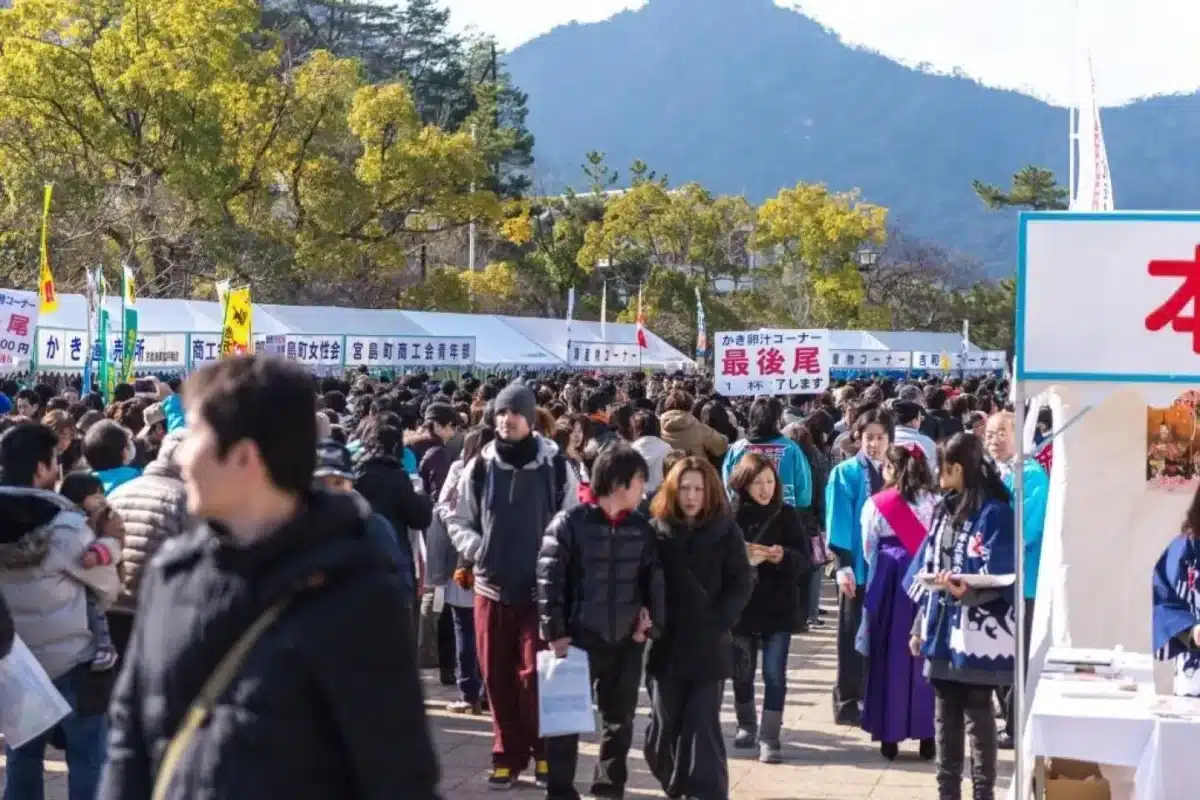
This oyster festival on Miyajima island is held each year in February during oyster season. It celebrates one of Hiroshima’s biggest exports, you guessed it, oysters. The event is held right next to the ferry port and a no-brainer if you are into seafood. You can get many variations of oysters: grilled, fried, in soup, battered and fried in tempura. They also sell other seafood like eel, anago, and other fish.
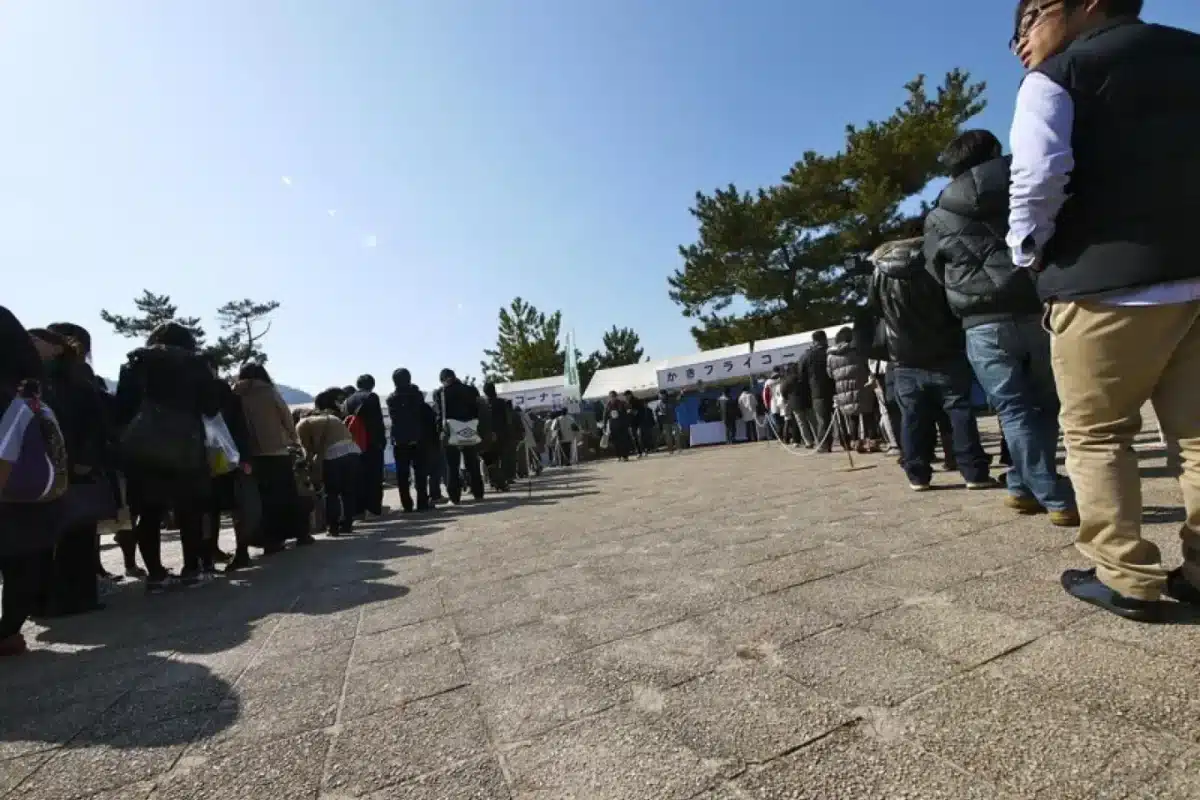
If you don’t want to stand in line for a long time, plan to get there very early, even before the main festival starts. During the festival you can enjoy traditional Japanese cultural performances.
Traditional plays with flute and taiko drum music playing while the actors dance and fight in colorful costumes on the main stage. In combination with the festival, you can enjoy the famous Miyajima island sights.
Enjoy Your Event Stress-Free with Japan Travelo
Do you know? Planning events, festivals, concerts, and cultural experiences in Japan can be overwhelming. Japan Travelo brings everything together in one place, helping you manage your itinerary, transport, and accommodation with ease—so you can enjoy Japan without the stress of planning.
Hiroshima produces about 60 percent of all the oysters eaten in Japan. That is roughly 20,000 tonnes a year, farmed almost entirely on bamboo rafts suspended in the shallow waters of the Seto Inland Sea. You can see the rafts from the ferry to Miyajima, long dark rectangles in the water, each one growing tens of thousands of oysters on cords hung beneath the surface. The industry is 400 years old, it has been backbone of coastal Hiroshima’s economy since early Edo period, and it produces specific kind of oyster that cannot be grown anywhere else.
What Makes This Food Event Special
What makes Miyajima Oyster Festival special is its iconic island location, peak-season timing, and complete oyster immersion.
Ferry Port Location on Sacred Island: The event is held right next to ferry port and a no-brainer if you are into seafood. It takes place on open square immediately to right of ferry terminal, where queues snake around tents serving oysters prepared in every way imaginable. You step off 10-minute ferry from Miyajimaguchi and you are instantly in festival. The location serves as tangible reminder that you should not leave Miyajima without consuming its oysters.
Peak Oyster Season: Hiroshima oysters are winter food, at their best from mid-November through late March, with peak eating months being January and February. The Miyajima Oyster Festival, first or second weekend of February, is held when oysters are at their tastiest, the first of its kind in Hiroshima prefecture. Winter cold snap produces dense, creamy meat that Hiroshima oysters are famous for, three weeks of water below 12C is what transforms regular spring oyster into thick R-month style.
Hiroshima’s Biggest Export Celebration: It celebrates one of Hiroshima’s biggest exports, oysters. Hiroshima produces about 60 percent of all oysters eaten in Japan, farmed on bamboo rafts in Seto Inland Sea. Five major rivers empty into Hiroshima Bay, bringing mineral-rich freshwater runoff from Chugoku mountains. Oysters are filter feeders, they thrive where freshwater meets saltwater because mix produces enormous phytoplankton bloom. Setouchi is almost fully enclosed inland sea, water barely moves, allowing bamboo-raft cultivation.
Cultural Performances: During festival you can enjoy traditional Japanese cultural performances. Traditional plays with flute and taiko drum music playing while actors dance and fight in colorful costumes on main stage. Performances include kagura, traditional Shinto theatrical dance.
Combination with Miyajima Sights: In combination with festival, you can enjoy famous Miyajima island sights, including Itsukushima Shrine floating torii gate, Mount Misen, and deer roaming freely.
Food, Cuisine & Specialties
The cuisine is oysters in six distinct ways plus other Seto Inland Sea seafood.
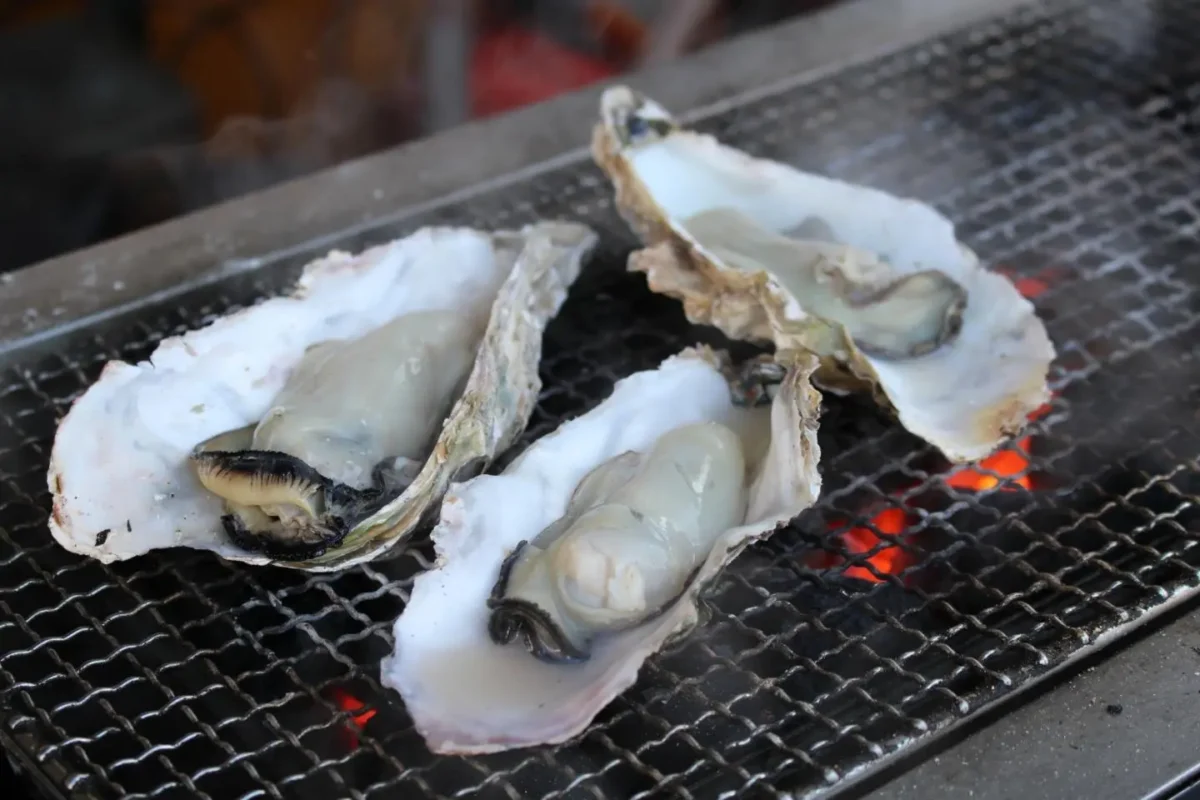
Yaki-gaki – Grilled in Shell: Most universal. Oysters are laid directly on hot charcoal grill in cupped shells, heat pops them open, juices stay inside. Eaten with squeeze of lemon or splash of ponzu. Stand-up grills along Miyajima’s Omotesando and at festival. Most popular festival style. Oysters from bay visible from festival grounds, 8 to 10 stalls grilling oysters.
Kaki-fry – Breaded and Deep-Fried: Battered in flour, egg, and panko, fried at high heat for 40 seconds per side, served with tonkatsu sauce and shredded cabbage. Japanese winter home-cooking staple. Every izakaya in Hiroshima has this on winter menu, set of six with rice and soup. Good kaki-fry has molten oyster inside crisp shell.
Kaki-nabe – Oyster Hotpot: Simmering pot of Kombu-dashi broth on table, with oysters, Chinese cabbage, tofu, carrot, mushrooms, and spring onion added progressively. Most common variant is miso-based kaki no dotenabe, where inside rim of pot is coated in thick wall of miso paste that slowly melts into broth. Festival serves small bowls of dotemiso stews for $3.00 to $5.00.
Kaki-don – Rice Bowl: Fried oysters on rice with sweet-soy drizzle. Workday lunch variant. Festival offers oyster rice balls.
Kaki no Tsukudani – Simmered in Soy: Smaller oysters simmered down for two hours in soy sauce, sake, and sugar until dense and savory, served cold with rice. Traditional preservation technique sold as glass-jar souvenir.
Raw Nama-gaki: Just-shucked, on crushed ice, with ponzu and grated daikon. Less common than cooked preparations because freshness matters more. At festival, some stalls offer raw with names of farm on ticket stuck in each shell.
Other Seafood – Anago Eel: They also sell other seafood like eel, anago, and other fish. Anago, conger eel, is another beloved Miyajima specialty enjoyed by many guests. Fresh anago caught in nearby Seto Inland Sea is glazed with secret sauce passed down for over 60 years and grilled to fragrant perfection using traditional methods. While unagi freshwater eel is famous across Japan, Hiroshima specializes in anago saltwater conger eel from Seto Inland Sea, lighter, more delicate than unagi, try it grilled over rice as anago-meshi. Anago-dokoro Shiroyama is must-visit for eel dishes, Miyajima bowl featuring fresh eel and oysters is highly praised for allowing diners to enjoy bounty of Hiroshima’s sea all at once.
Other Fish: Grilled fish, tempura, and miso soup with oysters.
Chefs, Restaurants & Food Vendors
The vendors are local oyster fishermen, Miyajima restaurants, and cultural performers.
Oyster Fishermen Stalls: Three Hiroshima festivals build around oyster season. Miyajima Oyster Festival first or second weekend of February, held on Miyajima ferry terminal concourse, 8 to 10 stalls grilling oysters from bay visible from festival grounds. Free entry, oysters $2.00 each based on 300 yen. Hot sake, miso soup, and oyster rice balls available. Fishermen come from raft farms visible from ferry, each raft grows around 10,000 to 15,000 oysters on ropes.
Miyajima Omotesando Oyster Stalls: Miyajima Omotesando Oyster Stalls are famous for grilled and fried oysters, price $3.30 to $10.00 based on 500 to 1500 yen.
Anago Specialists: Anago meshi shops like Ueno and Yakigaki no Hayashi, which also serves butter-grilled oysters made with pure Hiroshima-grown oysters.
Local Restaurants: Miyajima Ichiwa is local cuisine restaurant where you can fully enjoy unique flavors of Miyajima, featuring dishes such as Anagomeshi set meal made with purely domestic wild-caught Anago and fried or butter-grilled oysters.
Kakibune Boats Connection: Kanawa, Hiroshima Kakibune, and Kaki no Ya floating restaurant boats anchored in Motoyasu River next to Atomic Dome are specific Hiroshima oyster experience, dining below deck on tatami.
Cultural Performers: Traditional plays with flute and taiko drum music, kagura dancers in colorful costumes on main stage.
Food Experience
The food experience is queue-heavy, smoky, and festive.
Early Arrival Strategy: If you don’t want to stand in line for long time, plan to get there very early, even before main festival starts. During festival, queues can get very long as day progresses, so be prepared to set aside some time to stand in line. You wouldn’t want to miss. Most food stalls for festival can be found around Miyajima ferry terminal, and as day progresses queues can get very long. Best strategy is arrive 30 minutes before opening, get grilled oysters first.
Ferry Port Eating: Event is held right next to ferry port, open square immediately to right of ferry terminal. You eat standing at tent tables with lemon wedges, ponzu, and hot sake, with view of Seto Inland Sea and oyster rafts.
Variety Tasting: You can get many variations of oysters: grilled, fried, in soup, battered and fried in tempura. You can get crash course in Hiroshima oysters at one place.
Cultural Immersion: Traditional plays with flute and taiko drum music playing while actors dance and fight in colorful costumes on main stage, plus kagura dance, adds cultural layer to food.
Island Combination: In combination with festival, you can enjoy famous Miyajima island sights, including Itsukushima Shrine, Mount Misen, deer, and Omotesando shopping street with momiji manju.
Smoky Atmosphere: Grills produce smoky aroma of charcoal and oyster juices, with steam rising in cold February air.
Date & Schedule
Location: Miyajima Island, next to ferry port
Official Period: Mid February 2027 (Dates TBD)
This oyster festival on Miyajima island is held each year in February during oyster season. It celebrates one of Hiroshima’s biggest exports.
Typical Schedule Based on Previous Editions:
Duration: The Miyajima Oyster Festival is held every year during one weekend of February, typically first or second weekend of February, throughout two days, Saturday and Sunday. Some years it is held on single day Saturday.
Daily Hours: Festival typically runs from 10:00 AM to 3:00 PM or 10:00 AM to 4:00 PM each day, with food stalls opening at 10:00 AM and closing when sold out, often by 3:00 PM. Cultural performances run from 11:00 AM to 2:30 PM.
Peak Times: Opening hour 10:00 AM to 11:00 AM has shorter queues, but lines build quickly. Noon to 2:00 PM is busiest with longest queues.
Seasonal Note: Mid-February in Miyajima is cold, average highs around 10 to 12 degrees, with chilly winds from sea, so warm clothing is essential. Oysters are at peak creamy texture during this cold period.
Contact: Phone +81-0-829-44-2011 for Miyajima tourism association and festival information.
Visiting this event? Don’t miss out on these amazing activities and local experiences while you’re here.
Location & Venue
The venue is ferry terminal square on sacred island.
Miyajima Ferry Terminal Concourse: The event is held right next to ferry port on Miyajima island, specifically on open square immediately to right of ferry terminal, Miyajima Pier, Miyajima Island, Hatsukaichi City, Hiroshima Prefecture. It takes place on open square immediately to right of ferry terminal, where queues snake around tents.
Miyajima Island: Miyajima is also known as Itsukushima, famous for Itsukushima Shrine and floating torii gate, UNESCO World Heritage site. The island has deer roaming freely, Mount Misen, and Omotesando shopping street.
Facilities: Ferry terminal has waiting rooms, toilets, tourist information, and souvenir shops. Festival area has tented food stalls, benches, tables, and main stage for performances. Portable toilets added during festival.
Views: From festival grounds you can see oyster rafts from bay, long dark rectangles in water, each growing tens of thousands of oysters, and mainland across Seto Inland Sea.
Accessibility: Ferry terminal and festival square are flat and accessible, with paved paths. Ferry from Miyajimaguchi is accessible. Island paths have some slopes.
Getting to the Event
Getting to Miyajima Oyster Festival requires ferry.
By Train and Ferry: Access is JR Sanyo Line to Miyajimaguchi Station, then 10-minute ferry to Miyajima. JR Sanyo Line from Hiroshima Station to Miyajimaguchi is about 25 minutes, then ferry 10 minutes. From Hiroshima, you can also take Hiroden streetcar to Miyajimaguchi then ferry. Ferry runs every 15 minutes.
From Hiroshima: From Hiroshima Station, take JR to Miyajimaguchi, then ferry. Alternatively, take direct ferry from Peace Memorial Park to Miyajima, about 45 minutes, scenic route.
By Car: From Sanyo Expressway, take Miyajima or Hatsukaichi Interchange and park at Miyajimaguchi area parking lots, costing $5.00 to $8.00 per day, then ferry. Parking on Miyajima island itself is very limited.
Ferry Tickets: Ferry costs around $1.30 each way based on 200 yen, or covered by JR Pass for JR ferry.
Early Arrival: Plan to get there very early, even before main festival starts, to avoid long lines. First ferry from Miyajimaguchi is around 7:30 AM.
Where to Stay Nearby
Hatsukaichi and Hiroshima City offer many options.
On Miyajima Island: Ryokan and hotels on Miyajima Island such as Miyajima Grand Hotel Arimoto, Iwaso Ryokan, and guesthouses allow you to stay overnight after festival and enjoy island after crowds leave. Prices $100.00 to $300.00 per night. Staying on island gives you early access to festival next morning and evening views of illuminated torii gate.
In Miyajimaguchi: Hotels near ferry terminal on mainland like Miyajima Port Hotel and business hotels in Hatsukaichi City, $60.00 to $100.00 per night.
In Hiroshima City: Many visitors stay in Hiroshima City near Hiroshima Station or Peace Memorial Park, with hotels like Hotel Granvia Hiroshima, APA Hotel Hiroshima, and many business hotels $50.00 to $120.00 per night. Hiroshima City is 30 minutes by train to Miyajimaguchi.
Booking Tips: Mid-February is oyster season and relatively busy for Miyajima, but not peak tourist season like autumn. Booking a week ahead for weekend is recommended, especially for island ryokan.
Things to Do Before or After the Event
Combine oyster festival with Miyajima’s famous sights.
Itsukushima Shrine and Floating Torii: Visit Itsukushima Shrine, UNESCO World Heritage site, with torii gate that appears to float at high tide. Best viewed at high tide and illuminated at night.
Mount Misen: Hike or take ropeway to Mount Misen summit for panoramic views of Seto Inland Sea and oyster rafts. At top, you can see islands and Hiroshima city.
Omotesando Shopping Street: Walk Omotesando shopping street with deer roaming, trying momiji manju maple leaf cakes, oyster snacks, and anago meshi.
Daisho-in Temple: Visit Daisho-in Temple at base of Mount Misen, with many Buddhist statues and autumn leaves.
Hiroshima City: Visit Atomic Dome, Peace Memorial Park, and try Hiroshima-style okonomiyaki savory pancake, another Hiroshima specialty.
Other Oyster Experiences: Visit kaki-goya oyster huts along coast to east of Hiroshima city in Kaita, Etajima Island, and Takehara, where you pay $13.30 per person based on 2000 yen, get two buckets of oysters in shells, tongs, small grill, and wedge of lemon, for 90 minutes of grilling.
Oyster Farms: Visit Marutomi Suisan in Etajima for 2-hour tour including raft visit, shucking demonstration, and 30-oyster tasting for $23.00 based on 3500 yen per person, book through Hiroshima Tourist Information Center.
Restaurants & Local Food to Try
Beyond festival, Miyajima offers exceptional seafood.
Miyajima Omotesando Oyster Stalls: Grilled oysters on Omotesando are easiest way to eat Hiroshima oysters on short trip. Most visitors do it. It pairs well with torii-gate visit. $2.70 to $4.00 per oyster based on 400 to 600 yen.
Anago Meshi: Anago-dokoro Shiroyama is must-visit for eel dishes, Miyajima bowl featuring fresh eel and oysters highly praised for allowing diners to enjoy bounty of Hiroshima’s sea all at once. Ueno is famous for anago meshi conger eel rice $16.00 to $26.00 based on 2500 to 4000 yen.
Hiroshima City Oyster Bars: Oyster Conclave Yatai under railway arches and Ekohiiki in Hondori area do specialist standing-bar oyster counters: raw, grilled, kaki-fry, kaki-nabe small plates, and rotating fisherman’s oyster of week from specific farm. $20.00 to $30.00 for full session with beer based on 3000 to 4500 yen.
Kakibune Boats: Kanawa floating oyster boat restaurant anchored since 1965 in Motoyasu River within sight of Peace Memorial, only fully on-boat oyster kaiseki experience anywhere in Japan, full oyster kaiseki course $40.00 to $100.00 based on 6000 to 15000 yen, book at least two days ahead in oyster season.
Hiroshima Okonomiyaki: Try Hiroshima-style okonomiyaki rich savory pancake with noodles.
Dietary & Food Allergy Information
Oyster festival is seafood-focused with high allergen risk.
Allergen Information: Oysters are mollusks, major allergen. Dishes may contain shellfish, fish, soy sauce containing soy and wheat, eggs in kaki-fry batter, and wheat in panko and tempura. Anago eel contains fish. Miso soup contains soy. Ponzu contains soy and citrus.
Gluten: Grilled oysters in shell with lemon are gluten-free. Kaki-fry breaded and deep-fried contains wheat and egg. Tempura contains wheat. Miso soup may contain barley. Ask vendors.
Vegetarian and Vegan: Vegetarian and vegan options are extremely limited as festival is seafood-focused. Some stalls may offer rice balls or vegetable tempura but often cooked in same oil as seafood.
Halal: Halal-certified oysters are not available. Grilled oysters may be halal-friendly if only salt and lemon, but cross-contamination likely. Check with vendors.
Language Support: Menus primarily in Japanese with pictures. Staff speak basic English. Translation apps help. Tourist information at ferry terminal can provide English pamphlets.
Ticket Information
The Miyajima Oyster Festival is free to enter with pay-as-you-go for oysters.
Admission: Free entry, oysters $2.00 each based on 300 yen. Hot sake, miso soup, and oyster rice balls available. Three Hiroshima festivals build around oyster season. Miyajima Oyster Festival first or second weekend of February, held on Miyajima ferry terminal concourse, 8 to 10 stalls grilling oysters from bay visible from festival grounds. Free entry, oysters $2.00 each.
Oyster Pricing Based on Previous Editions:
Grilled Oysters Yaki-gaki: $2.00 to $4.00 per oyster based on 300 to 600 yen, depending on size and stall.
Kaki-fry: Set of 6 fried oysters with cabbage $5.00 to $8.00 based on 800 to 1200 yen.
Oyster Nabe and Soups: Small bowls of oyster miso soup dotenabe $3.00 to $5.00 based on 500 to 800 yen.
Anago Meshi: Anago conger eel rice bowls $10.00 to $16.00 based on 1500 to 2500 yen.
Other Seafood: Eel and other fish dishes $5.00 to $12.00.
Payment: Most stalls cash only, as run by local fishermen. Bring cash in small bills. Some stalls near ferry terminal accept IC cards.
No Reservation Needed: No reservation needed for festival. Simply arrive early, queue, and buy oysters.
Official Event Information
Event Name: Miyajima Oyster Festival, also known as Oyster Festival in Miyajima and Miyajima Kaki Matsuri
Location: Miyajima Island, next to ferry port, Miyajima Pier, Miyajima Island, Hatsukaichi City, Hiroshima Prefecture, Japan, specifically open square immediately to right of ferry terminal
Access: JR Sanyo Line to Miyajimaguchi, then 10-minute ferry to Miyajima, or direct ferry from Peace Memorial Park
Format: One or two-day outdoor oyster festival on ferry terminal concourse with 8 to 10 stalls grilling oysters from bay, plus fried, soup, tempura variations, other seafood like anago eel, and traditional Japanese cultural performances with flute and taiko drum
Organizer: Miyajima Tourism Association, Hatsukaichi City, and local oyster fishermen cooperatives
Official Website URL as Text: en.japantravel.com/hiroshima/miyajima-oyster-festival/31740 and miyajima.or.jp/event/event_kaki.html
Additional Official Information as Text: west-japan-travel.com/theme/oysters/ for Setouchi oysters guide and Hiroshima oyster festival calendar
Contact: Phone +81-0-829-44-2011 for Miyajima tourism association and festival information
Video
Location
FAQ
What is Miyajima Oyster Festival?
The oyster kaki festival on Miyajima island is held each year in February during oyster season, celebrating one of Hiroshima's biggest exports oysters, held right next to ferry port and no-brainer if you are into seafood. You can get many variations of oysters grilled, fried, in soup, battered and fried in tempura, plus other seafood like eel anago and other fish, with traditional Japanese cultural performances on main stage.
Where exactly is the festival held?
The event is held right next to ferry port on Miyajima island, specifically on open square immediately to right of ferry terminal at Miyajima Pier, where queues snake around tents serving oysters prepared in every way imaginable. Access is JR Sanyo Line to Miyajimaguchi then 10-minute ferry to Miyajima, with festival visible as soon as you step off ferry, making it easy to find and combine with famous Miyajima island sights like floating torii gate.
What types of oysters and other foods are available?
Hiroshima has more oyster preparation styles than any other region, including yaki-gaki grilled in shell with lemon or ponzu, kaki-fry breaded and deep-fried with tonkatsu sauce, kaki-nabe oyster hotpot with miso-based dotenabe, kaki-don rice bowl, kaki no tsukudani simmered in soy, and raw nama-gaki on ice. Other seafood includes eel anago another beloved Miyajima specialty from Seto Inland Sea glazed with secret sauce passed down for over 60 years, plus other fish, miso soup, and oyster rice balls.
Is there a long wait and how can I avoid queues?
If you don't want to stand in line for long time, plan to get there very early even before main festival starts, as during festival queues can get very long as day progresses with most food stalls around Miyajima ferry terminal. Best strategy is arrive 30 minutes before opening at 10:00 AM, get grilled oysters first, and explore island sights after eating, as lines are shortest in morning and longest at noon to 2:00 PM.
Are there cultural performances?
During festival you can enjoy traditional Japanese cultural performances including traditional plays with flute and taiko drum music playing while actors dance and fight in colorful costumes on main stage, plus kagura traditional Shinto theatrical dance. Performances typically run from 11:00 AM to 2:30 PM on main stage near ferry terminal, adding cultural layer to food festival and making it more than just eating event, while you can also enjoy famous Miyajima island sights like Itsukushima Shrine.

Leave a Reply