
-
April 17, 2027
Event date:
-
May 16, 2027
Event end:
What to expect
KYOTOGRAPHIE Kyoto Photography Festival is Japan’s leading international photography festival and one of the most distinctive cultural events in Asia. Founded in 2013 as a creative response to the Great East Japan Earthquake, the festival was conceived by co-founders Lucille Reyboz and Yusuke Nakanishi with the vision of fostering an appreciation of photography as a medium and art form that can connect people, histories and places. What visitors experience today is not a conventional art fair or a museum-bound survey, but a city transformed into an immersive exhibition landscape where contemporary photography inhabits Kyoto’s most exceptional spaces.
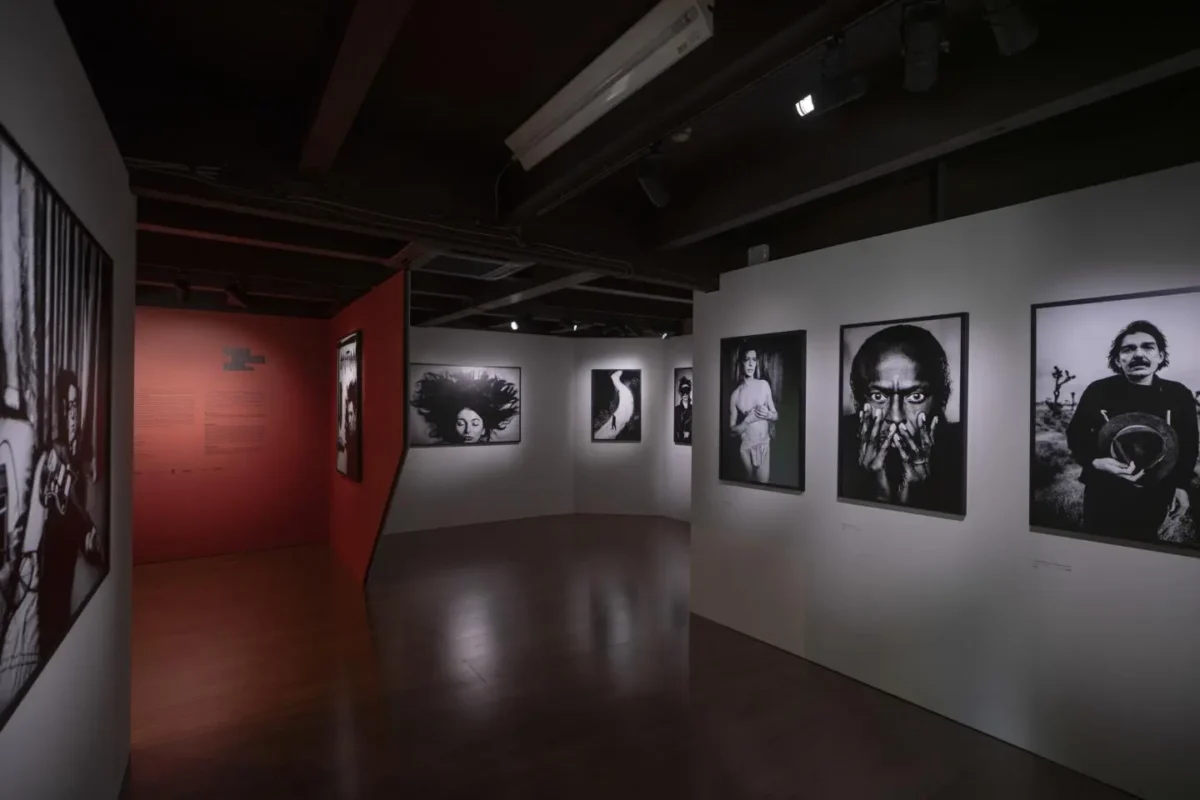
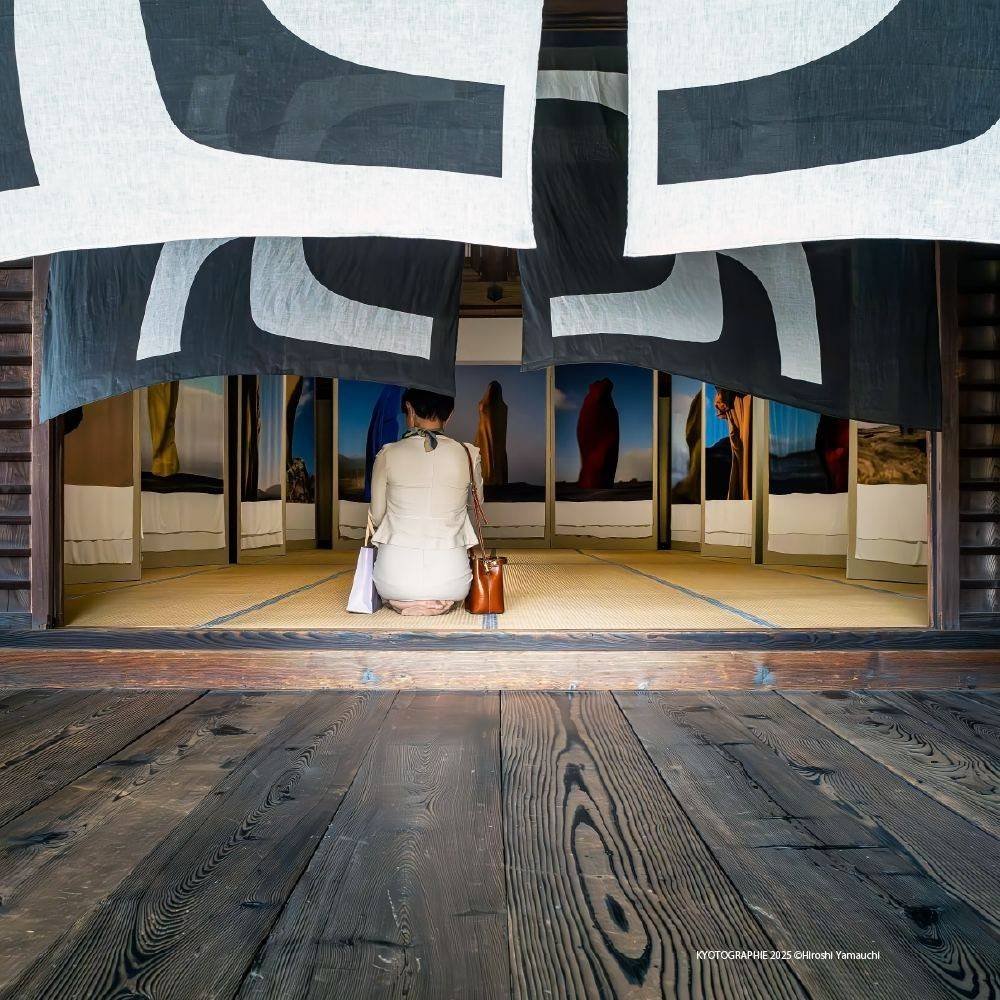
What sets KYOTOGRAPHIE apart is its commitment to scenography and context. Each exhibition is produced specifically for its venue, in collaboration with local architects, craftspeople and artisans who design bespoke installations using traditional materials, paper, wood, and textile techniques. You will encounter photography in an important cultural property like Hachiku-an, in the black-walled storehouse of Kondaya Genbei, a former kimono obi merchant, in the galleries of the Kyoto City KYOCERA Museum of Art, in former elementary schools, in temples and shrines, and in modernist architecture.
The festival is designed to be walked, allowing a single passport ticket to lead you on your own Kyoto adventure. The main program typically features around fourteen curated exhibitions across twelve venues, complemented by over one hundred exhibitions in the KG+ satellite program, alongside the KYOTOPHONIE Borderless Music Festival, performances, screenings and an extensive public program. With attendance surpassing two hundred thousand visitors in recent editions and cultural partnerships with Chanel as main sponsor and Dior as special partner, KYOTOGRAPHIE offers a rare balance of global excellence and local intimacy.
Enjoy Your Event Stress-Free with Japan Travelo
Do you know? Planning events, festivals, concerts, and cultural experiences in Japan can be overwhelming. Japan Travelo brings everything together in one place, helping you manage your itinerary, transport, and accommodation with ease—so you can enjoy Japan without the stress of planning.
Event dates
Main Festival Period: April 17 – May 16, 2027
Opening Events and Press Preview: April 16, 2027
Daily Opening Hours: Most venues operate from 10:00 AM to 6:00 PM with last admission at 5:30 PM. Selected venues extend hours until 8:00 PM on weekends and public holidays. Most venues are closed on Mondays except when Monday falls on a public holiday, with specific closures noted per venue at Information Machiya and on the official website.
Visiting this event? Don’t miss out on these amazing activities and local experiences while you’re here.
Venue & exhibition site
KYOTOGRAPHIE does not take place in a single convention center. Kyoto itself is the exhibition site, with venues clustered in the walkable central districts of Nakagyo, Kamigyo, Shimogyo, Higashiyama and Sakyo. The festival map guides you from Okazaki Park, where the flagship Kyoto City KYOCERA Museum of Art hosts major retrospectives, to the Museum of Kyoto Annex in the cultural heart near Karasuma Oike, to the intimate machiya townhouses north of the Imperial Palace, and to public interventions at Kyoto City Hall and Kyoto Station.
For 2027, the expected venue circuit includes the Kyoto City KYOCERA Museum of Art Main Building South Wing, The Museum of Kyoto, Hachiku-an Former Kawasaki Residence which is designated as an important cultural property, Kondaya Genbei Machiya KURO GURA, Former Junpu Elementary School, Shimogamo and Higashi Honganji temple precincts for sacred-space installations, Sfera Building and other contemporary architectural spaces, and the ROHM Theatre Kyoto for music events. All venues are marked with official multilingual signage, include an information desk with maps, and are staffed by knowledgeable volunteers who can contextualize the exhibition and the history of the building itself.
Full exhibition programme
The programme is structured in three interwoven layers that together transform Kyoto into a photographic city. The Main Program is the curated heart of the festival, comprising around fourteen exhibitions selected by the co-directors and invited international curators such as Thyago Nogueira of Instituto Moreira Salles. These are solo and duo exhibitions produced at museum scale, often presenting Japan premieres of major bodies of work. The second layer is KG+, an open-call satellite festival that presents over one hundred exhibitions by emerging and established photographers from Kyoto, Tokyo, Seoul, Paris, Berlin and New York. KG+ venues are cafes, independent galleries, bookshops, hotels and temporary pop-up spaces, and the KG+ Award recognizes outstanding emerging talent with exhibition support in the following year.
The third layer is the Associated Program, which includes KYOTOPHONIE concerts, symposiums, artist talks, masterclasses, portfolio reviews, educational workshops, guided city tours, photobook markets and publishing launches. In recent editions, the festival has presented public murals at Kyoto Station and free outdoor installations to bring photography directly to the streets. Your passport ticket grants access to all Main Program venues, while most KG+ venues are free to enter, creating a fluid experience that encourages serendipitous discovery as you move through the city.
Featured artists & designers
The final artist list for 2027 will be announced in February 2027, but the curatorial direction can be understood through recent editions and ongoing partnerships. The 2026 edition themed EDGE brought together three generations of South African photography through Lebohang Kganye, Ernest Cole and Pieter Hugo, alongside a comprehensive retrospective of Daido Moriyama curated by Thyago Nogueira, and large-format ruin studies by French duo Yves Marchand and Romain Meffre. The 2025 edition presented fourteen artists including Graciela Iturbide in her first major exhibition in Japan supported by Dior, JR, Martin Parr, Mao Ishikawa, Pushpamala N., Eamonn Doyle, Laetitia Ky and Keijiro Kai.
For 2027, expect a similar balance of historical masters, socially engaged documentary, fashion and contemporary art photography, and experimental practices that incorporate artificial intelligence and archival interventions. Featured artists are likely to include Japanese avant-garde figures, African and Latin American contemporary voices, European photographic artists, and women artists supported through Chanel and Dior cultural initiatives. Equally important are the featured designers and spatial collaborators, including spatial designer Hiromitsu Konishi and local Kyoto artisans who create custom display structures, washi paper backings, bamboo frames and immersive soundscapes, ensuring that exhibition design is itself a form of artistic practice.
Galleries & exhibitors
KYOTOGRAPHIE is not a commercial art fair with gallery booths, but a curated festival that collaborates with galleries, institutions and publishers to present exhibitions with curatorial integrity. International collaborators have included Magnum Photos, Luma Arles, Instituto Moreira Salles, and major museums from Europe, Africa and North America. Galleries are represented through their artists rather than through sales booths, preserving a museum-quality experience.
The KG+ section hosts independent galleries and artist-run spaces that apply through an open call, providing a platform for emerging galleries and self-publishing artists. The publishing sector is strongly represented through a photobook market featuring Japanese publishers such as AKAAKA Art Publishing and Case Publishing alongside international imprints. Institutional partners include Kyoto City, Kyoto City Board of Education, the Kyoto City KYOCERA Museum of Art, The Museum of Kyoto and leading art universities that contribute portfolio reviewers, workshop leaders and volunteers.
Exhibition halls & sections
Rather than traditional halls, KYOTOGRAPHIE organizes its city-wide presence into intuitive sections that help visitors plan their route. The Main Venues Circuit includes all paid exhibitions that require a passport or single-venue ticket, including the large museum shows at KYOCERA Museum of Art and the intimate machiya installations. The Free Access Circuit includes venues that are always free, such as Kyoto City Hall, outdoor murals at Kyoto Station, and select temple precincts where installations are viewable without a ticket.
The KG+ Circuit is numbered and marked on the official map, forming a dense network of small exhibitions that can be explored neighborhood by neighborhood, often with the opportunity to meet the artists in person. The Kids and Education Section is available at all main venues, offering free KYOTOGRAPHIE KIDS Passports with interactive tools for young visitors to engage with photography. The Professional Section centers around Kyoto City Hall and Information Machiya, hosting portfolio reviews, masterclasses, symposiums and professional networking events.
Talks, workshops & special events
The public program is one of KYOTOGRAPHIE’s greatest strengths, offering daily opportunities to deepen engagement. Artist talks and curator tours take place at main venues each day, with Japanese and English interpretation provided. These talks are included with venue admission and allow direct dialogue with exhibiting photographers and curators.
Symposiums such as the South Africa in Focus Symposium bring together artists, scholars, critics and moderators like Jillian Wolf for half-day programs that combine lectures with special free admission to related exhibitions. The KYOTOPHONIE Borderless Music Festival presents concerts by musician artists and collaborators, including performers such as Yoriyas, at ROHM Theatre Kyoto and temple spaces, with tickets sold separately through ePlus.
Portfolio reviews are held at Kyoto City Hall over the final weekend, with reviewers from museums, festivals, magazines and agencies worldwide. The review fee includes a free General Passport ticket, allowing participants to study the main program between sessions. Workshops for children and educators include photo lesson guides, cyanotype printing, zine-making and visual storytelling classes, many of which are free and designed around exhibition content. Volunteer-led guided tours depart from Information Machiya and Tambaguchi area venues each morning, offering an insider’s walk through two or three exhibitions with historical commentary on Kyoto’s urban landscape.
Ticket types
Pricing for 2027 has not yet been formally announced, so the festival operates on previous edition pricing converted to USD, which provides an accurate reference for budgeting. All Main Program access is covered by the passport system, which is widely regarded as the best value for visitors wishing to see multiple exhibitions.
General Passport Advance: $36. This is the advance-purchase e-passport and paper passport that grants one-time admission to all Main Program venues throughout the festival period. Available online via the official shop and ArtSticker platform starting in late February.
General Passport Regular: $40. Same one-time access to all main venues, purchased during the festival period at venues, partner bookstores, hotels and affiliated sales outlets.
Student Passport: $20 for both advance and regular purchase. Available to high school, university and academy students upon presentation of a valid student ID. Grants identical one-time access to all main venues.
Kyoto Citizen Discount Passport: $30. A paper passport sold only at Information Machiya upon proof of Kyoto residency, offering the same access at a reduced local rate.
One Day Passport: $20 for general visitors and $13 for students. Valid only on the day of purchase and grants one-time admission to all main venues on that day, ideal for short-stay visitors.
Express Unlimited Passport: $100 for general and $66 for students. This premium passport allows unlimited re-entry to all main venues throughout the entire festival period, including re-visits to experience exhibitions in different light conditions. Weekday-only variants are planned at lower rates.
Single Venue Tickets: $4 to $10 for general admission and $3 to $6 for students, sold only at each individual venue. Recent examples include the Daido Moriyama Retrospective at $10 for general and $5 for students, Ernest Cole House of Bondage at $6.50 for general and $3.50 for students, Pieter Hugo What the Light Falls On at $6.50 for general and $3.50 for students, and a joint three-venue ticket at Kyoto City KYOCERA Museum of Art at $20 for general and $10 for students.
Portfolio Review Fees: Application fee $13, three reviews $167 including a free General Passport, five reviews $267 including a free General Passport, with student discounts available.
Free Admission Categories: Children under junior high school age, holders of a Physical Disability Certificate or similar documentation plus one accompanying caregiver, and holders of the free KYOTOGRAPHIE KIDS Passport distributed at all venues.
VIP & collector access
KYOTOGRAPHIE maintains a discreet but significant VIP and collector program that runs alongside the public festival. The VIP Preview Day takes place the day before public opening, offering invitation-only walkthroughs with artists, curators and the co-directors, as well as press conferences and private receptions hosted by special partners Dior and Chanel.
Collector’s Circle participants receive access to private tours led by Lucille Reyboz and Yusuke Nakanishi, with visits to artisan studios that fabricate exhibition furniture and behind-the-scenes explanations of scenography decisions. Portfolio review participants gain entry to a networking reception at Kyoto City Hall with international reviewers, providing direct access to museum directors and photo editors.
Express Unlimited Passport holders benefit from express check-in lanes and the ability to revisit exhibitions, which is particularly valued by collectors and researchers who study installation details. Priority access to signed official catalogues and limited edition prints is offered through the online shop and Information Machiya, with early notification for past collectors and patrons.
Event rules
To protect fragile artworks and historic venues, KYOTOGRAPHIE enforces a clear set of event rules that are communicated at each entrance. Photography with flash, tripods, selfie sticks and video recording is prohibited inside main venues unless explicitly marked as allowed. Some exhibitions prohibit all photography to protect the work and respect artist copyright, and staff will indicate this at the entrance.
Your passport ticket is validated with a stamp at each venue for one-time entry and must be kept with you throughout the festival, as lost passports cannot be reissued. Student discounts require presentation of a valid student ID at the time of entry. Visitors are asked to maintain quiet contemplation in temple and shrine venues, to remove shoes where tatami flooring is present, and to refrain from bringing food or drinks into exhibition rooms.
Children under twelve must be accompanied by an adult, and large bags may be requested to be left at the reception desk. All indoor venues are non-smoking, and visitors are asked to set mobile phones to silent mode. Holders of disability certificates should present documentation at the entrance to receive free admission for themselves and one caregiver.
How to get there
Kyoto is accessible via Kansai International Airport for international visitors and via Tokyo with a Shinkansen connection for domestic arrivals. Once in Kyoto, the festival is designed to be experienced on foot, by bicycle and by public transport, with most venues located within a thirty-minute walk of central Information Machiya near Karasuma Oike Station.
From Kansai International Airport, the JR Haruka Express provides direct service to Kyoto Station in approximately seventy-five minutes. From Tokyo, the Tokaido Shinkansen reaches Kyoto Station in approximately two hours and fifteen minutes. From Kyoto Station, the majority of venues are reachable within fifteen to thirty minutes by subway or city bus. The Information Machiya serves as the main orientation point, where visitors can collect maps, purchase passports and join guided tours. The official festival map includes recommended walking routes that link venues by neighborhood, allowing you to experience Kyoto’s seasonal beauty between exhibitions.
Public transport & parking
Kyoto’s public transport network is comprehensive and strongly recommended over private vehicles. The Kyoto City Subway operates the Karasuma and Tozai lines, with Karasuma Oike Station serving Information Machiya, Higashiyama Station serving the KYOCERA Museum of Art and Okazaki Park venues, and Kyoto Shiyakusho-mae Station serving the Museum of Kyoto. A subway day pass costs approximately $6.
The city bus network operates with a flat fare of approximately $1.60 per ride and a day pass of approximately $5, with routes 5, 100 and 206 serving Okazaki Park and the museum cluster. Bicycle rental is highly recommended for festival visitors, as central Kyoto is largely flat and venues are close together. Rental shops near Kyoto Station and Gion offer daily rentals from $10 to $15, and many hotels provide bicycles for guests.
Taxis are readily available but generally unnecessary for the central circuit, with average fares between venues ranging from $5 to $8. There is no dedicated festival parking, and most historic venues prohibit visitor parking. Coin parking is available near Okazaki Park at approximately $2 per hour. Low-floor buses operate on main routes, and subway stations are equipped with elevators for accessible travel.
Accommodation areas
Accommodation should be booked early, as the festival coincides with Kyoto’s peak spring tourism season. The Okazaki and Higashiyama areas are ideal for proximity to the flagship KYOCERA Museum of Art and offer boutique hotels and guesthouses with views of the Higashiyama mountains. The Nakagyo district around Karasuma Oike and Kyoto Shiyakusho-mae is the most central choice, close to Information Machiya and the Museum of Kyoto, and offers business hotels from approximately $70 per night and design hotels from $150 per night.
The Gion and Shimogamo areas provide traditional ryokan and renovated townhouse stays near Hachiku-an and other machiya venues, offering an immersive Kyoto experience. The Kyoto Station area is convenient for airport access and for visitors combining the festival with travel elsewhere. Festival partner hotels offer benefits such as ten percent discounts on kimono rentals upon presentation of a passport ticket and late check-out options. Many partner hotels and bookstores also serve as passport sales points.
Food & refreshments
Food and drinks are not permitted inside exhibition rooms, but the location of venues ensures excellent dining options within a few minutes walk. Okazaki Park offers museum cafes at the KYOCERA Museum of Art with terrace seating overlooking the park, ideal for rest between exhibitions. In Nakagyo, many KG+ exhibitions are hosted inside gallery cafes where you can view photographs while enjoying coffee and light meals, with average lunch prices ranging from $8 to $15.
The Karasuma Oike and Shijo areas provide a wide range of options from traditional soba shops and Kyoto-style tofu restaurants to international cuisine. Near machiya venues, traditional kaiseki and wagashi shops offer seasonal specialties that reflect the festival’s spring timing. Convenience stores and vending machines are located within two minutes of all venues, and water bottles are permitted if kept inside bags while inside galleries. Some venues offer special festival-themed sweets and tea sets created in collaboration with local confectioners.
Accessibility
KYOTOGRAPHIE is committed to inclusive access while acknowledging the limitations of historic architecture. Major museum venues including the Kyoto City KYOCERA Museum of Art and The Museum of Kyoto are fully wheelchair accessible, with elevators, accessible restrooms, and level entrances. These venues offer priority entry and seating for talks.
Machiya townhouses and temple venues often include steps, narrow doorways, tatami flooring and no elevators, which may limit access. Staff assistance is available and advance inquiry through the festival office is encouraged for detailed venue accessibility information. Visual support includes large-print guides available at Information Machiya and audio descriptions for selected exhibitions. Talks are delivered with microphones and written summaries, and sign language interpretation can be arranged with two weeks advance notice via email. Holders of a Physical Disability Certificate and one accompanying caregiver are admitted free to all venues, and guide dogs are permitted throughout the festival.
Must-see exhibitions
While the 2027 program will be announced in early 2027, the festival structure suggests several unmissable categories. The flagship retrospective at the Kyoto City KYOCERA Museum of Art is typically the largest and most ambitious exhibition, such as the recent Daido Moriyama retrospective adapted from Instituto Moreira Salles, and offers a comprehensive survey with rare publications and magazine works.
The regional focus program, which has recently explored South Africa in Focus, often dedicates multiple venues to a single geographic or thematic inquiry, providing a deep, multi-generational perspective. The intimate machiya installations at Hachiku-an and Kondaya Genbei KURO GURA are essential for understanding KYOTOGRAPHIE’s unique scenographic approach, often featuring fashion-related photography supported by Dior and Chanel partnerships, such as Graciela Iturbide’s first major exhibition in Japan.
The experimental venue at Former Junpu Elementary School frequently presents forward-looking work that incorporates artificial intelligence and new media, as seen in the AI transformation of Kyoto cityscapes. Do not miss the KG+ Award winner exhibition, which highlights the best emerging talent selected from over one hundred submissions, and the public mural at Kyoto Station, which brings photography into the everyday flow of the city.
Previous year’s highlights
The 2026 edition themed EDGE explored the edge as a site of tension and transition, presenting fourteen exhibitions across twelve venues including three new historic locations. Highlights included a major retrospective of Daido Moriyama at the Kyoto City KYOCERA Museum of Art, curated by Thyago Nogueira with a special focus on magazines, Provoke magazine contributions and the radical photobook Farewell Photography, adapted specifically for Kyoto.
The South Africa in Focus program presented Ernest Cole’s House of Bondage, one of the first publications to expose apartheid by a Black photographer, structured in fifteen thematic chapters and shown in Japan for the first time, alongside Pieter Hugo’s What the Light Falls On, a personal reflection on mortality spanning over two decades, and Lebohang Kganye’s work supported by Dior with a focus on the burgeoning African art scene. French duo Yves Marchand and Romain Meffre presented The Shape of What Remains, haunting large-format studies of modern ruins and forgotten interiors, including new works using AI technology to transform cityscapes of Kyoto.
The city-wide expansion added three historic venues to the program, and performances at ROHM Theatre Kyoto and concerts under the KYOTOPHONIE banner reinforced the festival’s interdisciplinary approach. The 2025 edition under the theme of human connection presented fourteen artists across fifteen venues, including JR’s public interventions and exhibitions by Martin Parr and Pushpamala N., continuing the festival’s reputation for innovative installation and strong thematic coherence.
Official tickets
Official tickets should be purchased only through authorized channels to ensure validity and to support the non-profit organization. Online, the official shop at kyotographie.jp sells e-passports, with advance sales typically starting in late February on ArtSticker and Peatix platforms. During the festival period, paper passports and single venue tickets are sold at all paid main venues during opening hours.
Information Machiya serves as the central sales and information point for all passport types including the Kyoto Citizen Discount Passport and the Express Unlimited Passport. Affiliated bookstores, hotels and museums listed on the official website also sell passports. Your passport includes single-entry access to all main program venues, free guided tours, free KIDS Passport activities, and discounts at partner shops and kimono rental services. For inquiries, contact the KYOTOGRAPHIE office via the information provided on the official website, and check the website for full listings, accessibility details and updated program announcements.
Video
Location
FAQ
What does the KYOTOGRAPHIE passport include and is it worth buying if I only have one day?
The passport includes one-time admission to all main program exhibitions during the entire festival, free volunteer guided tours, free KIDS Passport activities, and discounts at partner cafes and kimono rentals. If you have only one day, the One Day Passport at $20 offers the same one-time access to all venues on that day and is ideal for short visits. For visitors planning two or more days, the advance General Passport at $36 offers significantly better value than purchasing single venue tickets individually.
Do I need to buy separate tickets for the KG+ exhibitions and how do I find them?
Most KG+ exhibitions are free and do not require the main passport, as they are hosted in cafes, independent galleries and shops that welcome walk-in visitors throughout the festival period. A small number of KG+ venues may charge a modest individual entry fee to cover costs, which is collected directly at those venues. The official festival map clearly marks all KG+ venues with numbers, and Information Machiya provides a dedicated KG+ guide with walking routes.
How accessible are the traditional machiya and temple venues for visitors with mobility needs?
The major museums like KYOCERA Museum of Art and The Museum of Kyoto are fully wheelchair accessible with elevators and accessible restrooms, while traditional machiya townhouses such as Hachiku-an have steps, narrow passages and tatami areas that may limit access. Staff can provide assistance and alternative viewing arrangements, so contacting the festival office in advance is recommended to discuss specific needs. The official website lists detailed accessibility notes per venue and suggests accessible routes between clusters.
What kind of events happen beyond the exhibitions and do I need to reserve?
Beyond exhibitions, KYOTOGRAPHIE hosts artist talks, curator tours, symposiums, KYOTOPHONIE concerts, portfolio reviews at Kyoto City Hall, masterclasses, and kids workshops with photo lesson guides. Most artist talks and guided tours are free with venue admission and do not require reservation, while symposiums require free online registration and portfolio reviews require advance application with a fee. Concerts and some workshops require paid tickets purchased through ePlus or the official shop, and early booking is advised as they sell out quickly.
What is the best way for first-time visitors to plan their route through the festival?
First-time visitors should begin at Information Machiya near Karasuma Oike to collect the printed map and purchase passports, then join a free volunteer guided tour that introduces exhibition themes and venue histories. It is best to group venues by neighborhood, such as Okazaki Park museums in the morning, central Nakagyo machiya venues in the afternoon, and Gion or Shimogamo in the evening, to minimize travel. Allow at least two full days to experience the main program at a comfortable pace and check Monday closures before finalizing your itinerary.

Leave a Reply