
-
January 3, 2027
Event date:
-
January 3, 2027
Event end:
What to expect in 2027
Karuta Hajime Ceremony Kyoto is a traditional New Year event held at Yasaka Shrine in Kyoto on January 3. The ceremony celebrates the first karuta playing of the new year and connects the game of karuta with the shrine’s long association with Japanese poetry and the deity Susanoo-no-Mikoto. Yasaka Shrine’s official information lists Karuta Hajime at 1:00 pm on January 3 as one of its regular New Year events.
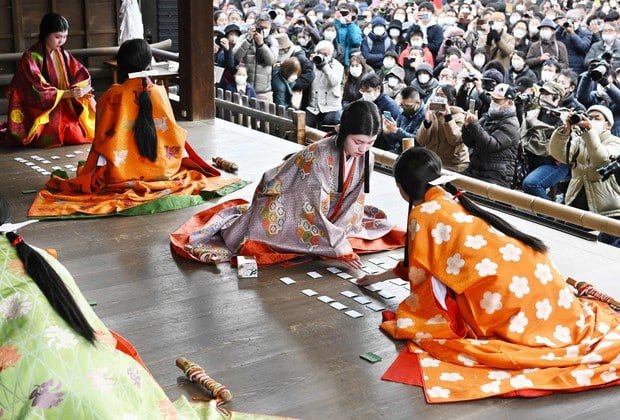
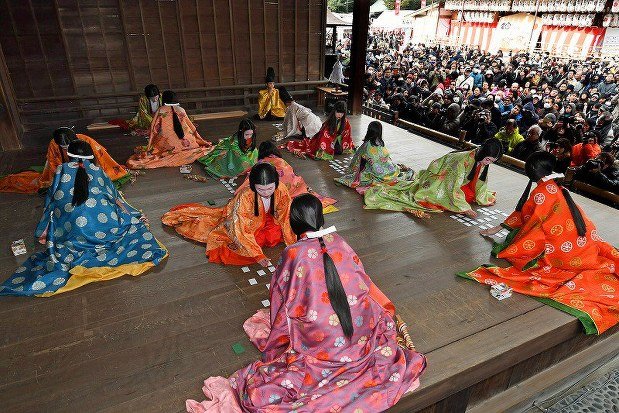
The main presentation takes place on the shrine’s Noh stage. Participants dressed in elegant Heian-period-style costumes, including karuta-hime, boys and girls, perform traditional Hyakunin Isshu karuta. The ceremony is both a cultural performance and a dedication to the shrine, making it particularly interesting for visitors who want to experience traditional Japanese customs during the New Year period.
For 2027, the ceremony is scheduled for Sunday, January 3. The published schedule gives a 1:00 pm start, although visitors should check the official Yasaka Shrine or Kyoto tourism information before traveling because traditional events can occasionally be modified or cancelled.
Enjoy Your Event Stress-Free with Japan Travelo
Do you know? Planning events, festivals, concerts, and cultural experiences in Japan can be overwhelming. Japan Travelo brings everything together in one place, helping you manage your itinerary, transport, and accommodation with ease—so you can enjoy Japan without the stress of planning.
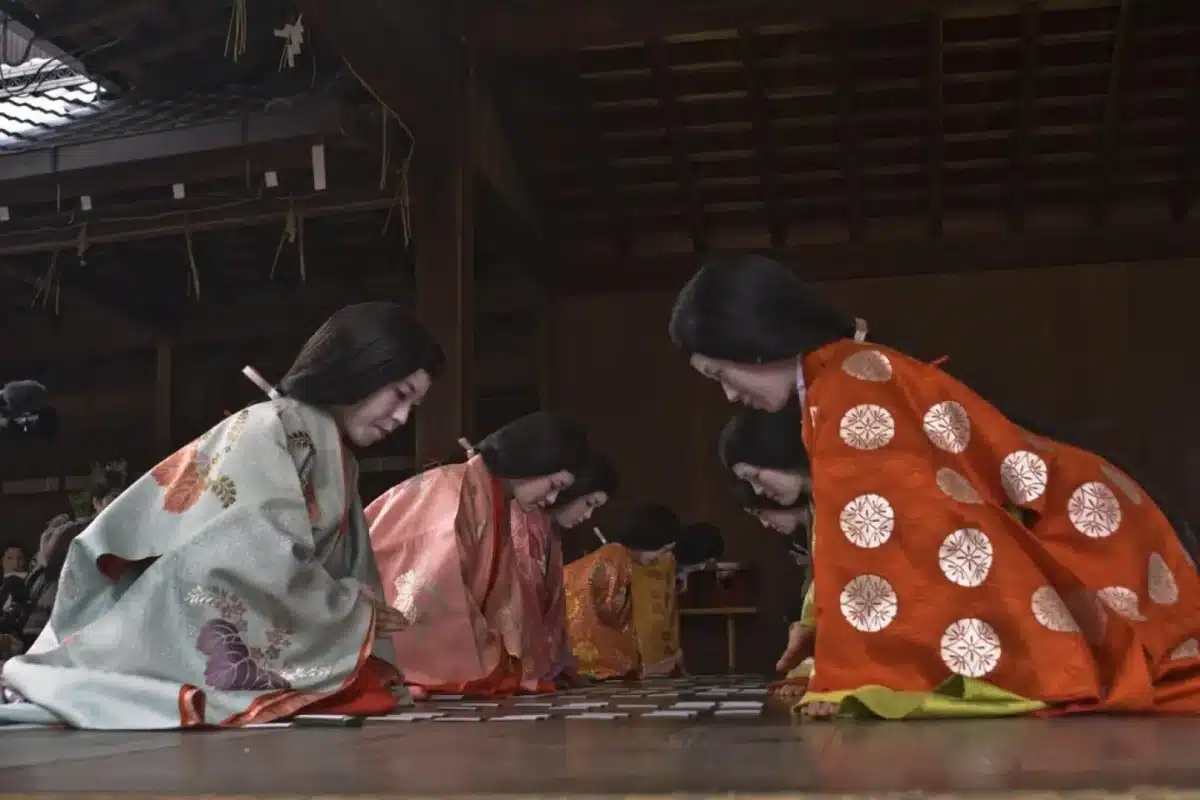
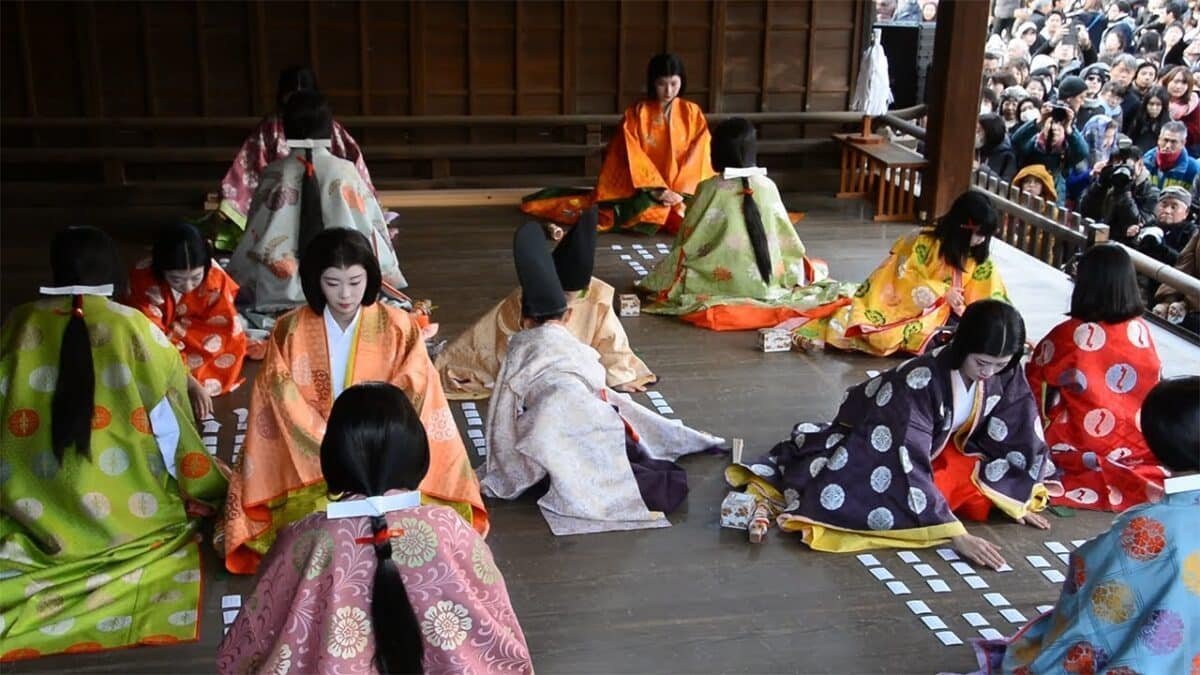
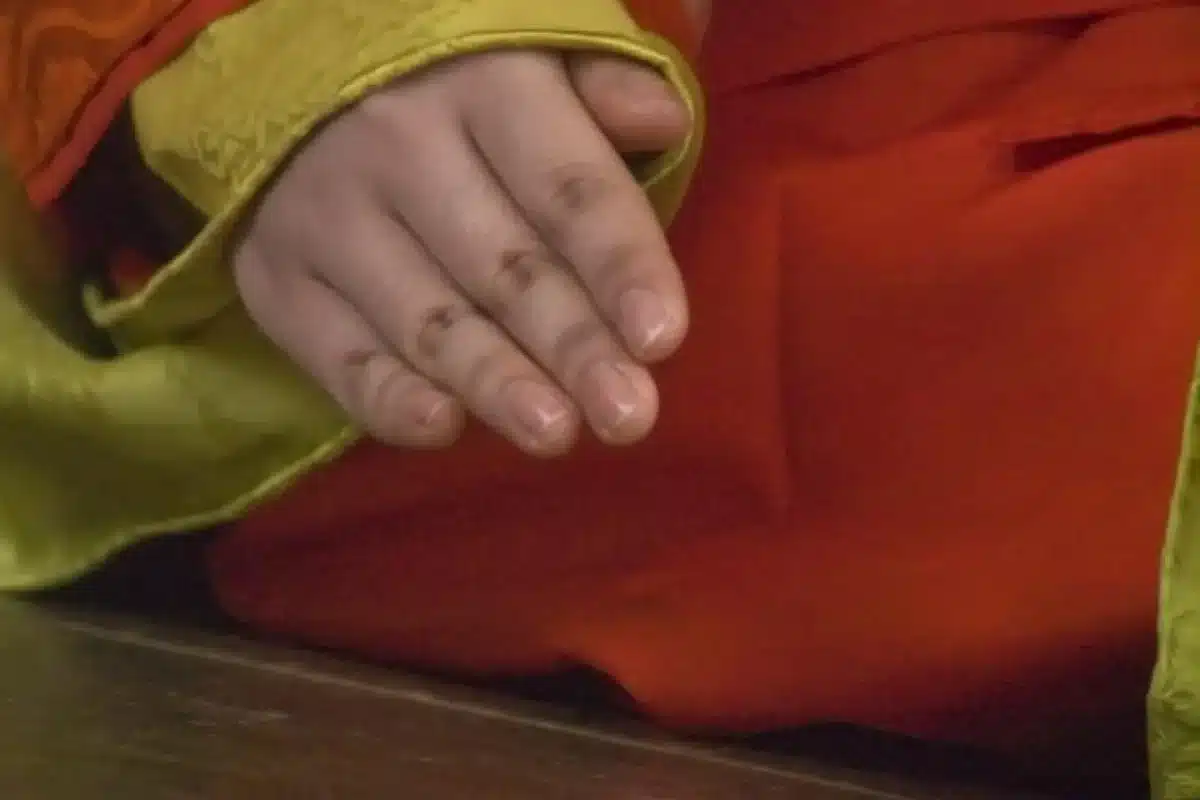
One of the most distinctive aspects is the visual presentation. The participants wear traditional court-style clothing while playing cards based on the famous collection of 100 classical poems. The combination of poetry, ritual, costumes and competitive card play gives the event a very different character from a modern sporting competition.
Event dates
Date: Sunday, January 3, 2027
Main ceremony: From 1:00 pm
Location: Yasaka Shrine Noh Stage, Kyoto
The Karuta Hajime Ceremony is traditionally held every January 3. Yasaka Shrine’s official annual-events information confirms the January 3 schedule and identifies the event as a dedication by the Kinki Branch of the All Japan Karuta Association.
Visitors planning a full New Year cultural day can arrive earlier because Yasaka Shrine also has other January 3 activities. The shrine’s official schedule lists Genshi-sai at 8:00 am and Hatsunoh Noh dedication at 9:00 am before the 1:00 pm Karuta Hajime ceremony.
The Karuta Hajime event itself is generally a relatively short ceremonial programme rather than an all-day festival. It is therefore easy to combine with sightseeing in Gion and eastern Kyoto.
Visiting this event? Don’t miss out on these amazing activities and local experiences while you’re here.
Venues & festival locations
The principal venue is Yasaka Shrine, located at 625 Gionmachi Kitagawa, Higashiyama-ku, Kyoto, 605-0073, Japan. The ceremony is held on the shrine’s Noh stage.
Yasaka Shrine
Yasaka Shrine is one of Kyoto’s best-known Shinto shrines and is closely associated with Gion and the Gion Festival. The shrine’s New Year programme includes several traditional ceremonies, making January 3 an especially active day for cultural visitors.
Noh Stage
The Noh stage is the central performance setting for Karuta Hajime. The traditional architecture provides the backdrop for the karuta presentation, while the participants’ Heian-style costumes create the distinctive appearance for which the ceremony is known.
Because the event is held within a working shrine rather than a dedicated ticketed festival ground, visitors should behave respectfully and follow any instructions from shrine staff or event organizers.
Full cultural programme
The central cultural programme focuses on the dedication and playing of karuta based on the Hyakunin Isshu, a collection of 100 classical Japanese poems.
Before the playing begins, karuta is dedicated at the shrine. The event then moves to the Noh stage, where participants perform the traditional card game in front of visitors. The Kyoto tourism authorities describe the ceremony as a traditional New Year event in which participants in formal costume compete in karuta playing.
The programme typically includes:
- Dedication of karuta at the shrine
- Opening presentation on the Noh stage
- Initial karuta demonstration
- Karuta play involving karuta-hime
- Performances by children dressed as traditional court figures
- Presentation of Heian-style costumes
- Traditional readings from the Hyakunin Isshu
The ceremony is particularly connected with Susanoo-no-Mikoto, one of the shrine’s principal deities. According to Yasaka Shrine, Susanoo is associated with the first 31-syllable waka poem in Japanese tradition, which is one reason poets have historically revered the deity.
Featured traditions & performances
Hyakunin Isshu karuta
The main attraction is the playing of karuta using poems from the Hyakunin Isshu. A reader recites the opening portion of a poem while players identify and take the corresponding card containing the concluding portion. The speed and concentration involved make the performance visually engaging even for visitors unfamiliar with the rules.
Karuta-hime
Karuta-hime are among the most recognizable participants. Their traditional court-style clothing creates the formal visual character of the ceremony and connects the modern presentation with Japan’s classical cultural heritage.
Children in traditional costumes
Children dressed in traditional clothing also take part in the presentation. Their participation adds a family and educational dimension to the event and helps introduce traditional Japanese culture to younger generations.
Heian-style costumes
The ceremony concludes with a presentation of the traditional costumes. The clothing is an important part of the event because it evokes the aristocratic culture associated with classical Japanese poetry.
Historical & heritage highlights
Karuta Hajime has been associated with Yasaka Shrine because of the shrine’s connection with Susanoo-no-Mikoto and Japanese poetry. Yasaka Shrine explains that Susanoo composed the famous waka beginning with “Yakumo tatsu Izumo Yaegaki” when celebrating his marriage to Kushinada-hime. The poem is traditionally regarded as Japan’s first 31-syllable waka.
This connection gives the ceremony a religious and literary foundation rather than making it simply a card-playing demonstration.
Yasaka Shrine itself has a long history and is popularly known as Gion-san. It is also the shrine associated with the Gion Festival, one of Kyoto’s major traditional festivals. The shrine’s grounds therefore provide a particularly appropriate setting for a ceremony combining religious tradition, classical poetry and Japanese cultural performance.
The modern Karuta Hajime ceremony is also connected with the development of organized karuta culture in Japan. Contemporary presentations are conducted with the involvement of the All Japan Karuta Association’s Kinki Branch, as stated by the shrine’s official schedule.
Events & activities schedule
8:00 am – Genshi-sai
Yasaka Shrine’s January 3 programme begins with Genshi-sai at 8:00 am. This is a New Year observance held at the shrine.
9:00 am – Hatsunoh Noh dedication
The shrine’s official New Year schedule lists Hatsunoh Noh at 9:00 am on the Noh stage. Depending on the year, performances are offered by the Kongo or Kanze schools.
1:00 pm – Karuta Hajime Ceremony
The main Karuta Hajime Ceremony begins at 1:00 pm. The karuta dedication and traditional playing take place on the Noh stage.
After the karuta performance – Costume presentation
The traditional costumes are presented after the karuta playing, providing an opportunity to appreciate the clothing and ceremonial appearance of the participants.
The exact running order and duration can vary, so visitors should confirm the day’s programme closer to January 3.
Ticket types & entry options
Admission to the Karuta Hajime Ceremony is free. Previous published Kyoto event information lists the event price as free, and no separate admission ticket is normally required for the ceremony.
General admission: Free
Advance ticket: Not normally required
Reserved seating: Not generally offered as part of the public event
Shrine access: Visitors can enter the shrine grounds as part of their visit, subject to any temporary crowd-control arrangements.
Because the event is free and takes place at a popular shrine during the New Year period, arriving early is advisable if you want a good viewing position.
Guided tours & cultural experiences
Karuta Hajime is not generally structured as a guided-tour festival. The main experience is watching the ceremony and learning about the relationship between karuta, classical Japanese poetry and Yasaka Shrine.
Visitors can make the experience more meaningful by exploring Yasaka Shrine before or after the ceremony. The shrine grounds provide an opportunity to see traditional Shinto architecture and learn about the religious traditions connected with Gion.
A wider cultural itinerary can also include nearby historic districts and temples in eastern Kyoto. The area around Gion offers opportunities to experience traditional streets, tea houses, historic architecture and Japanese cultural attractions.
For visitors particularly interested in karuta, learning the basic structure of the Hyakunin Isshu before attending can make the fast-paced card demonstrations easier to understand.
Special ceremonies & celebrations
January 3 is an important New Year date at Yasaka Shrine. Karuta Hajime is part of a broader series of traditional New Year observances.
The shrine’s official schedule places Genshi-sai at 8:00 am, Hatsunoh Noh at 9:00 am and Karuta Hajime at 1:00 pm.
The Noh programme and karuta ceremony together create a full morning-and-afternoon opportunity to experience traditional Japanese performing arts at the shrine.
Visitors arriving during the wider New Year season may also encounter other important shrine customs. Yasaka Shrine’s New Year programme begins with Okera-mairi on December 31 and continues with New Year ceremonies into January.
Festival rules
Karuta Hajime is held within a functioning Shinto shrine, so visitors should treat the site as a religious and cultural place.
Respect shrine customs: Follow signs and instructions from shrine staff.
Keep pathways clear: Do not block entrances, walkways or areas reserved for participants.
Photography: Photography may be possible, but visitors should follow any restrictions announced on the day and avoid interfering with the ceremony.
Quiet during performances: Keep conversations low while the poetry readings and karuta demonstrations are taking place.
Protect costumes and equipment: Do not touch participants, cards, costumes or ceremonial objects.
Crowd management: Follow temporary barriers and viewing-area instructions, particularly because January 3 is part of Kyoto’s busy New Year period.
How to get there
Yasaka Shrine is in Kyoto’s Gion district and is easily accessible from several central transportation points.
The shrine address is 625 Gionmachi Kitagawa, Higashiyama-ku, Kyoto, 605-0073.
From Gion-Shijo Station: The shrine can be reached on foot in approximately 5–10 minutes depending on the route and crowd conditions.
From Kyoto-Kawaramachi Station: The shrine is approximately a 15-minute walk according to Kyoto tourism information.
From Higashiyama Station: The walk takes approximately 10 minutes.
By bus: Kyoto City buses serving the Gion area provide access close to the shrine. Kyoto’s official event information lists the Gion bus stop as an access point.
Because January 3 is a major New Year sightseeing period, public transport and surrounding streets can be significantly busier than normal.
Public transport & parking
Public transport is the most practical way to reach Yasaka Shrine during the New Year period.
The nearest rail options include Keihan Gion-Shijo Station and Hankyu Kyoto-Kawaramachi Station. Higashiyama Station on the Kyoto Subway Tozai Line is another option.
Local buses can also take visitors to the Gion area, with the Gion stop close to the shrine.
Driving is less convenient during the New Year period because Gion and central Kyoto can experience heavy traffic and limited parking. Visitors using a car should check current parking availability separately and consider leaving the vehicle outside the busiest central area.
Accommodation areas
Gion
Staying in Gion provides the closest cultural setting for the ceremony. Visitors can walk around the historic district and reach Yasaka Shrine without depending heavily on public transport.
Higashiyama
Higashiyama is convenient for combining Karuta Hajime with temples, traditional streets and other historic attractions in eastern Kyoto.
Kawaramachi
The Kawaramachi area offers convenient access to restaurants, shopping, transport connections and the Gion district.
Kyoto Station
For travelers prioritizing transportation connections, the Kyoto Station area provides a practical base with direct access to trains and buses serving the wider city.
Booking early is advisable for the New Year period because Kyoto is a major tourist destination and January 3 falls within a busy holiday travel period.
Food & traditional specialties
Karuta Hajime itself is not primarily a food festival, so there is no dedicated food market or official festival menu associated with the ceremony.
However, visitors can combine the event with Kyoto’s traditional food culture in Gion and Higashiyama.
Kyoto-style sweets: Traditional wagashi and seasonal Japanese sweets are widely associated with Kyoto’s tea and confectionery culture.
Matcha: Tea shops around the historic districts provide opportunities to experience Kyoto-style matcha and Japanese sweets.
Yudofu: Hot tofu dishes are a well-known Kyoto specialty and are particularly suitable during the cold January season.
Kaiseki cuisine: Visitors seeking a formal dining experience can explore Kyoto’s traditional multi-course cuisine.
Nishin soba: Herring served with soba is another established Kyoto-style dish and provides a warming meal during winter sightseeing.
For a New Year visit, visitors can also look for seasonal Japanese foods and traditional sweets around central Kyoto.
Accessibility
Yasaka Shrine is a historic religious site, and accessibility can vary across different parts of the grounds. The January 3 event can also attract substantial crowds, which may make movement more difficult for wheelchair users and visitors with limited mobility.
Visitors who require assistance should contact Yasaka Shrine before the event using its published telephone number, 075-561-6155.
Because the ceremony takes place on a traditional Noh stage, viewing arrangements may differ from those at a modern accessible performance venue.
It is advisable to arrive early, identify the most suitable viewing position and ask shrine staff about accessible routes or temporary crowd-control arrangements.
Best cultural experiences
Watch the karuta performance
The main experience is seeing participants rapidly identify cards while dressed in traditional clothing. Even visitors who cannot understand Japanese can appreciate the speed, concentration and ceremonial presentation.
Explore Yasaka Shrine
Allow time to walk around the shrine before the ceremony and understand its connection with Susanoo-no-Mikoto and Japanese poetry.
Experience Gion
After the ceremony, explore the surrounding Gion district to experience one of Kyoto’s best-known historic areas.
Combine traditional arts
Arriving early can allow visitors to experience other January 3 activities at Yasaka Shrine, including the morning Noh dedication.
Learn the Hyakunin Isshu
Reading about the 100 poems beforehand can make the ceremony more meaningful because the card play is based on this important collection of classical Japanese poetry.
Explore eastern Kyoto
The ceremony can be combined with visits to nearby historic sites in Gion and Higashiyama, creating a full day focused on traditional Kyoto culture.
Previous year’s highlights
The most recent published editions continue the established format of a January 3 ceremony beginning at 1:00 pm at Yasaka Shrine. Kyoto’s official event information describes the presentation as a New Year tradition featuring participants in Heian-style clothing and traditional karuta play.
The ceremony’s key visual highlight remains the karuta performance on the Noh stage. Participants including karuta-hime and children dressed in traditional costumes face each other for the card-playing presentation.
The official shrine description also emphasizes the connection between the ceremony and Susanoo-no-Mikoto’s association with waka poetry. After the card play, the traditional costumes are presented, providing the final visual highlight of the event.
Previous published event information also confirms that admission has been free, making the ceremony an accessible way to experience traditional Japanese culture during Kyoto’s New Year celebrations.
Official tickets
Karuta Hajime Ceremony is a free public cultural event, so there are normally no official admission tickets to purchase. Published Kyoto event information lists the admission fee as free.
For the latest 2027 information, visitors should use the official Yasaka Shrine event information and Kyoto tourism listings before traveling. The shrine’s published schedule confirms Karuta Hajime as a January 3 event beginning at 1:00 pm.
Official event information: https://ja.kyoto.travel/event/single.php?event_id=4401
Contact: Yasaka Shrine, +81 75-561-6155.
Video
Location
FAQ
Do I need to buy tickets or register in advance to see the Karuta Hajime?
No, entry to the shrine grounds and viewing the ceremony is completely free, and no reservation is necessary.
How early should I arrive to secure a good viewing spot?
It is best to arrive 30 to 45 minutes before the 1:00 PM start time. Because viewing space around the Noh stage is limited and fills up fast with photographers and locals, early arrival is crucial.
Can foreigners or non-Japanese speakers enjoy the event?
Absolutely. While the poetry recitation is entirely in Japanese, watching the intense physical speed of the players, the striking multi-layered Heian costumes, and the historic shrine setting offers an incredible visual experience for everyone.
Is the event held outdoors? What happens if it rains or snows?
Yes, the ceremony takes place on the shrine's open-air stage. In case of light rain or minor snow flurries, the event usually proceeds, though adjustments may be made to protect the delicate silk garments. Heavy weather could prompt localized scheduling changes.
Are there restrooms and food options available on site?
Public restrooms are located within the Yasaka Shrine complex. Additionally, because it is the New Year holiday period, numerous seasonal food stalls (yatai) will be set up nearby, offering warm street snacks.
Who can I contact for official event inquiries?
You can reach Yasaka Shrine directly at 075-561-6155.

Leave a Reply