
Traditional Rituals, Dance & Performances
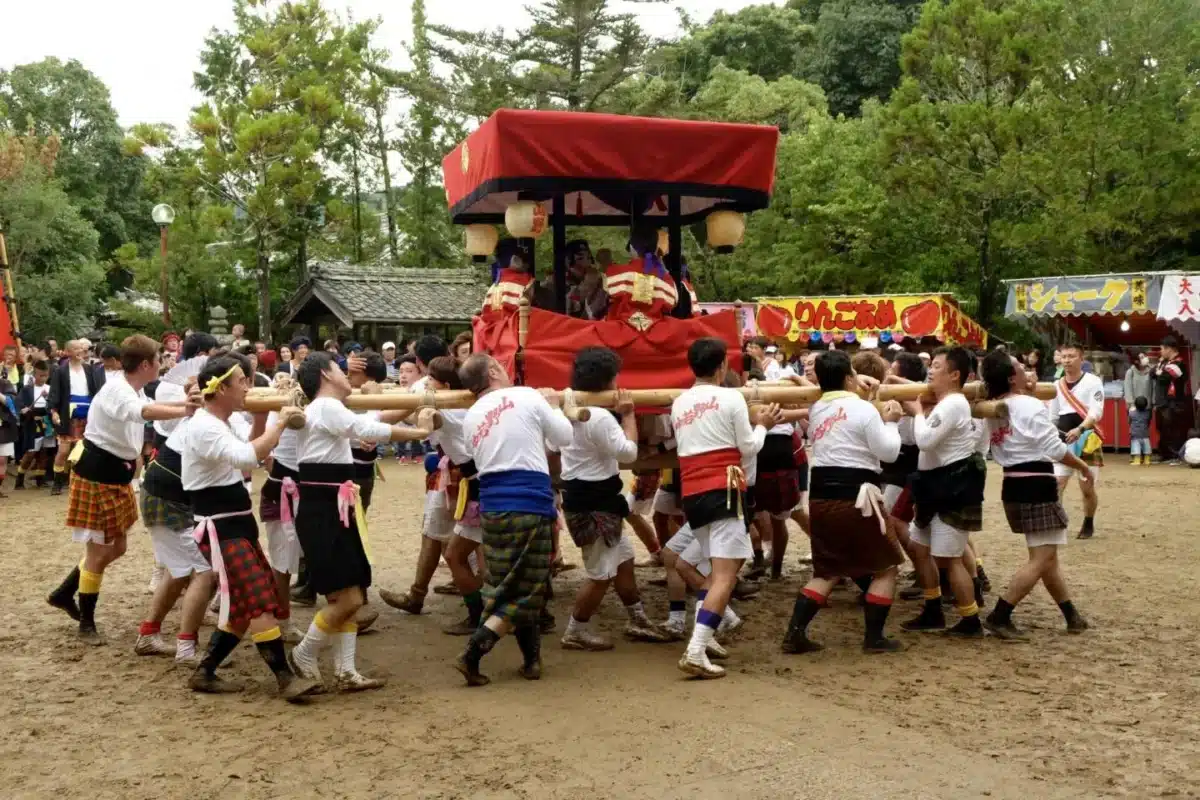
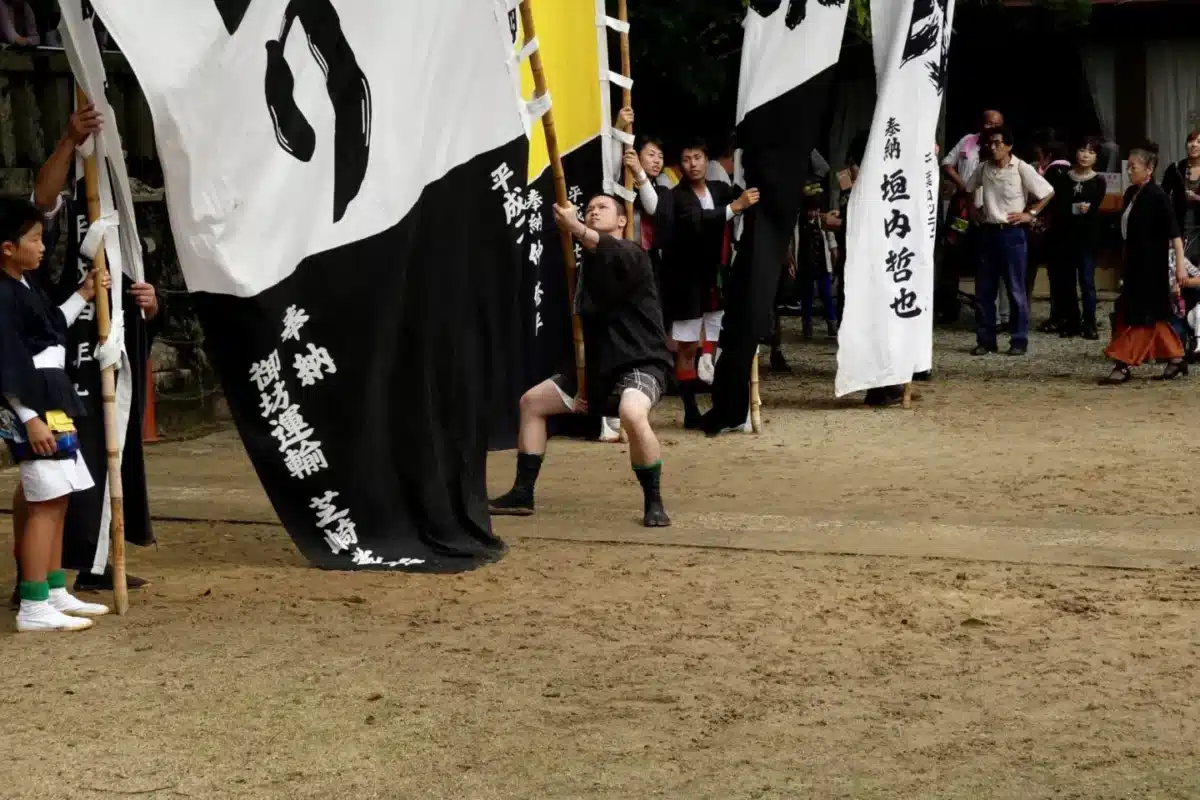
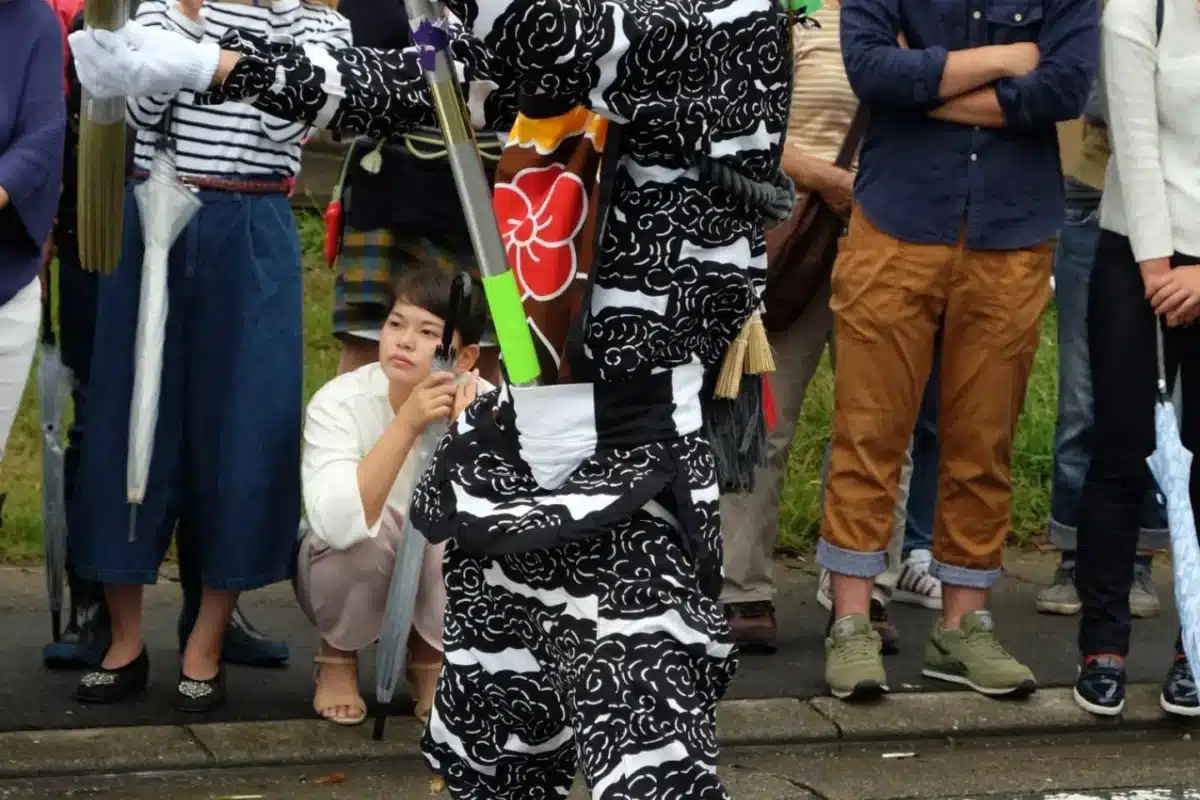
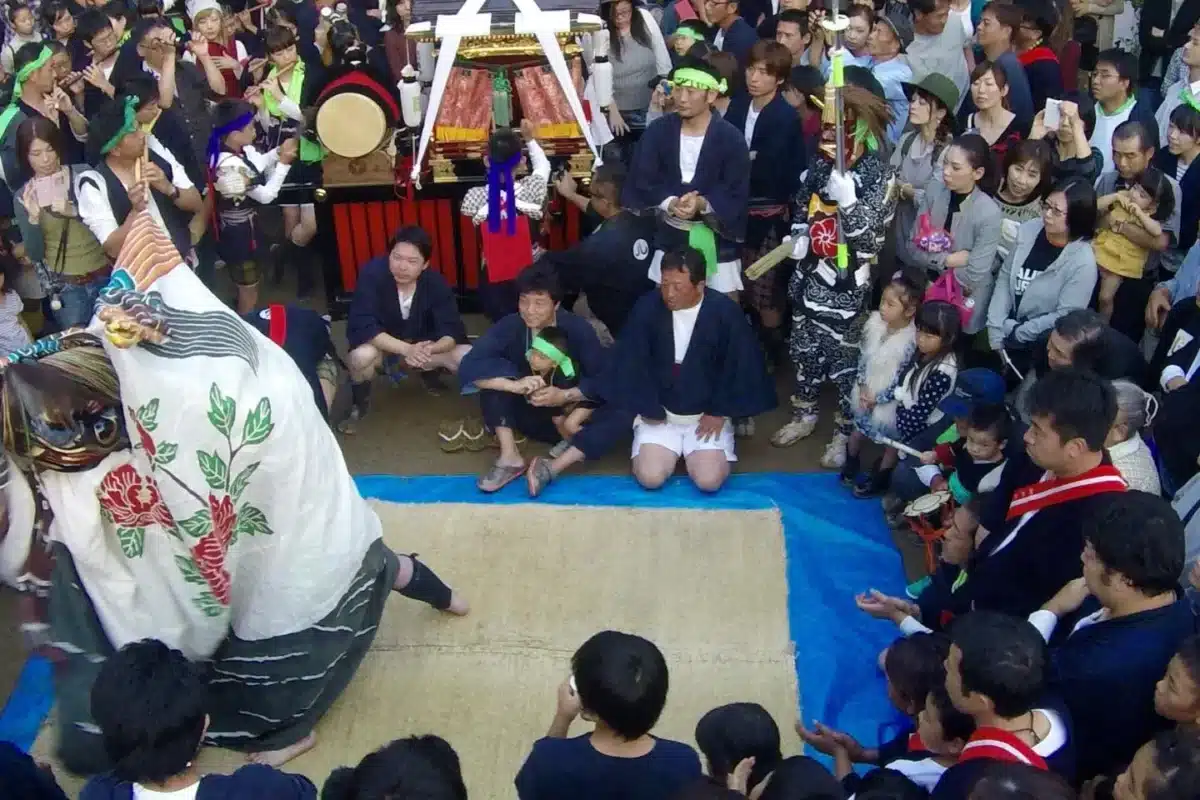
As soon as everyone arrives to the shrine the four participating towns (Ekawa, Matsuse, Sanya, and Wasa) of the Hidaka district show their skills in different traditional presentations. These include shishimai (lion dances), mikoshi (portable Shinto shrines), yotsudaiko (wooden structures that hold 4 boys playing drums), nobori sashi (bamboo banner balancing), as well as suzume and yako odori (folk dances).
The performance lineup begins with dramatic preliminary routines where regional groups display their unique artistic disciplines before merging into the main procession. Intricate drum beats, flute melodies, and acrobatic banner displays fill the shrine courtyard with constant audiovisual energy.
Each participating neighborhood brings distinct regional variations to their lion dances and musical numbers, showcasing local pride and artistic heritage. These performances run continuously throughout the afternoon, keeping spectators thoroughly immersed in classic Japanese folk culture.
Enjoy Your Event Stress-Free with Japan Travelo
Do you know? Planning events, festivals, concerts, and cultural experiences in Japan can be overwhelming. Japan Travelo brings everything together in one place, helping you manage your itinerary, transport, and accommodation with ease—so you can enjoy Japan without the stress of planning.
Festival Activities & Local Participation
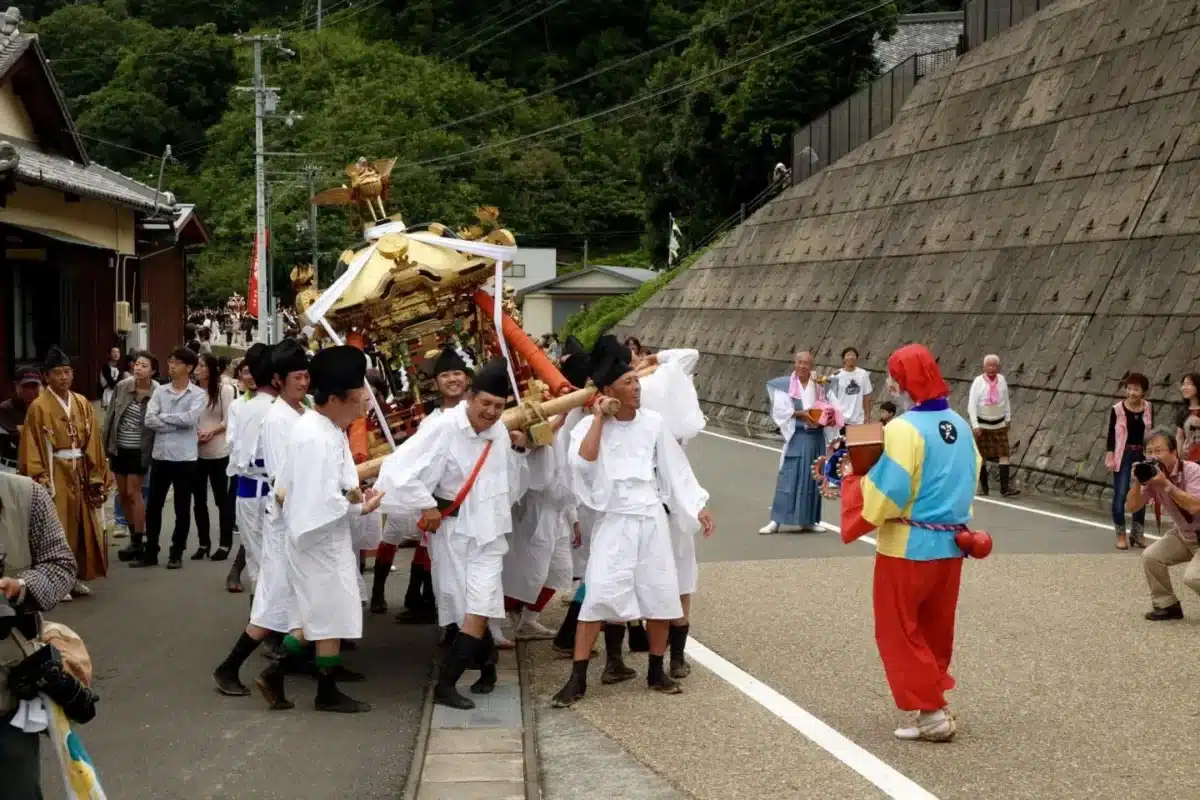
Nowadays the leader of the festival, dressed up as a clown, guides the participants to the Niu shrine. The short pilgrimage is escorted with laughs, celebration and joy.
Given that the event is not only a religious ceremony, but one of celebration as well, most of the participants will be dancing, singing, and laughing while drinking sake and beer. Once they are too drunk, they are not allowed to continue carrying the heavy portable shrines. Although is very safe to watch and enjoy the performance, be aware that the heavy portable shrines go from one side of the field to the other. They can get very close to the spectators making the celebration even more fun.
The festival takes place on the second Sunday of October. It usually starts at 11:00 a.m. and ends at 5:00 pm.
- Clown-Led Pilgrimage following a colorful leader wearing white makeup and bells down the route
- Rhythmic Chanting Sessions calling out cheerful phrases to encourage continuous group laughter
- Heavy Mikoshi Hauling watching energetic carriers maneuver large portable shrines across open fields
- Spontaneous Public Dancing joining local residents in folk steps and joyful holiday movements
- Sake and Beer Toasting sharing festive drinks among community members during celebration breaks
- Interactive Spectator Proximity standing close to unpredictable procession paths for an immersive experience
- Four-Town Collaboration uniting teams from Ekawa, Matsuse, Sanya, and Wasa in joint festivities
- Banner Balancing Feats witnessing skilled participants hoist tall bamboo flags high into the air
- Drum Float Maneuvers observing young performers manage traditional yotsudaiko percussion frameworks
- Afternoon Schedule Flow enjoying continuous entertainment from late morning through early evening
- Community Fellowship experiencing open hospitality and warm camaraderie from village residents
- Lively Noise Integration letting the sound of ringing bells and roaring laughter dominate the air
Date & Duration
- Event Date: Mid October 2026 (Dates TBD)
- Event Duration: One day event, typically starting around 11:00 a.m. and concluding at 5:00 p.m.
Visiting this event? Don’t miss out on these amazing activities and local experiences while you’re here.
Ticket Information
- How Tickets Are Sold: Free public event with no advance tickets or reservations required for entry
- Admission Type: Free Admission
- Ticket Pricing: Free Admission (Minimum $0.00 to Maximum $0.00)
- Special Seating Options: Unreserved open viewing areas and standing spaces around the shrine grounds and field pathways
- VIP Options: No official VIP seating or exclusive ticketed packages provided by festival organizers
Festival Background & Historical Origins
When you go to a festival at a remote village and you are the only foreigner, it tells you something about how local and traditional it is. Going to Warai Festival has probably been one of most spectacular and rewarding experiences I’ve ever had. It is a feast full of culture, tradition, and heritage that few foreigners and Japanese know about.
Niu Shrine in the Hidaka district of Wakayama hosts every year the Warai, or laughing, festival. The festival itself is considered a Prefectural Cultural Heritage asset and can be traced back several centuries.
The festival is based on the legend of Niutsuhime-No-Kimoto goddess. According to it, the goddess overslept and arrived late to a gathering of gods. All of them made fun of her; she grieved and locked herself in the Niu shrine. The villagers, wanting to cheer her up gathered outside the shrine and began laughing all together. It is said that their laughter restored the joy of the goddess and the villagers.
- Ancient Centuries-Old Roots tracing traditional rural heritage preserved through generations of local families
- Prefectural Cultural Heritage holding official regional designation for its unique historical significance
- Mythological Foundation honoring the legendary tale of the local deity Niutsuhime-no-mikoto
- Village Unity Symbolism representing communal harmony and mutual emotional support through shared joy
- Remote Cultural Preservation maintaining authentic folk customs largely untouched by mass tourism
- Generational Transmission passing down sacred storytelling and event management to younger villagers
- Divine Comfort Narrative turning historical embarrassment into an annual celebration of positive laughter
- Regional Identity Anchor serving as a cornerstone cultural event for the Hidaka district community
Cultural Significance & Traditional Beliefs
The festival transcends a simple community gathering, operating as a deeply symbolic expression of Shinto faith and emotional resilience. By reenacting the mythological cheering of a depressed deity, participants actively invoke blessings of good fortune, health, and communal happiness for the coming year.
Laughter is treated not merely as a physical reaction, but as a sacred spiritual tool capable of dispelling negative energy and inviting divine favor. This philosophical underpinning sets the event apart from standard autumn thanksgiving celebrations found across other parts of the country.
Community elders and shrine priests carefully guard the sanctity of these rituals, ensuring that every chant, movement, and offering aligns with historical custom. The resulting atmosphere bridges ancient indigenous beliefs with a cheerful, life-affirming human celebration.
- Sacred Laughter Philosophy treating joyous sound as a spiritual purifier to ward off misfortune
- Shinto Gratitude Expressions offering prayers for bountiful harvests and regional safety to local deities
- Spiritual Resilience Rites reenacting ancient emotional healing through collective village participation
- Divine Reverence Integration balancing solemn religious ceremonies seamlessly with lighthearted comedic acts
- Ancestral Custom Safeguarding preserving exact ritual steps handed down from feudal times
- Community Blessing Customs invoking prosperity and peace for all participating neighborhood districts
- Mythological Reenactment bringing ancient folklore to life through physical performance and costume
- Collective Catharsis allowing villagers and visitors alike to release stress through shared merriment
Venue / Location
- City and Country: Hidakagawa, Japan
- Venue Name: Niu Shrine
- Google Maps Address: Niu Shrine, Ekawa, Hidakagawa-cho, Hidaka-gun, Wakayama 649-1442, Japan
Contact Information
- Phone Number: +81 738-22-2041
- Website: https://en.japantravel.com/oita/warai-festival/31884
Visitor Experience, Etiquette & Safety Tips
Attending a hyper-local, high-energy rural celebration requires mindfulness regarding personal space and local customs. Because procession participants frequently consume alcoholic beverages during the festivities, keeping a respectful and alert distance from moving portable shrines is essential for safety.
Visitors should approach the event with an open, lighthearted attitude, embracing the spontaneous and unpredictable nature of the laughing processions. Navigating the remote venue also requires careful logistical planning, as local transportation options are limited compared to major urban tourist hubs.
- Watchful Distance Maintenance staying alert near fast-moving, unpredictable mikoshi carriers on open grounds
- Respectful Alcohol Awareness keeping a polite buffer from participants enjoying traditional festival drinks
- Open Mindset Preparation embracing spontaneous local humor and cheerful interactive public traditions
- Sturdy Footwear Selection wearing comfortable walking shoes suitable for rural terrain and dirt paths
- Public Transit Advance Planning mapping out train and walking schedules carefully ahead of time
- Cash Preparedness carrying sufficient Japanese yen since local rural vendors lack card facilities
- Weather Layering Strategy packing light layers to adapt to shifting autumn outdoor temperatures
- Photography Politeness asking permission before taking close-up portraits of local performers
- Trash Carry Policy packing personal waste bags to keep the rural shrine grounds pristine
- Local Guideline Adherence following instructions from event marshals and shrine staff immediately
Location
FAQ
What are the primary dates when the Warai Festival is held annually?
The festival takes place every year on the second Sunday of October at Niu Shrine in Wakayama Prefecture. This single-day autumn event runs continuously from late morning until late afternoon. Visitors should check exact scheduling details closer to the date before planning their journey.
How can travelers reach the remote Niu Shrine location using public transportation?
The easiest way to arrive is from Wakayama City via a one-hour train ride that takes you directly to Wasa station. From the station, travelers must complete a scenic walk lasting approximately one hour toward the shrine grounds. Planning your rail connections early ensures a smooth arrival for this rural excursion.
Do visitors need to purchase admission tickets to attend the festival?
No tickets, bookings, or admission fees are required to enter the festival grounds or watch the processions. All street viewings and shrine area events are completely open and free for the public to enjoy. Optional spending applies only to personal food or souvenir purchases from local stalls.
What is the mythological background that inspired the laughing festival?
The event originates from an ancient legend where the local goddess Niutsuhime-no-mikoto overslept and missed a major divine gathering. When she became deeply depressed over her mistake, local villagers cheered her up by gathering outside and laughing together. This joyful act successfully restored her happiness and established the annual tradition.
What are some of the main performance highlights to watch for during the event?
Highlights include the colorful clown-led pilgrimage, energetic shishimai lion dances, and the dramatic hauling of heavy portable shrines. Teams from four participating towns also showcase traditional drum performances and bamboo banner balancing acts. These diverse folk presentations run throughout the day, filling the venue with lively cultural energy.

Leave a Reply