
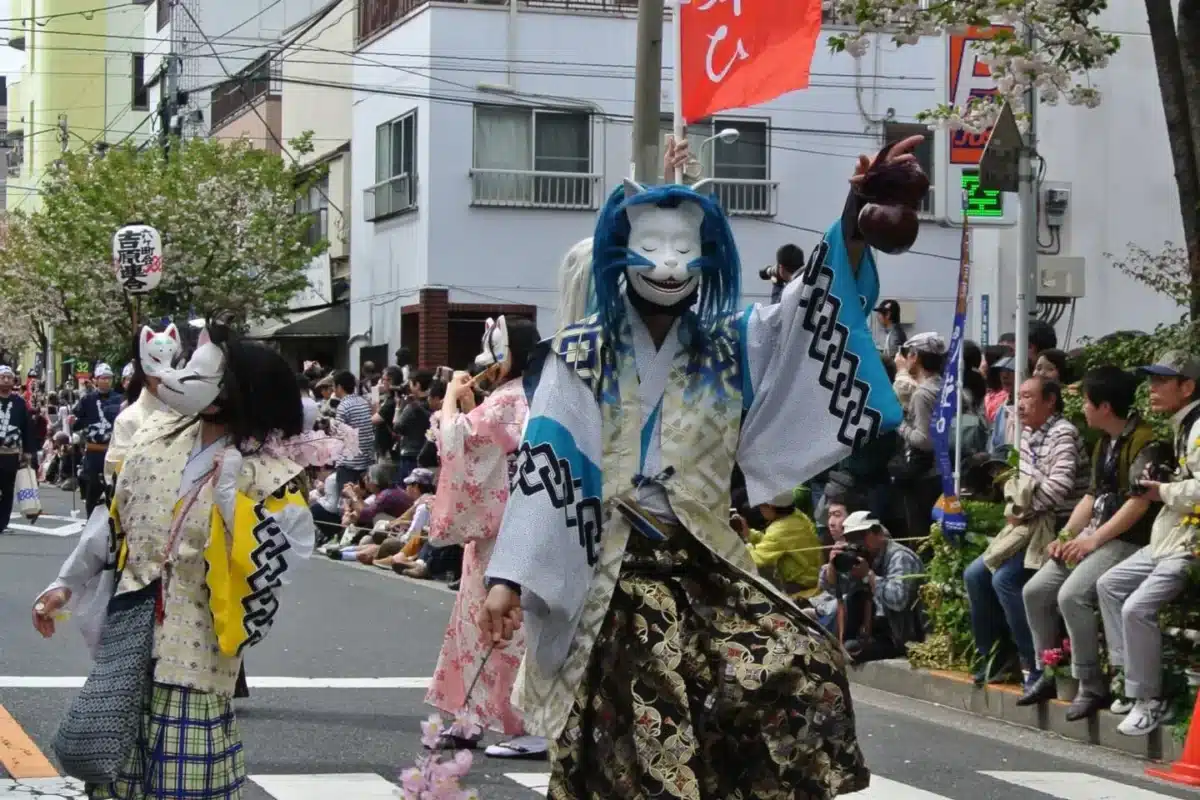
Procession Participants & Roles
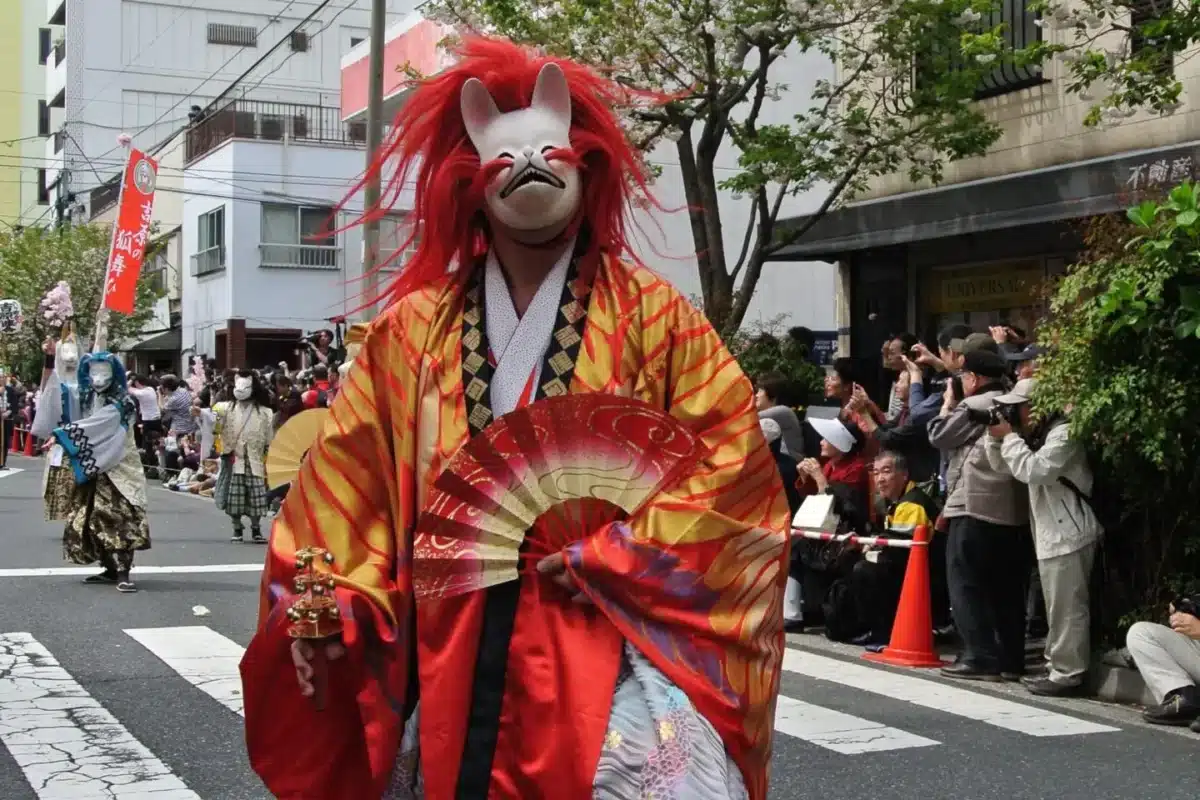
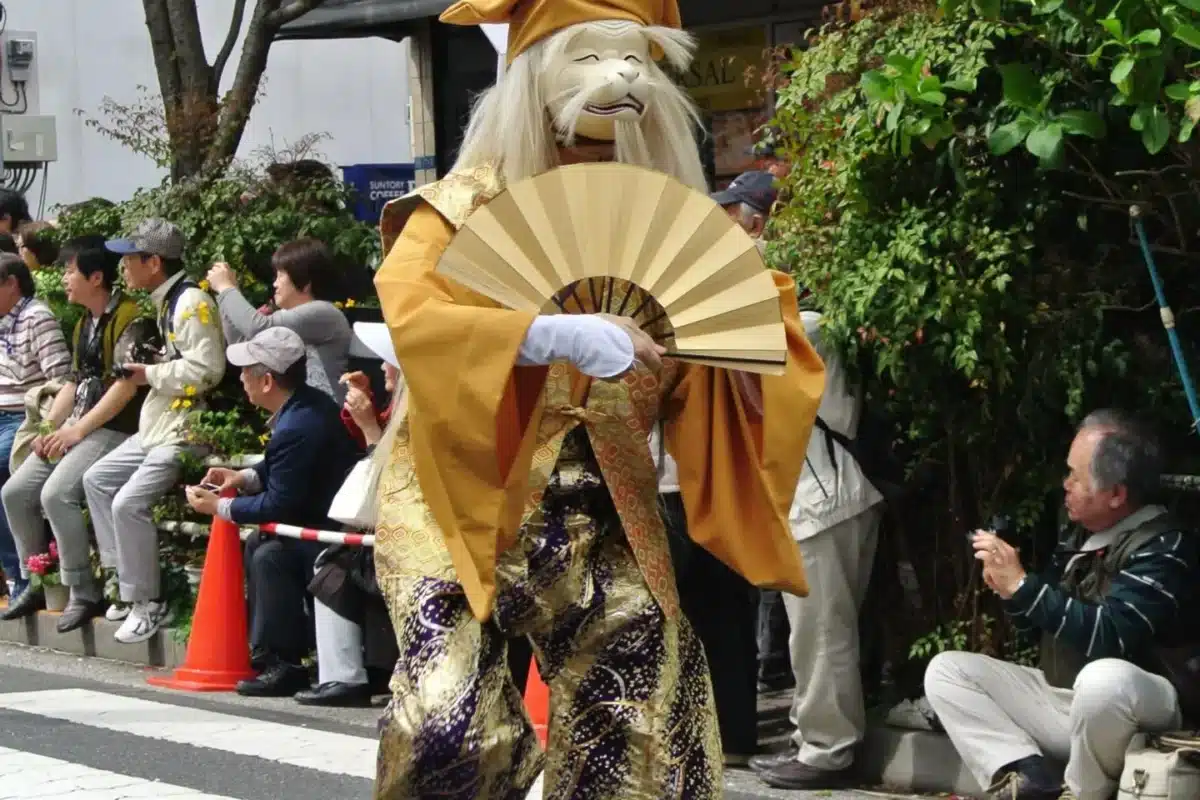
- Playful animal-masked characters leading the parade to charm the surrounding crowds and entertain onlookers
- Musicians playing traditional instruments such as flutes and drums to establish the rhythmic march
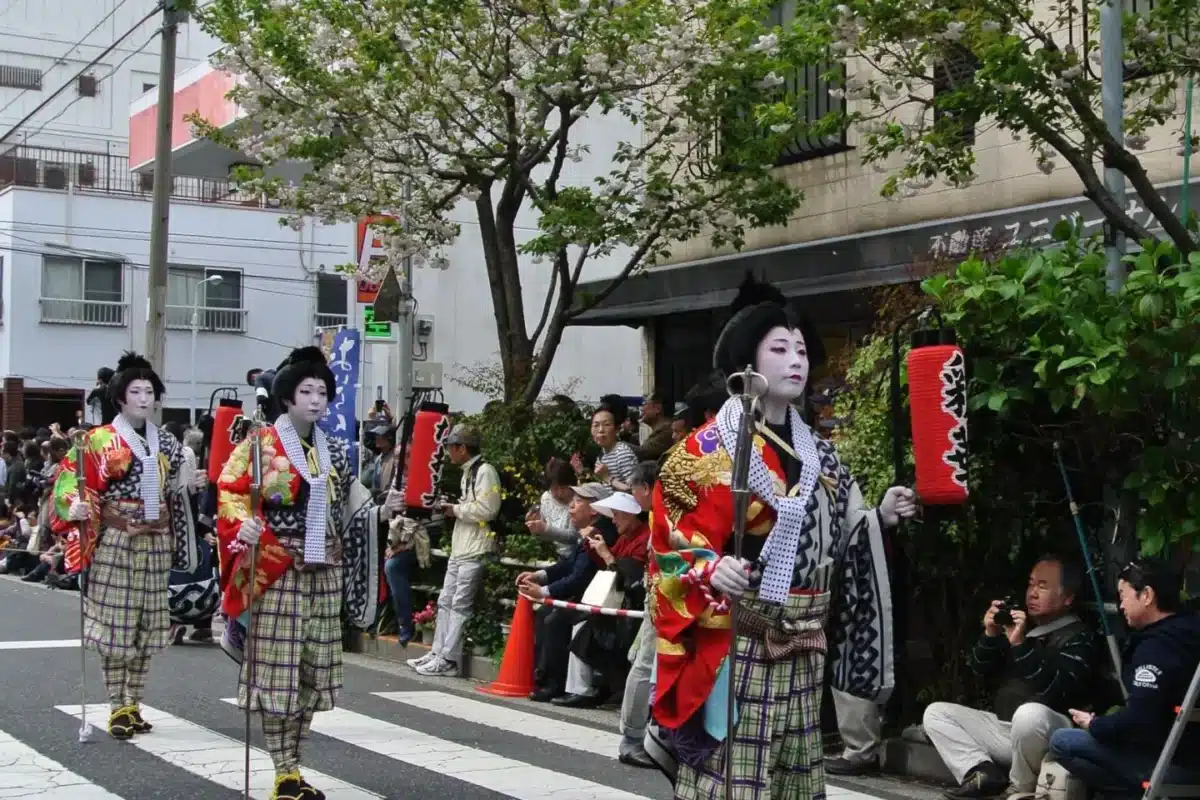
- Attendant guards wearing varying levels of costume, ranging from simple attire to intricate makeup
- Lantern-bearing staff illuminating the path and maintaining order along the parade route
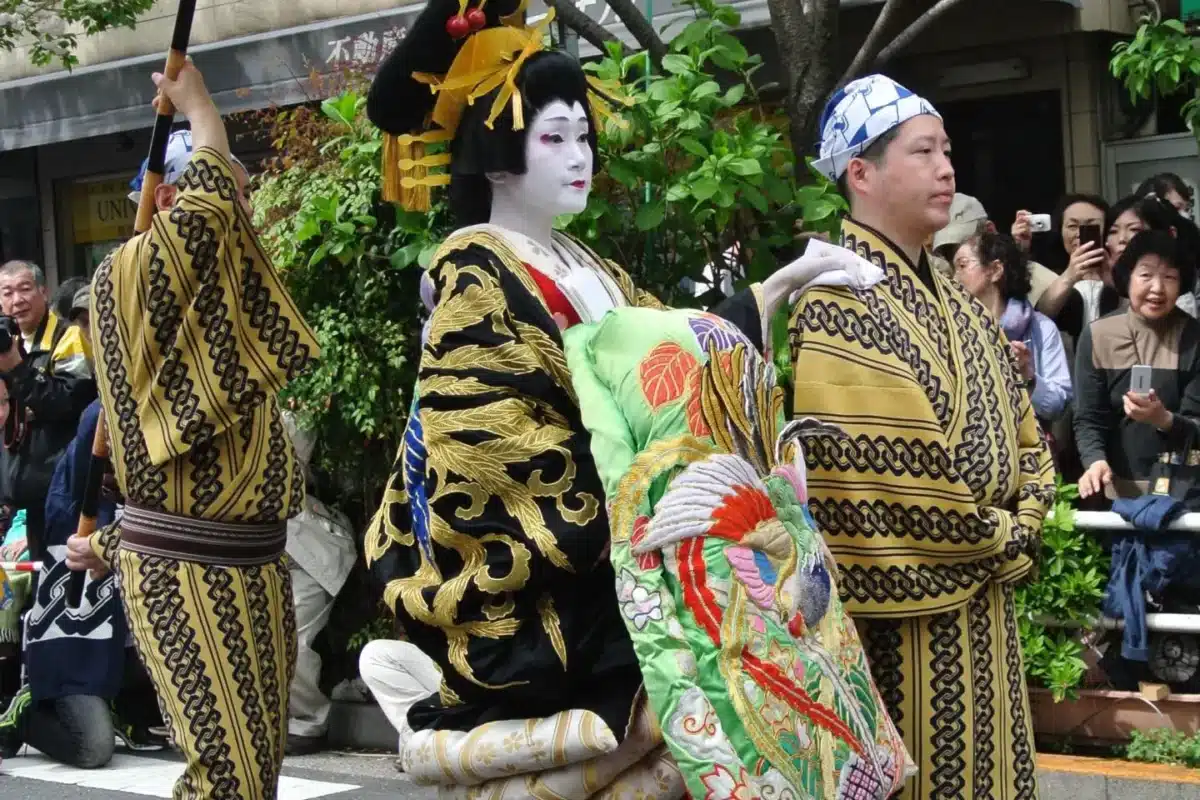
- The esteemed oiran themselves, flanked by experienced assistants managing their heavy trains
- Local preservation members and volunteers coordinating crowd flow and participant safety
When
- Event Date: Early – Mid April 2027 (Dates TBD)
- Event Duration: One-day daytime street procession and cultural festival
Visiting this event? Don’t miss out on these amazing activities and local experiences while you’re here.
Traditional Performances & Festival Programme
Once they reach the stage, the oiran perform a recreation of what it would be like to meet a client, though unless you are near the stage to begin with or are tall, you will find it very difficult to watch it. After that, the parade heads back the way they came, so you have two opportunities to see the procession.
The broader festival grounds offer a rich variety of cultural programming, ensuring visitors can enjoy multiple entertainment elements throughout the day. From musical accompaniment to community showcases, the schedule highlights regional heritage.
- Theatrical client-meeting recreation performed by the oiran upon reaching the main stage
- Lively musical performances featuring traditional flutes, gongs, and festival drums
- Stage presentations and dance numbers performed by local children’s groups
- Interactive street character interactions engaging families and children along the route
- Return procession march providing a second viewing opportunity for late arrivals
- Flea market browsing and community exhibition booths set up near the venue
Best Viewing Spots & Photography
I would recommend arriving early to secure a good spot for the procession, with right near the stage being the best spot. Because viewing areas fill up fast along the narrow blocks, claiming your space ahead of time ensures an unobstructed line of sight.
Enjoy Your Event Stress-Free with Japan Travelo
Do you know? Planning events, festivals, concerts, and cultural experiences in Japan can be overwhelming. Japan Travelo brings everything together in one place, helping you manage your itinerary, transport, and accommodation with ease—so you can enjoy Japan without the stress of planning.
Capturing the procession requires careful positioning to frame the vibrant costumes against the traditional Tokyo streetscape. The return journey also offers alternative angles for photographers looking to avoid peak crowd congestion.
- Front-row sidewalk positions along the main parade route for close-up portrait shots
- The area directly surrounding the main stage for capturing theatrical dramatic performances
- Elevated or clear side angles to photograph the unique figure-eight walking steps
- Patience-based framing to isolate colorful kimonos against urban backgrounds
- Polite positioning that respects pedestrian flow and local resident access
Food Stalls, Local Market & Festival Atmosphere
Numerous food stalls line the festival precinct, offering an array of classic Japanese street snacks, savory treats, and refreshing beverages. The lively market atmosphere brings a warm, community-driven energy to the historic neighborhood.
Visitors can easily spend hours exploring the vibrant flea market stalls and enjoying local delicacies between parade movements. The harmonious blend of history and modern neighborhood celebration creates an unforgettable afternoon.
- Rowdy food stalls serving classic festival snacks like yakitori, takoyaki, and sweet treats
- Bustling flea market lanes offering vintage goods, antiques, and local crafts
- Cheerful vendor calls and aromatic food scents filling the spring air
- Throngs of enthusiastic locals and international travelers sharing in the celebration
- Vibrant banners and decorative festive flags lining the neighborhood streets
- Community seating areas designed for relaxing and enjoying street food meals
Visitor Etiquette & What to Bring
If you are in Tokyo during the second Saturday in April, this procession is definitely worth a visit. It is found near Asakusa in an area called Senzoku, and the easiest way to find it is to head out the top exit of Sensoji near the car park area and walk for a few blocks till you find the festival area.
Visitors should maintain a respectful distance from the active parade participants and follow all safety instructions given by local staff. Bringing essential personal items ensures comfort throughout the outdoor daytime event.
Where It Takes Place
- City and Country: Tokyo, Japan
- Venue Name: Asakusa
- Google Maps Address: Senzoku, Taito City, Tokyo 111-0031, Japan
Oiran Costumes, Hairstyles & Traditional Footwear
- Ornate, multi-layered silk kimonos featuring dazzling embroidery and rich seasonal patterns
- Elaborate, gravity-defying historical hairstyles adorned with numerous traditional hairpins and ornaments
- Towering wooden geta clogs standing at least 20 centimeters tall that demand immense balance
- Distinctive signature walking style utilizing a slow, sweeping figure-eight foot motion known as hachimonji
- Highly detailed theatrical makeup and authentic accessories reflecting elite courtesan status
- Distinct color-coded garment variations designating different ranks among the participating oiran
Event Contact Details
- Phone Number: 03-3871-3591
- Website: ichiyosakura.com
Oiran Procession & Hachimonji Walk
The oiran are often confused with geisha, but the oiran were actually the courtesans of the pleasure quarters common in the 17th and 18th centuries until prostitution was outlawed after World War II. During that era, a daily procession would be seen on the streets of Yoshiwara near Asakusa where the oiran and their attendants would parade down the thoroughfares as a form of high-status advertising. Nowadays, the historical parade is faithfully recreated by a dedicated group of local participants who bring the Edo period back to life with striking authenticity.
Oiran Dochou Procession is held as part of the Ichiyo Sakura Matsuri. The festival includes stage performances by local children, traditional food stalls, and a vibrant flea market, but the main spectacle remains the Oiran Dochou Procession. The parade starts around 1:00 PM and travels for a couple of blocks before arriving at the main stage area, offering viewers a stunning display of intricate historical pageantry.
Video
Location
FAQ
Do visitors need to purchase tickets to attend the procession?
No tickets or advance reservations are required since the entire street festival and parade viewing areas are open to the public for free. Anyone can walk freely through the neighborhood streets to experience the historical pageantry.
Where is the festival located and how do I get there?
The event takes place near Asakusa in the Senzoku district, easily reached by walking a few blocks north from the top exit of Sensoji Temple near the parking area. Clear pedestrian routes and local street signs guide travelers directly to the main festival zone.
What is the best time to arrive for good viewing spots?
Arriving well in advance of the 1:00 PM parade start time is strongly recommended to secure a spot right near the main stage or along the front row of the street blocks. Popular viewing spaces fill up quickly with enthusiastic photographers and local spectators.
Can visitors see the procession more than once?
After the oiran reach the main stage and complete their theatrical presentation, the entire parade reverses direction and heads back the way it came. This return trip provides guests with a second wonderful opportunity to view the intricate costumes.
Are there food and shopping options available at the venue?
The festival features a lively collection of traditional food stalls offering delicious street snacks alongside a vibrant neighborhood flea market. Visitors can easily browse local crafts and enjoy regional treats while waiting for the parade to begin.

Leave a Reply