
What to expect in 2027
Oiran Dochu Procession 2027 is a traditional cultural reenactment held in the historic Yoshiwara area of Tokyo’s Taito Ward, near Asakusa. The procession recreates the elegant public appearances of high-ranking oiran courtesans from the Edo period, presenting their elaborate costumes, distinctive hairstyles, attendants, ceremonial movements and carefully choreographed walking style.
The event is associated with the Asakusa Kannon-ura Ichiyo Sakura Festival and is presented as a celebration of local history and Edo-period culture. Japan Travel describes the procession as a recreation of an Edo-period procession through the streets of Asakusa, while recent local programmes have continued to present the oiran procession alongside traditional music, dance and demonstrations.
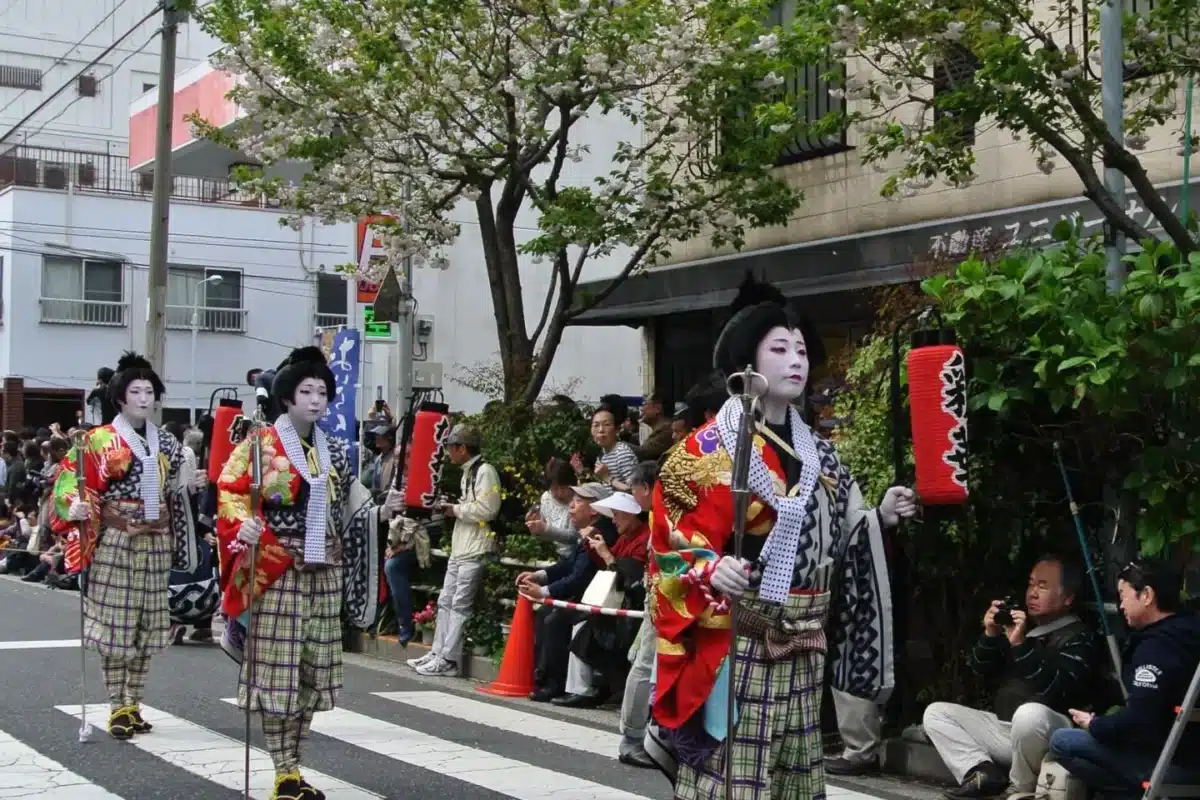
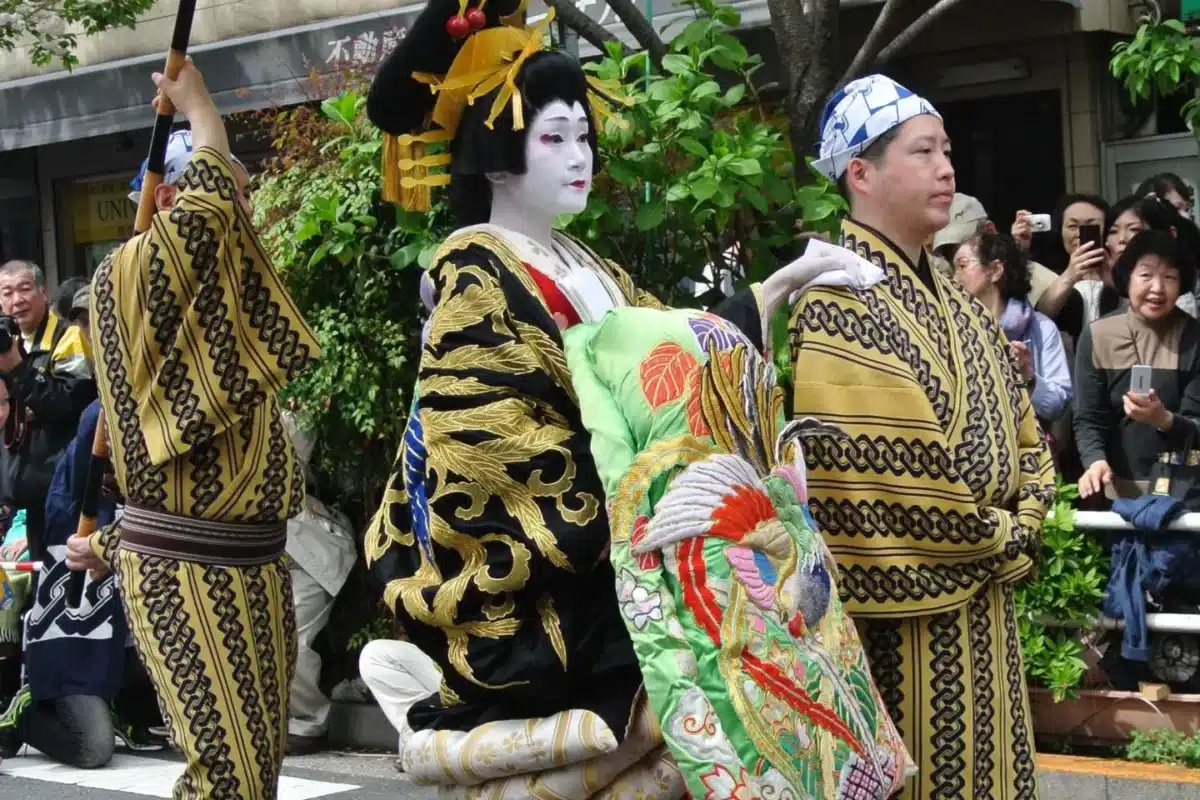
The central attraction is the slow-moving procession of the oiran accompanied by attendants and other participants. One of its most recognizable features is the distinctive movement of the oiran in extremely tall traditional clogs. The walking technique, elaborate kimono and ornate hair accessories create the theatrical appearance that makes the procession particularly popular with photographers and visitors interested in Japanese traditional culture.
Enjoy Your Event Stress-Free with Japan Travelo
Do you know? Planning events, festivals, concerts, and cultural experiences in Japan can be overwhelming. Japan Travelo brings everything together in one place, helping you manage your itinerary, transport, and accommodation with ease—so you can enjoy Japan without the stress of planning.
Visitors should also understand the historical context of the event. Oiran were high-ranking courtesans associated with the Yoshiwara pleasure district and were known not only for their appearance but also for accomplishments in music, poetry, calligraphy, tea and other forms of refined entertainment. The modern procession is a historical reenactment rather than a continuation of the historical pleasure-quarter system.
The 2027 programme should again provide an opportunity to experience the procession within the wider atmosphere of the Asakusa and Yoshiwara neighborhoods. Exact performers, supporting activities and the detailed programme should be confirmed by the organizers closer to the event.
Event dates
Oiran Dochu Procession 2027 is expected in early to mid April 2027, with the exact 2027 calendar date to be confirmed.
The event traditionally takes place during the spring festival season around Asakusa Kannon-ura and the Ichiyo Sakura area. Japan Travel currently lists the 2027 event as “Early – Mid Apr 2027” and identifies it as a free-entry cultural event in Asakusa.
Because the procession is an outdoor street event, the programme can be affected by weather and local arrangements. Visitors planning a trip around the event should check the official festival information before travelling.
Visiting this event? Don’t miss out on these amazing activities and local experiences while you’re here.
Venues & festival locations
The procession takes place in the historic northern Asakusa area associated with former Yoshiwara. The principal procession route is around Komatsubashi-dori Street in Senzoku, with the surrounding streets providing viewing areas for visitors.
The event is connected with the Asakusa Kannon-ura Ichiyo Sakura Festival, a local spring celebration centered around the Ichiyo Sakura area north of Senso-ji Temple.
Important areas to explore include:
- Komatsubashi-dori and surrounding streets
- Senzoku and the former Yoshiwara district
- Ichiyo Sakura-lined streets
- Asakusa Kannon-ura
- Nearby local shopping streets
- The wider Asakusa cultural district
- Senso-ji and its surrounding historic neighborhood
Recent editions of related Yoshiwara programming have also used outdoor festival spaces and streets for cultural performances, making the surrounding neighborhood an important part of the experience rather than simply a backdrop for the procession.
Full cultural programme
The cultural programme is centered on the oiran procession but can include several forms of traditional entertainment and local performance.
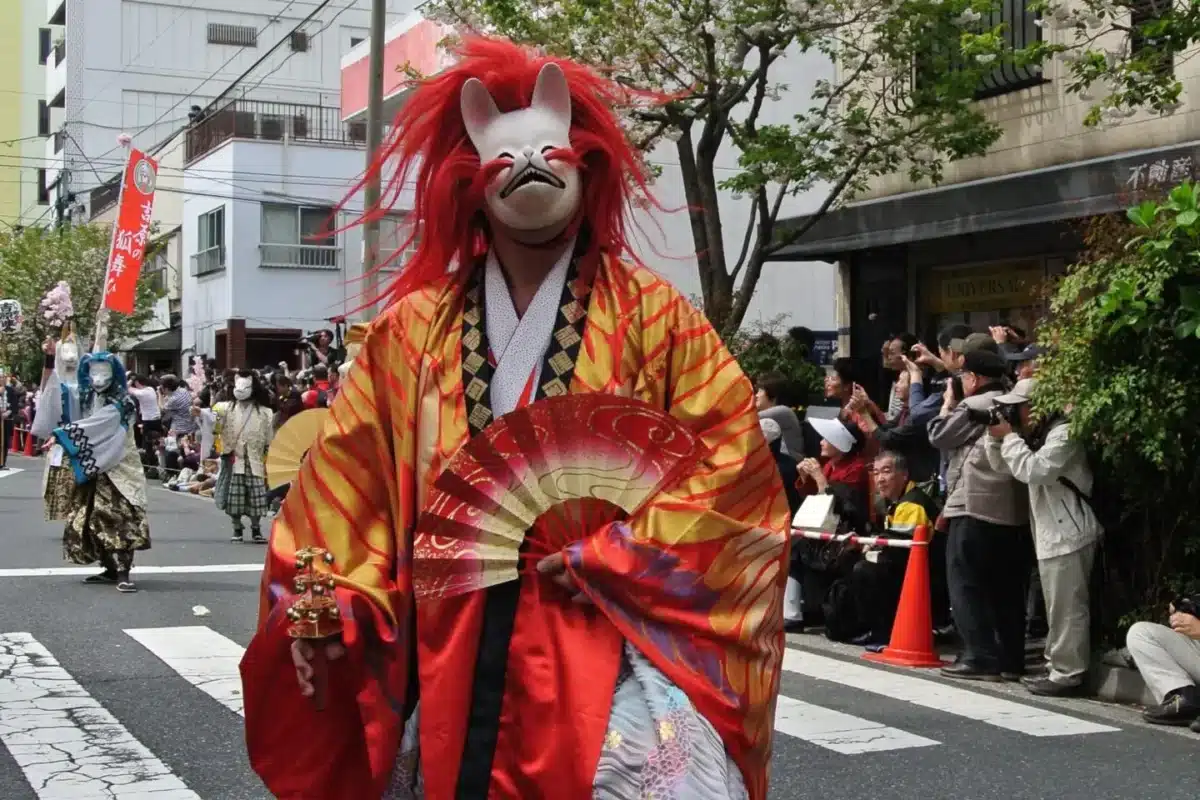
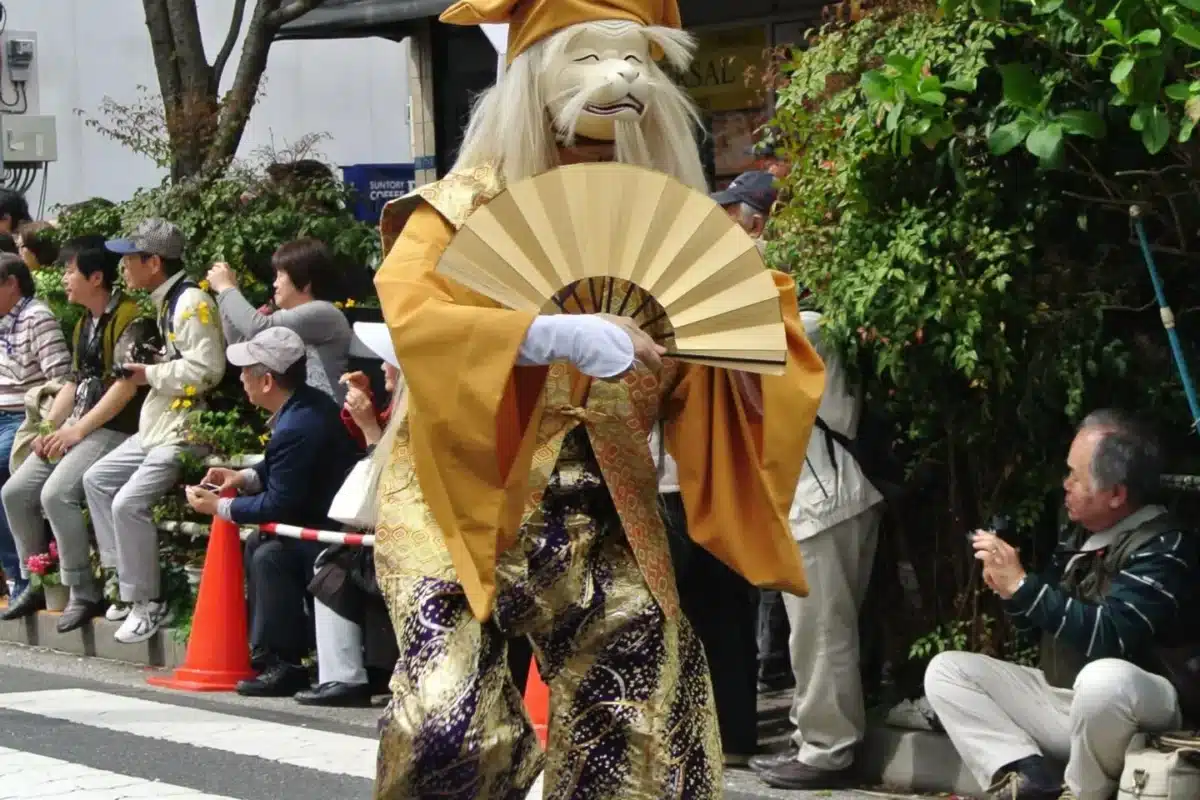
A recent official Okuyasakusa programme featured a broad selection of activities including traditional taiko, a commemorative ceremony, Asakusa geisha dancing, fox dance, Japanese traditional music, Yoshiwara Kiyari singing, traditional drum performance, a recreation of a formal oiran reception and a photography session.
The 2027 programme may include:
- Oiran Dochu procession
- Traditional Japanese music
- Taiko performances
- Geisha dance
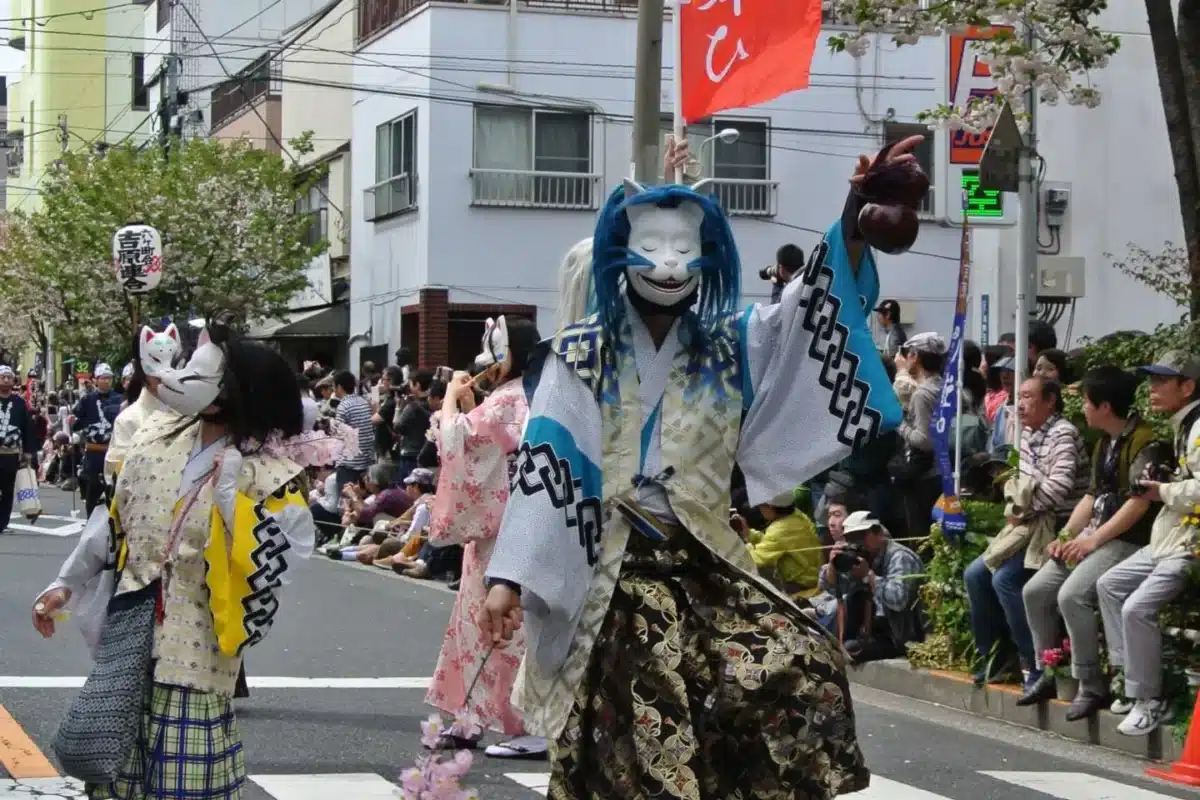
- Fox dance
- Kiyari singing
- Traditional drum performances
- Introduction of procession participants
- Historical demonstrations
- Ceremonial activities
- Photography opportunities
- Local festival stalls and community activities
The programme is designed to place the procession within a broader presentation of Edo cultural traditions. Rather than focusing only on costumes, it can introduce visitors to music, performance, etiquette, entertainment and ceremonial customs connected with historical Yoshiwara.
Featured traditions & performances
Oiran Dochu
The main procession recreates the formal movement of an oiran through the streets accompanied by attendants and other participants. The oiran wears an elaborate kimono and traditional hairstyle and walks slowly in high wooden clogs using the characteristic outward eight-shaped foot movement known as hachi-monji.
Traditional costumes
The costumes are among the most visually important elements. Elaborate kimono, obi, hair ornaments, footwear and accessories help recreate the appearance associated with high-ranking courtesans.
Kamuro and attendants
Historical processions included attendants known as kamuro as well as shinzō and other members of the procession. Their presence helps demonstrate the hierarchy and organization of the historical procession.
Geisha dance
Recent programmes have included performances by members of the Tokyo Asakusa geisha community, bringing another important aspect of traditional Asakusa entertainment culture to the festival.
Japanese traditional music
Traditional instrumental performances provide an important musical element. Recent programmes have included Japanese instruments performed by established traditional musicians.
Fox dance
The Yoshiwara area historically had strong associations with Inari worship, and fox-related performance traditions are part of the cultural presentation connected with the district. Recent programming has included a traditional fox dance.
Historical & heritage highlights
The historical foundation of the procession is the Yoshiwara pleasure district of Edo. Yoshiwara became one of the most famous licensed entertainment districts in the city and developed a distinctive culture involving courtesans, entertainers, musicians, artists, restaurants, teahouses and fashionable goods.
Oiran occupied the highest levels of the courtesan hierarchy. They were trained in artistic and cultural accomplishments as well as entertainment, and their clothing, hairstyles and accessories could influence contemporary fashion. Recent explanations of the tradition emphasize that the oiran were associated with music, tea, calligraphy, poetry and other cultural skills.
The historical oiran procession was a formal public spectacle. A high-ranking courtesan would travel with an organized retinue, creating an elaborate display that attracted crowds.
The procession also became an important subject for ukiyo-e artists. Images of oiran under cherry blossoms and in elaborate dress helped preserve the visual memory of the Yoshiwara tradition and continue to influence modern interpretations of Edo culture.
Modern reenactments should be viewed in their historical context. The original Yoshiwara system involved a complex and often difficult social reality, so the modern festival focuses on costumes, performing arts, historical customs and local heritage rather than recreating the social system itself.
Events & activities schedule
The exact 2027 timetable has not yet been announced, but the established format provides an indication of what visitors may encounter.
A typical programme can include:
- Opening or commemorative ceremony
- Traditional taiko performance
- Local dance and entertainment
- Fox dance
- First Oiran Dochu procession
- Introduction of the procession participants
- Traditional Japanese instrumental performance
- Yoshiwara Kiyari performance
- Traditional drum performance
- Demonstration of historical oiran reception customs
- Second procession or return procession
- Photography opportunity
- Closing ceremony
Recent official programming has presented the oiran procession more than once during the event programme, giving visitors multiple opportunities to see the main spectacle.
Visitors should arrive early if photography or a clear view of the procession is important. Japan Travel specifically recommends arriving early because popular viewing positions can become crowded, with areas close to the stage particularly valuable for seeing the ceremonial performance.
Ticket types & entry options
The Oiran Dochu Procession is a free-entry public cultural event. Japan Travel currently lists the 2027 edition as free, consistent with recent listings of the event.
There is generally no standard admission ticket required for viewing the outdoor procession.
Typical visitor access includes:
- General street viewing: Free
- Festival atmosphere and public performances: Free
- Oiran procession viewing: Free
- Surrounding neighborhood activities: Generally free, although individual vendors or businesses may charge separately
Because the event takes place in public outdoor areas, viewing spaces are generally first-come, first-served. A separate paid ticket should not be assumed for the main procession unless organizers announce a special seating or experience package for 2027.
Guided tours & cultural experiences
The procession itself is primarily a public festival rather than a ticketed guided tour. However, visitors can create a deeper cultural experience by exploring the Yoshiwara and Asakusa neighborhoods before or after the event.
Useful cultural experiences include:
- Walking through historic Asakusa
- Visiting Senso-ji
- Exploring traditional streets around Asakusa
- Learning about Edo-period entertainment culture
- Visiting museums covering Japanese art and history
- Viewing ukiyo-e related collections
- Exploring traditional Japanese architecture
- Sampling local Asakusa food
- Photographing historic neighborhood streets
A walking tour focusing on Edo Tokyo history can be particularly useful because the procession has a strong connection to the former Yoshiwara district.
Visitors should remember that the modern neighborhood is a living residential and commercial area. Cultural exploration should therefore be respectful of residents, businesses and private property.
Special ceremonies & celebrations
Ceremonial elements form an important part of the event’s presentation.
Recent programming has included a commemorative ceremony before the entertainment programme, followed by traditional performances and the procession itself.
The reenactment of an oiran reception is another distinctive feature. In historical Yoshiwara culture, becoming a familiar or established customer involved a formal sequence of encounters and etiquette. Recent performances recreate aspects of this ceremonial atmosphere through staged demonstrations rather than presenting it as an ordinary modern activity.
The festival also provides a cultural setting for traditional music, dance and community performances that connect the procession with the broader heritage of the area.
Festival rules
Visitors should treat the event as a cultural heritage performance and respect the performers, residents and other spectators.
Important visitor guidelines include:
- Follow instructions from event staff and local authorities.
- Do not enter restricted procession areas.
- Avoid blocking the route while photographing.
- Do not touch costumes, performers or props.
- Keep personal belongings out of walkways.
- Respect residential streets and private property.
- Follow crowd-control instructions.
- Keep noise at a reasonable level during performances.
- Use designated waste and recycling facilities.
- Ask permission before taking close-up photographs of individuals outside the formal performance.
- Be considerate when using tripods or large camera equipment.
Photography is an important part of the experience, but visitors should avoid interfering with the procession or obstructing other people’s views.
How to get there
The Oiran Dochu Procession takes place in the Asakusa and Senzoku area of eastern Tokyo.
From central Tokyo, visitors can travel toward Asakusa Station and continue on foot toward the northern part of Asakusa. Japan Travel notes that the festival area can be reached by walking from the Asakusa area, with the procession taking place around Senzoku.
Another useful approach is to travel to the Senso-ji area first and then walk north toward the Ichiyo Sakura and Yoshiwara neighborhoods.
Because streets around the event can become crowded, walking is often more practical than attempting to drive directly to the procession area.
Public transport & parking
Public transportation is recommended for visitors attending the event.
Tokyo Metro Ginza Line
Travel to Asakusa Station and continue toward the northern Asakusa festival area on foot.
Toei Asakusa Line
Asakusa Station provides another convenient connection for visitors coming from other parts of Tokyo.
Tsukuba Express
Asakusa Station on the Tsukuba Express is also useful for reaching the northern Asakusa area. The procession area around Senzoku can then be reached on foot.
Walking from Senso-ji
Visitors staying around Senso-ji can walk north through the Asakusa neighborhood toward the festival area. Japan Travel recommends approaching from the Senso-ji side and continuing toward the festival streets.
Parking
Limited paid parking may be available in the wider Asakusa and Taito area, but event-day parking can be difficult. Street closures and pedestrian congestion may also affect access.
For this reason, visitors should avoid relying on private cars and use rail services whenever possible.
Accommodation areas
Asakusa is the most convenient area for visitors who want to combine the Oiran Dochu Procession with other Tokyo cultural attractions.
Asakusa
Staying in Asakusa provides easy access to Senso-ji, traditional shopping streets, restaurants and the festival area.
Taito
The wider Taito area offers a large selection of hotels, guesthouses and smaller accommodation options while keeping visitors close to historic Tokyo attractions.
Ueno
Ueno is useful for travelers who want convenient rail connections together with access to museums, parks and cultural attractions.
Akihabara
Akihabara is another practical base with extensive rail connections and a wide range of accommodation.
Tokyo Station area
Visitors staying around Tokyo Station can reach Asakusa by rail and combine the procession with sightseeing elsewhere in the city.
For the best festival atmosphere, staying in Asakusa or nearby Taito allows visitors to explore the neighborhood on foot without depending heavily on transportation during the event.
Food & traditional specialties
The Oiran Dochu Procession takes place in one of Tokyo’s most established food districts, so visitors have many opportunities to experience traditional Japanese cuisine before or after the event.
Asakusa is particularly known for traditional snacks, sweets and casual Japanese dining.
Visitors can look for:
- Tempura
- Soba
- Sushi
- Unagi
- Japanese sweets
- Ningyo-yaki
- Dorayaki
- Matcha desserts
- Rice crackers
- Traditional festival snacks
- Street-food style treats
The wider Asakusa area also offers restaurants serving modern interpretations of Japanese cuisine.
During festival periods, temporary food stalls and local vendors may also operate around the surrounding event areas, although the exact 2027 vendor programme should be confirmed closer to the event.
Accessibility
The procession is held outdoors along public streets, so accessibility conditions can vary depending on crowd levels, temporary barriers and the exact viewing location.
Visitors with mobility needs should consider arriving early and identifying a suitable viewing position before the main procession begins. Heavy crowds can make narrow streets and pedestrian routes more difficult to navigate.
Useful planning considerations include:
- Use accessible rail stations where possible.
- Allow extra time for transfers.
- Avoid the busiest central viewing points if crowd density is uncomfortable.
- Check temporary event barriers before selecting a route.
- Ask event staff for assistance when needed.
- Consider accessible accommodation near a major railway station.
- Carry necessary personal mobility equipment and allow additional travel time.
Because the event is held in an urban neighborhood rather than a purpose-built festival venue, accessibility can depend on the street layout and temporary event arrangements.
Best cultural experiences
Watch the full procession
The central experience is watching the oiran and attendants move slowly along the procession route. Pay attention to the distinctive walking technique, costumes and formation.
Study the costumes
The kimono, obi, hair ornaments and tall clogs provide an opportunity to observe details of historical Japanese fashion.
Learn about Yoshiwara
Understanding the history of Yoshiwara makes the procession considerably more meaningful. The event represents a historical reenactment rather than simply a costume parade.
Explore Asakusa
Combine the festival with Senso-ji, Nakamise and the surrounding traditional streets.
Enjoy traditional performances
Allow time for supporting performances because they demonstrate that the event is broader than the oiran procession itself.
Arrive early for photography
Popular viewing areas can become crowded. Japan Travel recommends arriving early, particularly for visitors hoping to secure a good position near the stage.
Look beyond the main spectacle
Traditional music, dance, historical demonstrations and local community activities provide additional insight into the cultural character of the festival.
Previous year’s highlights
Recent editions and related local programmes have continued to emphasize the visual and performing-arts elements of the Oiran Dochu tradition.
Recent official programming included two presentations of the oiran procession, along with an introduction of the participants, traditional Japanese music, Yoshiwara Kiyari, two-drum performances and a staged representation of the formal reception of an oiran.
The official programme also highlighted the roles of different procession participants, including the oiran, kamuro, shinzō, teki-mai performers and male attendants. This provides visitors with a better understanding of how a historical procession was structured.
Another highlight is the distinctive movement of the oiran in extremely high clogs. Japan Travel notes that the clogs can be around 20 centimeters tall and require a specialized walking technique, making this one of the most recognizable features of the performance.
The event’s location also adds to its appeal. The modern procession takes place in the former Yoshiwara area, allowing visitors to connect the contemporary reenactment with the historical geography of Tokyo.
Official tickets
The Oiran Dochu Procession is a free public event, so standard admission tickets are not normally required. Japan Travel lists the 2027 edition as free entry.
There is currently no need to purchase a general admission ticket for the main outdoor procession. Visitors should instead monitor the official festival information for the confirmed 2027 programme, route, performance arrangements and any changes to viewing procedures.
For official event information, the event is associated with the Asakusa Kannon-ura Ichiyo Sakura Festival.
Visitors should also check the local organizer’s announcements before travelling because the procession schedule, supporting performances and event arrangements can change from one edition to another.
Video
Location
FAQ
Do visitors need to purchase tickets to attend the procession?
No tickets or advance reservations are required since the entire street festival and parade viewing areas are open to the public for free. Anyone can walk freely through the neighborhood streets to experience the historical pageantry.
Where is the festival located and how do I get there?
The event takes place near Asakusa in the Senzoku district, easily reached by walking a few blocks north from the top exit of Sensoji Temple near the parking area. Clear pedestrian routes and local street signs guide travelers directly to the main festival zone.
What is the best time to arrive for good viewing spots?
Arriving well in advance of the 1:00 PM parade start time is strongly recommended to secure a spot right near the main stage or along the front row of the street blocks. Popular viewing spaces fill up quickly with enthusiastic photographers and local spectators.
Can visitors see the procession more than once?
After the oiran reach the main stage and complete their theatrical presentation, the entire parade reverses direction and heads back the way it came. This return trip provides guests with a second wonderful opportunity to view the intricate costumes.
Are there food and shopping options available at the venue?
The festival features a lively collection of traditional food stalls offering delicious street snacks alongside a vibrant neighborhood flea market. Visitors can easily browse local crafts and enjoy regional treats while waiting for the parade to begin.

Leave a Reply