
What to expect in 2027
Shirasagi-no Mai, or the Dance of the White Heron, is one of the distinctive traditional performances held at Senso-ji Temple in Asakusa, Tokyo. The ceremony combines a graceful procession, traditional music, elaborate costumes and a choreographed dance inspired by a much older Japanese heron-dance tradition.
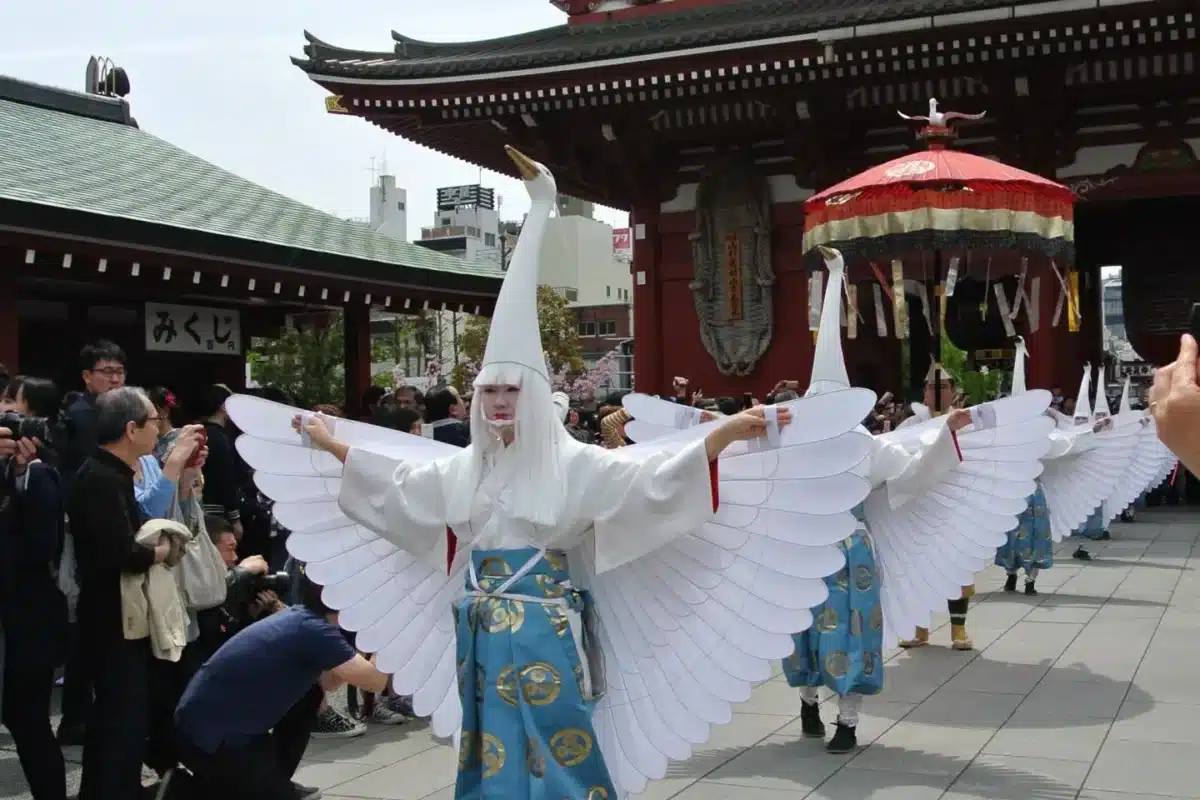
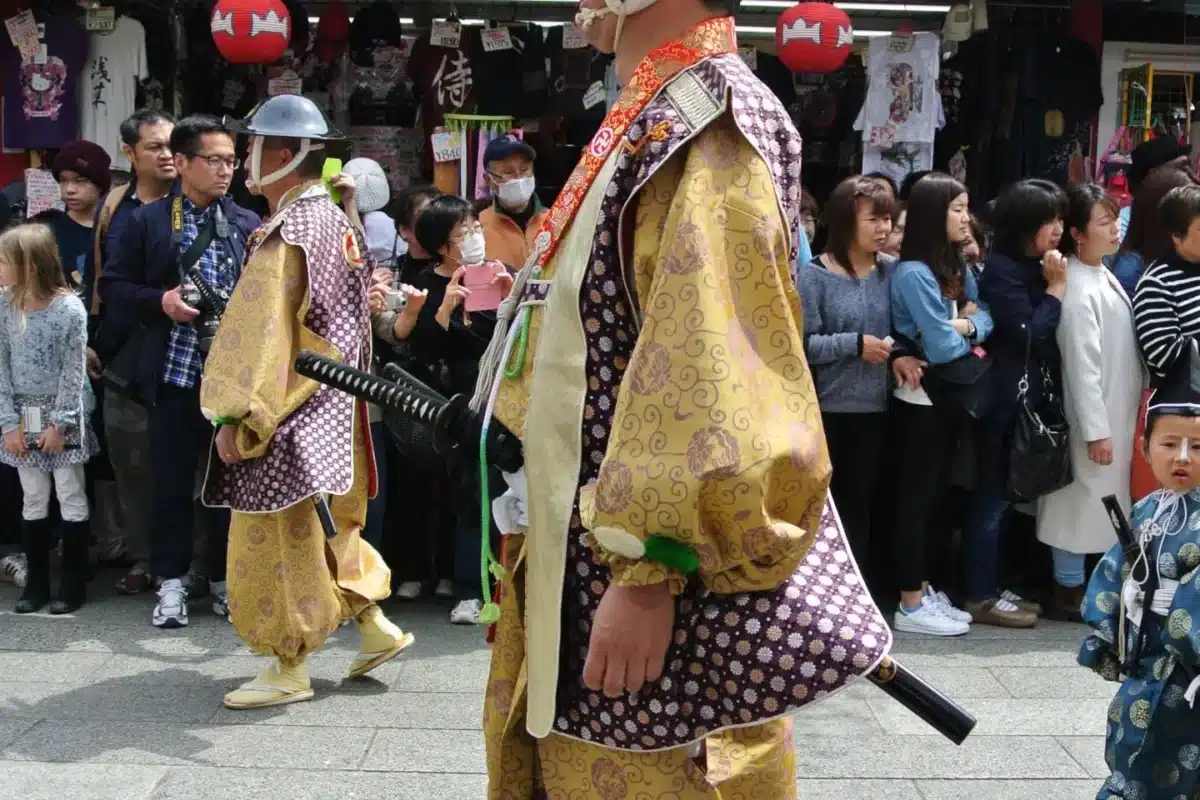
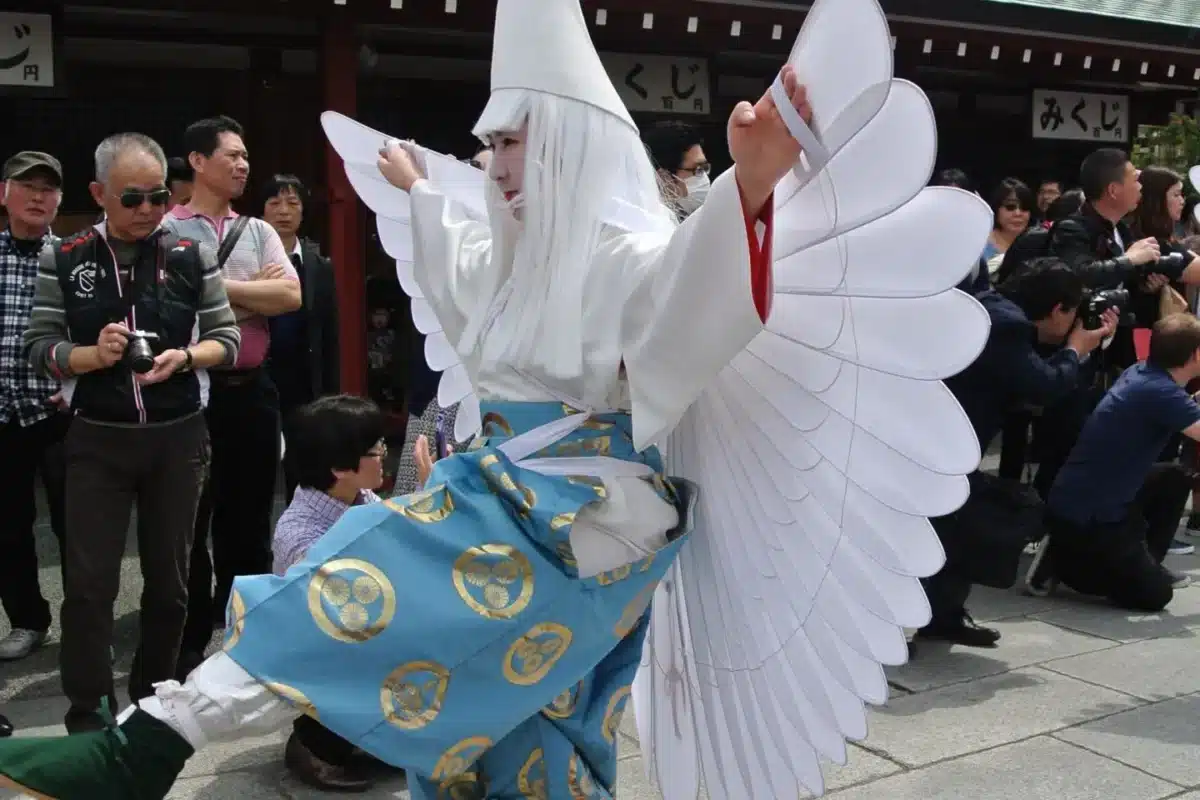
The performance is particularly recognizable because of the eight dancers dressed as white herons. Their costumes feature white plumage-like designs and carefully applied makeup, while the choreography imitates the movements of a heron through gestures such as spreading the wings, raising one leg and bending toward the ground. The dancers are accompanied by attendants, musicians and guardian children in traditional-style costumes.
Senso-ji’s official information explains that its version of Shirasagi-no Mai was revived in 1968 as part of commemorations connected with the centenary of Tokyo and was based on the depiction of Shirasagi-no Mai in the temple’s historical records. The tradition is connected to the older heron-dance tradition associated with Kyoto’s Yasaka Shrine.
Enjoy Your Event Stress-Free with Japan Travelo
Do you know? Planning events, festivals, concerts, and cultural experiences in Japan can be overwhelming. Japan Travelo brings everything together in one place, helping you manage your itinerary, transport, and accommodation with ease—so you can enjoy Japan without the stress of planning.
For visitors, the event offers an opportunity to see a traditional performance in the historic setting of Asakusa rather than inside a modern theater. The procession moves through the temple approach before the dancers perform within the temple grounds.
The 2027 edition is expected to retain the established format, although the exact performance arrangements should be confirmed by Senso-ji closer to the event. Japan Travel currently identifies the 2027 event as a mid-April performance with the exact date still to be confirmed.
Event dates
Shirasagi-no Mai at Senso-ji Temple 2027 is scheduled for mid-April 2027, with the exact calendar date to be confirmed.
Senso-ji’s official annual-events information identifies the spring performance as part of its regular temple-dance programme, while Japan Travel currently lists the 2027 edition as a mid-April event.
The event has traditionally been associated with the second Sunday of April, although visitors should rely on the official announcement for the confirmed 2027 arrangement rather than assuming the traditional timing will remain unchanged.
Visiting this event? Don’t miss out on these amazing activities and local experiences while you’re here.
Venues & festival locations
The principal venue is Senso-ji Temple in Asakusa, one of Tokyo’s most important historic Buddhist temples. The temple is located at 2-3-1 Asakusa, Taito City, Tokyo.
The performance is not confined to a single indoor stage. The procession uses the temple approach and grounds, creating several visually important locations for spectators.
Key areas include:
- Kaminarimon Gate and the entrance area
- Nakamise shopping street
- Hozomon Gate
- The main temple courtyard
- The area in front of the Main Hall
- The surrounding temple grounds
- The performance area where the dancers form a circle
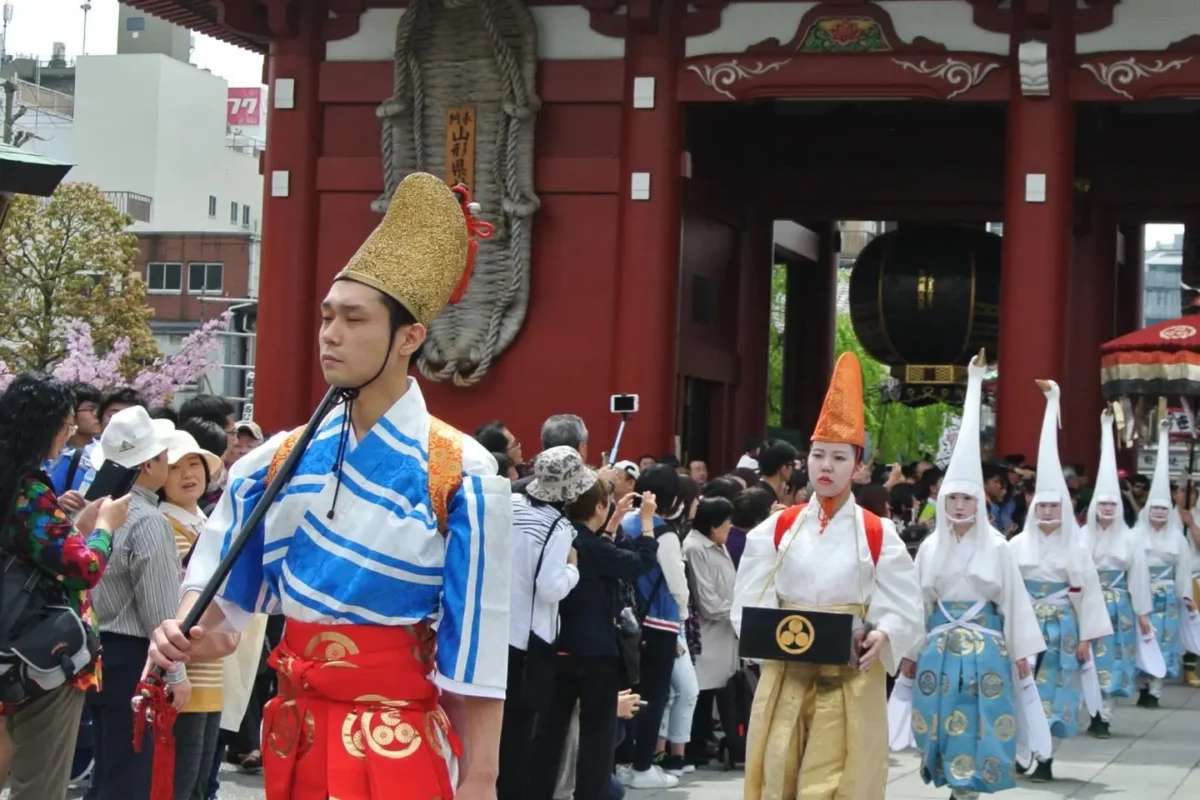
According to Japan Travel’s description, the procession begins along the Nakamise area, proceeds through Hozomon Gate and reaches the steps of Senso-ji, where the dancers bow before continuing into the temple grounds. The main dance then takes place in an open area where spectators gather around the performers.
Full cultural programme
The central programme is the Shirasagi-no Mai procession and dance, but the experience includes several different elements that work together to create the ceremonial presentation.
The procession features:
- Eight white-heron dancers
- Three principal attendants
- A bird feeder
- A baton twirler
- A parasol carrier
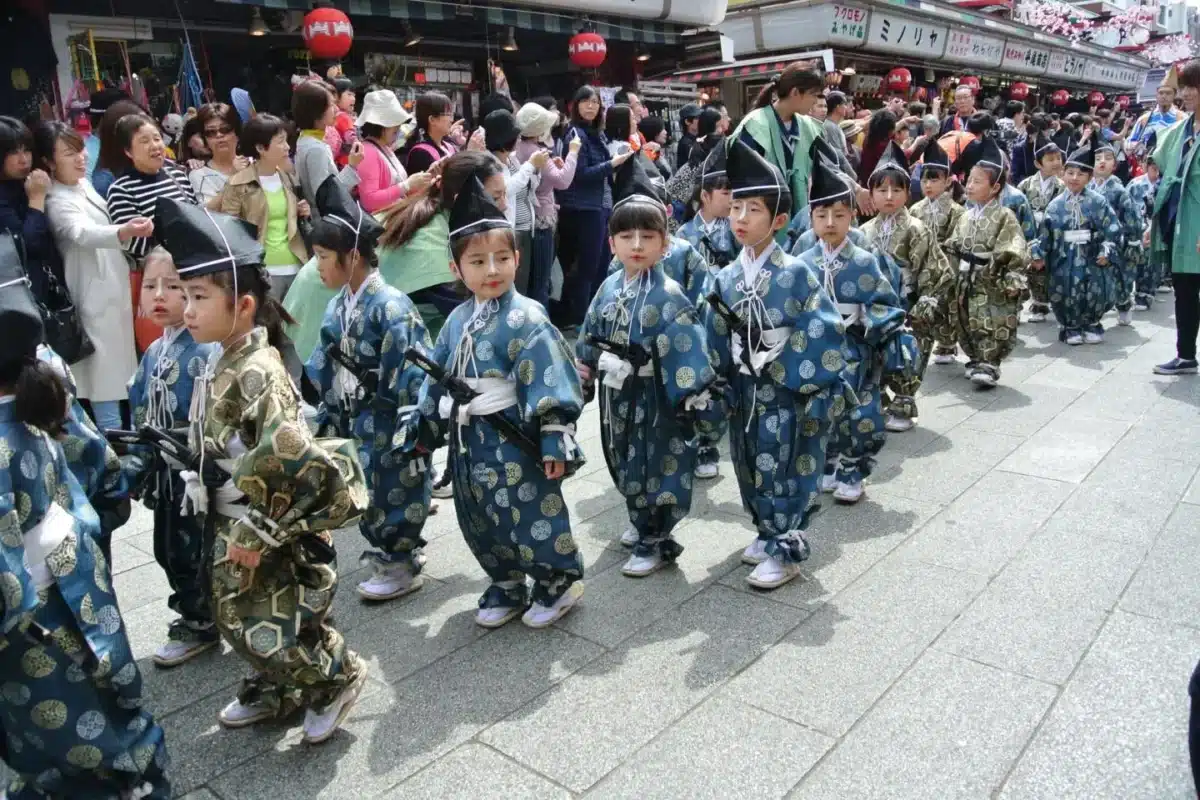
- Guardian children
- Traditional musicians
- A float carrying musicians
- Traditional ceremonial movement
- The Shirasagi dance performance
The eight dancers are the visual focus of the procession. Their costumes are designed to resemble white herons, while their makeup and movements emphasize the bird-like character of the performance.
The attendants also have clearly defined roles. The parasol carrier remains near the center of the performance area, while the bird feeder interacts with the dancers by scattering feed represented by paper confetti. A baton twirler contributes another traditional performance element.
The guardian children add a particularly distinctive local element. Japan Travel describes them as local kindergarten children dressed in matching Heian-period-style clothing who accompany the procession.
The music is another essential component. The dancers do not perform as an isolated stage act; their movements are integrated with the procession, musicians and ceremonial atmosphere.
Featured traditions & performances
White heron dance
The main performance recreates the movements of a white heron. Dancers extend their arms like wings, raise one leg, bend toward the ground and move in a carefully controlled manner to create the impression of birds moving together.
Shirasagi costumes
The white heron costumes are among the most striking elements of the ceremony. The performers are dressed in elaborate white costumes designed to evoke the appearance of birds, complemented by distinctive makeup.
Traditional procession
Before the main dance, the performers move ceremonially through the temple approach. This gives spectators an opportunity to see the costumes from different perspectives as the group travels toward the main performance area.
Traditional music
A group of musicians accompanies the procession and dance. The music establishes the rhythm and atmosphere for the dancers and helps distinguish the performance from an ordinary street parade.
Guardian children
Local children dressed in traditional-style clothing participate as guardian children. Their presence connects the performance with the local community and adds another historical visual element to the procession.
Ceremonial feeding
One of the most memorable parts of the dance involves the bird feeder scattering paper confetti as symbolic feed for the white-heron dancers. The action is incorporated into the choreography and creates a distinctive visual moment for spectators.
Historical & heritage highlights
The origins of heron dance traditions in Japan reach back many centuries. Senso-ji explains that its Shirasagi-no Mai was revived in 1968 based on a depiction in the temple’s historical records, while the broader heron-dance tradition is associated with Kyoto’s Yasaka Shrine.
The performance is therefore both a modern revival and a presentation of older Japanese cultural heritage. Its purpose is not simply entertainment; the procession preserves a form of ceremonial dance that might otherwise have disappeared from public performance.
Senso-ji itself has an even longer history. Japan Travel describes the temple as dating back to the seventh century and identifies it as Tokyo’s oldest temple. The traditional foundation story centers on a statue of Kannon discovered in the Sumida River by two fishermen.
The temple complex has been rebuilt and restored repeatedly because of fires and wartime destruction. Much of what visitors see today therefore represents a combination of traditional architectural forms and postwar reconstruction.
The Five-Story Pagoda, Hozomon Gate, Nakamise and Main Hall form an important historical setting for the performance. The pagoda visible today was reconstructed in the twentieth century and stands approximately 53 meters high.
Shirasagi-no Mai adds another layer of cultural heritage to this historic environment. Visitors can experience traditional dance while also exploring one of Tokyo’s most important Buddhist temple complexes.
Events & activities schedule
The detailed 2027 programme has not yet been published, but the established performance structure provides a useful guide to what visitors can expect.
A typical presentation follows a sequence similar to:
- Gathering around the temple approach
- Arrival of the procession
- White-heron dancers moving with attendants
- Traditional musicians accompanying the procession
- Passage through the temple gates
- Formal bowing by the dancers
- Movement into the main temple grounds
- Formation of the performance circle
- White-heron dance
- Symbolic feeding sequence
- Traditional musical accompaniment
- Completion of the ceremonial dance
Japan Travel has previously described the performance as being presented twice during the day, with individual performances lasting approximately 30 to 45 minutes from the beginning of the procession through the conclusion. The exact 2027 schedule should be checked once Senso-ji confirms the programme.
Visitors should allow additional time before and after the performance to explore Senso-ji because the temple complex itself is a major cultural attraction.
Ticket types & entry options
Shirasagi-no Mai is a free-entry public temple performance. Japan Travel currently lists the 2027 event as free.
There is no standard admission ticket for watching the outdoor procession and dance.
Typical visitor access includes:
- General viewing: Free
- Temple-ground viewing of the public performance: Free
- Procession viewing: Free
- Senso-ji temple grounds: Free to access
Visitors should be aware that free admission does not guarantee an unobstructed viewing position. The performance is popular, and spectators naturally gather around the dancers.
There may be separate costs for food, souvenirs, transportation, private tours or other activities in the surrounding Asakusa area, but these are not admission charges for Shirasagi-no Mai itself.
Guided tours & cultural experiences
Shirasagi-no Mai is not normally presented as a ticketed guided-tour experience. However, visitors can combine the performance with a wider cultural exploration of Asakusa.
Useful experiences include:
- Guided walking tours of historic Asakusa
- Exploring Senso-ji’s architectural complex
- Visiting Nakamise shopping street
- Learning about Buddhist temple customs
- Exploring traditional Japanese crafts
- Visiting nearby museums
- Exploring the Sumida River area
- Learning about Edo-period Tokyo
- Sampling traditional Asakusa foods
A guided cultural walk can help explain the significance of Kaminarimon, Nakamise, Hozomon and the Main Hall before the performance begins.
Visitors can also explore the temple independently. Japan Travel notes that Senso-ji is surrounded by Nakamise, a famous shopping street leading toward the temple and filled with traditional food, souvenirs and other goods.
Special ceremonies & celebrations
The Shirasagi-no Mai performance itself is the main ceremonial attraction.
The procession is carefully structured, with each participant playing a specific role. The white-heron dancers form the central group, while the attendants, musicians and guardian children contribute to the ceremonial presentation.
The dancers’ formal bow at the temple is an especially significant visual moment. After reaching the temple steps, the performers bow before moving into the area where the principal dance is performed.
The circular dance sequence creates a more intimate performance area within the large temple grounds. As spectators gather around the performers, the white costumes, parasol and musical accompaniment become the central focus.
The symbolic feeding sequence is another distinctive ceremonial element. The bird feeder approaches the dancers and scatters paper confetti as symbolic feed before returning to the protection of the parasol.
Festival rules
Visitors should remember that Shirasagi-no Mai takes place within an active Buddhist temple and should behave respectfully throughout the event.
Important visitor guidelines include:
- Follow instructions from temple staff and event organizers.
- Remain outside restricted performance areas.
- Do not walk into the procession route.
- Do not touch costumes, props or performers.
- Avoid blocking other spectators.
- Keep camera equipment under control in crowded areas.
- Do not use flash if organizers prohibit it.
- Maintain a respectful voice level near worship areas.
- Do not sit or stand in restricted temple areas.
- Follow temple photography instructions.
- Dispose of rubbish appropriately.
- Respect worshippers using the temple for religious purposes.
Photography is an important reason many visitors attend, but the performance should be treated as a cultural and religious presentation rather than simply a photo opportunity.
How to get there
Senso-ji is located in Asakusa, in Tokyo’s Taito City.
The temple is easy to reach by rail and is approximately a short walk from several Asakusa-area stations. Japan Travel identifies Senso-ji as being about a five-minute walk from Asakusa Station.
A common approach is to enter through Kaminarimon, the famous Thunder Gate, and continue along Nakamise toward Hozomon and the Main Hall.
Visitors attending specifically for Shirasagi-no Mai should allow extra walking time because Nakamise and the temple grounds can become busy, particularly when a major performance is about to begin.
Public transport & parking
Public transportation is the most practical way to reach Senso-ji.
Tokyo Metro Ginza Line
Asakusa Station provides a direct connection for visitors coming from central Tokyo and other Ginza Line locations.
Toei Asakusa Line
The Toei Asakusa Line is another convenient option and connects Asakusa with several major parts of Tokyo.
Tobu Skytree Line
Tobu services provide access to Asakusa and are useful for visitors combining the event with Tokyo Skytree-area sightseeing.
Tsukuba Express
The Tsukuba Express also serves Asakusa and provides another rail option for reaching the temple district.
Japan Travel’s Taito temple guide lists Senso-ji as approximately a five-minute walk from Asakusa Station on the Ginza, Toei Asakusa, Tsukuba Express and Tobu Skytree lines.
Parking
Visitors driving should expect limited parking and heavy pedestrian activity around the temple. Public parking facilities exist in the wider Asakusa area, but spaces can be difficult to find during major cultural events.
Using trains and walking is generally more convenient than attempting to park close to Senso-ji.
Accommodation areas
Asakusa
Asakusa is the most convenient choice for visitors who want to stay close to Senso-ji. The area offers hotels, hostels, guesthouses and traditional-style accommodation.
Taito
The wider Taito district provides access to Asakusa, Ueno and several historic neighborhoods while offering many accommodation choices.
Ueno
Ueno is convenient for travelers who want major JR connections, museums and easy access to Asakusa.
Kuramae
Kuramae provides a quieter alternative while remaining close to Asakusa and the Sumida River.
Akihabara
Akihabara offers extensive transport connections and a large selection of hotels while remaining within easy reach of Asakusa.
For visitors primarily interested in Shirasagi-no Mai, staying in Asakusa allows more flexibility because the temple can be reached on foot.
Food & traditional specialties
The streets around Senso-ji are particularly suitable for visitors who want to combine cultural sightseeing with traditional Japanese food.
Nakamise and the surrounding Asakusa streets offer numerous snacks, sweets and casual dining options.
Popular specialties and foods to look for include:
- Tempura
- Soba
- Sushi
- Unagi
- Ningyo-yaki
- Dorayaki
- Rice crackers
- Matcha sweets
- Japanese traditional confectionery
- Senbei
- Festival-style snacks
Nakamise is especially well known for traditional food and souvenir shops leading toward Senso-ji.
Visitors can also explore the side streets around the temple for restaurants offering everything from inexpensive noodle dishes to traditional Japanese dining.
Accessibility
Senso-ji is a large historic temple complex with significant visitor traffic. The main approach routes are generally accessible to pedestrians, but crowds can create challenges for wheelchair users, visitors with limited mobility and families using strollers.
Visitors with accessibility requirements should consider arriving early, before the largest crowds gather around the procession.
Useful considerations include:
- Use step-free rail routes where available.
- Check station accessibility before travelling.
- Allow extra time for crowded streets.
- Choose a viewing location with sufficient space.
- Ask temple staff for assistance if required.
- Avoid standing directly beside the procession route.
- Consider accessible accommodation near a major station.
The temple grounds include historic structures and changing surfaces, so visitors with mobility concerns may wish to plan their route in advance.
Best cultural experiences
Watch the procession
Seeing the white-heron dancers move through the historic temple approach is the defining experience.
Study the costumes
Look closely at the elaborate white costumes, makeup and bird-inspired movements that make the performance distinctive.
See the full dance
If possible, watch the procession from beginning to end rather than seeing only the final dance.
Explore Nakamise
The traditional shopping street provides an excellent introduction to Asakusa’s food, crafts and souvenir culture.
Visit Senso-ji
Allow time to explore the temple’s gates, Main Hall, pagoda and surrounding grounds rather than attending only the performance.
Arrive early
Japan Travel recommends securing a viewing position early because spectators gather around the performance area and the best locations can become crowded.
Explore Asakusa afterward
The Sumida River, traditional shopping streets and surrounding historic neighborhoods make it easy to turn the performance into a full cultural day.
Previous year’s highlights
Recent descriptions of Shirasagi-no Mai continue to emphasize the performance’s combination of procession, traditional music and highly distinctive costumes.
The eight white-heron dancers remain the main attraction, with their bird-like movements creating the visual identity of the ceremony. Their choreography includes wing-like arm movements, raised legs and movements toward the ground.
The supporting participants are equally important. The procession includes a bird feeder, baton twirler and parasol carrier, as well as guardian children dressed in traditional-style clothing and musicians traveling with the group.
Senso-ji’s official annual-events information confirms that the performance continues as part of the temple’s spring, early-summer and autumn cultural programme. The spring presentation is one of the established occasions for seeing the white-heron dance.
The setting remains one of the event’s greatest attractions. The procession moves through Nakamise and the historic temple gates before reaching the performance area, combining the traditional dance with the architecture and atmosphere of Asakusa.
Official tickets
Shirasagi-no Mai at Senso-ji Temple is a free public performance, so visitors do not normally need to purchase an admission ticket. Japan Travel lists the 2027 event as free entry.
The official Senso-ji annual-events information confirms Shirasagi-no Mai as part of the temple’s regular annual programme. The temple lists its spring performance alongside other traditional temple dances and ceremonies.
For the latest 2027 information, visitors should check the official Senso-ji website before travelling, particularly for the confirmed performance schedule and any changes to access or viewing arrangements.
https://www.senso-ji.jp/
Video
Location
FAQ
Do visitors need to purchase tickets to watch the procession?
No tickets or advance bookings are required since the entire parade and temple courtyard performance are completely free to the public. Spectators can simply arrive early and secure a viewing spot along the designated public areas.
What time do the performances take place during the day?
The ceremonial dance is typically scheduled twice a day, with morning sessions starting around 11:00 AM and afternoon shows beginning at 2:30 PM. Checking local announcements beforehand is recommended since schedules can occasionally change due to weather conditions.
Where is the best location to stand for a clear view?
Securing a spot near the open courtyard to the left of the main temple hall offers the best perspective for the circle dance. Arriving well before the scheduled start time is essential because crowds gather quickly along the popular route.
Can children participate in or enjoy the event?
The festival is wonderfully family-friendly, featuring local kindergarteners dressed in adorable Heian-period guardian costumes. Younger attendees enjoy the vibrant colors, animal-inspired movements, and lively musical accompaniment.
How do travelers reach Senso-ji Temple using public transit?
The temple grounds are easily accessible via a short walk from Asakusa Station, which is served by multiple major subway and train lines. Clear pedestrian signs guide visitors directly from the transit platforms to the Kaminarimon gate.

Leave a Reply