
Traditional Music & White Heron Song
- Accompaniment by live traditional musicians aboard a dedicated mobile float
- Rhythmic flute melodies establishing the tempo for the heron movements
- Traditional drum beats driving the energy of the outdoor courtyard dance
- Chanted vocal lines echoing classical festival musical compositions
- Harmonic soundscapes designed to evoke ancient imperial court atmospheres
Best Viewing Spots & Photography
- Along the Nakamise shopping street corridor for wide procession approach shots
- Near the Hozomon gate structure to capture performers passing historic architecture
- The open stone area to the left of the main temple hall for circle dance views
- Elevated sidewalk angles to look down over the heads of surrounding crowds
- Early staking positions along the courtyard perimeter to secure clear front-row framing
Festival Atmosphere in Asakusa
The historic district of Asakusa transforms into a lively cultural hub whenever the ceremonial procession takes place. Throngs of enthusiastic visitors and local residents gather tightly around the temple zones to witness the rare spectacle.
The joyful energy generated by the participating children and musicians creates an infectious community spirit. Surrounding street stalls and open plazas amplify the celebratory mood throughout the neighborhood.
When & How Long
- Event Date: Mid-April 2027 (Dates TBD)
- Event Duration: Two daily performances lasting approximately thirty to forty-five minutes each
Visiting this event? Don’t miss out on these amazing activities and local experiences while you’re here.
What to Wear & Bring
Dress in comfortable seasonal layers and wear supportive walking shoes suitable for standing on gravel and stone surfaces for extended periods. Carrying physical cash, a portable fan, and weather protection ensures a pleasant experience in the bustling outdoor courtyard.
Enjoy Your Event Stress-Free with Japan Travelo
Do you know? Planning events, festivals, concerts, and cultural experiences in Japan can be overwhelming. Japan Travelo brings everything together in one place, helping you manage your itinerary, transport, and accommodation with ease—so you can enjoy Japan without the stress of planning.
Nearby Senso-ji & Asakusa Attractions
- Nakamise-dori: Browse traditional souvenir stalls and snack shops lining the historic approach avenue.
- Kaminarimon Gate: Admire the massive red paper lantern marking the grand entrance to the temple complex.
- Senso-ji Main Hall: Explore the ancient Buddhist sanctuary and observe daily prayer practices.
- Asakusa Culture Tourist Information Center: Ascend to the top floor observation deck for panoramic neighborhood views.
- Sumida Park: Enjoy relaxing riverside walking paths overlooking the modern Tokyo Skytree tower.
Entry & Tickets
- How Tickets Are Sold: No tickets, pre-registration, or advance bookings are required to view the parade.
- Admission Type: Free Admission
- Ticket Pricing: Free Admission (Minimum price range: $0.00 USD, Maximum price range: $0.00 USD)
- Special Seating Options: No reserved seating or grandstands are provided; viewing is from public open spaces.
- VIP Options: No VIP ticket tiers, exclusive enclosures, or paid priority viewing packages are available.
White Heron Costumes & Traditional Appearance
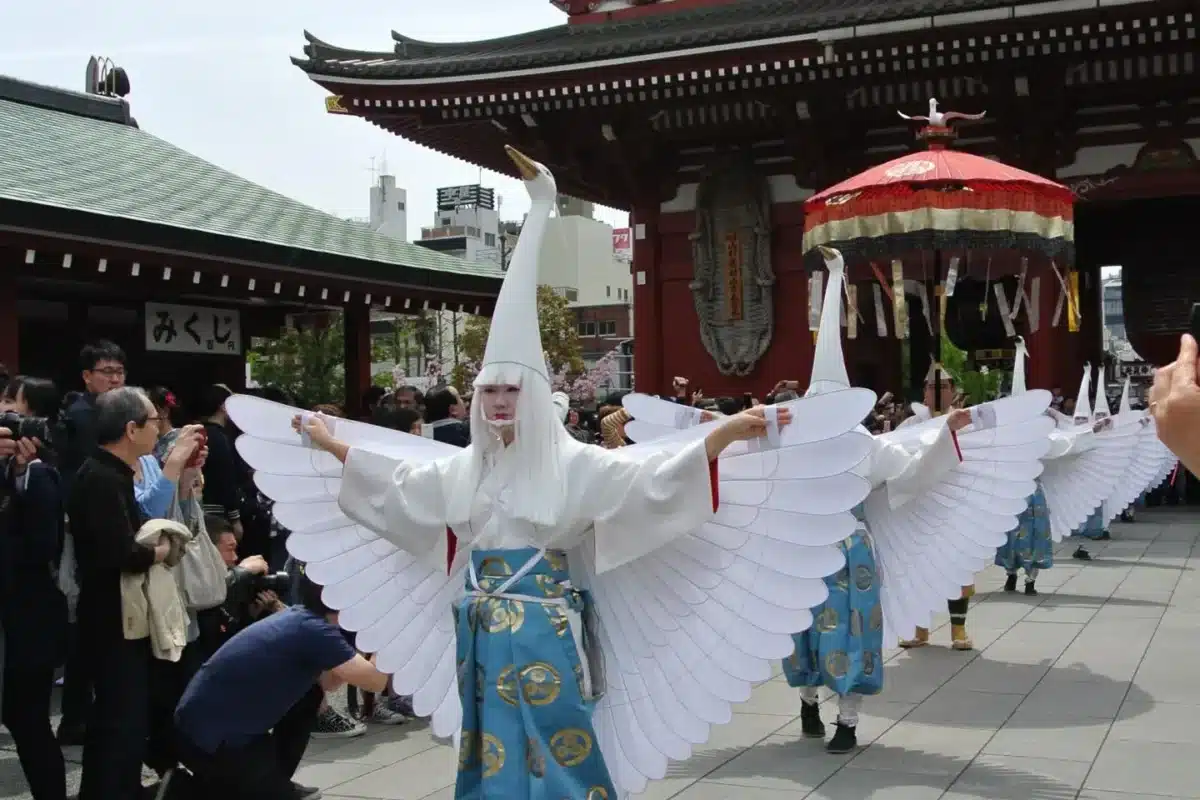
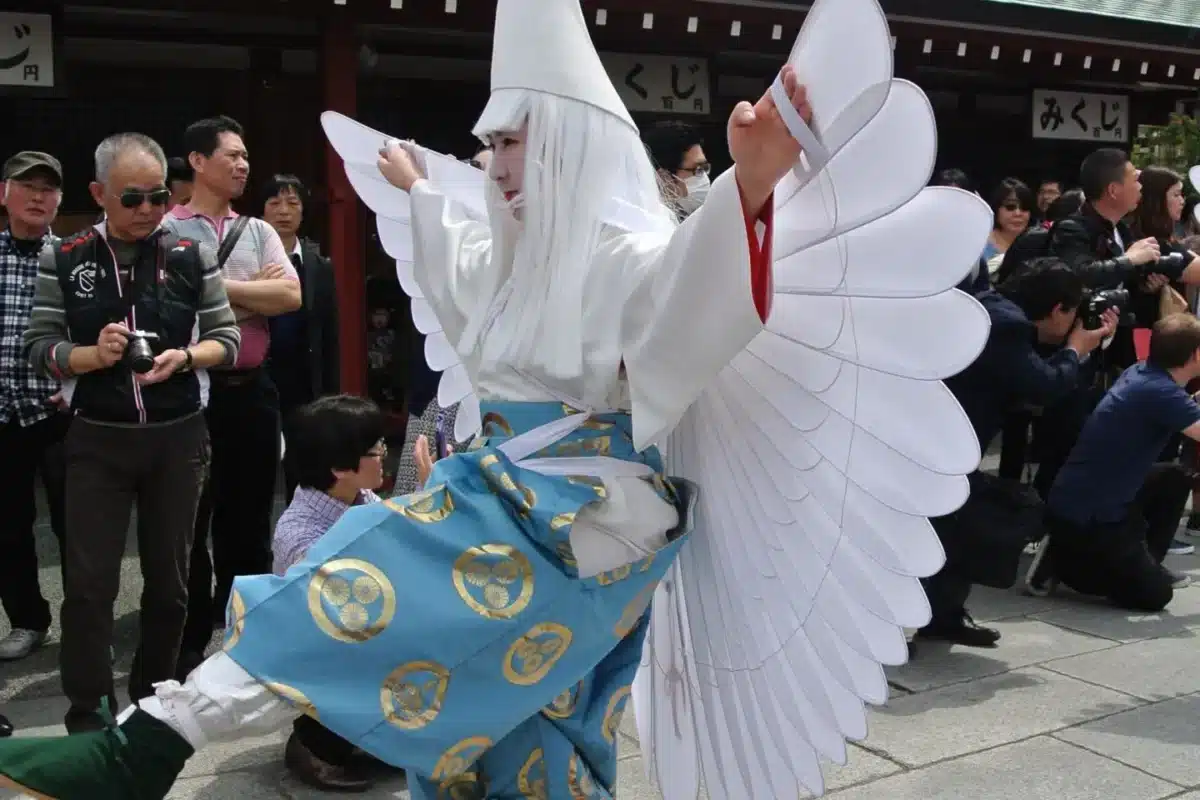
- Elaborate white feathered heron garments featuring sweeping wing structures
- Detailed traditional facial makeup highlighted by striking red eyeliner resembling real birds
- Specialized headdresses and ornate decorative accessories matching imperial court standards
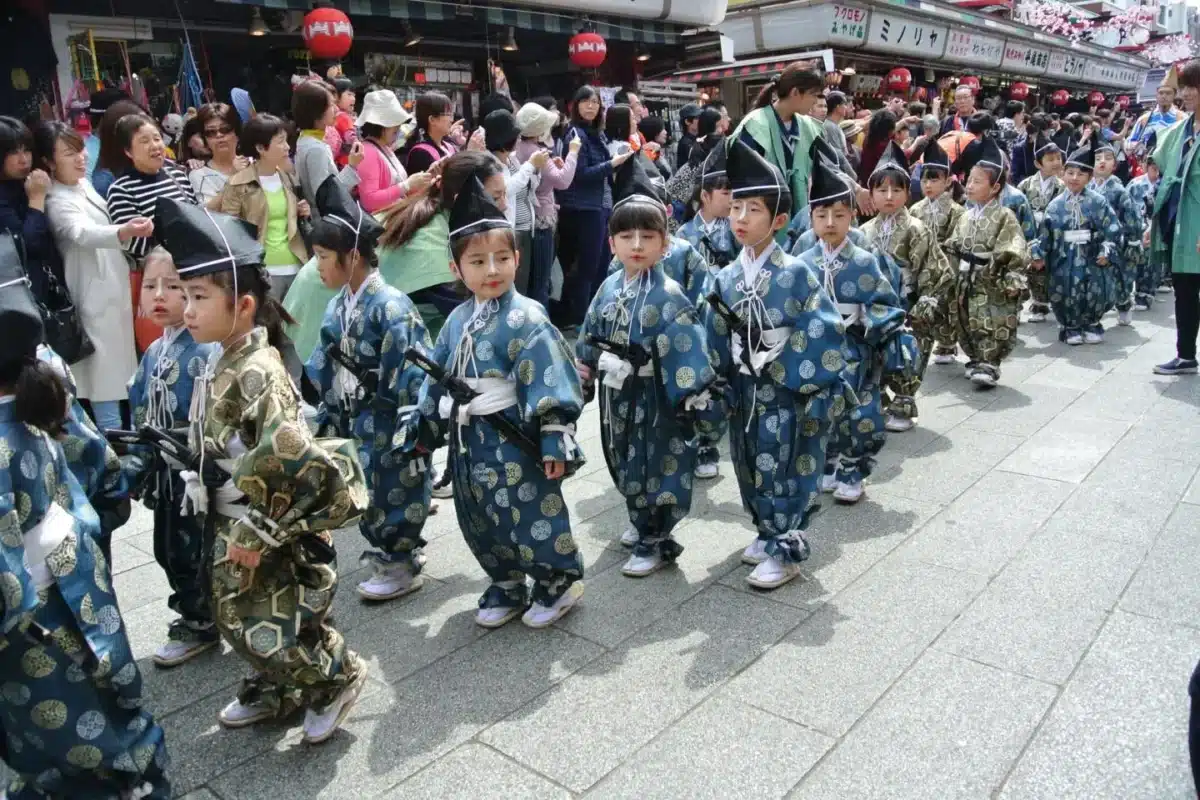
- Matching Heian-period costumes worn by local kindergarten guardian children
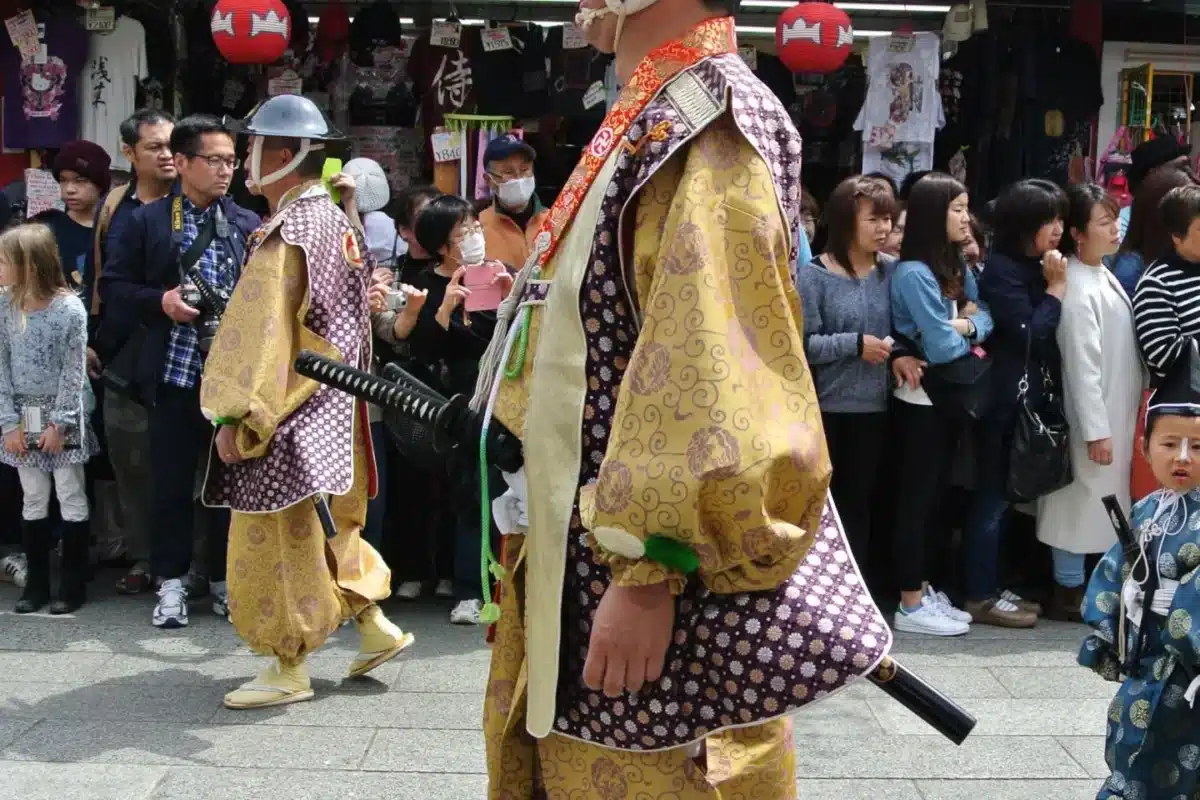
- Colorful participant garments worn by musicians, attendants, and support staff
- High attention to historical textile accuracy and classical design patterns
Procession Route & Ceremony
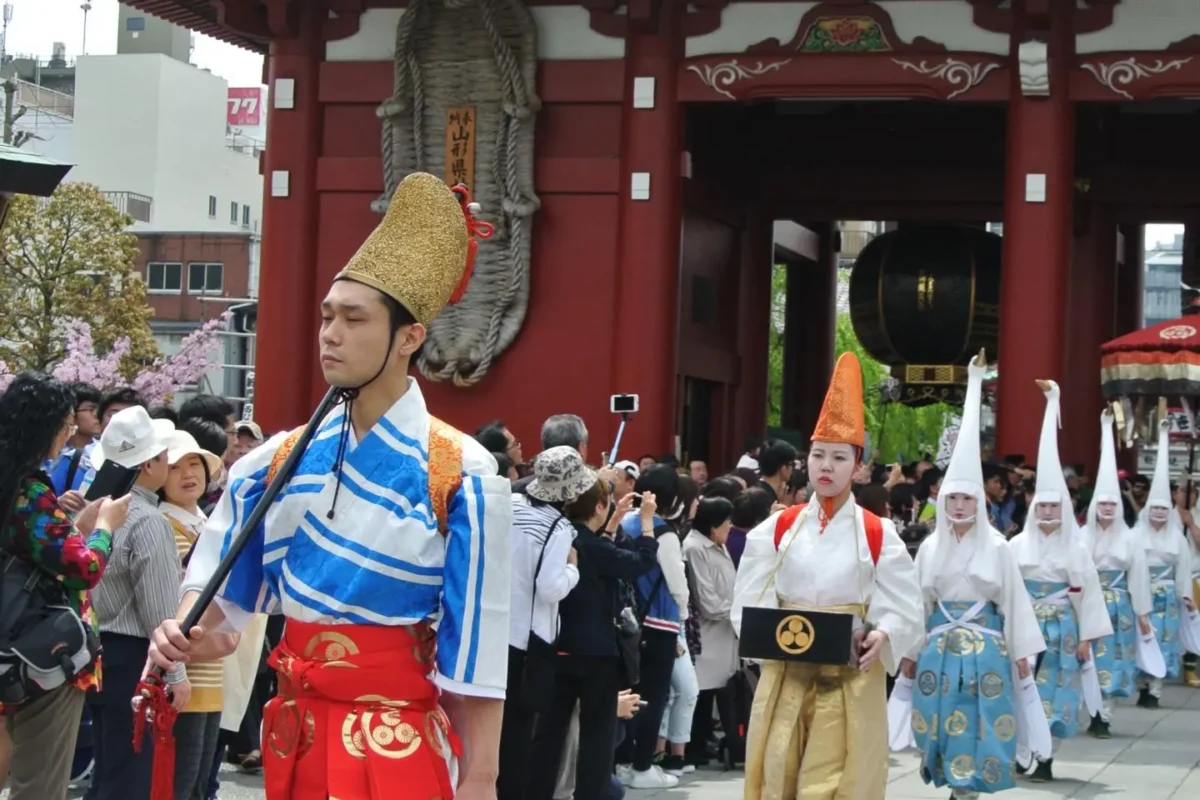
The parade commences from halfway along the Nakamise shops area and through the Hozomon gate up to the steps of Senso-ji Temple where all the heron dancers bow before running inside the temple. This historic pathway brings traditional artistry directly through one of Tokyo’s busiest tourist corridors.
It is performed twice at 11am and at 2.30pm and goes for around 30-45mins from the start of the procession until the end of the performance. Securing a vantage point early helps spectators catch both the march and the stationary courtyard dance.
- Starting assembly point midway along the famous Nakamise shopping street
- Ceremonial march passing directly through the monumental Hozomon gate
- Arrival at the main temple stone steps for initial ritual bowing
- Transition to the open courtyard area for the primary circle dance routine
- Final sprint of performers into the temple sanctuary to conclude the ceremony
- Timed scheduling featuring morning and afternoon performance slots
Where It Takes Place
- City and Country: Tokyo, Japan
- Venue Name: Sensoji Temple
- Google Maps Address: 2 Chome-3-1 Asakusa, Taito City, Tokyo 111-0032, Japan
Event Contact Details
- Phone Number: +81 3-3842-0181
- Website: https://enjapantravel.com/tokyo/shirasagi-no-mai-at-senso-ji-temple/28430
Cultural & Religious Significance
Shirasagi-no Mai or the Dance of the White Heron is a ceremonial parade that dates back to the Heian period in Kyoto but was revived back in 1968 to celebrate Tokyo’s 100th Anniversary. Now it is performed a few times a year on the second Sunday of April and on the third of November which is the Culture Day Holiday at the Senso-ji Temple in Asakusa.
The sacred performance serves as a living link to classical Japanese imperial traditions, invoking peace and auspicious blessings for the community. Performing the ritual dance on temple grounds combines historic Shinto and Buddhist cultural elements into a vibrant public spectacle.
Heian-Period Tradition & Historical Scroll
The inspiration for the modern performance is drawn from ancient illustrated scrolls depicting historical festival processions from centuries past. Preserving these forgotten movements allows contemporary audiences to witness the courtly arts of early Japanese history firsthand.
Reviving this heritage involved meticulous research into period-accurate garments, musical accompaniment, and choreographic style. The resulting procession offers an exceptionally faithful recreation of medieval Japanese pageantry within a modern urban setting.
White Heron Dance Performance
The dancers are really beautiful to watch and they are so graceful the way they move like the birds with wings spread out, one leg in the air and pecking at the ground. The choreography mimics the serene motions of herons wading through wetlands.
Then to the left of the temple a circle appears around the dancers where they perform to the music of the musicians. The parasol carrier stands strong in the centre whilst the bird feeder runs over to the heron dancers and throws feed out for them before returning to the shade.
- Graceful wading movements emulating the physical posture and flight of herons
- Synchronized wing extensions and rhythmic stepping patterns across the temple yard
- Playful interaction with the central bird feeder tossing symbolic paper confetti feed
- Dramatic bowing rituals performed directly before entering the main temple hall
- Enclosed circle formations allowing close-up audience observation of the choreography
Performers & Procession Roles
The procession includes eight dancers who are dressed in really beautiful and elaborate white heron costumes and stunning makeup complete with red eyeliner like the real birds. They form the centerpiece of the visual spectacle as they wind their way through the temple grounds.
They are also accompanied by three attendants who have different roles including a bird feeder, a baton twirler, and a parasol carrier. Additional participants feature a group of local kindergarten children dressed as guardians and a floating stage of traditional musicians.
Visitor Etiquette & Temple Guidelines
- Maintain a quiet and respectful demeanor while observing rituals on sacred temple grounds.
- Follow all directional instructions and crowd control boundaries set by security staff.
- Avoid blocking active walkways or emergency exit paths during the procession march.
- Keep camera flashes subdued so they do not startle performers or disrupt ceremonies.
- Dispose of any personal waste properly in designated station bins or carry it out.
- Respect worshippers engaged in regular prayers at the main altars and incense burners.
Video
Location
FAQ
Do visitors need to purchase tickets to watch the procession?
No tickets or advance bookings are required since the entire parade and temple courtyard performance are completely free to the public. Spectators can simply arrive early and secure a viewing spot along the designated public areas.
What time do the performances take place during the day?
The ceremonial dance is typically scheduled twice a day, with morning sessions starting around 11:00 AM and afternoon shows beginning at 2:30 PM. Checking local announcements beforehand is recommended since schedules can occasionally change due to weather conditions.
Where is the best location to stand for a clear view?
Securing a spot near the open courtyard to the left of the main temple hall offers the best perspective for the circle dance. Arriving well before the scheduled start time is essential because crowds gather quickly along the popular route.
Can children participate in or enjoy the event?
The festival is wonderfully family-friendly, featuring local kindergarteners dressed in adorable Heian-period guardian costumes. Younger attendees enjoy the vibrant colors, animal-inspired movements, and lively musical accompaniment.
How do travelers reach Senso-ji Temple using public transit?
The temple grounds are easily accessible via a short walk from Asakusa Station, which is served by multiple major subway and train lines. Clear pedestrian signs guide visitors directly from the transit platforms to the Kaminarimon gate.

Leave a Reply