
What to expect in 2027
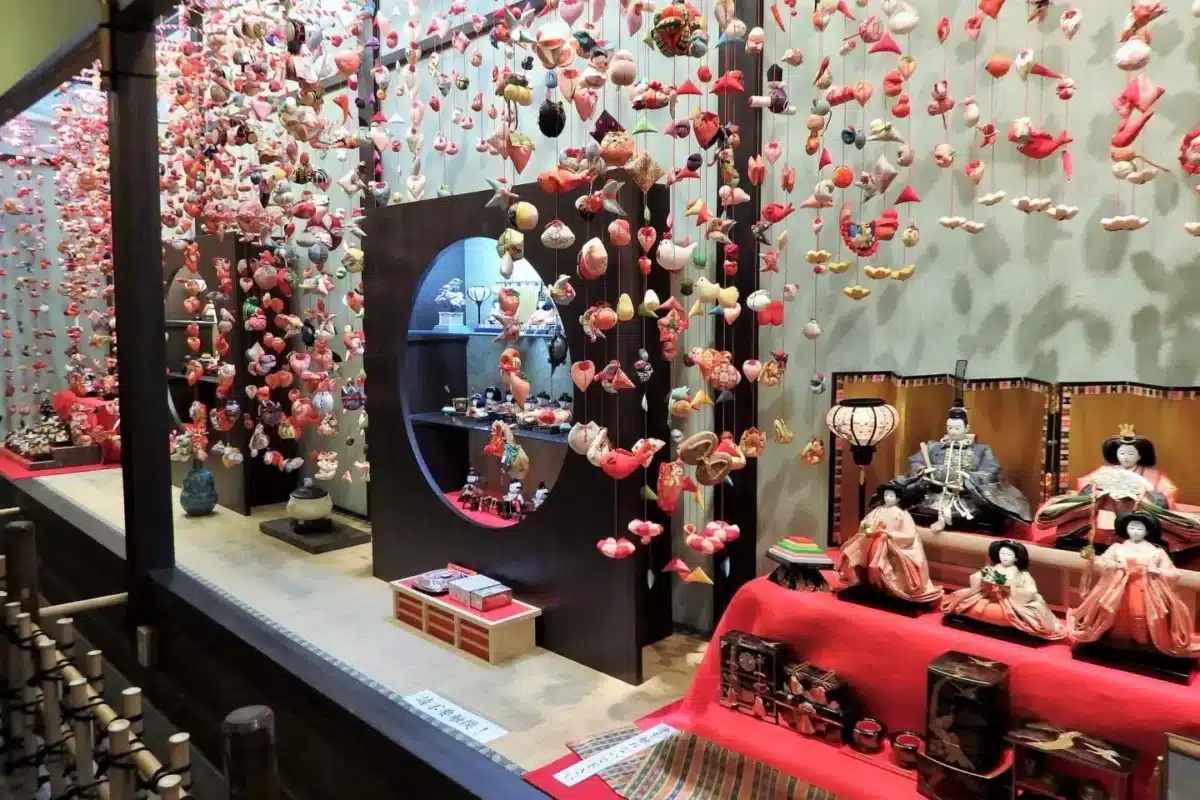
The Hina Festival of Inatori Onsen, also known as the Hina-no-Tsurushikazari Matsuri or Inatori Hanging Doll Festival, is one of the most distinctive traditional Hina doll celebrations in Japan. Held in the seaside hot-spring town of Inatori in Higashi-Izu, Shizuoka Prefecture, the festival transforms local exhibition halls, shrines and community venues into colorful displays of handmade hanging ornaments and traditional Hina dolls.
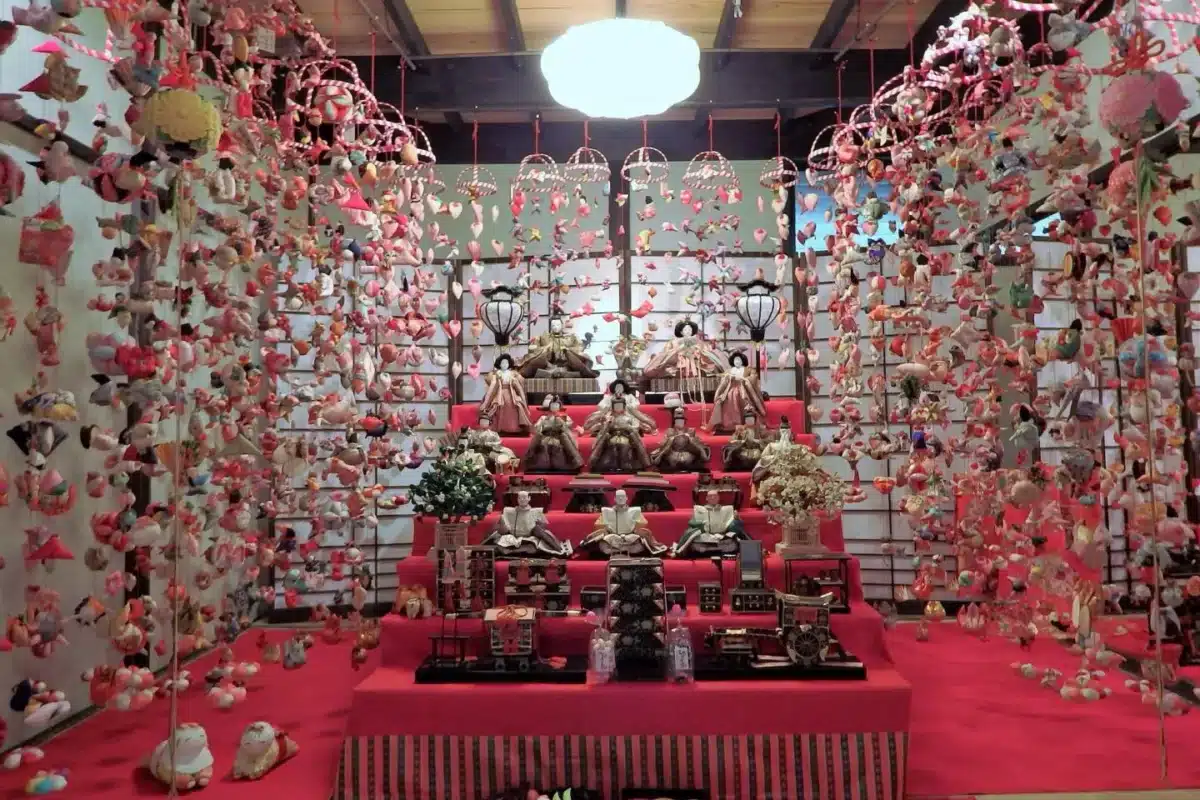
The festival is particularly famous for tsurushi-bina, handmade ornaments that are suspended in groups around traditional Hina doll displays. The custom developed as a way for families to express wishes for the health, happiness and prosperous future of their children. The tradition has been passed down locally for more than a century and is regarded as a distinctive cultural heritage of Inatori.
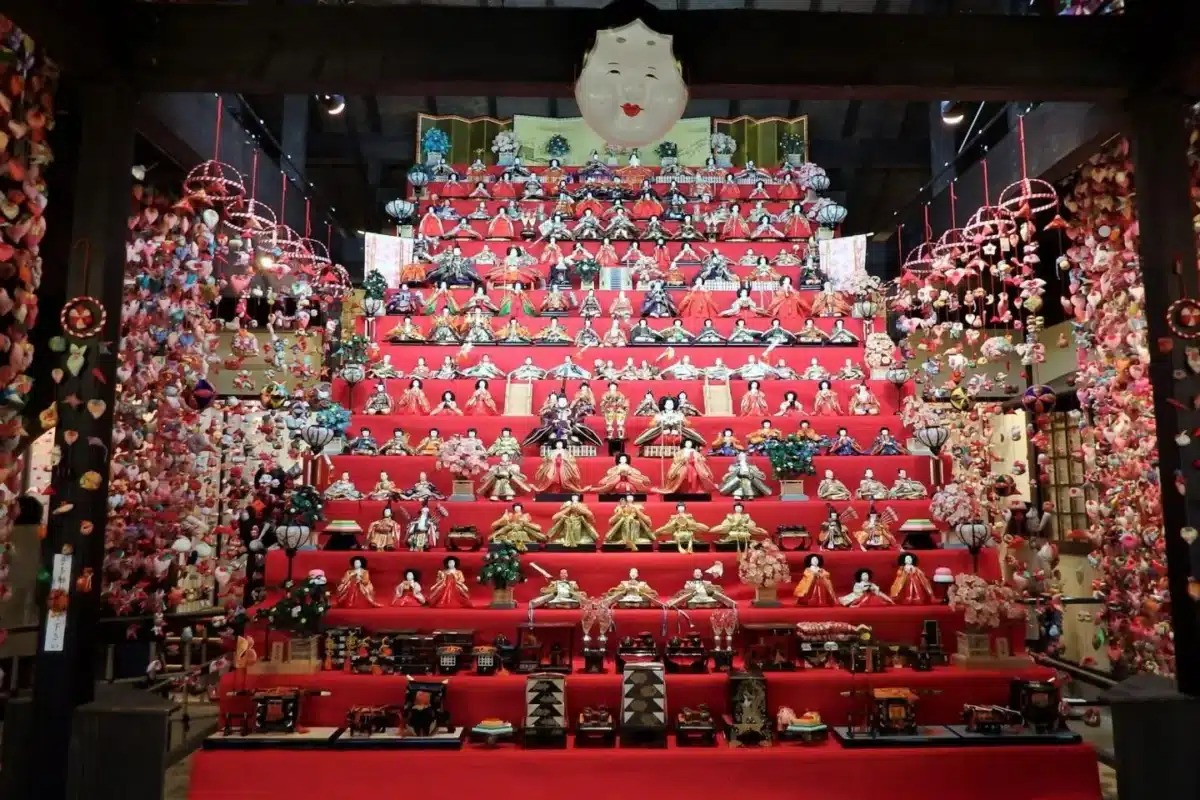
The main exhibition is held at Culture Park Hina no Yakata, where visitors can see extensive collections of hanging decorations arranged around large Hina doll displays. Recent editions have featured hundreds of ornament strings and thousands of individual handmade pieces, including an enormous central hanging decoration and a large tiered Hina display.
Enjoy Your Event Stress-Free with Japan Travelo
Do you know? Planning events, festivals, concerts, and cultural experiences in Japan can be overwhelming. Japan Travelo brings everything together in one place, helping you manage your itinerary, transport, and accommodation with ease—so you can enjoy Japan without the stress of planning.
A particularly striking part of the festival is the Susanoo Shrine Hina Doll Display. Traditional Hina dolls and hanging decorations are arranged along the shrine’s long stone staircase, creating a dramatic outdoor exhibition that combines Japanese seasonal decoration with a historic Shinto setting.
Visitors can also explore several smaller exhibition venues around Inatori, each offering a different interpretation of the local tradition. Some locations show family-style displays, while others present antique dolls, handmade ornaments or related regional crafts.
The festival is an especially good cultural experience for visitors staying at Inatori Onsen, because the exhibitions can be combined with hot springs, traditional Japanese accommodation, local seafood and sightseeing around the Izu Peninsula.
Event dates
The Hina Festival of Inatori Onsen 2027 is expected to take place from mid-January through late March 2027, with the official calendar dates still to be confirmed.
Japan Travel currently lists the 2027 festival period as Mid Jan – Late March 2027 and specifically notes that the dates have not yet been confirmed by the organizers.
For the 2027 edition:
- Event period: Mid Jan – Late March 2027
- Exact dates: To be confirmed
- Location: Inatori, Higashi-Izu, Shizuoka Prefecture
- Main venue: Culture Park Hina no Yakata
- Special venue: Susanoo Shrine
- Festival type: Traditional Japanese Hina doll and seasonal culture festival
The main exhibition normally operates for an extended period, making the festival easier to include in a wider Izu Peninsula itinerary than events that take place over only a few days.
The Susanoo Shrine display is a special component within the wider festival and generally operates for a shorter period than the main exhibition. Its opening can also be affected by rain and other weather conditions.
Visiting this event? Don’t miss out on these amazing activities and local experiences while you’re here.
Venues & festival locations
The Hina Festival of Inatori Onsen uses multiple exhibition locations around Inatori rather than a single enclosed festival ground.
Culture Park Hina no Yakata
This is the principal exhibition venue and the centerpiece of the festival. It is located within Culture Park and presents large collections of handmade tsurushi-bina alongside traditional Hina dolls.
Recent editions have featured approximately 100 pairs of hanging displays, with thousands of individual ornaments. The main hall has included a huge hanging decoration containing thousands of pieces and a large tiered Hina display.
Susanoo Shrine
Susanoo Shrine hosts one of the festival’s most recognizable displays. Hina dolls and hanging decorations are arranged along the shrine’s staircase, creating a long outdoor Hina display.
Naburatoto
This participating venue presents additional hanging-doll decorations and historic Hina dolls. Recent editions have included an antique Hina collection associated with a historic marriage between prominent Japanese families.
Futatsubori Harvest Experience Farm
This venue offers another style of hanging-doll display based more closely on arrangements found in ordinary Inatori homes. Seasonal agricultural experiences can also be available during the festival period.
Hachiman Shrine
Hachiman Shrine, an important local guardian shrine of Inatori, also participates in the exhibition programme. Visitors can see hanging decorations displayed in its traditional shrine environment.
Full cultural programme
The cultural programme revolves around the display, preservation and interpretation of Inatori’s hanging-doll tradition.
Visitors can expect a combination of:
- Large Hina doll exhibitions
- Handmade tsurushi-bina displays
- Historic Hina dolls
- Traditional household-style arrangements
- Shrine exhibitions
- Cultural Park displays
- Craft and hanging-decoration experiences
- Seasonal agricultural activities
- Local shopping
- Traditional food
- Inatori Onsen experiences
The main exhibition demonstrates the scale to which a traditionally handmade decoration can develop when many individual ornaments are combined. Visitors can see hanging strings filled with symbolic objects, animals, flowers, foods and household items.
Each ornament traditionally carries a meaning or wish. The handmade nature of the displays is central to the experience because the tradition developed through families making decorations themselves rather than simply purchasing commercially produced ornaments.
The official Inatori Onsen association explains that the hanging decorations were traditionally displayed beside Hina dolls and were made with wishes for children’s happiness. The tradition originated in Inatori and has been passed down through generations.
Featured traditions & performances
The festival is primarily an exhibition and cultural celebration rather than a stage-performance event.
Tsurushi-bina
The hanging decorations are the defining feature. Handmade ornaments are suspended from decorative frames around Hina dolls, producing colorful vertical displays.
Hina dolls
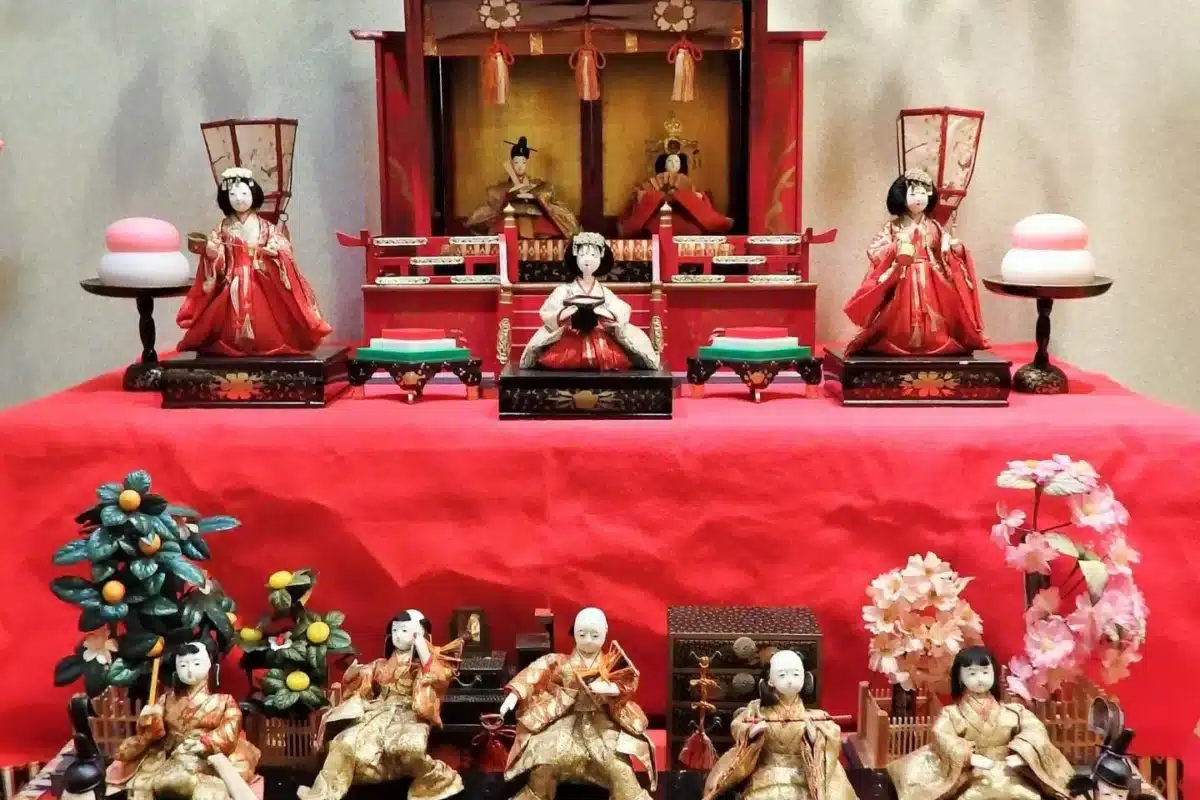
Traditional Hina dolls represent the imperial court and are displayed during Hinamatsuri, the Japanese seasonal celebration associated with children’s health and happiness.
Handmade ornament symbolism
Individual ornaments can represent wishes for health, prosperity, longevity, fertility, protection and other aspects of family well-being.
Large-scale displays
Culture Park Hina no Yakata creates spectacular large installations by combining thousands of individual handmade decorations.
Shrine staircase display
The Susanoo Shrine display places Hina dolls and hanging ornaments against a historic religious setting, creating one of the festival’s most distinctive visual scenes.
Traditional craftsmanship
The festival provides an opportunity to see sewing, textile work and decorative craft traditions that have been maintained by local residents.
Historical & heritage highlights
The hanging-doll tradition of Inatori dates back to the Edo period, although its exact origin is uncertain. Local accounts describe the practice as a unique Inatori tradition that has survived for more than a century.
Historically, Hina dolls could be expensive, making them difficult for some families to obtain. Families in Inatori developed handmade hanging decorations that could be created from available fabrics and materials. Mothers and grandmothers passed the craft from one generation to the next.
The decorations were made with affection and wishes for children’s health and happiness.
This makes the festival more than a visual exhibition. It demonstrates how local families adapted a broader Japanese seasonal tradition into a distinctive regional form.
Inatori is now regarded as one of Japan’s important centers for hanging Hina decorations. The Inatori Onsen association describes the town as the birthplace of this particular festival tradition.
Susanoo Shrine adds another layer of heritage. The shrine is traditionally regarded as an important guardian of the Inatori community, and its staircase becomes an unusual outdoor setting for the seasonal Hina display.
The combination of shrine culture, family craftsmanship and seasonal celebration gives the festival its distinctive identity.
Events & activities schedule
The detailed 2027 programme will be confirmed by the organizers. The traditional festival experience can be organized around several stages.
Main exhibition visit
Begin at Culture Park Hina no Yakata to see the largest collection of hanging decorations and Hina dolls.
Secondary exhibition venues
Continue to participating venues such as Naburatoto, Futatsubori and Hachiman Shrine to compare different display styles.
Traditional craft experience
Visitors may be able to participate in hanging-decoration workshops operated by local groups. Recent official information lists several local organizations offering tsurushi-kazari making experiences, with advance reservations required for some providers.
Susanoo Shrine display
Visit the shrine to see Hina dolls arranged along the staircase when the special outdoor exhibition is operating.
Inatori Onsen experience
Combine the cultural visit with a traditional hot-spring stay.
Local food and shopping
Explore seafood restaurants, local shops and specialty products around Inatori.
Because some exhibition venues operate on different schedules, visitors should check the latest official programme before planning a full walking route.
Ticket types & entry options
The festival uses individual admission arrangements for participating exhibition venues rather than one universal festival ticket.
Based on the latest available edition, the main Culture Park Hina no Yakata admission was approximately $3.20, based on a ¥500 adult fee. Elementary-school-age children and younger were admitted free at the main venue.
Culture Park Hina no Yakata
Recent adult admission: approximately $3.20.
Naburatoto
Recent admission: approximately $0.65, based on a ¥100 entry fee.
Futatsubori Harvest Experience Farm
Recent exhibition admission: Free. Separate charges may apply for agricultural experiences such as fruit picking.
Hachiman Shrine
Recent exhibition admission: Free.
Susanoo Shrine
Recent editions requested a facility-maintenance cooperation contribution of approximately $1.90, based on ¥300.
These are previous-edition reference prices because 2027 admission charges have not yet been announced. Visitors should confirm the final fees before travelling.
Guided tours & cultural experiences
The festival is particularly suitable for visitors who want to participate in a hands-on Japanese craft experience.
The Inatori Onsen association lists local groups offering tsurushi-kazari making experiences. Recent information includes workshops operated by groups such as Niko Niko Kai, Kinuno Kai and Furuya, with different operating hours and reservation requirements.
Hanging-decoration workshop
Participants can learn how individual fabric ornaments are assembled and create a small decoration of their own.
Traditional craft learning
A workshop provides more insight into the patience and sewing skills required to produce the elaborate displays seen throughout the festival.
Cultural walking route
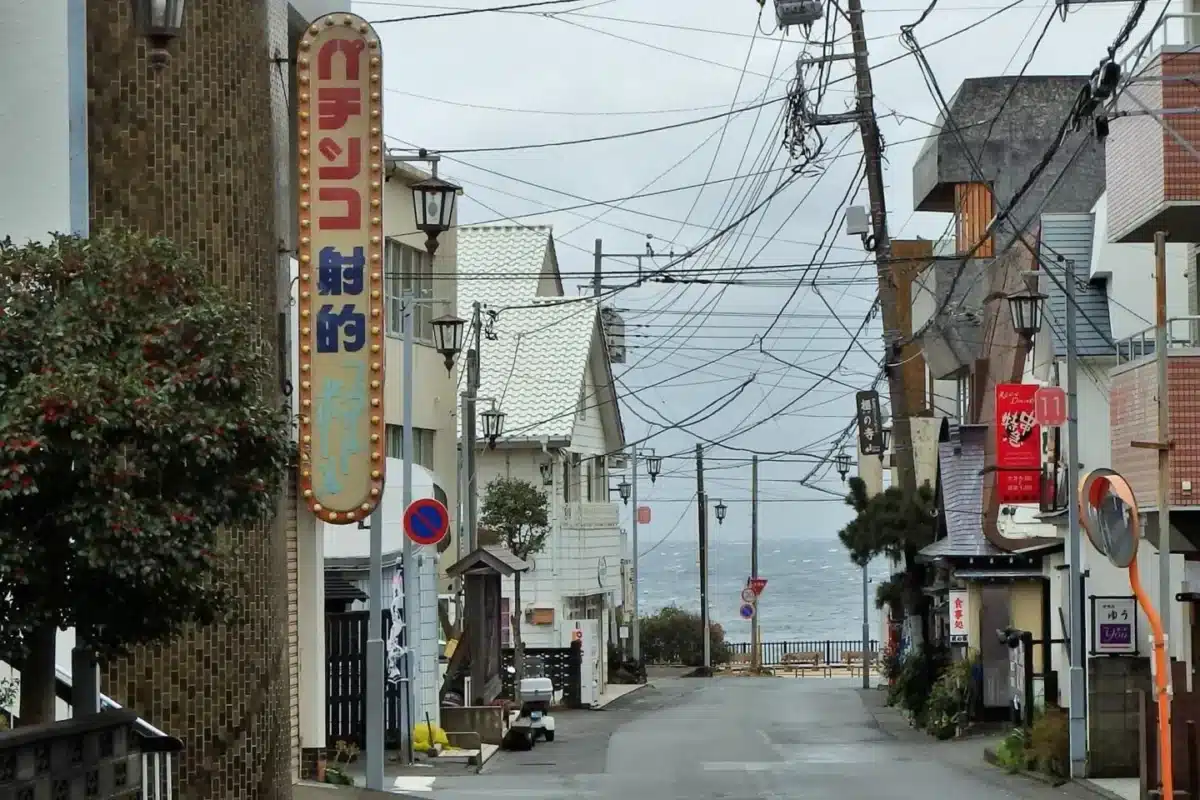
Visitors can walk between the different exhibition locations while exploring Inatori’s streets, harbor and traditional neighborhoods.
Onsen cultural experience
Staying at an Inatori Onsen ryokan adds a traditional Japanese hospitality component to the festival visit.
Local sightseeing
The festival can be combined with coastal scenery, local seafood, traditional architecture and other attractions around the Izu Peninsula.
Advance reservation is advisable for craft workshops because availability can be limited.
Special ceremonies & celebrations
The Hina Festival is primarily centered on exhibitions rather than religious ceremonies, but the Susanoo Shrine display creates a special connection between the seasonal Hina tradition and local shrine heritage.
The most spectacular special display is the staircase arrangement at Susanoo Shrine. Hina dolls and hanging decorations are placed along the shrine’s stone steps, creating an extended display that rises toward the main shrine. Recent editions have used 118 steps for the Hina arrangement.
The display is also weather-sensitive. Rain can cause the outdoor exhibition to be canceled, so visitors should check the local announcement before travelling to the shrine.
The festival’s wider celebration is centered on the arrival of spring, family well-being and the continuation of local craftsmanship.
Rather than a single ceremony, the event creates a seasonal cultural atmosphere across the town through exhibitions, craft activities, shrine displays and local hospitality.
Festival rules
Visitors should treat the displays as valuable cultural objects and follow instructions at each venue.
Do not touch the displays
Many of the hanging ornaments are handmade and delicate. Visitors should avoid touching or moving them.
Respect photography instructions
Photography may be allowed, but individual venues can establish restrictions. Flash photography should be avoided where prohibited.
Follow shrine rules
At Susanoo Shrine and Hachiman Shrine, visitors should follow normal shrine etiquette and remain outside restricted areas.
Respect local homes and businesses
Some exhibitions reflect household-style arrangements or are presented in community spaces. Visitors should behave respectfully.
Keep pathways clear
Large displays can make exhibition spaces narrow. Allow other visitors to move freely.
Observe weather notices
The Susanoo Shrine outdoor display may be canceled during rain or unsuitable conditions.
Follow workshop instructions
Craft activities may require reservations, capacity limits or specific operating conditions.
How to get there
Inatori is located in Higashi-Izu on the eastern side of the Izu Peninsula in Shizuoka Prefecture.
The main exhibition venue, Culture Park Hina no Yakata, is located at Inatori 1729, Higashi-Izu. Japan Travel lists the venue as the main location of the festival.
By train
The most convenient railway station is Izu-Inatori Station on the Izukyu Line.
From the station, the main exhibition area can be reached on foot or by local taxi. Recent visitor information places the main venue within a manageable walking distance of the station.
By car
Driving is convenient for visitors planning to explore several parts of the Izu Peninsula. It also makes it easier to visit exhibition venues outside the central area.
From Tokyo
Travelers can reach the Izu Peninsula using rail connections toward Atami and continue south toward Izu-Inatori.
From Atami
Visitors can travel south along the Izu eastern coast using the Izukyu railway network or by road.
The coastal journey itself can be part of the experience, with ocean views and access to other Izu attractions along the way.
Public transport & parking
Public transport is a practical option for the main festival because Izu-Inatori Station provides direct access to the local town area.
Izu-Inatori Station
The station is served by the Izukyu Line and is the principal railway gateway to Inatori.
Walking
Culture Park Hina no Yakata is within walking distance of the station, making the main exhibition relatively easy to access without a car.
Taxi
A taxi can be useful for visitors carrying luggage or visiting several venues in one day.
Parking
The latest available information lists parking at the main Culture Park venue at approximately $3.20 per vehicle, based on a ¥500 charge.
Some participating venues have limited parking or different arrangements. Large buses may not be accepted at smaller exhibition venues.
Visitors should avoid blocking narrow local roads and should use designated parking facilities.
Accommodation areas
Inatori is particularly well suited to an overnight cultural visit because the town is also famous for its hot-spring resorts.
Inatori Onsen
This is the most convenient area for festival visitors. Traditional ryokan and hotels provide access to hot springs, Japanese meals and local hospitality.
Inatori coastal area
Staying near the coast gives visitors access to harbor views, seafood restaurants and the town’s cultural attractions.
Higashi-Izu
Accommodation elsewhere in Higashi-Izu can work well for visitors exploring a broader section of the eastern Izu Peninsula.
Kawazu
Kawazu is another useful base on the Izu coast and can be combined with other seasonal attractions.
Atami
Atami provides a larger range of hotels and transport connections, although it requires additional travel to reach Inatori.
A stay at an Inatori Onsen ryokan is particularly appropriate because the festival is designed around a seasonal visit to this historic hot-spring town.
Food & traditional specialties
The festival itself is not primarily a food festival, but Inatori has a strong local food identity.
Kinmedai
Inatori is particularly famous for Kinmedai, or splendid alfonsino, a premium deep-water fish associated with the local fishing port. Recent tourism information specifically highlights Inatori Kinmedai as one of the area’s signature specialties.
Fresh seafood
The town’s coastal location means visitors can find sushi, sashimi, grilled fish and other seafood dishes.
Japanese ryokan cuisine
Traditional inns may serve multi-course seasonal meals featuring locally sourced seafood and vegetables.
Local sweets
Visitors can also look for Japanese confectionery and seasonal sweets associated with Hina celebrations.
Hina-themed treats
During the festival period, some local businesses may offer seasonal Hina-themed foods, sweets or products.
Combining the exhibitions with a traditional seafood meal and an onsen stay provides a fuller experience of Inatori’s local culture.
Accessibility
The main indoor exhibition at Culture Park Hina no Yakata is generally easier to access than the outdoor shrine staircase display.
Main exhibition
The indoor venue offers a more controlled environment and is the most practical location for visitors who want to avoid uneven outdoor terrain.
Susanoo Shrine
The Hina display at Susanoo Shrine is arranged along a long staircase, so the outdoor exhibition may be difficult for wheelchair users or visitors with limited mobility.
Walking between venues
Inatori’s streets include slopes and uneven sections, so visitors with mobility concerns should plan routes carefully.
Weather
Rain can affect outdoor displays, while winter weather can make surfaces slippery.
Visitors requiring specific accessibility support should contact the venue or local tourism organization before visiting and confirm current conditions.
Best cultural experiences
The festival offers a variety of experiences beyond simply viewing Hina dolls.
See the main hanging-doll display
Culture Park Hina no Yakata provides the clearest introduction to the scale and craftsmanship of Inatori’s tradition.
Compare different exhibition styles
Visiting several venues allows visitors to see how the decorations look in large public displays, traditional shrine settings and household-style arrangements.
Visit Susanoo Shrine
The staircase display is one of the festival’s most distinctive visual experiences.
Try a craft workshop
Making a small hanging ornament gives visitors a practical understanding of the sewing and decorative work behind the festival.
Stay at an onsen ryokan
Combining the festival with a hot-spring stay connects the Hina tradition with Inatori’s longstanding tourism culture.
Taste local seafood
A meal featuring Inatori Kinmedai provides another way to experience the identity of the coastal town.
Explore Inatori on foot
Walking between exhibition locations allows visitors to discover local streets, shrines, shops and harbor scenery.
Previous year’s highlights
The latest completed edition expanded the festival’s exhibition programme across multiple venues, with Culture Park Hina no Yakata remaining the principal location.
The main venue featured around 100 pairs of hanging displays, with thousands of individual ornaments. A large central hanging decoration and a 17-tier Hina display formed the centerpiece of the exhibition.
Naburatoto presented approximately 20 pairs of hanging displays and included historic Hina dolls, including an antique collection with a connection to a historic Japanese family.
Futatsubori Harvest Experience Farm displayed approximately 18 pairs and presented the decorations in a style closer to ordinary Inatori households. The venue also offered seasonal agricultural experiences.
Hachiman Shrine presented another collection of hanging decorations in a traditional shrine setting.
The Susanoo Shrine display remained one of the major attractions, with Hina dolls arranged across the shrine’s staircase. Recent editions used 118 steps and attracted visitors specifically for the dramatic outdoor display.
These previous editions demonstrate the festival’s combination of large-scale exhibition, intimate handmade craftsmanship, historic dolls, shrine heritage and local tourism.
Official tickets
The Hina Festival of Inatori Onsen does not use one universal ticket for every festival venue. Admission is generally paid separately at participating exhibition locations.
For 2027, official prices have not yet been announced. The latest available edition provides the following reference prices:
- Culture Park Hina no Yakata: approximately $3.20 for adults
- Elementary-school-age children and younger at the main venue: Free
- Naburatoto: approximately $0.65
- Futatsubori Harvest Experience Farm exhibition: Free
- Hachiman Shrine exhibition: Free
- Susanoo Shrine cooperation contribution: approximately $1.90
- Main venue parking: approximately $3.20 per vehicle
These prices are based on the latest available edition and should be treated as previous-edition reference prices until the 2027 organizers publish the final information.
Official festival information: https://inatorionsen.or.jp/hina/
Japan Travel event information: https://en.japantravel.com/shizuoka/hina-festival-of-inatori-onsen/26529
Location
FAQ
When does the Inatori Onsen Hina Festival take place each year?
The celebration runs continuously from mid-January through the end of March across multiple venues in town. This extended schedule gives travelers plenty of time to experience the hanging decorations during the late winter and early spring season.
Are admission fees required to view the festival displays?
While primary indoor locations like Culture Park Hina no Yakata charge a small entry fee, countless smaller exhibits in local shops and shrines are completely free. Visitors can easily enjoy a mix of paid museum collections and open-air public showcases.
What makes Inatori's hanging dolls different from standard hina displays?
Instead of relying solely on expensive traditional tiered platforms, Inatori features vertical tsurushi kazari mobiles hand-sewn by local women. Each mobile is packed with dozens of symbolic cloth charms representing health, happiness, and good luck.
How do travelers reach Inatori Onsen using public transportation?
Visitors can take the scenic Izu Kyuko Line directly to Izu-Inatori Station from major regional transit hubs. The main exhibition venues are located within a pleasant fifteen-minute walk or a short taxi ride from the station platform.
Can visitors combine this trip with other seasonal Izu attractions?
The festival period overlaps wonderfully with nearby early-blooming cherry blossom events on the Izu Peninsula. Travelers frequently pair their doll festival itinerary with relaxing hot spring soak experiences at local coastal ryokan inns.

Leave a Reply