
Traditional Crafts & Hanging Decoration Workshops
- Interactive craft sessions teaching participants basic hand-sewing techniques for small fabric charms
- Expert guidance provided by local artisan masters preserving authentic Inatori styles
- Souvenir assembly kits available for purchase to create personalized miniature mobiles at home
- Educational displays showcasing raw textiles, colored threads, and stuffing materials used
- Public demonstration booths highlighting the patience required to shape tiny cloth animals
Five Exhibition Venues & Local Displays
- Culture Park Hina no Yakata acting as the central ticketed museum anchor
- Susanoo Shrine hosting the famous outdoor stone step doll arrangement
- Local community centers and regional storefronts opening free mini-exhibitions
- Historic hot-spring inns displaying family-heirloom mobils in their lobbies
- Seaside boutique stops and farm markets featuring local crafts alongside seasonal themes
When & How Long
- Event Date: Mid Jan – Late March 2027 (Dates TBD)
- Event Duration: A multi-week spring seasonal exhibition spanning over two months across the hot-spring town
Visiting this event? Don’t miss out on these amazing activities and local experiences while you’re here.
Hina no Tsurushi Kazari & Cultural Significance
The practice of tsurushi kazari represents an intimate expression of familial love and protection passed down through generations of women in Inatori. Unlike standard tiered platforms that require substantial investment, these vertical mobiles allowed every household to celebrate the Doll Festival with equal devotion. The delicate craft reflects the resilience and artistic creativity of local fishing families.
Displaying these cascading textile artworks during the spring season invokes blessings for health, happiness, and bright futures for young girls. The tradition bridges past hardships with modern appreciation, ensuring ancient handmade techniques survive in contemporary society. Community volunteers work year-round to preserve and showcase these intricate cultural treasures.
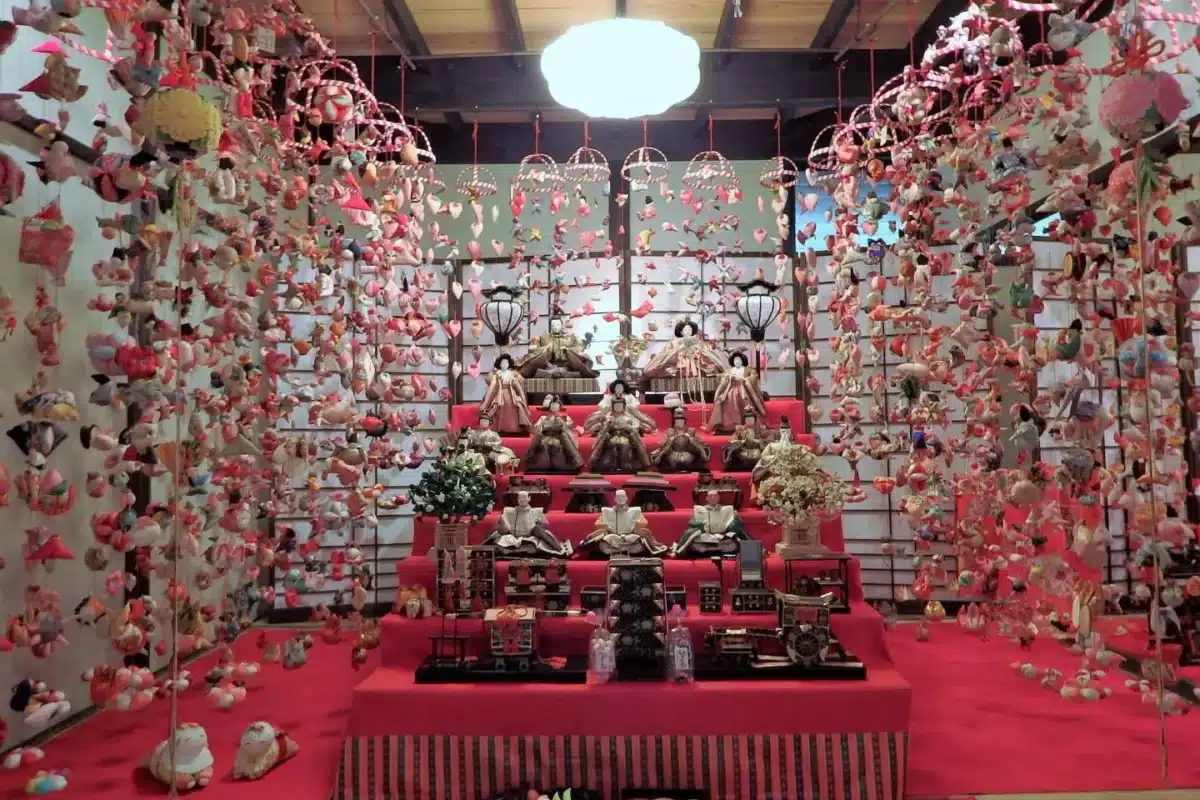
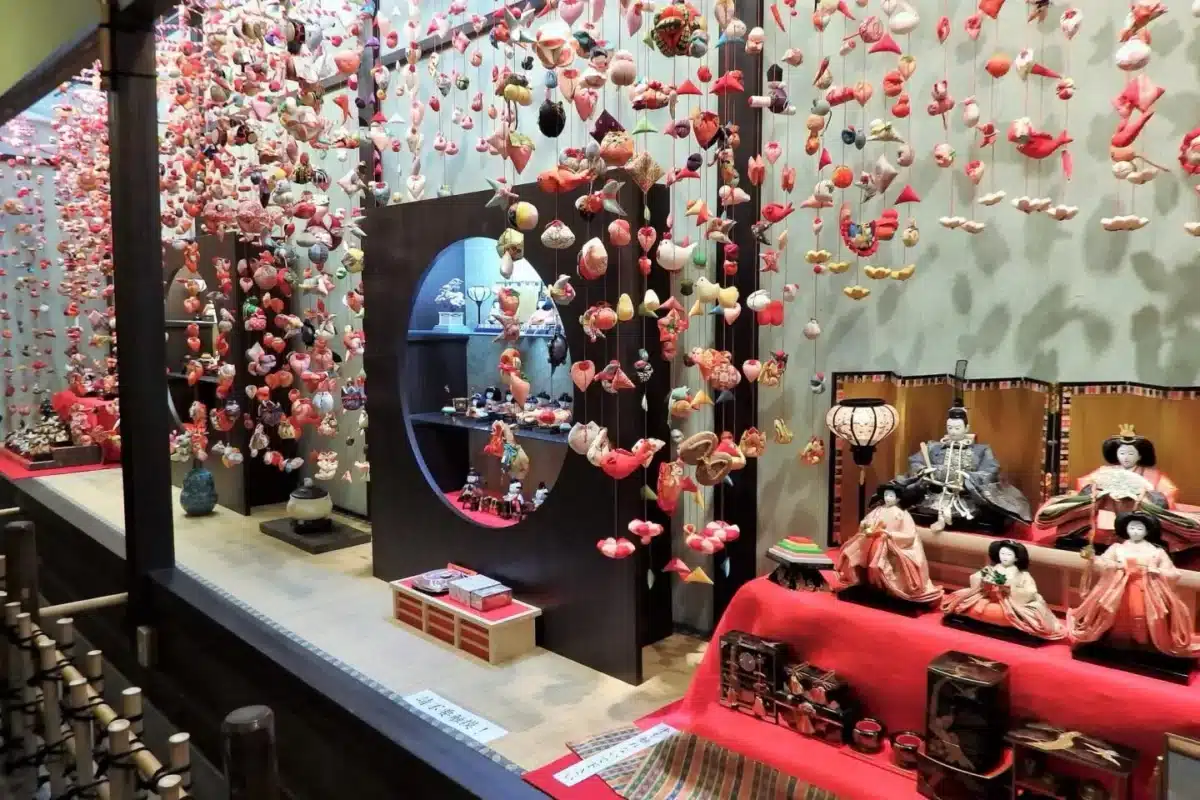
- Vertical cascading mobiles featuring dozens of hand-sewn fabric charms suspended from bamboo rings
- Deep-rooted maternal wishes woven into every stitch to protect daughters from misfortune
- Preservation of rare Edo-period sewing patterns unique to the Izu Peninsula
- Community-driven workshops keeping traditional textile artistry alive for younger generations
- Integration of heirloom pieces handed down through local families over a century
Meaning Behind the Hanging Hina Ornaments
Each individual ornament hung within the mobile carries a specific symbolic meaning designed to bestow positive virtues and protection upon a child. Creators choose motifs carefully based on traditional folklore, representing health, wealth, safe growth, and future prosperity. These miniature fabric figures transform abstract hopes into tangible, colorful art objects.
Enjoy Your Event Stress-Free with Japan Travelo
Do you know? Planning events, festivals, concerts, and cultural experiences in Japan can be overwhelming. Japan Travelo brings everything together in one place, helping you manage your itinerary, transport, and accommodation with ease—so you can enjoy Japan without the stress of planning.
The careful curation of symbols ensures that no two mobiles are entirely identical, as families personalize their arrangements to match personal aspirations. Understanding these symbols enriches the viewing experience for every visitor exploring the exhibition spaces.
- Rabbits symbolizing agility, cleverness, and prayers for smooth fertility
- Monkeys representing the warding off of illness and safe, healthy childbearing
- Triangles and geometric shapes signifying academic success and sharp intellect
- Peaches denoting longevity, eternal youth, and protection from evil spirits
- Mandarin oranges wishing for financial stability and household wealth throughout life
- Bags and pouches representing thriftiness, wisdom, and the safe keeping of treasures
- Nested boxes symbolizing harmonious domestic relationships and marital happiness
Entry & Tickets
- How Tickets Are Sold: Tickets for main exhibition halls are purchased on-site at the venue ticket counters, while town-wide shop displays are freely accessible.
- Admission Type: Paid and Free Access (Main exhibition halls require a small entry fee, while local street displays are free)
- Ticket Pricing: Minimum price range: $0.00 USD (for public town walks and open shrines), Maximum price range: $3.25 USD (approx. ¥500 JPY for main indoor exhibition entry)
- Special Seating Options: No reserved seating arrangements or viewing grandstands are provided, as the festival is designed as a walking tour.
- VIP Options: No VIP ticket tiers, exclusive fast-track passes, or private private-access packages are offered.
Best Viewing Times & Photography Opportunities
- Early morning hours providing quiet exhibition halls and soft natural lighting for peaceful strolls
- Midday visits capturing brilliant sunshine cascading over the outdoor stone steps at Susanoo Shrine
- Macro photography framing the intricate hand-stitched facial expressions of tiny fabric animals
- Wide-angle perspectives capturing the towering vertical length of multi-ring hanging mobiles
- Respectful distancing rules ensuring clear frames without obstructing fellow visitors
Visitor Experience, Etiquette & What to Bring
- Wear comfortable walking shoes suitable for exploring sloping seaside streets and shrine stairs.
- Dress in versatile layers to adapt between heated indoor exhibition halls and chilly coastal breezes.
- Respect indoor photography rules and refrain from touching fragile hanging textile displays.
- Carry cash currency for purchasing local crafts, snacks, and small venue admission tickets.
- Maintain a quiet, polite demeanor when visiting active sacred shrine grounds.
- Follow all designated walking pathways and crowd management directions provided by staff.
- Keep personal trash secure or use designated public recycling stations on site.
Where It Takes Place
- City and Country: Higashiizu, Shizuoka Prefecture, Japan
- Venue Name: Culture Park Hina no Yakata, Susanoo Shrine
- Google Maps Address: 1729 Inatori, Higashiizu-cho, Kamo-gun, Shizuoka Prefecture 413-0411, Japan
Susanoo Shrine’s 118-Step Hina Display
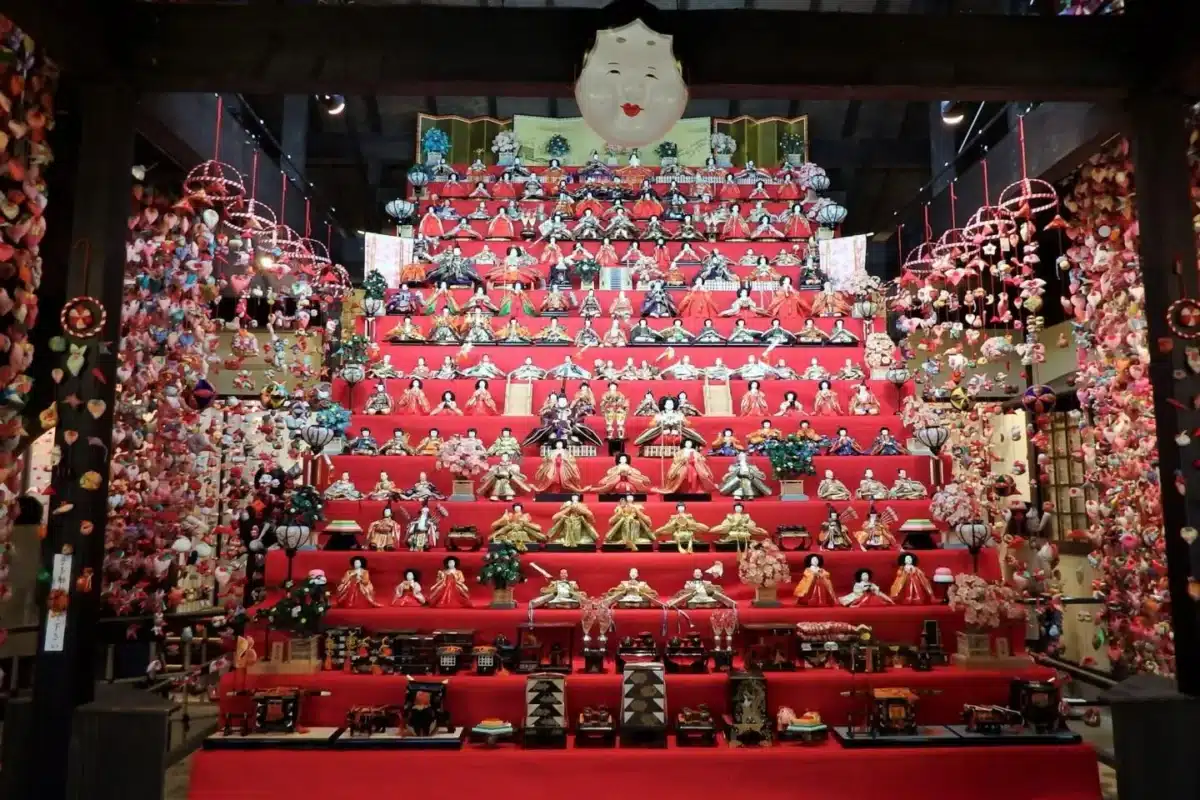
One of the most breathtaking highlights of the festival takes place on the monumental stone staircase of Susanoo Shrine in Inatori. Hundreds of traditional hina dolls and vibrant red decorations are meticulously arranged across the open-air steps, creating a striking visual contrast against the ancient wooden shrine architecture. This massive outdoor setup is widely celebrated as one of the largest seasonal stair displays in Japan.
Visitors gather at the base of the staircase to marvel at the sheer scale and precision of the tiered arrangement. When weather permits, the bright red dolls cascading down the stone path under clear spring skies offer an unforgettable photo opportunity.
- Breathtaking arrangement spanning one hundred and eighteen steep stone steps
- Hundreds of traditional tiered hina dolls positioned carefully in natural sunlight
- Vibrant red carpet platforms highlighting the bright colors of the ceremonial garments
- Historic shrine backdrop framing the cultural spectacle with sacred tranquility
- Weather-dependent daily scheduling ensuring dolls are protected from rain or strong winds
Event Contact Details
- Phone Number: +81 557-95-0700
- Website: https://en.japantravel.com/shizuoka/hina-festival-of-inatori-onsen/26529
Festival History & Inatori’s Hina Tradition
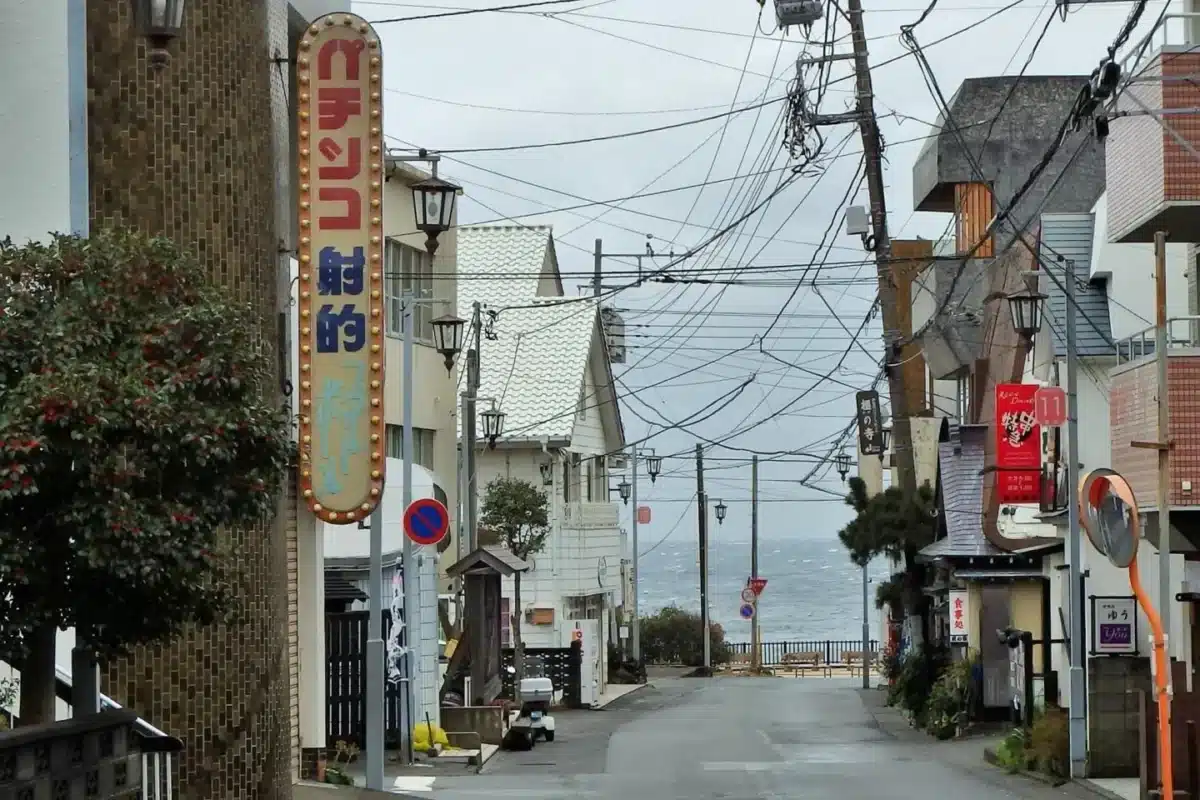
From mid-January to the end of March, the tiny seaside town of Inatori comes to life to host its annual Hina-no-tsurushikazari Matsuri. This festival focuses on a combination of hina dolls and handmade hanging ornaments. Rooted deeply in the local coastal heritage, the celebration transforms the quiet hot-spring destination into a vibrant living museum of textile art.
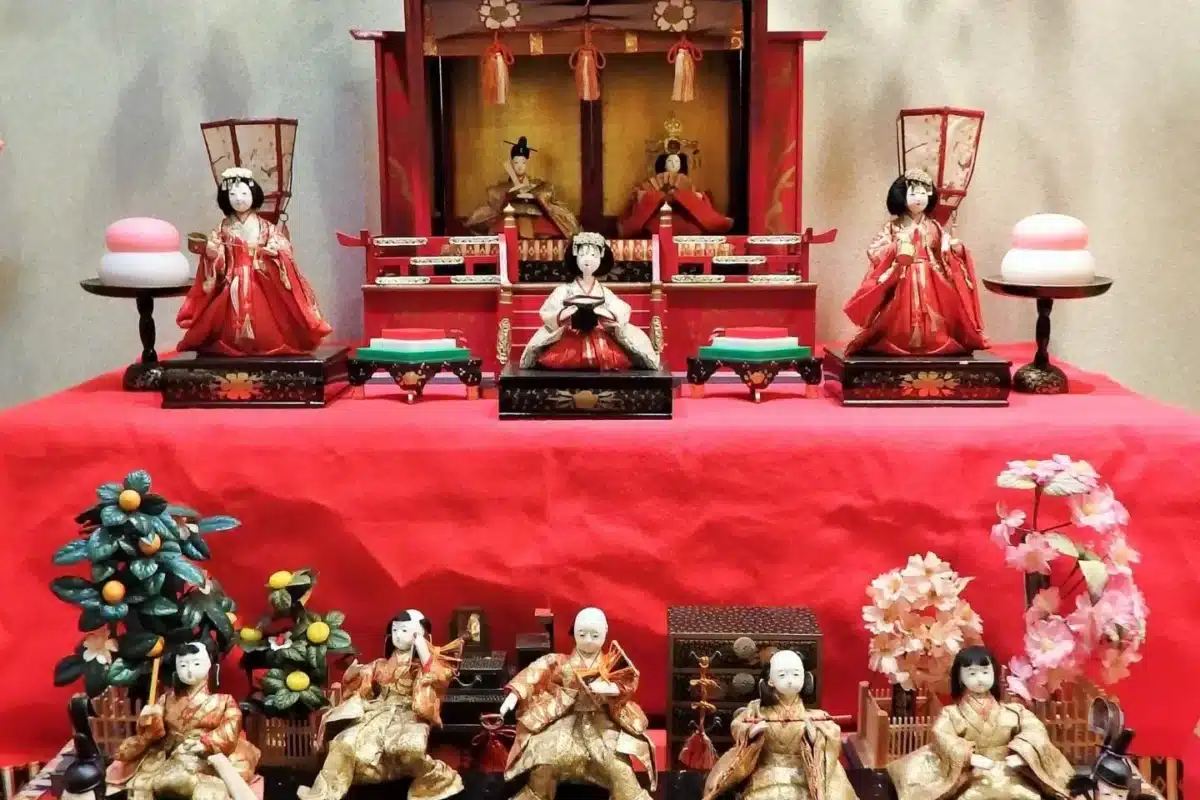
Hina dolls are very expensive, so for families who could not afford them, mothers and grandmothers made lovely hanging ornaments in the shapes of items thought to bring good luck. Inatori has carried on this tradition for over 100 years and tourists are now welcome to view many of their lovely creations. Today, this heartfelt custom stands as one of Japan’s three most prominent hanging doll traditions, drawing travelers from across the country.
Bunka Park Hina no Yakata & Main Exhibitions
Culture Park Hina no Yakata serves as the primary indoor hub for the festival, housing magnificent ceiling-to-floor cascades of colorful hanging decorations. Stepping inside the main hall reveals thousands of meticulously crafted cloth dolls gleaming under soft exhibition lighting. Museum-quality pieces collected from across the region are preserved here in pristine condition.
Expert staff members are stationed throughout the facility to explain the historical context and intricate construction methods behind the displays. The spacious layout allows visitors to inspect the fine details of individual charms up close without feeling rushed by dense crowds.
- Expansive indoor exhibition halls filled with towering columns of hanging ornaments
- Rare antique tsurushi kazari dating back multiple generations of local families
- Informative exhibits detailing the evolution of regional sewing techniques
- Climate-controlled display cases protecting fragile historical silk and cotton textiles
- Comfortable walking paths designed for leisurely viewing and photography
Japanese Peach Festival Traditions & Family Culture
- Celebration of traditional Hinamatsuri customs linked directly to early spring renewal
- Cultural emphasis on nurturing strong family bonds and wishing bright futures for children
- Seasonal display of blossoming peach branches symbolizing the expulsion of evil spirits
- Community-wide sharing of festive treats and traditional seasonal cuisine
Location
FAQ
When does the Inatori Onsen Hina Festival take place each year?
The celebration runs continuously from mid-January through the end of March across multiple venues in town. This extended schedule gives travelers plenty of time to experience the hanging decorations during the late winter and early spring season.
Are admission fees required to view the festival displays?
While primary indoor locations like Culture Park Hina no Yakata charge a small entry fee, countless smaller exhibits in local shops and shrines are completely free. Visitors can easily enjoy a mix of paid museum collections and open-air public showcases.
What makes Inatori's hanging dolls different from standard hina displays?
Instead of relying solely on expensive traditional tiered platforms, Inatori features vertical tsurushi kazari mobiles hand-sewn by local women. Each mobile is packed with dozens of symbolic cloth charms representing health, happiness, and good luck.
How do travelers reach Inatori Onsen using public transportation?
Visitors can take the scenic Izu Kyuko Line directly to Izu-Inatori Station from major regional transit hubs. The main exhibition venues are located within a pleasant fifteen-minute walk or a short taxi ride from the station platform.
Can visitors combine this trip with other seasonal Izu attractions?
The festival period overlaps wonderfully with nearby early-blooming cherry blossom events on the Izu Peninsula. Travelers frequently pair their doll festival itinerary with relaxing hot spring soak experiences at local coastal ryokan inns.

Leave a Reply