
What to expect in 2026
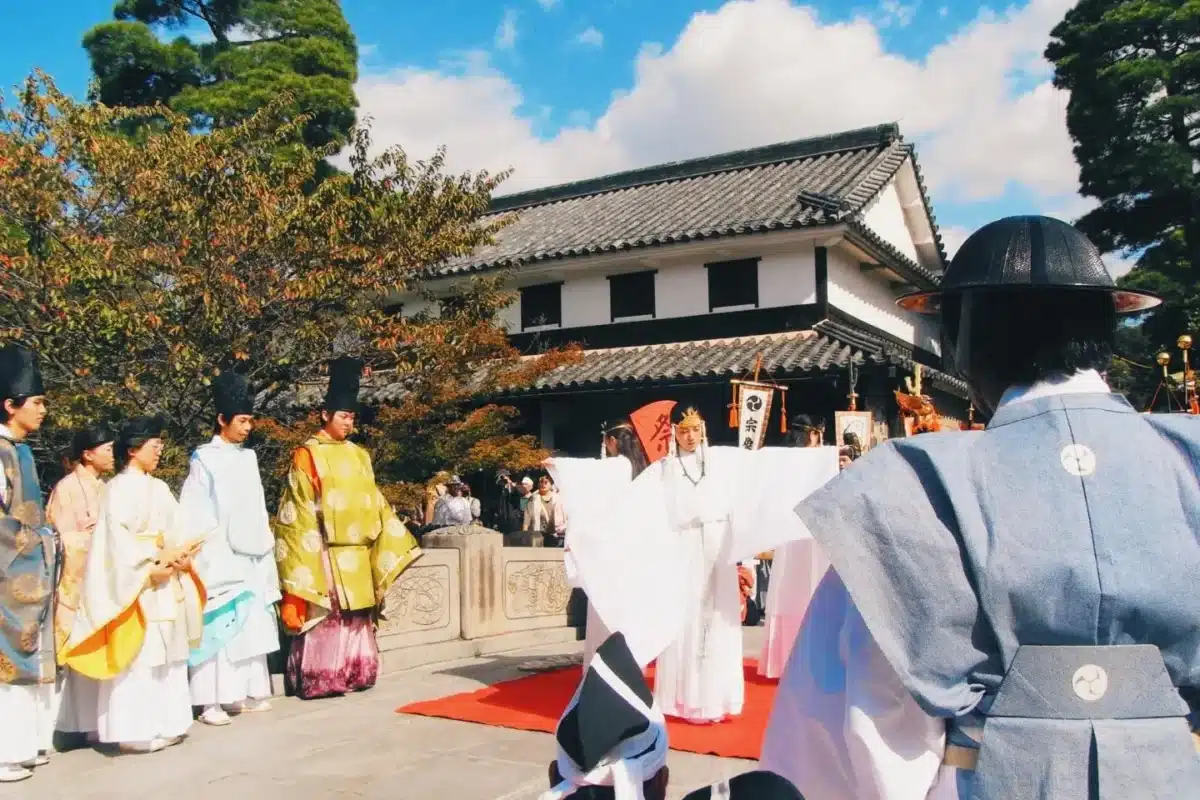
Kurashiki Autumn Festival is a traditional Shinto celebration centered on Achi Shrine, the historic guardian shrine of the Kurashiki area. Set on Mount Tsurugata above the Kurashiki Bikan Historical Area, the festival combines religious ceremonies, traditional performing arts, a ceremonial procession and distinctive local customs that have continued for generations.
The festival is particularly known for its autumn grand festival and the subsequent mikoshi procession through the historic streets of Kurashiki. Visitors can experience the atmosphere of a traditional Japanese shrine festival while also exploring the white-walled storehouses, willow-lined Kurashiki River and historic merchant district surrounding the shrine.
The main programme traditionally unfolds across two festival days. One day focuses on shrine ceremonies and evening entertainment known as shin-gi, while the following day centers on the Goshinkō procession, when the sacred mikoshi is carried through the parish area as part of a historical-style procession. Official Okayama tourism information confirms this established format for the 2026 edition.
Enjoy Your Event Stress-Free with Japan Travelo
Do you know? Planning events, festivals, concerts, and cultural experiences in Japan can be overwhelming. Japan Travelo brings everything together in one place, helping you manage your itinerary, transport, and accommodation with ease—so you can enjoy Japan without the stress of planning.
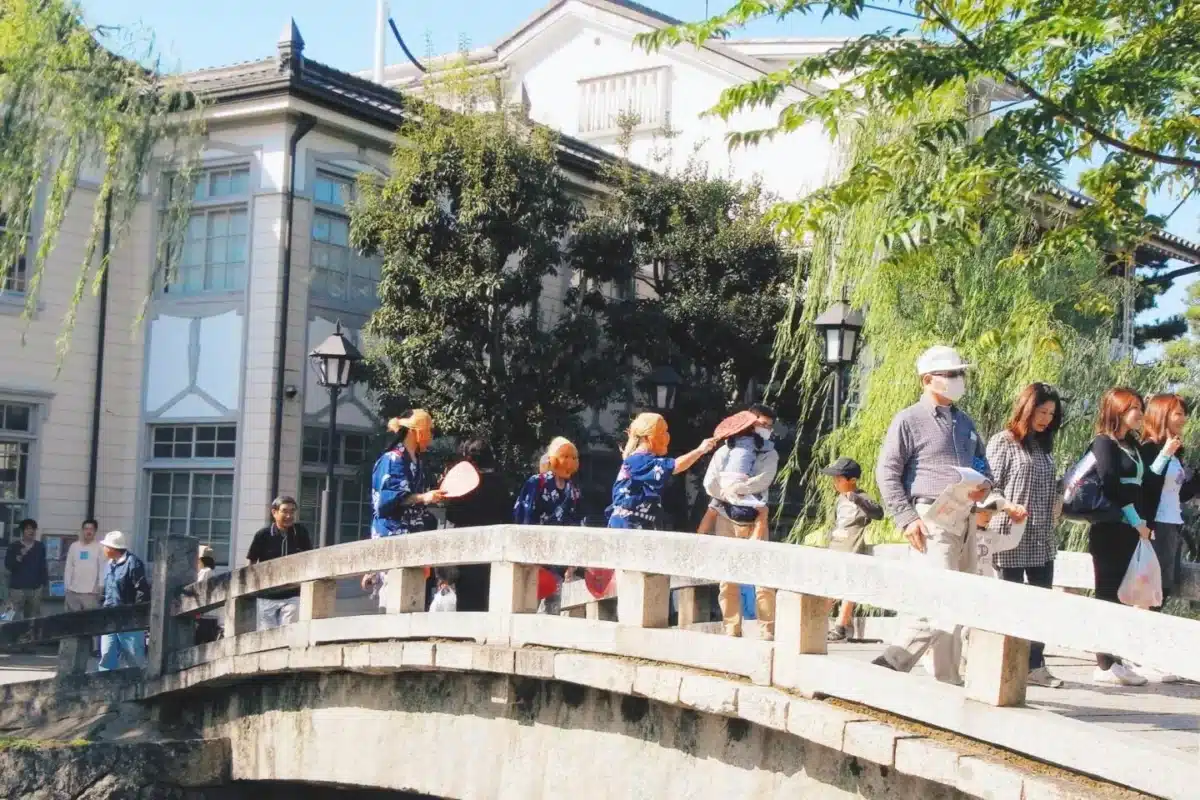
A major attraction is the appearance of Suinkyo, distinctive masked figures representing elderly men and women. The custom of tapping people on the head with a fan is associated with wishes for health and happiness and is one of the festival’s most recognizable traditions.
Visitors can also expect traditional dances, lion dancing, children’s performances, festival music and taiko drumming. The combination of these performances with the historic architecture of Kurashiki makes the festival particularly atmospheric.
The surrounding Kurashiki Bikan Historical Area also becomes part of the experience because the procession moves through the local streets. Visitors can therefore combine the festival with historic homes, canals, traditional shops, museums and seasonal cultural displays.
Event dates
The 2026 event is listed as Mid October 2026 (Dates TBD).
The exact date wording above is being retained as requested. The festival itself follows an established annual pattern connected with Achi Shrine’s autumn grand festival. Official Okayama tourism information states that the festival is held around the third Saturday and Sunday of October each year, with the shrine ceremonies and evening performances followed by the Goshinkō procession.
The 2026 event information published by Okayama’s official tourism guide confirms that the autumn festival includes a shrine ceremony, evening traditional performances and a following-day historical procession.
Visitors should check the shrine’s official announcements before travelling for the final programme, procession route and any changes caused by weather or local circumstances.
Visiting this event? Don’t miss out on these amazing activities and local experiences while you’re here.
Venues & festival locations
Achi Shrine
The principal venue is Achi Shrine, located at 12-1 Honmachi in Kurashiki. The shrine stands on the summit of Mount Tsurugata overlooking the Kurashiki Bikan Historical Area.
Achi Shrine precincts
The shrine grounds provide the setting for the principal religious ceremonies and the evening shin-gi programme. Traditional performances are presented here as part of the autumn celebration.
Kurashiki Bikan Historical Area
The historic district becomes an important part of the festival during the Goshinkō procession. The procession moves through streets associated with the shrine’s parish community, bringing traditional festival activity directly into the old town.
Honmachi and surrounding streets
The streets around the shrine and historic district provide viewing opportunities as the procession moves through the community.
Otabisho areas
The procession traditionally stops at designated temporary resting or ceremonial locations, where religious ceremonies and traditional performances can take place.
The wider festival environment therefore extends beyond the shrine itself and into one of Japan’s best-known preserved historic townscapes.
Full cultural programme
The 2026 programme is centered on traditional Shinto ceremonies and local performing arts.
Shrine ceremonies
The festival begins with formal religious rites at Achi Shrine. These ceremonies are conducted in accordance with the shrine’s longstanding traditions.
Shin-gi entertainment
The evening programme known as shin-gi brings traditional performing arts into the festival. Recent official programmes have included several different forms of dance, music and stage entertainment.
Three Goddesses Dance
The Sanjojin no Mai, or Three Goddesses Dance, is one of the festival’s important ceremonial performances. It reflects the shrine’s connection with the three Munakata goddesses enshrined as its principal deities.
Urayasu no Mai
A shrine-maiden dance performed as part of the traditional programme adds a formal ritual element to the evening.
Children’s Bitchu Kagura
Children’s Bitchu Kagura introduces younger performers to a traditional regional performing art associated with Okayama.
Festival music and lion dance
Traditional festival music accompanies a lion dance performance, adding movement, drums and ceremonial energy to the evening programme.
Kurashiki Tenryo Taiko
Taiko performance is another major attraction. Recent official programmes have included Kurashiki Tenryo Taiko as one of the featured evening performances.
Goshinkō procession
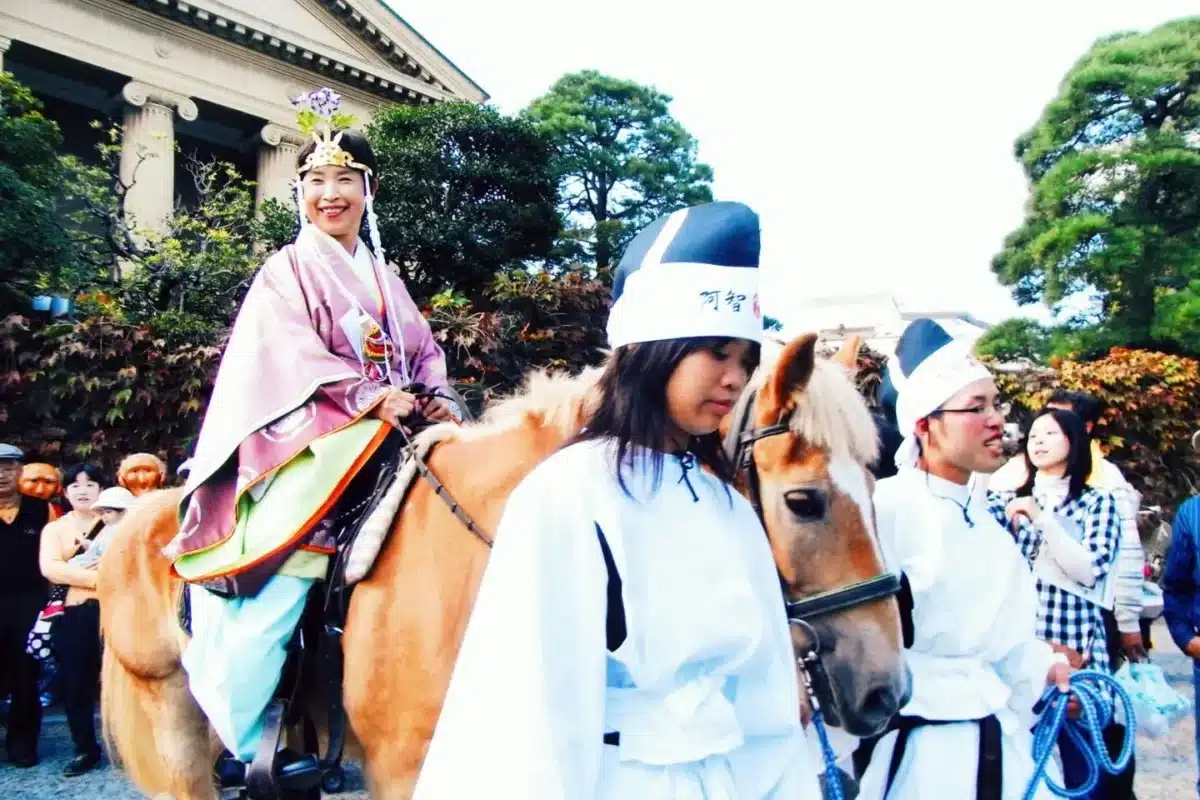
The following day centers on the sacred procession, with the mikoshi carried through the community alongside a historical-style procession. Official descriptions indicate that approximately 100 people can take part in the procession.
Featured traditions & performances
Suinkyo
Suinkyo are one of the most distinctive features of the Kurashiki Autumn Festival. Participants wear humorous masks representing elderly men and women and carry fans.
The traditional custom involves Suinkyo tapping children and other participants on the head with their fans. The gesture is associated with wishes for health and happiness.
Sanjojin no Mai
The Three Goddesses Dance is performed in connection with the shrine’s principal deities and provides one of the most formal moments of the festival.
Urayasu no Mai
This traditional shrine dance is performed by shrine maidens and contributes to the ceremonial atmosphere.
Bitchu Kagura
Bitchu Kagura is a regional form of Japanese sacred dance and storytelling. Its inclusion gives the festival a strong connection to the traditional performing arts of Okayama.
Shishi-mai
Lion dancing is performed as part of the festival entertainment and is a familiar feature of Japanese shrine celebrations.
Festival music
Traditional festival music accompanies the performances and procession, helping establish the distinctive sound of the celebration.
Taiko drumming
Kurashiki Tenryo Taiko adds powerful percussion to the evening programme and is one of the performances highlighted in recent official festival schedules.
Historical & heritage highlights
Achi Shrine has been closely associated with the historic Kurashiki community for centuries. The shrine stands on Mount Tsurugata and serves as the guardian shrine of the old Kurashiki area. Its principal deities are the three Munakata goddesses, traditionally associated with maritime safety.
The shrine’s present name dates from the Meiji period, following the separation of Shinto and Buddhism, while its religious history extends much further into the past. The shrine grounds include historic stonework, a garden and other cultural features.
The autumn festival itself is an important expression of local heritage. Kurashiki tourism information describes the Goshinkō as a historical-style procession associated with the shrine’s autumn celebration.
The festival is also connected with the distinctive Suinkyo tradition. The Okayama Shrine Association explains that the masked figures accompany the procession and use fans in a custom associated with health and good fortune.
Kurashiki’s preserved townscape adds another important heritage dimension. The Bikan Historical Area retains traditional white-walled buildings, merchant houses, warehouses and the historic Kurashiki River landscape. Visitors can therefore experience the festival within a living historic district rather than an isolated event site.
Events & activities schedule
The detailed 2026 programme should be confirmed through Achi Shrine before visiting. The established structure includes the following major elements.
Festival ceremony
The formal autumn festival ceremony takes place at the shrine, marking the religious beginning of the celebration.
Evening shin-gi programme
Traditional performing arts are presented in the evening, including the Three Goddesses Dance, Urayasu no Mai, children’s Bitchu Kagura, festival music, lion dancing and taiko.
Vehicle procession
The sacred mikoshi may be transported through the parish area as part of the vehicle procession associated with the festival.
Goshinkō procession
The following day’s main event is the Goshinkō, with the mikoshi accompanied by a historical-style procession through the community.
Otabisho ceremonies
Ceremonial activities take place at designated locations along the procession route.
Suinkyo appearances
Suinkyo accompany the procession and interact with people along the route, making this one of the most distinctive opportunities for visitors.
Kurashiki streets
The procession transforms the historic district into part of the festival experience, allowing visitors to see traditional customs within the old town.
Ticket types & entry options
The Kurashiki Autumn Festival is a traditional shrine festival rather than a commercial ticketed music or food festival.
Festival admission
There is generally no general admission ticket required to observe the public festival activities.
Shrine access
Visitors can access the shrine grounds for public festival activities, subject to temporary restrictions during religious ceremonies.
Procession viewing
Watching the procession along public streets does not normally require a ticket.
Traditional performances
The public outdoor and shrine-based performances associated with the festival are generally presented as part of the free community celebration.
Expected 2026 admission
General festival entry: Free
Separate attractions in the Kurashiki Bikan Historical Area, such as museums or cultural facilities, may have their own admission charges and are not included in the festival itself.
Guided tours & cultural experiences
The festival can be combined with several cultural experiences in the surrounding historic district.
Historic walking tour
A walking tour of the Bikan Historical Area can introduce visitors to the white-walled warehouses, merchant houses, traditional shops and Kurashiki River.
Achi Shrine visit
Visitors can explore the shrine precincts and appreciate its position above the historic district. The shrine has a scenic viewpoint overlooking the Bikan area.
Kurashiki River boat ride
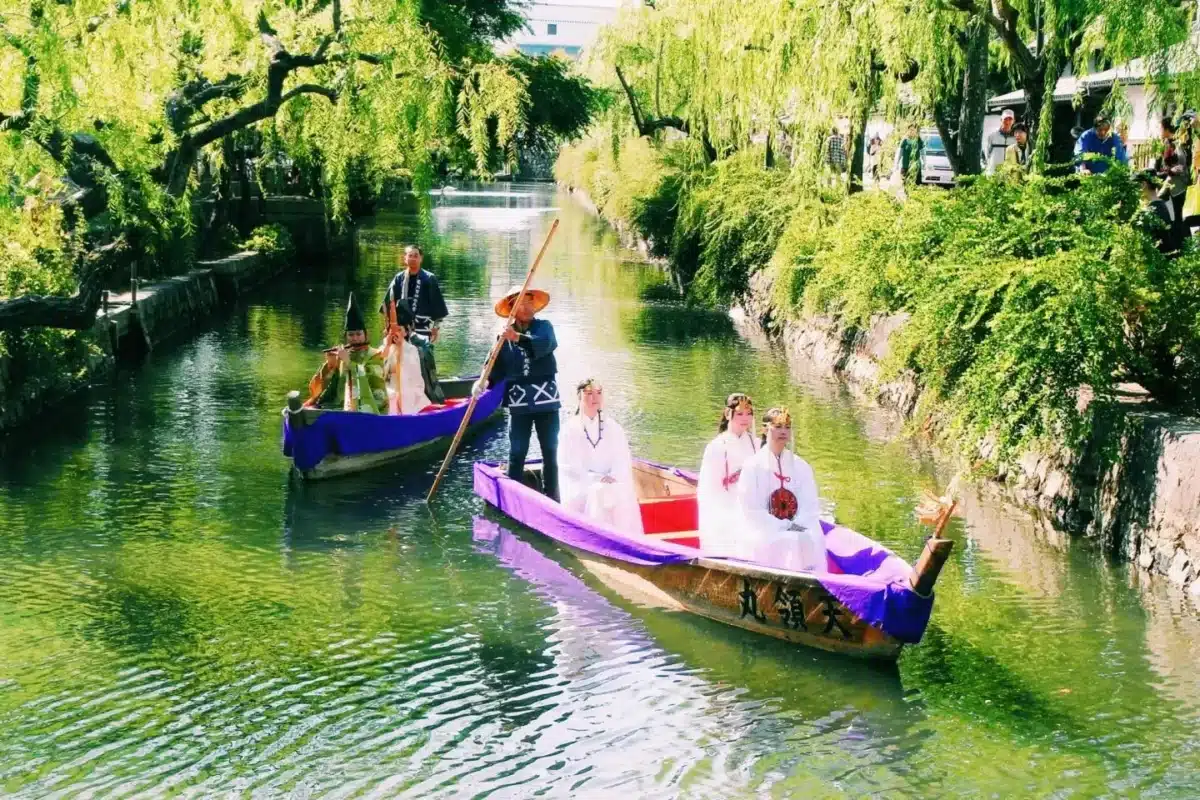
The Kurashiki River offers traditional boat rides through the historic district. The official tourism guide describes the experience as a way to appreciate the atmosphere of the old commercial waterway.
Traditional architecture
Walking through Honmachi and Higashimachi provides an opportunity to see preserved merchant architecture and historic streets.
Local cultural museums
The Bikan Historical Area includes museums and former merchant residences that help explain Kurashiki’s commercial and cultural development.
Festival photography
The combination of traditional costumes, shrine architecture, old streets, mikoshi and seasonal decorations creates strong opportunities for cultural photography.
Special ceremonies & celebrations
Autumn grand festival
The autumn grand festival is the central religious celebration at Achi Shrine and includes formal Shinto rites.
Sanjojin no Mai
The Three Goddesses Dance provides a direct connection with the shrine’s principal deities and is one of the most important ceremonial performances.
Urayasu no Mai
The shrine-maiden dance adds a formal sacred performance to the festival programme.
Mikoshi procession
The sacred mikoshi represents the presence of the shrine’s deity during the Goshinkō. It is carried through the parish community as part of the traditional procession.
Historical procession
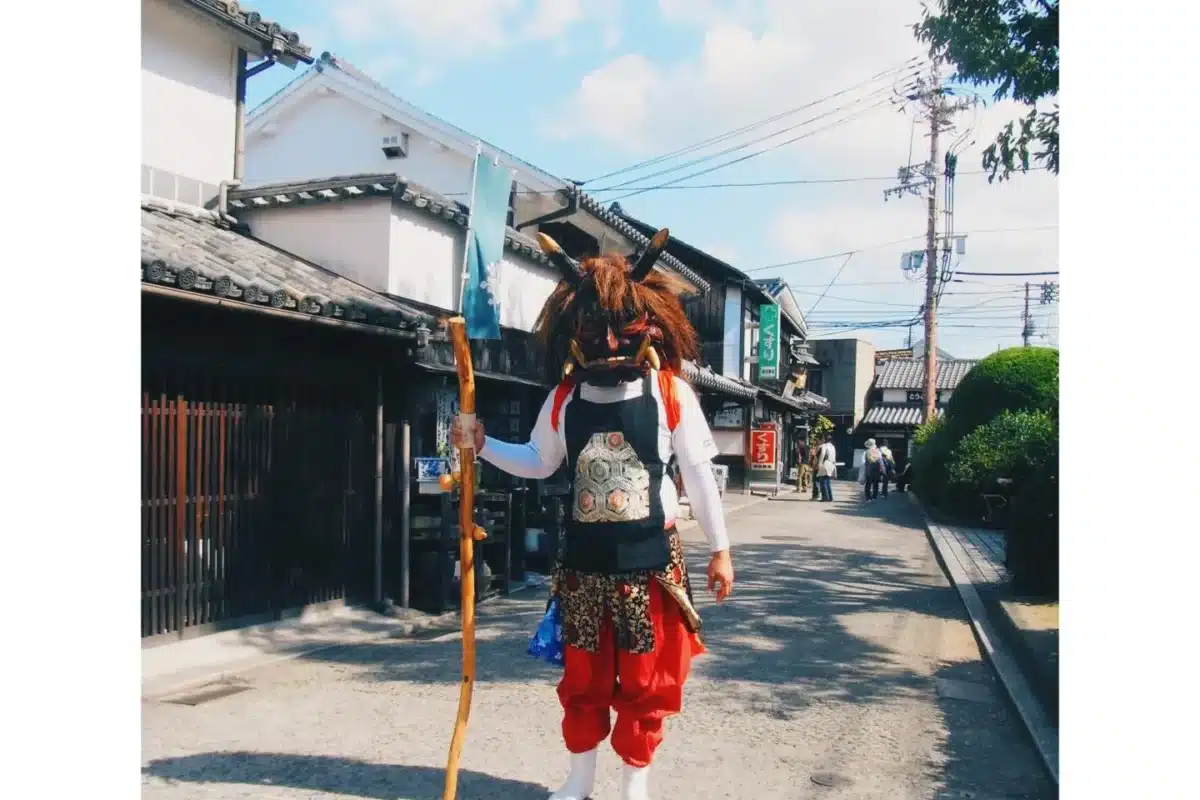
The Goshinkō includes a historical-style procession with participants in traditional roles and costumes, creating one of the most visually distinctive aspects of the celebration.
Suinkyo blessing tradition
The Suinkyo custom of tapping people with fans is associated with wishes for health and happiness and is a particularly recognizable Kurashiki tradition.
Festival rules
Respect the shrine
Visitors should observe normal shrine etiquette and remain quiet and respectful during formal religious ceremonies.
Follow barriers
Do not cross temporary barriers or enter restricted areas around the mikoshi, performers or shrine ceremonies.
Respect the procession
Allow the procession to move freely and follow instructions from organizers, police and shrine staff.
Photography etiquette
Photography is generally possible in public areas, but visitors should avoid blocking the route or interfering with ceremonies and performers.
Respect Suinkyo
The Suinkyo tradition is part of the local festival culture. Visitors should avoid inappropriate behavior toward participants wearing the masks.
Crowd awareness
The historic streets can become crowded during the procession. Keep children close and remain aware of moving festival equipment and participants.
Weather
Outdoor festival activities may be affected by weather conditions. Visitors should check official announcements before travelling.
How to get there
Achi Shrine is located in the historic centre of Kurashiki and is convenient to reach from JR Kurashiki Station.
From Kurashiki Station
Achi Shrine is approximately a 15-minute walk from JR Kurashiki Station.
Walking through the city
Walking from the station allows visitors to approach the festival through central Kurashiki and toward the Bikan Historical Area.
By car
The shrine can be reached from the Sanyo Expressway’s Kurashiki Interchange in approximately 15 to 20 minutes depending on traffic.
From Okayama
Kurashiki is easily incorporated into a wider Okayama itinerary, making the festival suitable as a cultural day trip or overnight visit.
Public transport & parking
JR Kurashiki Station
JR Kurashiki Station is the most convenient rail arrival point. From the station, Achi Shrine is around a 15-minute walk.
Walking route
The walking route is particularly convenient because the shrine and festival area are close to the Bikan Historical Area.
Local transport
Local buses and taxis are available around Kurashiki Station for visitors who prefer not to walk.
Shrine parking
Achi Shrine has a small number of parking spaces. The shrine’s official information lists approximately 15 spaces, so capacity is limited.
Public parking
Visitors arriving by car should use designated city or commercial parking facilities farther from the shrine and walk into the historic district.
Festival congestion
Major festival activity can increase pedestrian and vehicle congestion around Achi Shrine and the Bikan Historical Area. Historic-event documentation has recorded increased pedestrian and parking activity around the festival area.
Accommodation areas
Kurashiki Bikan Historical Area
Staying near the Bikan Historical Area provides the easiest access to Achi Shrine, the procession route and traditional sightseeing attractions.
Kurashiki Station
The area around JR Kurashiki Station has convenient hotels, restaurants and transport connections.
Honmachi and Higashimachi
Accommodation close to the historic streets places visitors near the heart of the festival atmosphere.
Kurashiki River area
Hotels and traditional accommodations around the river provide an attractive base for visitors interested in historic architecture and evening walks.
Okayama City
Visitors with accommodation in Okayama can travel to Kurashiki for the festival and return by rail, making the event suitable for a wider Okayama trip.
Location
FAQ
What is the main cultural purpose of the Kurashiki Autumn Festival?
The festival celebrates abundant autumn harvests and expresses deep gratitude to regional deities through sacred Shinto rites, music, and community processions. Held annually in mid-October, the multi-day event connects modern travelers directly with centuries-old spiritual traditions originating from Achi Shrine.
How does the public interact with the moving parade compared to other Japanese festivals?
Unlike many strict Japanese festivals that keep spectators behind barriers, Kurashiki allows the parade to weave directly through packed historic streets. Spectators can walk underneath the sacred palanquins for blessings and interact closely with traditional performers and playful characters.
What is the significance of the Suinkyo characters during the procession?
Suinkyo figures wear humorous masks of elderly men and women while roaming the cobblestone pathways carrying persimmon-stained fans. According to local folklore, being gently tapped on the head by these characters is believed to grant enhanced intelligence, good health, and a long life.
What related cultural events take place inside local homes during the celebration?
In tandem with the outdoor parade, the Kurashiki Byobu Festival takes place where local residents open their historic homes to display heirloom folding screens. These private exhibitions are frequently adorned with traditional flower arrangements and master calligraphy, showcasing authentic Japanese hospitality.
What are the best strategic locations for capturing memorable photography during the event?
Prime photography locations include the Kurashikikan Tourist Information Center plaza for wide procession shots and the scenic stone bridge for waterborne arrivals. Additionally, wandering into Center-Gai Street and narrow merchant alleys provides fantastic opportunities for authentic close-up portraits against historic architectural backdrops.

Leave a Reply