
Suinkyo (Old Man & Old Woman Masks) Tradition
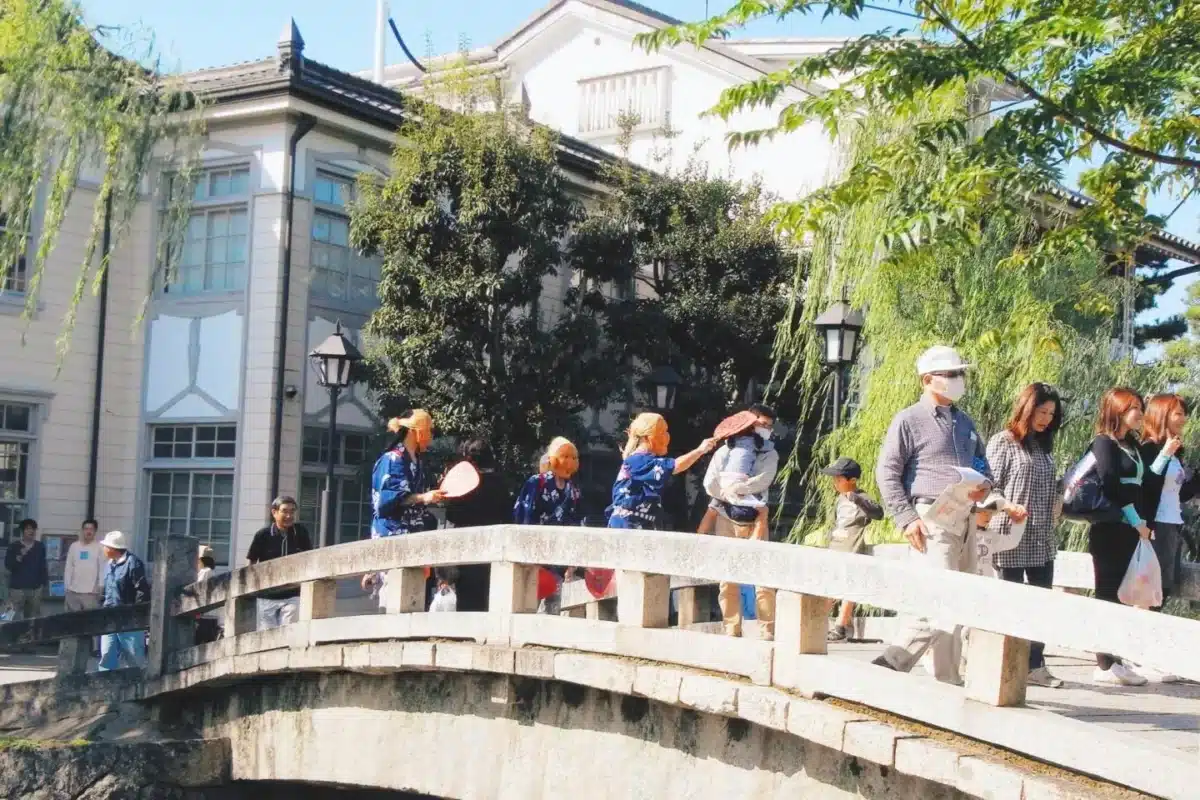
Suinkyo are people dressed in traditional clothes and masks of elderly men and women. They are a humorous bunch as they go around hitting everyone on their heads with their red fans. It is said that the hitting on the head is supposed to make the person smarter and in turn bring about good health. There are a few versions on its origins but one of them is said to be a shortened form of a phrase that literally just means a grand retirement, which would relate to a rich long life.
The persimmon-stained fan, known as a shibu-uchiwa, is carried by each Suinkyo character as they roam the festival grounds. Their playful and mischievous antics provide an entertaining contrast to the solemnity of the main religious rituals, delighting both children and adults who line the streets.
These recognizable figures have become enduring symbols of Kurashiki’s cultural identity during the autumn celebration. By encouraging direct and lighthearted interaction between performers and the public, the Suinkyo tradition ensures that every visitor feels personally connected to the festive atmosphere.
Enjoy Your Event Stress-Free with Japan Travelo
Do you know? Planning events, festivals, concerts, and cultural experiences in Japan can be overwhelming. Japan Travelo brings everything together in one place, helping you manage your itinerary, transport, and accommodation with ease—so you can enjoy Japan without the stress of planning.
Traditional Performances & Festival Entertainment
- Three Goddesses Dance: Graceful ritual performances executed by sacred dancers following the waterborne arrival of the deities
- Lion Dance: Traditional theatrical displays featuring dynamic choreography designed to ward off evil spirits and bring prosperity
- Traditional festival music: Authentic flute and percussion arrangements echoing through the historic merchant corridors
- Taiko performances: Powerful drum rhythms delivered by skilled musicians leading the floating stages and procession routes
- Children’s cultural performances: Community youth presentations showcasing local folklore and preservation of regional arts
- Shrine maiden songs: Melodic vocal presentations delivered by the Miko during key assembly points on the stone bridge
When & How Long
- Event Date: Mid October 2026 (Dates TBD)
- Event Duration: Multi day autumn celebration lasting across a vibrant weekend
Visiting this event? Don’t miss out on these amazing activities and local experiences while you’re here.
Mikoshi Ceremony & Shrine Procession
The Mikoshi serves as a divine palanquin used to transport the deity during the festival and when moving between sacred locations. During the procession, community members bear the heavy structure on their shoulders and move it around the neighborhood, waving it wildly from side to side to amuse the deity inside.
The sacred movement extends deep into the local parish area, bringing spiritual protection and divine energy directly to community homes and businesses. Bearers chant rhythmically as they navigate narrow lanes, demonstrating immense physical endurance and profound neighborhood solidarity.
Following the extensive parish tour, the procession culminates in the grand return journey back up to Achi Shrine. This final ascent symbolizes the safe return of the deity to its sacred hilltop home, concluding the energetic outdoor rites with solemn prayers of gratitude.
- Transports regional deities inside ornate, sacred palanquins carried on the shoulders of local residents
- Involves wild swaying movements designed to entertain and amuse the divine spirit within
- Navigates through the local parish to bestow spiritual protection upon neighborhoods and businesses
- Features synchronized chanting by dedicated bearers to maintain momentum and spiritual focus
- Concludes with a ceremonial return back up the hillside steps to Achi Shrine
- Blends physical strength with devotion as community members unite to shoulder the sacred burden
Entry & Tickets
- How Tickets Are Sold: Festival access is open directly in public spaces with no advance purchase necessary for street viewing
- Admission Type: General public access with open entry for all visitors throughout the historic district
- Ticket Pricing: Free Admission
- Special Seating Options: No reserved seating areas exist as crowds gather organically along the parade route
- VIP Options: None offered since the festival focuses on community integration and open public participation
Goshinko Procession & Historical Parade
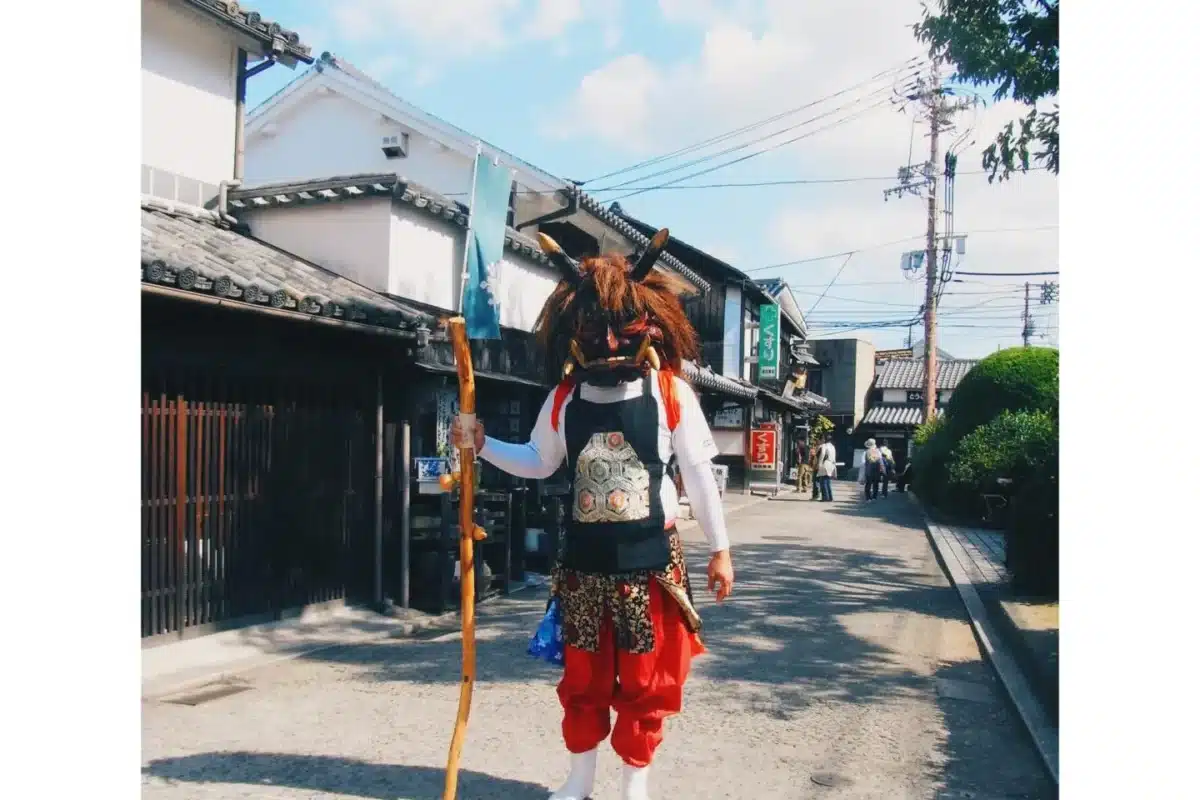
If you have not been to a festival in Japan before, I should explain that to aid the procession, the crowds may be cordoned off the parade area. But this particular festival in Kurashiki does it differently from Jidai Matsuri in Kyoto, as an example. The procession walks right into the heart of the old town amidst the crowd so all people can partake in it. People can choose to walk under the Mikoshi for good blessings, they can get knocked on the head by Suinkyo for good health, and they may even meet an Akuma or two prowling the streets.
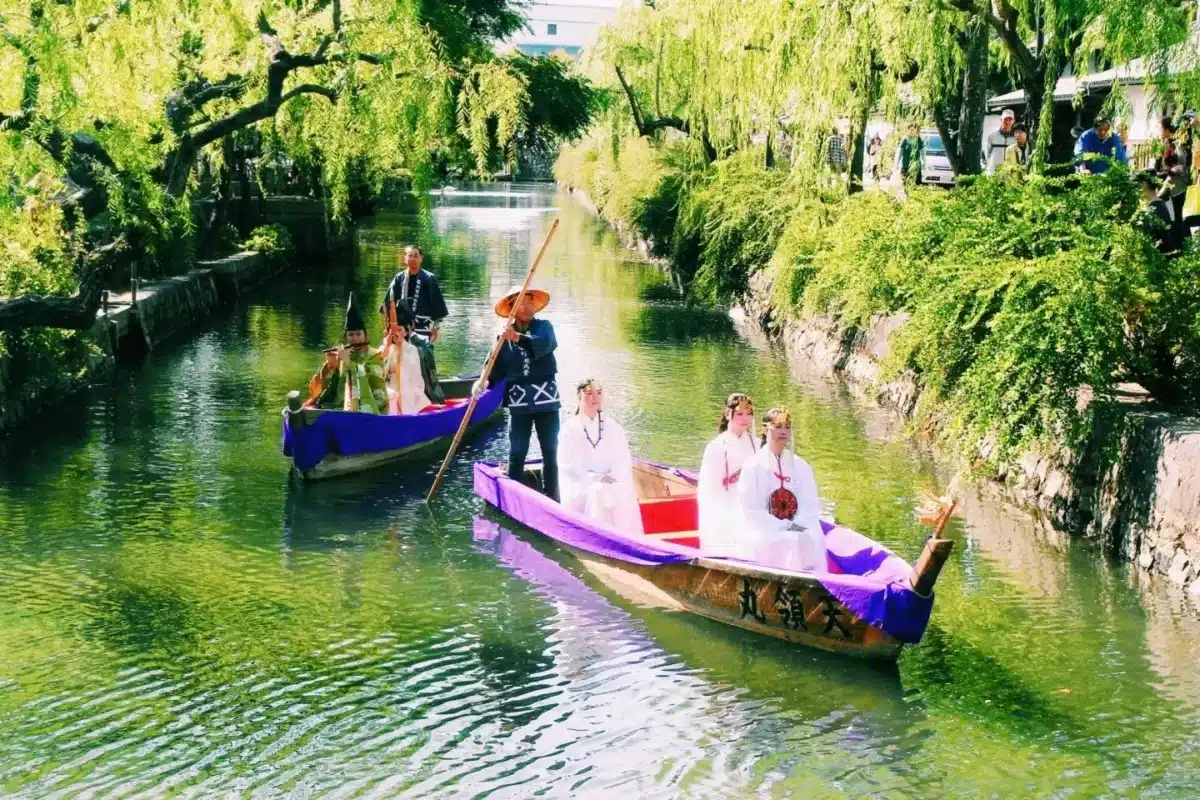
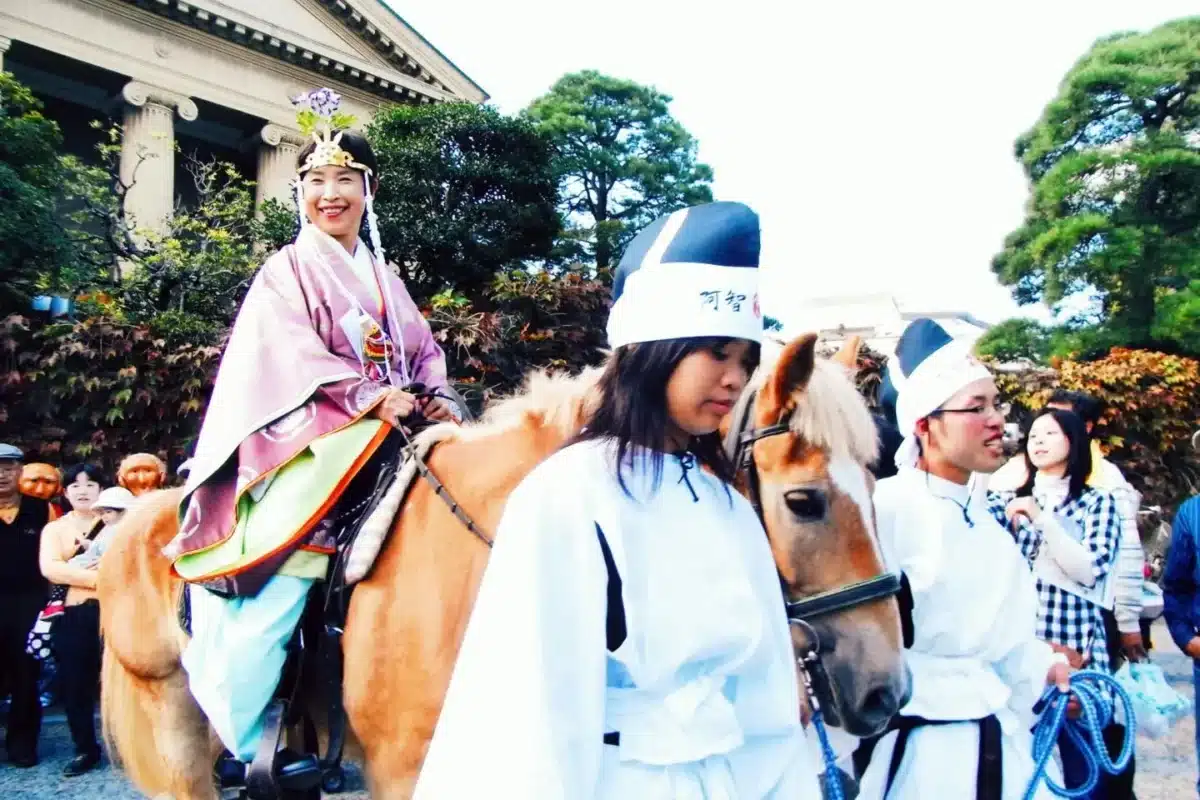
You can hear the procession before you see it coming as the bearers of the Mikoshi and the Senzairaku will be chanting as they walk. The Miko or priestess will travel on a horse and lead the procession. The Sanjyojin or 3 goddesses will be carried over the water with court musicians playing Gagaku in a separate boat slightly behind the goddesses. They will head down the canal before disembarking further down.
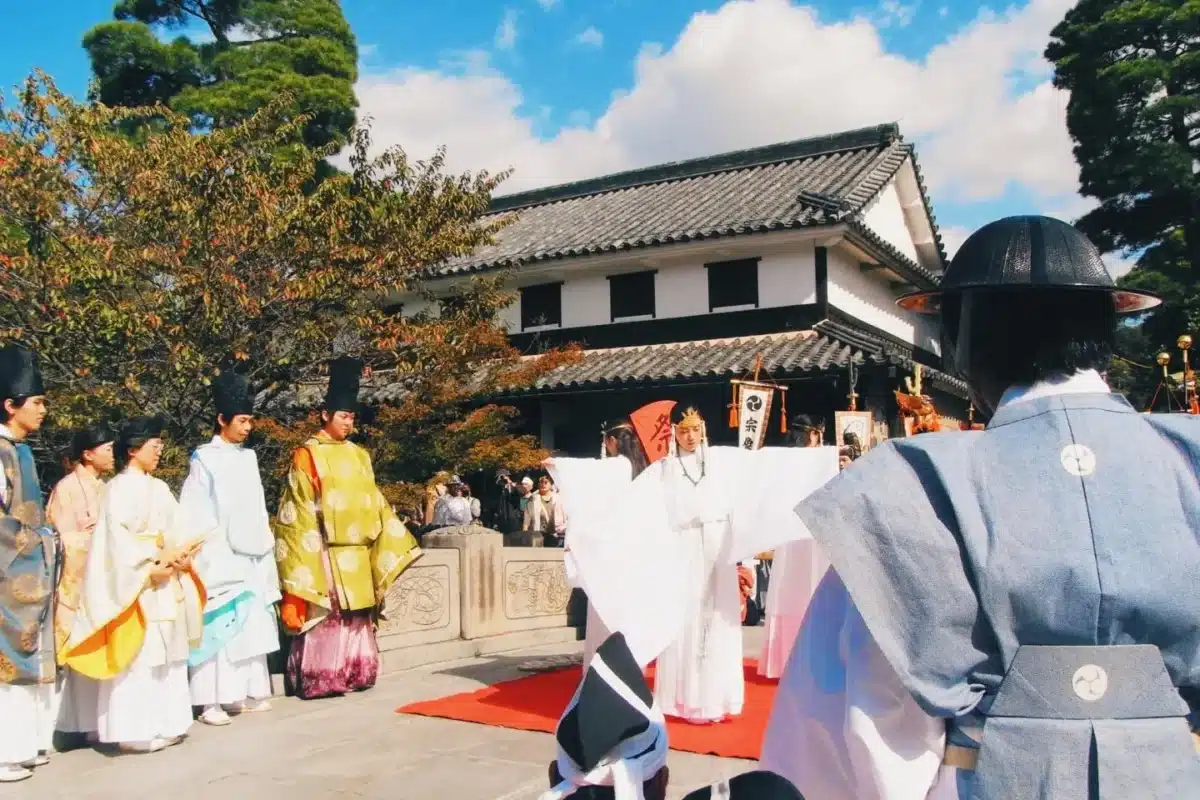
Once the priestess and the 3 goddesses are assembled on the stone bridge, the Miko makes a speech and then starts to sing. The beautiful voice is accompanied by the entrancing dance of the 3 goddesses and brings a calm over the whole area. Even with the crowd around, you do not feel flustered or annoyed as everyone seem to be charmed by the beauty of the scene. You can feel the gentle wind that whispers in your ear and the sunlight patting lightly on your cheeks, as you feel an overall sense of peace and calmness.
- Led by a shrine priestess traveling on horseback at the front of the grand procession
- Features the Three Goddesses carried in ornate traditional structures over the town canal waterways
- Accompanied by Gagaku musicians playing classical imperial court music in a separate following boat
- Walks directly among the crowd without barriers, allowing total immersion for every spectator
- Showcases chanting palanquin bearers who carry heavy drum stages and divine palanquins
- Stops at the stone bridge for formal speeches, traditional singing, and sacred dances
- Includes playful traditional characters like Suinkyo figures and roaming demons interacting with onlookers
- Passes through Edo-period streets flanked by historic white-walled and black-tiled merchant warehouses
Where It Takes Place
- City and Country: Kurashiki, Okayama, Japan
- Venue Name: Achi Shrine
- Google Maps Address: Tsurugata-yama-koen, Kurashiki, Okayama 710-0054, Japan
Best Viewing Spots, Photography & Visitor Tips
Finding the ideal viewing location can dramatically elevate your experience of the Kurashiki Autumn Festival. Hanging around the Kurashikikan, formerly the Kurashiki town hall and now the Tourist Information Center, provides some of the best bits of the festival procession as it navigates the central district.
Capturing traditional costumes, historic architecture, and dynamic street scenes requires a blend of patience and respect. The contrast of autumn sunlight on white-walled warehouses and willow-lined canals creates breathtaking photo opportunities, especially when photographing the waterborne arrival of the deities and the colorful Suinkyo characters.
Enjoying the festival respectfully means embracing the open community atmosphere while remaining mindful of local guidelines. Taking detours through Center-Gai Street, trying local delicacies like the famous crunchy katsu, and wearing comfortable walking shoes will ensure you experience the absolute best of Kurashiki’s historic autumn celebration.
Event Contact Details
- Email: contact@kurashiki-tourism.com
- Phone Number: 864263030
- Website: achi.or.jp
Achi Shrine & Autumn Grand Festival Rituals
The Kurashiki Autumn Festival, or Achi-Jinja Aki Matsuri, happens every year on the 3rd weekend of October to celebrate abundant harvests. The Japanese name of the festival is a combination of the shrine’s name, autumn, and festival designation, anchoring centuries of local heritage in a profound seasonal celebration.
The shrine is located in Tsurugata-yama-koen, a park that overlooks the Bikan Historical Quarter, preserved from the Edo Period. This historic sanctuary serves as the spiritual epicenter of the entire event, where sacred prayers and foundational ceremonies take place before moving into the merchant town.
Throughout the festival rituals, deep religious importance is placed on honoring the three protective daughters of the Sun God Amaterasu. These ancient rites unite local residents and visitors alike in spiritual devotion and thanksgiving.
- Dedicated to the Munakata Sanjoshin as protectors of the nation, the imperial household, and safe sea voyages
- Anchored at Achi Shrine situated within the scenic hillside park overlooking the merchant district
- Celebrates abundant harvests through traditional Shinto rites performed by trained shrine priests and priestesses
- Serves as the spiritual center where initial prayers and purification ceremonies are conducted
- Links modern participants with centuries of ancestral worship and regional heritage preservation
Kurashiki Bikan Historical Area Festival Atmosphere
- Edo-period streetscapes: Preserved architectural wonders featuring classic white-walled and black-tiled merchant warehouses
- Willow-fringed canals: Picturesque waterways running through the heart of the district where water processions take place
- Traditional stone bridges: Historic crossing points offering prime gathering spaces for spectators and sacred ceremonies
- Open public integration: Direct mingling of festival crowds and parade participants without restrictive barricades
- Charming merchant alleys: Narrow side streets filled with old shops, traditional cafes, and local artisan displays
- Historic town architecture: Remnants of Kurashiki’s history as a feudal rice storage hub lending unique visual charm
Kurashiki Byobu Festival & Local Cultural Displays
Another event to highlight is that on this special occasion, some of the residents open their houses to the public and display their Byobu folding screens which are handed down from generation to generation. Some are accompanied with Ikebana floral arrangements as well as calligraphy works. This intimate cultural tradition allows visitors to step inside historic private homes and witness the living heritage of local families.
The display of ancestral folding screens highlights the deep-rooted hospitality culture of Kurashiki residents during the autumn celebration. It offers a peaceful, artistic indoor counterpoint to the lively outdoor music and dynamic street processions occurring along the canals.
Food, Local Markets & Festival Experience
- Traditional katsu snacks: Crispy local pork cutlets sold at historic neighborhood butcher shops along Center-Gai Street
- Seasonal harvest treats: Regional culinary specialties celebrating autumn ingredients and local agricultural abundance
- Old toy boutiques: Quaint specialty shops offering vintage playthings and nostalgic Japanese memorabilia
- Local artisan crafts: Handmade goods and ceramics displayed by regional creators in historic storefronts
- Street food stalls: Temporary vendors offering savory festival snacks and refreshing beverages for walkers
- Historic cafe culture: Charming coffee shops housed inside converted centuries-old rice storehouses
- Neighborhood shopping detours: Engaging local markets found along winding detours away from the main thoroughfare
Location
FAQ
What is the main cultural purpose of the Kurashiki Autumn Festival?
The festival celebrates abundant autumn harvests and expresses deep gratitude to regional deities through sacred Shinto rites, music, and community processions. Held annually in mid-October, the multi-day event connects modern travelers directly with centuries-old spiritual traditions originating from Achi Shrine.
How does the public interact with the moving parade compared to other Japanese festivals?
Unlike many strict Japanese festivals that keep spectators behind barriers, Kurashiki allows the parade to weave directly through packed historic streets. Spectators can walk underneath the sacred palanquins for blessings and interact closely with traditional performers and playful characters.
What is the significance of the Suinkyo characters during the procession?
Suinkyo figures wear humorous masks of elderly men and women while roaming the cobblestone pathways carrying persimmon-stained fans. According to local folklore, being gently tapped on the head by these characters is believed to grant enhanced intelligence, good health, and a long life.
What related cultural events take place inside local homes during the celebration?
In tandem with the outdoor parade, the Kurashiki Byobu Festival takes place where local residents open their historic homes to display heirloom folding screens. These private exhibitions are frequently adorned with traditional flower arrangements and master calligraphy, showcasing authentic Japanese hospitality.
What are the best strategic locations for capturing memorable photography during the event?
Prime photography locations include the Kurashikikan Tourist Information Center plaza for wide procession shots and the scenic stone bridge for waterborne arrivals. Additionally, wandering into Center-Gai Street and narrow merchant alleys provides fantastic opportunities for authentic close-up portraits against historic architectural backdrops.

Leave a Reply