
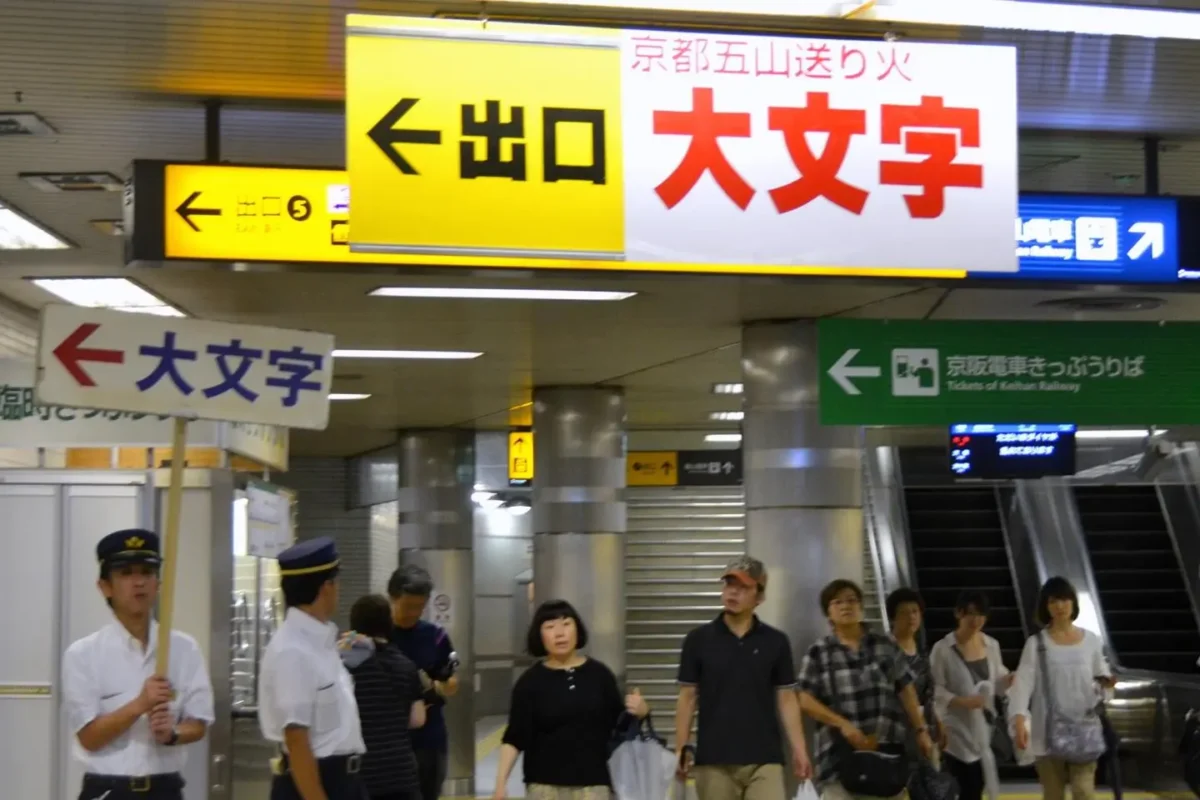
What to expect in 2027
Kyoto Gozan Okuribi 2027 is expected to illuminate the mountains surrounding Kyoto with five enormous bonfires representing traditional Japanese characters and symbols. The ceremony is one of Kyoto’s most distinctive summer traditions and is closely connected with Obon, the Buddhist period during which ancestral spirits are believed to return to the world of the living.
The five fires are known as Daimonji, Myo-Ho, Funagata, Hidari-Daimonji and Toriigata. Each is positioned on a different mountain or hillside around Kyoto, creating a sequence of glowing shapes that can be seen from numerous parts of the city. The ceremony is traditionally understood as a way of sending ancestral spirits back to the other world at the conclusion of the Obon period.
Unlike a conventional festival held inside one venue, Gozan Okuribi takes place across the mountains and surrounding viewing areas of Kyoto. Visitors therefore experience the event by choosing a suitable location from which one or more of the fires can be seen.
Enjoy Your Event Stress-Free with Japan Travelo
Do you know? Planning events, festivals, concerts, and cultural experiences in Japan can be overwhelming. Japan Travelo brings everything together in one place, helping you manage your itinerary, transport, and accommodation with ease—so you can enjoy Japan without the stress of planning.
The five fires are traditionally lit one after another at short intervals, beginning with Daimonji and continuing through the remaining four designs. Each fire burns for approximately half an hour, although exact operating conditions can be affected by weather and safety considerations.
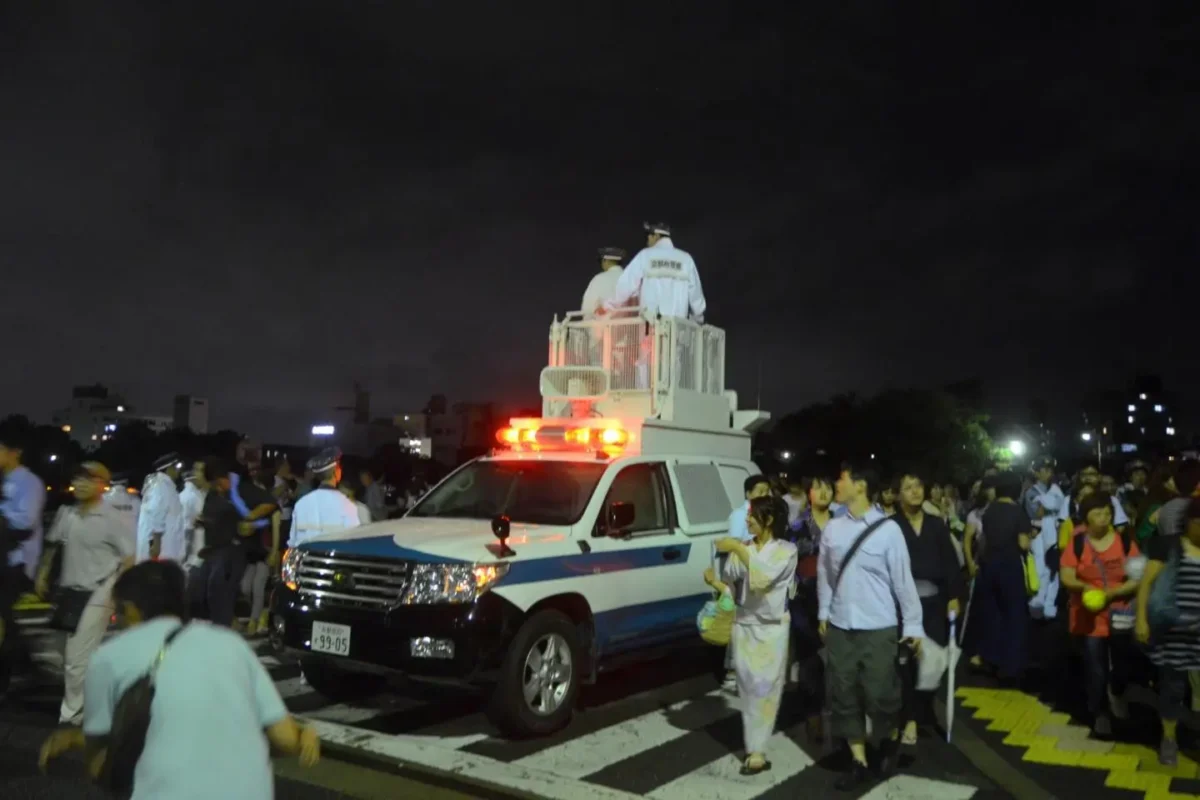
The event is especially atmospheric when viewed from an open riverside, bridge area, elevated location or another unobstructed part of the city. Because thousands of people gather at popular viewing locations, visitors should plan their route in advance and allow extra time for walking and public transportation.
Event dates
Kyoto Gozan Okuribi 2027 is planned for Mid August 2027 (Dates TBD) in Kyoto, Japan.
The ceremony traditionally takes place during the Obon period and is held annually. The Kyoto City Official Travel Guide describes Gozan Okuribi as a traditional annual event associated with sending off the spirits of ancestors.
The final 2027 visitor information, viewing guidance, safety instructions and any special tourism programmes should be checked through official Kyoto tourism sources before travelling.
Visiting this event? Don’t miss out on these amazing activities and local experiences while you’re here.
Venues & festival locations
Gozan Okuribi does not have one central festival ground. Instead, the ceremony takes place simultaneously across five mountains surrounding Kyoto.
Daimonji
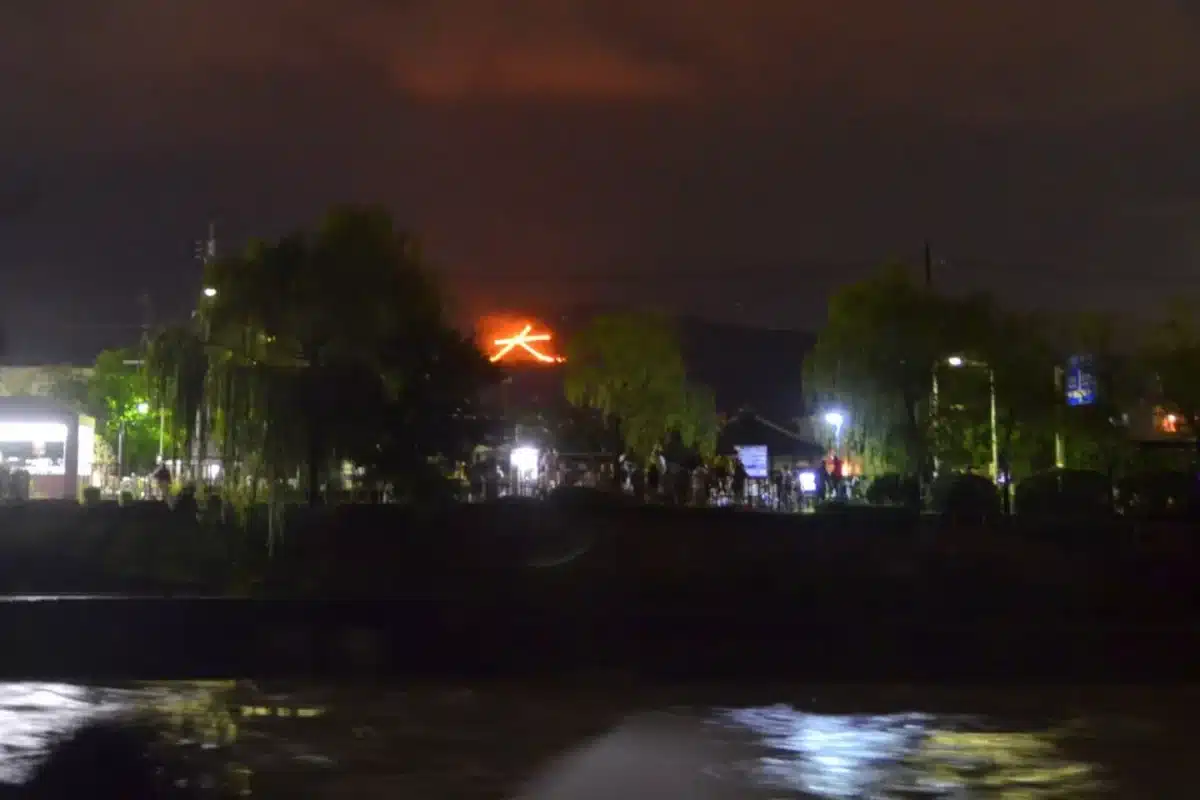
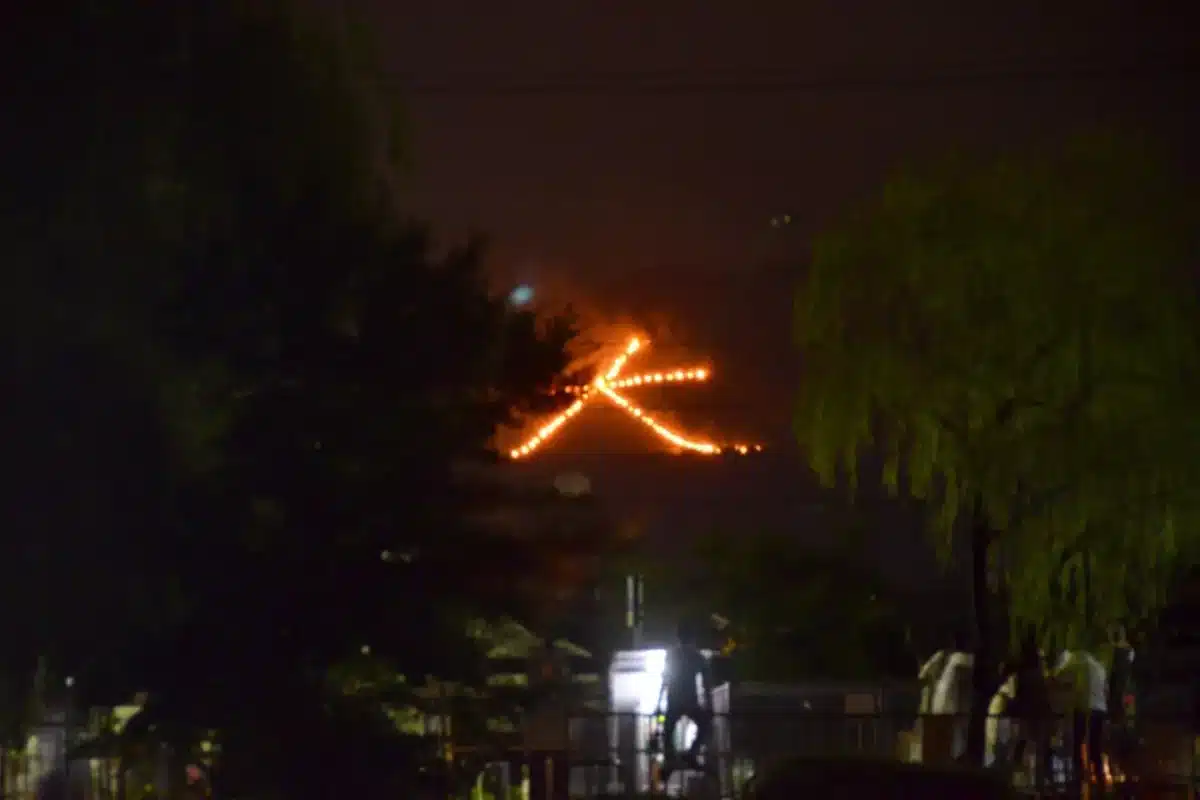
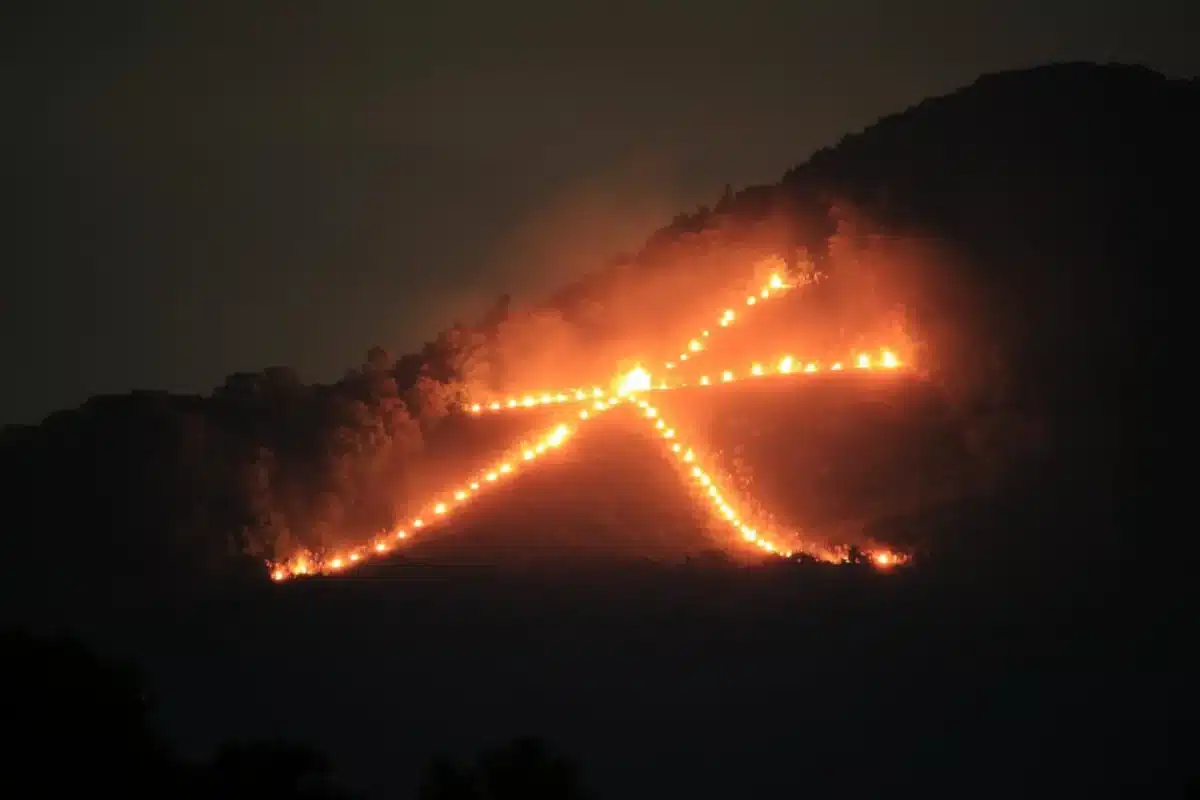
The large character “大” is displayed on Mt. Daimonji, also known as Nyoigatake, on the eastern side of Kyoto. Popular viewing areas include sections of the Kamo River, Kyoto Imperial Park and areas around Yoshidayama.
Myo-Ho
The characters “妙” and “法” appear around the Matsugasaki area. The two characters represent Buddhist teachings and are associated with Mt. Mantoro and Mt. Daikokuten. Viewing areas include Kitayama Street and areas around Matsugasaki and the Takano River.
Funagata
The “船” or ship-shaped fire is displayed on Mt. Funa in Nishigamo. The design resembles a traditional boat and can be viewed from parts of the Kamogawa River and surrounding northern Kyoto areas.
Hidari-Daimonji
The second “大” is displayed on Mt. Okita in the western part of the city. Popular viewing areas include sections of Nishioji Street and locations around Kinkaku-ji.
Toriigata
The final design resembles a Shinto shrine gate and is located on Mt. Mandara in the Saga area. Viewing areas include the vicinity of Togetsukyo Bridge, Matsuo Bridge and Hirosawa Pond.
Full cultural programme
The core programme revolves around the five bonfires and the religious meaning of the ceremony. Unlike a music or food festival, there is no conventional stage programme running throughout the evening.
The cultural experience includes:
- Preparation of the five sacred fire sites
- Offering of gomagi prayer sticks
- Traditional prayers and memorial practices
- Lighting of Daimonji
- Lighting of Myo-Ho
- Lighting of Funagata
- Lighting of Hidari-Daimonji
- Lighting of Toriigata
- Public viewing from designated areas
- Special cultural interpretation programmes
- Historical and religious explanations
- Live broadcasts and online viewing options when provided
The five bonfires are registered as intangible folk cultural assets of Kyoto City, reflecting their importance as part of the city’s traditional culture.
Visitors should understand that the ceremony itself is relatively solemn. The main attraction is not entertainment programming but the sight of the fires appearing sequentially across Kyoto’s night sky.
Featured traditions & performances
The most important tradition is the lighting of the five Okuribi fires. Each fire has a distinctive shape and location, giving visitors an opportunity to see different aspects of Kyoto’s cultural landscape.
Daimonji is represented by the large “大” character. Myo-Ho consists of two characters associated with Buddhist teachings. Funagata takes the shape of a ship, Hidari-Daimonji repeats the “大” form on the western side of Kyoto, and Toriigata resembles a traditional shrine gate.
Another important tradition is the use of gomagi, small pieces of wood on which people can write prayers, wishes or names before they are offered to the fire. The act of submitting gomagi connects individual visitors with the religious and memorial character of the ceremony.
There is generally no large-scale performance stage associated with the main ceremony. Instead, the visual sequence of the fires, the surrounding temples and mountains, and the Obon traditions form the central cultural experience.
Historical & heritage highlights
Gozan Okuribi is deeply connected with Kyoto’s Obon traditions. During Obon, ancestral spirits are traditionally believed to return to the world of the living. Okuribi is understood as the ceremony that helps guide those spirits back to the other world.
The exact origins of the ceremony are uncertain. Kyoto’s official tourism sources note that there are several theories concerning its beginnings, while some historical interpretations connect the tradition with older customs involving fire and the sending away of spirits.
The present form of Gozan Okuribi developed over a long historical period, with references linking its establishment as an annual tradition to the Muromachi and Edo periods.
The ceremony is also important because it connects Kyoto’s religious heritage with its geography. The five mountains form a natural framework around the urban area, and the bonfires make that relationship visible after dark.
The mountains themselves are not simply viewing platforms. They contain protected areas and operational fire sites that require careful management by preservation associations and volunteers.
Events & activities schedule
The detailed 2027 programme will be announced closer to the event, but the traditional sequence follows a recognisable pattern.
Obon preparations
Before the main ceremony, visitors may encounter local preparations and opportunities to learn about the meaning of Obon and Okuribi.
Gomagi offerings
Gomagi reception points are established around the individual mountains. Visitors can write prayers or wishes on the wooden pieces and submit them for burning. Availability and reception arrangements vary by mountain.
Viewing preparation
As evening approaches, visitors move toward their selected viewing locations. Popular areas near rivers, bridges and open streets can become crowded.
Sequential bonfire lighting
The five fires traditionally appear one after another at intervals of approximately five minutes. The sequence begins with Daimonji and continues through Myo-Ho, Funagata, Hidari-Daimonji and Toriigata.
Evening viewing
After all five fires have appeared, visitors can continue observing the illuminated mountains before gradually dispersing through Kyoto’s streets and public transport network.
Ticket types & entry options
The main Gozan Okuribi ceremony is not structured like a conventional ticketed festival. Visitors generally watch the bonfires from public viewing areas around Kyoto.
This means there is normally no general admission ticket required to stand along a public road, river area or other permitted viewing location.
Optional cultural experiences and special tours may be separately ticketed. Kyoto City has previously offered official special experiences designed to give visitors a deeper understanding of the ceremony.
Previous published programmes included:
- Gozan Okuribi Special Experience: approximately $1,530 USD per person
- All Hills Taxi Tour: approximately $132 USD per person
- Self-guided All Mountains Experience Set: approximately $17 USD
- Gomagi-only experience set: approximately $3 USD
These amounts are converted from previously published prices and are provided only as reference pricing. The 2027 programme and availability may differ.
Visitors attending only the public outdoor viewing areas should check the latest Kyoto City guidance for any temporary restrictions or designated viewing arrangements.
Guided tours & cultural experiences
Kyoto has developed special experiences that allow visitors to understand the ceremony beyond simply seeing the fires from a distance.
One previous official programme offered guided visits to an Okuribi mountain during the daytime, followed by evening viewing from selected locations. Participants could hear explanations from people involved in the preparation and lighting of the fires.
Another experience allowed visitors to visit the gomagi reception points for all five mountains. Participants could submit gomagi, collect commemorative stamps and use an audio guide explaining the history and meaning of Gozan Okuribi.
A more premium experience previously combined mountain access, an English-speaking guide, reserved taxi transportation, dinner and an evening viewing location.
For 2027, visitors should look for official Kyoto tourism announcements if similar experiences are offered again. These programmes can be especially useful for international visitors because they explain the religious symbolism and local traditions behind the ceremony.
Special ceremonies & celebrations
The most important ceremonial moment is the lighting of the five bonfires.
The ceremony is traditionally connected with sending ancestral spirits back after their return during Obon. This makes the event more reflective than a conventional summer fireworks display or illumination festival.
Gomagi offerings are another important ceremonial element. People write wishes, prayers or names on pieces of wood before they are placed into the sacred fires.
The five mountain fires also have individual symbolism:
- Daimonji: the great “Dai” character
- Myo-Ho: Buddhist teachings represented by two characters
- Funagata: the ship
- Hidari-Daimonji: the left-side “Dai” character
- Toriigata: the shrine-gate shape
Together, they create one of Kyoto’s most recognisable summer cultural scenes.
Festival rules
Visitors should treat Gozan Okuribi as a religious and cultural ceremony rather than simply a photographic spectacle.
Important rules and safety considerations include:
- Do not enter the Okuribi mountains during the ceremony.
- Do not attempt to hike to the fire beds for a closer view.
- Follow instructions from security personnel and volunteers.
- Do not enter restricted riverbank areas.
- Take extra care near rivers after dark.
- Avoid stopping in places that block pedestrian traffic.
- Do not use smartphones while walking through dense crowds.
- Follow temporary crowd-control measures.
- Keep children close in busy viewing areas.
- Respect local residents and surrounding neighbourhoods.
- Do not touch fire installations or restricted equipment.
Kyoto’s official guidance specifically states that hiking on the mountains where the Okuribi fires are held is prohibited during the ceremony for safety and to prevent interference with preparations.
Riverbanks can also become unsafe at night, particularly during high water conditions. Visitors should follow instructions from security staff rather than attempting to find a closer position beside the water.
How to get there
Kyoto Gozan Okuribi is spread across the city, so the best transportation method depends on which fire visitors want to see.
For Daimonji, visitors can use the eastern Kyoto area around Ginkaku-ji, Yoshidayama or the Kamo River.
For Myo-Ho, the Matsugasaki and Kitayama areas provide access to viewing locations.
For Funagata, northern Kyoto around Nishigamo and the Kamogawa area is useful.
For Hidari-Daimonji, western Kyoto locations around Nishioji Street and Kinkaku-ji are commonly used.
For Toriigata, the Saga and Arashiyama area provides several viewing opportunities, including locations around Togetsukyo Bridge and Hirosawa Pond.
Kyoto’s extensive railway, subway and bus network makes it possible to reach many viewing areas, but visitors should expect heavy demand around the ceremony.
It is generally better to select one or two fires to view rather than attempting to chase all five around the city during the lighting sequence.
Public transport & parking
Public transportation is the preferred way to travel around Kyoto during Gozan Okuribi.
Useful transport options include:
- Kyoto City Subway
- JR railway services
- Hankyu Railway
- Keihan Railway
- Kyoto City buses
- Private railway services
- Walking between nearby viewing areas
Road traffic can become particularly congested around popular viewing locations. Parking spaces may also be difficult to find, while some streets or river areas may have temporary restrictions.
Visitors should avoid relying on a private car unless they have a specific reason to do so.
The Kyoto City tourism authorities also provide real-time safety information during the event, including crowding information and, in some years, livestream cameras around busy areas.
Because the five fires are separated across the city, public transportation should be planned around the specific mountain selected for viewing.
Accommodation areas
Staying in central Kyoto provides the greatest flexibility for visitors attending Gozan Okuribi.
Downtown Kyoto
Areas around Shijo, Kawaramachi and Karasuma provide restaurants, shopping and convenient connections to several parts of the city.
Kyoto Station
Kyoto Station is useful for visitors arriving by Shinkansen or JR services and offers a wide range of accommodation.
Higashiyama
This area is convenient for visitors interested in the eastern side of Kyoto and viewing opportunities associated with Daimonji.
Northern Kyoto
Visitors focusing on Myo-Ho or Funagata may prefer accommodation farther north, although transport options can be more limited.
Arashiyama
Arashiyama is particularly convenient for visitors interested in the western side of the ceremony and Toriigata viewing areas.
Booking accommodation early is advisable because the event takes place during a busy summer travel period in Kyoto.
Food & traditional specialties
Gozan Okuribi itself is primarily a religious and cultural ceremony rather than a food festival, so visitors should explore Kyoto’s restaurants and traditional food districts before or after viewing the fires.
Popular Kyoto foods include:
- Kyoto-style kaiseki cuisine
- Yudofu
- Nishin soba
- Kyoto vegetables
- Obanzai
- Matcha sweets
- Yatsuhashi
- Tofu dishes
- Seasonal wagashi
- Green tea
Visitors near the Kamo River can combine their viewing experience with dinner in central Kyoto, while those in Arashiyama or northern Kyoto can explore local restaurants before returning to their accommodation.
During the Obon period, visitors may also encounter seasonal Japanese foods and traditional sweets associated with summer cultural events.
Because popular restaurants can become busy during the evening, making reservations in advance is recommended.
Accessibility
Accessibility varies considerably because Gozan Okuribi takes place across public streets, riverside areas, bridges and urban neighbourhoods rather than one purpose-built festival venue.
Visitors with mobility requirements should select a viewing location carefully.
Important considerations include:
- Crowded pedestrian areas
- Narrow pavements
- Uneven riverside surfaces
- Steps and bridges
- Limited seating
- Heavy pedestrian traffic
- Dark outdoor conditions
- Temporary restrictions around viewing areas
The mountains themselves should not be treated as accessible viewing venues. Hiking into the Okuribi areas is restricted during the ceremony, and several of the mountains are generally closed to the public.
For visitors who require accessible routes, an urban viewing location with good public transport access may be more suitable than attempting to reach remote mountain areas.
Best cultural experiences
Watch the fires appear across the mountains
The defining experience is seeing the five enormous shapes appear sequentially across Kyoto’s surrounding mountains.
Choose one main viewing area
Rather than travelling continuously between mountains, select a location with a clear view and remain there throughout the lighting sequence.
Participate in the gomagi tradition
Where reception points are operating, writing a wish or prayer on gomagi provides a more personal connection to the ceremony.
Learn the meaning of each symbol
Understanding the five designs makes the event much more meaningful. The characters and shapes are not simply decorative; they form part of the religious and cultural symbolism of the ceremony.
Visit Kyoto during Obon
Experiencing Gozan Okuribi alongside other Obon customs provides greater context for understanding why the fires are lit.
Take a cultural tour
Official guided experiences can provide access to explanations from people connected with the Okuribi tradition and may include specially arranged viewing opportunities.
Experience Kyoto at night
The event is also an opportunity to see the city’s mountains, rivers and historic districts in a completely different atmosphere from daytime sightseeing.
Previous year’s highlights
The previous editions of Gozan Okuribi have continued the traditional sequence of five fires surrounding Kyoto.
The ceremony begins with Daimonji, followed by Myo-Ho, Funagata, Hidari-Daimonji and Toriigata. The fires are traditionally illuminated at approximately five-minute intervals, creating a sequence that can be followed across the Kyoto skyline.
Recent official tourism programmes have also expanded opportunities for visitors to learn about the cultural meaning of the event. Special experiences have included guided visits to fire sites, explanations from people involved in the tradition, reserved transportation and designated evening viewing locations.
The gomagi tradition has remained an important part of the experience. Visitors can write prayers or wishes on small wooden pieces and submit them for burning at the appropriate mountain reception point.
Kyoto’s official tourism guidance has also increasingly focused on visitor safety because popular viewing areas can become crowded. Recent guidance has included warnings about entering riverbanks at night, hiking on the mountains and using smartphones while walking through crowded areas.
Official tickets
There is generally no standard admission ticket for watching the main Gozan Okuribi fires from permitted public viewing areas. The ceremony takes place across Kyoto’s mountains and can be viewed from many public locations.
Paid cultural experiences, guided tours and special viewing programmes may be offered separately. Previous Kyoto City tourism programmes included specialist guided experiences, taxi tours and gomagi-related cultural programmes.
For the 2027 edition, visitors should check the official Kyoto tourism information for confirmed special experiences, viewing guidance, safety instructions and any advance booking requirements.
https://en.japantravel.com/kyoto/gozan-okuribi/14588
Video
Location
FAQ
What is the primary spiritual purpose of the Kyoto Gozan Okuribi festival?
The festival serves as a solemn Buddhist memorial ritual marking the conclusion of the Obon season, utilizing massive mountain bonfires to light and guide the returning spirits of deceased ancestors back to the spiritual realm after their temporary visit to the living world.
Are members of the general public allowed to climb the mountain slopes during the event?
No, public access to the mountain slopes is strictly prohibited on the night of the festival due to extreme fire safety hazards, steep terrain, and the need to preserve the sacred sites for authorized community volunteers managing the flames.
How long do the individual mountain bonfires typically burn after being ignited?
Each separate mountain bonfire burns steadily for approximately thirty minutes, glowing brilliantly against the dark summer sky before gradually fading into embers as the sequence concludes across the five designated peaks surrounding the city basin.
What are gomagi and what role do they play in the festival preparation?
Gomagi are sacred cedarwood prayer strips upon which participants write their names, personal wishes, or concerns, which are then collected by local temples and transported up the mountains to serve as the foundational firewood for the ceremonial blazes.
Where are the most effective urban locations in Kyoto to view multiple mountain symbols?
Open public spaces such as the banks of the Kamo River, wide elevated bridges like Demachiyanagi, and designated city plazas offer expansive sightlines that allow spectators to witness several distinct kanji characters and symbols light up sequentially across the horizon.
How does Gozan Okuribi differ culturally from standard modern fireworks celebrations?
Unlike festive fireworks designed purely for vibrant public entertainment and noisy celebration, Gozan Okuribi is approached with deep reverence, quiet reflection, and gentle melancholy as a religious send-off honoring ancestors and processing the emotional weight of parting.
What logistical preparations should first-time visitors make before attending the event?
Visitors should plan their public transportation routes in advance, expect heavy pedestrian congestion around major riverbanks and bridge overpasses, arrive well before sunset to secure viewing positions, and carry portable hydration and waste disposal bags.

Leave a Reply