
-
October 18, 2026
Event date:
-
November 21, 2026
Event end:
What to expect in 2026
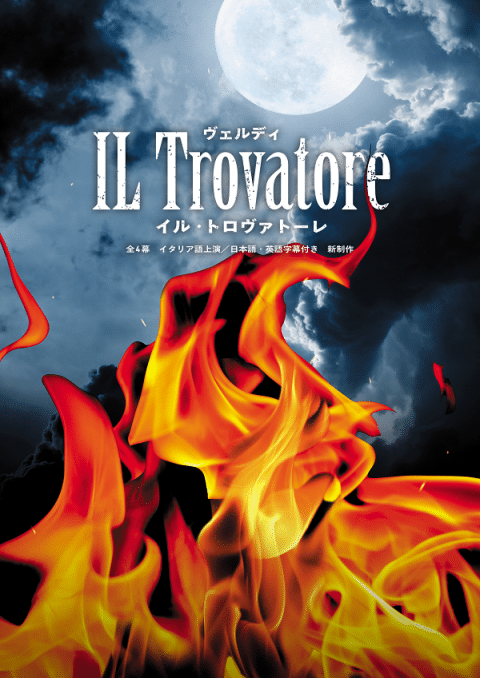
Verdi’s opera Il Trovatore returns to Japanese stages in 2026 as a new national co-production presenting one of the composer’s best-known tragic operas. The production is directed by Misa Takagishi and is performed in Italian with Japanese and English subtitles, allowing audiences to experience Verdi’s original-language opera while following the dramatic story through projected translations.
The 2026 production is scheduled across Japan, with performances in Kanazawa, Hirakata, Tokyo and Niigata. The dates supplied for the Ticket Pia listing are October 18, November 8 and November 21, while the national production schedule also includes a November 29 performance in Niigata.
Il Trovatore tells a story of love, rivalry, revenge and mistaken identity. Leonora loves the troubadour Manrico, while Count di Luna also desires Leonora and becomes Manrico’s rival. Azucena, a Romani woman carrying the consequences of a terrible event from her past, becomes central to the opera’s family secrets and tragic conclusion.
Enjoy Your Event Stress-Free with Japan Travelo
Do you know? Planning events, festivals, concerts, and cultural experiences in Japan can be overwhelming. Japan Travelo brings everything together in one place, helping you manage your itinerary, transport, and accommodation with ease—so you can enjoy Japan without the stress of planning.
The 2026 presentation is especially interesting because the production travels between different regions while working with local orchestras and opera choruses. This means that the staging remains part of one national project, but the musical forces differ depending on the city.
The production is being presented as part of Japan’s National Co-Production Opera project, a long-running initiative connecting major theatres and performing-arts organizations to produce opera productions for audiences in multiple parts of the country.
Event dates
The 2026 production is scheduled for four performances in Japan.
Kanazawa
October 18, 2026, at 2:00 PM at Kanazawa Theatre in Ishikawa Prefecture. Doors are scheduled to open at 1:00 PM.
Hirakata
November 8, 2026, at 2:00 PM at the Kansai Medical University Large Hall at Hirakata City General Cultural Arts Center in Osaka Prefecture. Doors open at 1:15 PM.
Tokyo
November 21, 2026, at 2:00 PM at the Concert Hall of Tokyo Metropolitan Theatre. The lobby opens at 1:00 PM.
Niigata
November 29, 2026, at 2:00 PM at Niigata Prefectural Civic Centre.
The Ticket Pia event listing specifically promotes the October 18, November 8 and November 21 performances, while the official production information confirms the additional Niigata performance.
Visiting this event? Don’t miss out on these amazing activities and local experiences while you’re here.
Venue & performance locations
The production uses four established performing-arts venues around Japan rather than a single permanent opera house.
Kanazawa Theatre
The first performance is presented at Kanazawa Theatre. The venue provides the setting for the opening performance of the national production and hosts the cast alongside Orchestra Ensemble Kanazawa and Kanazawa Opera Chorus.
Hirakata City General Cultural Arts Center
The Osaka-area performance takes place in the Kansai Medical University Large Hall at Hirakata City General Cultural Arts Center. The production is accompanied by the Osaka Philharmonic Orchestra and Hirakata City Opera Chorus.
Tokyo Metropolitan Theatre
Tokyo hosts the production at the Concert Hall of Tokyo Metropolitan Theatre. The performance forms part of the theatre’s Theatre Opera series and is the twentieth production in that series.
Niigata Prefectural Civic Centre
The final scheduled presentation takes place at Niigata Prefectural Civic Centre, accompanied by the Niigata Central Philharmonic Orchestra and Niigata Prefectural Opera Chorus.
Full programme
Il Trovatore is a four-act opera composed by Giuseppe Verdi with a libretto by Salvatore Cammarano. The 2026 production presents the complete opera rather than a selection of individual scenes.
The four-act structure is traditionally organized around the following sections:
- Act I – The Duel
- Act II – The Gypsy
- Act III – The Gypsy’s Son
- Act IV – The Execution
The drama begins with a conflict between Manrico and Count di Luna. Leonora is caught between her love for Manrico and the Count’s determination to win her affection.
Azucena introduces another dimension to the story. Her memories of her mother’s fate and the revenge she has pursued for years eventually become connected to Manrico’s identity. The resulting revelation transforms the personal rivalry into a much larger family tragedy.
The production is performed in Italian, with Japanese and English subtitles. This allows the original Italian text to remain part of the musical experience while giving audiences access to the dramatic meaning.
Verdi’s score moves between intimate lyrical passages, large ensemble scenes and highly dramatic confrontations. The four acts create a continuous progression from romantic conflict to increasingly serious revelations and the opera’s tragic finale.
Featured productions & performers
The 2026 production is directed by Misa Takagishi. She previously directed Il Trovatore in 2017, and her return to the opera provides continuity while introducing a new production concept for the 2026 national co-production.
Manrico – Hiroaki Fueda
Hiroaki Fueda takes the role of Manrico throughout the national production. Manrico is the troubadour at the heart of Leonora’s love story and Count di Luna’s rivalry.
Leonora – Yasko Sato
Yasko Sato appears as Leonora in Kanazawa and Niigata. The role requires a highly demanding soprano performance as Leonora moves between romantic expression, dramatic confrontation and emotional crisis.
Leonora – Mihoko Kinoshita
Mihoko Kinoshita performs Leonora in Hirakata and Tokyo. Her previous repertoire includes major Verdi and Puccini roles, making the role an important part of her operatic work.
Azucena – Kasumi Shimizu
Kasumi Shimizu performs Azucena in Kanazawa and Niigata. Azucena is one of the opera’s most dramatically complex characters, connecting the current conflict with events from the past.
Azucena – Mutsumi Taniguchi
Mutsumi Taniguchi performs Azucena in Hirakata and Tokyo. The role gives the mezzo-soprano a central place in the opera’s dramatic and emotional development.
Count di Luna – Takashi Aoyama
Takashi Aoyama appears as Count di Luna in Kanazawa and Niigata. The Count is Manrico’s rival and one of the principal forces driving the opera’s conflict.
Count di Luna – Takaoki Onishi
Takaoki Onishi takes the role in Hirakata and Tokyo, creating a different principal cast combination for those performances.
Shows & performances
The 2026 production presents the complete four-act Il Trovatore rather than a concert selection or shortened recital.
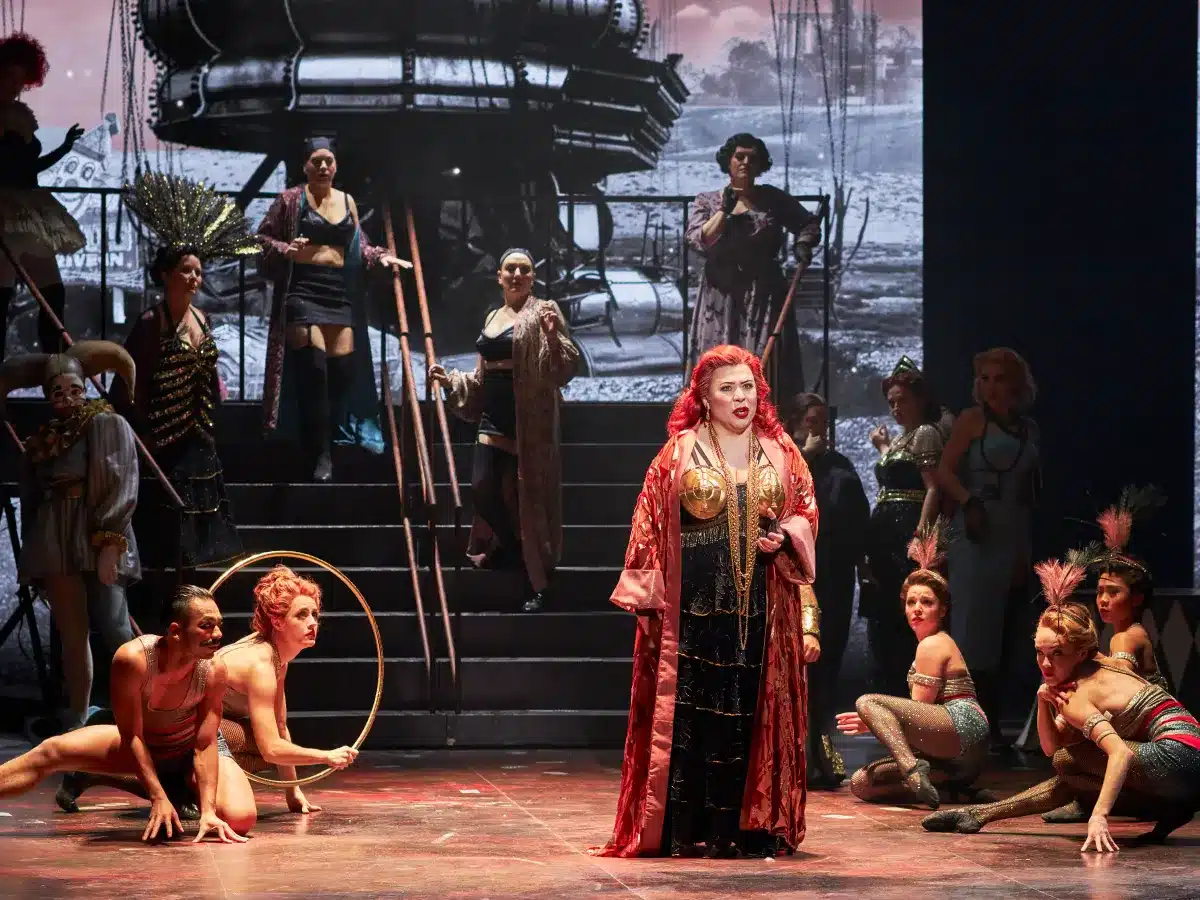
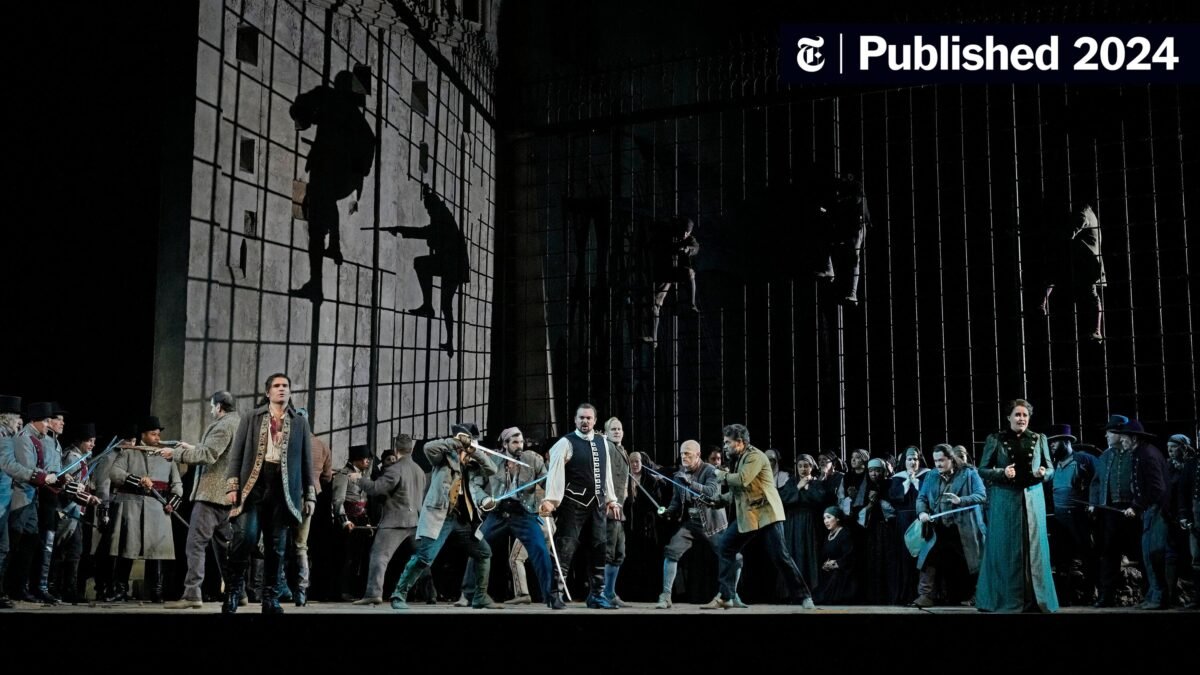
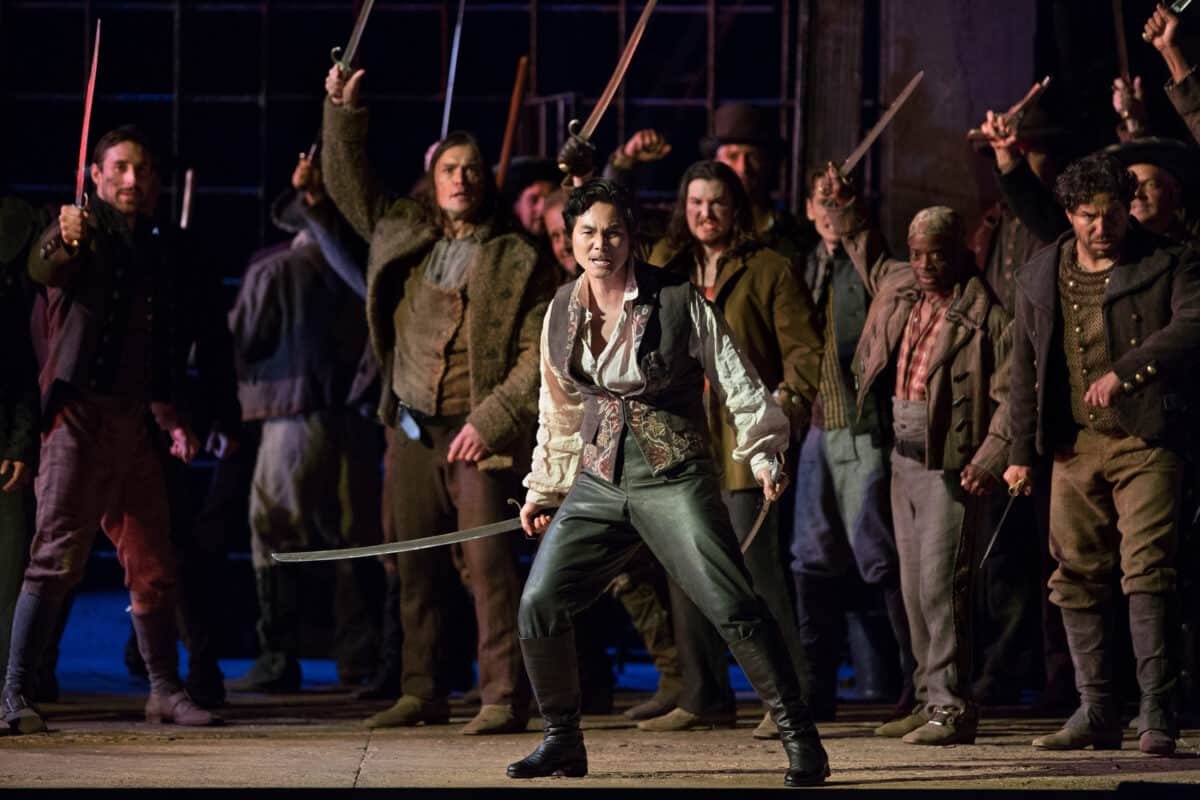
The performance combines solo singing, ensembles, chorus and orchestra within a fully staged opera production. The dramatic action is built around the intertwined stories of Leonora, Manrico, Count di Luna and Azucena.
The title’s central conflict develops through several themes:
- Love – Leonora and Manrico are deeply connected despite the dangers surrounding them.
- Rivalry – Count di Luna sees Manrico as both a romantic and personal rival.
- Revenge – Azucena’s past drives important decisions throughout the opera.
- Identity – Hidden family connections eventually change the meaning of the central conflict.
- Tragedy – The final act brings the consequences of the characters’ choices together.
The combination of Verdi’s music and the dramatic storyline makes the production suitable for both experienced opera audiences and visitors encountering Il Trovatore for the first time.
Performance schedule
The national schedule is divided into four performances.
October 18 – Kanazawa
The Kanazawa performance begins at 2:00 PM. Jun Iisaka conducts Orchestra Ensemble Kanazawa, with Kanazawa Opera Chorus supporting the production. The principal cast includes Hiroaki Fueda, Yasko Sato, Kasumi Shimizu and Takashi Aoyama.
November 8 – Hirakata
The Hirakata performance begins at 2:00 PM. The Osaka Philharmonic Orchestra performs under Jun Iisaka, joined by Hirakata City Opera Chorus. Mihoko Kinoshita, Mutsumi Taniguchi and Takaoki Onishi appear alongside Hiroaki Fueda.
November 21 – Tokyo
The Tokyo performance begins at 2:00 PM at Tokyo Metropolitan Theatre Concert Hall. Masaru Kumakura conducts The Opera Band, with The Opera Choir supporting the singers.
November 29 – Niigata
The Niigata performance begins at 2:00 PM and features Hiroaki Fueda, Yasko Sato, Kasumi Shimizu and Takashi Aoyama with the Niigata Central Philharmonic Orchestra and Niigata Prefectural Opera Chorus.
Ticket types
Ticket categories and prices vary between the four venues.
Kanazawa
- SS Seat – approximately $76.68
- S Seat – approximately $57.51
- A Seat – approximately $44.73
- B Seat – approximately $31.95
- Wheelchair Seat – approximately $57.51
- University students and younger, A Seat – approximately $22.36
- University students and younger, B Seat – approximately $15.97
Hirakata
- A Seat – approximately $76.68
- B Seat – approximately $63.90
- C Seat – approximately $51.12
- D Seat – approximately $31.95
Tokyo
- S Seat – approximately $108.63
- A Seat – approximately $89.46
- B Seat – approximately $70.29
- C Seat – approximately $44.73
- U30 seats – 50% of the applicable standard S to B ticket price
- High-school students and younger – approximately $6.39
Niigata
- S Seat – approximately $76.68
- A Seat – approximately $51.12
- B Seat – approximately $31.95
- B Seat for students – approximately $12.78
The listed dollar amounts are approximate conversions of the published Japanese ticket prices and can change slightly with exchange rates. Venue-specific ticket availability can also change as performances approach.
Ticket release & booking
Ticket sales are managed separately by each participating venue.
Kanazawa
OEK members received advance sales before general sales opened. General ticket sales began in April 2026 through authorized ticketing channels and local outlets.
Hirakata
Advance sales were offered to CLUB H-Arts members before general sales began on May 21, 2026. General sales included the venue, Ticket Pia and ePlus.
Tokyo
Tokyo Metropolitan Theatre members received an advance sales period before general sales opened on June 20, 2026. Tickets are handled through the theatre and authorized ticketing services.
Ticket Pia
The Ticket Pia event page provides information for the Kanazawa, Hirakata and Tokyo performances and is one of the principal authorized booking routes for the production.
VIP & premium seating
The production does not advertise one nationwide VIP package covering all four performances. Instead, premium experiences are primarily represented by the highest seating categories offered at each venue.
Kanazawa provides SS and S seating, with SS representing the highest standard category. Hirakata’s A Seat is the highest published category, while Tokyo offers S seating as its highest standard category. Niigata also provides S seating as its top standard category.
There is no published nationwide package guaranteeing a meet-and-greet, backstage visit or VIP lounge. Visitors interested in premium seating should therefore select the highest available seating category at their chosen venue and confirm the current seating map before purchase.
Event rules
Audience members should follow the individual regulations of the theatre where they attend.
Age restrictions
Preschool-age children are not permitted to attend the performance. This restriction is included in the published ticketing information.
Language
The opera is performed in Italian and accompanied by Japanese and English subtitles. Visitors should check subtitle visibility from their selected seating position when choosing tickets.
Programme changes
Cast, repertoire and other performance details may be changed. Visitors should verify the latest information with the relevant venue before traveling.
Ticket resale
Unauthorized ticket resale is prohibited. Tickets should be purchased through official venues and authorized ticketing services.
Audience etiquette
Mobile phones and other electronic devices should be silenced before the performance begins. Photography, video recording and audio recording should only be undertaken when specifically permitted by the venue.
How to get there
Travel arrangements depend on the performance city.
Kanazawa is connected to Tokyo and other major Japanese cities by the Hokuriku Shinkansen, making rail travel a practical option for visitors traveling from outside Ishikawa Prefecture.
Hirakata is positioned between Osaka and Kyoto and can be reached using the railway network serving northern Osaka Prefecture. Visitors staying in Osaka or Kyoto can travel to Hirakata for the afternoon performance.
The Tokyo performance takes place in Ikebukuro at Tokyo Metropolitan Theatre. Ikebukuro is one of Tokyo’s major transport hubs, with extensive railway and subway connections.
Niigata can be reached from Tokyo by the Joetsu Shinkansen. Visitors can then use local transportation or taxi services to continue to the performance venue.
Because the performances take place on different dates and in different regions, visitors should check the current route and service timetable before traveling.
Public transport & parking
Public transportation is generally the most convenient option for this multi-city opera production.
Kanazawa
Travelers arriving at Kanazawa Station can use local buses, taxis or other city transportation to continue toward Kanazawa Theatre. Visitors arriving by Shinkansen can also combine the performance with an overnight stay in central Kanazawa.
Hirakata
Hirakata’s railway connections provide access from both Osaka and Kyoto. Local buses and taxis can be used for the final part of the journey.
Tokyo
Tokyo Metropolitan Theatre is particularly easy to incorporate into a rail-based itinerary because Ikebukuro is served by multiple train and subway lines. Visitors should follow the theatre’s current access instructions for the most suitable station exit.
Niigata
Niigata Station is the main rail gateway for visitors arriving by Shinkansen. Local buses, taxis and other city transportation provide onward connections.
Parking arrangements vary by venue. Visitors driving should check the host theatre’s current parking information rather than assuming that event parking will be available or reserved.
Accommodation areas
Kanazawa
Kanazawa Station and central Kanazawa are convenient areas for an overnight visit. They provide access to hotels, restaurants and the city’s principal sightseeing areas.
Hirakata
Visitors can stay in Hirakata for proximity to the venue or choose Osaka or Kyoto for a wider selection of accommodation. Osaka can be particularly convenient for visitors combining the opera with other city activities.
Tokyo
Ikebukuro is the most convenient area for the Tokyo performance because Tokyo Metropolitan Theatre is located directly in the district. Shinjuku, Ueno, Shibuya and central Tokyo also provide extensive hotel choices.
Niigata
Staying near Niigata Station provides convenient access to the Shinkansen, local transportation, restaurants and hotels. It is a practical base for visitors attending the final performance.
Dining & refreshments
Each city provides a different dining environment, but visitors can find restaurants and cafés near the major railway stations and cultural venues.
Kanazawa offers a strong regional food culture, including seafood, traditional Japanese cuisine and local specialties. Visitors arriving early can have lunch before the afternoon performance.
Hirakata has casual restaurants and cafés, while Osaka and Kyoto offer much broader dining choices for visitors who decide to stay outside Hirakata.
Tokyo provides the widest range of dining options. Ikebukuro has restaurants, cafés, department-store food areas and international dining options within convenient reach of the theatre.
Niigata also offers a variety of restaurants around Niigata Station and central areas, with opportunities to sample local cuisine during an overnight stay.
Because the performances begin at 2:00 PM, visitors can normally arrange lunch before the opera and dinner afterward without needing to plan around a late-night start.
Accessibility
Accessibility services differ according to the host theatre.
Kanazawa lists wheelchair seating and also provides a hearing-loop facility for visitors who use compatible hearing aids.
Hirakata provides hearing-loop seating and other support through its cultural arts centre. Visitors who require specific assistance should contact the venue before purchasing tickets so that suitable seating and access arrangements can be discussed.
The Tokyo and Niigata venues also have their own accessibility arrangements. Because facilities, seating configurations and assistance procedures can differ, visitors should contact the relevant theatre before attending if they require wheelchair seating, mobility assistance, hearing support or other accommodations.
The availability of Japanese and English subtitles is another useful feature for international visitors. The original Italian performance can be followed through the subtitle system throughout the production.
Best performances to attend
There is no single performance that applies to every visitor because the cast and accompanying orchestra vary by city.
Kanazawa – October 18
This opening performance features Yasko Sato as Leonora, Kasumi Shimizu as Azucena and Takashi Aoyama as Count di Luna, alongside Hiroaki Fueda as Manrico. Orchestra Ensemble Kanazawa and Kanazawa Opera Chorus provide the musical accompaniment.
Hirakata – November 8
The Hirakata performance features Mihoko Kinoshita as Leonora, Mutsumi Taniguchi as Azucena and Takaoki Onishi as Count di Luna. The Osaka Philharmonic Orchestra and Hirakata City Opera Chorus accompany the production.
Tokyo – November 21
The Tokyo performance features Mihoko Kinoshita, Mutsumi Taniguchi and Takaoki Onishi alongside Hiroaki Fueda. Masaru Kumakura conducts The Opera Band, with The Opera Choir. The performance is part of Tokyo Metropolitan Theatre’s Theatre Opera series.
Niigata – November 29
The final performance features Yasko Sato, Kasumi Shimizu and Takashi Aoyama with Hiroaki Fueda. The Niigata Central Philharmonic Orchestra and Niigata Prefectural Opera Chorus provide the musical forces.
Previous year’s highlights
The 2026 Il Trovatore production follows earlier projects presented through Japan’s National Co-Production Opera initiative.
The project began in 2009 and has brought together theatres and performing-arts organizations to develop productions capable of touring multiple regions. Previous productions have included works such as The Marriage of Figaro, Yuzuru, Die Fledermaus, La Bohème and Donizetti’s The Elixir of Love.
The previous national co-production before Il Trovatore was Donizetti’s The Elixir of Love, presented in 2025 in a new production directed by Kunioki Sugihara.
The 2026 Il Trovatore expands the geographical reach of the production by presenting performances in four locations. An important feature of the project is that the production retains its overall artistic identity while working with different regional orchestras and opera choruses.
This approach means audiences in Kanazawa, Hirakata, Tokyo and Niigata experience the same Verdi opera through different local musical organizations. It also connects major Japanese cultural institutions with regional performers and audiences.
Official tickets
Official tickets should be purchased through Ticket Pia or the relevant host theatre’s authorized ticketing service.
The Ticket Pia event page for Il Trovatore provides the principal listing for the October 18 Kanazawa performance, November 8 Hirakata performance and November 21 Tokyo performance.
For Tokyo, visitors can also use the official Tokyo Metropolitan Theatre ticketing information. For Hirakata, tickets are handled through Hirakata City General Cultural Arts Center and its authorized sales channels. Kanazawa tickets are available through the participating theatre and authorized ticket services.
Visitors attending Niigata should use the official Niigata venue or production information for the latest ticket availability and seating details.
Ticket availability can change, and some seating categories may sell out before the performance date. Checking the official ticket page immediately before booking is recommended.
Location
FAQ
What makes the narrative structure of this particular production stand out for modern audiences?
The production utilizes a focused four-act progression that strips away conventional padding to highlight intense psychological realism. Director Misaki Takagishi emphasizes the raw trauma and obsessions driving the characters, making their historical conflicts feel urgent and deeply human today.
Can audience members expect traditional staging or a completely modernized contemporary interpretation?
The staging bridges timeless operatic grandeur with minimalist spatial designs that reflect the mental traps of the characters. It honors Verdi's original nineteenth-century setting while prioritizing nuanced emotional acting over rigid theatrical cliches.
How do the regional musical collaborations shape each performance across different cities?
Each city features distinct, high-caliber regional ensembles such as the Osaka Philharmonic Orchestra and local opera choruses. This decentralization allows local audiences to experience world-class talent paired with unique acoustic interpretations under expert conducting leadership.
Are there specific advisory warnings regarding the dramatic themes depicted in the opera?
The narrative deals heavily with dark themes including historical executions, family revenge, and violent political rivalry. Prospective attendees should anticipate intense emotional confrontations and tragic outcomes characteristic of Verdi's finest dramatic masterpieces.
What should patrons know about arriving at the venues for these scheduled dates?
Venues enforce strict arrival guidelines and late-entry restrictions to protect the pristine acoustic environment of the concert halls. Attendees are strongly encouraged to check specific local transit routes and arrive well before the curtain rises.
How does the inclusion of the famous choral highlights impact the overall pacing?
Massive choral set pieces like the iconic Anvil Chorus inject bursts of raw, rhythmic energy that punctuate the tense dramatic narrative. These sweeping ensemble moments provide a thrilling sonic contrast to the intimate, psychologically heavy solo arias.

Leave a Reply