
What to expect in 2026-2027
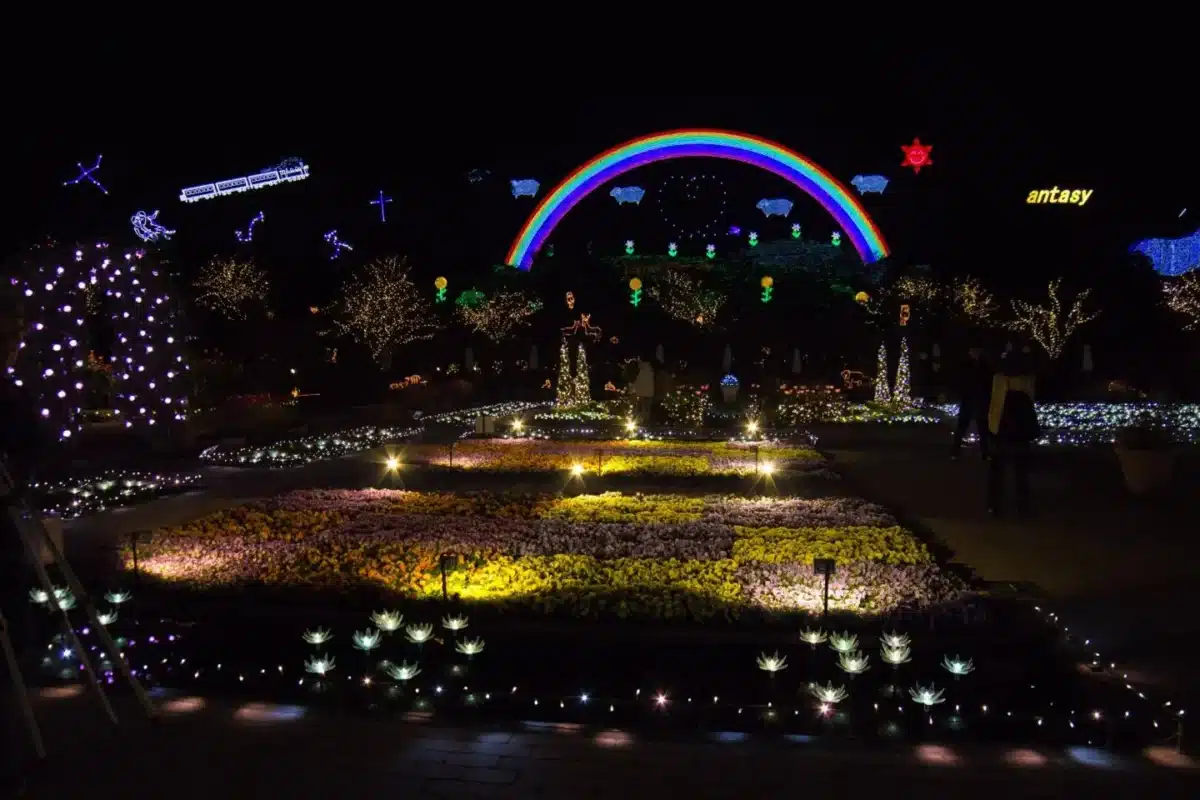
Ashikaga Flower Park Illumination 2026-2027 will turn Ashikaga Flower Park in Tochigi Prefecture into a large-scale nighttime garden of flowers, illuminated trees, themed displays, water features and colorful light installations. Known as “Garden of Illuminated Flowers,” the winter programme is one of the park’s major seasonal attractions and forms part of its year-round calendar of flower and light experiences.
Unlike a traditional Christmas market or winter festival concentrated around one central stage, the illumination is designed as an immersive walking experience. Visitors move through different sections of the park to discover illuminated gardens, flower-themed displays, tunnels, ponds, trees and large-scale light artworks.
The park’s seasonal illumination is especially notable because it uses the existing landscape as part of the display. Trees, flowers, bridges, waterways and garden structures become part of the lighting design rather than simply serving as backgrounds for separate installations.
Enjoy Your Event Stress-Free with Japan Travelo
Do you know? Planning events, festivals, concerts, and cultural experiences in Japan can be overwhelming. Japan Travelo brings everything together in one place, helping you manage your itinerary, transport, and accommodation with ease—so you can enjoy Japan without the stress of planning.
Illuminated flower garden
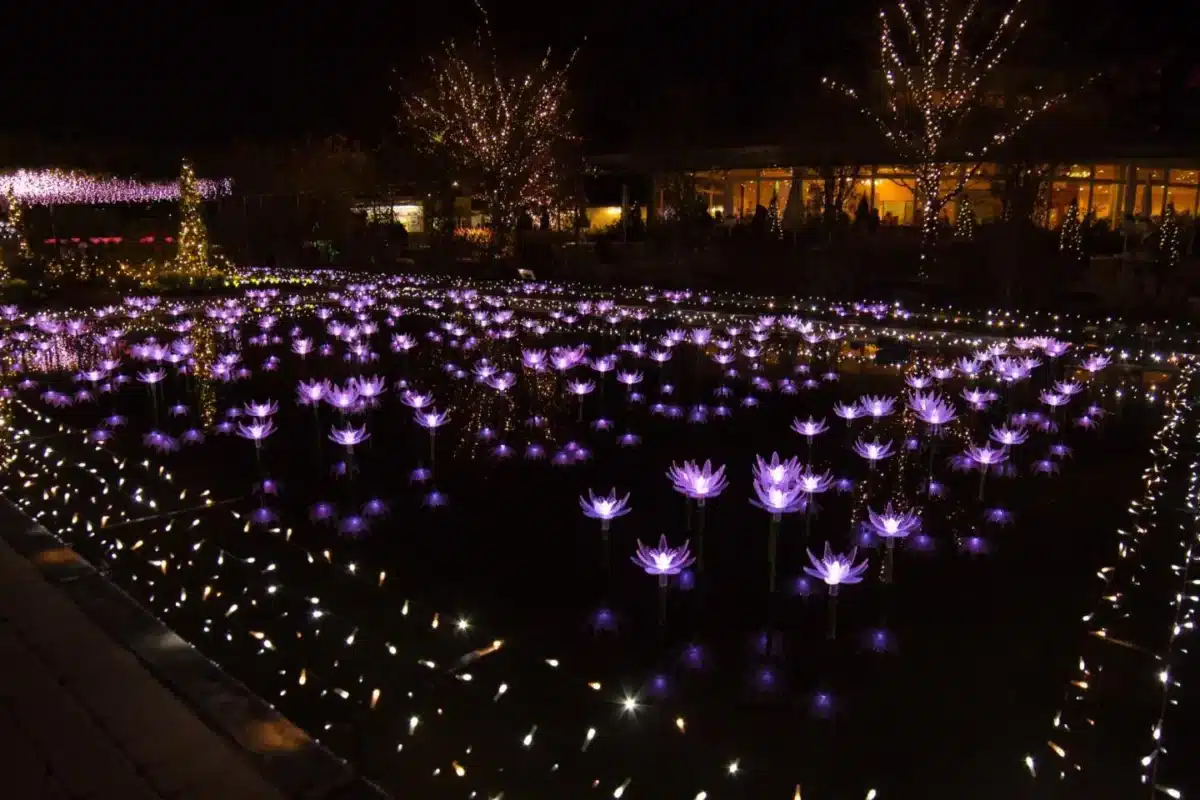
The central attraction is a nighttime garden where flowers and landscape features are enhanced with carefully arranged lighting. The official park describes its illumination season as one of its eight major seasonal flower stages.
Large-scale light displays
Different sections of the park use large illuminated structures and themed installations, creating changing visual experiences as visitors move through the grounds.
Seasonal winter atmosphere
The illumination extends across the transition from autumn into winter and continues into the colder part of the season. This gives visitors opportunities to see different seasonal themes during the long-running programme.
Flower and light combination
Ashikaga Flower Park is designed around flowers throughout the year, so the illumination incorporates the park’s horticultural identity rather than presenting lights separately from the gardens.
Photography
The combination of illuminated flowers, reflections, tunnels and large light structures makes the event particularly suited to nighttime photography.
Event dates
Mid Oct 2026 – Mid February 2027 (Dates TBD)
The official Ashikaga Flower Park calendar identifies “Hikari no Hana no Niwa,” or “Garden of Illuminated Flowers,” as the park’s illumination season running broadly from mid-October into mid-February.
The exact 2026-2027 operating dates, opening hours and programme phases should be confirmed by the park before travelling. The illumination is typically divided into seasonal or thematic phases, allowing the appearance of the park to change during the long winter programme.
The park also operates daytime and nighttime sessions separately during the main illumination period. Recent official operating information has used a daytime session followed by a dedicated evening session, with the illumination beginning after sunset.
Because the event is weather- and season-dependent, visitors should check the official website shortly before their visit for operating conditions, lighting hours, temporary closures and any changes to the programme.
Visiting this event? Don’t miss out on these amazing activities and local experiences while you’re here.
Venue & event locations
Ashikaga Flower Park
The entire illumination takes place at Ashikaga Flower Park in Ashikaga, Tochigi Prefecture. The park is located at 607 Hasama-cho, Ashikaga City, Tochigi Prefecture, and is specifically designed as a large-scale botanical attraction with multiple themed garden areas.
Flower gardens
Different flower sections become part of the illumination, with lighting used to emphasize planting beds, flower structures and seasonal vegetation.
Wisteria areas
Ashikaga Flower Park is internationally associated with its spectacular wisteria displays. Although the main wisteria flowering season occurs outside the winter illumination period, wisteria structures and garden features remain important elements of the park landscape.
Water features
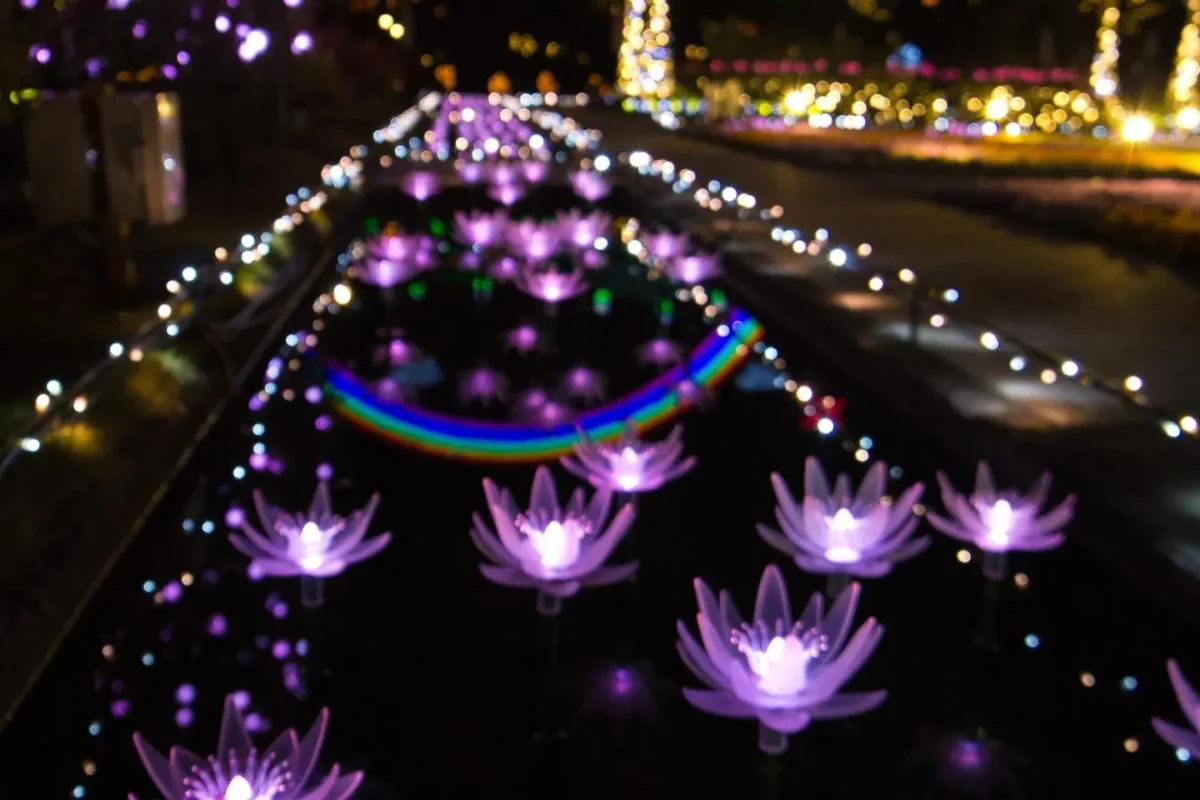
Ponds and other water features create reflective surfaces that amplify the lighting and provide some of the most atmospheric views after dark.
Light tunnels
Illuminated tunnels provide visitors with enclosed walking experiences surrounded by changing lights and decorative effects.
Themed garden areas
Different parts of the park are organized around separate visual themes, allowing visitors to move from one illuminated landscape to another rather than seeing one uniform display.
Restaurant and shopping areas
The park also contains restaurants, cafés, flower-related shops and souvenir facilities, allowing visitors to combine the illumination with dining and shopping.
Full holiday programme
Ashikaga Flower Park Illumination is primarily a seasonal winter attraction rather than a single holiday celebration, but the programme incorporates festive and seasonal themes as the season progresses.
Garden illumination
The main programme lights the park’s gardens, flowers, trees and landscape structures after dark.
Themed seasonal displays
Different sections of the illumination are designed around changing seasonal concepts. During the later winter period, displays can incorporate New Year and Valentine-inspired decorations.
Flower illumination
Illuminated flowers and botanical installations maintain the park’s connection with its horticultural identity.
Light tunnels
Visitors can walk through illuminated tunnels that form part of the larger nighttime route.
Water and reflection displays
Lighting around ponds and water features creates reflective scenes that change depending on viewing position.
Traditional Japanese-inspired displays
Some sections incorporate Japanese decorative elements such as umbrellas, bamboo and other traditional visual motifs.
Winter flower displays
The park continues to showcase seasonal flowers during the colder months. Official park information has highlighted winter-blooming peonies, wintersweet and cold-season plum blossoms during the illumination season.
Seasonal flower-hand displays
Flower arrangements displayed in water-filled vessels, known as hanachozu, have also been incorporated into the park’s winter presentation. During evening hours, these can be illuminated as part of the nighttime experience.
Main attractions & highlights
Garden of Illuminated Flowers
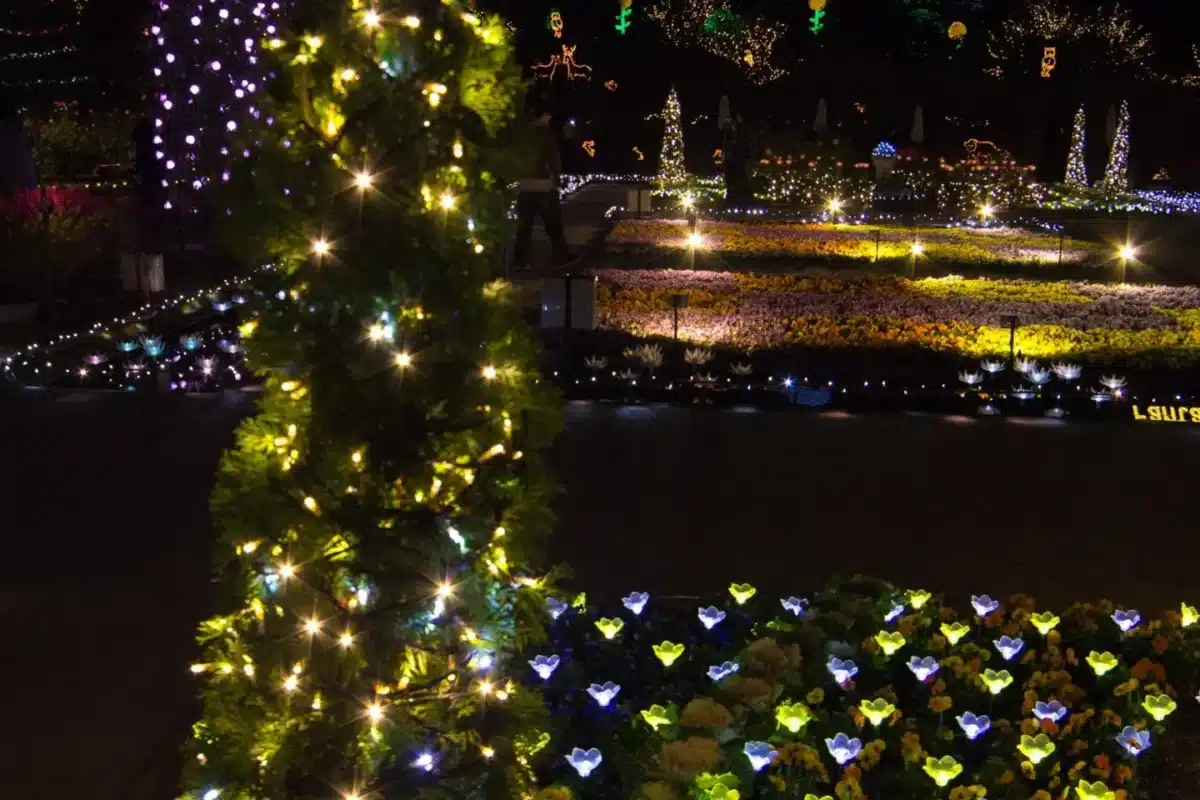
The central attraction is the extensive illuminated garden itself. Thousands of lights are arranged around flower beds, trees, pathways and garden structures to create a continuous nighttime landscape.
Illuminated flower tunnels
Light tunnels create enclosed visual environments that are especially popular for photographs and family visits.
Water reflections
Ponds and water surfaces reflect the surrounding illumination, producing layered views of light, flowers and garden structures.
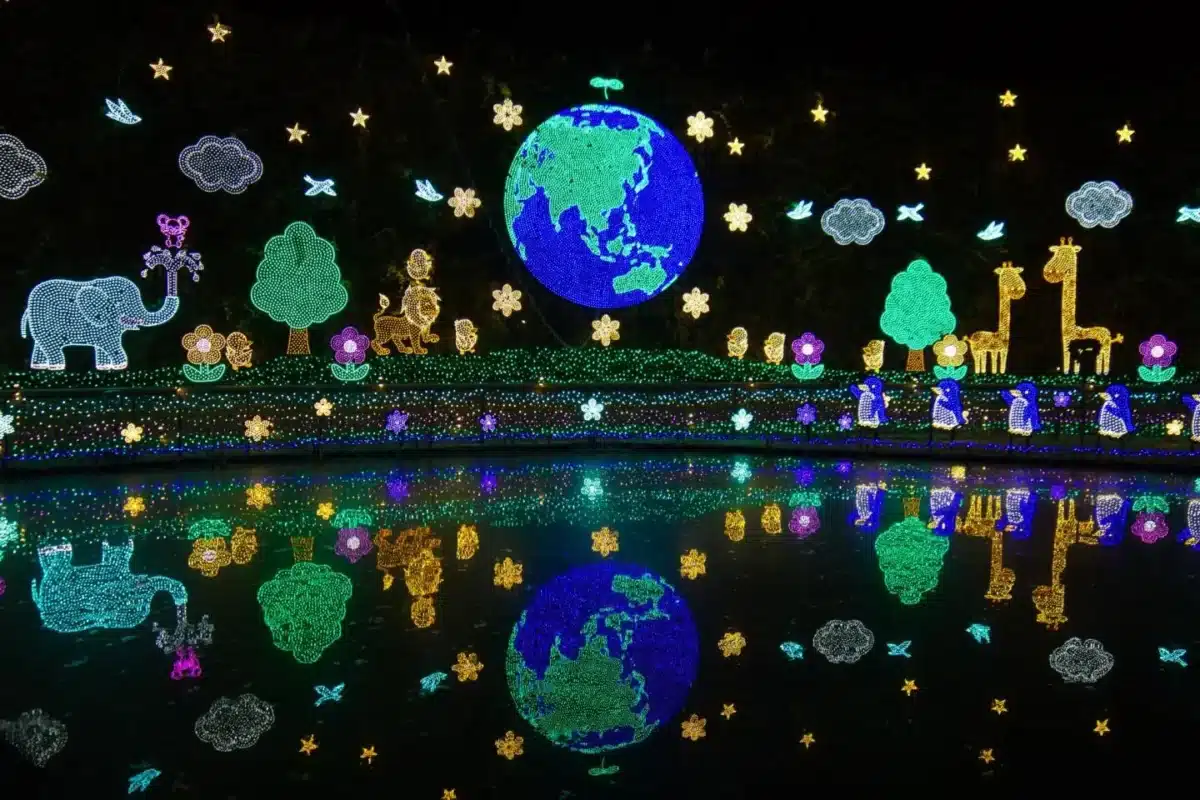
Large-scale installations
The park uses substantial illuminated artworks and structures rather than relying only on small decorative bulbs.
Seasonal flower displays
The winter garden includes cold-season flowers and decorative botanical arrangements, giving the illumination a stronger horticultural identity than many urban light festivals.
Japanese-style illumination
Bamboo, umbrellas and Japanese-inspired lighting elements appear in selected areas, providing a connection with traditional landscape aesthetics.
Flower-themed light art
Large flower shapes and botanical motifs appear throughout the grounds, reinforcing the park’s identity as a flower destination.
Nighttime viewpoints
Elevated sections, bridges and open garden spaces provide different perspectives of the illuminated landscape.
Markets, decorations & themed areas
Ashikaga Flower Park is not primarily a Christmas market, so visitors should expect a garden-based illumination rather than rows of independent market stalls.
Flower-themed decorations
Large illuminated flowers, trees and botanical shapes form the core decorative language of the event.
Japanese garden decorations
Selected areas use traditional-looking elements such as bamboo lighting and Japanese umbrellas. These features are particularly effective when combined with the surrounding garden.
Seasonal photo areas
Decorative installations provide designated environments for family, couple and landscape photography.
Food and shopping areas
The park’s existing restaurants and souvenir facilities complement the illumination. Seasonal products and flower-related gifts are available within the shopping areas.
Winter-themed zones
As the illumination progresses through the season, different displays can emphasize winter, New Year and later romantic themes. Previous official park information has described a Valentine-themed transformation toward the end of the illumination period.
Flower-hand displays
Illuminated hanachozu displays provide smaller, detailed decorative scenes that contrast with the park’s large-scale light installations.
Events & entertainment schedule
The illumination is primarily a self-guided nighttime garden experience rather than a festival built around concerts and stage performances.
Daytime garden session
Visitors can explore the park during daytime operating hours before the dedicated evening illumination session begins, depending on the official schedule.
Evening illumination
The nighttime session provides access to the illuminated garden and its seasonal light installations.
Seasonal programme changes
The visual programme can change as the season progresses. Autumn-oriented displays transition toward winter and later seasonal themes.
Food and shopping
Restaurants, cafés and shops provide supporting activities during a visit, allowing guests to combine the light displays with meals and souvenir shopping.
Seasonal installations
Special installations may be introduced or modified during different phases of the illumination. Visitors should consult the official programme for the current season’s featured areas.
Recent official information has used separate daytime and evening admission periods, with evening hours extending later on weekends and public holidays.
Admission & ticket information
Admission prices for the 2026-2027 illumination should be confirmed by Ashikaga Flower Park when the final winter programme is published. The park has historically adjusted admission according to seasonal conditions, flower displays and the evening illumination period.
For website planning, recent official illumination pricing provides a useful previous-edition reference.
Adult evening admission: approximately $10.50
Child evening admission: approximately $5.00
These are approximate dollar conversions based on recent official Japanese admission levels and should not be treated as the final 2026-2027 price. The park’s official pricing can vary by season and operating period.
The park has also used separate daytime and nighttime admission sessions. Recent official information stated that visitors entering after the evening session begins could receive a lower admission price than daytime visitors, with additional discounts available to registered email members.
Evening admission
A dedicated nighttime ticket provides access to the illuminated park during the evening session.
Advance tickets
The park has offered advance tickets for the illumination, allowing visitors to enter more smoothly without relying entirely on same-day purchase.
Discounts
The park periodically provides promotional discounts through its membership or email-registration programme. These offers can change.
Children
Children’s admission is generally lower than adult admission, with the final age categories and prices determined by the park.
Visitors should check the official ticket page before travelling because the illumination is a long seasonal programme and admission can vary by period.
Special experiences & activities
Nighttime flower photography
The illumination provides opportunities to photograph flowers and garden structures under artificial light, with different effects depending on weather and viewing position.
Light tunnel walk
Walking through illuminated tunnels creates a more immersive experience than viewing individual installations from outside.
Reflection photography
Ponds and water features offer opportunities to photograph reflections of lights, flowers and garden structures.
Japanese-style illumination
Visitors can discover bamboo lights, umbrellas and other Japanese-inspired decorative features incorporated into the wider garden.
Seasonal flower viewing
The park continues to present flowers during winter, allowing visitors to combine horticultural sightseeing with the illumination.
Hanachozu viewing
Illuminated flower arrangements floating in water create smaller-scale photographic scenes and provide a quieter alternative to the largest light installations.
Flower Park shopping
Visitors can browse flower-related souvenirs, local products and seasonal items in the park’s shopping areas.
Restaurant experience
A meal or hot drink within the park can provide a useful break during an evening walking itinerary.
Family & children’s activities
Ashikaga Flower Park Illumination is particularly suitable for families because much of the experience is visual and easy to enjoy without needing to follow a complicated event schedule.
Large light displays
Large flower-shaped installations and illuminated structures provide recognizable attractions for children.
Light tunnels
Children can enjoy walking through illuminated tunnels and discovering different colors and patterns.
Seasonal decorations
Winter, New Year and other seasonal themes provide changing visual details during the long illumination period.
Flower displays
Families interested in nature can combine the light experience with winter flower viewing.
Photography
The numerous illuminated installations create opportunities for family photographs and seasonal portraits.
Food breaks
Restaurants, cafés and temporary food options allow families to take breaks without leaving the park.
Parents should remember that the park is extensive and the event takes place after dark. Comfortable shoes, warm clothing and close supervision are recommended.
Event rules
Stay on designated paths
Visitors should remain on official walking routes and avoid entering planted areas or restricted garden sections.
Protect the flowers
Ashikaga Flower Park is a horticultural attraction. Visitors should not touch, pick or damage flowers and plants.
Photography etiquette
Photography is generally encouraged, but visitors should avoid blocking pathways or interfering with other guests.
Tripods
Large camera equipment and tripods may be restricted in crowded locations. Visitors should follow staff instructions where crowd management is necessary.
Food and drinks
Food and drinks should be consumed only in permitted areas, particularly around restaurants and designated seating spaces.
Weather conditions
Outdoor illumination can be affected by rain, strong winds or other adverse weather. The park advises that event content may change or be cancelled because of weather.
Follow operating instructions
Visitors should follow staff directions regarding queues, access routes, parking and restricted areas.
How to get there
Ashikaga Flower Park is located in Ashikaga City, Tochigi Prefecture, and can be reached by train or car from the wider Tokyo and Tochigi regions.
Ashikaga Flower Park Station
The dedicated Ashikaga Flower Park Station is the most convenient arrival point for many visitors. The station is located very close to the park, making rail travel particularly practical during the illumination season.
JR Ryomo Line
Ashikaga Flower Park Station is served by the JR Ryomo Line, providing direct access from surrounding parts of Tochigi.
From Tokyo
Visitors travelling from Tokyo can connect through the wider JR network and continue toward the Ashikaga area.
By car
The park can also be reached by road, making it convenient for visitors touring Tochigi or combining the illumination with other regional attractions.
The official park lists its address as 607 Hasama-cho, Ashikaga City, Tochigi Prefecture.
Public transport & parking
Ashikaga Flower Park Station
The dedicated station is approximately a short walk from the park entrance, making it one of the easiest ways to avoid traffic during busy illumination periods.
Train travel
Rail is particularly useful during weekends and peak seasonal periods when roads around the park can become busy.
Local transport
Visitors staying elsewhere in Ashikaga or nearby cities can combine local railway and taxi services.
Parking
The park provides parking facilities for visitors arriving by car. During major illumination periods, parking demand can increase significantly.
Busy evening periods
Visitors driving should allow extra time for traffic and parking, particularly around weekends, holidays and periods of peak seasonal demand.
The park’s own recent illumination notices have highlighted parking arrangements and noted that later afternoon arrival can sometimes make access smoother.
Accommodation areas
Ashikaga City
Staying in Ashikaga is the most convenient option for visitors who want to explore the flower park and other local attractions without returning to Tokyo immediately.
Near Ashikaga Flower Park
Accommodation in the surrounding area provides easy access to the park and is useful for visitors who want to attend the evening illumination without a long return journey.
Ashikaga Station area
The central Ashikaga area offers access to restaurants, shops and railway connections.
Sano
Sano is another practical base for visitors exploring southern Tochigi and can be combined with other regional attractions.
Tochigi City
Travelers planning a wider Tochigi itinerary can consider staying in Tochigi City and travelling toward Ashikaga for the illumination.
Tokyo
A Tokyo hotel is also possible for visitors treating the illumination as a day trip, although the return journey should be planned carefully around evening operating hours.
Food, drinks & seasonal specialties
Ashikaga Flower Park has restaurants and food facilities within the grounds, allowing visitors to eat without leaving the attraction.
Japanese meals
Park restaurants provide Japanese-style dishes and seasonal menu options.
Hot drinks
Warm drinks can be especially appealing during the winter illumination, when visitors spend extended periods outdoors.
Japanese sweets
Traditional sweets and desserts can complement an evening garden visit.
Seasonal food
Menus can change with the season, with winter-oriented dishes and drinks becoming more relevant during the colder part of the illumination.
Flower-themed products
The park’s flower identity extends to its shops, where visitors can find flower-related souvenirs, sweets and gift products.
Local souvenirs
The shopping areas also provide opportunities to purchase regional products and gifts connected with Tochigi and Ashikaga.
Visitors should check the operating hours of individual restaurants because food facilities may close earlier than the illumination itself.
Accessibility
Ashikaga Flower Park welcomes visitors with different mobility requirements, but the large garden environment means that accessibility can vary between individual paths and attractions.
Visitors using wheelchairs or mobility aids should consider the distance involved in walking through the illuminated garden and check the current route conditions before visiting.
Accessible facilities
The park provides accessible facilities and restrooms, while staff can assist visitors with information about available routes and services.
Walking distances
Because the illumination covers a large area, visitors who have difficulty walking long distances may wish to plan a shorter route focusing on selected major displays.
Crowded areas
Popular light tunnels and major installations can become crowded. Visiting during quieter periods can make movement easier.
Weather
Cold temperatures, wet surfaces and nighttime conditions can affect mobility, so visitors should dress appropriately and use caution on paths.
Visitors requiring specific assistance should contact the park in advance to confirm the latest arrangements.
Best days & times to visit
Early evening
Arriving around the beginning of the nighttime session gives visitors more time to explore the garden before the final admission period.
Weekdays
Weekday evenings can be more comfortable for visitors who prefer fewer crowds, although popularity varies according to seasonal conditions.
Weekend evenings
Weekends can provide a lively atmosphere but generally attract more visitors, particularly when the illumination is at its most popular seasonal stage.
After sunset
The full effect of the event is visible after dark, when the lighting contrasts most strongly with the surrounding night sky.
Peak seasonal displays
Visitors interested in a particular theme should check the park’s current announcements because the illumination changes as the season progresses.
Late-season winter atmosphere
Later in the programme, seasonal displays can shift toward New Year and Valentine-inspired themes. Previous official park information has described these changes during the later winter period.
Weather-conscious visits
Clear, cold evenings can provide excellent visibility, while rain can create reflections but may also affect outdoor conditions. Visitors should always check the official operating announcement before travelling.
Previous year’s highlights
Previous editions of Ashikaga Flower Park’s illumination have established the attraction as a major winter light experience centered on flowers and garden landscapes.
The park’s official information has highlighted the combination of flowers, light, water and fragrance as a defining part of the nighttime experience.
The illumination has also developed into a long seasonal programme rather than a short holiday event. This allows the visual themes to change from autumn through winter, with later displays introducing seasonal decorations.
Recent editions have included illuminated hanachozu arrangements, Japanese umbrellas, bamboo lighting and large-scale light artworks. The park has also used Valentine-inspired decorations later in the season, including illuminated hearts and romantic installations.
The park’s reputation for illumination has also been reinforced by industry recognition. Official park information states that it received the top award in the illumination category at the International Illumination Award ceremony and was recognized for its illumination storytelling.
The continuing popularity of the event comes from its combination of botanical displays and large-scale lighting. Rather than placing illumination separately from the gardens, the park integrates light into its existing flower landscapes, ponds, trees, paths and structures.
For the 2026-2027 season, visitors should expect this established format to continue, while checking the official programme for the final themes, displays and operating arrangements.
Official event information
Ashikaga Flower Park is the official organizer and primary source for current information about the illumination, admission, opening hours, flower conditions, parking, restaurants and seasonal programme.
Official Ashikaga Flower Park: https://www.ashikaga.co.jp/
The official site identifies the illumination as “Garden of Illuminated Flowers” and lists it as the park’s major seasonal programme from mid-October through mid-February.
The park also publishes regular updates on flower conditions, illumination displays, operating hours and seasonal changes. Visitors should check these updates shortly before travelling because flower conditions and weather can affect the experience.
Official event information: https://en.japantravel.com/tochigi/ashikaga-flower-park-illumination/33158
The park’s official announcements should be used to confirm the final 2026-2027 illumination schedule, ticket prices, opening hours, parking arrangements, special displays and any weather-related changes.
Video
Location
FAQ
Are advance tickets required or can visitors buy them easily at the entrance gate?
While tickets are readily available at the ticket counters upon arrival, purchasing online in advance helps avoid potential queue delays during peak seasonal weekends. Buying early ensures smooth entry so you can head straight into the glowing garden paths without unnecessary waiting.
Is the park fully accessible for visitors using wheelchairs or pushing strollers?
Most primary pathways are flat, paved, and wide enough to accommodate wheelchairs and strollers comfortably throughout the evening viewing hours. On-site staff members are also readily available to assist guests with specific mobility requirements navigating minor terrain shifts.
What happens to the illumination schedule if unexpected severe weather occurs?
Outdoor light displays and operational hours may occasionally be adjusted, delayed, or temporarily suspended during severe storms, heavy snow, or high winds. Visitors should check official park communication channels or social media updates if adverse weather conditions arise on their planned evening.
Can visitors bring outside food or drinks inside the park grounds?
Bringing outside food, snacks, and beverages into the garden is strictly prohibited according to park safety and cleanliness guidelines. However, an abundant selection of hot food stalls and the on-site restaurant provide plenty of delicious dining choices during your visit.
Are pets allowed to accompany visitors inside the illumination event?
Pets and animals of any kind are not permitted within the park boundaries, with the sole exception of certified guide or service animals. This strict rule ensures optimal hygiene, safety, and comfort for every guest exploring the crowded walking trails.

Leave a Reply