
-
June 5, 2027
Event date:
-
June 5, 2027
Event end:
Overview
Atsuta Festival, also known as the Shobu Festival, is the largest and most important annual festival of Atsuta Jingu, one of Japan’s most revered Shinto shrines. The festival takes place every year on 5 June in Nagoya, marking the beginning of summer with religious ceremonies, traditional performances, lantern displays, martial arts demonstrations and evening fireworks.
The 2027 festival is therefore scheduled for Saturday, 5 June 2027. The central religious ceremony traditionally begins at 10:00 in the morning, while various performances and offerings take place throughout the day before the evening celebrations.
Atsuta Festival is especially interesting for visitors because it combines an important Shinto ceremony with a lively public celebration. Around the shrine, visitors can experience traditional Japanese performing arts, mikoshi processions, food stalls and the spectacular illumination of the 365 lanterns on the makiwara floats before fireworks light up the night sky.
Enjoy Your Event Stress-Free with Japan Travelo
Do you know? Planning events, festivals, concerts, and cultural experiences in Japan can be overwhelming. Japan Travelo brings everything together in one place, helping you manage your itinerary, transport, and accommodation with ease—so you can enjoy Japan without the stress of planning.
Cultural Significance & Origins
Atsuta Festival is the annual Reisai, or main festival, of Atsuta Jingu. It is considered the shrine’s most important and solemn annual ceremony, and an imperial envoy is traditionally sent to participate on behalf of the Emperor. During the ceremony, prayers are offered for the prosperity of the Imperial Family and the peace of the nation.
Atsuta Jingu itself has a history extending back approximately 1,900 years and is closely associated with Kusanagi-no-Tsurugi, one of Japan’s Three Sacred Imperial Regalia. The shrine’s importance has made it a major centre of religious devotion in the Chubu region for centuries.
The festival is also known as Shobu Matsuri, or Shobu Festival. Its arrival has traditionally been regarded as a signal that summer has begun in Nagoya, and local visitors have a long-standing custom of wearing summer cotton kimono, carrying fans and enjoying the evening festivities.
Traditions, Rituals & Customs
The central Reisai ceremony takes place at the shrine on 5 June. An imperial envoy attends the ceremony, and offerings are made while Shinto prayers are performed inside the shrine precincts.
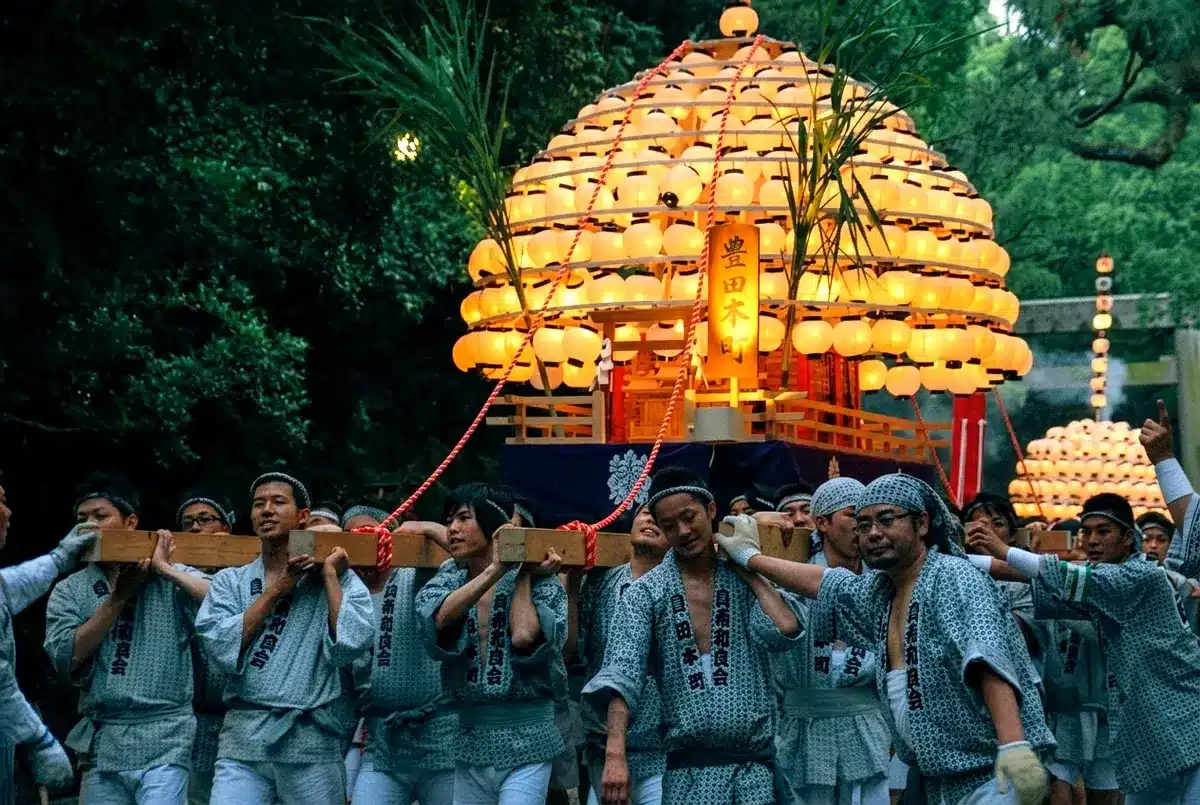
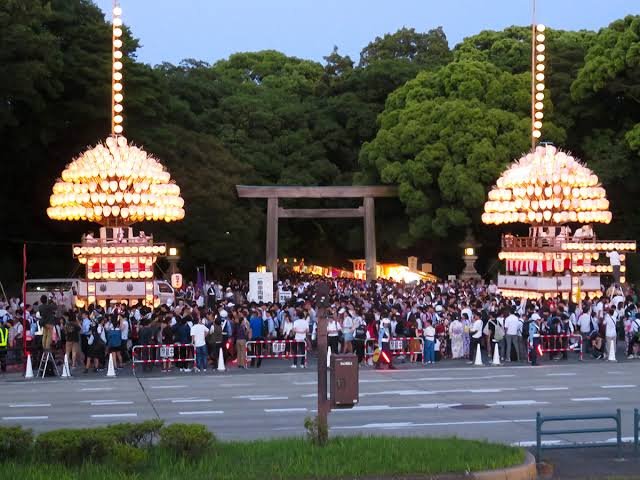
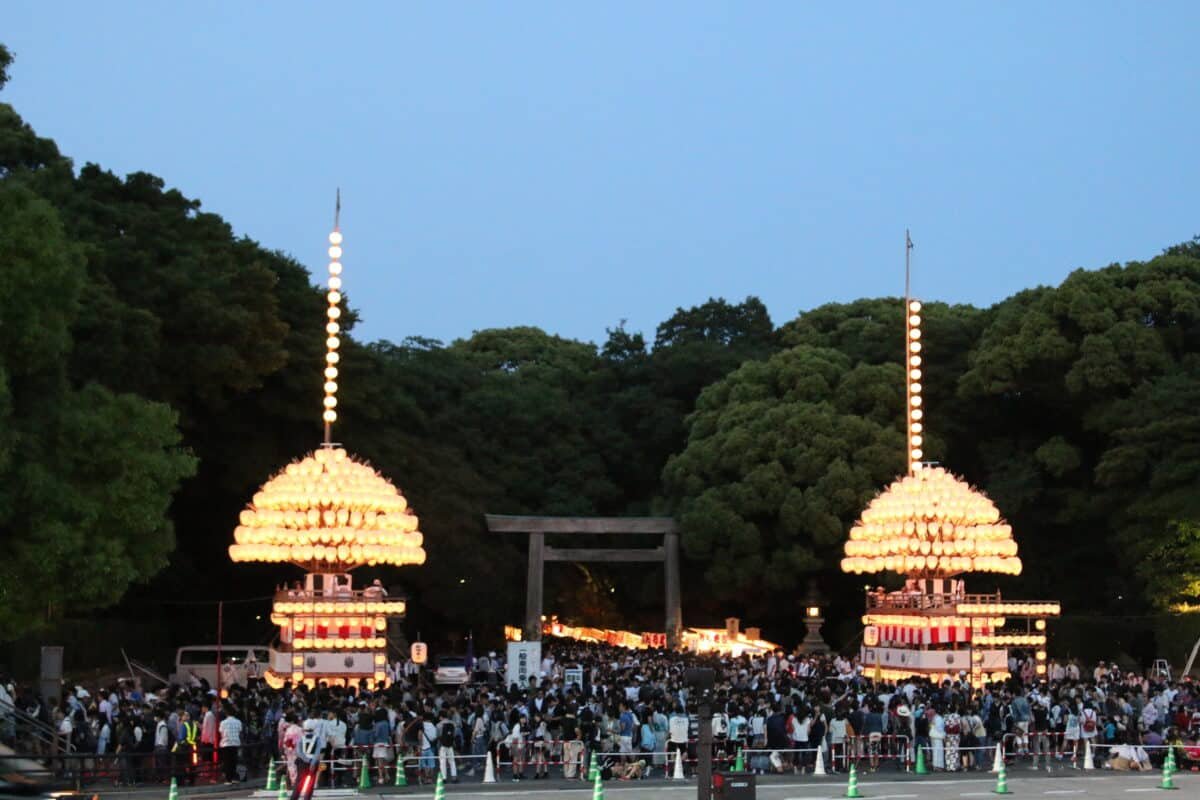
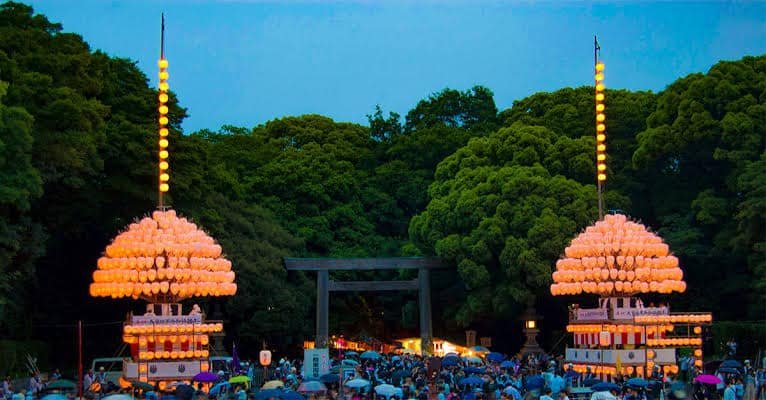
One of the most visually distinctive traditions takes place later in the day. Makiwara floats, decorated with hundreds of lanterns, are illuminated around the shrine gates. Each float traditionally carries 365 lanterns, representing the days of the year, creating a striking display after sunset.
Various mikoshi and locally prepared portable shrine structures are also carried along the shrine approaches as acts of dedication. These processions give visitors an opportunity to see traditional festival culture at close range while remaining within the historic setting of Atsuta’s forested shrine grounds.
What to Expect at the Festival
The festival develops throughout the day rather than being concentrated into one short ceremony. The morning begins with the main religious observance, followed by a variety of cultural and traditional activities around the shrine.
Visitors can expect taiko performances, Atsuta Kagura, archery, martial arts, traditional dance and other forms of dedication to the shrine. Local communities may also present children’s lion dances and makiwara mikoshi as part of the festivities.
As evening approaches, the atmosphere changes considerably. Food stalls and festival crowds become more prominent, visitors gather around the illuminated lantern floats and the shrine grounds take on a distinctly summer-festival atmosphere.
The night concludes with fireworks launched from Jingu Park. Recent official tourism information has listed approximately 1,000 fireworks, although the exact 2027 display time and arrangements should be confirmed closer to the event.
Date & Schedule
Atsuta Festival is held every year on 5 June, making the 2027 date:
Saturday, 5 June 2027
The recurring official shrine schedule lists the main Reisai at 9:00, while the detailed festival description identifies the principal ceremony as beginning at 10:00. This difference reflects different listings for the wider ceremony schedule and the main ceremonial proceedings, so visitors should check the final 2027 programme for the precise timetable.
The day traditionally includes:
- Main Reisai ceremony
- Tea ceremony
- Mikoshi and local dedication events
- Traditional performances
- Atsuta Kagura
- Taiko performances
- Martial arts demonstrations
- Makiwara lantern displays
- Evening fireworks
The fireworks have recently been scheduled for around 19:40–20:30, but this is based on current festival information and should not be treated as the final 2027 timetable.
Visiting this event? Don’t miss out on these amazing activities and local experiences while you’re here.
Main Events & Programme
The Reisai is the religious heart of Atsuta Festival and takes place at the shrine’s main hall. Although visitors can experience the atmosphere of the ceremony, some religious proceedings are formal Shinto rituals rather than performances intended primarily for tourists.
Throughout the day, various hōnō, or dedication performances, are presented. These can include martial arts such as archery, kendo, judo and sumo, as well as artistic activities including dance, music and other cultural demonstrations.
Atsuta Kagura is another important attraction. This traditional dance and music performance uses instruments including flutes and drums and has been associated with the shrine for centuries.
The evening lantern ceremony and fireworks provide the festival’s most spectacular public moments. Visitors who want to experience the full progression of the festival should plan to remain in the area from afternoon into the evening.
Traditional Dress, Arts & Performances
Traditional clothing becomes particularly noticeable as the festival moves into the evening. Local visitors may wear yukata, lightweight summer cotton garments traditionally associated with warm-weather festivals.
Performers may wear happi coats, traditional costumes or martial-arts uniforms depending on the activity. The combination of formal Shinto ceremonies, traditional arts and modern festival visitors creates a distinctly Japanese summer atmosphere.
The visual highlight is the illuminated makiwara, whose hundreds of lanterns transform the shrine approaches after dark. The lanterns provide a completely different atmosphere from the daytime religious ceremonies and are one of the festival’s most memorable photographic scenes.
Traditional Food & Local Specialties
Atsuta Festival is not primarily a food festival, but temporary food stalls traditionally form part of the public celebration. Visitors can expect the kinds of street food commonly associated with Japanese summer festivals, such as takoyaki, yakisoba, grilled foods, sweets and drinks.
A visit to Nagoya also provides an opportunity to explore the city’s distinctive local cuisine. Hitsumabushi, grilled eel served with rice in several ways, is one of Nagoya’s best-known specialties. Other regional dishes include miso katsu, tebasaki chicken wings and kishimen noodles.
For a more traditional food experience, visitors can explore restaurants around Atsuta and central Nagoya before returning to the shrine for the evening programme.
Location & Festival Areas
The festival is centred on Atsuta Jingu at 1-1-1 Jingu, Atsuta Ward, Nagoya, Aichi Prefecture. The shrine occupies a large wooded area in southern Nagoya, giving the festival a distinctive setting compared with urban street festivals elsewhere in Japan.
The main religious ceremonies take place within the shrine precincts. Other activities spread through the surrounding grounds and approaches, while the evening fireworks are traditionally held at Jingu Park.
The festival attracts a large local crowd, with the shrine reporting around 250,000 visitors for the festival in its official description. Visitors should therefore expect significantly busier conditions around the shrine and transport stations than on an ordinary June day.
Getting to the Festival
Public transportation is the best option for visiting Atsuta Festival because of the large number of people expected and the possibility of festival-related traffic restrictions.
The most convenient railway access is Jingu-mae Station on the Meitetsu Line, which is approximately a three-minute walk from the shrine. Atsuta Station on the JR Tokaido Line is around an eight-minute walk away, while Jingu-Nishi Station on the Nagoya City Subway Meijo Line is approximately seven minutes from the shrine.
Visitors travelling from Nagoya Station can therefore reach the festival relatively easily without a car. During the evening fireworks, trains and surrounding streets can become crowded, so allowing extra time for the journey back is advisable.
The shrine has parking facilities for ordinary visitors, but restrictions may apply during the festival. Official tourism information specifically recommends using public transportation where possible.
Where to Stay Nearby
Visitors can stay around Nagoya Station, Sakae or Atsuta depending on their itinerary.
Nagoya Station is particularly convenient for travellers arriving by Shinkansen and offers a very large selection of hotels, restaurants and shopping facilities. Sakae is a good choice for visitors interested in nightlife, shopping and dining, while staying closer to Atsuta provides easier access to the shrine itself.
Because the festival takes place in early June rather than during Japan’s busiest Golden Week period, accommodation is generally easier to arrange than for major May festivals. However, visitors planning to stay specifically for the festival should still book ahead if they want a particular hotel or room category.
What Visitors Can Participate In
Visitors can freely experience many parts of the public festival atmosphere. Watching the traditional performances, observing the lantern displays, exploring the shrine grounds and viewing the fireworks are among the easiest ways to participate.
The religious ceremonies themselves should be approached respectfully. Visitors should follow signs, remain outside restricted areas and avoid disturbing worshippers or ceremonial participants while taking photographs.
The festival also provides an opportunity to experience a Japanese summer tradition that is especially local to Nagoya. Joining the evening crowds, trying festival food and walking through the illuminated shrine grounds can be as memorable as watching the formal performances.
Things to Do Before or After the Festival
A visit to Atsuta Festival can easily be combined with a wider Nagoya itinerary. The most obvious starting point is Atsuta Jingu itself, which is worth exploring outside the busiest festival periods as well.
The Atsuta Jingu Treasure Hall contains religious and historical artefacts associated with the shrine, while the surrounding forest offers a quieter experience away from the main festival crowds.
Elsewhere in Nagoya, visitors can explore Nagoya Castle, the Osu shopping and temple district, Sakae and the Toyota Commemorative Museum of Industry and Technology.
For travellers staying longer, Nagoya also provides convenient access to other parts of central Japan, including Inuyama, Gifu and the historic areas around the Kiso Valley.
Local Food & Restaurants
Nagoya has a strong regional food identity, making the city particularly rewarding for visitors who want to combine cultural sightseeing with local cuisine.
Hitsumabushi is closely associated with Nagoya and consists of grilled eel served over rice, traditionally enjoyed in several stages. Miso katsu, tebasaki and kishimen are other dishes worth trying during a festival trip.
The area around Atsuta is also known for Kishimen, a broad flat noodle associated with Nagoya cuisine. Visitors can choose between casual local restaurants near the shrine and a much wider range of dining options in central Nagoya.
On the festival day itself, eating at a restaurant earlier in the afternoon can be more comfortable than trying to find a table during the busiest evening period.
Ticket Information & Access
Atsuta Festival is a public festival and does not require a general admission ticket. Visitors can enter the shrine grounds and experience the public festival activities without purchasing a festival pass.
The religious ceremonies, performances and evening celebrations are part of the shrine’s annual festival programme. Individual areas may have their own access arrangements, and some ceremonial spaces may not be open to unrestricted visitor access.
The main cost for visitors is therefore transportation, food and any purchases made during the festival rather than an admission fee.
Official Event Information
Event: Atsuta Festival
Japanese: 熱田まつり
Also known as: Shobu Festival / Shobu Matsuri
Date: 5 June 2027
Location: Atsuta Jingu, Nagoya, Aichi, Japan
Main Ceremony: Reisai, Atsuta Jingu’s main annual festival
Evening Highlights: Makiwara lantern displays and fireworks
Admission: Free
The official Atsuta Jingu website provides the shrine’s annual festival calendar, ceremony information, access guidance and updates. Atsuta Jingu Official Website : https://www.atsutajingu.or.jp/en/
Video
Location
FAQ
When is Atsuta Festival 2027?
Atsuta Festival is held every year on 5 June, so the 2027 edition will take place on Saturday, 5 June 2027. The main ceremony and other events are held throughout the day, followed by the evening lantern displays and fireworks.
What is Atsuta Festival?
Atsuta Festival is the main annual festival of Atsuta Jingu and is one of Nagoya's most important traditional religious celebrations. It combines formal Shinto ceremonies with traditional performances, martial arts, local festival customs, lantern displays and fireworks.
What time does Atsuta Festival start?
The official annual festival schedule lists the main Reisai on 5 June at 9:00, while the detailed festival description identifies the principal ceremony at 10:00. Visitors should therefore check the official 2027 programme for the precise ceremony timetable rather than relying on a single published time.
Are there fireworks at Atsuta Festival?
Yes. Fireworks are traditionally held in the evening at Jingu Park as part of the festival's public celebrations.
What are the Makiwara lanterns?
Makiwara are distinctive festival floats decorated with large numbers of lanterns. During Atsuta Festival, groups of 365 lanterns are illuminated around the shrine gates at night, creating one of the event's most recognisable sights.

Leave a Reply