
What to expect in 2027
Candle Night in Matsumoto 2027 is expected to transform the outdoor spaces of the Matsumoto City Museum of Art into a softly illuminated evening setting filled with candles, art, music and environmental messages. The event is designed to encourage visitors to think about climate change, energy conservation and sustainable lifestyles while enjoying a relaxed cultural evening.
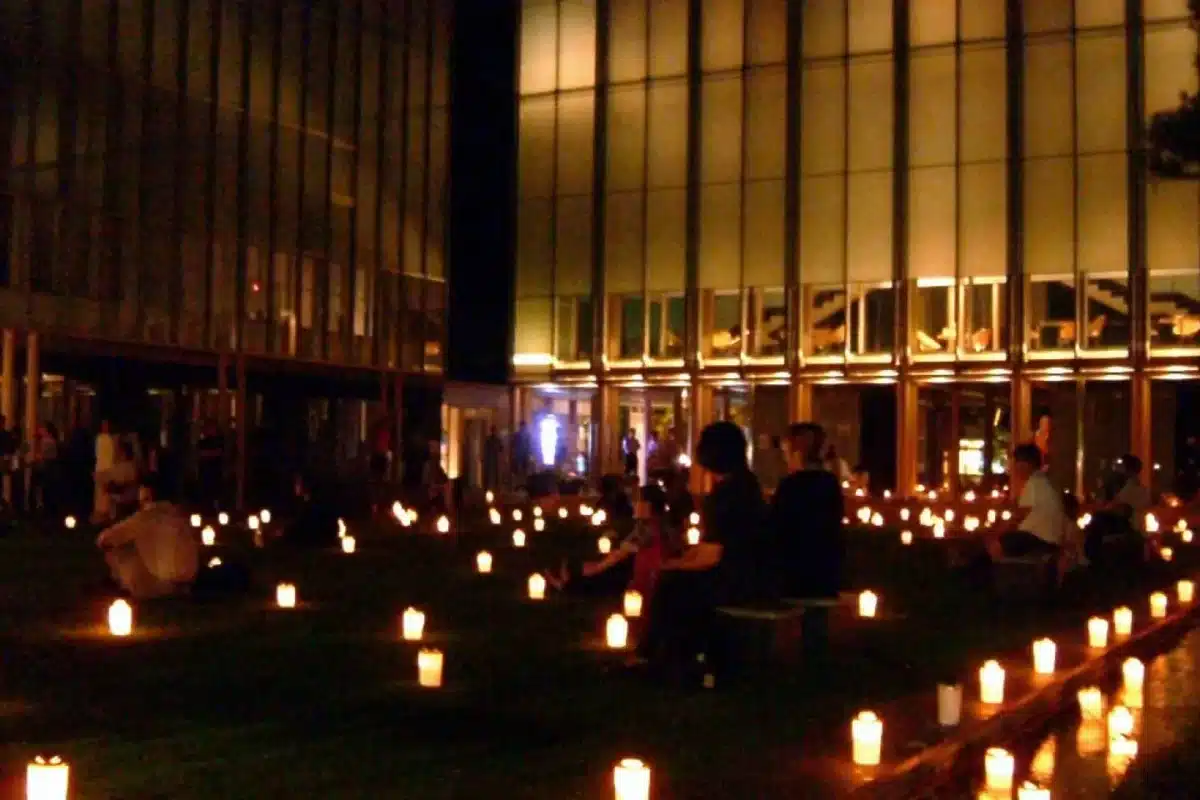
The Candle Night tradition at the museum combines visual art with environmental education and live entertainment. Rather than functioning as a conventional exhibition, it creates a temporary evening atmosphere in the museum’s entrance plaza and courtyard, where candlelight becomes the central feature.
The event has traditionally been connected with Matsumoto City’s efforts to raise awareness of global warming and energy consumption. Previous editions have included eco-life talks, candle lighting and environmentally conscious live performances. The official museum describes the setting as a starry-sky-like candle display, giving the museum grounds a distinctly different character from its normal daytime operation.
Enjoy Your Event Stress-Free with Japan Travelo
Do you know? Planning events, festivals, concerts, and cultural experiences in Japan can be overwhelming. Japan Travelo brings everything together in one place, helping you manage your itinerary, transport, and accommodation with ease—so you can enjoy Japan without the stress of planning.
For 2027, visitors can expect a combination of:
- Candle installations around the museum grounds
- Environmental and eco-life activities
- Live music or other environmentally themed performances
- Art-related displays and illuminated spaces
- A peaceful evening atmosphere suitable for families, couples and individual visitors
- Opportunities to learn more about climate-conscious living
- A strong connection between art, community and environmental awareness
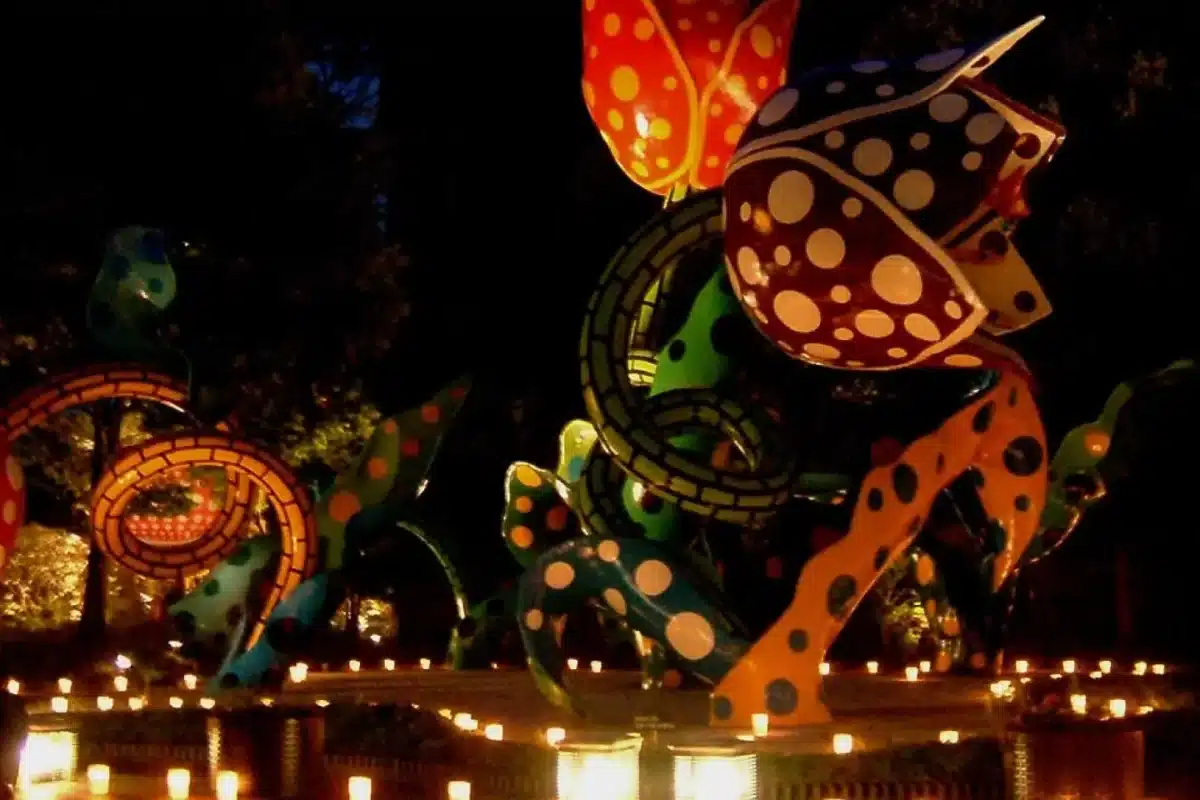
The event is particularly appealing to visitors already exploring Matsumoto’s art and cultural attractions. The museum is closely associated with the work of Yayoi Kusama, who was born in Matsumoto, and some previous Candle Night editions have incorporated outdoor artworks into the candlelit environment.
Event dates
2027 schedule: Early June 2027 (Dates TBD)
The official 2027 calendar dates have not yet been confirmed. JapanTravel currently lists the event for early June and notes that the dates will be updated after confirmation by the organizers.
Visitors should check the official Matsumoto City Museum of Art event information before travelling because the programme, operating hours and activities can change.
Candle Night is traditionally an evening event, with the main experience taking place after the candles are illuminated. Previous editions have combined candle lighting with environmental talks and live performances.
Admission has traditionally been free, making the event accessible to visitors who want to experience Matsumoto’s art and environmental culture without purchasing a festival ticket.
Visiting this event? Don’t miss out on these amazing activities and local experiences while you’re here.
Venue & exhibition site
Candle Night in Matsumoto takes place at the Matsumoto City Museum of Art in central Matsumoto, Nagano Prefecture.
Matsumoto City Museum of Art
4 Chome-2-22 Chuo, Matsumoto, Nagano 390-0811, Japan
The principal event spaces include the museum entrance plaza, Citizens’ Creative Plaza courtyard and other outdoor areas around the museum. Previous official programmes have specifically identified the entrance plaza, courtyard and lecture room as Candle Night locations.
The museum provides an especially suitable setting because its contemporary architecture, open courtyard and artworks create a strong contrast with the warm glow of candles.
The event area is not simply a conventional exhibition hall. Much of the Candle Night experience takes place outdoors, allowing visitors to move through illuminated spaces while listening to music and environmental presentations.
The museum is also an important cultural attraction in its own right. Visitors can combine Candle Night with Matsumoto’s art and sightseeing attractions, although normal museum exhibitions may have different admission arrangements and operating hours.
Full event programme
The detailed 2027 programme has not yet been announced, but the established Candle Night format provides a useful guide to what visitors can expect.
Candle lighting
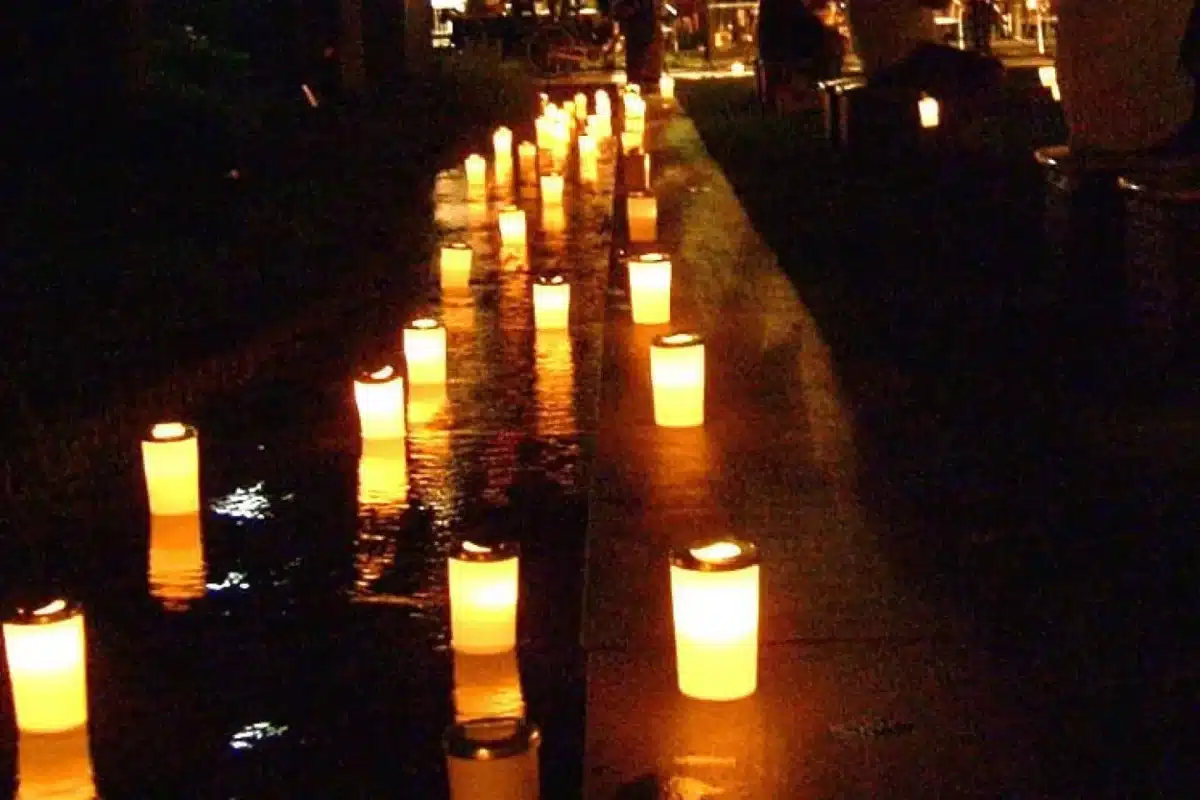
The evening traditionally begins with the lighting of candles around the museum’s entrance and courtyard areas. As daylight fades, the candles become the main source of illumination and create the distinctive atmosphere associated with the event.
Eco-life talk
Environmental education is an important part of Candle Night. Previous programmes have included talks about global warming, the environment and ways of understanding the relationship between people and the planet. One established programme used a digital globe to discuss the Earth, the universe and the global environment.
Eco live performance
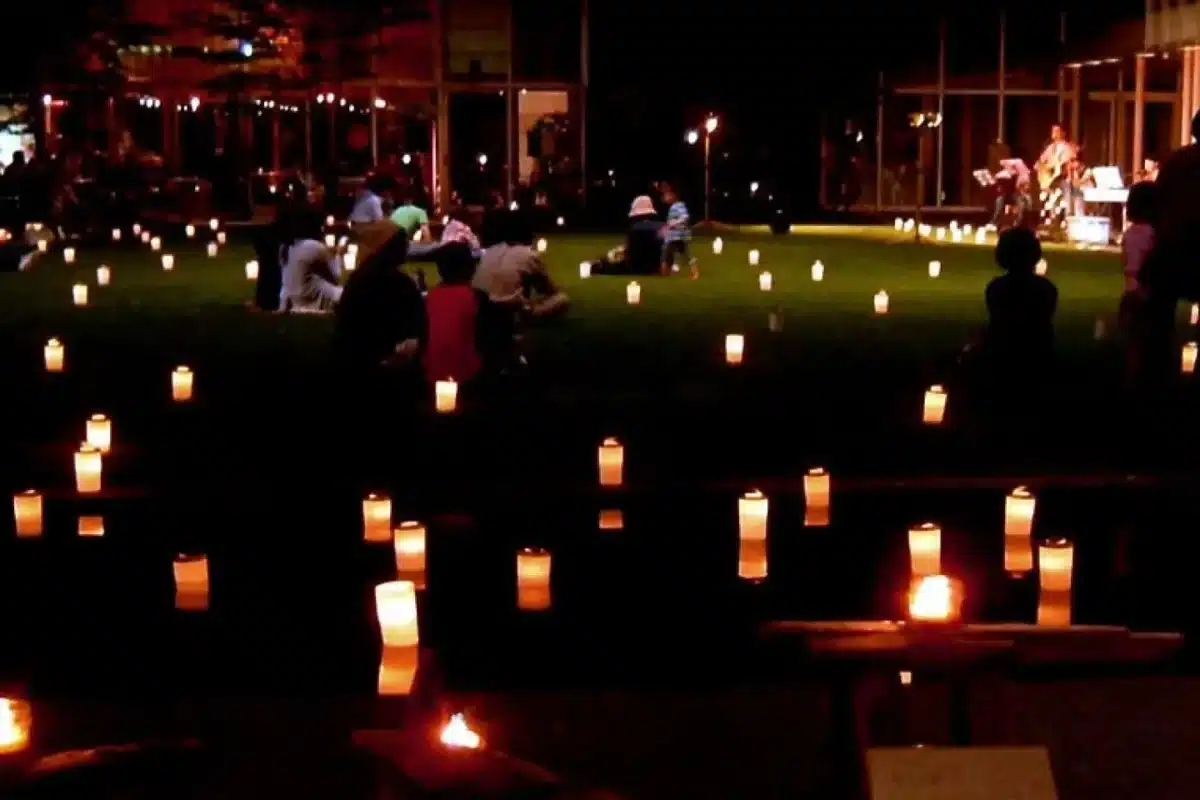
Live music is another recurring part of the programme. Previous editions have featured local musical groups, including the Matsumoto Civic Wind Orchestra, demonstrating how community performance can be combined with an environmental message.
Candlelit art atmosphere
Art remains central to the experience. The combination of candles, museum architecture, courtyard spaces and outdoor artworks creates an evening environment that is very different from a standard museum visit.
The final 2027 programme may include additional performances, talks, displays or workshops once the organizers publish the official schedule.
Featured companies & exhibitors
Candle Night in Matsumoto is not a commercial trade exhibition, so visitors should not expect a conventional lineup of companies, corporate exhibitors or commercial exhibition booths.
Instead, the event focuses on the museum, local cultural organizations, environmental groups, artists, musicians and community participants.
The environmental message has historically been supported through cooperation between Matsumoto’s civic and environmental initiatives. The event is closely connected with local efforts to promote awareness of global warming and energy conservation.
Potential participating groups may include:
- Local environmental organizations
- Community music groups
- Artists and cultural participants
- Environmental educators
- Local civic organizations
- Museum staff and cultural partners
The exact participating organizations and performers for 2027 should be confirmed through the official event announcement.
Agriculture & environmental sectors
Although agriculture is not a central theme of the event, environmental awareness is one of Candle Night’s defining purposes.
The programme has historically been associated with Matsumoto City’s efforts to encourage people to consider energy use, global warming prevention and environmentally responsible lifestyles. Official museum information describes the event as part of an initiative connected with the city’s summer energy-saving efforts and awareness of global warming prevention.
Environmental themes may include:
- Energy conservation
- Climate change awareness
- Responsible electricity use
- Sustainable everyday lifestyles
- Community environmental action
- Protection of the natural environment
- Understanding the relationship between human activity and the planet
This makes the event particularly suitable for visitors interested in sustainability, environmental education and community-based climate initiatives.
Products, technologies & innovations
Candle Night does not operate as a technology or commercial innovation exhibition. Instead, innovation is presented through creative ways of communicating environmental themes.
One example from previous programming was the use of a digital globe to help visitors understand the Earth and environmental issues. The presentation connected scientific information with a visual, educational experience.
The event’s most distinctive visual element is also a simple form of environmental communication: using candlelight to encourage people to reconsider energy consumption and the way electricity is used.
Visitors may encounter:
- Environmentally themed educational displays
- Digital or visual environmental presentations
- Candle installations
- Creative lighting concepts
- Art and environmental interpretation
- Community-based sustainability activities
The specific technologies and installations planned for 2027 have not yet been announced.
Demonstrations & workshops
Workshops have formed part of some earlier Candle Night programmes. A previous museum edition included a candle-making workshop where participants created candles using beeswax and bamboo. The completed candles were then displayed as part of the Candle Night experience.
This type of hands-on activity demonstrates how the event can combine environmental awareness with practical creativity.
Possible workshop themes include:
- Candle making
- Sustainable craft activities
- Environmental education
- Creative reuse
- Family-oriented activities
- Art and nature workshops
A previous candle-making workshop charged approximately $3 per participant after conversion from the historical Japanese price, but this was a separate workshop rather than general event admission. No 2027 workshop pricing has been announced, so visitors should wait for the official programme before assuming that a paid workshop will be offered.
Ticket types & registration
Candle Night in Matsumoto has traditionally been a free public event.
General admission: $0
There is normally no conventional festival ticket required for the main Candle Night experience. The official museum information for previous editions lists the event price as free, while JapanTravel also describes the event as free of charge.
If special workshops or limited-capacity activities are introduced for 2027, they may have separate registration requirements.
Visitors should distinguish between Candle Night admission and normal museum exhibitions. The event itself is free, but other museum exhibitions or experiences may have their own admission arrangements.
Professional & trade visitor access
Candle Night is designed primarily as a public cultural and environmental event rather than a professional trade show.
There is therefore no separate trade-only entrance category or business visitor badge normally associated with the event.
Professionals working in areas such as:
- Environmental education
- Sustainability
- Community development
- Arts and culture
- Museum programming
- Energy conservation
- Local government
- Environmental communication
may nevertheless find the event useful as an example of community-based environmental engagement.
The relaxed public format also makes it suitable for educators, families, cultural visitors and travelers interested in sustainable living.
Exhibition halls & floor plan
There is no conventional exhibition-hall floor plan for Candle Night because the main programme is concentrated in the museum’s outdoor and communal spaces.
The principal areas used in previous editions include:
- Museum entrance plaza
- Citizens’ Creative Plaza courtyard
- Lecture room
- Outdoor areas surrounding the museum
- Spaces used for candle displays and performances
The entrance plaza and courtyard are particularly important because they allow the candle installations to be experienced as a large visual environment rather than as individual displays.
Visitors should follow any temporary signs and staff instructions when moving between the candle areas, performance spaces and activity locations.
The final 2027 layout may change depending on the programme, weather conditions, safety arrangements and the number of activities scheduled.
Sustainability & environmental initiatives
Sustainability is at the heart of Candle Night in Matsumoto.
The event has been organized as an opportunity to raise awareness of global warming and encourage people to consider environmental responsibility. Official museum information connects Candle Night with Matsumoto City’s seasonal energy-saving initiatives.
The candlelit environment itself provides a symbolic reminder of energy consumption. Instead of relying entirely on conventional illumination, the event creates a distinctive atmosphere through candles while using the setting to introduce environmental discussions.
Previous programmes have also used talks and educational presentations to explain environmental issues in accessible ways.
Visitors can support the event’s sustainability message by:
- Using public transport where practical
- Avoiding unnecessary waste
- Following recycling instructions
- Bringing reusable items where appropriate
- Respecting the museum environment
- Following staff instructions concerning candles and installations
Event rules
Candle Night takes place in a museum environment, so visitors are expected to follow museum rules and instructions from staff.
Important considerations include:
- Do not touch candles or lighting installations unless specifically permitted.
- Keep children supervised around candle displays.
- Do not obstruct walkways or emergency access routes.
- Follow staff directions around performance areas.
- Do not bring items that could create a fire or safety hazard.
- Respect artworks, museum property and temporary installations.
- Keep noise under control during talks and performances.
- Follow any temporary restrictions introduced for weather or safety reasons.
The event can be held in outdoor spaces, so weather conditions may affect the arrangement. Visitors should check official information before travelling if adverse weather is expected.
How to get there
The Matsumoto City Museum of Art is located in central Matsumoto and can be incorporated easily into a city sightseeing itinerary.
From Matsumoto Station
The museum can be reached from JR Matsumoto Station by walking or using local transportation. The central location makes public transport a practical option for visitors staying in the city.
By local bus
Local buses serving central Matsumoto provide another convenient option. Visitors should check current routes and evening service before attending because public transport schedules can differ from daytime sightseeing services.
By taxi
Taxis provide a straightforward option for visitors carrying luggage, traveling with children or staying farther from the museum.
By car
Driving is possible, but visitors should check available parking and evening restrictions before setting out. Because Candle Night is a public evening event, parking may become more convenient if visitors arrive early.
Public transport & parking
Public transportation is generally the easiest option for visitors staying in central Matsumoto.
JR Matsumoto Station is the city’s principal rail hub, providing connections for visitors arriving from other parts of Nagano Prefecture and beyond.
For visitors driving, parking availability around the museum should be checked through the museum’s current visitor information. Parking spaces can be limited compared with demand during popular events.
Visitors should avoid assuming that ordinary daytime museum parking arrangements will remain unchanged for the evening event.
For a relaxed visit, staying near Matsumoto Station or in the central city allows visitors to reach the museum without depending on a car.
Accommodation areas
Matsumoto has a wide range of accommodation suitable for visitors attending Candle Night.
Matsumoto Station area
This is one of the most convenient choices for travelers arriving by train. It offers hotels, restaurants and easy access to local transport.
Central Matsumoto
Staying in the central area places visitors close to the museum, Matsumoto Castle, shopping streets and restaurants.
Around Matsumoto Castle
The castle district provides a more sightseeing-focused base and is within convenient reach of the museum and central attractions.
Nakamachi and historic streets
Visitors interested in traditional architecture, cafés, galleries and craft shops may prefer accommodation around the historic central districts.
Staying centrally also makes it easier to combine Candle Night with Matsumoto’s other cultural attractions.
Accessibility
The museum is a modern cultural facility with visitor support services, although accessibility can vary between indoor museum spaces and temporary outdoor event areas.
The Candle Night programme uses outdoor plazas and courtyard areas, so visitors should be prepared for changes in lighting and visitor flow during the evening.
Visitors who require specific accessibility assistance should contact the museum before attending and ask about:
- Step-free routes
- Accessible entrances
- Accessible toilets
- Wheelchair access
- Seating availability
- Assistance during crowded periods
- Access to individual programme areas
The museum’s official website provides visitor information covering accessibility and facility services.
Because Candle Night is held after dark, visitors with visual accessibility needs may also wish to ask staff about the lighting conditions and safest routes through the outdoor areas.
Previous year’s highlights
Previous Candle Night editions have established a distinctive combination of environmental awareness, art and live performance.
One of the recurring highlights is the transformation of the museum courtyard into a candlelit environment. The museum describes the effect as resembling a star-filled sky, creating a calm atmosphere that contrasts with the normal daytime museum experience.
Environmental talks have also been a consistent part of the programme. Previous presentations have used visual tools such as a digital globe to discuss the Earth, the universe and environmental challenges.
Live performances have provided another major attraction. The Matsumoto Civic Wind Orchestra has appeared as part of the eco-live programme, while other editions have featured different local performers.
Art has also played an important role. Previous Candle Night experiences have illuminated outdoor artworks, including works associated with Yayoi Kusama, creating a particularly atmospheric setting. JapanTravel notes that the large outdoor work “The Visionary Flowers” has previously been incorporated into the candlelit environment.
The event’s long-running format demonstrates its focus on community participation rather than commercial entertainment. Candlelight, environmental education, music and art come together to create an evening centered on sustainability and local culture.
Official tickets & registration
Candle Night in Matsumoto is traditionally free, with no general admission ticket required. JapanTravel lists the event as free, while official museum programmes from previous editions also state that admission is free.
General event admission: $0
For the latest 2027 information, visitors should use the official Matsumoto City Museum of Art event information and Matsumoto City announcements.
https://en.japantravel.com/nagano/candle-night-museum-in-matsumoto/13692
The official 2027 announcement should be checked before travel for the confirmed programme, operating arrangements, any special workshops and other visitor information.
Location
FAQ
Are advance tickets or reservations required to enter the evening event?
General entry to the outdoor candle illumination areas is entirely free and open to the public without requiring any advance booking. Visitors can simply arrive at the museum courtyard during the scheduled evening hours to enjoy the installations.
What is the primary purpose behind hosting the Candle Night celebration?
The event is organized annually around the solstices to raise public awareness about energy conservation and urgent environmental challenges. It encourages participants to reflect on sustainable lifestyles by turning off conventional lights and embracing natural candlelight.
Can visitors explore the indoor museum galleries during the evening program?
While the outdoor courtyard displays are open to everyone, indoor gallery access may depend on regular museum operating hours and special exhibition schedules. Guests are advised to check current museum opening guidelines ahead of their visit.
What should attendees wear for the outdoor evening courtyard activities?
Since the event takes place outdoors after dark in Matsumoto, evening temperatures can become cool quite quickly. Bringing a warm jacket, sweater, and comfortable walking shoes is strongly recommended for an enjoyable experience.
Is photography permitted around the candle displays and outdoor sculptures?
Casual photography of the illuminated courtyard and outdoor art installations is generally permitted for personal, non-commercial use. Photographers should exercise caution with tripods to ensure they do not block pathways or disturb other guests.
How can travelers easily commute to the Matsumoto City Museum of Art?
The museum is conveniently located just a fifteen-minute walk east from the central train station. Local bus routes and clear pedestrian walkways provide easy access for both local residents and visiting tourists.
Are food and beverage options available for purchase on site?
The museum features a pleasant courtyard café and shop areas where visitors can relax during their cultural outing. Additionally, numerous traditional restaurants and pubs in the surrounding neighborhood are open for post-event dining.

Leave a Reply